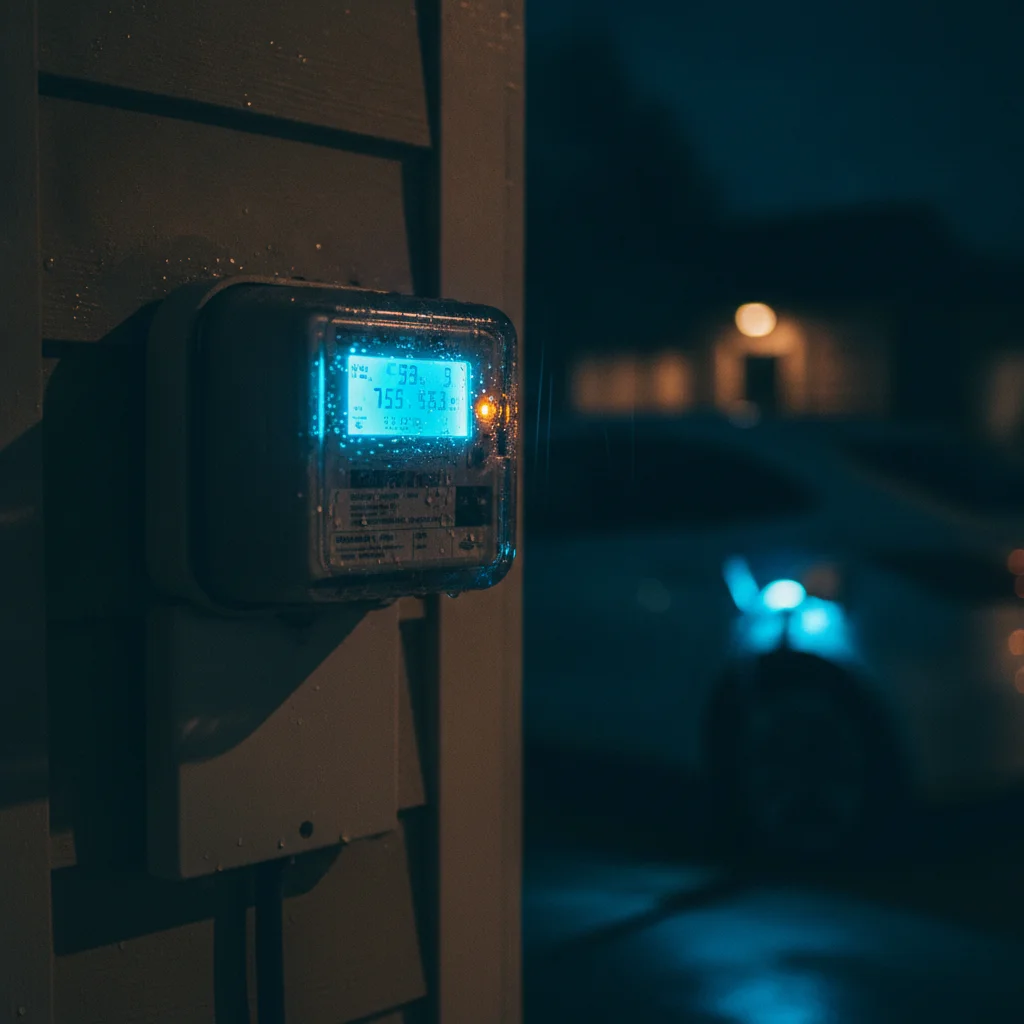
Key Takeaways
Why Time-of-Use Pricing Changes the EV Cost Equation
Electricity is not priced like gasoline. At a gas station, the posted price is the price — full stop. With residential electricity, when you consume energy can matter as much as how much you consume. Time-of-use (TOU) pricing reflects the real-time cost of generating and delivering electricity to your home: cheap overnight when industrial demand falls and wind generation often peaks, expensive during late afternoon and early evening when millions of households simultaneously run air conditioning, cook dinner, and plug in devices.
For most households, this pricing structure is largely academic — refrigerators, water heaters, and lighting run on their own schedules with little user control. But an EV is different. A 60–100 kWh battery that charges over six to ten hours is an enormous, schedulable load that you can move almost entirely into off-peak hours with a few minutes of setup. That flexibility is what makes TOU pricing disproportionately valuable for EV owners.

The financial case is real. The U.S. Energy Information Administration's 2023 residential electricity data show average peak-to-off-peak rate spreads of $0.10–$0.30 per kWh across the country's largest TOU markets. Applied to a 70 kWh battery charged twice a week, a $0.15 spread alone represents roughly $110 in annual savings — before accounting for any whole-home load shifting. In high-rate states like California, the math improves dramatically. Understanding how electricity rates affect EV charging costs provides the broader context for how utilities price energy and why rate structure selection is one of the highest-leverage decisions an EV owner can make.
What you will need
One important nuance: TOU pricing cuts both ways. If your household runs significant loads during peak hours — central air conditioning, electric cooking, a hot tub — a TOU plan can raise your total electricity bill even as it reduces your EV charging cost. The net impact depends on your specific usage pattern, which is why the analysis steps below rely on your actual data rather than averages.
Utility online account portal
Used to locate available rate plans, download your hourly usage data (Green Button), and request a rate-plan switch.
EV onboard charge scheduler
Programs your vehicle to begin and end charging automatically within off-peak windows.
Smart Wi-Fi–enabled Level 2 EVSE
Provides app-based scheduling, energy monitoring, and kWh logging as a backup or alternative to the in-car scheduler.
Spreadsheet or EV charging cost calculator
Calculates break-even analysis comparing your current flat rate against a proposed TOU plan using your actual mileage.
Green Button electricity usage data (CSV)
Exports your hourly household consumption so you can model exactly what a TOU plan would have cost you historically.
Utility rate comparison tool
Third-party tools such as UtilityAPI or your state's PUC rate comparison page can rank available plans by estimated annual cost.
How to Choose the Right Rate Plan and Lock In Off-Peak Savings
The seven steps below take you from your current bill to a configured charge schedule that keeps every kilowatt of EV energy in the cheapest pricing window available. Work through them in order — skipping the analysis steps in favor of jumping straight to enrollment is the most common mistake EV owners make with TOU plans.
Pull your current electricity rate structure
Log into your utility's online portal and navigate to your account's rate plan section. Write down three numbers: your current flat rate per kWh (or your tiered rates if applicable), any fixed monthly service charges, and any demand charges if you are on a commercial-style plan. These figures are your baseline.
If your bill lists only a total dollar amount, divide it by your total kWh consumed that month to get an effective average rate. For most U.S. households this falls between $0.12 and $0.18 per kWh, though California, Hawaii, and New England states frequently exceed $0.25. Understanding this baseline is the first step the full rate-structure breakdown covers in depth.
Identify every TOU and EV-specific rate plan your utility offers
Call your utility's residential rate department or search its website for a complete tariff schedule. Ask specifically for:
- Standard time-of-use plans (peak/off-peak pricing on a single meter)
- EV-dedicated rate plans (a second meter or sub-meter on your charger circuit)
- Whole-home EV rates (TOU pricing applied to the entire account, often with a deeper off-peak discount)
Many utilities list only their most popular plans prominently; niche EV tariffs frequently require a phone call to uncover. California's PG&E, for example, offers the EV2-A plan that applies tiered TOU pricing to the whole home with off-peak rates as low as $0.12 per kWh overnight versus $0.45 or more during summer peak hours — a spread that makes the math very straightforward.
Map the peak and off-peak windows for each candidate plan
For every plan you identified, record the exact hours when peak, mid-peak, and off-peak pricing applies — separately for weekdays, weekends, and holidays. Create a simple table:
| Plan name | Peak hours | Off-peak hours | Peak rate ($/kWh) | Off-peak rate ($/kWh) | Weekend rules |
|---|---|---|---|---|---|
| Standard TOU-D | 4 PM–9 PM | 9 PM–4 PM | $0.41 | $0.13 | All off-peak |
| EV2-A | 4 PM–9 PM | 9 PM–4 PM | $0.45 | $0.12 | All off-peak |
| TOU-EV (sub-meter) | 11 AM–7 PM | 7 PM–11 AM | $0.33 | $0.09 | All off-peak |
The peak window is the single most critical variable. A plan with a cheaper off-peak rate is worthless if the off-peak window ends before you typically begin charging.
[in_content_images:0]Run a break-even calculation for each plan
Use your average daily miles, your EV's efficiency rating (kWh/100 mi), and each plan's rates to estimate monthly charging cost under each scenario. The formula:
Monthly charging cost =
  (Daily miles ÷ 100) × kWh per 100 miles
  × off-peak rate × 30
Then compare that figure against what you pay today at your flat rate. Example: a vehicle consuming 3.5 kWh per 100 miles, driven 35 miles per day, uses roughly 1.225 kWh daily or about 36.75 kWh per month. At a flat rate of $0.16/kWh that is $5.88/month. At an off-peak TOU rate of $0.09/kWh that drops to $3.31/month — a 44% reduction.
However, TOU plans can raise costs for any peak-hour consumption. If your household runs high loads — cooking, air conditioning, laundry — between 4 PM and 9 PM, those appliances will now cost significantly more per kWh. Use your Green Button hourly data to calculate whether the night-time savings on your EV outweigh the daytime penalty on your home loads. This deeper rate math guide walks through the household load side of that equation in full detail.
Enroll in your chosen rate plan
Once your analysis points to a winning plan, contact your utility to switch. Most utilities allow plan changes through the online portal; some require a phone call or a form submission. Key things to confirm at enrollment:
- The effective date of the rate change (utilities typically apply changes at the start of the next billing cycle)
- Whether a second meter or sub-meter installation is required (EV sub-meter plans may involve a one-time installation fee and a multi-week wait for an electrician)
- Any lock-in period — some experimental TOU pilots require a 12-month commitment
- Opt-out policy if the plan turns out to cost more
Ask for written confirmation of the new rate schedule and save it. Billing errors on newly switched accounts are not uncommon; having the tariff details on hand makes disputes easier to resolve.
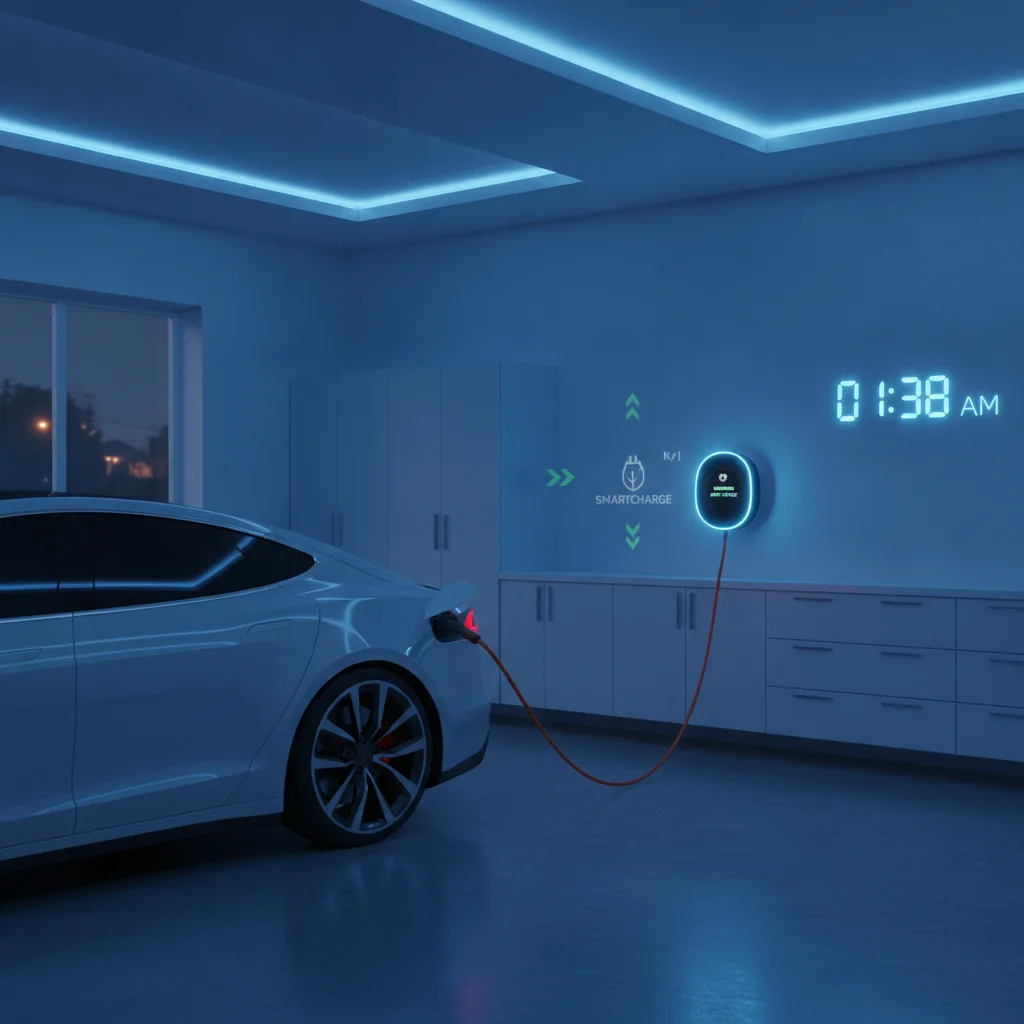
Program your EV's charge scheduler to avoid peak windows
Every major EV on the market today — including Tesla, Rivian, Ford, Hyundai, Chevrolet, and BMW models — includes a departure-time or charge-window scheduler in the vehicle's settings or companion app. Configure it to:
- Begin charging after your utility's off-peak window opens (e.g., 9:00 PM)
- Complete charging at or before the off-peak window closes (e.g., 6:00 AM) to avoid any overlap with the peak period
- Set a charge limit of 80% for daily use to reduce battery stress; reserve 100% for long-trip days
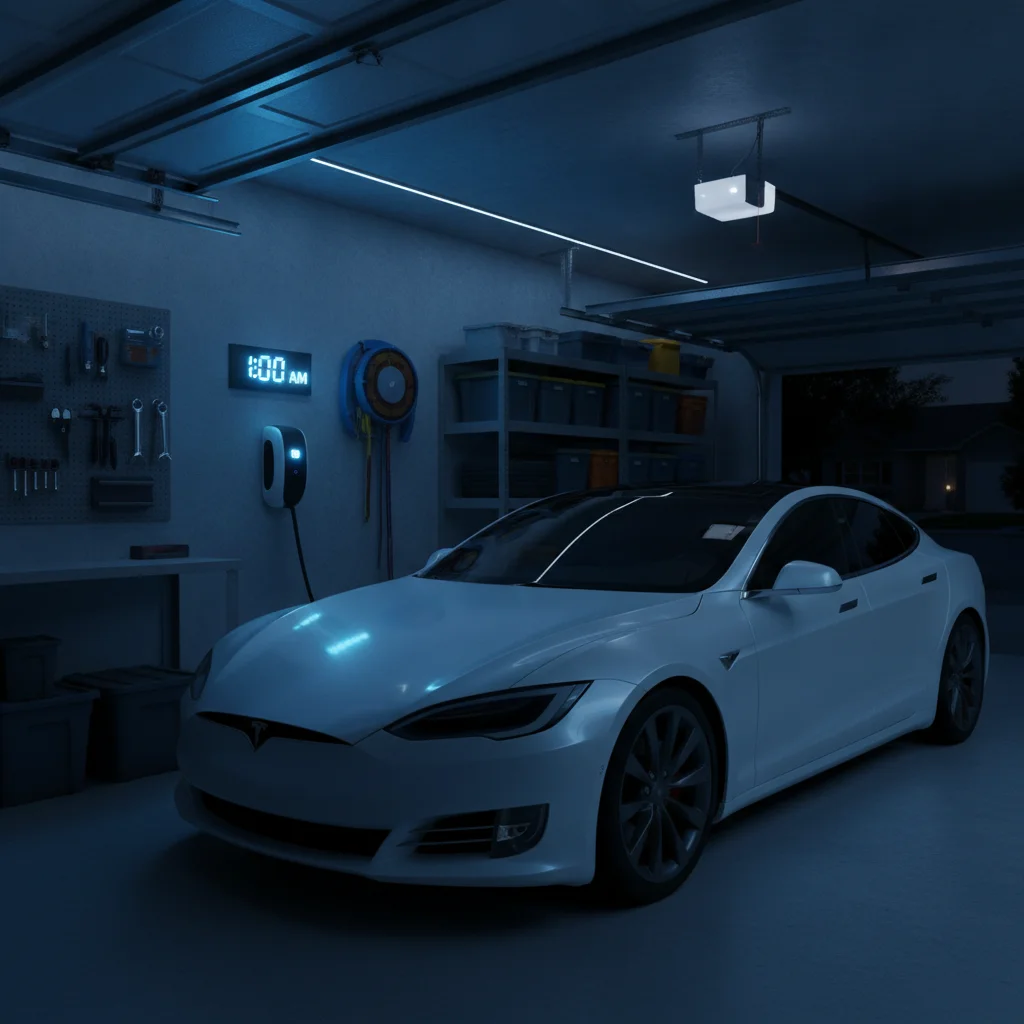
If you prefer to manage scheduling through your charger rather than the car, a smart EVSE with Wi-Fi connectivity lets you set time windows, track kWh consumed, and receive alerts if charging begins outside the programmed schedule. This is particularly useful for households with multiple EVs. See the full overview of home charging setup options for hardware recommendations.
[in_content_images:1]Monitor your first two billing cycles and adjust
After switching plans, download your first full TOU bill and compare it line by line with your last flat-rate bill. Look for:
- The total kWh billed at peak versus off-peak rates and whether the ratio matches your expectations
- Any unexpected peak-hour charges that indicate the scheduler failed or a household appliance ran during peak hours
- Demand charges, if applicable, and whether any single-hour spikes are triggering them
Most utility portals now display hourly usage charts. Use these to verify that your EV charging sessions appear exclusively in the off-peak band. If you see charging during peak hours, revisit your scheduler settings or check whether a manual override was accidentally triggered.
If after two full billing cycles your total bill is higher than before the switch, run the break-even math again using actual — not estimated — usage data. Some households genuinely fare better on flat rates, particularly those with inflexible daytime loads. These common EV charging cost mistakes include exactly this type of plan-selection error and how to course-correct.
Use Your Utility's Own Modeling Tool First
Before calling anyone, check whether your utility's website has a rate comparison or plan optimizer tool. Most major investor-owned utilities — including Pacific Gas & Electric, Southern California Edison, Xcel Energy, and Duke Energy — now offer these tools with Green Button data import. Running your actual 12-month usage through the tool takes about 10 minutes and produces a side-by-side cost projection for every available plan, which gives you a confident starting point before any conversation with a billing representative.
Automation Beats Willpower Every Time
Manually remembering to plug in after 9 PM works fine for a week. After a month, it fails. Set your EV's departure-time scheduler or your smart EVSE's charge window once, test it once, and then treat it as a set-and-forget configuration. The households that sustain the largest TOU savings over time are those that remove human memory from the equation entirely.
Seasonal Rate Windows May Shift Your Strategy
Several large utilities apply different peak windows in summer versus winter. Pacific Gas & Electric's EV2-A plan, for example, maintains a 4 PM–9 PM peak year-round, while other utilities shift windows by an hour or more between seasons. If your utility has seasonal variation, update your charge scheduler at the start of each season to make sure your off-peak window assumption is still accurate. A misaligned scheduler can easily cost you $5–$15 per month in unnecessary peak-rate charges.
TOU Plans Can Raise Bills for Some Households
If your household has significant inflexible peak-hour loads — central air conditioning that runs from 3 PM to 8 PM, a home-based business with daytime electricity use, or an electric pool pump on a timer — a TOU plan may increase your total bill even as it reduces your EV charging cost. Always model the full-home impact, not just the EV charging component, before switching. Utilities typically allow one free plan switch per year, but re-switching mid-billing cycle can create billing complications.
Sub-Meter Plans Require Physical Installation
EV sub-meter rate plans apply the discounted off-peak rate only to a dedicated circuit metered separately from your home. This requires a utility technician to install a second meter, which can take two to six weeks to schedule in busy utility service territories. Do not switch your billing plan before confirming an installation date — charging on the EV circuit before the sub-meter is live will result in that energy being billed at your standard home rate, negating the savings.
Verify Peak Windows Before You Commit
The most consequential number in any TOU plan is the exact minute the peak window opens — not the approximate hour shown on a utility's marketing page. Tariff documents and marketing summaries frequently differ by 30 to 60 minutes, and charging during even a single hour of peak pricing per night can eliminate a week's worth of off-peak savings. Always download and read the full tariff schedule (typically a PDF on your utility's rates page) before programming your charge scheduler, and confirm whether the window shifts seasonally.
Beyond the Basics: Advanced Strategies to Maximize TOU Savings
Once your scheduler is running reliably and your first TOU bills confirm the expected savings, several additional strategies can compound the financial benefit.
Stack TOU savings with utility EV incentives
Many utilities layer separate incentive programs on top of TOU rate plans. Common examples include rebates for smart EVSE purchase ($50–$500), enrollment bonuses for joining a managed-charging program, and bill credits for allowing the utility to briefly delay your charge during grid stress events (demand-response programs). These programs do not require you to change your rate plan and can add $50–$200 per year on top of your TOU rate savings. Call your utility's EV programs line or search its website for terms like "EV managed charging," "smart charging incentive," or "demand response."
Coordinate other schedulable loads with your off-peak window
A dishwasher, clothes washer, and electric water heater collectively add 3–8 kWh of daily load. If your utility's off-peak window runs from 9 PM to 6 AM, running these appliances on timers or smart plugs during that same window compounds your per-kWh savings across a meaningfully larger energy block. The practical advice on getting the most from off-peak charging covers load-stacking strategies in detail.
Compare home TOU savings against public fast-charging costs
TOU plans optimize home charging economics, but they do nothing for public charging network sessions. DC fast chargers typically bill $0.25–$0.55 per kWh or by the minute, rates that frequently exceed even peak-hour residential TOU pricing. Minimizing fast-charge reliance — by arriving home with enough range to charge overnight — is therefore just as important as optimizing the rate plan itself. Overusing fast chargers is one of the most common ways EV owners erode their savings, even after getting their home rate plan exactly right.
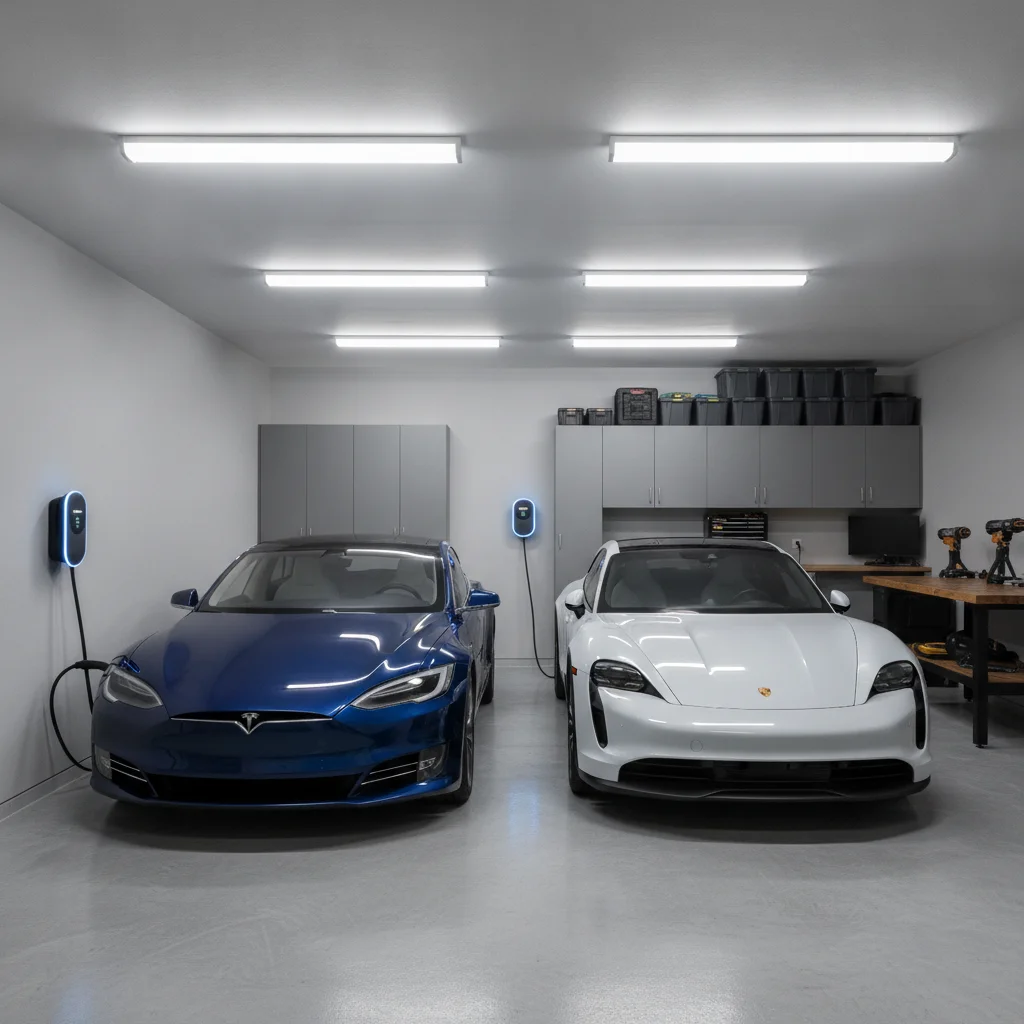
Revisit your plan when you add a second EV
A two-EV household doubles overnight kWh consumption, which makes the TOU off-peak rate even more impactful — but it also increases the risk of peak-hour overlap if both vehicles are left on manual charging. Re-run your break-even analysis and coordinate both charge schedules to ensure neither vehicle draws from the grid during peak hours. Some smart EVSEs support multi-vehicle scheduling through a single app interface, which simplifies management considerably. For a comparison of smart charging schedule setups, including multi-vehicle configurations, see the companion guide linked here.
Finally, keep an eye on charging network membership plans as a separate cost-control lever. If your driving patterns involve regular long-distance travel with frequent DC fast-charging stops, a network membership may reduce per-session costs at public stations enough to complement — rather than compete with — your home TOU strategy.
All claims are backed by peer-reviewed research. Sources on request.