Key Takeaways
Why Off-Peak Charging Is the Closest Thing to Free EV Fuel
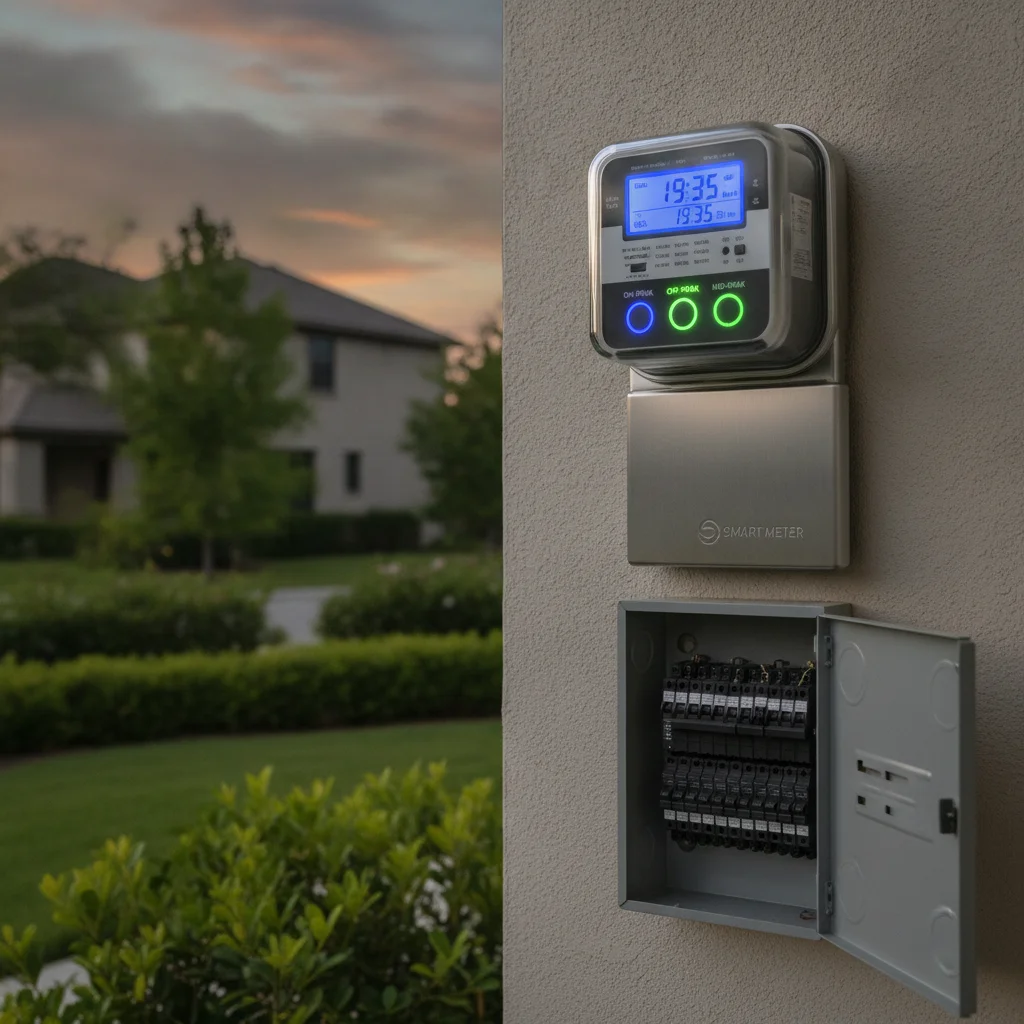
Electricity isn't priced the same around the clock. Utilities manage grid demand by charging more during peak periods — typically weekday afternoons and early evenings — and less when demand drops overnight and on weekends. That price swing is the foundation of every smart off-peak charging strategy.
In states like California, Texas, and New York, the difference between peak and off-peak rates can be dramatic. On Pacific Gas & Electric's EV2-A time-of-use rate, off-peak rates during winter drop to roughly $0.15–0.18 per kWh, while super-peak rates in summer can exceed $0.55 per kWh. For a vehicle with a 75 kWh usable battery, that's the difference between a full charge costing $11 versus $41. Over a year of daily charging, the gap is thousands of dollars.
The good news: capturing those savings doesn't require an engineering degree. It requires understanding a few key levers — rate plans, charge scheduling, charge limits, and hardware — and applying them consistently. This guide covers each one with enough specificity to make an immediate difference in your monthly electricity bill.
For context on the mistakes that erode these savings, see common EV charging cost mistakes that quietly drain what should be a financial advantage.
Best Practices for Maximizing Off-Peak Charging Savings
The following practices are drawn from a combination of utility rate data, battery engineering guidance, and real-world EV ownership patterns. Not every practice applies equally to every driver, but each one has a documented financial or efficiency benefit worth understanding.
Switch to a dedicated EV time-of-use rate plan and verify your utility offers a super off-peak window.
Standard tiered residential rates don't reward overnight charging behavior. EV-specific TOU plans are structured to make overnight charging dramatically cheaper, often with super off-peak rates 60–80% below daytime pricing. Without the right rate plan, smart scheduling delivers only a fraction of its potential savings.
Use your EV's built-in departure time scheduling — not a manual start time — to anchor charging to the cheapest rate window.
Scheduling by departure time ensures the vehicle finishes charging at or just before you need it, which minimizes the time the battery sits at a high state of charge and maximizes the duration of charging that falls within the off-peak window. Manual start times require constant adjustment and often result in charging spilling into peak hours.
Set your daily charge limit to 80% and reserve 100% charges exclusively for days before long trips.
Lithium-ion chemistry degrades faster when held at high states of charge for extended periods. An 80% daily limit both preserves long-term battery capacity and reduces the energy drawn per session — keeping costs lower. Battery replacement is one of the few costs that can dwarf the savings from any rate plan.
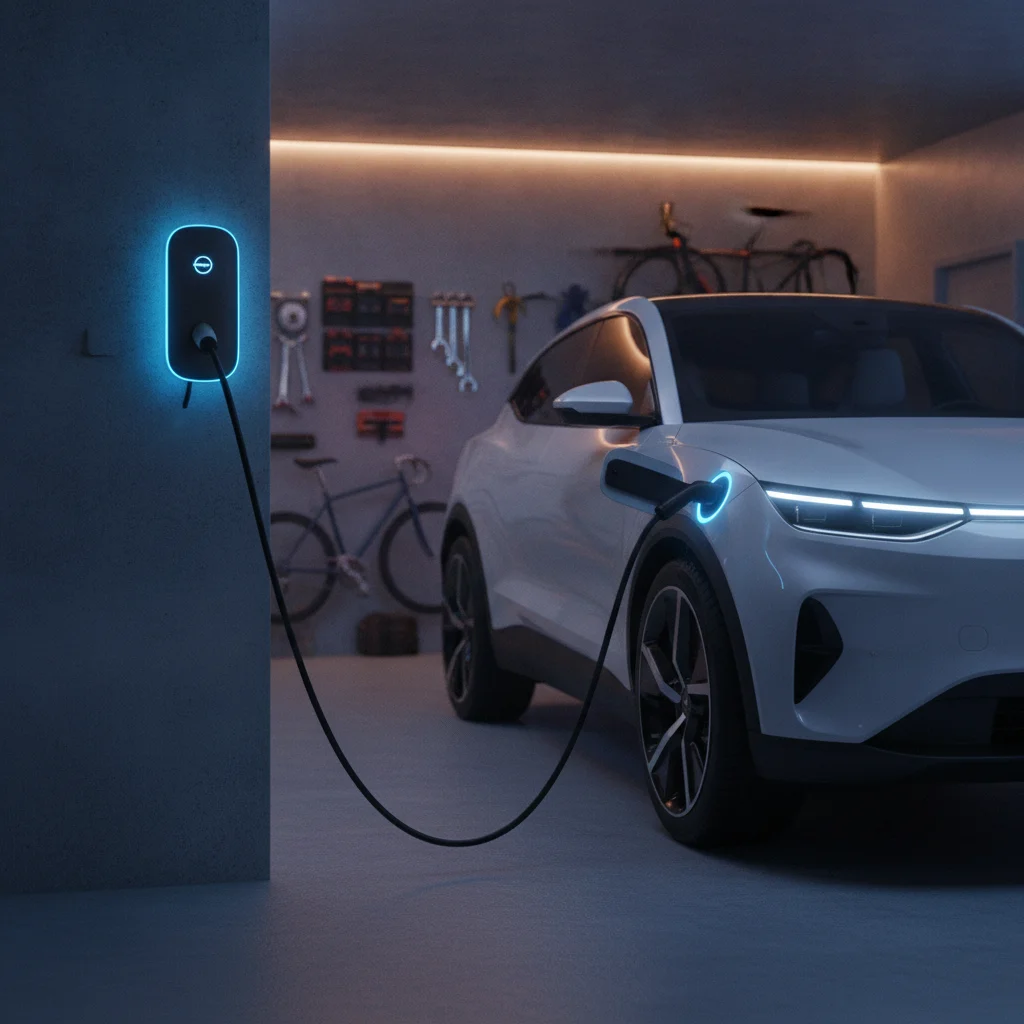
Install a Level 2 (240V) home charger if you're currently relying on a standard 120V outlet.
Level 1 charging at 120V adds approximately 3–5 miles of range per hour, which is insufficient for many commuters and forces longer charging windows that may extend into peak rate hours. A Level 2 charger adds 20–30 miles per hour, completing most daily charges within a 2–4 hour window comfortably inside the off-peak period.
Audit your utility account quarterly for rate structure changes and new EV-specific offerings.
Utility rate structures change more frequently than most customers realize. New EV rate plans are regularly introduced as utilities respond to grid modernization mandates and increasing EV penetration. An owner who selected the best plan in 2021 may be missing a substantially better option available today.
Reserve public DC fast charging for road trips and genuine range emergencies — not routine charging.
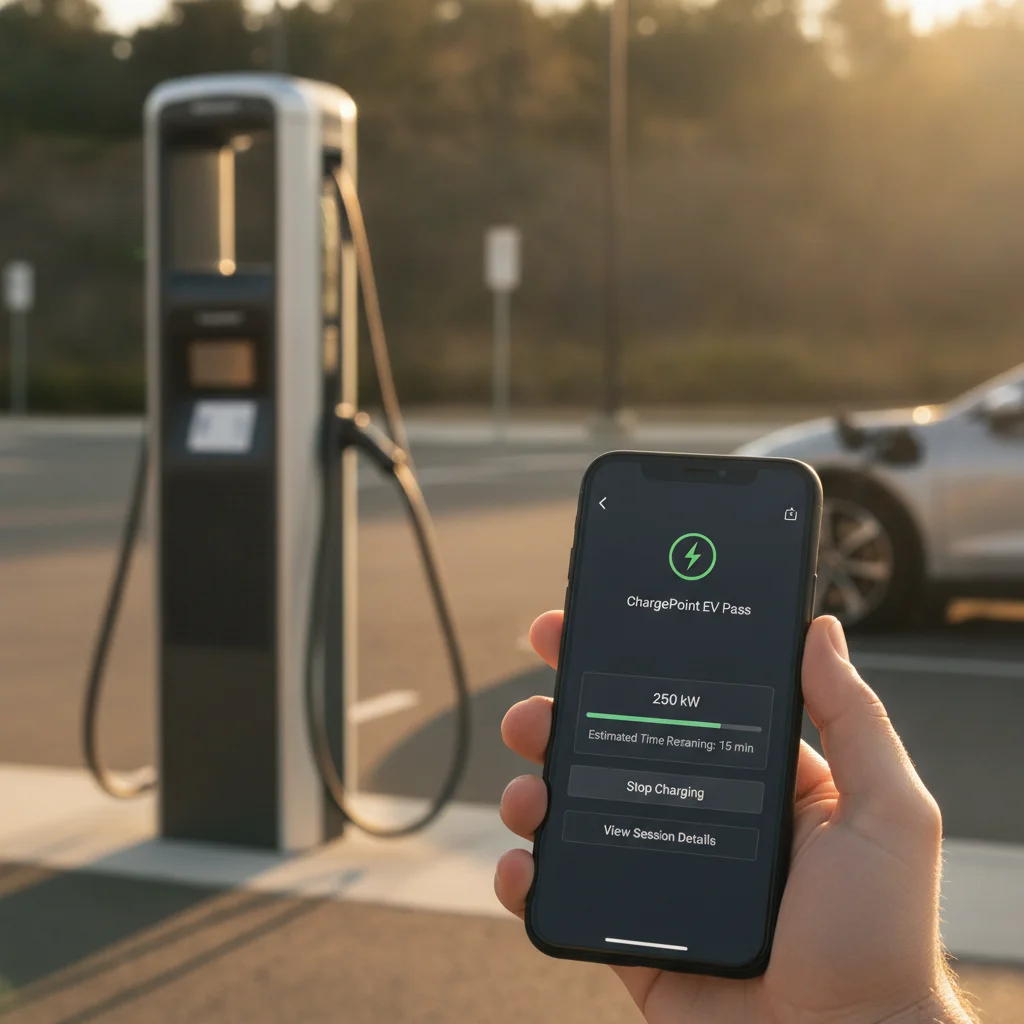
Public DC fast charging costs three to five times more per kWh than home off-peak rates in most US markets. Habitual reliance on fast chargers also subjects the battery to higher thermal stress, accelerating long-term degradation. The combination of higher per-session cost and faster battery wear makes routine fast charging one of the most expensive habits an EV owner can develop.
Enable pre-conditioning from grid power — not battery power — when temperatures are extreme.
Pre-conditioning the cabin and battery pack while still plugged in prevents range loss from thermal management during a drive. Critically, when pre-conditioning draws from grid power rather than the battery, the EV arrives at its destination with a full effective charge rather than one that's been partially depleted by climate control. Most modern EVs support this through departure time settings.
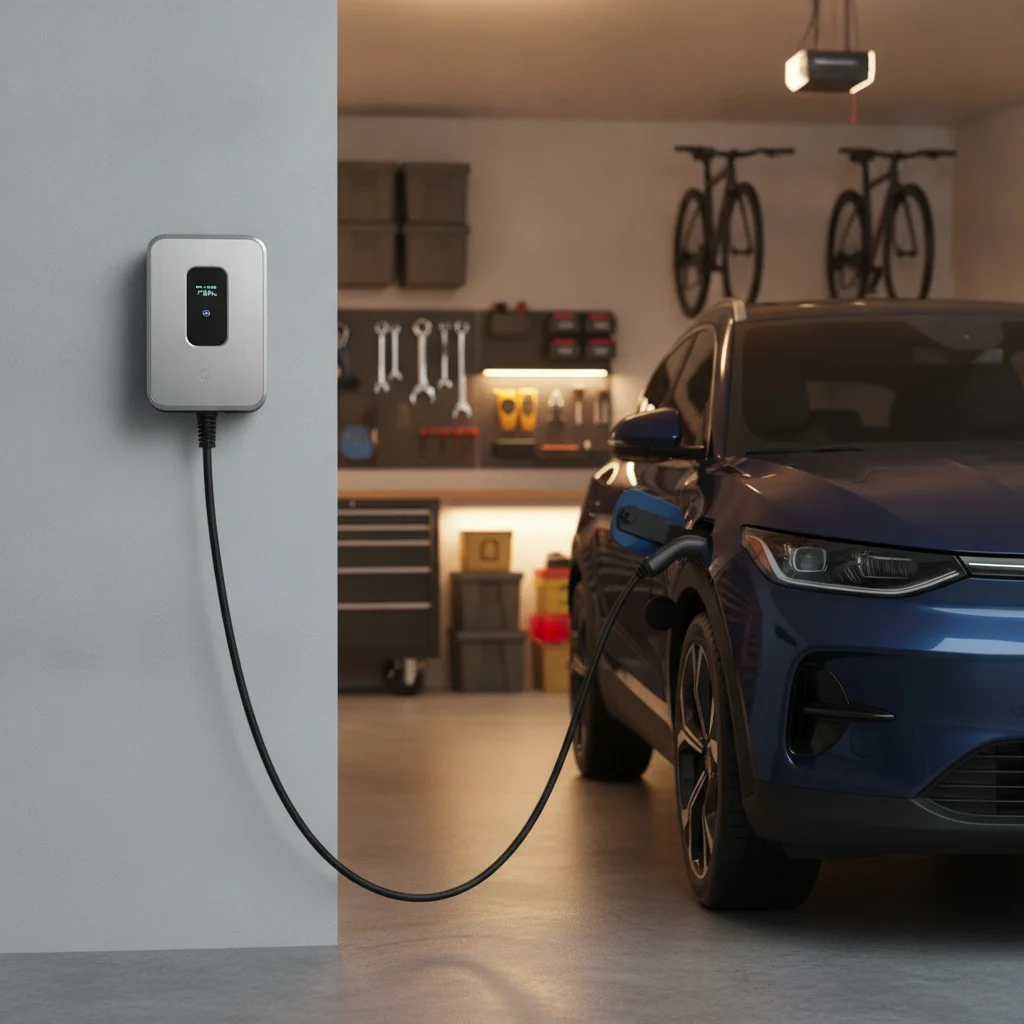
For drivers setting up home charging for the first time, the home charging setup hub covers charger selection, installation costs, and permit requirements in detail.
Understanding Time-of-Use Rate Plans
The single most impactful decision most EV owners can make is switching to a time-of-use (TOU) rate plan. Yet according to Lawrence Berkeley National Laboratory research, only about 10% of US residential electricity customers are on any form of TOU pricing — a fraction of those who would benefit from it.
~10%
US residential customers on time-of-use rates
According to Lawrence Berkeley National Laboratory research, despite widespread TOU availability, the vast majority of eligible customers have not enrolled.
30–60%
Potential savings vs. peak-hour charging
US Department of Energy estimates that EV owners who charge during off-peak hours can reduce per-kWh costs by 30–60% compared to daytime peak rates, depending on their utility and region.
$0.03–0.05
Per-kWh off-peak rate in some US markets
Utilities such as Duke Energy and Austin Energy offer overnight EV-specific rates as low as $0.03–0.05 per kWh, making home charging significantly cheaper than gasoline on a per-mile basis.
3–5x
Cost premium for public DC fast charging vs. home off-peak
Analysis of major US charging networks finds that public DCFC pricing of $0.30–0.48/kWh is three to five times higher than typical home off-peak rates of $0.07–0.18/kWh.
$700–1,000
Annual overspend from routine fast charging
EV owners who rely on public DC fast chargers for weekly top-ups rather than home charging can spend an estimated $700–1,000 more per year in charging costs, based on average US driving patterns.
Most major utilities offer at least one TOU rate specifically designed for EV owners. These EV-specific plans often come with an additional overnight "super off-peak" window — sometimes as cheap as $0.08–0.12 per kWh — that's deeper than standard off-peak rates. Examples include:
- Southern California Edison (SCE) TOU-D-PRIME: Super off-peak rates from 8 p.m. to 8 a.m. on weekdays, all weekend.
- Duke Energy (Carolinas) EV rates: Separate overnight EV meter with rates near $0.03–0.05 per kWh in off-peak windows.
- Austin Energy Value Time-of-Use: Overnight rates as low as $0.03 per kWh between 11 p.m. and 6 a.m.
TOU Plans Require Behavioral Adjustments
Switching to a time-of-use rate plan lowers charging costs only if peak-hour electricity consumption is actively managed across your household — not just for EV charging. Running a dishwasher, dryer, or air conditioner during peak windows (typically 4–9 p.m. on weekdays) can more than offset off-peak charging savings. Review your full household energy profile before switching, and consider using appliance delay-start features to shift loads into off-peak windows.
Not All EV Scheduling Features Work the Same Way
Departure time scheduling works differently across vehicle brands and even model years. Some vehicles calculate the charge start time based on your set limit and current charge level; others require manual input of a charge window. Check your vehicle's owner manual or companion app documentation to confirm exactly how your car handles scheduled charging — incorrect setup can result in charging during peak hours despite your intentions.
Apartment and Condo Residents Face Different Constraints
Off-peak home charging strategies primarily apply to owners with access to a dedicated home charger. EV owners in multi-unit dwellings who rely on shared Level 2 stations or public charging face different cost structures, since most shared chargers don't offer TOU pricing to individual users. If you're in this situation, focus on identifying nearby public stations with off-peak pricing structures or advocating with your building management for TOU-capable shared chargers.
The tradeoff with TOU plans is real: peak rates are substantially higher, so charging or running large appliances during the afternoon can offset savings. The key is behavioral discipline — shifting as much energy use as possible outside the peak window, not just EV charging.
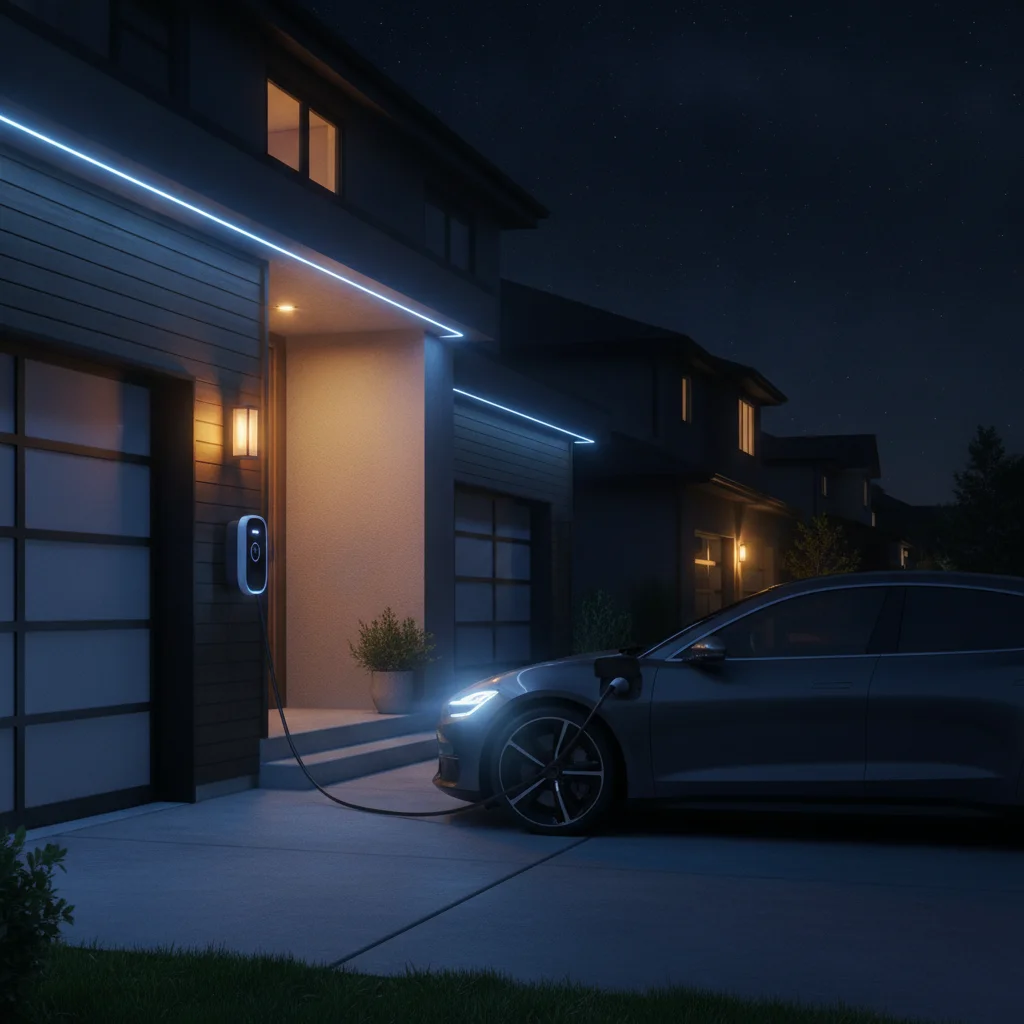
Scheduled charging during off-peak hours is the mechanical backbone of any TOU strategy. Most modern EVs allow you to set a departure time, and the car's onboard system calculates when to start charging so it finishes just before you need it — maximizing the time spent in the cheapest rate window.
Quick Wins You Can Implement Today
Not every improvement requires a new rate plan or hardware upgrade. Several high-impact changes require only a few minutes in your vehicle's settings or a quick call to your utility.
For drivers who charge occasionally at public stations, evaluating EV charging network membership plans is a worthwhile exercise — but only after home off-peak charging is fully optimized, since home charging should represent the vast majority of your energy intake.
The Battery Health Connection: Why Charge Limits Matter
Off-peak charging isn't only about rate arbitrage — it intersects directly with battery longevity, which affects the total cost of EV ownership over a five- to ten-year period.
“The battery is the engine of an electric vehicle. How you charge it — not just where or when — is one of the most consequential decisions you make as an EV owner. Keeping state of charge between 20 and 80 percent for daily use is the single best thing most people can do to extend pack life.”
— Venkat Srinivasan, Director, Argonne Collaborative Center for Energy Storage Science (ACCESS), Argonne National Laboratory
Lithium-ion batteries experience accelerated degradation at both extremes of their state of charge. Holding a battery above 90% for extended periods — especially in warmer climates — accelerates cathode stress. Regularly depleting below 10–15% increases anode strain. The practical implication: set your daily charge limit to 80%, and only push to 100% before a long trip.
This matters economically because battery replacement costs remain substantial. A replacement pack for a mid-size EV can run $10,000–$20,000 depending on make and model. Extending battery life by even two to three years through disciplined charge management is worth thousands of dollars in avoided depreciation.
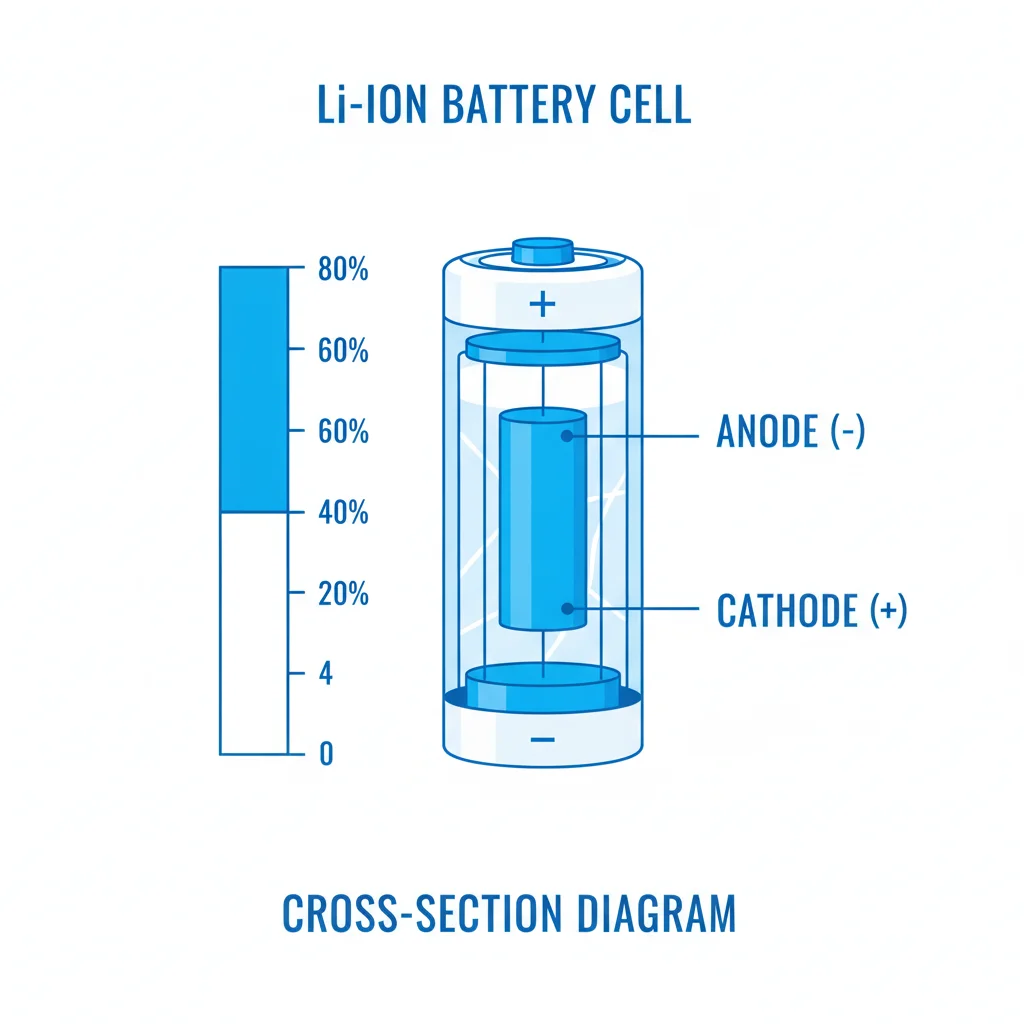
Off-peak scheduling also reduces thermal stress on the battery. Charging produces heat; finishing a charging session just before your morning departure means the battery is at operating temperature without having sat at full charge for hours in a hot garage. Many EVs automate this through "departure time" settings that combine pre-conditioning with charge scheduling.
For a broader look at efficiency strategies beyond charging, safe hypermiling techniques for EVs covers driving-side approaches that extend range and reduce how often you need to charge at all.
Public Charging: When It's Worth It and When to Avoid It
Public DC fast charging has its place — primarily for long-distance travel where home charging isn't an option. But using fast chargers as a routine substitute for home charging is one of the most reliable ways to eliminate the cost advantage of EV ownership.
The math is straightforward. A typical public DC fast charger prices at $0.30–0.48 per kWh through major networks. At-home off-peak rates in most US markets run $0.07–0.18 per kWh. For a 60 kWh charge session, that's a cost range of $18–29 at a public charger versus $4–11 at home overnight. Repeat that weekly, and the annual difference exceeds $700–1,000.
Map Your Off-Peak Window Before Your First Road Trip
Before any long-distance drive, check whether fast-charging stops along your route offer lower rates during specific hours. Some Electrify America and EVgo stations offer reduced rates during overnight windows. If your trip timing is flexible, planning charging stops between 11 p.m. and 6 a.m. can meaningfully reduce en-route charging costs even at public stations.
Set a Monthly Calendar Reminder to Check Your Bill
The first three months after switching to a TOU plan are critical for catching behavioral leakage — moments when peak-hour appliance use or charging is offsetting your off-peak savings. Set a monthly reminder to review your utility's detailed usage report, which most utilities provide online broken down by time of day. Early detection of peak consumption habits allows you to course-correct before they compound.
Public charging network membership plans can reduce per-session costs for drivers who travel frequently. Navigating public charging networks requires understanding each network's pricing structure, since some charge by the minute rather than per kWh — which can dramatically change the cost calculus depending on your vehicle's charge rate.
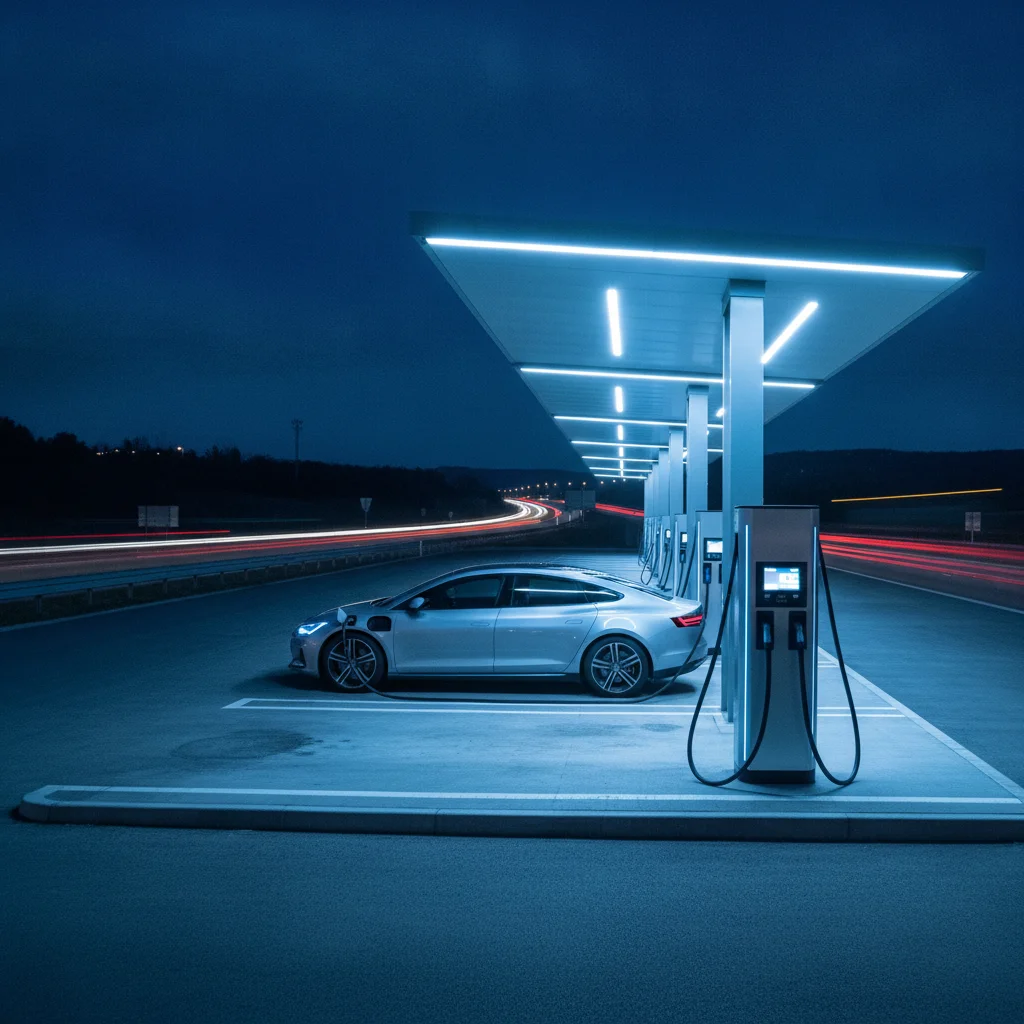
The optimal strategy for most EV owners: treat public fast charging as aviation fuel — necessary for the journey, not for daily commuting. Plan long trips with charging stops mapped in advance, use the vehicle's native navigation system where possible (it often optimizes for cost and speed simultaneously), and return to home off-peak charging as the default.
Building a Charging Routine That Compounds Savings Over Time
The highest-performing EV charging strategies share a common trait: they're systematic, not reactive. Rather than plugging in whenever convenient and hoping for low rates, effective off-peak chargers build a routine around rate windows, departure times, and charge-limit discipline.
A practical daily routine for a commuter EV owner might look like this:
- Plug in immediately upon arriving home — even if charging doesn't begin immediately. The car is connected and ready when the off-peak window opens.
- Set a departure time rather than a start time — most EVs will back-calculate the start time needed to reach your charge limit by your scheduled departure.
- Keep the daily charge limit at 80% unless a trip requires more. Override the limit the night before a long trip, not as a routine.
- Review your utility bill monthly for the first three months after switching to a TOU plan. Verify that peak consumption is minimal and that off-peak kWh usage aligns with your charging sessions.
- Reassess your rate plan annually. Utilities update TOU structures, and a plan that was optimal two years ago may have been superseded by a better option.
Map Your Off-Peak Window Before Your First Road Trip
Before any long-distance drive, check whether fast-charging stops along your route offer lower rates during specific hours. Some Electrify America and EVgo stations offer reduced rates during overnight windows. If your trip timing is flexible, planning charging stops between 11 p.m. and 6 a.m. can meaningfully reduce en-route charging costs even at public stations.
Set a Monthly Calendar Reminder to Check Your Bill
The first three months after switching to a TOU plan are critical for catching behavioral leakage — moments when peak-hour appliance use or charging is offsetting your off-peak savings. Set a monthly reminder to review your utility's detailed usage report, which most utilities provide online broken down by time of day. Early detection of peak consumption habits allows you to course-correct before they compound.
Compounding these habits over multiple years produces significant cumulative savings. An EV owner who captures off-peak rates consistently, maintains battery health through disciplined charge limits, and avoids unnecessary fast charger use can reduce total "fuel" costs to well under $0.03 per mile in low-rate markets — a figure that no gasoline vehicle can approach at current pump prices.
For a complete picture of the charging decisions that undermine these savings, charging cost mistakes that quietly drain EV savings is a useful companion read that covers the flip side of every practice outlined here.
All claims are backed by peer-reviewed research. Sources on request.