Key Takeaways
Why EV Charging Costs Are So Easy to Misunderstand
When new EV owners first calculate their expected fuel savings, they often reach for the simplest math: the national average electricity price divided by their car's rated efficiency. That single number is seductive in its clarity—and almost always wrong in practice.
Charging costs are shaped by a web of variables: the type of charger used, the time of day, the utility's rate structure, network session fees, idle fees, and even ambient temperature. Without understanding these factors, many owners discover their actual monthly charging bill is meaningfully higher—or in some cases lower—than they anticipated.
The myths below aren't fringe beliefs. They appear in mainstream EV forums, YouTube reviews, and even some dealer sales pitches. Each one can have a real dollar impact on your annual cost of ownership. See how they stack up against the evidence.
Myth
Charging an EV is always cheaper than fueling a gas car, no matter where or how you charge.
Fact
Home charging is usually cheaper than gas, but public DC fast charging can cost as much per mile as—or more than—gasoline in many regions.
This is the myth that catches the most new owners off guard. The savings are real when charging at home overnight, especially on a time-of-use rate plan. But the moment you shift to public DC fast charging as your primary source, the economics can flip. Electrify America's non-member rate of $0.48/kWh, applied to a vehicle getting 3.5 miles per kWh, produces a per-mile cost of about 13.7 cents. A gas car getting 32 miles per gallon at $3.50/gallon costs 10.9 cents per mile. The EV is more expensive in that comparison.
Frequent road-trippers who rely heavily on paid fast chargers should model their actual charging mix—not just assume the national average residential rate applies to everything they do. The most common EV charging cost mistakes include exactly this: defaulting to fast charging when slower, cheaper options are available.
Myth
Electricity rates are roughly the same everywhere, so my neighbor's EV charging cost applies to me.
Fact
Residential electricity rates in the U.S. range from about 10 cents per kWh in Louisiana to over 40 cents per kWh in Hawaii—a fourfold difference that drastically changes the EV value proposition.
According to the U.S. Energy Information Administration, the national average residential electricity rate in 2024 is approximately 16 cents per kWh—but that number obscures enormous geographic variation. An EV owner in Idaho charging at 10 cents per kWh pays roughly $3.80 to add 100 miles of range. An owner in California at 30 cents per kWh pays $11.40 for the same 100 miles.
This variation also affects whether time-of-use rate plans make sense. In low-rate states, the off-peak discount may not justify the behavioral change of scheduling overnight charging. In high-rate states like California or New York, the difference between peak and off-peak rates can be 20–25 cents per kWh—a difference that adds up to hundreds of dollars annually for a typical commuter. Before purchasing an EV, check your utility's current rate schedule and any available EV-specific tariffs.
Myth
DC fast charging is essentially free or negligible in cost because it's so much faster than Level 2.
Fact
DC fast charging is the most expensive per-kWh charging option available and, when used regularly, can significantly erode or eliminate fuel-cost savings over home charging.
Speed and cost are independent variables. A DC fast charger delivers energy quickly, but the price per kWh at public DCFC stations is typically 2–4 times higher than home electricity rates. The convenience premium is real, and for occasional long-distance trips it's entirely justified. The problem arises when drivers use fast charging habitually—for daily top-ups or short-range errands—because a Level 2 home charger or workplace charger would accomplish the same result at a fraction of the cost.
Some confusion stems from the early EV era, when several automakers offered unlimited free Supercharging or free fast-charging credits as purchase incentives. Those programs have been largely scaled back or eliminated, and new buyers who assume free fast charging is standard are in for a surprise at their first paid session.
Also worth noting: frequent DC fast charging accelerates battery degradation over time compared to regular Level 2 charging, though the effect is modest under normal use. Most automakers recommend limiting DCFC to travel situations rather than daily charging. Explore the public charging networks options and pricing tiers to understand when a membership plan offsets the premium rate.
Myth
The posted per-kWh price at a public charger is what I'll actually pay.
Fact
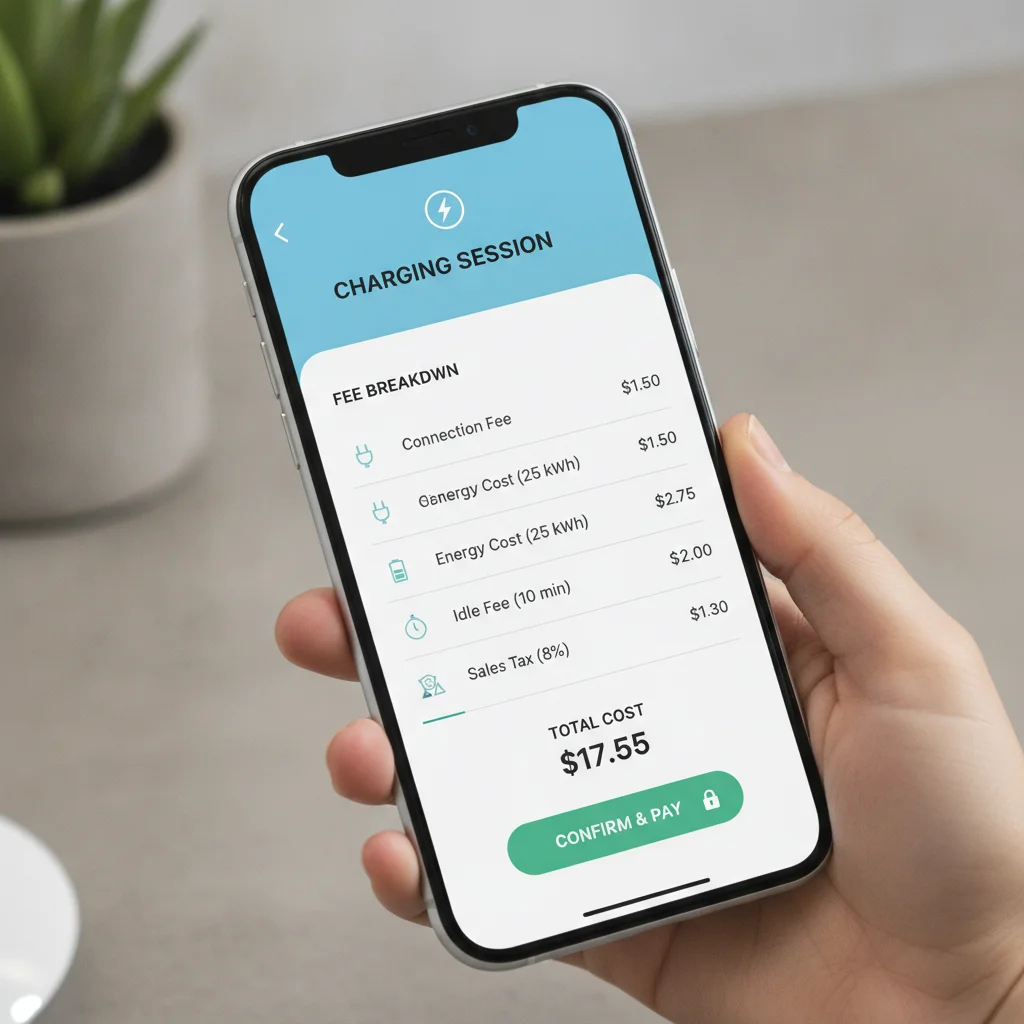
Session fees, idle fees, and parking surcharges routinely add $1–$5 or more to the final bill beyond the displayed energy rate.
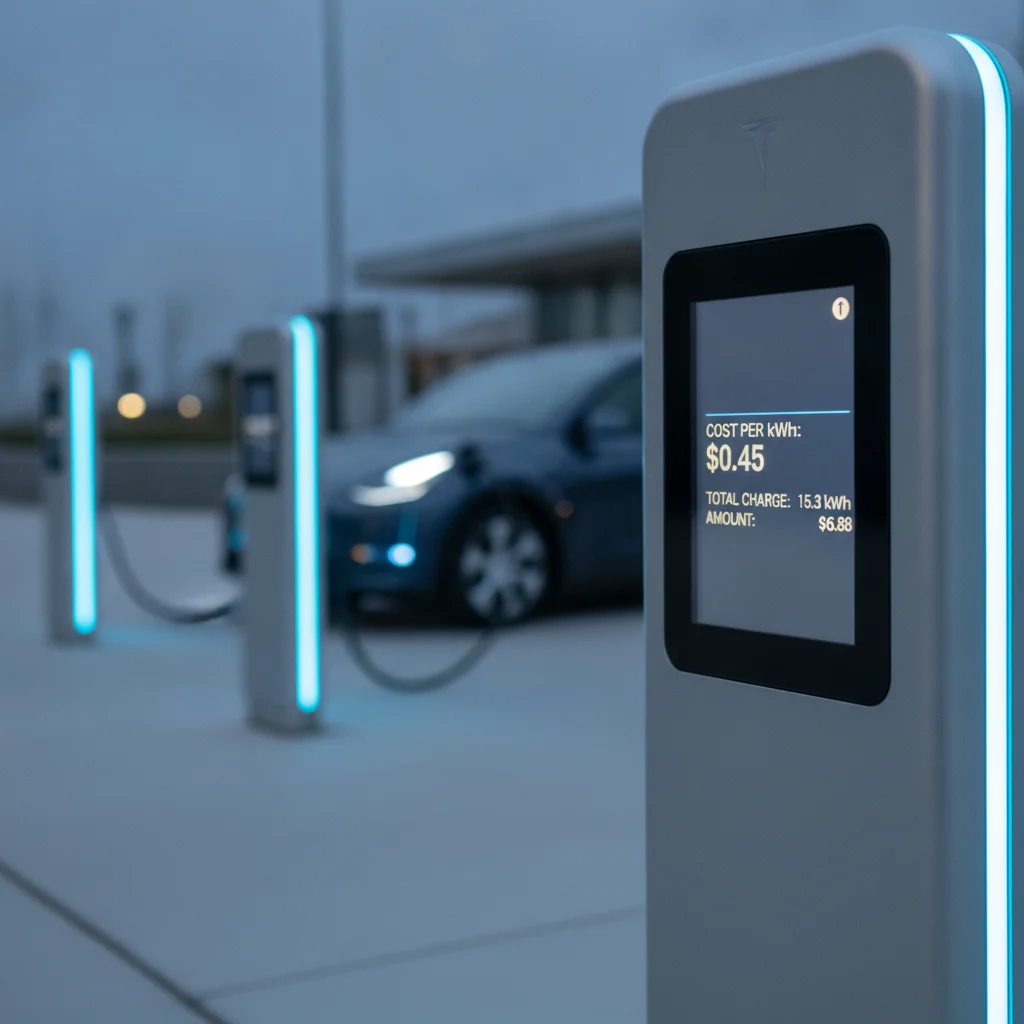
Public charging networks are not required to present all-in pricing on the charger display, and many don't. A session may display a rate of $0.35/kWh—which looks reasonable—while also charging a $1.50 connection fee per session. If you only add 10 kWh (about 35 miles on an efficient vehicle), that connection fee alone adds 15 cents per kWh to your effective rate, raising it to $0.50/kWh.
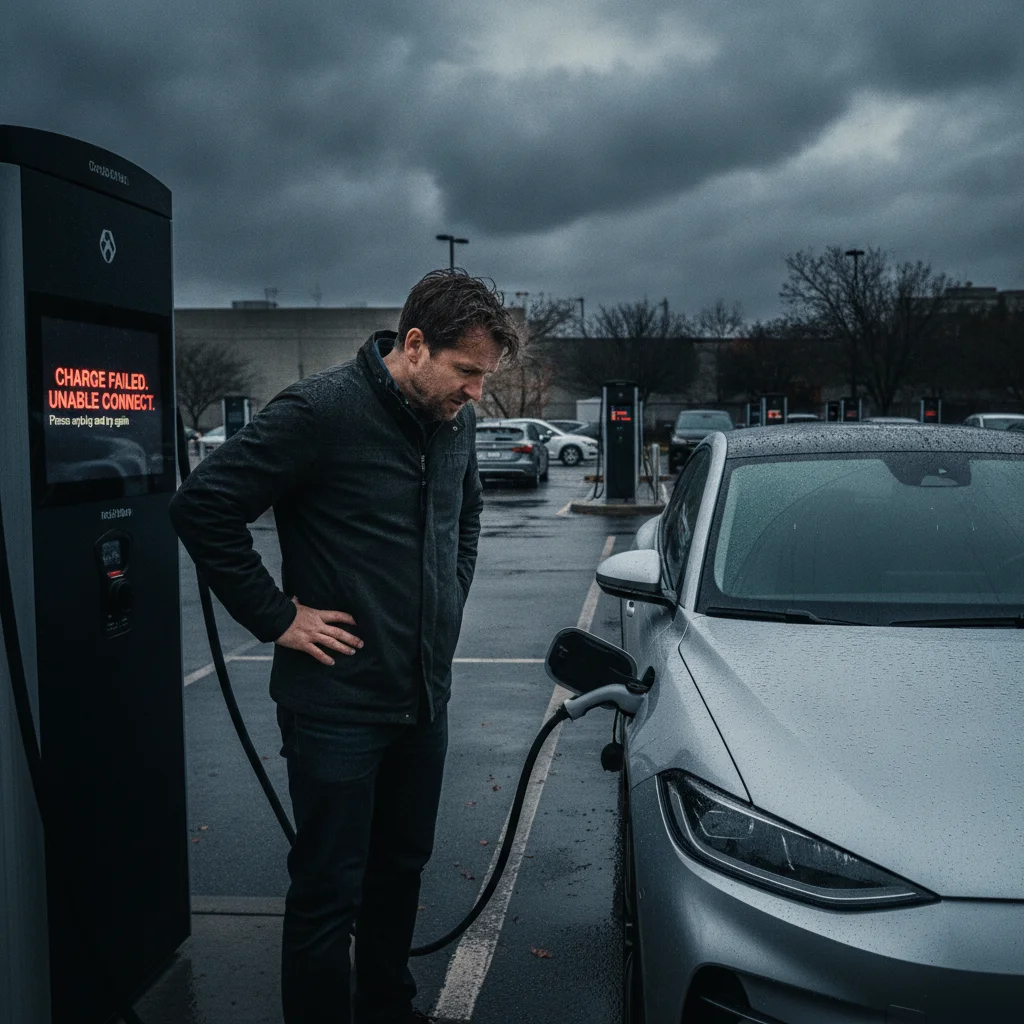
Idle fees are an equally overlooked cost driver. If you're inside a restaurant while your car sits fully charged at a busy station, many networks begin charging by the minute—typically $0.40–$1.00/minute—after a short grace period. A 15-minute overstay can add $6–$15 to your session total. These fees are described in the app terms but not always prominently displayed at the charger.
Demand charges are another hidden cost that some business and utility customers encounter when high-power charging triggers peak demand thresholds on their electric bill. Always review your charging app's full fee schedule—not just the headline rate—before starting a session.
Myth
Free charging offered by automakers or dealerships has no real cost attached to it.
Fact
Complimentary charging perks are often bundled into the vehicle's purchase price, restricted to specific networks, capped in total kWh or years, and may not transfer to subsequent owners.
Automaker-provided charging credits are a marketing tool, not a pure gift. When an automaker offers "3 years of free Electrify America charging" with a vehicle purchase, that perk is factored into the overall transaction. In some cases, you could negotiate a lower purchase price by declining the charging bundle—though in practice this is rarely offered explicitly.
More practically, these perks come with usage caps (often limited to a set number of kWh per session or a maximum session count per year), network restrictions (usable only on specific charging networks), and expiration terms that may not align with your actual driving patterns. Some perks are also non-transferable, meaning they expire if you sell the vehicle before the promotional period ends.
Workplace and retail destination chargers that are genuinely free at the point of use are a different matter—those represent real savings. But automaker trial offers, dealership "free charging for life" claims, and network promotional credits all require careful reading of the fine print. Our full breakdown of what's actually free and what comes with strings examines these offers in detail.
Myth
Charging to 100% every day is fine and maximizes the range you're paying for.
Fact
Daily charging to 100% accelerates lithium-ion battery degradation; most automakers recommend a daily charge limit of 80% for longevity.
This myth has a real financial consequence: battery replacement or degradation-related range loss is one of the most significant potential long-term costs of EV ownership. Lithium-ion cells experience accelerated capacity fade when held at very high or very low states of charge for extended periods. Charging to 80% and keeping the battery between 20% and 80% for daily use is the recommendation in the owner's manuals of vehicles from Ford, GM, Hyundai, Tesla, and most other major EV manufacturers.
Charging to 100% is appropriate before a long trip where you need maximum range—not as a daily habit. Similarly, letting the battery sit near 0% for extended periods stresses the chemistry from the other direction. Modern battery management systems offer some protection, but they're not a substitute for smart charging habits.
The practical implication: if you're paying for electricity to charge to 100% every night and your battery degrades faster as a result, you're paying more now and potentially facing higher costs later. This topic intersects with the broader EV maintenance myths that cost owners real money around battery care that many owners don't discover until it's too late.
Myth
Switching to an EV time-of-use rate plan always saves money compared to a standard flat rate.
Fact
TOU plans save money only if you consistently charge during off-peak hours; peak-hour charging on a TOU plan can cost more than a standard flat rate.
Time-of-use rate plans are genuinely powerful tools for reducing EV charging costs—but they require behavioral discipline. Most TOU plans for EV owners offer deep discounts between 9 p.m. and 6 a.m. or midnight and 7 a.m., with peak rates during afternoon and evening hours that can be 3–5 times higher than the off-peak rate.
An owner who reliably schedules overnight charging captures the full benefit. An owner who occasionally forgets to schedule, charges at 5 p.m. after a long day, or tops up during a peak window at a home charger can end up paying more than they would on a standard flat rate—especially in high-rate states where peak TOU rates can exceed $0.50/kWh.
Before enrolling in a TOU plan, audit your typical charging behavior honestly. If your schedule doesn't permit consistent overnight charging—shift workers, irregular hours, frequent evening departures—a flat rate may actually be more economical. Your utility's rate comparison tool, or a billing simulator, can run the numbers against your actual usage patterns. The Home Charging Setup hub covers how to evaluate rate plans alongside charger installation decisions.
Myth
All EV charging networks charge the same way, so pricing is easy to compare across providers.
Fact
Networks use inconsistent pricing models—per kWh, per minute, or hybrid structures—making direct cost comparisons difficult and sometimes misleading.
There is no standardized pricing model across the U.S. public charging industry. Some networks charge by energy delivered (per kWh), which is the most transparent method and the one increasingly mandated by state law. Others charge by time (per minute), which disadvantages vehicles with slower charge acceptance rates. Some use a hybrid model: a lower per-minute rate combined with a per-kWh fee.
A driver comparing a $0.30/kWh rate on one network to a $0.18/minute rate on another can't make a straightforward comparison without knowing their vehicle's actual charge acceptance rate at that specific station. A vehicle charging at 150 kW pays the per-minute rate very efficiently; a vehicle limited to 50 kW at the same station pays a dramatically higher effective per-kWh rate.
This is one of the key friction points documented in myths about public EV charging that keep people from going electric. Approximately 30 states now require per-kWh billing at public chargers, but the rest permit per-minute pricing, creating a fragmented landscape that even experienced EV owners find difficult to navigate. The Public Charging Networks hub provides updated pricing structures by network to help with direct comparisons.
The Real Cost Structure of EV Charging
To cut through the myths, it helps to understand the actual fee structures you'll encounter across charging scenarios.
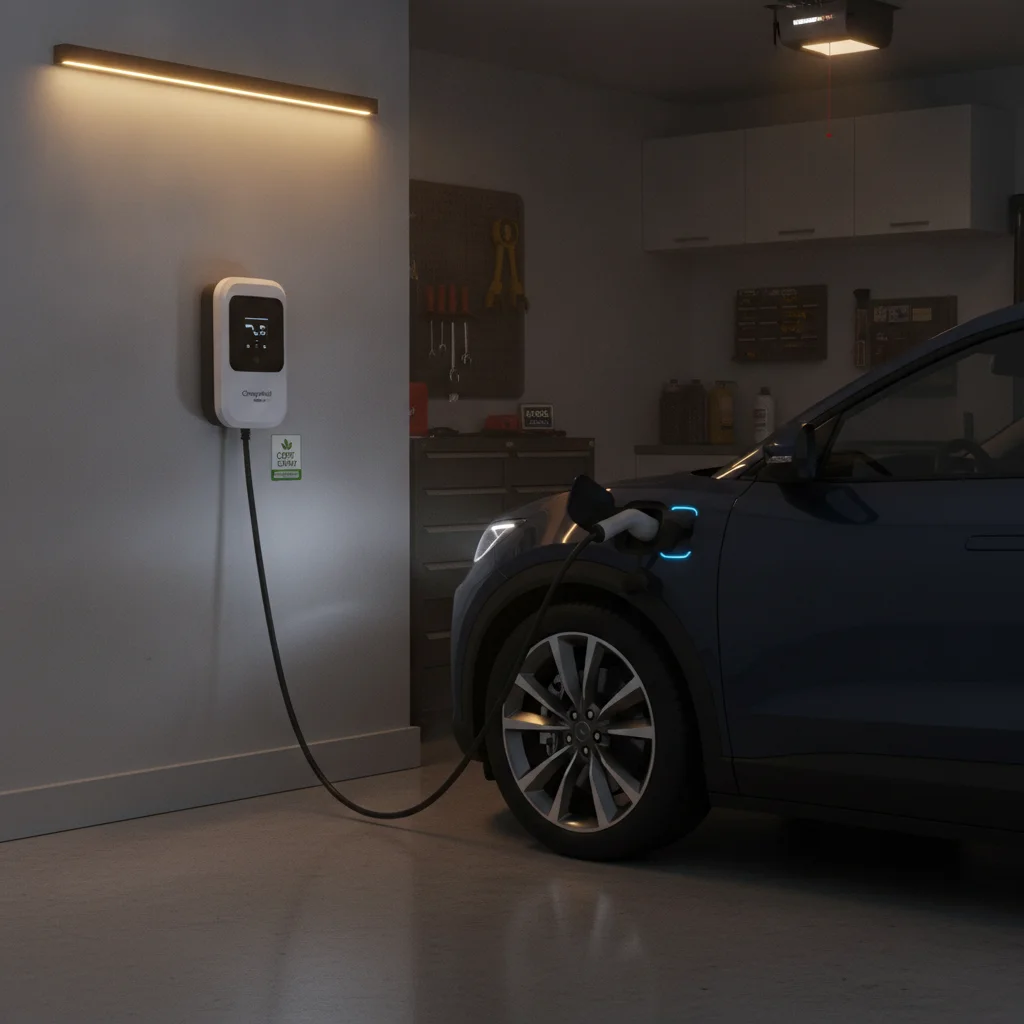
Home Charging: Your Cheapest Option—With Caveats
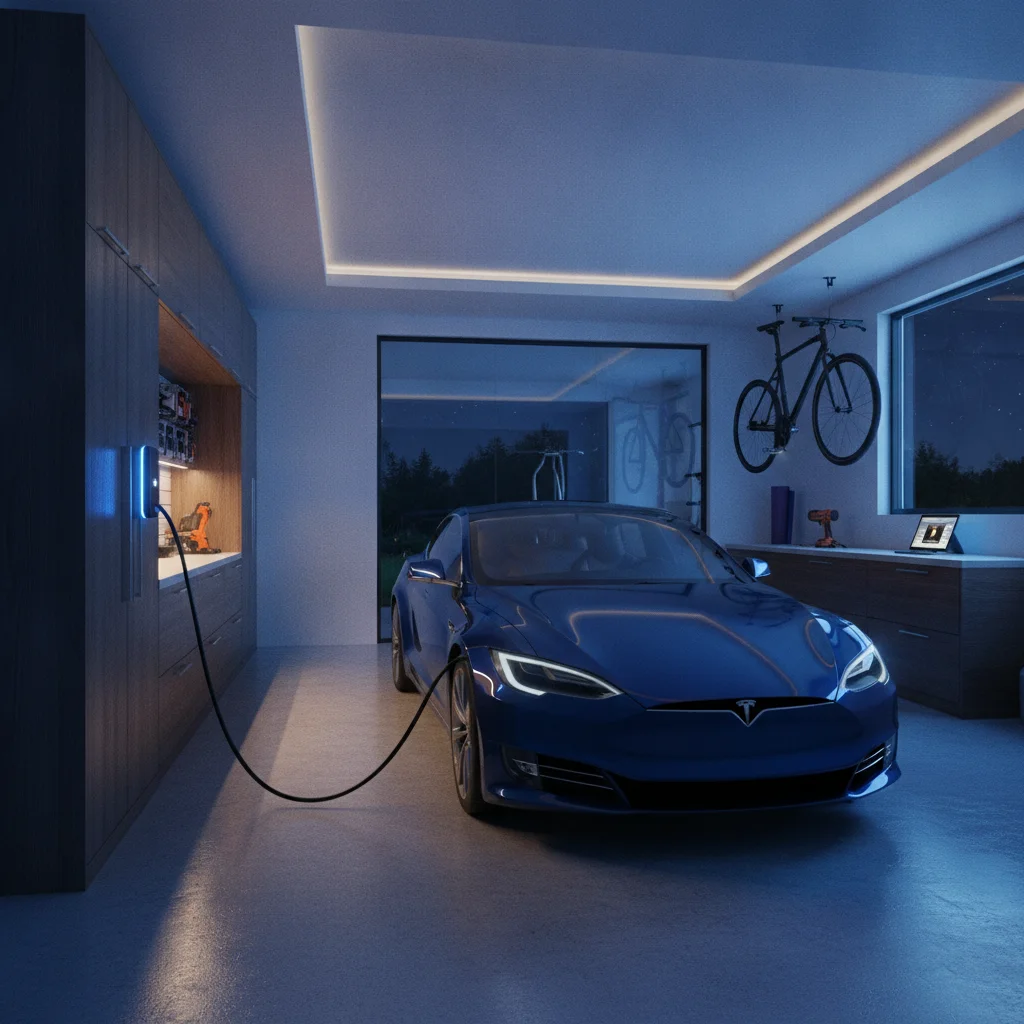
For the majority of EV owners, home charging using a Level 2 charger (240V) is the most economical option. The U.S. Energy Information Administration pegs the national average residential electricity rate at around 16 cents per kWh as of 2024. A vehicle averaging 3.5 miles per kWh would cost roughly $0.046 per mile to run at that rate—significantly below the per-mile fuel cost of a 30-mpg gas car at $3.50/gallon.
But that average masks enormous regional variation. In California, Hawaii, and parts of the Northeast, residential rates regularly exceed 30–35 cents per kWh, which can push EV charging costs close to—or occasionally past—equivalent gas costs for efficient hybrid vehicles. Enrolling in a time-of-use (TOU) rate plan can cut those costs substantially. Pacific Gas & Electric's EV2-A rate, for example, drops to around 15–18 cents per kWh during overnight off-peak hours, compared to 45+ cents during peak afternoon windows. Scheduling your charge for 11 p.m. rather than 6 p.m. is one of the highest-leverage decisions you can make as an EV owner.
For a deeper look at optimizing your home setup, the Home Charging Setup hub covers charger selection, installation costs, and rate plan strategies in detail. You should also read about common myths about home EV charging that frequently mislead new owners.
16¢
U.S. average residential electricity rate per kWh
According to the U.S. Energy Information Administration's 2024 data, the national average masks a range from ~10¢ in low-cost states to 40¢+ in Hawaii.
$0.48/kWh
Electrify America non-member DCFC rate (2024)
At this rate, a vehicle averaging 3.5 miles per kWh pays roughly 13.7 cents per mile—comparable to or exceeding some gasoline vehicles.
~30 states
States requiring per-kWh billing at public chargers
The remaining states permit per-minute billing, which can significantly disadvantage EV models with lower charge acceptance rates.
80%
Recommended daily charge limit for battery longevity
Ford, GM, Hyundai, Tesla, and most major automakers recommend a daily charge ceiling of 80% to minimize long-term battery degradation.
2–4x
Cost premium of DCFC vs. home Level 2 charging
Analysis of major network pricing versus average residential rates shows public fast charging costs between two and four times more per kWh than overnight home charging.
Public DC Fast Charging: Convenient but Costly
DC fast charging (DCFC) stations—the kind that can add 100+ miles of range in 20–30 minutes—are priced at a significant premium over home electricity. Electrify America, one of the largest public networks, charges non-subscribers around $0.48 per kWh as of mid-2024. At that rate, a vehicle drawing 3.5 miles per kWh costs roughly $0.137 per mile to run—nearly three times the home-charging equivalent and approaching the per-mile cost of a 30-mpg car at $3.50/gallon.
Some networks still charge by the minute rather than by the kilowatt-hour, which penalizes vehicles with slower onboard charge acceptance rates. A 150-kW station charging a vehicle that only accepts 50 kW will bill you for time at 150-kW speed while delivering a fraction of that energy. Networks operating in states that have passed per-kWh billing legislation—currently around 30 states—are required to use energy-based pricing, which is fairer to consumers.
The Public Charging Networks hub provides a current comparison of major network pricing structures and how membership plans can reduce per-session costs. If you're new to public stations, also review the most common mistakes first-time public charger users make before your first session.
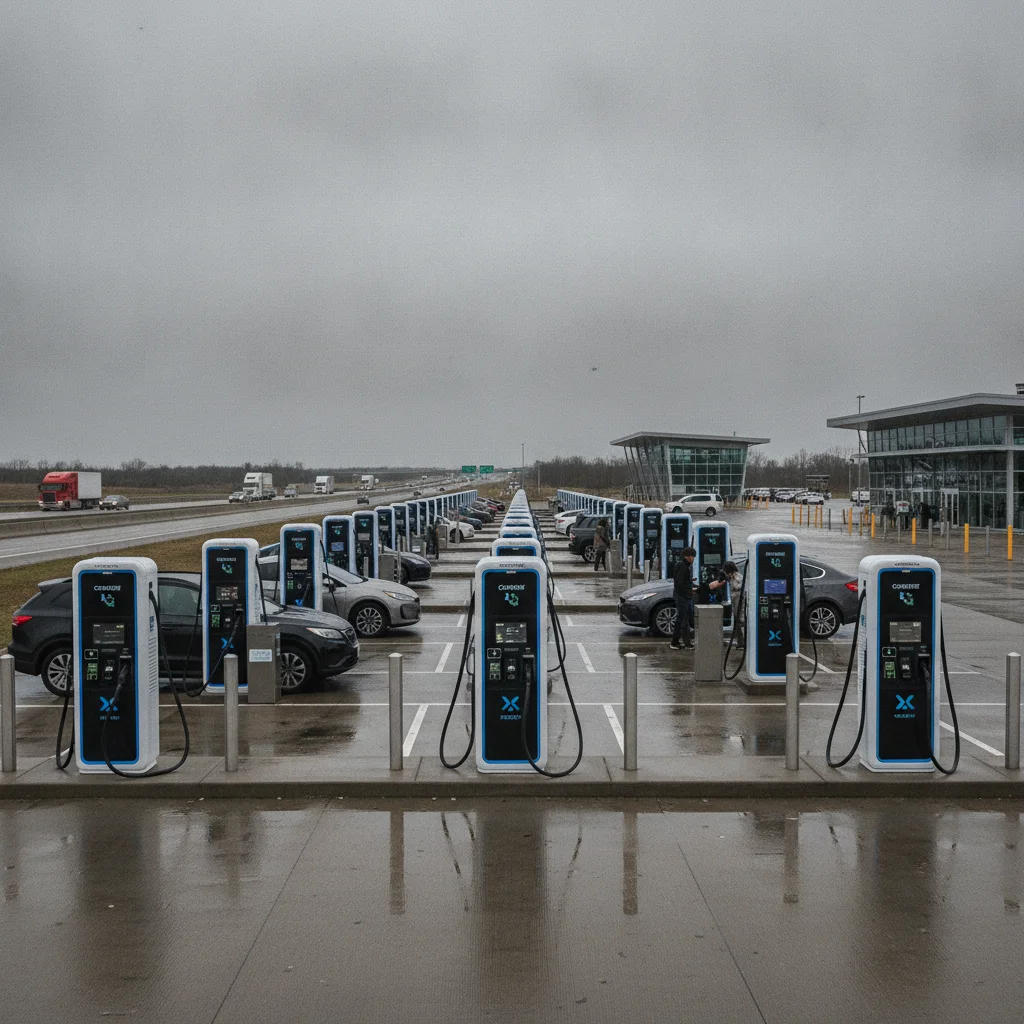
Hidden Fees That Inflate Your Bill
Beyond the headline per-kWh rate, public charging sessions can accumulate several additional charges:
- Session or connection fees: A flat charge (typically $1–$2) applied per charging session regardless of energy delivered.
- Idle fees: Charged per minute after your vehicle reaches full charge and you haven't unplugged. EVgo charges $0.40/minute; ChargePoint's idle fees vary by station owner but are common.
- Parking surcharges: Some stations located in paid parking structures bill separately for parking time.
- Network membership tiers: Monthly subscription fees that unlock lower per-kWh rates—worthwhile only if you fast-charge frequently enough to offset the fee.
These fees are a primary reason why charging cost mistakes quietly drain EV savings for owners who don't track their actual per-session total. Always check the full cost breakdown in a charging network's app before plugging in. And be especially aware of demand charges that can appear on some utility bills when high-power charging triggers peak demand thresholds.
Free Charging: Reading the Fine Print
Free or subsidized charging offers are a genuine perk of EV ownership—but they're rarely as straightforward as they sound. Several automakers have offered complimentary fast-charging credits as a purchase incentive, and workplace or retail chargers are often genuinely free at the point of use.
Automaker Free-Charging Offers Expire—Plan Accordingly
Complimentary charging credits from automakers typically expire after 2–3 years, after a set number of sessions, or when the vehicle changes hands. Owners who factor these perks into long-term cost projections and then lose them face a sudden increase in monthly charging expenses. Calculate your charging costs with and without the perk so you're not caught off guard when it ends.
Idle Fees Can Accumulate Quickly at Busy Stations
Most major charging networks begin applying idle fees of $0.40–$1.00 per minute once your vehicle reaches full charge at a public station. A 20-minute overstay at a busy urban station can add $8–$20 to your session cost. Always set an alert in your charging app to notify you when charging is complete, and return promptly during peak hours.
The full picture of what's actually free versus what comes with strings attached is covered in depth in our analysis of free EV charging—what's actually free and what comes with strings. The short version: read every offer's terms before factoring it into your ownership cost projections.
It's also worth noting that "free" workplace or destination charging is typically Level 2, meaning it adds 10–25 miles of range per hour. For a commuter who plugs in for an 8-hour workday, that can represent a genuine, meaningful fuel subsidy. For an owner who occasionally stops at a hotel charger for 45 minutes and adds 8 miles, the practical value is minimal.
How Charging Costs Fit Into the Bigger EV Ownership Picture
Charging is only one component of EV total cost of ownership. Maintenance costs, insurance premiums, depreciation, and financing all play into the full financial picture—and each carries its own set of misconceptions.
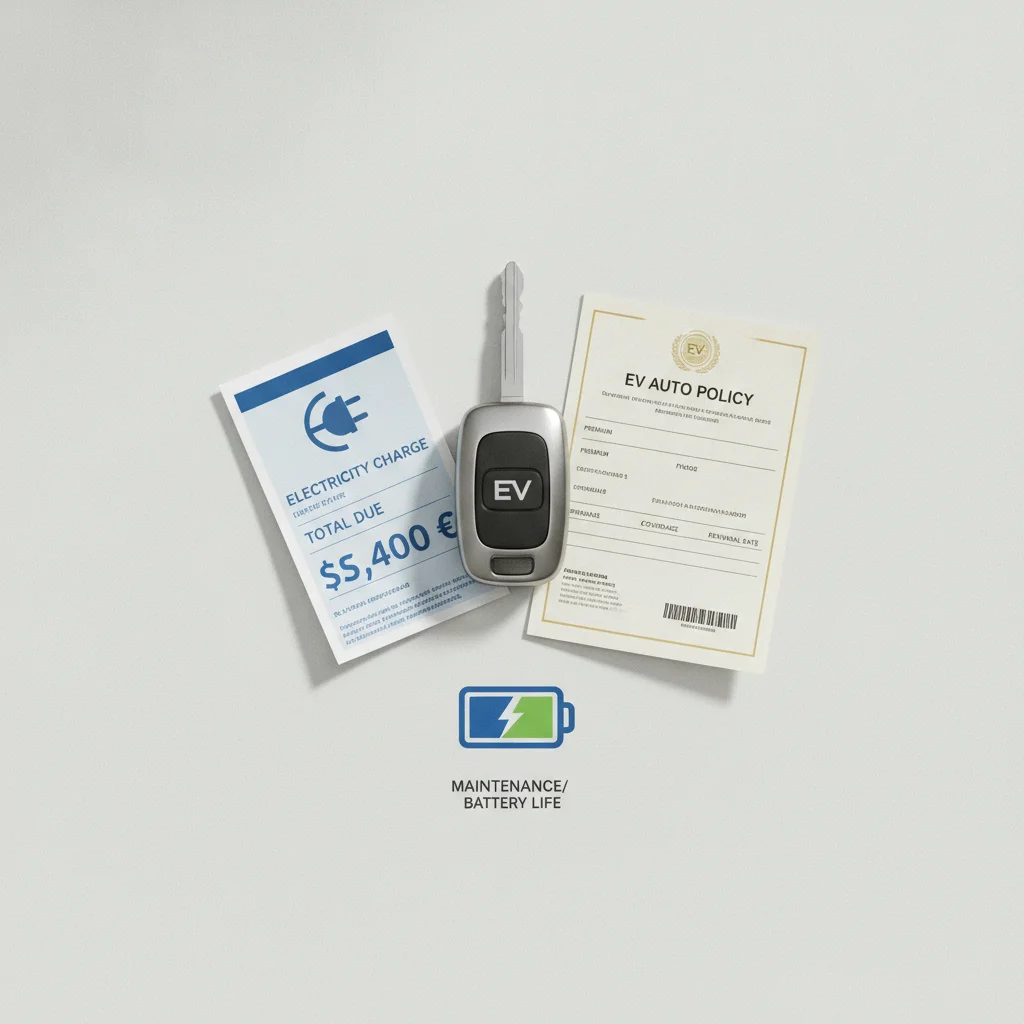
On the maintenance side, EVs do have lower routine service costs than internal combustion vehicles, but they're not zero-cost. The EV maintenance myths that are costing owners time and money piece documents where owners are getting surprised by tire wear, brake fluid service, and software-related repair costs.
Insurance costs are another area where assumptions frequently diverge from reality. Higher vehicle values, expensive repair parts, and specialized labor can push EV premiums above equivalent ICE vehicles. Read about EV insurance myths that are costing owners real money to avoid overpaying or being underinsured.
And if you purchased your EV with a federal tax credit in mind, be sure you understand the actual eligibility rules. The EV tax credit myths that are costing buyers real money article clarifies income limits, vehicle price caps, and the point-of-sale credit mechanism that many buyers still misunderstand.
Don't Skip a TOU Rate Plan Analysis
Enrolling in a time-of-use electricity rate plan without auditing your actual charging schedule can backfire. Peak-hour rates on TOU plans in high-cost states can exceed $0.50/kWh—more expensive than a standard flat rate. Before switching, run your typical monthly usage against both rate structures using your utility's online calculator or billing simulator. A well-matched TOU plan can save $300–$600 annually; a poorly matched one can cost you more than a standard rate.
For a comprehensive overview of EV ownership realities before you even take delivery, the common EV myths that confuse first-time buyers piece is worth bookmarking. It covers battery longevity, range anxiety, and charging-in-rain fears that continue to circulate despite strong evidence to the contrary.
The core takeaway across all of these: EVs can deliver meaningful long-term savings, but only for owners who understand the actual cost structure rather than relying on simplified assumptions. The math tends to favor EV ownership most strongly for drivers who charge primarily at home, take advantage of off-peak rate plans, and use public fast charging strategically rather than habitually.
All claims are backed by peer-reviewed research. Sources on request.