Key Takeaways
Why Home Charging Myths Persist
The transition from filling a gas tank to plugging in at home is genuinely unfamiliar territory for first-time EV owners. That unfamiliarity creates a vacuum, and misinformation rushes in to fill it — from online forums, well-meaning neighbors, and automotive media that sometimes sensationalizes edge cases. The result is a collection of fears and misconceptions that cause real harm: people delay buying an EV, skip the home charger installation, or charge in ways that unnecessarily stress the battery.
This article tackles the most persistent home charging myths head-on, with evidence drawn from manufacturer guidance, Department of Energy data, and industry installation standards. If you're weighing the Level 1 vs. Level 2 decision, or just want to know whether your nightly charging habit is wrecking your battery, you're in the right place.
And if your concerns extend beyond the driveway, the myths around public charging infrastructure are just as widespread — see myths about public EV charging for a companion fact-check.
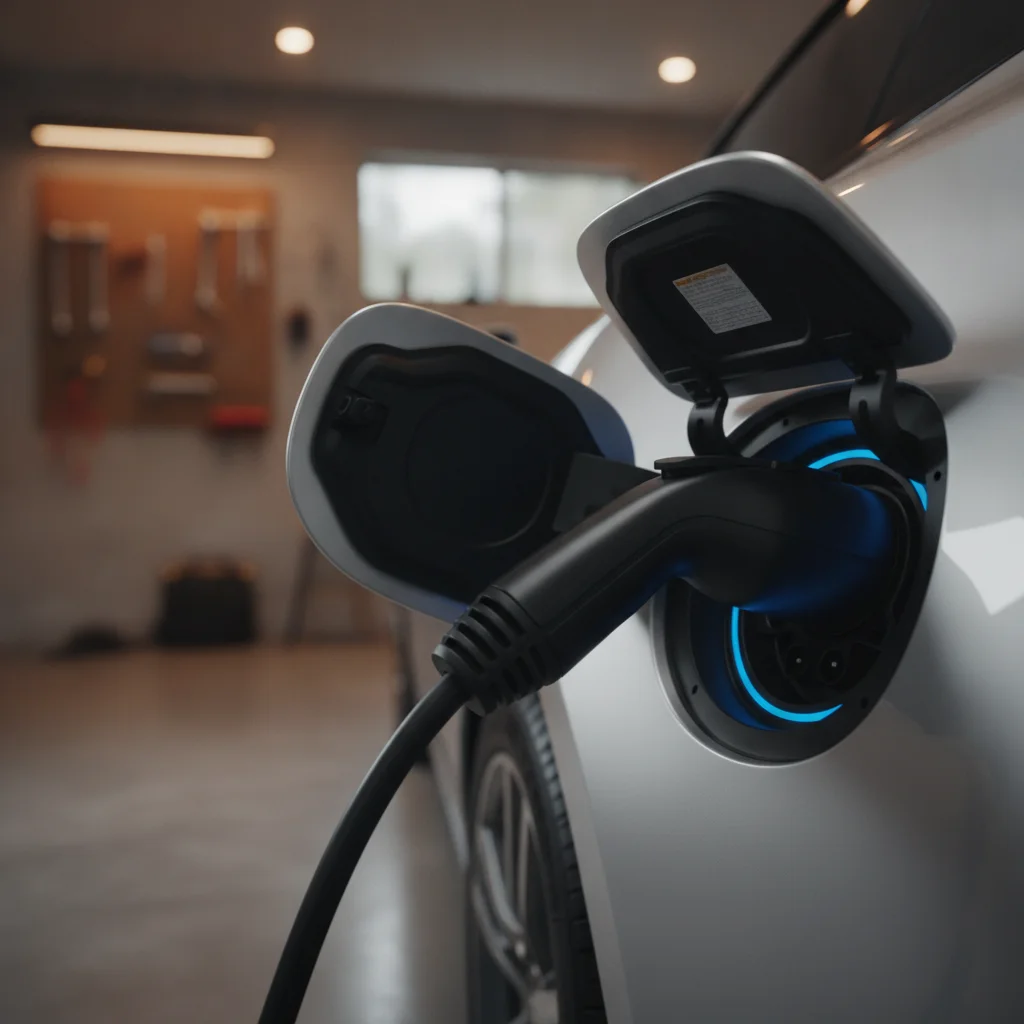
The Myths, Examined
Below are the most common misconceptions new EV owners encounter about charging at home. Each one is paired with what the evidence actually shows — and why the distinction matters for your wallet, your safety, and your battery's long-term health.
Myth
Charging an EV at home is a serious fire hazard that puts my house at risk.
Fact
Home EV charging, when installed to code with listed equipment, carries no meaningful elevated fire risk compared to other high-draw household appliances.
This fear gets amplified every time a dramatic EV fire appears in the news — but the data doesn't support the idea that home charging is uniquely dangerous. The National Fire Protection Association (NFPA) and the U.S. Fire Administration note that most EV charging fires involve damaged equipment, improper DIY wiring, or the use of uncertified chargers. A properly installed, UL-listed Level 1 or Level 2 EVSE unit on a dedicated, correctly sized circuit presents risk comparable to a clothes dryer or an electric range.
The key words are properly installed. Using an extension cord with a Level 1 charger, overloading an existing outlet, or using uncertified third-party hardware introduces real risk — not from EVs specifically, but from standard electrical overload hazards that apply to any high-draw device. Follow code, hire a licensed electrician for Level 2 installation, and the fire risk talking point largely evaporates.
Myth
Level 1 charging (a regular 120V outlet) is too slow to be useful for any real-world driver.
Fact
Level 1 charging covers the average American's daily driving needs entirely, with no hardware upgrade required.
The Federal Highway Administration's National Household Travel Survey consistently shows the average U.S. driver travels roughly 37 miles per day. A Level 1 charger adds 3–5 miles of range per hour. Plug in when you get home at 6 p.m. and by midnight you've recovered 18–30 miles; by morning, 40–60 miles. For average daily use, Level 1 is not a compromise — it's genuinely sufficient.
Where Level 1 falls short is for drivers with long commutes (say, 80+ miles per day), multiple drivers sharing one car, or anyone who habitually arrives home with a nearly depleted battery. In those scenarios, Level 2's speed advantage is real and worth the installation cost. But defaulting to Level 2 as the only viable option for home charging is a myth — millions of EV owners charge exclusively on 120V with zero issues.
See charging cost myths that trip up new EV owners for context on how Level 1 and Level 2 costs actually compare over time.
Myth
Installing a Level 2 home charger requires a full electrical panel upgrade and costs thousands of dollars.
Fact
Most homes built after the 1990s can support a Level 2 charger with only a dedicated 240V circuit addition, typically costing $400–$1,200 installed.
The panel upgrade fear is one of the most consequential myths because it causes real sticker shock before owners even get a quote. In practice, a licensed electrician assesses your panel's available capacity before recommending anything. The majority of homes with a 200-amp service panel — standard since the 1990s — have sufficient headroom for a 40-amp EV circuit without touching the panel itself.
According to data from multiple installer networks and DOE-affiliated surveys, the median Level 2 EVSE installation cost (including the charger unit and labor) ranges from roughly $800 to $2,000. Factor in the federal 30C tax credit (30% of equipment and installation costs, up to $1,000 for residential), and many homeowners bring their out-of-pocket cost well under $1,000. Older homes with 100-amp panels or heavily loaded electrical systems may need upgrades — but that's the exception, not the rule, and it's something your electrician can identify in a quick assessment.
[in_content_images:2]Myth
Charging your EV to 100% every night is the right way to keep it ready and maximize battery life.
Fact
Most EV manufacturers explicitly recommend daily charging to 80% to preserve long-term battery capacity.
This myth is a carryover from gasoline habits — fill the tank before bed, start the day full. Lithium-ion batteries don't work that way. Holding a lithium cell at or near 100% state of charge for extended periods accelerates chemical degradation, particularly at the cathode. Tesla, GM, Ford, Hyundai, and virtually every other major EV manufacturer include in-app or on-screen guidance recommending an 80% daily charge limit, reserving 100% for road trips or days when you genuinely need max range.
The practical upshot: set your car's charge limit to 80% in the app or settings menu and leave it there for daily driving. You'll rarely notice the missing 20% of range on a normal day, and over three to five years the battery capacity retention difference between routine 100% charging and 80% charging can be measurable — potentially affecting resale value and long-term ownership satisfaction.
This connects directly to broader battery care guidance covered in EV maintenance myths that are costing owners time and money.
Myth
Home EV charging will cause my electricity bill to skyrocket.
Fact
Home charging typically adds $30–$60 per month to an electricity bill for an average driver, often less than what they were spending on gasoline.
The electricity bill fear is understandable — you're adding a new high-draw appliance and you don't have an intuitive feel for kilowatt-hours the way you do for gallons of gasoline. But the math is straightforward. The average EV consumes about 3–4 miles of range per kWh. At the U.S. average residential electricity rate of roughly $0.16/kWh (2024 EIA data), driving 37 miles per day costs about $1.50–$2.00 in electricity. That's roughly $45–$60 per month.
Compare that to the same 37 miles driven in a 30 MPG gasoline vehicle at $3.50/gallon: about $1.60 per day, or $48 per month — and that's without accounting for oil changes or other fuel-system maintenance. If you have access to time-of-use (TOU) rates from your utility and charge during off-peak hours (often midnight to 6 a.m.), you can drop that electricity cost by 30–50% in many markets, pushing home charging costs well below gasoline equivalents.
Myth
You can charge an EV outdoors in rain or wet conditions and it's dangerous.
Fact
EV charging equipment is specifically designed and rated for outdoor use, including rain exposure — it's safe when using properly rated hardware.
High-voltage electricity and water sound like a terrifying combination, and instinctively people assume outdoor charging in rain must be hazardous. In reality, Level 2 EVSE units intended for outdoor installation carry an IP (Ingress Protection) rating — typically IP54 or higher — meaning they're tested and certified to resist water spray from all directions. The charge port on your vehicle is similarly sealed and rated for weather exposure.
The charging connector itself uses a safety interlock: high-voltage current only flows after a secure connection between the vehicle and charger is confirmed and the pilot signal handshake is completed. Disconnect or expose the connector to rain mid-plug and the system shuts off automatically. This is true of both the SAE J1772 standard (used across most non-Tesla vehicles) and Tesla's own connector design.
The one legitimate caution: don't use a standard household extension cord outdoors in wet conditions with a Level 1 charger. Use only outdoor-rated extension cords if absolutely necessary, and recognize that Level 1 outdoor setups are a temporary workaround, not a permanent solution.
Myth
A home charger from any brand will work with my EV.
Fact
Connector compatibility matters — most non-Tesla EVs use J1772 for Level 2, while Tesla vehicles use their own connector (now NACS), and adapters bridge the gap.
As of 2024–2025, the North American EV charging landscape is mid-transition. The SAE J1772 connector has been the standard for Level 1 and Level 2 home charging for most non-Tesla vehicles for over a decade. Tesla historically used its proprietary connector at home and on the Supercharger network, but has now transitioned to the SAE NACS (North American Charging Standard) connector — and Ford, GM, Rivian, Nissan, and others have announced or begun adopting NACS as well.
For home charging purposes, this means: if you have a Tesla and purchase a J1772-based Level 2 EVSE, you'll need a J1772-to-NACS adapter (Tesla provides one). If you have a Ford or GM vehicle with a NACS port and purchase a J1772 EVSE, you'll need a NACS-to-J1772 adapter. Most quality EVSE manufacturers are now selling units with NACS connectors or dual-compatibility options.
The practical takeaway: check your vehicle's charge port specification before purchasing a Level 2 EVSE unit, and confirm the unit comes with or supports the necessary adapter. This is a 10-minute research step that prevents a frustrating compatibility surprise on delivery day.
80%
EV owners who charge primarily at home
According to the U.S. Department of Energy's Alternative Fuels and Advanced Vehicle Data Center, approximately 80% of EV charging in the U.S. occurs at home.
37 miles
Average U.S. daily driving distance
The Federal Highway Administration's National Household Travel Survey reports the average American drives about 37 miles per day — well within Level 1 charging capability.
$800–$2,000
Typical Level 2 home charger installation cost
Based on DOE-affiliated installer surveys and major EVSE provider data for a standard 40-amp, 240V dedicated circuit installation including equipment.
30%
Federal tax credit for home EVSE installation
The federal 30C tax credit covers 30% of Level 2 charger equipment and installation costs, up to $1,000 for residential installations, under current IRS guidance.
$0.16/kWh
Average U.S. residential electricity rate (2024)
U.S. Energy Information Administration (EIA) 2024 data; rates vary significantly by state and time-of-use plan, with off-peak rates often 30–50% lower.
Making the Level 1 vs. Level 2 Decision
Once you strip away the myths, the Level 1 vs. Level 2 choice becomes a straightforward practical calculation. Ask yourself three questions:
- How many miles do you drive daily? The U.S. average is about 37 miles per day, according to the Federal Highway Administration. A Level 1 charger adds roughly 3–5 miles of range per hour, meaning an overnight charge of 8–10 hours yields 30–50 miles of recovery — enough for most average drivers with no upgrade required.
- Do you have occasional high-mileage days? Road trips don't depend on home charging, but if you regularly drive 80–150 miles per day for work or family, a Level 2 charger (which adds 20–30 miles per hour) gives you a full battery every morning without managing your schedule around charging windows.
- Can you time-of-use rate charging? Both Level 1 and Level 2 work with scheduled charging, but Level 2's speed gives you a shorter overnight window, which can be strategically placed in the cheapest off-peak hours. Check your utility's rate structure before assuming your bill will spike.

The federal 30C tax credit currently covers 30% of Level 2 EVSE equipment and installation costs, up to $1,000 for homeowners — making the upgrade less expensive than the sticker price suggests. Many states layer additional incentives on top. Visit the Department of Energy's Alternative Fuels Station Locator or your state energy office for current rebate programs.
Don't Use Unrated Extension Cords for Level 1 Charging
Using a standard household extension cord with your Level 1 (120V) portable charger is one of the most common and preventable home charging mistakes. Standard extension cords are not rated for the sustained current draw of EV charging and can overheat, damage the outlet, or create a fire risk. If you must extend your reach, use only a heavy-duty, outdoor-rated extension cord with a gauge appropriate for the load — and treat it as a temporary measure, not a permanent solution.
Letting Your Battery Regularly Drop Below 10%
Just as routinely charging to 100% stresses the top of the battery's range, frequently running the battery down below 10% stresses the bottom. Deep discharge cycles accelerate capacity degradation over time. Most manufacturers recommend keeping daily charging in the 20–80% band. Your car's range display and charge limit settings make this easy to manage once you establish the habit.
For a deeper look at the ongoing cost math — including how home charging compares to public fast charging for your specific situation — see Charging Costs & Savings. And if you want the full picture on what EV ownership actually costs beyond charging, EV maintenance myths covers the upkeep side of the equation.
Getting Your Home Installation Right
The single biggest variable in home charging safety and performance is installation quality. Here's the short checklist that separates a smooth setup from a headache:
- Hire a licensed electrician familiar with EV charger installation. Not all electricians have done this work — ask specifically about EVSE experience.
- Pull a permit. Many jurisdictions require one. Beyond code compliance, a permitted installation protects your homeowner's insurance claim if something ever goes wrong.
- Choose a UL-listed charger. All reputable Level 2 EVSE units carry UL or ETL certification. Don't buy uncertified hardware from unverified third-party marketplaces.
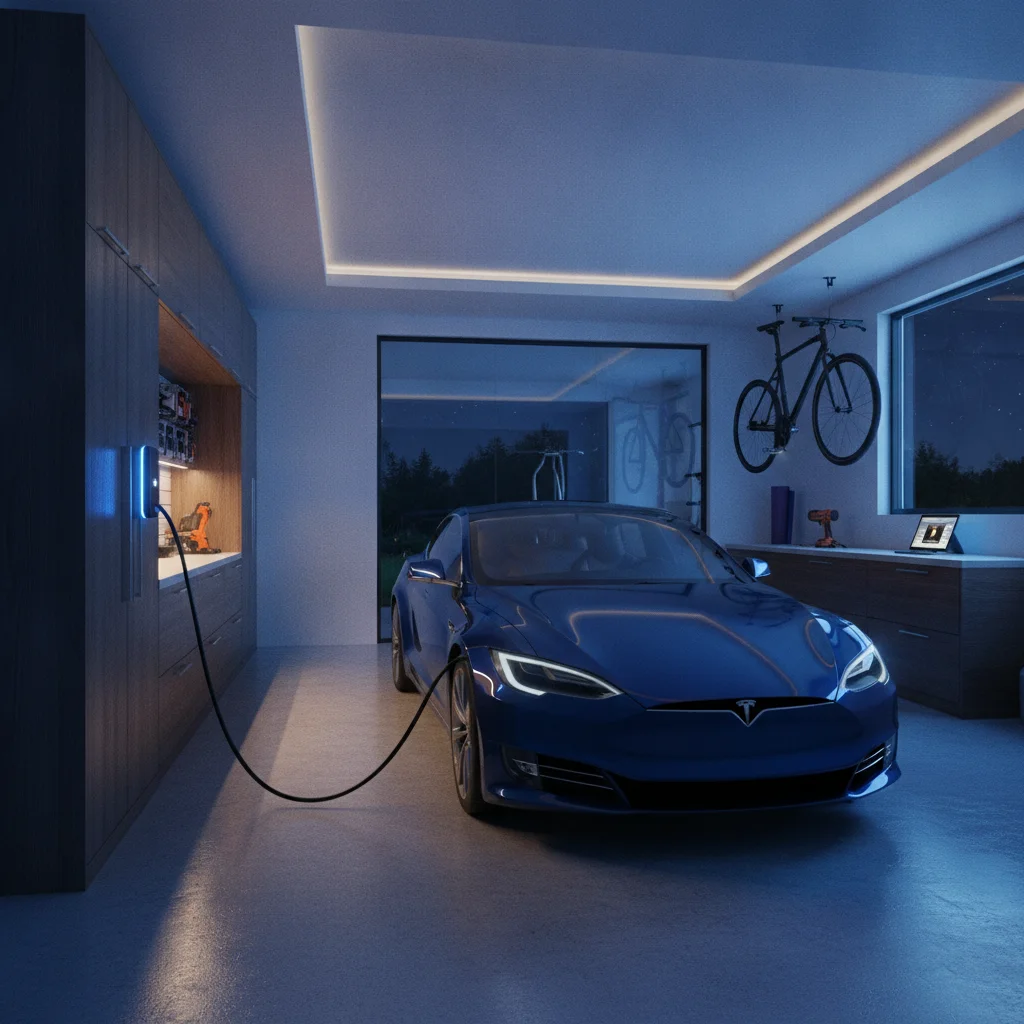
- Size the circuit correctly. A 40-amp, 240V dedicated circuit handles the vast majority of home Level 2 chargers. Your electrician will assess your panel's capacity and whether a service upgrade is needed — which, for most newer homes, it isn't.
- Consider future-proofing. If you might add a second EV or a home battery storage system later, discuss load management or a panel upgrade now rather than paying for a second service call.
Never Skip the Permit for Level 2 Installation
Pulling a permit for your Level 2 charger installation isn't bureaucratic box-ticking — it's a financial and legal protection. An unpermitted electrical installation can void your homeowner's insurance coverage for related claims and create complications when you sell the home. In many jurisdictions, inspectors verify that the circuit is correctly sized and the EVSE unit is properly grounded. The permit process typically adds minimal cost and a few days to the timeline, but the protection it provides is ongoing.
Once you're up and running, the operational habits matter as much as the hardware. Don't ignore your car's built-in charge scheduling features — virtually every modern EV lets you set a charge completion time so the car finishes charging right before you leave, maximizing the benefit of cooler overnight temperatures for battery chemistry and hitting the cheapest utility rate window.
New to EVs altogether and still sorting out the broader misconceptions? Common EV myths that confuse first-time buyers covers the full spectrum of first-time buyer confusion, from battery longevity to rain charging fears.

All claims are backed by peer-reviewed research. Sources on request.