Key Takeaways
Advanced safety tech often lowers collision premiums
Most EVs come standard with automatic emergency braking, lane-keeping assist, and other ADAS features that are associated with fewer accidents. Insurers increasingly price these in, reducing collision-related surcharges for well-equipped EV models.
Green vehicle discounts available from multiple carriers
Insurers including Farmers, Travelers, and several regional carriers offer 5–10% discounts specifically for hybrid and electric vehicle owners. These require minimal documentation and can be stacked with other discounts.
Telematics programs reward efficient EV driving habits
Smooth acceleration and regenerative braking — driving behaviors EVs naturally encourage — score well in usage-based insurance programs. EV owners who enroll in telematics can see premium reductions of 10–30% based on driving data.
Lower mechanical complexity reduces some claim types
Without a combustion engine, transmission, or exhaust system, EVs eliminate entire categories of mechanical failure claims. Fewer moving parts mean fewer opportunities for the kind of mechanical breakdowns that generate insurance claims under some policy types.
Resistance to traditional theft methods may reduce comprehensive rates
EVs cannot be hotwired through conventional means, making them largely immune to the most common vehicle theft approach. In lower-risk ZIP codes, this can translate to modestly lower comprehensive premiums.
Brand-specific policies offer real-time rate personalization
EV manufacturers like Tesla offer in-house insurance that uses real-time driving data rather than historical proxies to set rates. Safe drivers can access rates that traditional actuarial models might not offer them.
Premiums average 10–25% higher than ICE equivalents
Higher vehicle purchase prices, expensive battery packs, and complex repair requirements push EV insurance premiums above those of comparable gas-powered vehicles. The gap is widest for luxury EVs and in areas with limited EV repair infrastructure.
Battery degradation is almost never covered by insurance
Gradual capacity loss — which can significantly reduce real-world range and resale value — falls entirely outside the scope of standard auto insurance. Owners bear this risk directly unless covered by a manufacturer warranty.
Repair costs are significantly higher after collisions
EV body repairs often require sensor recalibration, high-voltage system inspections, and specialized labor that dramatically inflates repair bills compared to equivalent ICE vehicle damage. This directly elevates collision and comprehensive premiums.
Fewer certified repair shops can delay claims and inflate costs
Many body shops are not certified to work on EV high-voltage systems, which limits where insurers can direct repairs. Longer repair times and parts sourcing delays increase both claim costs and the likelihood of a rental car benefit being fully consumed.
Charging equipment and liability gaps in standard policies
Standard auto policies often don't explicitly cover home EVSE equipment damage or third-party liability during a charging event. Owners may need endorsements on both their auto and homeowners policies to close these gaps.
Higher relay-attack vulnerability affects some EV models
Certain EVs — particularly those using passive keyless entry without ultra-wideband protection — are susceptible to relay attacks that can enable theft. Insurers in high-theft areas may apply surcharges to affected models.
Policy language is less standardized than for ICE vehicles
EV-specific terms like battery coverage, charging liability, and software-related losses are handled inconsistently across insurers. Owners who don't scrutinize policy language risk discovering gaps only at claim time.
Our Verdict
EV insurance costs more upfront than covering a comparable gas-powered car, and the policy landscape is genuinely more complex — with battery coverage gaps, charging liability questions, and repair shop limitations all in play. That said, EVs open doors to discounts and telematics programs that can meaningfully close the gap, and safety technology built into most modern EVs often earns additional premium reductions. The net result depends heavily on the specific vehicle, insurer, and driver profile.
This article is most useful for prospective EV buyers who want a clear-eyed look at insurance trade-offs before committing, and for current EV owners who suspect they may be overpaying or under-covered.
Why EV Insurance Is a Different Animal
Switching from a gas-powered car to an electric vehicle changes more than your fuel bill. It also reshapes your insurance profile in ways that aren't immediately obvious — and that most dealerships won't mention during the sale. Electric vehicles carry higher average premiums than comparable internal combustion engine (ICE) vehicles, but they also introduce coverage considerations, discount opportunities, and risk factors that simply don't exist in the conventional auto insurance world.
Understanding these differences isn't just academic. Getting the wrong coverage — or paying too much for the right coverage — can cost EV owners hundreds of dollars per year. The complete picture of EV insurance involves coverage types, battery protection, and insurer selection, all of which interact in ways that reward informed shoppers.
This article breaks down the genuine advantages and real disadvantages of insuring an EV compared to a gas-powered car, drawing on industry data and real-world ownership patterns — so you can make a decision grounded in fact rather than assumption.
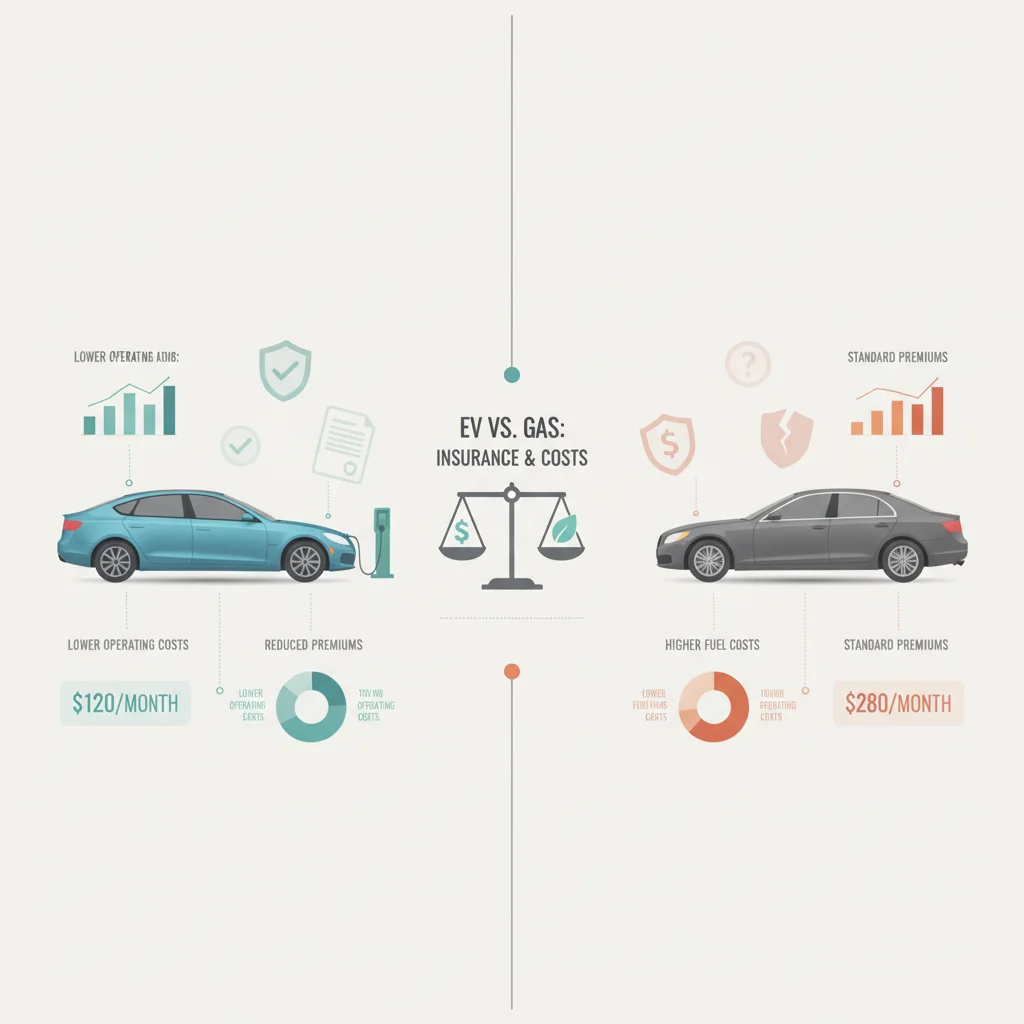
The Pros: Where EV Insurance Actually Works in Your Favor
Despite the headline-grabbing premium increases, EV insurance isn't uniformly expensive or unfavorable. Several structural features of electric vehicles translate directly into insurance advantages — if you know where to look and which insurers to approach.
Advanced safety tech often lowers collision premiums
Most EVs come standard with automatic emergency braking, lane-keeping assist, and other ADAS features that are associated with fewer accidents. Insurers increasingly price these in, reducing collision-related surcharges for well-equipped EV models.
Green vehicle discounts available from multiple carriers
Insurers including Farmers, Travelers, and several regional carriers offer 5–10% discounts specifically for hybrid and electric vehicle owners. These require minimal documentation and can be stacked with other discounts.
Telematics programs reward efficient EV driving habits
Smooth acceleration and regenerative braking — driving behaviors EVs naturally encourage — score well in usage-based insurance programs. EV owners who enroll in telematics can see premium reductions of 10–30% based on driving data.
Lower mechanical complexity reduces some claim types
Without a combustion engine, transmission, or exhaust system, EVs eliminate entire categories of mechanical failure claims. Fewer moving parts mean fewer opportunities for the kind of mechanical breakdowns that generate insurance claims under some policy types.
Resistance to traditional theft methods may reduce comprehensive rates
EVs cannot be hotwired through conventional means, making them largely immune to the most common vehicle theft approach. In lower-risk ZIP codes, this can translate to modestly lower comprehensive premiums.
Brand-specific policies offer real-time rate personalization
EV manufacturers like Tesla offer in-house insurance that uses real-time driving data rather than historical proxies to set rates. Safe drivers can access rates that traditional actuarial models might not offer them.
The safety technology argument deserves particular emphasis. Most modern EVs — from the Chevrolet Equinox EV to the Tesla Model 3 — come standard with advanced driver assistance systems (ADAS) including automatic emergency braking, lane-keeping assist, and blind-spot monitoring. These features are associated with measurably lower collision frequency, and insurers are increasingly factoring them into rate calculations. The Insurance Institute for Highway Safety (IIHS) has documented that vehicles with front crash prevention technology reduce rear-end crashes by roughly 50%.
The telematics angle is especially compelling for EV drivers. Because EVs already collect granular driving data through onboard systems, integrating a usage-based insurance (UBI) program is relatively seamless. Drivers who tend to be cautious — which EVs may encourage through regenerative braking dynamics — stand to benefit most. Our deeper look at telematics programs and EV drivers examines whether the data trade-off is worth it.
Green vehicle discounts, while not universal, are available from a meaningful subset of insurers including Farmers, Travelers, and certain regional carriers. These discounts typically run 5–10% off the base premium and require minimal documentation — often just proof of vehicle registration for an EV or hybrid. For a more exhaustive breakdown of available savings, see discounts EV owners can actually qualify for.
10–25%
Average EV premium increase over comparable ICE vehicles
Industry analyses from LexisNexis and multiple insurer disclosures consistently place EV premiums 10–25% above direct ICE comparables, with variation by segment and geography.
~50%
Reduction in rear-end crashes with front crash prevention
The Insurance Institute for Highway Safety (IIHS) found that vehicles equipped with front crash prevention technology reduce rear-end crash rates by approximately 50%.
30–50%
Share of EV value represented by the battery pack
Battery packs typically account for 30–50% of a new EV's total manufacturing cost, making them the single most consequential component in any total-loss or major damage scenario.
10–30%
Potential premium savings through telematics programs
Major insurers including Progressive and Nationwide report that top-performing telematics participants can earn discounts of 10–30% off their base premium after a monitoring period.
5–10%
Typical green vehicle discount at qualifying insurers
Carriers such as Farmers and Travelers offer green vehicle discounts in this range for verified EV and hybrid owners, applicable to the overall policy premium.
The Cons: Where EV Insurance Gets Complicated and Costly
The disadvantages of EV insurance are real, and in some cases significant. They stem from three interrelated sources: the higher cost of EV components and repairs, the relative scarcity of qualified technicians, and the evolving — sometimes inconsistent — nature of EV-specific policy language.
Premiums average 10–25% higher than ICE equivalents
Higher vehicle purchase prices, expensive battery packs, and complex repair requirements push EV insurance premiums above those of comparable gas-powered vehicles. The gap is widest for luxury EVs and in areas with limited EV repair infrastructure.
Battery degradation is almost never covered by insurance
Gradual capacity loss — which can significantly reduce real-world range and resale value — falls entirely outside the scope of standard auto insurance. Owners bear this risk directly unless covered by a manufacturer warranty.
Repair costs are significantly higher after collisions
EV body repairs often require sensor recalibration, high-voltage system inspections, and specialized labor that dramatically inflates repair bills compared to equivalent ICE vehicle damage. This directly elevates collision and comprehensive premiums.
Fewer certified repair shops can delay claims and inflate costs
Many body shops are not certified to work on EV high-voltage systems, which limits where insurers can direct repairs. Longer repair times and parts sourcing delays increase both claim costs and the likelihood of a rental car benefit being fully consumed.
Charging equipment and liability gaps in standard policies
Standard auto policies often don't explicitly cover home EVSE equipment damage or third-party liability during a charging event. Owners may need endorsements on both their auto and homeowners policies to close these gaps.
Higher relay-attack vulnerability affects some EV models
Certain EVs — particularly those using passive keyless entry without ultra-wideband protection — are susceptible to relay attacks that can enable theft. Insurers in high-theft areas may apply surcharges to affected models.
Policy language is less standardized than for ICE vehicles
EV-specific terms like battery coverage, charging liability, and software-related losses are handled inconsistently across insurers. Owners who don't scrutinize policy language risk discovering gaps only at claim time.
The repair cost issue is perhaps the most concrete driver of elevated premiums. EV body panels are often integrated with sensors and structural battery protection systems in ways that make even minor collision repairs disproportionately expensive. A rear bumper replacement on a Tesla Model Y, for example, may require recalibrating multiple cameras and sensors in addition to the physical repair — a process that can push a $1,200 gas-car repair past $4,000 on an equivalent EV.
Battery coverage creates a uniquely EV headache. Standard comprehensive and collision coverage may pay out if a battery is damaged in an accident or by a covered peril (hail, flood), but degradation-related capacity loss is almost never covered. This matters because battery packs are by far the most expensive single component in an EV — typically representing 30–50% of the vehicle's total cost. If your battery degrades to 70% capacity over eight years, no insurer will help you replace it. Some manufacturers offer separate battery warranties, but these are manufacturer obligations, not insurance products, and they have their own limitations.
The structural policy differences between EV and traditional auto coverage extend to charging equipment and liability during the charging process — areas where standard policy language frequently lags behind real-world EV ownership.
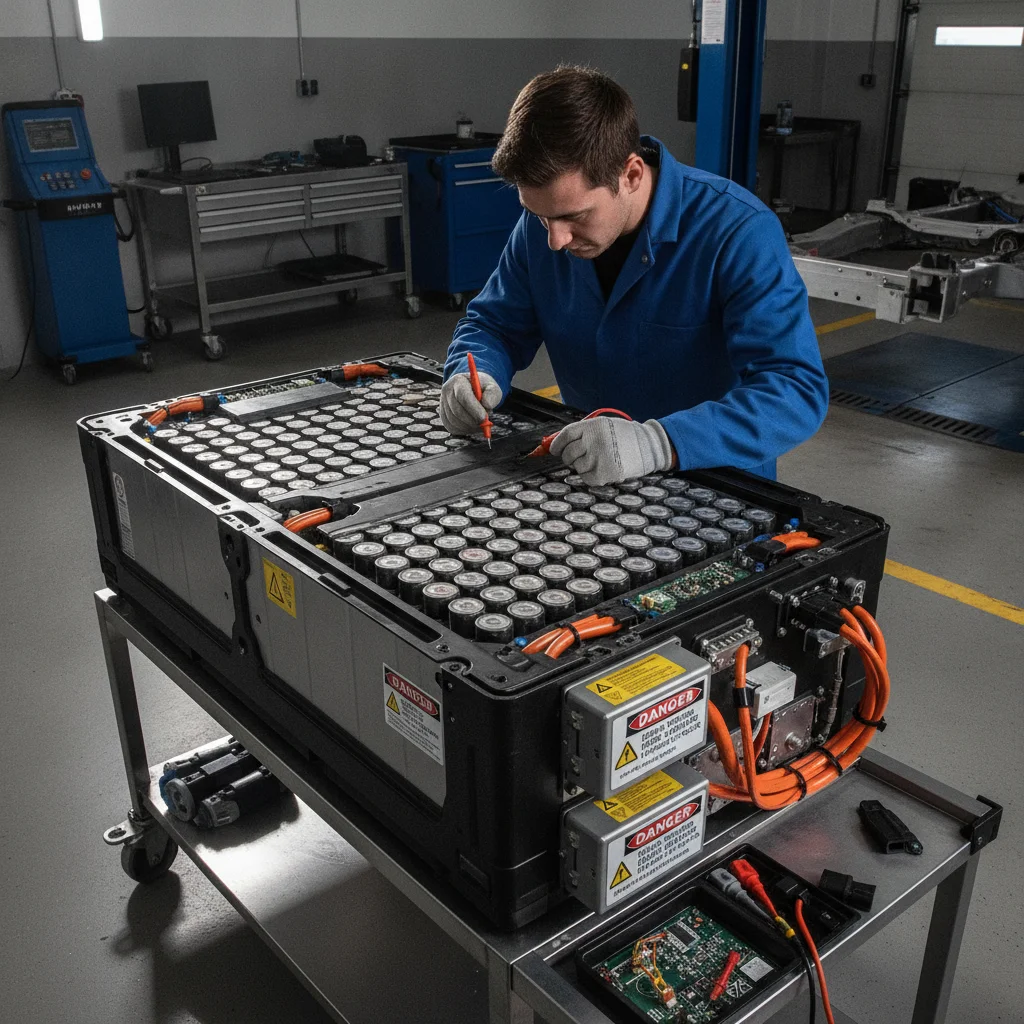
It's also worth noting that the higher sticker prices of EVs inflate comprehensive and collision premiums independently of any EV-specific risk factors. A vehicle that costs $52,000 will simply cost more to insure against total loss than a $38,000 equivalent — regardless of powertrain. This dynamic affects first-year insurance costs especially, when depreciation hasn't yet brought the vehicle's insured value closer to that of a comparable ICE car.
Battery Coverage: The Gap Most EV Owners Don't Anticipate
Among all the insurance considerations unique to EVs, battery coverage generates the most confusion and the most financial risk. The battery pack isn't just another component — it's the engine, the fuel tank, and a significant portion of the vehicle's resale value, all in one.
What 'Battery Coverage' Actually Means in Most Policies
When insurers say your battery is covered, they typically mean it's covered against damage from a collision, fire, theft, or other named perils — not against degradation or capacity loss over time. This is an important distinction. A battery that's destroyed in a flood claim will be covered; a battery that loses 25% of its range after five years will not. Always ask your insurer to clarify exactly what battery-related scenarios are included and excluded in your specific policy.
Home Charging Equipment: Check Both Policies
A Level 2 home charging station (EVSE) is typically considered a home fixture for insurance purposes, which means it may fall under your homeowners or renters policy rather than your auto policy. However, the electrical liability during a charging event — if your charger damages the vehicle or causes a fire — may fall in a gray zone between both policies. Before assuming you're covered, verify explicitly with both your auto and property insurer and request a written confirmation or endorsement if needed.
PHEVs and HEVs Generally Cost Less to Insure Than BEVs
If you're comparing insurance costs across EV types, plug-in hybrids (PHEVs) and standard hybrids (HEVs) typically insure much closer to equivalent ICE vehicles than full battery EVs (BEVs). Their smaller battery packs are less expensive to replace, and their dual-powertrain design means more repair shops can service them. For buyers on the fence between a PHEV and a BEV, the insurance cost difference is a meaningful factor in total ownership cost calculations.
Most standard auto policies treat the battery pack like any other covered component: if it's damaged in a collision or covered event (fire, theft, flood), it's covered. What they don't cover is:
- Capacity degradation — gradual loss of range over time due to charge cycles, temperature exposure, and age
- Software-related limitations — some manufacturers have remotely limited battery access; insurance won't cover resulting capacity loss
- Charging equipment damage at home — unless you have a separate homeowners or renters rider
- Battery failure due to manufacturing defect — this falls under the manufacturer's warranty, not your auto policy
Some specialty insurers, including Aviva in certain markets and a handful of newer EV-focused underwriters, are beginning to offer extended battery protection endorsements that go beyond manufacturer warranties. These remain relatively rare in the U.S. market as of 2025, but the product category is expanding.
For EV buyers weighing total ownership costs, the federal and state tax credit landscape can partially offset the higher upfront cost — and by extension, the higher insured value that drives up premiums in the first year or two of ownership.
How EV Theft Risk Factors Into Your Premium
Theft risk is one area where EVs present a genuinely mixed picture for insurers — and where conventional assumptions often don't apply. The absence of a traditional ignition cylinder, combined with digital key fob systems and over-the-air software access, means that EV theft operates on different mechanics than ICE vehicle theft.
On one hand, EVs are harder to steal through traditional methods — hotwiring simply isn't possible with a fully digital powertrain. On the other, sophisticated relay attacks on keyless entry systems have enabled theft of high-value EVs, particularly certain Tesla models, in ways that have caught both owners and insurers off guard. The full breakdown of how this affects insurance pricing is covered in detail in our EV theft and insurance analysis.
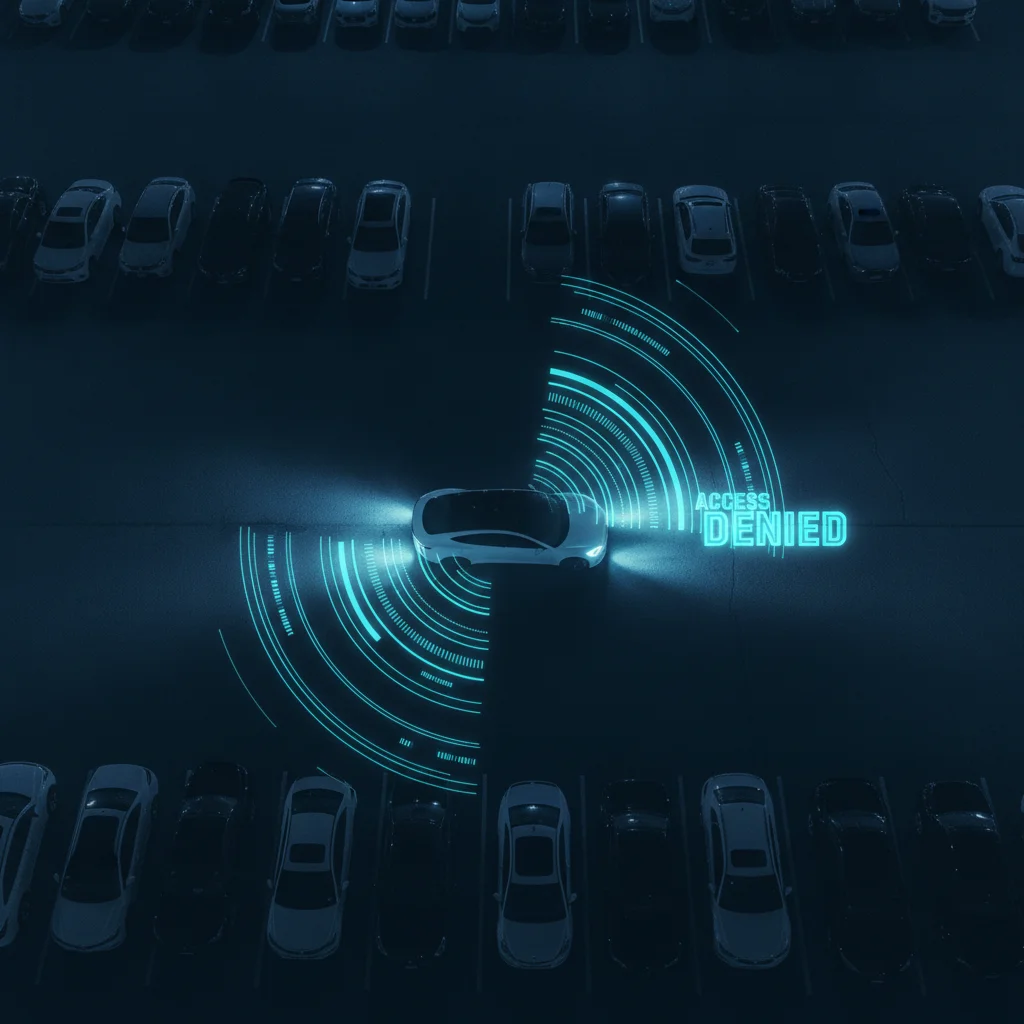
From a premium standpoint, insurers in high-theft ZIP codes may apply surcharges to EVs that are statistically more susceptible to relay attacks, while in lower-risk areas, EVs may actually attract slightly lower comprehensive premiums due to their resistance to conventional theft. The net effect varies significantly by geography — another reason why getting quotes from multiple carriers matters more for EV owners than for drivers of standard ICE vehicles.
Comparing EV Insurance Costs to Gas Cars: What the Numbers Show
Raw premium comparisons between EVs and gas cars are complicated by the fact that EVs tend to be newer, more expensive, and concentrated in premium segments. Comparing a Tesla Model 3 to a Toyota Camry isn't apples-to-apples — the Model 3 has a higher MSRP and a more expensive repair profile regardless of its powertrain.
More useful is comparing EVs to their closest ICE equivalents within the same segment. Studies and insurer data consistently show that EVs cost roughly 10–25% more to insure than direct ICE comparables, with the gap widest for luxury EVs and narrowest for mass-market models like the Chevrolet Equinox EV or Nissan Ariya.
| Vehicle Type | Avg. Annual Premium (est.) | Key Premium Driver |
|---|---|---|
| Compact ICE sedan | $1,450 | Moderate repair costs |
| Compact BEV | $1,680 | Higher repair labor, parts cost |
| Midsize ICE SUV | $1,620 | Higher vehicle value |
| Midsize BEV SUV | $1,990 | Battery exposure, repair complexity |
| Luxury BEV (e.g., Model S) | $2,800+ | High replacement value, repair scarcity |
Note: Estimates are national averages for a 35-year-old driver with a clean record. Individual rates vary significantly by state, insurer, and driving history.
The detailed breakdown of how insurers price EVs differently explains the specific underwriting factors — including repair shop density, parts availability, and battery risk modeling — that produce these premium differences.
One emerging dynamic worth watching: as EV market share grows and repair infrastructure matures, the premium gap is expected to narrow. Several major insurers have signaled that improved parts supply chains and the proliferation of certified EV repair shops are already beginning to moderate their EV rate increases in high-penetration markets like California and Washington.

Brand-specific insurance programs add another layer to this comparison. Tesla's in-house insurance product, for instance, uses real-time driving behavior data to set monthly rates — a model that differs substantially from traditional annual premium pricing. How Tesla Insurance compares to third-party policies is worth examining if you drive or are considering a Tesla, as the gap between best and worst options can be substantial.
Practical Steps to Get the Best EV Insurance Deal
Given the complexity and cost variability of EV insurance, a strategic approach to shopping and structuring your policy pays real dividends. Here's what the data and owner experience suggest:
- Get quotes from at least five insurers. Premium dispersion for EVs is wider than for gas cars, and the cheapest option varies significantly by vehicle model, ZIP code, and driver profile. Don't assume your current insurer is competitive just because they were for your gas car.
- Ask specifically about green vehicle discounts. These aren't always surfaced automatically in online quoting tools. A direct call or agent inquiry often reveals discounts that the digital quote flow omits.
- Consider a telematics enrollment period. Even if you don't want permanent data monitoring, many UBI programs let you earn a discount after an initial monitoring window. EV drivers who use regenerative braking smoothly and avoid aggressive acceleration often score well on telematics assessments.
- Review your homeowners or renters policy. Level 2 home charging equipment (EVSE) may or may not be covered under your auto policy for fire or electrical damage. Check both policies and close any gap with an endorsement if needed.
- Verify your policy's battery damage language. Ask your agent explicitly: what happens if my battery is damaged in a covered accident? What about a flood? The answer should be in writing.
- Account for depreciation timing. EV premiums are highest in year one because insured value is highest. Reassess your comprehensive and collision deductibles after two to three years as the vehicle depreciates.
What 'Battery Coverage' Actually Means in Most Policies
When insurers say your battery is covered, they typically mean it's covered against damage from a collision, fire, theft, or other named perils — not against degradation or capacity loss over time. This is an important distinction. A battery that's destroyed in a flood claim will be covered; a battery that loses 25% of its range after five years will not. Always ask your insurer to clarify exactly what battery-related scenarios are included and excluded in your specific policy.
Home Charging Equipment: Check Both Policies
A Level 2 home charging station (EVSE) is typically considered a home fixture for insurance purposes, which means it may fall under your homeowners or renters policy rather than your auto policy. However, the electrical liability during a charging event — if your charger damages the vehicle or causes a fire — may fall in a gray zone between both policies. Before assuming you're covered, verify explicitly with both your auto and property insurer and request a written confirmation or endorsement if needed.
PHEVs and HEVs Generally Cost Less to Insure Than BEVs
If you're comparing insurance costs across EV types, plug-in hybrids (PHEVs) and standard hybrids (HEVs) typically insure much closer to equivalent ICE vehicles than full battery EVs (BEVs). Their smaller battery packs are less expensive to replace, and their dual-powertrain design means more repair shops can service them. For buyers on the fence between a PHEV and a BEV, the insurance cost difference is a meaningful factor in total ownership cost calculations.
Common misconceptions about EV insurance can cost owners real money before they're corrected. The most persistent EV insurance myths — including the belief that standard policies automatically cover all EV-specific risks — are worth reviewing before you finalize any policy.
The Bottom Line on EV Insurance Trade-offs
EV insurance is more expensive, more complex, and more variable than gas-car insurance — but not uniformly or inevitably so. The premium gap is real and documented, but it's also narrowing as EV infrastructure matures and insurer experience with these vehicles deepens. Meanwhile, the advantages — ADAS-related safety discounts, telematics opportunities, green vehicle perks, and in some cases lower theft risk — are equally real, and accessible to any EV owner willing to shop deliberately.
The most important insight for EV owners is that the insurance market for electric vehicles is less standardized than for ICE cars. Policy language varies more, pricing varies more, and the coverage gaps — particularly around battery degradation and charging equipment — are less uniformly addressed. That variability is an opportunity for informed shoppers and a risk for those who simply roll over their existing coverage without scrutiny.
If you're still in the vehicle selection phase, understanding the differences between BEV, PHEV, and HEV options matters for insurance purposes too — PHEVs and HEVs typically insure closer to ICE vehicles, while full battery EVs carry the largest premium differential. Factor insurance into your total cost of ownership calculation, not as an afterthought, but as a line item that deserves the same attention as charging costs, tax credits, and maintenance savings.
All claims are backed by peer-reviewed research. Sources on request.