Key Takeaways
Option A
Bodily Injury Liability (BI)
The coverage that pays when someone else gets hurt.
Best for: Drivers who want protection against medical bills, lost wages, and legal fees when they injure another person in an at-fault accident.
Option B
Property Damage Liability (PD)
The coverage that pays when you damage someone else's property.
Best for: Drivers who need financial protection against repair bills, replacement costs, and legal exposure when their vehicle damages another person's property.
If you cause an accident that sends another driver to the emergency room
Bodily Injury Liability (BI)
BI liability steps in to cover the injured party's medical treatment, rehabilitation, lost wages, and any pain and suffering claims — keeping those costs off your personal balance sheet.
If you rear-end someone and crush their bumper or hit a storefront
Property Damage Liability (PD)
PD liability pays the repair or replacement bill for the other person's vehicle or any other property you damage, protecting you from out-of-pocket repair costs.
If you're a new driver choosing how much liability coverage to buy
Bodily Injury Liability (BI)
Bodily injury claims are typically far more expensive than property damage claims — medical bills, legal fees, and lost wages can reach six figures. Higher BI limits are the most important upgrade you can make.
If you drive in a densely populated area with expensive vehicles and infrastructure
Property Damage Liability (PD)
In cities where luxury vehicles and costly infrastructure are common, state minimums for property damage can fall short quickly. Consider increasing your PD limit to match the real-world value of what you could damage.
If you want the most complete liability protection and can afford it
Bodily Injury Liability (BI)
Both coverages matter, but higher BI limits provide the broadest legal and financial shelter. Pair them with adequate PD limits and consider an umbrella policy for an added safety net.
Why Liability Insurance Is Really Two Coverages
When people talk about having "liability insurance," they often treat it as a single thing. But your policy actually splits liability into two clearly distinct buckets — and knowing the difference between them matters a lot when a claim comes in.
Bodily Injury (BI) liability covers the human cost of an accident you cause: emergency care, surgery, physical therapy, lost income, even legal fees if the injured party sues you. Property Damage (PD) liability covers the physical damage side: the other driver's crushed quarter panel, a damaged guardrail, or a storefront you might clip while parking.
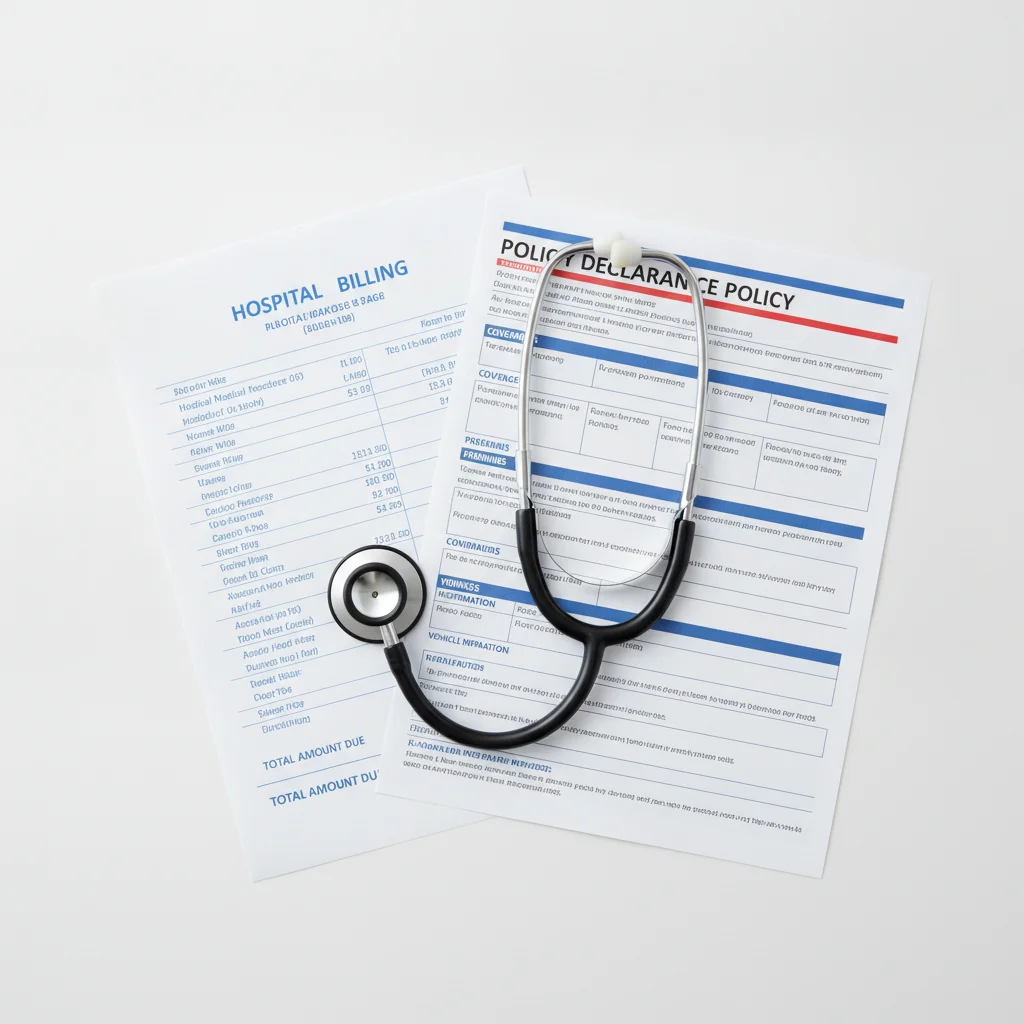
They look similar on your declarations page — usually listed as something like 100/300/100, where that last number is your property damage limit — but they respond to completely different types of harm. Understanding which one applies in a given situation removes a lot of the anxiety that comes with being in an accident.
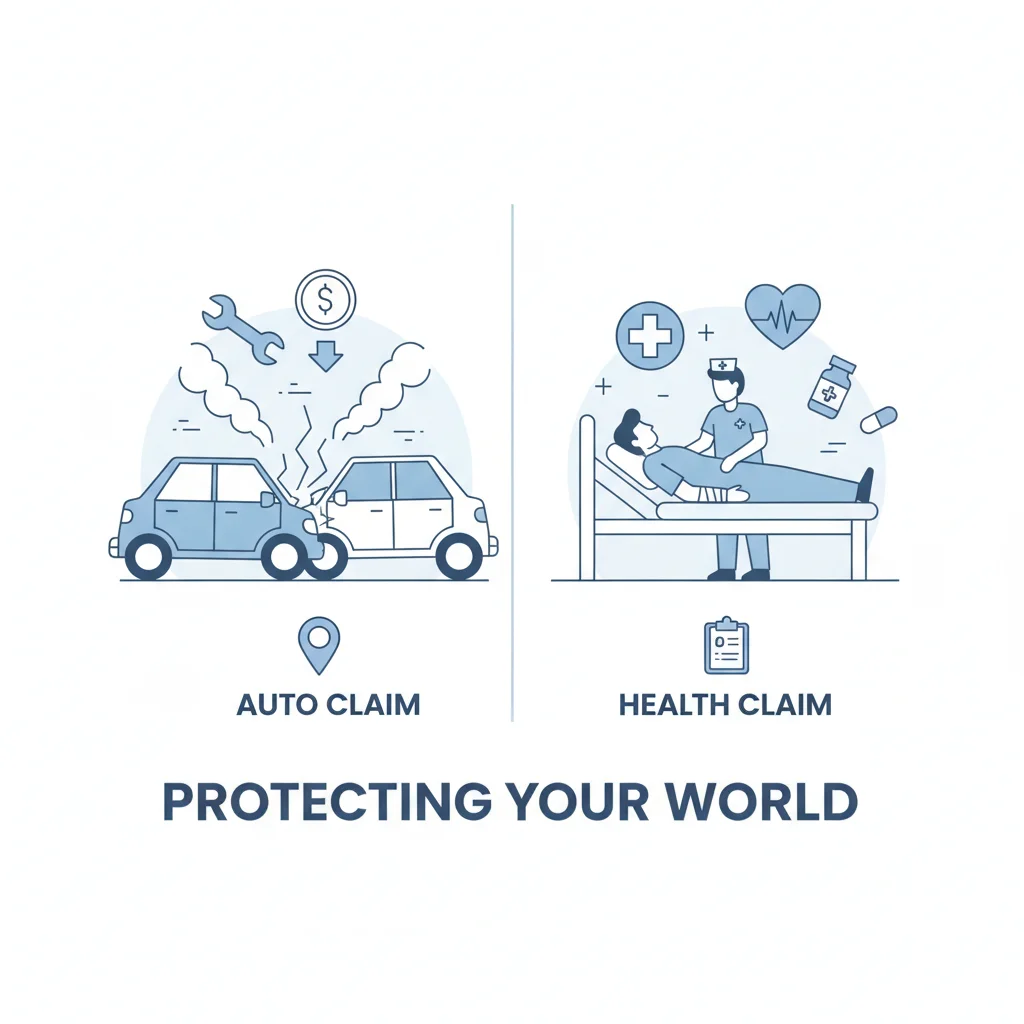
It's also worth noting upfront that neither coverage protects you. If you're injured, you'd look to your own health insurance, Medical Payments (MedPay), or Personal Injury Protection (PIP). If your car is damaged, that's a collision and comprehensive question. Liability, in both its forms, exists solely to protect other people from the financial consequences of your mistake.
Liability Covers the Other Party — Not You
Both bodily injury and property damage liability exist to protect other people from the financial consequences of accidents you cause. They do not cover your own medical bills or vehicle repairs under any circumstances. If you want protection for yourself, you'll need separate coverages — like MedPay, PIP, collision, or comprehensive. This distinction is easy to miss on a declarations page but critical to understand when a claim happens.
When State Minimums Fall Short
State-required liability minimums represent the legal floor, not a recommended coverage level. A $25,000 property damage minimum, for example, won't cover the full replacement cost of most vehicles sold today. And a $25,000 bodily injury per-person minimum can be exhausted by a single emergency room visit for a serious injury. Treat minimums as a starting point for research, not a finish line for protection. <a href="/car-insurance/rates-and-savings/comparing-policies/personal-injury-protection-vs-medical-payments-coverage-knowing-the-difference">Understanding PIP and MedPay</a> can also help round out your coverage picture.
How Bodily Injury Liability Works
Bodily injury liability is triggered any time you are found at fault for an accident that physically injures another person. That person could be the driver of another vehicle, a passenger in their car, a cyclist, or a pedestrian. Your BI coverage steps in to pay on your behalf so you aren't personally on the hook for the costs.
What BI Typically Covers
- Emergency room visits, hospitalization, and surgery
- Ongoing medical care, prescription medication, and rehabilitation
- Lost wages if the injured party cannot work during recovery
- Pain and suffering damages, including emotional distress
- Funeral expenses in fatal accidents
- Your legal defense costs and any court-ordered settlements up to your limit
How BI Limits Are Structured
Bodily injury limits are almost always expressed as two numbers: a per-person limit and a per-accident limit. For example, a 100/300 BI limit means your insurer will pay up to $100,000 for any single injured person and up to $300,000 total across all injured parties in the same accident. If you injure three people and each has $150,000 in medical expenses, your policy pays the per-accident cap of $300,000 — anything beyond that becomes your personal liability.
This is why the gap between state minimums and adequate protection matters so much. A state might require only 25/50 in BI coverage, but a single serious injury can easily breach that ceiling. See our guide on choosing the right liability limits if you're trying to figure out where to set your numbers.
$47,000+
Average new vehicle transaction price in the U.S.
According to Kelley Blue Book data from 2024, the average new car costs more than most state PD minimums cover.
$24,000
Average cost of a serious injury car accident claim
The Insurance Research Council reports that injury claim costs have risen steadily, with serious cases reaching well into six figures.
38 states
States requiring both BI and PD liability coverage
While most states mandate both coverages, required minimums vary widely and rarely reflect actual accident costs.
100/300/100
Most commonly recommended liability limit
Insurance professionals broadly recommend 100/300/100 as the baseline for adequate protection for most drivers.
How Property Damage Liability Works
Property damage liability activates when you damage something that belongs to someone else. Most commonly that means the other driver's vehicle — but it's broader than that. PD liability also covers fences, mailboxes, utility poles, storefronts, and other structures you might strike.
What PD Typically Covers
- Repair costs for the other party's vehicle
- Replacement value if the vehicle is totaled
- Rental car costs for the other driver while their vehicle is being repaired (varies by policy)
- Damage to non-vehicle property such as buildings, fences, or public infrastructure
- Legal costs if the property owner sues you
How PD Limits Are Structured
Unlike BI, property damage limits are expressed as a single per-accident number. A $100,000 PD limit means your insurer will pay up to $100,000 for all property damage you cause in a single accident. There is no per-item breakdown — the limit is shared across everything you damage in that event.
State minimums for PD tend to be low — often $10,000 to $25,000 — which sounds reasonable until you consider that the average new vehicle costs over $47,000. If you total a newer SUV or damage two vehicles in a multi-car accident, a $25,000 limit won't go very far. Drivers in urban areas or those who frequently park near high-value vehicles should strongly consider higher PD limits.
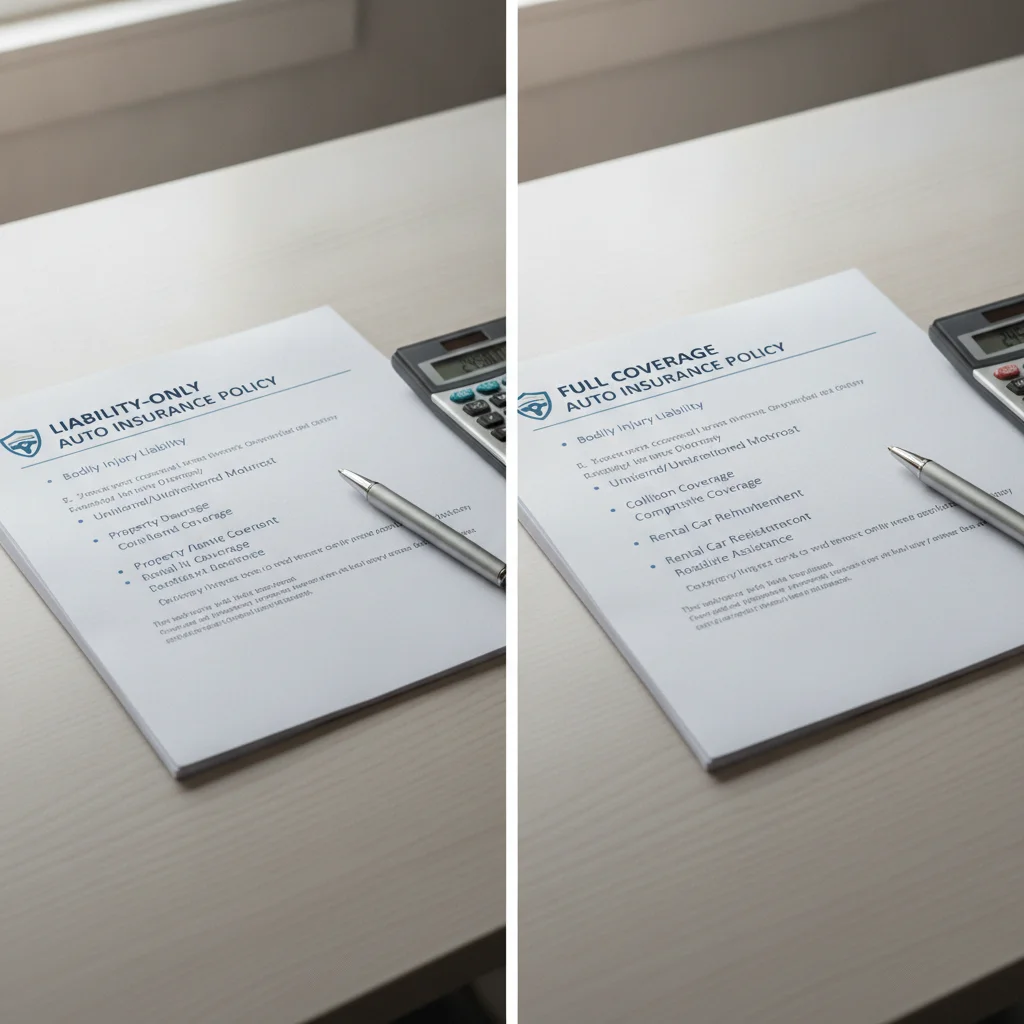
It's also important to distinguish PD liability from coverage for your own vehicle. PD pays for damage you cause to other people's property. For your own car, you'd need collision coverage. And if you're weighing whether to carry only liability or add collision and comprehensive, this breakdown of liability vs. full coverage can help you decide.
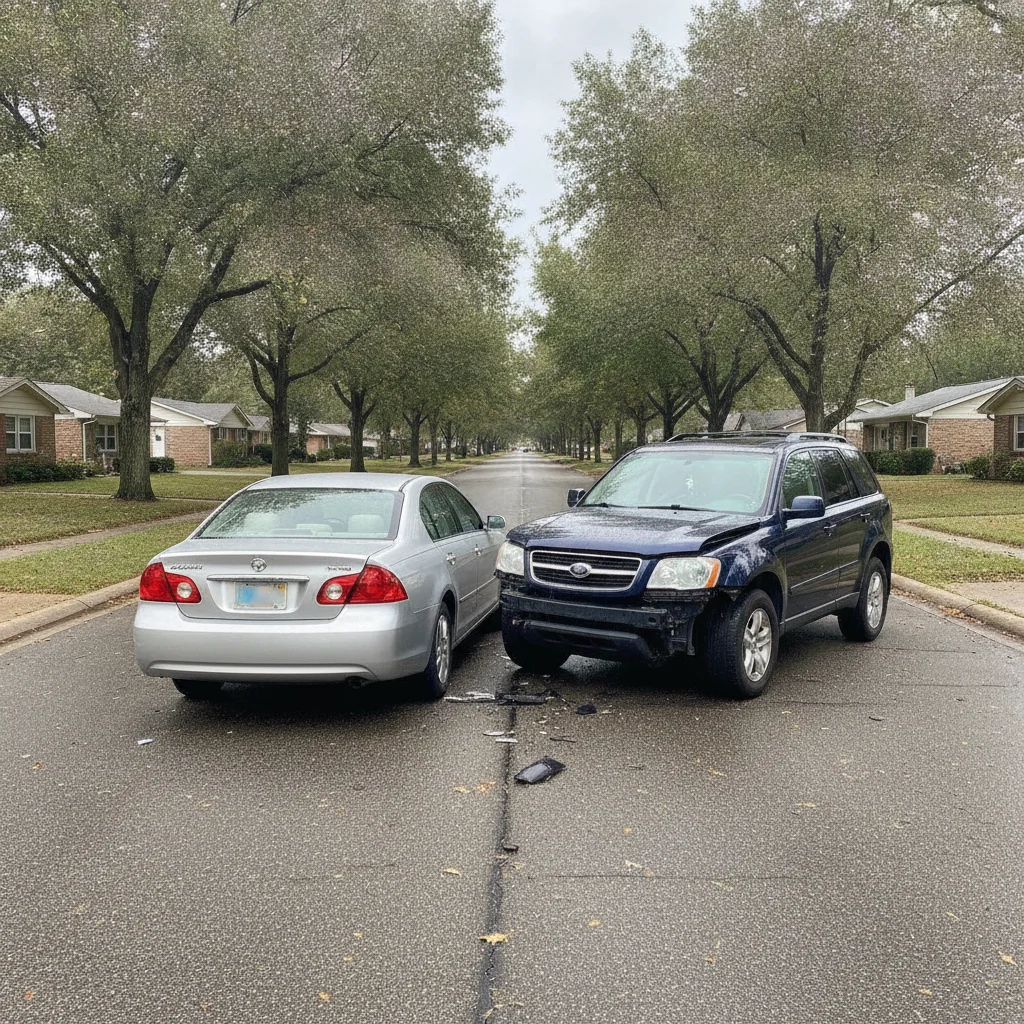
Bodily Injury vs. Property Damage: A Direct Comparison
The two coverages share some structural similarities — both are third-party protections, both are required by most states, and both appear on the same declarations page. But they diverge significantly in what they pay for, how limits are applied, and how costly claims tend to get.
| Criterion | Bodily Injury Liability (BI) | Property Damage Liability (PD) |
|---|---|---|
| What it covers | Injuries to other people caused by you | Damage to other people's property caused by you |
| Common claim types | ER bills, surgery, lost wages, pain & suffering | Vehicle repairs, totaled cars, fences, buildings |
| Limit structure | Per-person AND per-accident maximum | Single per-accident maximum |
| Typical state minimums | $25,000/$50,000 (varies by state) | $10,000–$25,000 (varies by state) |
| Recommended limits | $100,000/$300,000 or higher | $50,000–$100,000 or higher |
| Covers your own injuries? | No | No |
| Covers your own vehicle? | No | No |
| Legal defense included? | Yes | Yes |
| Claim resolution speed | Slower — medical costs unfold over time | Faster — property values are easier to assess |
| Potential claim size | High — can reach six figures or more | Moderate to high — depends on vehicle value |
One nuance worth highlighting: bodily injury claims take longer to resolve. Medical treatment can continue for months or years after an accident, and legal disputes over pain and suffering extend timelines further. Property damage claims, by contrast, are usually straightforward. A repair estimate gets submitted, the adjuster reviews it, and payment follows relatively quickly. That speed difference doesn't affect your premiums much, but it does affect your experience if you're the at-fault driver waiting for a claim to close.
Common Misconceptions About Liability Coverage
A few misunderstandings come up regularly when drivers try to make sense of their liability policy. Getting these straight now can prevent real financial surprises later.
"My liability coverage will pay for my medical bills."
It won't. Liability, in both forms, covers the other party. If you're injured in an accident you caused, you'd rely on your health insurance, MedPay, or PIP. For a clear breakdown of how those injury coverages differ, see our comparison of Medical Payments vs. Personal Injury Protection.
"State minimum limits are probably enough."
Unfortunately, minimums are set at the floor of legal compliance, not at a level that reflects real-world accident costs. A single hospitalization from a serious collision can cost $50,000 or more. If your BI limit is $25,000 and the injured party's bills reach $80,000, you could personally owe $55,000. Your assets — savings, home equity, future wages — are at risk once your policy limit is exhausted.
"Property damage only covers the other person's car."
PD liability is broader. It covers any property you damage: a neighbor's fence, a business's storefront, a utility pole, or even a fire hydrant. If multiple pieces of property are damaged in one incident, they all draw from the same per-accident PD limit.
"If I have full coverage, I don't need to worry about liability limits."
Full coverage adds collision and comprehensive to your policy, but it doesn't change your liability limits. Those two concepts are separate. You can have collision and comprehensive with dangerously low liability limits — or you can have high liability limits with no coverage for your own vehicle at all. Understanding that distinction is foundational to building a policy that actually protects you. You can explore how the two layers interact in our explanation of physical damage coverage.
Liability Covers the Other Party — Not You
Both bodily injury and property damage liability exist to protect other people from the financial consequences of accidents you cause. They do not cover your own medical bills or vehicle repairs under any circumstances. If you want protection for yourself, you'll need separate coverages — like MedPay, PIP, collision, or comprehensive. This distinction is easy to miss on a declarations page but critical to understand when a claim happens.
When State Minimums Fall Short
State-required liability minimums represent the legal floor, not a recommended coverage level. A $25,000 property damage minimum, for example, won't cover the full replacement cost of most vehicles sold today. And a $25,000 bodily injury per-person minimum can be exhausted by a single emergency room visit for a serious injury. Treat minimums as a starting point for research, not a finish line for protection. <a href="/car-insurance/rates-and-savings/comparing-policies/personal-injury-protection-vs-medical-payments-coverage-knowing-the-difference">Understanding PIP and MedPay</a> can also help round out your coverage picture.
Choosing the Right Limits for Both Coverages
Now that you understand what each coverage does, the practical question is how much of each to buy. Here's a grounded way to think through it.
For Bodily Injury Liability
A commonly cited starting point is 100/300 — $100,000 per person and $300,000 per accident. That gives you reasonable protection for moderate accidents. If you have significant assets (a home, investments, retirement accounts), you may want to go higher: 250/500 or even a separate umbrella policy that extends your limits to $1 million or more. The cost difference between 50/100 and 100/300 is often just a few dollars per month — a small price for a much wider safety net.
For Property Damage Liability
Consider the types of vehicles and property you're likely to encounter. If you live in an area where late-model trucks and SUVs are common, a $50,000 or $100,000 PD limit is more appropriate than a $25,000 minimum. If you've ever parked near luxury vehicles or driven in a dense urban environment, think about what it would cost to replace what you could realistically damage.
The Cost-Benefit Reality
Raising liability limits is typically one of the least expensive ways to increase your protection. A jump from state minimum limits to 100/300/100 often costs less than $20 per month on most policies. Compare that to the financial exposure you're eliminating and it becomes one of the easier insurance decisions to make.
If you're also weighing whether to add or drop collision and comprehensive on top of your liability base, the liability vs. full coverage comparison walks through exactly that decision. And if you're curious about optional add-ons that can layer on additional protection, optional coverage add-ons covers extras like umbrella riders and gap insurance.

The goal isn't to have the most coverage possible — it's to have coverage that matches your real financial exposure. For most drivers, that means taking both BI and PD limits seriously, moving past state minimums, and reviewing limits whenever your financial situation changes.

All claims are backed by peer-reviewed research. Sources on request.