
Key Takeaways
Location-Based EV Insurance Rating
Location-based EV insurance rating refers to how insurers adjust your electric vehicle's premium based on where you live and garage your car. Factors like state regulations, local repair shop availability, weather patterns, and neighborhood theft rates all feed into this geographic calculation. Two identical EVs owned by drivers with identical records can carry meaningfully different premiums simply because of their zip codes.
Insurers use actuarial territory rating — dividing the country into thousands of micro-zones — to assign baseline risk multipliers before any individual driver factors are applied. EV-specific data layers, such as certified repair shop density and battery fire incident history by region, are increasingly overlaid on these legacy territory models.
How Geography Becomes a Line Item on Your Insurance Bill
Ask most drivers what determines their auto insurance rate and they'll cite their driving record, their age, maybe their credit score. What they rarely mention is the address on their policy — and for EV owners, that omission is costly. Location is one of the heaviest-weighted variables in any insurer's rating algorithm, and it interacts with EV-specific cost drivers in ways that gas-car owners simply don't face.
Insurers don't set one national price for a given vehicle. Instead, they divide the country into thousands of rating territories — sometimes as granular as a single zip code, sometimes grouped by county or metropolitan area. Each territory carries a baseline multiplier derived from years of local claims data: how often cars are stolen, how severe accidents tend to be, how expensive repairs run at area shops. Your individual risk profile is then layered on top of that territorial baseline.
For a conventional gas-powered sedan, this territorial system is well-calibrated. Decades of claims data have trained the models. For EVs, the picture is murkier. The vehicles are newer, the repair ecosystem is still maturing, and claim cost patterns vary sharply by geography in ways that legacy actuarial tables don't always capture cleanly. That uncertainty typically cuts in one direction: higher premiums for EV owners, with the magnitude of the penalty depending heavily on where they live.

Understanding the geographic levers that shape your EV premium — state regulation, repair infrastructure, climate, and local crime — gives you real tools to shop smarter and potentially reduce what you pay. See our overview of auto insurance rate factors for the full picture of how insurers build a premium from the ground up.
State Regulations: The Rules Before the Rules
Before any individual rating factor matters, state law sets the boundary conditions. Insurance is regulated at the state level in the U.S., which means the rules governing what insurers can charge — and what data they can use — differ by jurisdiction. For EV owners, these regulatory differences can translate into premium swings of hundreds of dollars per year for the same driver in the same car.
California's Unique Insurance Regulatory Framework
California operates under Proposition 103, passed in 1988, which requires prior approval of all insurance rate changes and prohibits the use of certain rating factors, including credit scores. This makes California's insurance market substantially different from most other states. EV owners in California benefit from this regulatory framework, but it also means insurer choices are sometimes limited because some carriers choose not to operate in the state due to regulatory constraints.
EV Claims Data Is Still Maturing
Most EVs on U.S. roads today are fewer than seven years old, meaning the actuarial data underlying territorial EV ratings is thin compared to decades of gas-car claims history. Insurers acknowledge this uncertainty and some build conservative margins into EV pricing as a result. As the EV fleet ages and loss patterns become clearer, pricing accuracy — and potentially competition — should improve. Early EV adopters in any market may be subsidizing that actuarial learning curve.
California is the most restrictive example. The state prohibits insurers from using credit scores as a rating factor and requires that any new factor introduced into a rating model be statistically justified and approved by the Department of Insurance. That regulatory pressure compresses the range of premiums across the state and gives regulators leverage to push back on outsized EV surcharges. States with lighter regulatory frameworks give insurers more latitude to price aggressively based on vehicle type and territorial risk.
State-level EV adoption policy also shapes the insurance market indirectly. States with strong EV incentives tend to have higher EV registration volumes, which means insurers accumulate local claims data faster. More data means more accurate pricing — and in competitive markets, more accurate pricing often benefits consumers. Conversely, in states where EVs are rare, insurers may apply conservative (read: expensive) assumptions simply because they lack local loss history.
A handful of states have also begun examining whether insurers are appropriately discounting EVs for certain advantages — fewer moving parts, regenerative braking that reduces brake wear, and lower fire ignition rates in normal operation compared to gas vehicles. Regulatory scrutiny of EV pricing is still nascent, but it's a space worth watching as adoption scales. You can explore state and federal EV incentives to see how your state's broader EV policy environment looks.
26%
Average EV insurance premium premium over gas cars
According to Insurify's 2024 State of the Auto Insurance Market report, EV owners pay roughly 26% more on average than comparable gas-car owners, with geographic variation accounting for a significant portion of that gap.
20–40%
Winter range loss in extreme cold
The U.S. Department of Energy and AAA testing have consistently documented EV range reductions of 20–40% in temperatures below 20°F, a factor that feeds into cold-climate insurance risk assessments.
$5,500+
Average EV collision repair cost
Mitchell International's industry claims data shows average EV collision repair costs exceeding $5,500, roughly 25% higher than equivalent gas vehicle repairs, with rural markets skewing the figure even higher.
Top 10
States account for 70% of U.S. EV registrations
The Alliance for Automotive Innovation reports that just ten states — led by California — account for approximately 70% of all U.S. EV registrations, concentrating insurer loss data geographically.
3–5x
Towing cost multiplier in rural EV claims
Industry claims analysts at CCC Intelligent Solutions have noted that rural EV claims routinely incur towing costs three to five times higher than urban claims due to distance to certified repair facilities.
Repair Infrastructure: The Hidden Geographic Premium
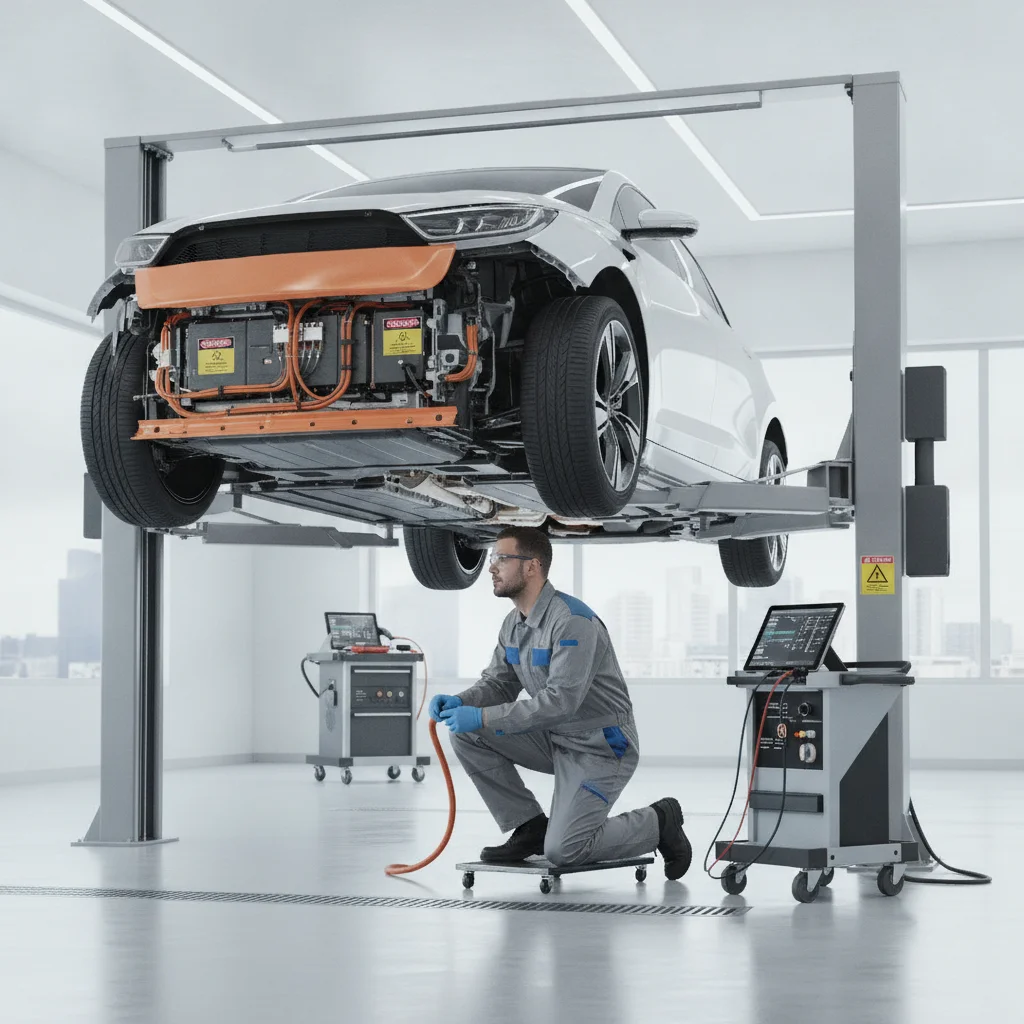
Of all the geographic variables that shape EV insurance costs, repair shop availability may be the least visible to consumers and the most consequential to insurers. When an EV is damaged, it cannot simply go to any body shop. High-voltage battery systems, proprietary software, and manufacturer-specific structural requirements mean that certified technicians and specialized equipment are essential. In markets where that infrastructure is thin, claim costs rise — and insurers price that scarcity into your premium.
Major metropolitan areas in EV-adoption leaders like California, Washington, Colorado, and the Northeast corridor tend to have reasonably dense networks of certified EV repair facilities. Insurers operating in these markets have better cost visibility and shorter claim cycles. Longer tow distances aren't adding days to repair timelines, and parts availability is more predictable.
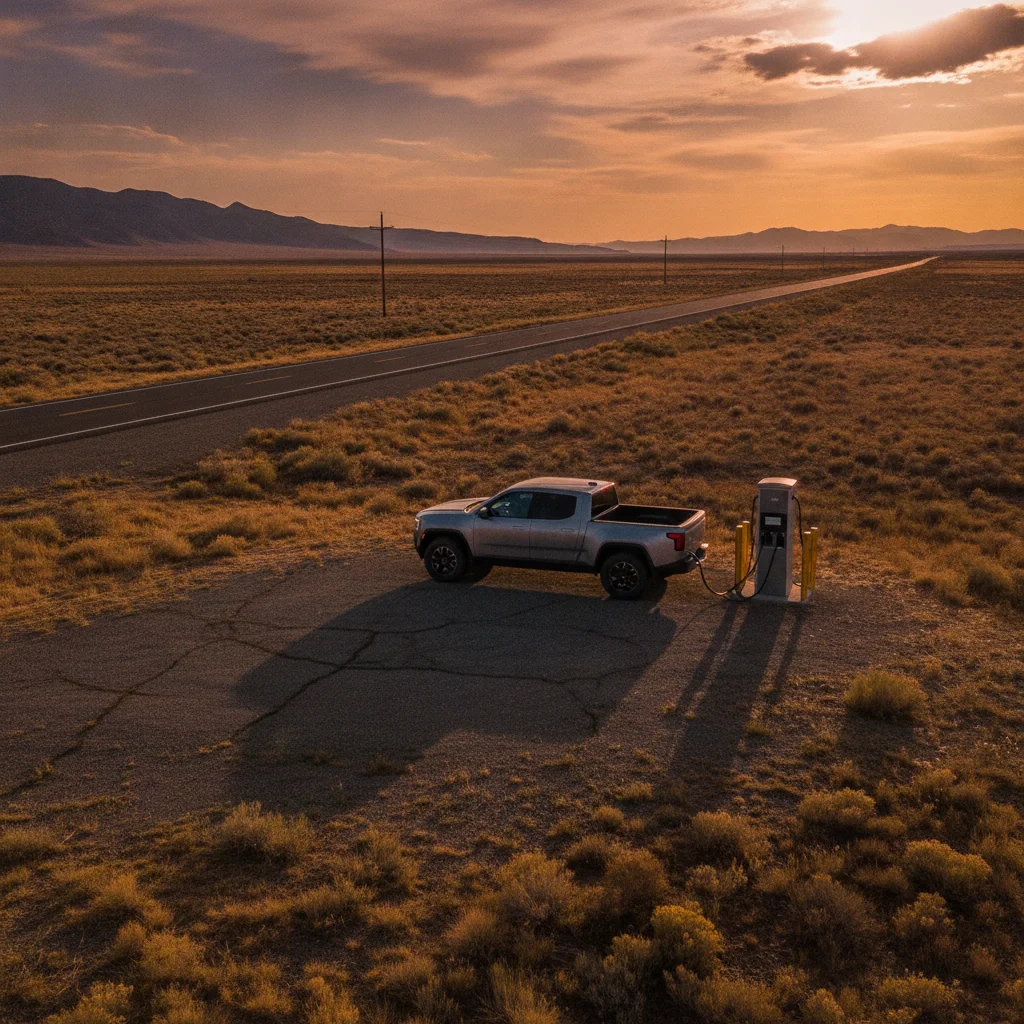
Rural markets tell a different story. A collision that would be a moderate repair in suburban Los Angeles can become a near-total-loss situation in a rural county with no certified technician within 100 miles. Towing costs alone can reach four figures. Extended rental car coverage gets triggered for weeks rather than days. The insurer's exposure on a single claim can be dramatically higher than the same accident in an urban market — and those elevated costs feed directly into the territorial rating that rural EV owners face.
The full breakdown of why EV repairs cost more explains the structural factors behind these elevated bills. The geographic dimension compounds those base costs wherever the support network is sparse.
Get EV-Specific Quotes Before You Buy
Insurance shopping is most effective before you finalize your EV purchase. Quotes obtained before signing the sales contract give you real cost data to factor into your total ownership calculation. Different models in the same class can carry meaningfully different geographic premium implications based on parts costs and theft profiles. See <a href="/electric-vehicles/ev-ownership-costs/ev-insurance-guide/why-electric-vehicles-cost-more-to-insure-than-gas-cars">why EV insurance runs higher</a> to understand which vehicle characteristics matter most.
Ask Insurers About Certified Repair Network Coverage
When shopping for EV coverage, ask each insurer whether their policy includes provisions for towing to a certified EV repair facility — not just the nearest shop. Some policies cap towing reimbursement at a dollar amount that doesn't cover rural distances. Others have network agreements with certified shops that streamline the process. This detail matters most to rural EV owners but is worth clarifying regardless of where you live.
Reassess Coverage After Major Weather Events
If your region experiences a significant hail storm, flood event, or wildfire season, it's worth proactively reviewing your comprehensive coverage before renewal. Insurers often adjust territorial rates after high-loss weather events, and you may find better pricing by shopping at renewal rather than waiting. Battery vulnerability to flood and fire damage makes comprehensive coverage particularly important for EV owners in weather-exposed markets.
Climate and Weather: When Your Environment Becomes a Liability
Battery chemistry is sensitive to temperature extremes in ways that have real insurance implications. In cold-climate states — think Minnesota, Wisconsin, upstate New York, or Montana — lithium-ion batteries lose usable capacity in winter, sometimes reducing effective range by 20–40% in severe cold. That degradation alone doesn't trigger an insurance claim, but it sets up a chain of risk factors that insurers track closely.
Cold weather increases accident frequency across all vehicle types through icy roads and reduced visibility. For EVs specifically, however, there's an added dimension: battery damage in a collision is assessed differently in cold climates. A battery that enters a collision already operating at reduced capacity due to cold may be more susceptible to structural compromise that triggers a total loss determination. Total losses are expensive for insurers, and regional claim frequency data in cold-weather markets reflects this pattern.
Heat extremes carry their own risk profile. In desert Southwest markets — Arizona, Nevada, inland California — sustained high temperatures accelerate battery degradation over time and can in rare cases contribute to thermal events. Insurers in these markets have begun tracking EV-specific climate risk more carefully as the fleet in those regions ages and battery warranty periods expire.
Hail, flooding, and severe storm exposure also vary geographically and feed into the comprehensive portion of your premium. EV batteries positioned in the vehicle floor are particularly vulnerable to flood damage — a compromised battery pack from water intrusion is typically a total loss. Owners in flood-prone regions or Tornado Alley should pay close attention to comprehensive coverage limits and deductibles. Where you garage your EV matters enormously in weather-exposed markets.
Urban vs. Rural: Two Very Different Risk Equations
The urban-rural divide in auto insurance pricing is well-established for all vehicles, but it plays out with particular nuance for EVs. Urban EV owners and rural EV owners face essentially opposite risk profiles — and both can end up paying more than their gas-car counterparts for different reasons.
In dense urban markets, the primary cost drivers are collision frequency and theft. Stop-and-go traffic and crowded parking structures increase fender-bender frequency. High-demand EV models in urban areas have seen elevated theft rates in some markets, partly because the secondary market for EV components — particularly batteries and charging hardware — carries significant value. Comprehensive and collision premiums in cities reflect this elevated exposure.
“We're seeing EV loss costs that vary by as much as 40% between metropolitan and rural territories — not because of the vehicles themselves, but because of what happens after the accident. Repair access is the single biggest geographic variable we're tracking right now.”
— Michelle Crenshaw, Senior Actuary specializing in emerging vehicle technologies at a major U.S. insurer
Rural EV owners, by contrast, face lower collision and theft risk but encounter the repair infrastructure problem described earlier in amplified form. They also tend to drive more miles on average — often on higher-speed roads — which increases the statistical exposure per policy year. And when weather events hit rural areas, the response and recovery resources for damaged vehicles are stretched thin, driving up claim durations and costs.
The comparison isn't simple, and neither is the premium outcome. The mechanics of urban vs. rural rate calculations apply to EVs with these added layers on top. The best course of action for any EV owner — urban or rural — is to get quotes from multiple carriers, since geographic pricing varies significantly between insurers.
California's Unique Insurance Regulatory Framework
California operates under Proposition 103, passed in 1988, which requires prior approval of all insurance rate changes and prohibits the use of certain rating factors, including credit scores. This makes California's insurance market substantially different from most other states. EV owners in California benefit from this regulatory framework, but it also means insurer choices are sometimes limited because some carriers choose not to operate in the state due to regulatory constraints.
EV Claims Data Is Still Maturing
Most EVs on U.S. roads today are fewer than seven years old, meaning the actuarial data underlying territorial EV ratings is thin compared to decades of gas-car claims history. Insurers acknowledge this uncertainty and some build conservative margins into EV pricing as a result. As the EV fleet ages and loss patterns become clearer, pricing accuracy — and potentially competition — should improve. Early EV adopters in any market may be subsidizing that actuarial learning curve.
What EV Owners Can Do With This Information
Understanding that geography shapes your premium is only useful if it leads to action. There are several concrete steps EV owners can take to work with — or around — the geographic factors in their rating.
- Compare quotes aggressively. Because insurers file their own territory maps and rate factors, the same driver with the same EV in the same zip code can receive dramatically different quotes from different carriers. The geographic premium embedded in your quote is carrier-specific. Use that to your advantage.
- Ask about EV-specific discounts. Some insurers offer discounts for EVs that offset geographic risk surcharges. These aren't always advertised. Ask explicitly whether the carrier has EV-specific pricing programs, telematics discounts calibrated to EV driving patterns, or partnerships with charging networks that carry insurance benefits.
- Optimize your garaging situation. Moving your EV from street parking to a secured garage reduces theft and weather exposure. In markets where those risks are priced heavily — urban markets and severe-weather regions — this change can produce meaningful premium reductions. See how garaging affects your quote for specifics.
- Review your coverage mix by risk type. If you're in a low-theft rural area, your comprehensive premium may be lower than the default assumption, but your collision coverage may need to be more robust given repair cost exposure. Tailor your deductibles and limits to your actual geographic risk profile rather than accepting defaults.
- Monitor your state's regulatory environment. Insurance commissioners in several states are actively reviewing EV pricing practices. If your state institutes new rules that limit geographic surcharges or require EV discounts for safety features, you may become eligible for lower rates without doing anything at all — but only if you're aware of the change and ask your insurer to apply it.
Get EV-Specific Quotes Before You Buy
Insurance shopping is most effective before you finalize your EV purchase. Quotes obtained before signing the sales contract give you real cost data to factor into your total ownership calculation. Different models in the same class can carry meaningfully different geographic premium implications based on parts costs and theft profiles. See <a href="/electric-vehicles/ev-ownership-costs/ev-insurance-guide/why-electric-vehicles-cost-more-to-insure-than-gas-cars">why EV insurance runs higher</a> to understand which vehicle characteristics matter most.
Ask Insurers About Certified Repair Network Coverage
When shopping for EV coverage, ask each insurer whether their policy includes provisions for towing to a certified EV repair facility — not just the nearest shop. Some policies cap towing reimbursement at a dollar amount that doesn't cover rural distances. Others have network agreements with certified shops that streamline the process. This detail matters most to rural EV owners but is worth clarifying regardless of where you live.
Reassess Coverage After Major Weather Events
If your region experiences a significant hail storm, flood event, or wildfire season, it's worth proactively reviewing your comprehensive coverage before renewal. Insurers often adjust territorial rates after high-loss weather events, and you may find better pricing by shopping at renewal rather than waiting. Battery vulnerability to flood and fire damage makes comprehensive coverage particularly important for EV owners in weather-exposed markets.
The geographic dimension of EV insurance is not static. As EV adoption grows, as repair networks expand into underserved markets, and as insurers accumulate more granular claims data, the territorial pricing of EV policies will evolve. Owners who understand the current landscape are better positioned to respond when it shifts. For a comprehensive view of all the variables that feed into your EV premium, the full guide to EV insurance premium factors is the logical next read. And if you want to understand how EV ownership costs stack up beyond insurance, electricity rate structures are the other major geographic variable worth mastering.
All claims are backed by peer-reviewed research. Sources on request.