Key Takeaways
Our Verdict
No single policy template fits every vehicle type. Sedans tolerate standard coverage structures reasonably well, but trucks, EVs, and high-value vehicles each expose gaps in typical off-the-shelf policies. The right move is to match your coverage architecture to your vehicle's actual risk profile—not just shop by price.
| Best for | Recommended |
|---|---|
| Everyday sedan and compact car owners | Standard comprehensive + collision with market-value settlement |
| Pickup truck owners who haul, tow, or use for business | Commercial endorsement or dedicated commercial auto policy |
| Electric vehicle owners | EV-specific policy or carrier with battery and charging equipment coverage |
| Luxury and high-value vehicle owners | Agreed-value or stated-value policy with OEM parts guarantee |
Why Vehicle Type Changes Everything About Your Policy
Most drivers shop for auto insurance the same way regardless of what they drive: enter zip code, enter age, pick the cheapest quote. The problem is that a policy structured for a 2019 Honda Civic isn't built for a 2023 Ford F-250 Super Duty or a Tesla Model Y. The risk profile is fundamentally different, and off-the-shelf policies reflect average risk—not your specific situation.
Insurers price and structure coverage based on several vehicle-specific factors:
- Repair cost and parts availability — imported luxury vehicles and EVs often have far longer repair timelines and higher parts costs than standard gas vehicles.
- Theft and total-loss rates — certain truck models and high-end vehicles rank disproportionately high in theft statistics.
- Use patterns — trucks blur the line between personal and commercial use more than any other vehicle class.
- Replacement value complexity — a standard ACV (actual cash value) payout may leave you thousands short on a depreciated luxury car or EV with an expensive battery.
Two policies with the same premium can offer completely different protection—and this is never more true than when comparing across vehicle types. The sections below break down what actually matters for each category.
Sedans and Compact Cars: The Baseline Standard
Standard passenger cars—sedans, hatchbacks, and compacts—are the vehicles the insurance market is most efficiently priced for. They're well-represented in actuarial data, have broad parts availability, and follow predictable depreciation curves. That works in your favor when shopping.
For most sedan owners, a policy built around these elements covers the bases:
- Liability limits above state minimums — state minimums are almost always too low to fully cover a serious accident. Aim for at least 100/300/100 (bodily injury per person / per accident / property damage).
- Comprehensive and collision — worthwhile if your car's market value exceeds $5,000–$6,000. Below that, run the math on premiums vs. maximum payout.
- Uninsured/underinsured motorist coverage — roughly 1 in 8 drivers nationwide is uninsured. This matters for any vehicle class, but it's especially critical if your car doesn't have robust collision coverage.
- Rental reimbursement — inexpensive add-on that matters most when you rely on your car daily and repairs take time.
Check for ADAS Coverage Before Renewing
If your sedan, SUV, or truck has advanced driver-assistance features—automatic braking, lane-keep assist, blind-spot monitoring—verify your policy covers sensor recalibration after a covered repair. Many standard policies don't include it explicitly, and calibration bills often exceed $1,000. Ask your insurer specifically before assuming it's covered.
Annual Coverage Review Pays Off
Vehicle values change, and so does your driving situation. Review your coverage annually—especially after modifications, a change in vehicle use, or a major market shift (like the rapid EV depreciation correction in 2023–2024). What made sense at purchase may leave you exposed or overpaying a year later. A 20-minute review with your agent can catch both gaps and unnecessary spend.
One caveat for newer sedans: if your vehicle has advanced driver-assistance systems (ADAS)—like automatic emergency braking or lane-keep assist—even a minor fender-bender can result in a sensor or camera calibration bill of $1,000+. Make sure your collision coverage and deductible account for that.
The same sedan will cost more to insure in a dense urban area than in a rural one—that's a rate-factor issue, not a coverage-structure issue. But the structure of what you need stays largely the same.
1 in 8
Drivers on U.S. roads are uninsured
According to the Insurance Research Council, approximately 12.6% of U.S. motorists were uninsured as of a recent national estimate.
$3,000+
Average EV collision repair cost premium over gas vehicles
CCC Intelligent Solutions reported EV collision repairs averaging significantly more than comparable ICE vehicles, driven by battery proximity and specialized parts.
Top 3
Pickup truck models in annual vehicle theft rankings
The NICB's annual Hot Wheels report consistently lists Ford F-Series and Chevy Silverado among the most stolen vehicles in the U.S.
30–50%
Portion of EV value represented by battery pack
Industry estimates place EV battery pack costs at 30–50% of total vehicle value, making battery-specific coverage decisions critical.
$1,200+
Typical ADAS recalibration cost after minor collision
AAA research found that recalibrating common ADAS sensors—cameras and radar—after a minor front-end collision can cost $1,200 or more.
Pickup Trucks: Personal Use Doesn't Always Mean Personal Coverage
Trucks are the best-selling vehicle category in the United States, and they're also one of the most frequently misinsured. The core issue: pickup trucks straddle personal and commercial use more than any other vehicle type, and most personal auto policies draw a sharp line between the two.
Here's where truck owners routinely get into trouble:
- Hauling for hire — if you use your truck to deliver goods, haul equipment for clients, or participate in gig-economy delivery services, your personal policy likely excludes coverage during those activities.
- Loaded truck weight — after-market modifications, heavy toolboxes, and consistent load-bearing change the risk profile. Some carriers will deny claims if they determine the vehicle was being used in a manner not consistent with personal use.
- Towing liability — liability coverage typically extends to a trailer you're towing, but the scope varies. A trailer-specific endorsement or separate coverage may be needed for high-value or commercial trailers.
- Aftermarket modifications — lifted suspensions, custom beds, winches, and performance upgrades add value that a standard ACV settlement won't capture. A custom parts and equipment (CPE) endorsement fills that gap.
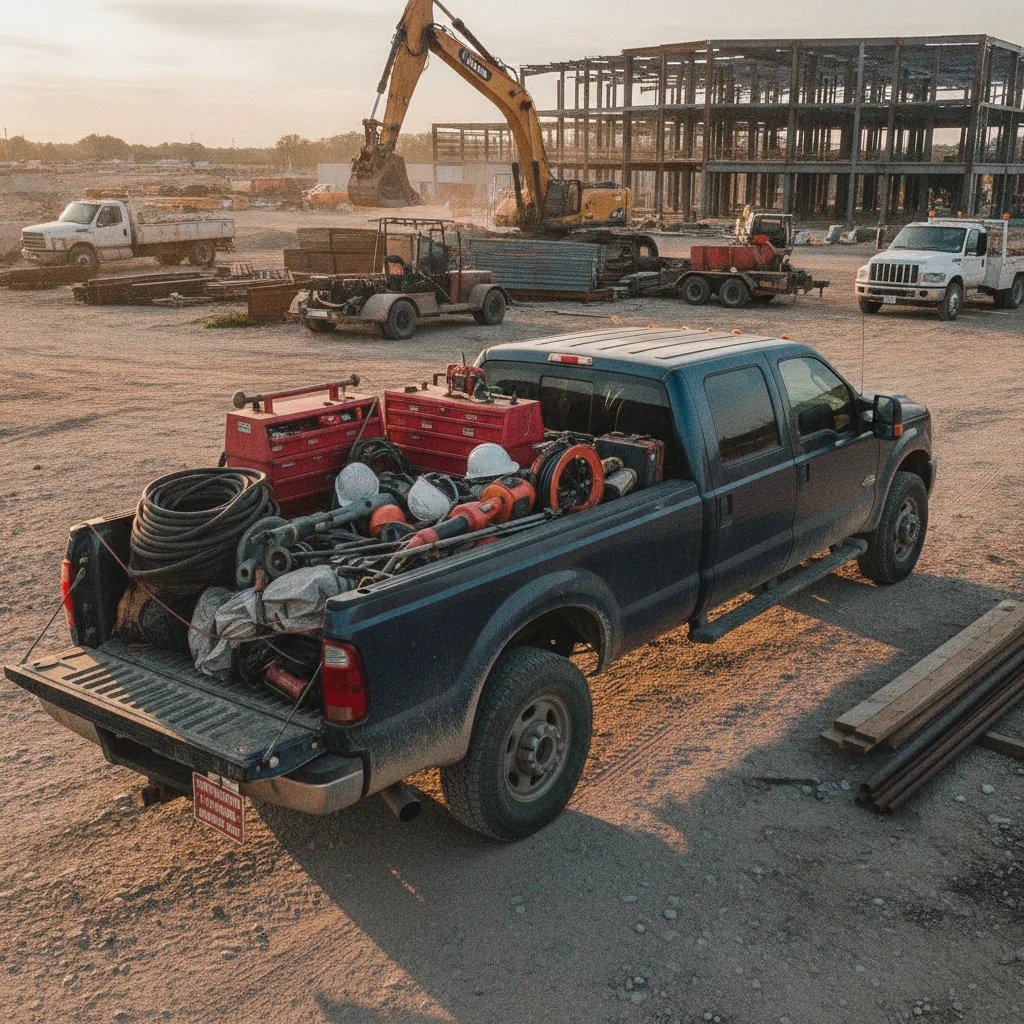
If your truck is truly personal-use only, a robust personal auto policy with high liability limits, collision, comprehensive, and a CPE endorsement usually works. If you use it for any business purpose—even occasional hauling—talk to your agent explicitly about that use. Failing to disclose it isn't just a gap in coverage; it can be treated as material misrepresentation and void your policy entirely.
Undisclosed Commercial Use Can Void Your Policy
Using your personal vehicle—truck or otherwise—for any commercial purpose without disclosing it to your insurer is a material misrepresentation. If an accident occurs during that use, your insurer may deny the claim entirely. This includes gig-economy delivery, occasional paid hauling, and contractor-related transport. When in doubt, disclose and ask about an endorsement—it's almost always cheaper than a denied claim.
Electric Vehicles: Coverage Gaps That Cost Thousands
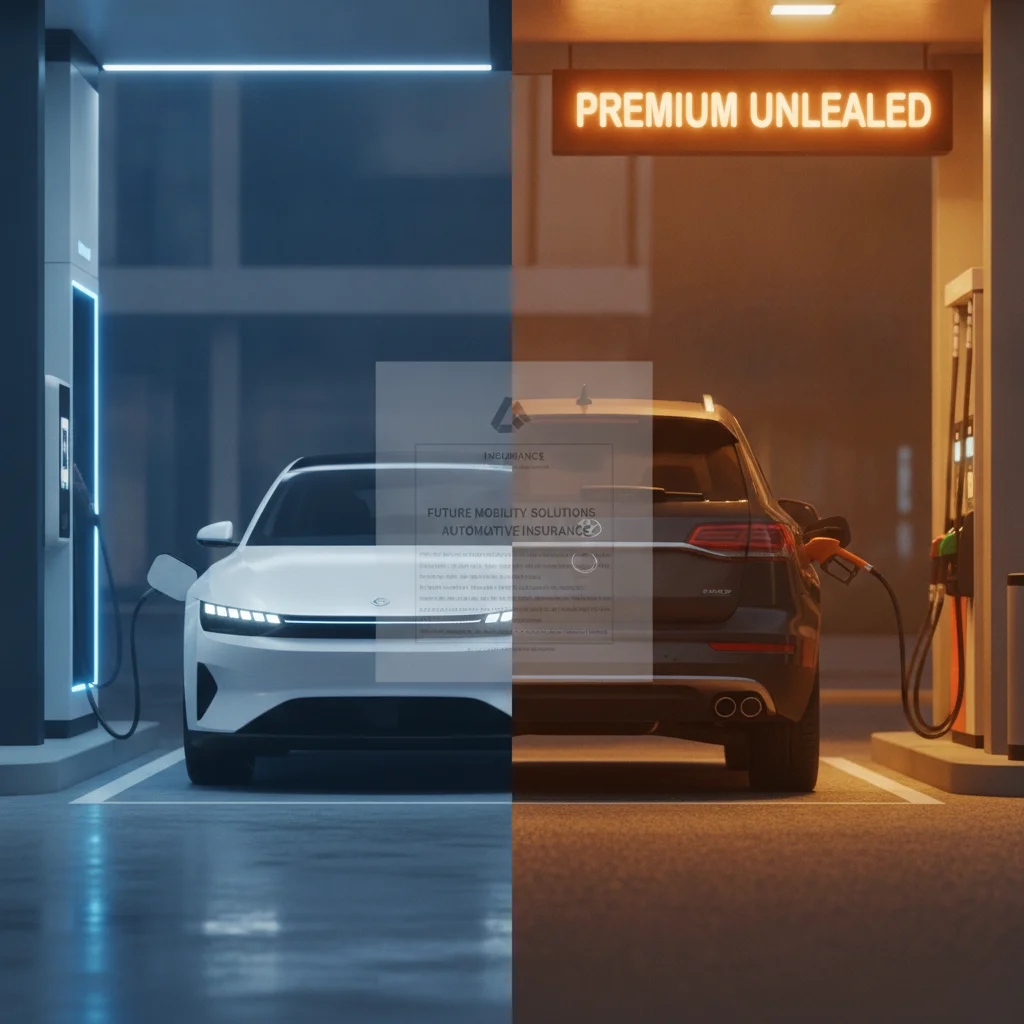
EVs introduce coverage needs that standard policies simply weren't designed for. The battery pack alone can represent 30–50% of the vehicle's total value, and most standard comprehensive/collision policies don't address battery degradation, partial failure, or charging equipment damage in a meaningful way.
Key coverage considerations for EV owners:
- Battery replacement coverage — if your battery is damaged in a covered event, does your policy replace it? At what value? Some policies use ACV for the battery, which depreciates significantly. Others offer replacement cost or manufacturer pricing.
- Charging equipment coverage — home charging equipment (Level 2 chargers, cables, and installed hardware) can cost $500–$2,500. This isn't automatically covered under homeowners or auto. Some EV-specific policies include it; most standard ones don't.
- Higher repair costs and longer timelines — EVs take longer to repair on average, which means rental reimbursement limits matter more. A standard $30/day rental allowance won't cut it if your car is in the shop for 30+ days.
- Agreed vs. actual cash value — EVs depreciate steeply in the first two years, then often stabilize. ACV settlements on a relatively new EV can leave you well short of what replacement costs. Look for carriers that offer agreed-value options.
EV policies differ structurally from conventional auto coverage in ways that standard comparison tools often won't surface. The higher repair and parts costs are one reason EVs cost more to insure, but the more important issue is making sure the policy actually covers what can go wrong.
Some carriers now offer EV-specialized policies through dedicated insurers or targeted endorsements. These are worth comparing directly rather than assuming your current carrier's EV add-on is comprehensive. For a deeper dive into the two core coverage types and how they apply to EV components, see this breakdown of comprehensive vs. collision coverage for electric vehicles.
| Sedan/Compact | Pickup Truck | Electric Vehicle | Luxury/High-Value | |
|---|---|---|---|---|
| Ideal valuation method | Actual cash value (ACV) | ACV + custom parts endorsement | Agreed or replacement cost value | Agreed value strongly preferred |
| Key coverage gap risk | ADAS calibration costs | Commercial use exclusion | Battery and charging coverage | ACV shortfall on total loss |
| Commercial use concern | Rarely relevant | High—must disclose all use | Low-moderate | Low |
| OEM parts endorsement need | Low | Moderate | High (specialized parts) | Critical |
| Rental reimbursement priority | Standard limits adequate | Moderate | High—long repair timelines | High—lengthy specialty repairs |
| Theft risk profile | Varies by model | High for popular models | Moderate | High for exotic/luxury |
| Specialized policy recommended | No | If commercial use applies | Yes—EV-specific coverage | Yes—agreed-value policy |
Luxury and High-Value Vehicles: When ACV Isn't Enough
A luxury vehicle—whether a German sport sedan, a high-end SUV, or an exotic sports car—has coverage needs that go well beyond higher liability limits. The core issue is valuation. Standard auto policies settle total losses and major claims based on ACV: what a comparable vehicle sells for on the open market at the time of the loss. For depreciation-heavy vehicles, that number can be dramatically lower than what you paid or what it would cost to replace.
There are two alternative valuation structures worth knowing:
- Agreed Value
- You and the insurer agree on a fixed coverage amount at policy inception. In the event of a total loss, that amount is paid—no depreciation argument. This is the gold standard for high-value vehicles and collectibles.
- Stated Value
- You declare the vehicle's value, but the insurer pays the lesser of that stated value or the ACV at time of loss. It's better than pure ACV but not as clean as agreed value.
Beyond valuation, luxury vehicle owners should pay close attention to:
- OEM parts requirements — aftermarket parts can compromise the engineering and resale value of a luxury vehicle. Some premium policies guarantee original manufacturer parts in repairs; standard policies often don't.
- Concierge claims service — high-end carriers offer dedicated claims handlers and approved specialty repair shops familiar with your vehicle make. This isn't just a nicety—it affects repair quality and time.
- Gap coverage relevance — if you financed a luxury vehicle, the gap between what you owe and what ACV would pay can be substantial. Gap coverage is essential for financed high-value vehicles.
- Underinsured motorist property damage — a standard driver who hits your $120,000 SUV will almost certainly carry property damage limits far below what your repair will cost. UMPD coverage steps in where their liability ends.
Understanding your vehicle's actual market value before binding coverage is essential. Tools like KBB and Edmunds can give you a baseline for current market value, which you should reference when negotiating agreed-value coverage amounts with your insurer.

How to Actually Compare Policies Across Vehicle Types
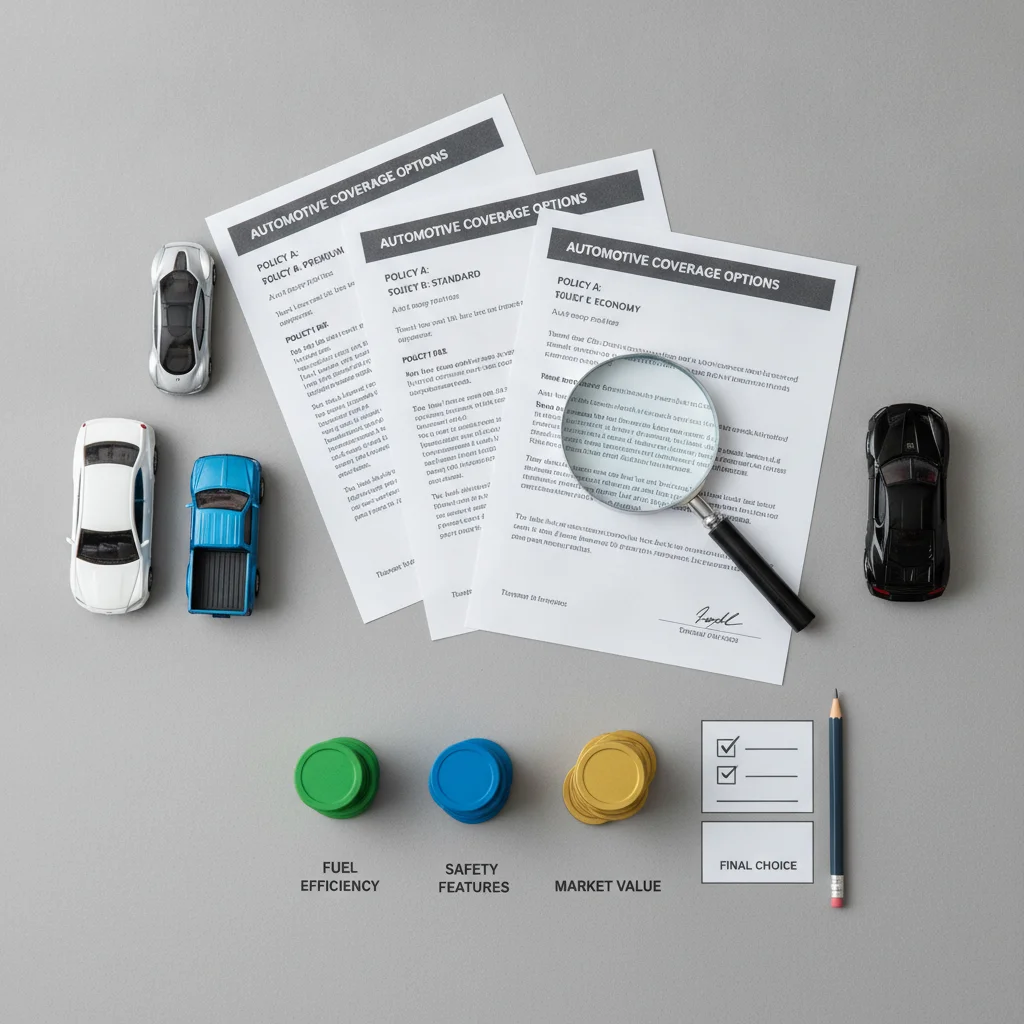
When you're comparing quotes—whether you're switching carriers or insuring a new vehicle—the premium comparison is step one, not the finish line. Here's a structured way to evaluate coverage quality across vehicle types:
- Start with your vehicle's specific risk profile. What does it cost to repair? Is it a theft target? What's the replacement value? Does it have specialized components (EV battery, ADAS systems, custom modifications)?
- Identify coverage gaps before you shop. Write down what could go wrong and check whether a standard policy addresses it. A truck owner asking "what if I haul something commercially?" or an EV owner asking "what happens to my battery?" will immediately spot where generic policies fall short.
- Compare coverage structures, not just limits. Two policies might both list "comprehensive and collision," but one may exclude EV battery coverage or use ACV instead of replacement cost. Read the declarations page and policy exclusions before assuming parity.
- Ask about endorsements explicitly. Custom equipment, battery coverage, agreed value, OEM parts—these often don't appear in online quote tools. You may need to call an agent or dig into carrier-specific product details.
- Check rental reimbursement limits against realistic repair timelines. For EVs and luxury vehicles especially, repair times can stretch to weeks. A $30/day cap for 15 days won't cover a month-long rental on a vehicle that takes 35 days to fix.
For EV owners specifically, there's a structured approach to comparing EV policies that goes beyond what standard comparison engines surface—worth reading before you commit to a carrier.

Check for ADAS Coverage Before Renewing
If your sedan, SUV, or truck has advanced driver-assistance features—automatic braking, lane-keep assist, blind-spot monitoring—verify your policy covers sensor recalibration after a covered repair. Many standard policies don't include it explicitly, and calibration bills often exceed $1,000. Ask your insurer specifically before assuming it's covered.
Annual Coverage Review Pays Off
Vehicle values change, and so does your driving situation. Review your coverage annually—especially after modifications, a change in vehicle use, or a major market shift (like the rapid EV depreciation correction in 2023–2024). What made sense at purchase may leave you exposed or overpaying a year later. A 20-minute review with your agent can catch both gaps and unnecessary spend.

All claims are backed by peer-reviewed research. Sources on request.