Key Takeaways
Option A
Urban Car Insurance
The high-density, high-risk premium environment.
Best for: Drivers who live in cities and need to understand why their rates are elevated and where they might find savings.
Option B
Rural Car Insurance
The lower-density, lower-cost alternative with its own risk profile.
Best for: Drivers outside metro areas who want to understand what pricing advantages they hold — and what risks they still carry.
If you're moving from a suburb to a major city center
Urban Car Insurance
You'll pay more, but understanding exactly which urban factors drive your rate allows you to negotiate smarter — shop multiple carriers, ask about garage parking credits, and consider usage-based policies if you don't commute daily.
If you're relocating from a city to a rural area
Rural Car Insurance
Expect a meaningful drop in your comprehensive and collision premiums, but don't cut coverage — rural accidents tend to be more severe, and medical evacuation and uninsured motorist coverage become especially important.
If you want the lowest possible premium regardless of location
Rural Car Insurance
Rural ZIP codes carry statistically lower claim frequencies, fewer theft incidents, and less congestion — all of which translate to lower base rates from most major insurers.
If you drive infrequently in an urban area
Urban Car Insurance
A telematics or pay-per-mile policy can dramatically narrow the urban-rural rate gap for low-mileage city drivers, making urban insurance far more competitive.
If you own a high-value or electric vehicle in a city
Urban Car Insurance
Premium vehicles in urban environments face compounded risk factors — theft, vandalism, and higher repair costs all stack. Comprehensive coverage with a low deductible is essential, even at higher premiums.
How Insurers Actually Price by Location
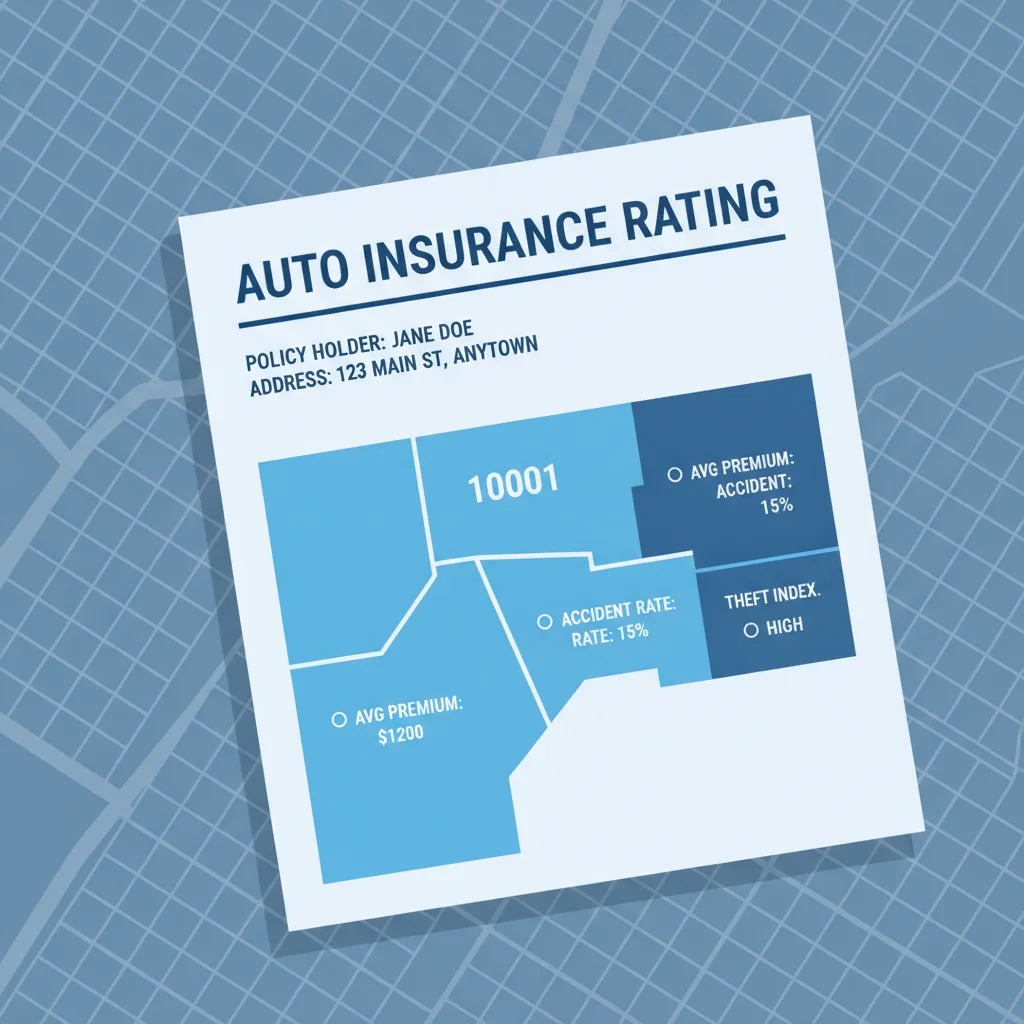
When you apply for auto insurance, your ZIP code isn't just an administrative field — it's a pricing variable that actuaries treat with the same weight as your accident history. Insurers maintain vast datasets mapping claim frequency, claim severity, theft rates, weather events, and repair costs down to the census tract level. Your address drops you into a risk pool defined by everyone in your immediate geography, not just you as an individual.
This system is sometimes called territorial rating. Most states permit it with some degree of regulatory oversight; a handful — including California and Michigan — place limits on how heavily it can be weighted. For most American drivers, though, their location is doing enormous pricing work behind the scenes.
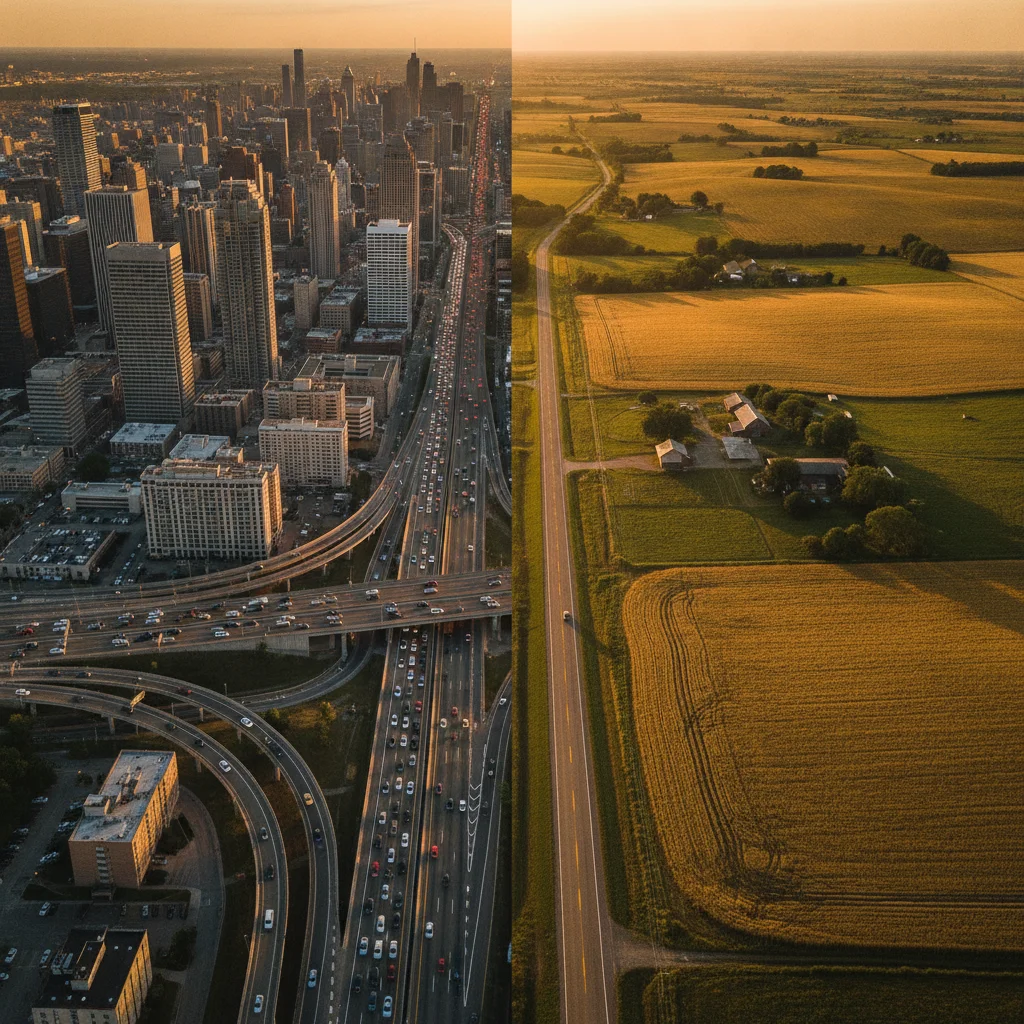
The result: two drivers with identical clean records, the same vehicle, and the same coverage can face premiums that differ by hundreds of dollars per year simply because one lives in a dense metro area and the other in a small rural county. That gap isn't arbitrary. Insurers price for expected payouts, and the data consistently shows those payouts are higher in cities.
Understanding exactly which urban variables inflate premiums — and which rural variables quietly suppress them — is the first step toward making smarter decisions, whether you're shopping for a new policy or evaluating whether a move will change your costs. For a broader look at how vehicle type also shapes these calculations, see how vehicle type affects policy needs.
The Urban Premium: What Drives City Rates Higher
City insurance rates are not simply a tax on urban living. Each surcharge reflects a measurable, documented increase in the probability that your insurer will have to pay a claim. Here are the primary mechanisms:
Traffic Density and Collision Frequency
More vehicles per square mile means more interactions — and more opportunities for accidents. Urban drivers spend more time in stop-and-go traffic, navigate complex intersections, share lanes with cyclists and pedestrians, and deal with aggressive merging behaviors. The National Highway Traffic Safety Administration (NHTSA) data confirms that the absolute number of crashes is substantially higher in urban settings, even when adjusted for vehicle miles traveled on arterial roads and local streets.
Theft and Vandalism
Vehicle theft is disproportionately an urban problem. The National Insurance Crime Bureau (NICB) consistently finds the highest theft rates in large metropolitan areas. Cars parked on city streets overnight face not only theft risk but catalytic converter theft, break-in damage, and vandalism at rates that rural drivers rarely encounter. These losses fall under comprehensive coverage, and their frequency in cities directly inflates comprehensive premiums.
Repair Costs and Labor Rates
Urban auto repair shops pay higher rents, higher wages, and face higher overhead — and those costs pass through to insurers in the form of elevated repair invoices. A fender repair that costs $1,200 at a suburban shop in Oklahoma might run $1,900 at a certified body shop in Los Angeles or New York. Insurers factor regional labor and parts costs into their loss projections.
Uninsured Motorist Exposure
Densely populated areas, particularly in states with lower enforcement capacity, tend to have higher rates of uninsured or underinsured drivers on the road. When an at-fault uninsured driver hits you, your own insurer absorbs the cost — which pushes up rates across the risk pool.
| Criterion | Urban Car Insurance | Rural Car Insurance |
|---|---|---|
| Average annual premium | ~$1,800–$2,800+ | ~$1,100–$1,600 |
| Collision claim frequency | High — dense traffic | Low — sparse traffic |
| Theft & vandalism risk | High — street parking | Low — private property |
| Accident severity | Moderate — lower speeds | High — highway speeds |
| Repair cost environment | High labor/parts rates | Lower overhead costs |
| Wildlife collision risk | Minimal | Significant in many states |
| Uninsured motorist exposure | Elevated in many cities | Varies by state |
| Emergency response time | Fast — urban EMS | Slow — rural EMS gaps |
| Rating granularity | ZIP/census tract level | ZIP/county level |
| Telematics savings potential | High for low-mileage drivers | Moderate — already lower base |
47%
Average urban-to-rural premium gap
Bankrate's 2023 rate analysis found urban drivers in major U.S. metros pay roughly 47% more on average than rural drivers in the same state with identical profiles.
~50%
Share of U.S. traffic fatalities on rural roads
NHTSA data consistently shows rural roads account for approximately half of all traffic fatalities despite representing a minority of total vehicle miles traveled.
$8.1B
Annual U.S. vehicle theft losses
The NICB reported over $8 billion in vehicle theft losses in 2022, with urban metro areas accounting for a disproportionate share of incidents.
1 in 116
Odds of deer collision per rural driver annually
State Farm's annual deer-vehicle collision study estimates roughly 1 in 116 drivers will file a deer-related claim in high-risk states like Pennsylvania and Michigan.
20–40%
Potential savings from telematics for urban drivers
Insurance industry studies, including research published by LexisNexis Risk Solutions, indicate low-mileage urban drivers using telematics programs can reduce premiums by 20–40%.
The Rural Discount: What Keeps Rates Lower — and What Doesn't
Rural areas enjoy lower premiums for well-documented structural reasons, but the picture isn't entirely favorable. Insurers apply discounts where data supports them and maintain — or even elevate — certain coverage costs where rural risk is genuinely higher.
Lower Claim Frequency
Fewer vehicles, fewer interactions, and less congestion translate directly into fewer fender-benders and collision claims. A driver in a rural county may go years without filing a single claim, and the actuarial tables for that territory reflect that history. Lower expected claim frequency is the primary driver of lower rural premiums.
Lower Theft and Vandalism Rates
Rural vehicles, particularly those garaged on private property, are far less likely to be stolen or vandalized. Comprehensive premiums in rural areas can be substantially lower as a result — sometimes 40–60% less than comparable urban rates for the same vehicle.
Where Rural Risk Stays High: Severity
Here's the counterintuitive reality that many rural drivers overlook: while accidents happen less frequently in rural areas, they tend to be far more serious when they do occur. The rural road safety data is sobering — rural roads account for roughly half of all U.S. traffic fatalities despite carrying a minority of total vehicle miles traveled. High speeds, lack of barriers, wildlife hazards, and delayed emergency response all contribute to higher fatality rates per crash.
Insurers price this severity into medical payments, bodily injury liability, and uninsured motorist coverage. A rural driver who strips these coverages to save money is taking on real financial exposure.

Wildlife collisions are another rural-specific risk. In states like Pennsylvania, Michigan, and Montana, deer strikes generate hundreds of millions in comprehensive claims annually — a risk that urban drivers rarely face. This can partially offset the rural advantage on comprehensive premiums in high-deer-density regions.
State Regulations Limit the Location Weight
California, Massachusetts, Hawaii, and Michigan have all enacted laws restricting how heavily insurers can weight geography in rate calculations. In these states, the urban-rural premium gap is typically narrower than the national average. If you live in one of these states, your driving record, vehicle, and coverage choices carry comparatively more pricing weight than your ZIP code.
Moving? Notify Your Insurer Immediately
A change of address — even within the same city — is a material change that must be reported to your insurer promptly. Failing to update your address can constitute a material misrepresentation on your policy, which insurers can use as grounds to deny a claim. When you move, contact your insurer, request a revised quote, and shop competitors at the same time — a move is one of the best natural windows to find better pricing.
The ZIP Code Effect: How Granular Is the Rating?
Insurers don't just differentiate between "urban" and "rural" as broad categories. The rating gets considerably more precise. Most major carriers rate at the ZIP code level; some use census tract data or even specific street addresses for certain risk factors. This means two drivers living just three miles apart — one in a dense urban core, another just outside a city limit — can face meaningfully different premiums from the same insurer.
This granularity can work in your favor or against you. Moving from a high-theft downtown neighborhood to a quieter residential ZIP code on the city's edge — even within the same metro area — can reduce your comprehensive premium without changing anything about your driving habits. Conversely, a rural driver who moves to a ZIP code adjacent to a city can see rates climb even before they've driven a single mile in their new location.
The variation between insurers for the same driver profile is also worth understanding here. Different carriers weight geographic variables differently. One insurer's pricing model might be particularly sensitive to theft rates; another might emphasize collision frequency. This is why urban drivers especially benefit from comparing multiple quotes — the spread between the highest and lowest quote in a dense urban market is typically wider than in rural markets.
For EV owners, geography adds an additional layer of complexity. Where you live shapes EV insurance rates in ways that compound the urban-rural gap, particularly around repair infrastructure and charging-related incidents.
Strategies to Manage the Urban Premium
Urban drivers aren't powerless against elevated rates. Several well-documented strategies can meaningfully reduce premiums without sacrificing necessary coverage:
Garage Parking Discounts
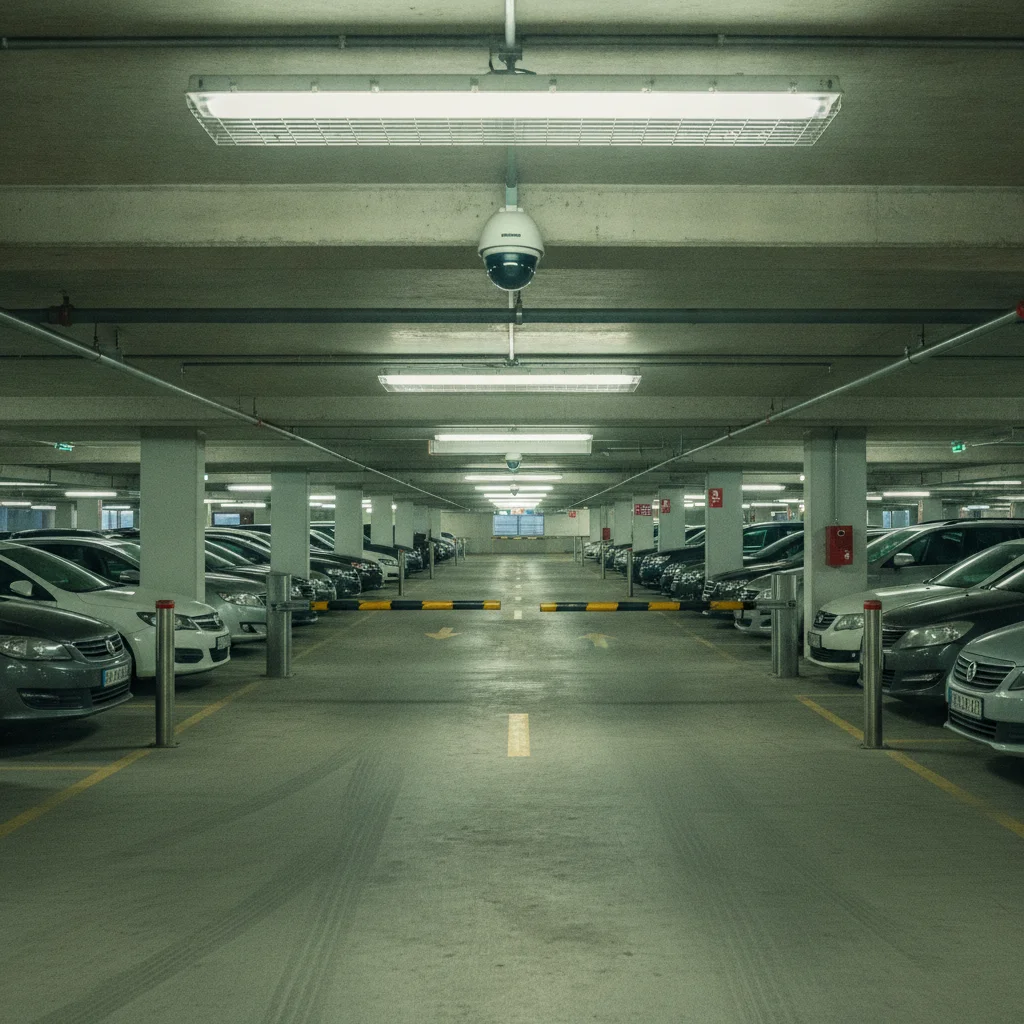
Many insurers offer discounts for vehicles that are garaged overnight rather than parked on the street. If you have access to a garage or secured parking structure, disclose it to your insurer — the reduction in theft and vandalism exposure is real and often reflected in pricing.
Usage-Based and Pay-Per-Mile Insurance
Urban residents who work remotely, rely on public transit, or simply drive less than average are often overcharged by standard mileage-band pricing. Telematics programs and pay-per-mile policies can realign your premium with your actual exposure. For a low-mileage urban driver, this can cut rates by 20–40% compared to a standard policy. EV drivers face similar pricing dynamics that make telematics especially relevant.
Higher Deductibles on Comprehensive
If you have a solid emergency fund and your vehicle isn't high-value, raising your comprehensive deductible from $500 to $1,000 or $1,500 can produce meaningful premium savings in urban markets where comprehensive rates are elevated. Just ensure you can absorb the deductible comfortably before choosing this route.
Multi-Policy Bundling
Bundling auto with renters or homeowners insurance through the same carrier typically yields 5–15% discounts that apply regardless of your territory rating. For urban renters, the renters policy is usually inexpensive, making bundling a high-value move.
Shop Aggressively and Annually
The urban insurance market is highly competitive. Rates among major carriers for the same urban driver can vary by hundreds of dollars per year. Shopping at renewal — or when a life event changes your profile — consistently produces savings that loyalty to a single carrier rarely matches.
What Rural Drivers Should Know Before Cutting Coverage
The temptation to drop coverage when rates are already low is understandable, but rural drivers who strip their policies often do so precisely in the areas where their exposure is highest.
Uninsured motorist coverage matters in rural areas too — and in some states, rural roads see higher rates of uninsured drivers simply because enforcement is less frequent. If an uninsured driver crosses the center line on a rural highway, your own UM/UIM coverage is what protects you.
Medical payments and personal injury protection take on added importance when emergency medical response is measured in tens of minutes rather than minutes. A serious crash on a rural road may involve a lengthy wait for EMS, air transport, and treatment at a regional trauma center that is far from home. The medical bills can be substantial, and a stripped-down liability-only policy offers no protection for your own injuries.
Comprehensive coverage in high-deer-density states is genuinely useful, even if base rates are lower than in cities. A deer strike can total a modest-value vehicle. Before dropping comprehensive to save $80 per year, compare that savings against the potential out-of-pocket cost of replacing your vehicle.
Rural drivers who own their vehicle outright and are tempted to drop collision should carefully evaluate their vehicle's actual cash value and their ability to self-insure. For vehicles worth less than $4,000–$5,000, dropping collision may be mathematically defensible. For newer vehicles, it's rarely wise regardless of where you live.
For rural EV owners specifically, the EV Insurance Guide is a useful resource — repair infrastructure gaps in rural areas can make comprehensive EV coverage even more important, not less.
State Regulations Limit the Location Weight
California, Massachusetts, Hawaii, and Michigan have all enacted laws restricting how heavily insurers can weight geography in rate calculations. In these states, the urban-rural premium gap is typically narrower than the national average. If you live in one of these states, your driving record, vehicle, and coverage choices carry comparatively more pricing weight than your ZIP code.
Moving? Notify Your Insurer Immediately
A change of address — even within the same city — is a material change that must be reported to your insurer promptly. Failing to update your address can constitute a material misrepresentation on your policy, which insurers can use as grounds to deny a claim. When you move, contact your insurer, request a revised quote, and shop competitors at the same time — a move is one of the best natural windows to find better pricing.

All claims are backed by peer-reviewed research. Sources on request.