Key Takeaways
What Liability Coverage Actually Does — and Doesn't Do
Before walking through the steps, it helps to be clear on what liability insurance is designed to do. When you are at fault in an accident, your liability policy pays for the other party's losses — their vehicle repairs, medical bills, lost income, and pain and suffering. It does not cover your own vehicle or your own injuries. Those are handled by collision coverage and medical payments coverage (MedPay) or personal injury protection (PIP), respectively.
Most states require drivers to carry a minimum level of liability insurance, typically expressed as a set of three numbers — for example, 25/50/25. That shorthand means $25,000 per person for bodily injury, $50,000 per accident for total bodily injury, and $25,000 for property damage. State minimums, however, are often far too low to cover the true cost of a serious accident.
Understanding this structure matters because it shapes how the entire claims process works. You are filing a claim under your own policy, but the money flows to someone else. That distinction affects your role, your rights, and what you need to do at every stage.
What you will need
For drivers who want a side-by-side comparison with a different coverage type, our collision claim walkthrough covers what happens when you file under your own policy for your own vehicle's damage.
What to Bring to Each Stage of the Process
Having the right tools and information at each phase of a liability claim dramatically reduces friction. At the scene, your phone and your insurance card are the two things that matter most. In the days that follow, organized documentation becomes your most valuable asset.
Smartphone with camera
Used to photograph vehicle damage, road conditions, license plates, and injuries at the accident scene.
Insurance card (physical or digital)
Required to exchange policy and insurer contact information with the other driver.
Notepad and pen
Useful for recording witness names, contact information, and scene details that may not be captured in photos.
Insurer mobile app
Allows you to report the claim, upload photos, and track claim status directly from your phone.
Police report number
Used by your adjuster to verify the official record of the accident — essential for disputed liability cases.
Personal injury or auto attorney contact
Provides legal representation if the claim involves serious injuries, disputed fault, or litigation risk.
Many drivers are surprised by how much of the claims process hinges on evidence gathered in the first fifteen minutes after a collision. The adjuster assigned to your case was not there — they are relying entirely on what you and the other party provide, along with whatever third-party evidence they can locate. Strong documentation from the scene means your account of what happened is supported by facts, not just words.
Step-by-Step: From Accident Scene to Settlement
The liability claims process follows a predictable sequence, even though individual cases vary. Knowing what comes next at each stage helps you stay organized and avoid the common mistakes that slow claims down or reduce payouts. Work through each step in order — skipping ahead rarely saves time and often creates problems.
Secure the Scene and Ensure Everyone Is Safe
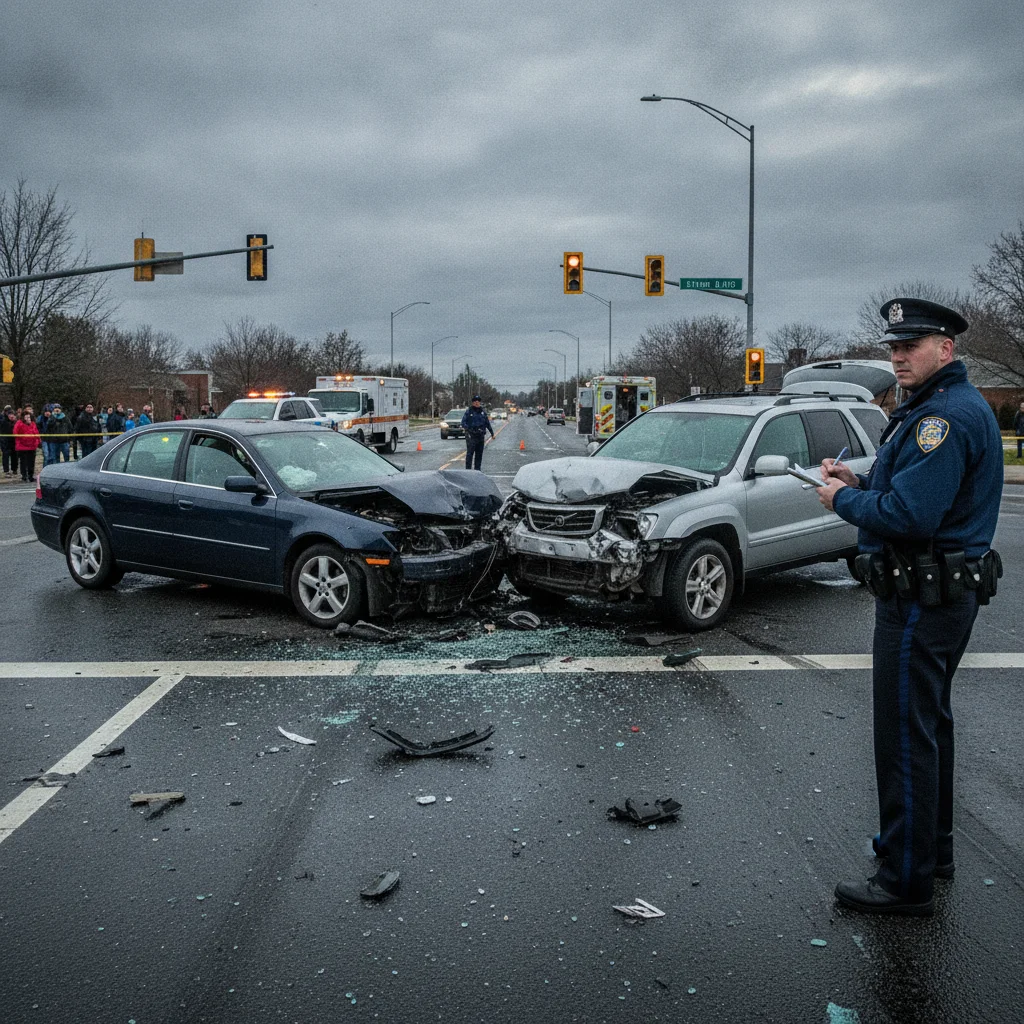
Before anything else, move vehicles out of active traffic if it is safe to do so and turn on your hazard lights. Check on all parties involved — yourself, your passengers, and the occupants of the other vehicle. Call 911 immediately if anyone is injured, if vehicles are blocking a roadway dangerously, or if either driver appears impaired.
Even in a minor fender bender, a police report is a valuable document. Many insurers and courts give it significant weight when fault is disputed. Ask the responding officer for the report number before leaving the scene.
Exchange Information with the Other Driver
Collect the following from every driver involved:
- Full legal name and contact information (phone and address)
- Driver's license number and state of issue
- License plate number and vehicle VIN if accessible
- Insurance company name, policy number, and claims contact number
- Vehicle make, model, and year
If there are passengers in either vehicle, note the number of passengers — this matters later when bodily injury claims are filed. Similarly, collect the names and phone numbers of any independent witnesses before they leave the scene.
Document the Scene Thoroughly
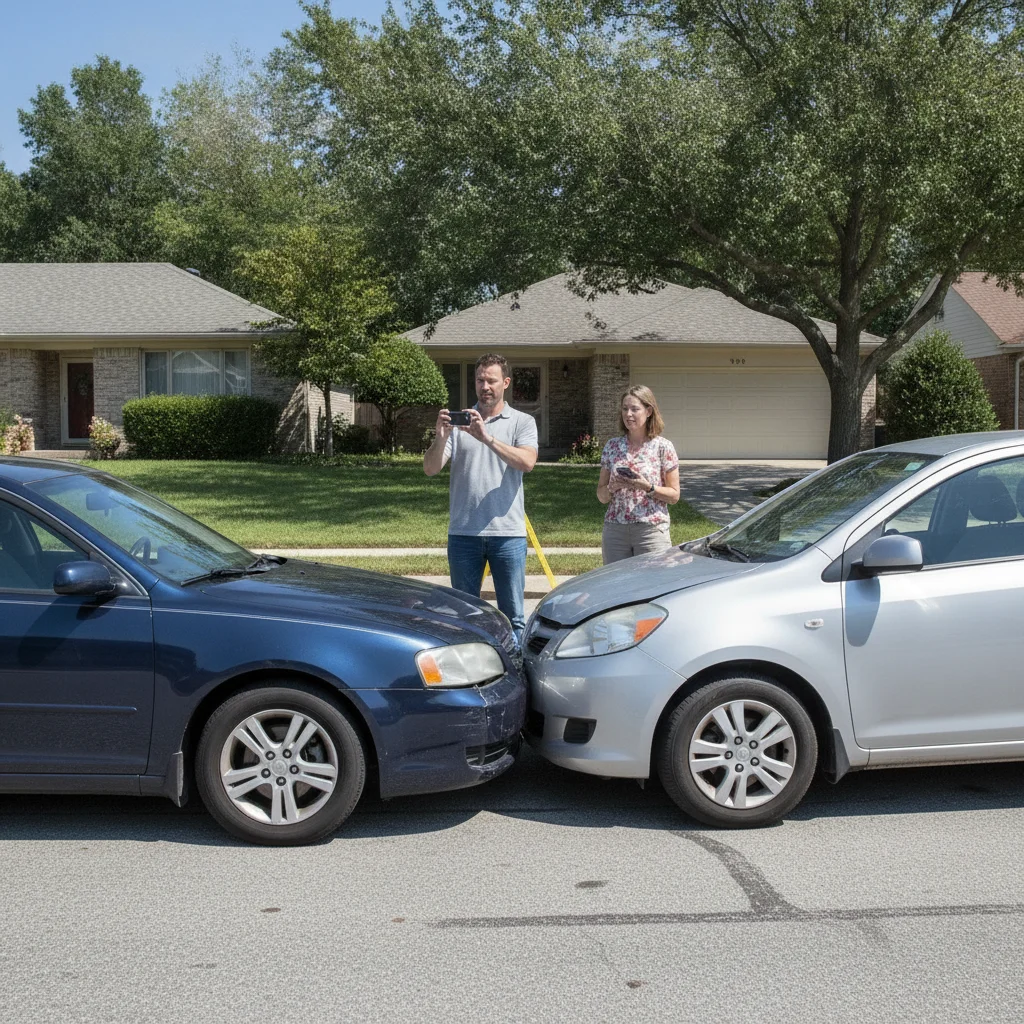
Documentation gathered in the first few minutes after a collision is often more useful than anything collected later. Photograph and video the following:
- All vehicles from multiple angles, including wide shots showing both vehicles together
- Close-ups of every area of visible damage on all vehicles
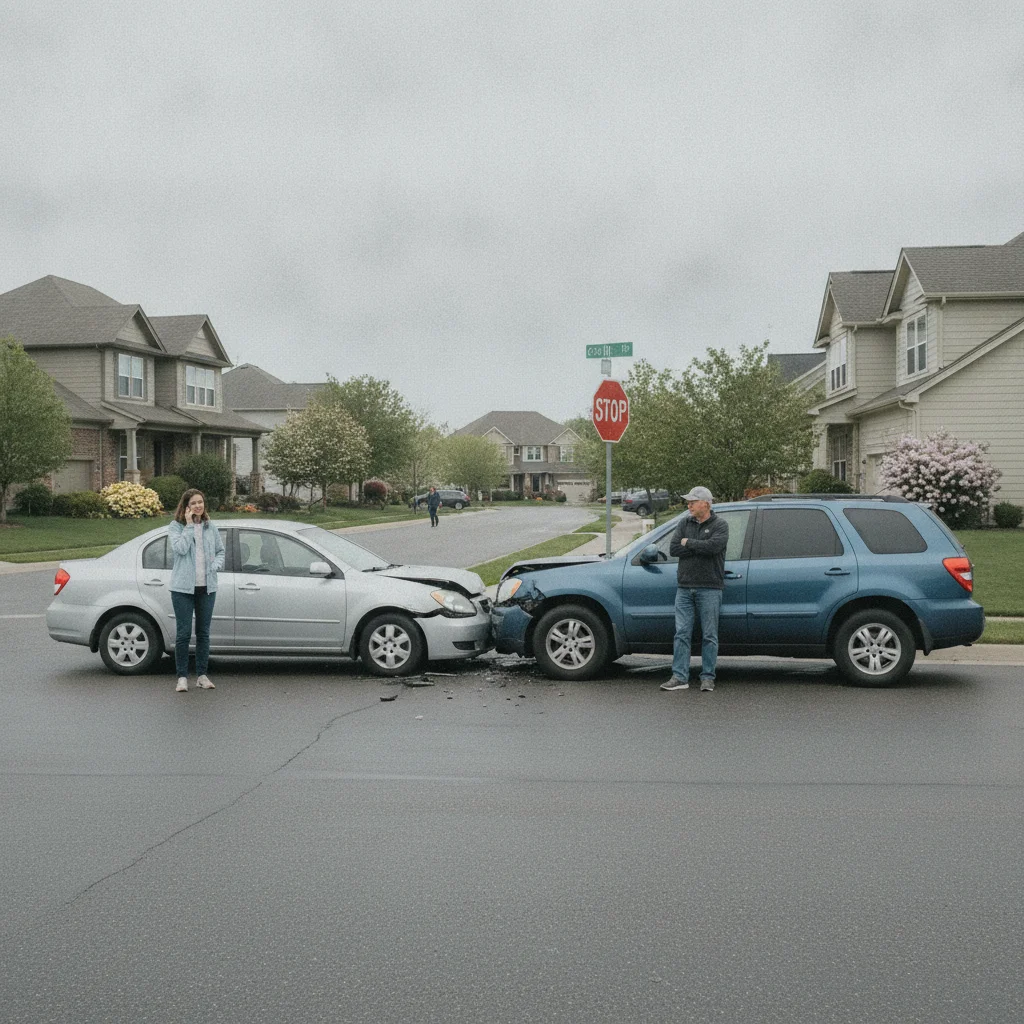
- Road conditions, skid marks, debris, and traffic control signs or signals
- The overall intersection or roadway, including any obscured sightlines
- Any visible injuries, if the affected party consents
- The positions of vehicles before they are moved
A short video narration walking through the scene — describing what you see out loud — can also be useful as a timestamp-verified record of conditions immediately after the crash.
[in_content_images:0]Notify Your Insurance Company
Contact your insurer as soon as you are safely away from the scene — ideally the same day. Most insurers offer 24/7 claims reporting by phone, and many have mobile apps that let you file on the spot. When you call, provide:
- The date, time, and location of the accident
- A factual description of what happened
- The other driver's information and insurance details
- The police report number, if one was generated
- A list of any witnesses
Your insurer will open a claim file and assign a claims adjuster to your case, usually within one business day. That adjuster becomes your primary point of contact for everything that follows.
[important_callout]Cooperate with Your Adjuster's Investigation
Your adjuster's job is to gather facts, determine liability, and quantify the other party's damages. You are legally obligated under your policy to cooperate fully. This typically means:
- Providing a recorded statement describing the accident from your perspective
- Submitting all photos, videos, and notes you collected at the scene
- Granting your insurer access to your vehicle for inspection
- Responding promptly to requests for additional information
The adjuster will also independently review the police report, inspect all vehicles, and may canvass for security or dashcam footage from nearby businesses. In more serious accidents, an accident reconstruction specialist may be brought in.
If liability is genuinely disputed, your insurer may conduct a more extended investigation. See our guide on disputed liability for how those cases are handled.
Understand How Liability Is Determined
Adjusters don't simply take one driver's word for what happened. Fault is assigned based on a combination of evidence:
- Police report: Officers often note which driver received a citation, which carries significant weight.
- Physical evidence: Point of impact, vehicle damage patterns, and skid marks help reconstruct the sequence of events.
- Witness statements: Independent witnesses who have no stake in the outcome are particularly persuasive.
- Traffic laws: Right-of-way rules, speed limits, and signage govern who bore legal responsibility.
- Comparative negligence: Many states apportion fault between drivers — if you are found 20% at fault, your insurer covers 80% of the other party's damages.
Once liability is determined, your insurer will notify both parties of the outcome. If you disagree with the finding, you have options — including requesting a re-investigation, filing a complaint with your state's insurance department, or pursuing arbitration.
Track and Verify the Other Party's Claimed Damages
After fault is established, the other party files their damage claims against your liability policy. Your adjuster will review and verify those claims before paying anything. This is where your documentation pays off — adjusters scrutinize:
- Property damage: Repair estimates are cross-checked against the actual damage visible in photos. Inflated or unrelated damage claims are common, and a strong photo record from the scene helps your adjuster push back.
- Medical bills: For bodily injury claims, your insurer reviews medical records, treatment timelines, and whether the injuries are consistent with the type of collision that occurred.
- Lost wages and other economic losses: These require documentation — pay stubs, employer letters, and the like — before they are accepted.
- Pain and suffering: Noneconomic damages are harder to quantify, and adjusters typically apply a multiplier to medical costs as a starting point for negotiation.
Review and Respond to the Settlement Offer
Once your insurer has evaluated all claimed damages, they will make a settlement offer to the other party. As the policyholder, you generally do not control the specific dollar figure — that negotiation happens between your insurer and the claimant (or their attorney). However, you should:
- Confirm that the settlement amount falls within your policy limits
- Understand that if damages exceed your limits, you may face personal exposure
- Consult an attorney immediately if litigation appears likely or if the other party is represented by counsel
For a broader look at what the full claims process looks like from start to finish, our complete roadmap to filing an auto insurance claim walks through each phase in detail.
[important_callout]Close the Claim and Review Your Policy Going Forward
Once the other party accepts a settlement offer and signs a release, the claim is officially closed. Your insurer will update your claims history, which may affect your premium at renewal. After the claim is resolved, take a few minutes to review your coverage:
- Were your liability limits sufficient, or did damages come uncomfortably close to your cap?
- Do you have an umbrella policy to backstop serious accidents?
- Is your documentation process in good shape for the future?
A single at-fault claim often signals the right moment to reassess how much liability protection you actually carry. See our detailed look at how liability insurance responds after an at-fault accident for a full explanation of the coverage mechanics.
Common Complications and How to Handle Them
Most straightforward at-fault accidents resolve without major complications. But a few scenarios consistently create friction, and it helps to know how to respond.
The other party claims injuries that seem inconsistent with the crash
This happens more often than most drivers expect, particularly in low-speed rear-end collisions. Your adjuster is trained to evaluate medical claims in the context of the actual impact — reviewing photos of vehicle damage, accident reconstruction data, and medical records to assess whether the claimed injuries are plausible. If something seems off, flag it to your adjuster and make sure your scene photos are on file.
The other driver is uninsured or underinsured
If you are at fault, this generally does not complicate your liability claim — your insurer pays the other party regardless of whether they carry their own insurance. However, if you are the one who was hit by an uninsured driver, that is a separate issue handled by your uninsured motorist coverage.
Multiple claimants exceed your policy limits
If several people are injured and their total damages exceed your per-occurrence limit, your insurer pays up to that cap — and you may be personally liable for the remainder. This is the scenario that most clearly illustrates why carrying adequate limits, or an umbrella policy, is worth the additional premium cost.
The claim is disputed or goes to litigation
When fault is contested, or when the other party believes they are owed more than your insurer offered, the case may enter formal arbitration or litigation. Your insurer assigns a defense attorney to represent you at no cost to you — that is part of what your premium buys. Your obligation is to cooperate and stay in communication. For more on how disputed claims unfold, see our guide to disputed liability situations.
Do Not Wait to Report the Accident
Most insurers require prompt notification — often within 24 to 72 hours of the accident. Waiting too long can give your insurer grounds to delay or deny coverage entirely. Even if you are unsure whether a claim will be filed, call and report the incident as soon as you are safely away from the scene.
Watch What You Say to the Other Party's Insurer
If the other driver's insurance company contacts you directly, you are under no obligation to give a recorded statement without first consulting your own insurer or an attorney. Adjusters working for the opposing carrier are looking out for their policyholder — not you. Politely decline until you are prepared.
A Signed Release Ends Your Claim Permanently
Once you sign a settlement release — or once the other party signs one with your insurer — the claim is closed. No additional compensation can be sought, even if new injuries or damages surface later. Make sure all losses are fully accounted for before any release is signed.
Protecting Yourself Before the Next Accident Happens
The best time to think about your liability coverage is before you need it. After working through a claim — especially one that came close to your policy limits — most drivers wish they had made different decisions when they first set up their policy.
A few things worth reviewing right now:
- Your liability limits: State minimums protect you from legal penalties, not financial ruin. Consider limits of at least 100/300/100 as a practical floor if your financial situation warrants it.
- An umbrella policy: A personal umbrella policy typically adds $1 million or more in liability protection above your auto and homeowners limits for a few hundred dollars per year. It is one of the most cost-effective forms of financial protection available.
- Your documentation habits: Build the habit of keeping your insurance card current and accessible, and consider installing a dashcam. Dashcam footage has resolved countless disputed claims quickly and definitively.
If you want to understand the full arc of the auto insurance claims process — not just the liability-specific path — our complete roadmap to filing an auto insurance claim covers every phase from first notice through final settlement. And if this is your first time navigating a claim and you want a gentler introduction, Your First Car Accident: A Calm, Step-by-Step Path Through the Claims Process is written specifically for that situation.
Create a Simple Accident Documentation Kit
Keep a small notepad, a pen, and a printed insurance card in your glove compartment. In the stress of an accident, having these on hand helps you collect information systematically rather than relying on memory. Many insurers also offer mobile apps that walk you through the documentation process in real time.
Request Your Claim File if Needed
You have the right to request a copy of your claim file from your insurer at any point during the process. Reviewing it lets you catch errors in the adjuster's notes, verify that your documentation was received, and understand exactly how fault was apportioned — all useful if you need to challenge a decision.
Ask About Rental Coverage Before You Need It
If you caused an accident and the other party's vehicle is undrivable, your liability policy's property damage coverage may need to cover their rental car costs during repairs. Confirm whether your policy includes this and what daily limits apply — surprises here can be costly.
Liability claims can feel overwhelming, especially when you are already dealing with the stress of an accident. But the process is structured and predictable — and understanding it means you can move through each stage with confidence rather than confusion.

All claims are backed by peer-reviewed research. Sources on request.