Key Takeaways
EV Insurance Premium Gap
Electric vehicles typically cost more to insure than comparable gasoline-powered cars. This premium gap exists because EVs carry higher repair costs, require specialized technicians, use expensive battery components, and have higher average purchase prices that lift replacement values. Insurers price policies to reflect the statistically higher payout risk these factors create.
Actuarially, insurers calculate expected loss costs using historical claims data. Because EVs are relatively new and repair data is still maturing, carriers often apply conservative loading factors that push premiums higher until more claims experience accumulates.
The Premium Gap Is Real — and It's Measurable
When EV buyers sit down with insurance quotes for the first time, the numbers often catch them off guard. A driver switching from a Toyota Camry to a Tesla Model 3 can expect their annual premium to jump — not because they became a worse driver, but because the vehicle itself costs significantly more to make whole after an accident.
Data from insurance comparison platforms and industry reports consistently show the gap. According to Bankrate's 2024 analysis, the average annual insurance cost for a Tesla Model Y was roughly $2,200, compared to about $1,600 for a Toyota RAV4 — a gap of nearly 38%. The Insurance Institute for Highway Safety and LendingTree have documented similar spreads across multiple EV models and geographic markets.
~27%
Average EV insurance premium above gas-car equivalent
According to Bankrate's 2024 auto insurance analysis comparing EV and gas-car premiums across major models.
$10K–$20K+
Typical EV battery pack replacement cost
Cost range for full battery replacement across common EV models, per repair industry data compiled by iSeeCars and repair cost aggregators.
~$55,000
Average new EV transaction price in the U.S.
Kelley Blue Book new-vehicle transaction price data for 2023, compared to approximately $43,000 for all new vehicles combined.
30%+
Higher likelihood of total loss after collision (EVs vs. gas cars)
Mitchell International claims data indicating EVs are totaled more frequently than gas-powered vehicles following comparable collision events.
3–5x
Longer parts lead times for EV-specific components
Repair industry estimates citing proprietary EV parts sourcing timelines versus common gas-car replacement parts availability.
The gap isn't uniform. A Chevrolet Equinox EV — priced around $35,000 — costs meaningfully less to insure than a Rivian R1T starting above $70,000. But even lower-priced EVs tend to carry premiums above their gas equivalents. Understanding why that gap exists is the first step toward doing something about it. For a deeper look at the specific variables insurers weight, see the key factors that determine your EV insurance premium.
Higher Purchase Price, Higher Stakes for the Insurer
Auto insurance premiums for comprehensive and collision coverage are fundamentally tied to one number: what it would cost to replace or repair the vehicle. EVs have a higher average transaction price than gas cars across virtually every segment. When the insurer's maximum liability goes up, so does your premium.
The average new EV transaction price in the U.S. sat around $55,000 in 2023, according to Kelley Blue Book — roughly $12,000 above the industry average for all new vehicles. That elevated sticker price flows directly into the actuarial math. A totaled $55,000 vehicle costs the insurer far more than a totaled $43,000 vehicle, and premiums are priced accordingly.
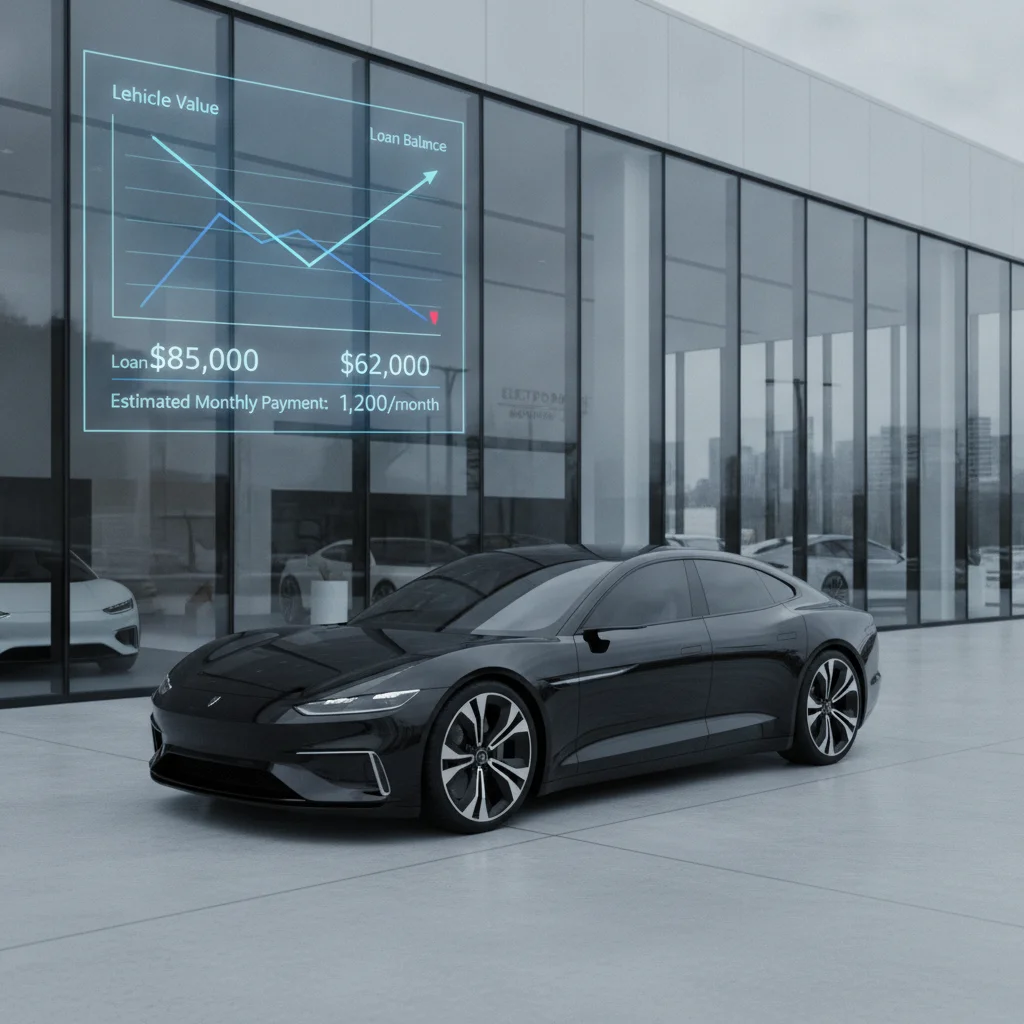
Depreciation adds another wrinkle. Some EVs — particularly first-generation models or those in competitive segments — depreciate faster than the loan payoff schedule. That mismatch creates a window where you owe more than the car is worth. If the vehicle is totaled during that window, your standard policy pays actual cash value, not what you owe. This is why gap insurance is particularly worth considering for EV buyers.
Lock In Your Vehicle's Value Before a Claim
Some insurers offer agreed value or stated value policies for EVs, which can protect you from depreciation-driven underpayment after a total loss. Ask your insurer specifically whether an agreed value option exists for your model. It's more common with specialty and enthusiast vehicles but is increasingly available for mainstream EVs.
Use Low Annual Mileage as a Negotiating Tool
If you drive fewer than 10,000 miles per year — common among EV owners who use public transit for part of their commuting — proactively report this to your insurer. Many carriers offer low-mileage discounts or pay-per-mile structures that can cut premiums by 15–30% for genuinely light drivers.
Battery Packs: The Biggest Wildcard in EV Repair Costs
No single component drives EV insurance costs higher more than the battery pack. In a gasoline car, the engine and transmission are expensive, but many collisions leave them unaffected. An EV's battery pack sits low in the vehicle — typically under the floor — making it vulnerable to undercarriage impacts, road debris, and flood damage in ways that gas-car powertrains are not.
A full replacement battery for common EVs ranges from roughly $10,000 to over $20,000 before labor, depending on the model and chemistry. Even partial battery damage can trigger a recommendation for full replacement because the cost of individually diagnosing and swapping cells often exceeds the cost of a new pack. The result: collisions that would produce a $3,000–$5,000 repair bill on a gas car can become a total-loss declaration on an EV.
“The battery is the single biggest driver of EV claim severity. A relatively minor collision that touches the battery floor can immediately triple or quadruple the expected repair cost compared to an equivalent gas-car incident. Insurers have no choice but to price for that exposure.”
— Josh Damico, Vice President of Insurance Operations, Jerry (quoted in industry analysis, 2023)
The total-loss threshold amplifies the financial risk to insurers. When a vehicle is totaled, the insurer pays out the full actual cash value — which on a late-model EV can be substantial. Higher total-loss frequency on EVs is one of the clearest actuarial signals driving elevated premiums. For context on what routine maintenance looks like without that battery drama, EV maintenance basics is a useful read.
Not All EV Models Carry the Same Premium
The insurance premium gap between EVs and gas cars is an average, not a rule. A Chevy Equinox EV or Nissan Leaf can carry premiums very close to their gas equivalents, while a Lucid Air or Rivian R1S may cost twice as much to insure as a comparably-sized gas SUV. Always compare quotes specific to your model before drawing conclusions about EV insurance costs broadly.
Repair Infrastructure Is Expanding — Rates May Follow
As automakers expand certified repair networks and independent shops earn high-voltage certifications, the labor cost differential between EV and gas-car repairs is beginning to narrow in some markets. Insurers that update their models frequently may already be pricing this in, which is another reason to shop broadly rather than renewing on autopilot.
Repair Network Gaps Drive Up Labor Costs and Cycle Times
Even when an EV can be repaired rather than replaced, the repair process is more complex and often more expensive than a comparable gas-car job. Most EVs require technicians with high-voltage certification to safely work on the electrical systems, and not every body shop in every market has that workforce. Automakers like Tesla, Rivian, and BMW have authorized repair networks, but those networks are thinner — especially outside major metro areas.
When certified shops are scarce, a few things happen: prices go up because demand exceeds supply, and cycle times extend because vehicles wait longer for open repair bays. Longer cycle times mean longer rental car claims, which adds to the insurer's total cost per claim. Parts availability compounds this — proprietary EV components can carry multi-week lead times compared to days for common gas-car parts.
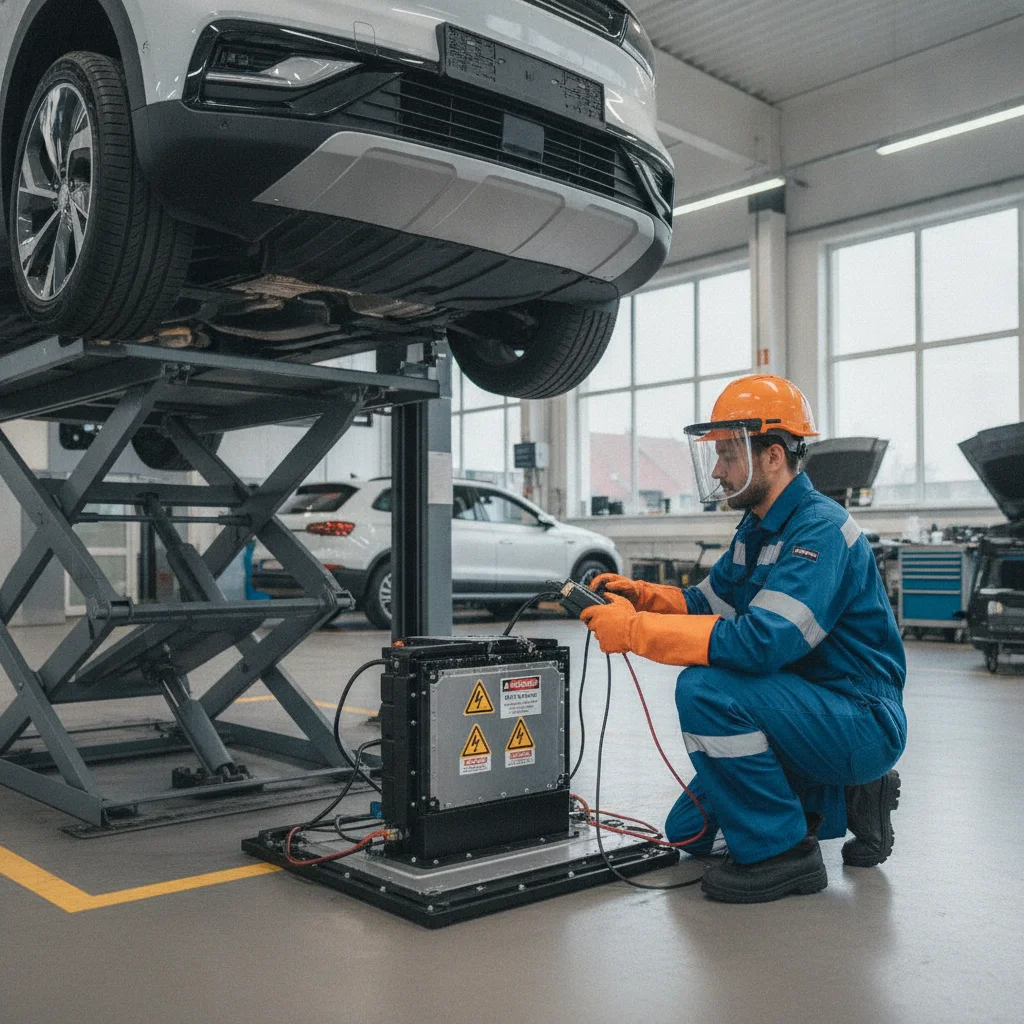
Geography matters here significantly. An EV owner in San Francisco or Seattle, where repair infrastructure is relatively dense, faces different insurance dynamics than one in rural Wyoming or northern Maine. Where you live affects EV insurance rates more than many owners realize, and repair shop availability is a central reason why.
Not All EV Models Carry the Same Premium
The insurance premium gap between EVs and gas cars is an average, not a rule. A Chevy Equinox EV or Nissan Leaf can carry premiums very close to their gas equivalents, while a Lucid Air or Rivian R1S may cost twice as much to insure as a comparably-sized gas SUV. Always compare quotes specific to your model before drawing conclusions about EV insurance costs broadly.
Repair Infrastructure Is Expanding — Rates May Follow
As automakers expand certified repair networks and independent shops earn high-voltage certifications, the labor cost differential between EV and gas-car repairs is beginning to narrow in some markets. Insurers that update their models frequently may already be pricing this in, which is another reason to shop broadly rather than renewing on autopilot.
Specialized Parts and OEM Requirements
Beyond the battery, EVs carry a range of proprietary components — power inverters, onboard chargers, thermal management systems, regenerative braking assemblies — that don't have aftermarket equivalents in the way common gas-car parts do. When a bumper cover or fender on a combustion vehicle needs replacement, a body shop can often source a quality aftermarket part quickly and cheaply. That flexibility rarely exists for EV-specific components.
Some automakers explicitly require OEM (original equipment manufacturer) parts for warranty and safety compliance, and many certified repair shops are contractually bound to use them. OEM parts carry manufacturer pricing and are subject to the same supply constraints as any new-vehicle component. The practical effect is that parts costs on EV repairs run higher than comparable gas-car claims, and the insurer's modeled loss cost reflects that.
It's worth noting that this dynamic is evolving. As the EV parc (total EVs on the road) grows, aftermarket parts suppliers are entering the space, and independent repair shops are investing in high-voltage training. Insurers that update their rate models to reflect these improvements will eventually offer more competitive pricing — but the transition is gradual. For a broader look at how these factors play out in premium calculations, how EVs are rated differently under the hood offers useful context.
What EV Owners Can Actually Do About It
Understanding the drivers of higher EV premiums is useful, but the practical question is: what levers does an owner have? The answer is more than many people assume.
Shop multiple carriers, including EV-specific options
Rate-setting philosophy varies widely across insurers. Some carriers have invested in EV-specific actuarial models that price more precisely; others apply broad loading factors that overcharge. Tesla Insurance, available in a growing number of states, uses real-time driving data from the vehicle itself to set rates — a model that rewards cautious drivers meaningfully. Mainstream carriers like Nationwide, Travelers, and GEICO have also developed more refined EV pricing.
Adjust coverage structure strategically
Raising your comprehensive and collision deductibles from $500 to $1,000 or $2,000 can produce meaningful premium reductions. For an EV where minor fender-benders can still trigger large repair bills, a higher deductible is a reasonable self-insurance strategy — especially if you have the cash reserves to cover it.
Take advantage of low-mileage and telematics programs
EVs are disproportionately used as primary commuter vehicles and are often driven fewer miles than the average gas car. Low-mileage discounts and pay-per-mile policies (like Metromile or Mile Auto) can produce significant savings. Some carriers also offer telematics discounts tied to smooth acceleration and braking patterns — habits that EV drivers often naturally develop due to regenerative braking.
Lock In Your Vehicle's Value Before a Claim
Some insurers offer agreed value or stated value policies for EVs, which can protect you from depreciation-driven underpayment after a total loss. Ask your insurer specifically whether an agreed value option exists for your model. It's more common with specialty and enthusiast vehicles but is increasingly available for mainstream EVs.
Use Low Annual Mileage as a Negotiating Tool
If you drive fewer than 10,000 miles per year — common among EV owners who use public transit for part of their commuting — proactively report this to your insurer. Many carriers offer low-mileage discounts or pay-per-mile structures that can cut premiums by 15–30% for genuinely light drivers.
The most common mistake EV buyers make is accepting the first insurance quote they receive. The spread between the cheapest and most expensive quotes for the same EV can easily exceed $800 annually. Shopping matters, and it matters more for EVs than for most gas cars. For a reality check on beliefs that might be costing you money, common EV insurance myths is worth reading before you renew.
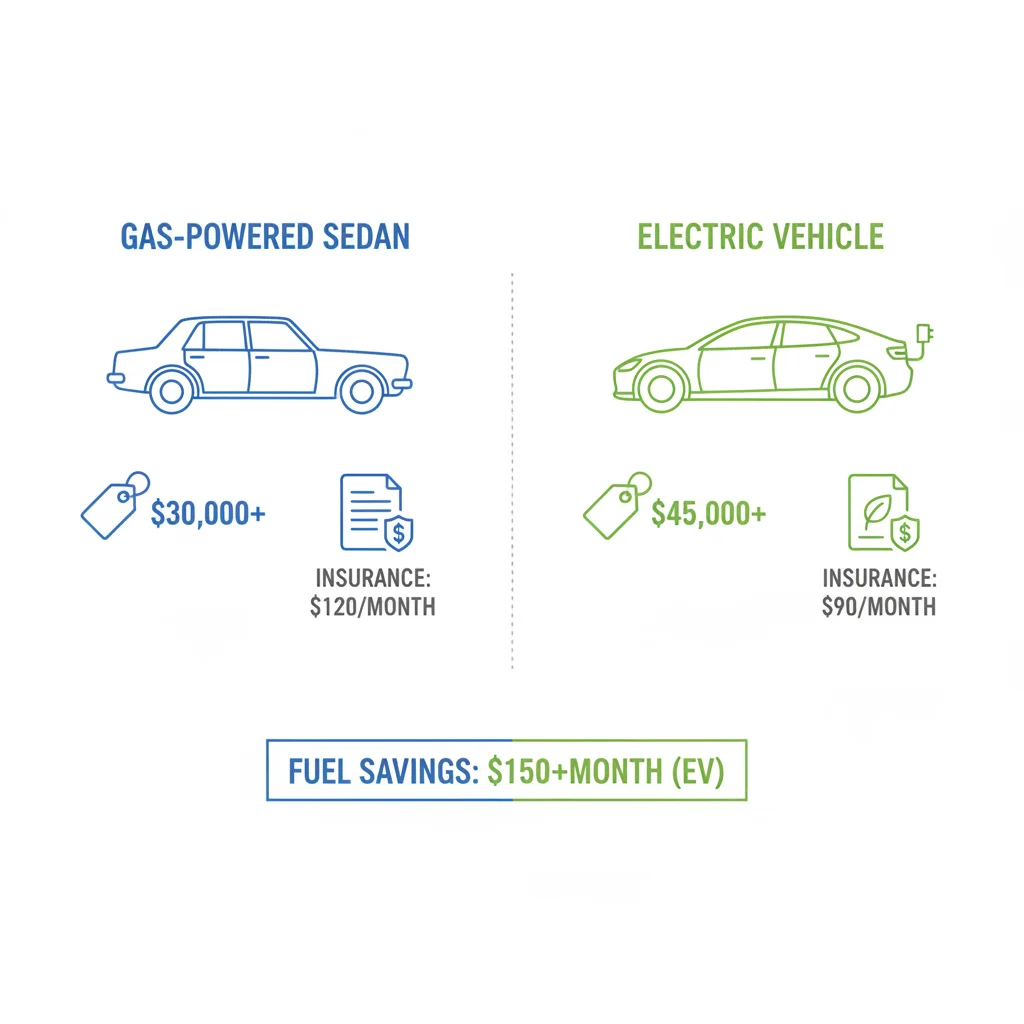
Finally, keep the total ownership cost picture in mind. EVs typically save owners money on fuel and routine maintenance — charging costs are substantially lower than gasoline over the life of the vehicle. A higher insurance premium may be a real headwind, but it rarely erases the overall economic case for going electric.
All claims are backed by peer-reviewed research. Sources on request.