| Average EV premium vs. ICE equivalent | 15–25% higher (Insurance.com, 2024 EV Insurance Rate Analysis) |
| Average battery replacement cost | $8,000–$20,000+ (AAA, 2023) |
| Telematics savings potential | Up to 30% (Varies by insurer program) |
| Typical EV repair cycle time vs. ICE | 3–4 days longer on average (Mitchell International, 2023 Industry Trends Report) |
| Key EV-specific rating factors | Battery capacity, repair network, vehicle MSRP, ADAS complexity |
| Coverage often not included in standard policy | Battery degradation, charging cable theft, software loss |
Why EV Insurance Is Priced Differently
Shopping for insurance on an electric vehicle isn't quite the same exercise as insuring a gas-powered sedan. Underwriters are working with a different risk profile — one defined by expensive battery packs, a still-maturing repair infrastructure, and vehicle values that depreciate in patterns traditional actuarial models weren't built to predict.
The result is that EV premiums tend to run higher than equivalent ICE vehicles, though the gap has been narrowing as insurers accumulate claims data. Understanding which factors move the needle — and by how much — puts you in a better position to shop policies, choose coverage limits, and even select a vehicle with insurance costs in mind.
The variables below are the core rate factors insurers evaluate specifically or more heavily for EVs. For a broader look at how age, driving record, and location affect your rate alongside these EV-specific considerations, see the Rate Factors hub.
| Average EV premium vs. ICE equivalent | 15–25% higher (Insurance.com, 2024 EV Insurance Rate Analysis) |
| Average battery replacement cost | $8,000–$20,000+ (AAA, 2023) |
| Telematics savings potential | Up to 30% (Varies by insurer program) |
| Typical EV repair cycle time vs. ICE | 3–4 days longer on average (Mitchell International, 2023 Industry Trends Report) |
| Key EV-specific rating factors | Battery capacity, repair network, vehicle MSRP, ADAS complexity |
| Coverage often not included in standard policy | Battery degradation, charging cable theft, software loss |
Battery Pack: The Biggest Cost Driver
The high-voltage battery is simultaneously the most valuable component in an EV and the most expensive to repair or replace. A replacement battery pack for a mid-range electric crossover can range from $8,000 to over $20,000 depending on capacity, chemistry, and the manufacturer's parts pricing. Insurers know this and price accordingly.
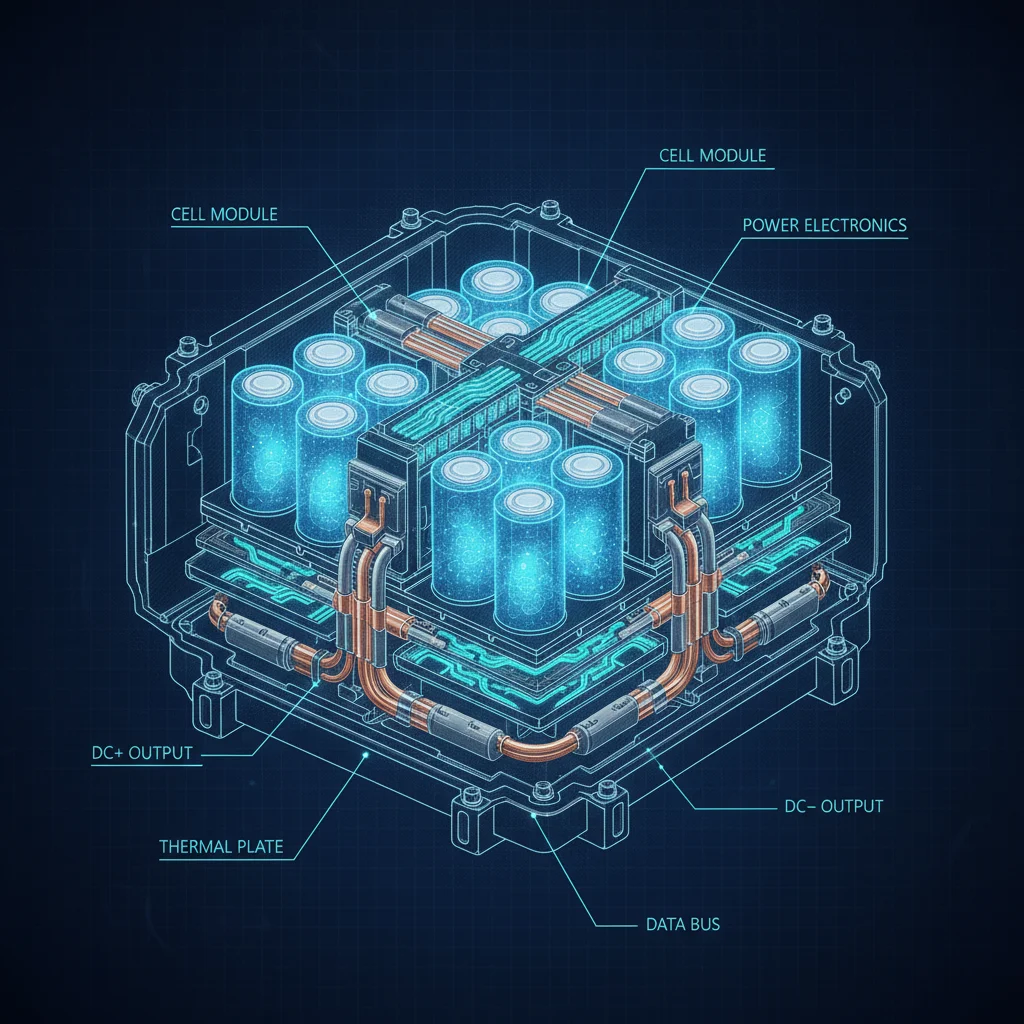
Two battery-related variables matter most to underwriters:
- Battery capacity (kWh): Larger packs store more energy and cost more to produce. A 100 kWh pack in a long-range luxury EV will typically carry a higher replacement cost — and thus a higher insured value — than a 40 kWh pack in a compact city EV.
- Battery condition and warranty status: Some insurers differentiate between batteries still under manufacturer warranty and those that have aged out. A degraded pack outside warranty represents a higher net loss if the vehicle is totaled.
Battery damage doesn't always require a full replacement, but when high-voltage cells are compromised in a collision, most certified technicians can't simply swap individual modules — the entire pack often has to go. For a deeper dive into how this plays out in total-loss scenarios, read what happens to your insurance when an EV battery is totaled.
$20,000+
Peak battery pack replacement cost for large EVs
AAA estimates replacement costs for long-range EV battery packs can exceed $20,000 including labor, a primary driver of higher insured vehicle values.
25%
Higher average collision claim cost for EVs vs. ICE
According to Mitchell International's 2023 Industry Trends Report, EV collision repairs cost approximately 25% more on average than equivalent non-EV vehicles.
3–4 days
Longer average repair cycle time for EVs
Mitchell International data shows EVs spend measurably more time in repair facilities, increasing rental reimbursement exposure per claim.
Vehicle Purchase Price and Trim Level
Comprehensive and collision coverage are priced against the cost to repair or replace the vehicle. Because EVs carry a meaningful price premium over comparable ICE alternatives — driven largely by battery costs — the base insured value is higher before a single risk factor is applied.
Trim level compounds this. A dual-motor all-wheel-drive variant with a larger battery and premium electronics package can cost $15,000–$25,000 more than the base model of the same vehicle. That gap translates directly into higher comprehensive and collision premiums.
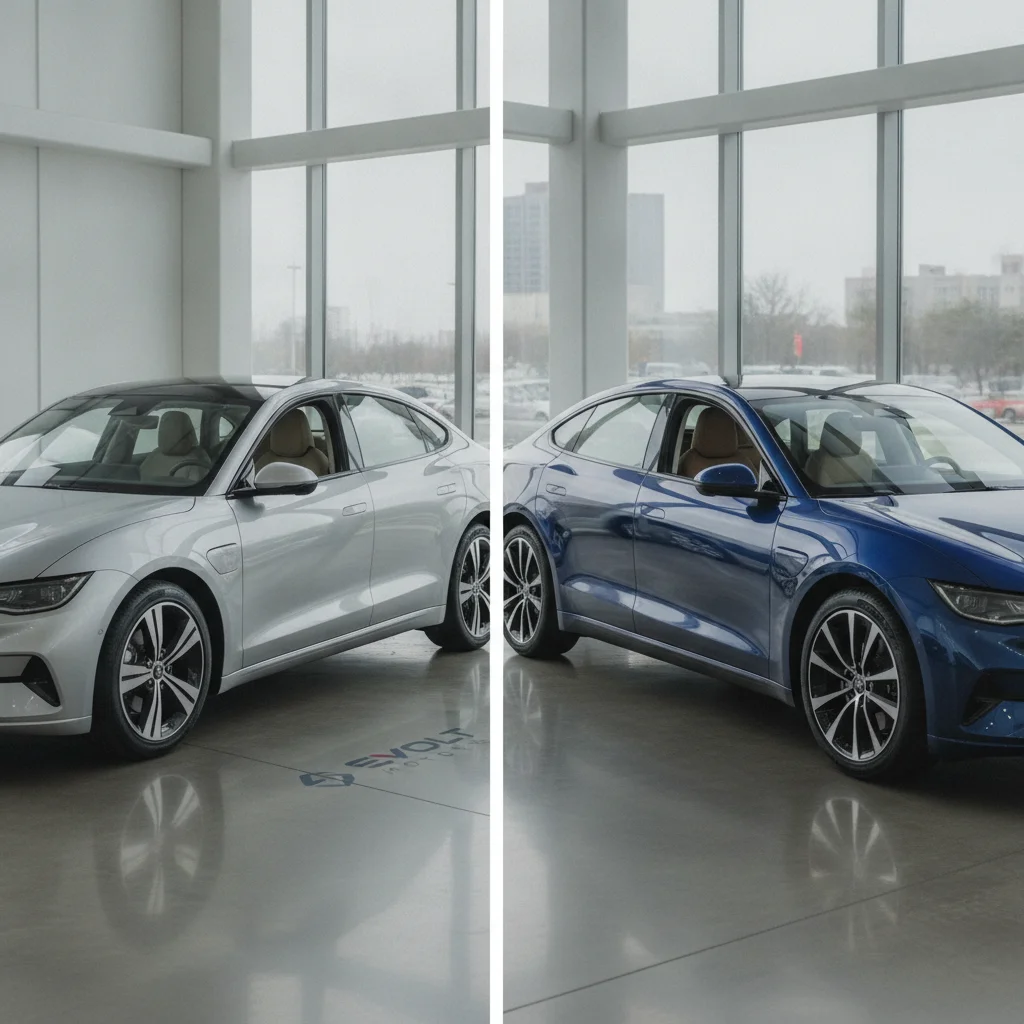
It's worth noting that federal and state EV tax credits can reduce your effective purchase price, but insurers insure the vehicle's replacement value, not what you paid after incentives. Check the EV Tax Credits hub for how credits affect your net cost — but don't expect them to lower your insured value.
Tax Credits Don't Lower Your Insured Value
Federal EV tax credits of up to $7,500 reduce what you pay at purchase, but insurers base comprehensive and collision coverage on the vehicle's replacement cost — not your net purchase price. Don't expect your premium to reflect the credit. Confirm your coverage limits reflect the vehicle's actual replacement value.
Telematics Programs and EV Drivers
EV drivers with consistent, lower-mileage commuting habits are often well-positioned to benefit from telematics programs. Smooth regenerative braking can score favorably under hard-braking metrics. Before enrolling, review what data the insurer collects, how long it's retained, and whether a poor initial score can raise your rate above the standard baseline.
Review Your Policy's EV-Specific Exclusions
Many standard auto policies were written before EV ownership became mainstream. Battery degradation, charging equipment, and software-related losses are often excluded or ambiguously covered. Ask your insurer directly how each of these scenarios is handled, and consider carriers that offer EV-specific endorsements or dedicated EV policies.
Repair Network Availability and Labor Complexity
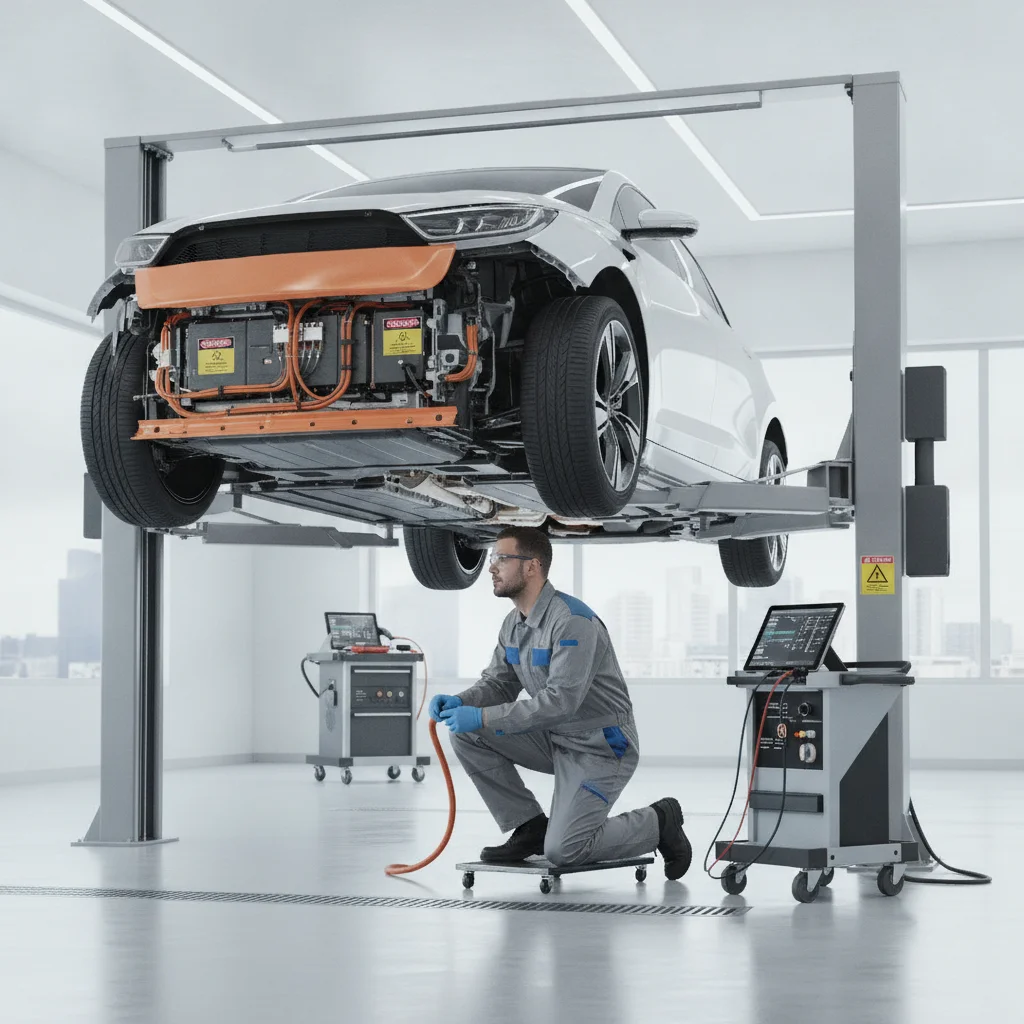
One of the least-discussed but most impactful EV insurance variables is the availability of certified repair technicians in your area. EVs require technicians trained to work safely with high-voltage systems — and that training isn't universal. In markets where certified shops are sparse, a damaged EV may sit waiting for repair authorization, parts sourcing, and an available qualified tech for weeks longer than a comparable gas vehicle.
Extended repair timelines increase rental reimbursement costs, which feeds back into premiums. Insurers in markets with thin EV repair networks have observed materially longer cycle times per claim and price their rates to reflect that exposure.
- Brand-specific repair networks: Some manufacturers require damage repairs be performed at authorized body shops using proprietary diagnostic tools. This limits the competitive bidding that keeps repair costs down.
- Parts availability: Proprietary components — particularly structural parts designed around battery protection — can have long lead times if not stocked domestically.
- Over-the-air updates and recalibration: After a collision involving cameras, radar, or ultrasonic sensors, full ADAS recalibration is required. That adds both parts and labor costs beyond what a traditional body shop repair would entail.
The full breakdown of how these repair dynamics affect your premium is covered in why EV repair costs are higher and what that means for your premium.
High-voltage battery pack
The primary energy storage system in an EV, typically operating at 400V or 800V. It is the most expensive single component to repair or replace, and its condition and capacity are key underwriting variables.
ADAS (Advanced Driver Assistance Systems)
Sensor-based safety technologies including automatic emergency braking, lane-keep assist, and adaptive cruise control. After a collision, ADAS components must be recalibrated, adding to repair costs.
EVSE (Electric Vehicle Supply Equipment)
The technical term for EV charging equipment, including the cable, connector, and control electronics that manage power delivery from a wall outlet or charging station to the vehicle.
Battery degradation
The gradual reduction in a battery pack's capacity and range over time due to charge cycles and age. Typically excluded from auto insurance as a mechanical failure, not a sudden physical loss.
Telematics
Insurance programs that use an app or plug-in device to monitor driving behavior — including speed, braking, and mileage — and adjust your premium based on actual risk rather than demographic proxies.
Actual Cash Value (ACV)
The market value of a vehicle at the time of a loss, accounting for depreciation. EV battery degradation can complicate ACV calculations because it affects both range and resale value.
Vehicle Range, Usage Patterns, and Telematics
Range isn't a direct pricing variable in most standard underwriting models, but it correlates with factors that are. A vehicle rated for 350 miles of range typically carries a larger battery (higher replacement cost), a higher purchase price, and potentially a more powerful motor — all of which increase the insured value and repair cost.
Usage patterns matter alongside range. EV drivers who rely heavily on DC fast charging — especially for long highway runs — put more stress on battery cells over time, which some insurers are beginning to factor into usage-based programs. Telematics policies that monitor:
- Miles driven per day
- Frequency and duration of fast-charging sessions
- Hard braking and acceleration events
- Time-of-day driving patterns
...can either reduce your premium if you drive conservatively or increase it if your data reflects higher-risk behavior. For EV drivers with predictable, lower-mileage commuting patterns, telematics programs often produce meaningful savings — sometimes 10–30% off a base rate, depending on the insurer.
Tax Credits Don't Lower Your Insured Value
Federal EV tax credits of up to $7,500 reduce what you pay at purchase, but insurers base comprehensive and collision coverage on the vehicle's replacement cost — not your net purchase price. Don't expect your premium to reflect the credit. Confirm your coverage limits reflect the vehicle's actual replacement value.
Telematics Programs and EV Drivers
EV drivers with consistent, lower-mileage commuting habits are often well-positioned to benefit from telematics programs. Smooth regenerative braking can score favorably under hard-braking metrics. Before enrolling, review what data the insurer collects, how long it's retained, and whether a poor initial score can raise your rate above the standard baseline.
Review Your Policy's EV-Specific Exclusions
Many standard auto policies were written before EV ownership became mainstream. Battery degradation, charging equipment, and software-related losses are often excluded or ambiguously covered. Ask your insurer directly how each of these scenarios is handled, and consider carriers that offer EV-specific endorsements or dedicated EV policies.
Home Charging Setup, Location, and Coverage Gaps
Where you charge and how you've set up your home charging infrastructure introduces a category of risk that doesn't exist for ICE vehicle owners.
Home Charging Equipment
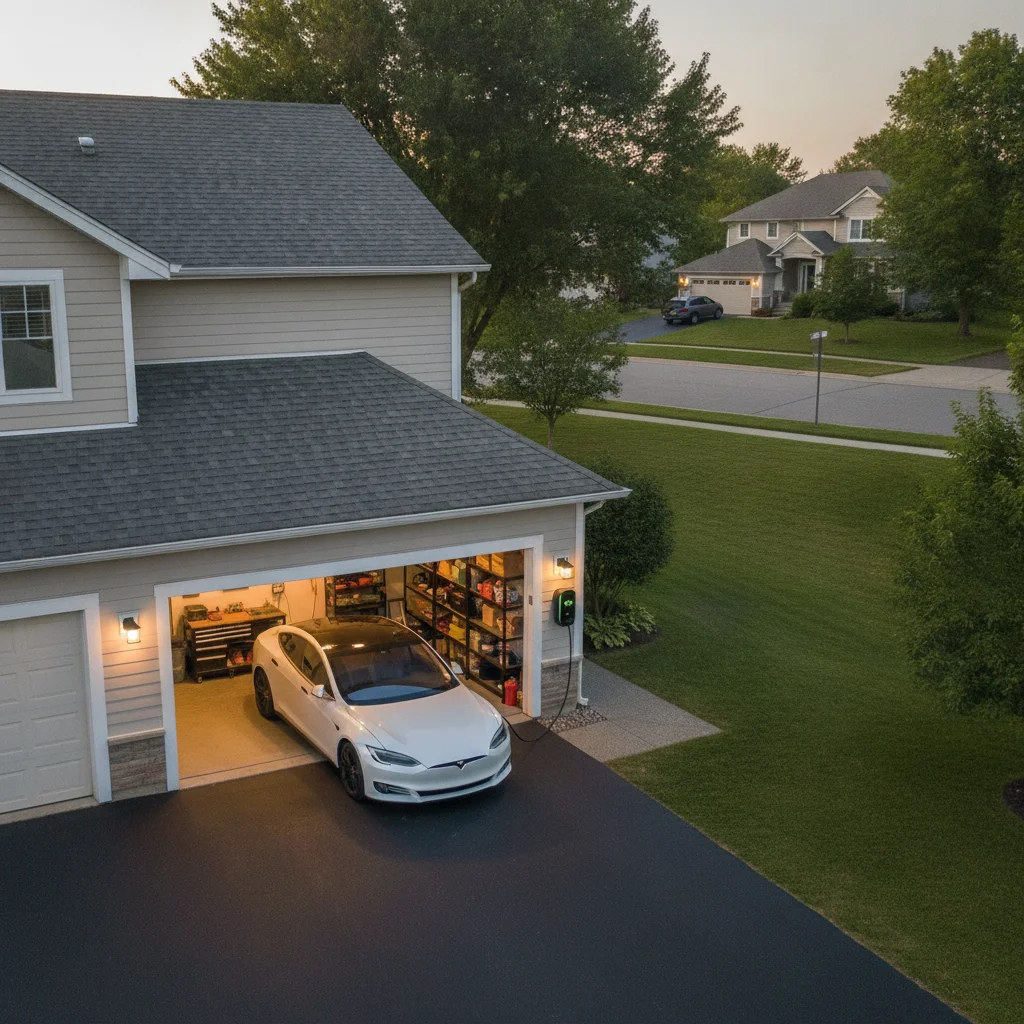
A Level 2 charger (240V EVSE) installed in a residential garage is generally covered under homeowner's or renter's insurance, not your auto policy. But a mobile Level 1 cord set stored in the vehicle may be treated as vehicle equipment — or as personal property — depending on your insurer. It's worth confirming with your agent exactly how your charging equipment is classified.
Location-Based Risk Factors
Standard location risk factors — ZIP code theft rates, weather exposure, traffic density — apply to EVs just as they do to any vehicle. But some additional considerations emerge:
- Flood risk: High-voltage battery packs can be severely damaged by flood exposure. In flood-prone areas, comprehensive coverage becomes more critical than it might be for an ICE vehicle.
- Hail and storm damage: Glass roofs and large flat hood surfaces common on EVs can sustain more costly hail damage than traditional vehicles.
- Parking environment: Vehicles parked in public charging locations overnight may face elevated theft or vandalism exposure depending on the neighborhood.
Coverage Gaps to Watch
Standard auto policies weren't written with EVs in mind. Review your policy for how it handles: battery degradation (typically excluded as a mechanical failure), charging cable theft, and software-related losses. Some EV-specialist insurers and standard carriers with EV-specific endorsements have begun addressing these gaps explicitly.
When evaluating insurers, don't overlook financial strength. A carrier's ability to pay claims is as important as coverage terms — see how to read insurer financial strength ratings before committing to a policy.
EV Insurance Rate Comparison Tool
Compare EV insurance quotes side by side across major carriers. Useful for identifying which insurers offer EV-specific endorsements or telematics discounts in your state.
Mitchell International Annual Industry Trends Report
Annual collision repair data including EV vs. ICE repair cost comparisons, cycle time analysis, and parts cost trends — the primary data source insurers use to calibrate EV premiums.
AAA EV Ownership Cost Calculator
AAA's ownership cost tool breaks down insurance, charging, maintenance, and depreciation for specific EV models so you can compare total cost of ownership before buying.
NAIC Consumer Insurance Search
The National Association of Insurance Commissioners' tool lets you look up complaint ratios and licensing status for insurers you're considering — a quick check on carrier reliability.
Tax Credits Don't Lower Your Insured Value
Federal EV tax credits of up to $7,500 reduce what you pay at purchase, but insurers base comprehensive and collision coverage on the vehicle's replacement cost — not your net purchase price. Don't expect your premium to reflect the credit. Confirm your coverage limits reflect the vehicle's actual replacement value.
Telematics Programs and EV Drivers
EV drivers with consistent, lower-mileage commuting habits are often well-positioned to benefit from telematics programs. Smooth regenerative braking can score favorably under hard-braking metrics. Before enrolling, review what data the insurer collects, how long it's retained, and whether a poor initial score can raise your rate above the standard baseline.
Review Your Policy's EV-Specific Exclusions
Many standard auto policies were written before EV ownership became mainstream. Battery degradation, charging equipment, and software-related losses are often excluded or ambiguously covered. Ask your insurer directly how each of these scenarios is handled, and consider carriers that offer EV-specific endorsements or dedicated EV policies.
All claims are backed by peer-reviewed research. Sources on request.