Key Takeaways
Gap Insurance
Gap insurance — short for Guaranteed Asset Protection — pays the difference between what your car is currently worth (its actual cash value) and what you still owe on your auto loan or lease when the vehicle is totaled or stolen. Your standard collision or comprehensive insurance only pays out the car's current market value, which is often less than your remaining loan balance due to depreciation. Gap insurance covers that shortfall so you're not stuck paying off a car you no longer have.
Gap insurance is a debt-cancellation product, not technically a traditional insurance policy in all states. It pays your lender directly, not you, and only triggers after your primary insurer settles the total loss claim.
The Problem Gap Insurance Solves
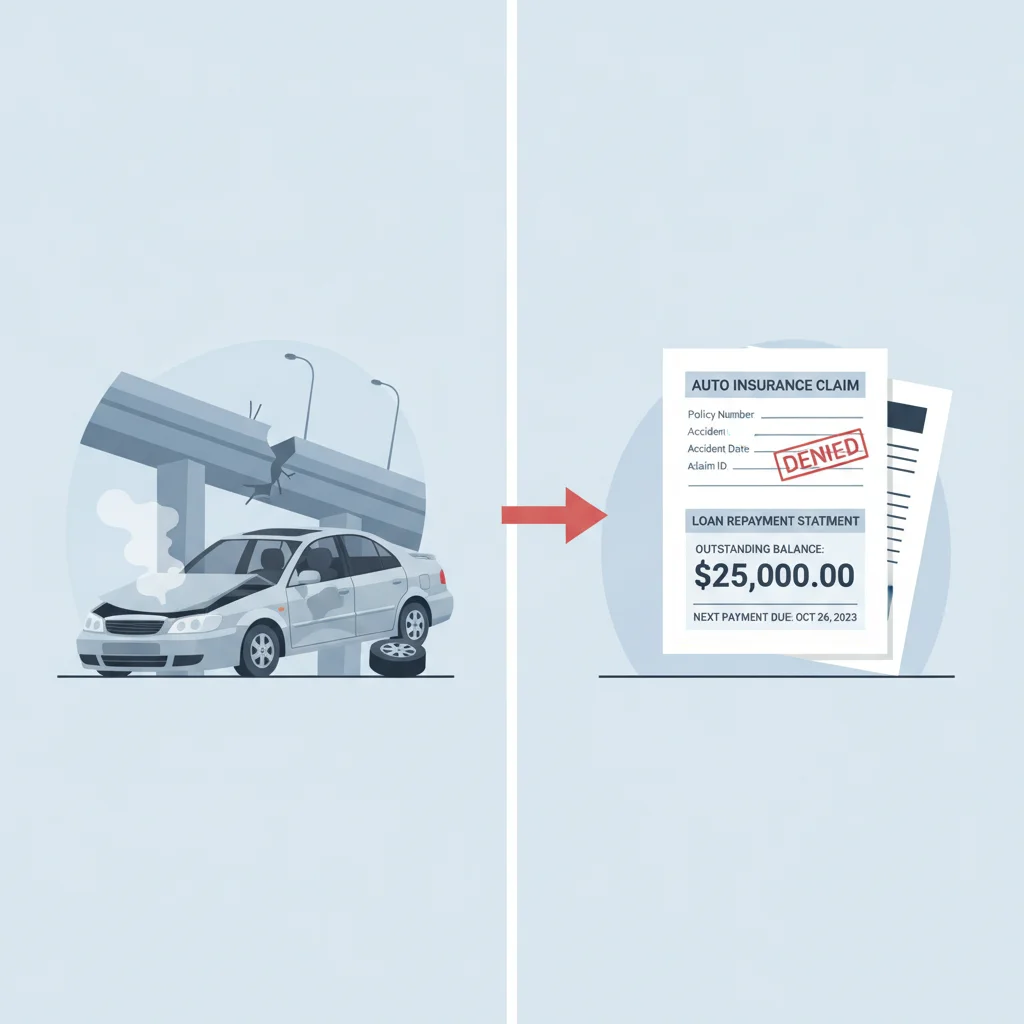
Here's the scenario nobody thinks about when they're signing loan paperwork: you drive off the lot, and three months later a distracted driver totals your car. Your insurer pays you the car's current market value — let's say $28,000. But your loan payoff is $34,000. You now owe $6,000 on a car that's sitting in a salvage yard. That $6,000 doesn't disappear. You still owe it to the lender, and you still have to pay it, even if you need to turn around and buy another car immediately.
That gap — between what the car is worth and what you owe — is exactly what gap insurance is designed to eliminate. It's not a scam and it's not always unnecessary. For the right driver in the right loan situation, it's one of the few optional F&I products that can deliver real financial protection.
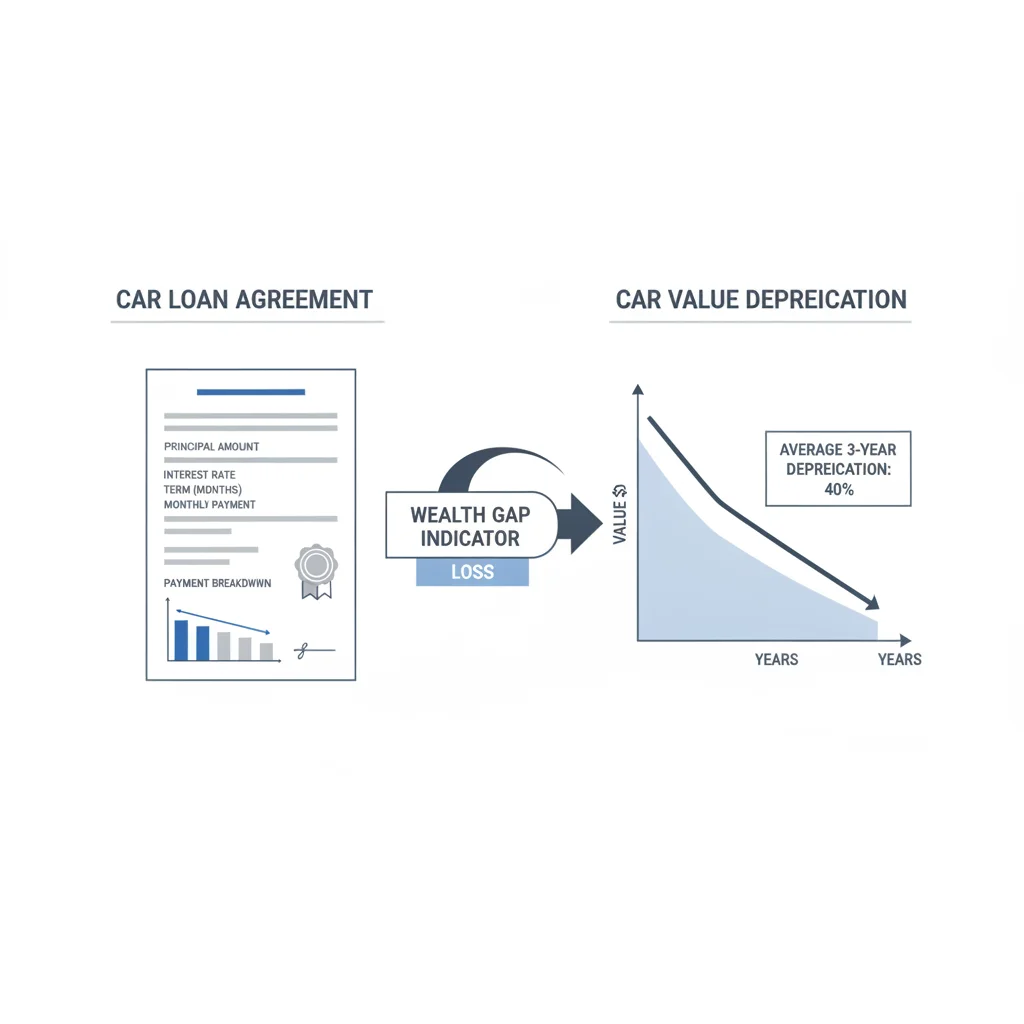
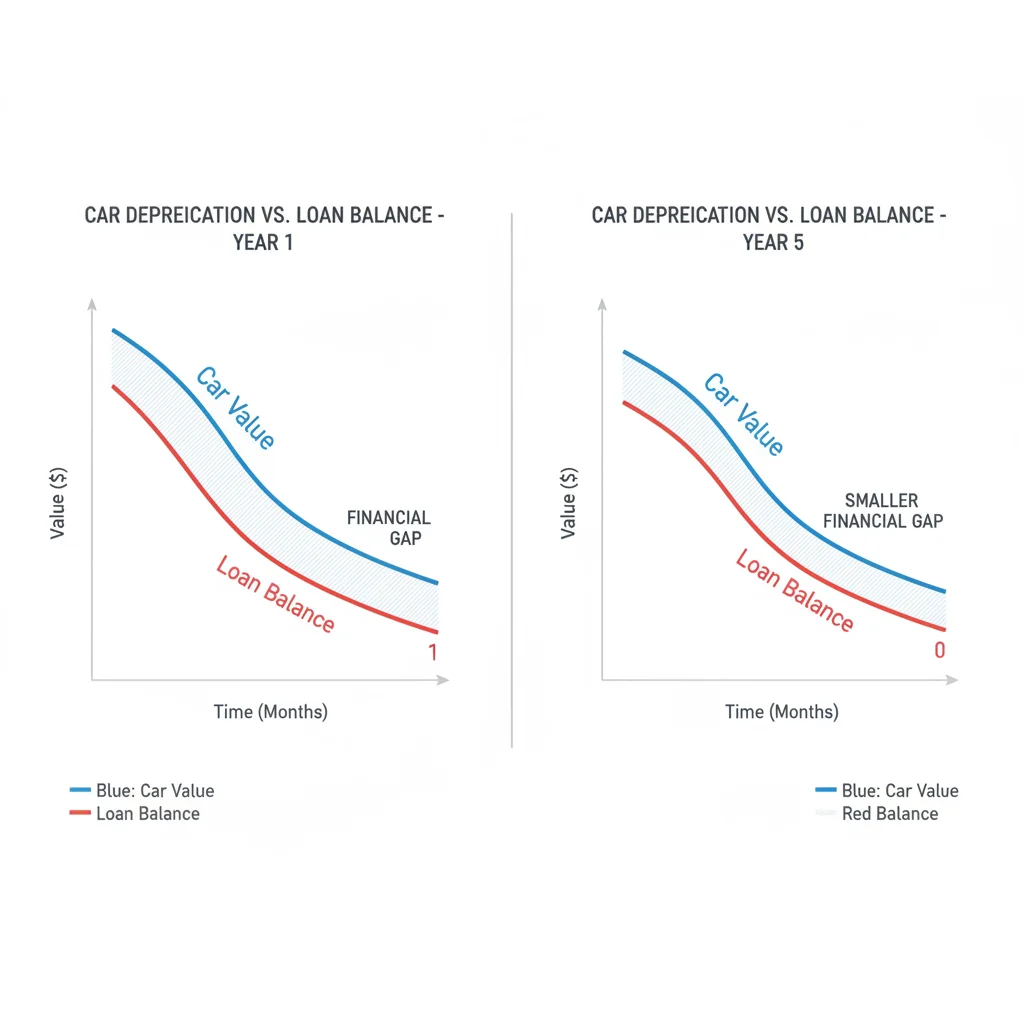
The root cause is depreciation. New vehicles lose value fast — often 15–20% in the first year — while loan balances drop slowly in the early months due to front-loaded interest. That mismatch is widest right after purchase, which is exactly when your financial exposure is highest.
Collision and comprehensive coverage protect your car against damage and theft, but they only pay actual cash value — not what you owe. Gap coverage bridges the rest. Understanding how these layers interact is critical before you decide whether to add it.
What Gap Insurance Actually Covers
Gap insurance is narrowly scoped, and that's important to understand before you pay for it. Here's what it will and won't do:
- Covered: The difference between your loan or lease payoff and your vehicle's actual cash value (ACV) after a total loss determination by your primary insurer
- Covered: The remaining gap after a theft claim is settled and the vehicle is never recovered
- Not covered: Repairs to a damaged vehicle that isn't declared a total loss
- Not covered: Your collision or comprehensive deductible (in most policies)
- Not covered: Missed loan payments, late fees, or other penalties rolled into your balance
- Not covered: Extended warranty or other add-ons that were rolled into your loan balance
That last point is one dealers rarely highlight. If you rolled a $2,000 extended warranty into your loan, gap insurance doesn't cover that portion of the balance. The payout is calculated strictly against the vehicle's ACV — those extra financed products are your problem.
Gap Doesn't Cover What You Rolled Into the Loan
Any products financed into your loan — extended warranties, paint protection packages, tire-and-wheel coverage — are not covered by gap insurance. The gap payout is calculated solely based on the vehicle's actual cash value versus the loan payoff. If you financed $3,000 in add-ons, that portion of the balance is your responsibility regardless of what gap pays.
When to Recalculate Your Exposure
Your gap exposure changes every month as you make payments and the car's market value fluctuates. Reassess every six months using a fresh loan payoff quote and a current valuation from Kelley Blue Book or Edmunds. In fast-depreciating markets — or after a major model refresh that tanks used-car values — the numbers can shift more quickly than expected.
Gap insurance also has payout caps in many policies — typically limiting coverage to 25% above the vehicle's ACV. If you have an unusually large gap due to rolling in previous negative equity, you might still owe money after the claim settles. Find out when gap insurance falls short for underwater borrowers.
20%
Average new car depreciation in year one
According to Carfax, most new vehicles lose 15–20% of their value within the first 12 months of ownership.
~$5,500
Typical gap on a new car at 12 months
Based on average transaction prices and depreciation curves for new vehicles financed with minimal down payments on 72-month loans.
72+ months
Loan terms increasing risk of negative equity
Experian data shows that loans of 73–84 months now represent over 30% of new vehicle financing — the longest terms correlate directly with extended negative equity periods.
$400–$900
Typical dealer gap insurance cost
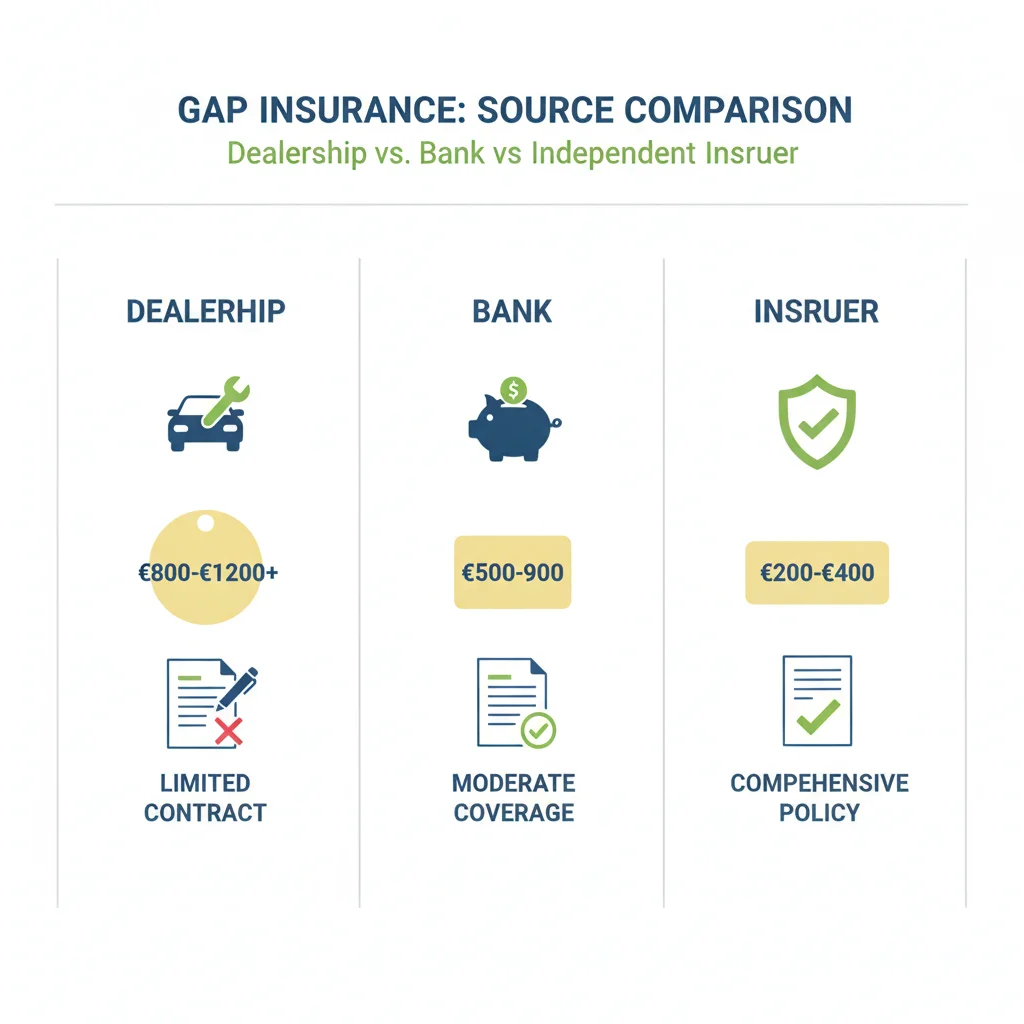
Consumer advocacy groups consistently find dealer-sold gap products priced at 2–4x the cost of equivalent coverage from an insurer or credit union.
$20–$40/yr
Average insurer-sold gap coverage cost
Most major auto insurers offer gap as a policy endorsement for a fraction of what dealers charge, according to insurance industry pricing surveys.
The relationship between gap insurance and physical damage coverage matters operationally too: gap doesn't activate until your primary insurer closes the total loss claim. If you only carry liability insurance, gap insurance is useless — there's no underlying claim to trigger it.
Who Genuinely Needs Gap Insurance
Not every driver needs gap insurance, and paying for it when you don't is pure waste. Here's how to think about your actual exposure:
High-risk situations where gap makes sense
- Low or no down payment: Put down less than 20% and you're likely underwater from day one. The math on a $35,000 car with 5% down and a 72-month loan puts you negative by several thousand dollars for at least two years.
- Long loan terms (72–84 months): The longer the term, the slower you build equity. Depreciation outpaces your paydown for a much longer window.
- Rolled-in negative equity: If you traded in a car you owed more on than it was worth and rolled that balance into your new loan, you started the new loan already upside-down. This is one of the highest-risk scenarios.
- High-depreciation vehicles: Luxury cars, certain domestic trucks, and EVs can depreciate at above-average rates in the first 12–24 months. EVs in particular carry depreciation uncertainty as the market evolves — see how EV insurance considerations differ.
- Leases without built-in gap: Many leases include gap, but some don't. Always verify before purchasing separately.
Situations where you can probably skip it
- You put down 20% or more
- You're financing for 48 months or less
- You're buying a used car that's already past its steepest depreciation curve
- Your loan balance is already close to or below the car's market value
How your loan term and down payment affect your gap exposure is worth reading before you commit to any coverage decision.
Check Your Insurer Before the Dealer
Call your auto insurer before you visit the finance office. Ask specifically about gap coverage as a policy endorsement and get the annual premium in writing. Walking into the F&I office knowing you already have gap arranged removes one of the dealer's most profitable upsell opportunities — and typically saves you $300–$700.
Cancel Gap When the Gap Closes
Set a calendar reminder every six months to compare your loan payoff quote with your car's current market value. The moment you have equity, cancel your gap policy. Most insurers will refund the unused portion pro-rated. Keeping gap coverage after it's no longer needed is one of the most common and avoidable auto insurance expenses.

Where to Buy It — and Where Not To
The dealership finance office will almost certainly offer you gap insurance. The F&I manager may frame it as a must-have, present it as a monthly add-on of "just a few dollars," and make it sound like buying it anywhere else is complicated or impossible. None of that is true.
Dealers push gap insurance because the markup is substantial. Dealer-sold gap typically costs $400–$900 as a lump sum, often rolled into your loan (so you pay interest on it). The same coverage from your auto insurer generally runs $20–$40 per year — often totaling less than $100 over the life of a loan.
Your actual options
- Your auto insurance company
- Most major insurers offer gap as a rider on your existing policy. This is almost always the cheapest route and easiest to cancel. Call before you go to the dealer.
- Your credit union or bank
- Many lenders offer gap protection at loan origination for a flat fee that's usually well below dealer pricing. Ask explicitly — they won't always volunteer it.
- The dealership F&I office
- Highest cost, often rolled into the loan, sometimes difficult to cancel. Read the contract carefully — understand what the finance contract gap clause actually says before signing.
“The finance office is not the last place you can buy gap insurance — it just wants you to believe it is. Buying gap through your auto insurer before you go to the dealer puts you in a much stronger negotiating position and almost always saves you hundreds of dollars.”
— Desmond Kimathi, Former dealership finance manager and consumer auto finance advocate
One more thing: gap insurance sold through a dealer is sometimes structured as a debt-cancellation addendum rather than an insurance product. That distinction affects your rights if you need to dispute a claim or cancel the policy — so check your state's rules and read the contract language carefully.
Gap Insurance vs. Similar Products
The market has several products that sound like gap insurance but work differently. Knowing the distinctions prevents you from doubling up or buying the wrong thing.
Gap insurance vs. loan/lease payoff coverage
Loan/lease payoff add-ons offered by some insurers are not identical to standalone gap policies. They typically cap payouts at 25% above ACV and may have different eligibility rules. See exactly how these two products differ before assuming they're interchangeable.
Gap insurance vs. new car replacement coverage
New car replacement pays for a brand-new vehicle of comparable make and model after a total loss — it's more generous than gap insurance, but it costs more and usually only applies to vehicles under one or two years old. If you want the upgrade, compare new car replacement and gap insurance side by side to see which fits your situation.
Gap insurance vs. mechanical breakdown insurance
These two products protect against completely different risks. Gap covers total loss; mechanical breakdown insurance covers repair costs that warranties don't. They're not competitors — some drivers carry both.
The Depreciation Math Behind the Gap
To understand why gap insurance exists, you need to understand what's happening to your car's value versus your loan balance in real time.
When you finance a vehicle, your monthly payment is structured so that most of the early payments go toward interest, not principal. Meanwhile, the car is depreciating — the steepest drop happens within the first 12–24 months. Those two curves moving in opposite directions create the gap.
| Month | Loan Balance (est.) | Car Value (est.) | Gap Amount |
|---|---|---|---|
| Purchase | $38,000 | $38,000 | $0 |
| 6 months | $36,800 | $32,000 | $4,800 |
| 12 months | $35,500 | $30,000 | $5,500 |
| 24 months | $32,800 | $28,500 | $4,300 |
| 36 months | $29,700 | $27,000 | $2,700 |
| 48 months | $26,200 | $25,500 | $700 |
Estimates based on a $38,000 vehicle financed at 7% for 72 months with average depreciation. Actual figures vary by make, model, and market conditions.
Notice two things: the gap is largest in the first 12–18 months, and it eventually closes. Once you hit month 48 in this example, you're nearly at parity. That's when gap insurance becomes unnecessary — and when you should cancel it to stop paying for coverage you no longer need.
See the full depreciation and gap coverage analysis to understand how this math changes based on vehicle type, loan structure, and market conditions.
Check Your Insurer Before the Dealer
Call your auto insurer before you visit the finance office. Ask specifically about gap coverage as a policy endorsement and get the annual premium in writing. Walking into the F&I office knowing you already have gap arranged removes one of the dealer's most profitable upsell opportunities — and typically saves you $300–$700.
Cancel Gap When the Gap Closes
Set a calendar reminder every six months to compare your loan payoff quote with your car's current market value. The moment you have equity, cancel your gap policy. Most insurers will refund the unused portion pro-rated. Keeping gap coverage after it's no longer needed is one of the most common and avoidable auto insurance expenses.
How to Evaluate Whether Gap Is Worth It for You Right Now
The decision comes down to one number: your current loan-to-value ratio (LTV). If you owe more than the car is worth, you're underwater and gap insurance has value. If you owe less, you don't need it. Here's how to calculate it in under five minutes:
- Get your loan payoff amount. Call your lender or check your online account. This is not your remaining balance — it's the total amount needed to close the loan today, including any fees.
- Check your car's actual cash value. Use Kelley Blue Book, Edmunds, or NADA Guides to get a private-party or trade-in value estimate. This is closer to what an insurer would pay than the retail price.
- Subtract ACV from payoff amount. If the result is positive, you have a gap. If it's negative or zero, you have equity and don't need gap coverage.
Do this calculation every six months. As your loan balance drops and market depreciation slows, the gap shrinks. When it closes, cancel the policy immediately — most insurers allow cancellation at any time with a pro-rated refund.
Gap Doesn't Cover What You Rolled Into the Loan
Any products financed into your loan — extended warranties, paint protection packages, tire-and-wheel coverage — are not covered by gap insurance. The gap payout is calculated solely based on the vehicle's actual cash value versus the loan payoff. If you financed $3,000 in add-ons, that portion of the balance is your responsibility regardless of what gap pays.
When to Recalculate Your Exposure
Your gap exposure changes every month as you make payments and the car's market value fluctuates. Reassess every six months using a fresh loan payoff quote and a current valuation from Kelley Blue Book or Edmunds. In fast-depreciating markets — or after a major model refresh that tanks used-car values — the numbers can shift more quickly than expected.
One scenario where gap insurance has unusual importance: rideshare drivers. If you're driving for Uber or Lyft, your vehicle accumulates mileage faster, which accelerates depreciation and extends the period when you're underwater. Standard gap policies may also have rideshare exclusions. Rideshare gap coverage has its own rules worth reviewing if you're driving commercially.
Bottom line: gap insurance is a targeted product for a specific financial vulnerability. It's worth the cost during the window when you're genuinely underwater — and not worth a dollar after that window closes.

All claims are backed by peer-reviewed research. Sources on request.