Key Takeaways
Gap Insurance + Physical Damage Coverage
Physical damage coverage — meaning collision and comprehensive — pays your insurer's assessed value of your vehicle when it's damaged or destroyed. Gap insurance then covers the remaining difference between that payout and what you still owe on your auto loan or lease. The two coverages are designed to work in sequence: gap insurance cannot pay out unless physical damage coverage has already been triggered.
Gap insurance is formally categorized as a debt-cancellation product rather than traditional insurance in some states, which affects where and how it's sold. It does not replace physical damage coverage — it supplements it.
The Coverage Chain: Why Sequence Matters
Most drivers think of gap insurance as a standalone safety net — something that simply pays off their loan if the car is wrecked. That framing misses a critical detail: gap insurance is the second link in a two-part chain, not the first.
Here's how the sequence actually works. When your vehicle is totaled or stolen, your collision or comprehensive coverage — collectively called physical damage coverage — triggers first. Your insurer evaluates the car's actual cash value (ACV), subtracts your deductible, and issues a settlement check. That settlement goes to pay off as much of your loan as it can cover.
If that ACV payout falls short of your outstanding loan balance, you're left with a deficit — the "gap." That's the precise moment gap insurance enters the picture: it pays the lender or lessor the difference between what your physical damage coverage paid and what you still owe.
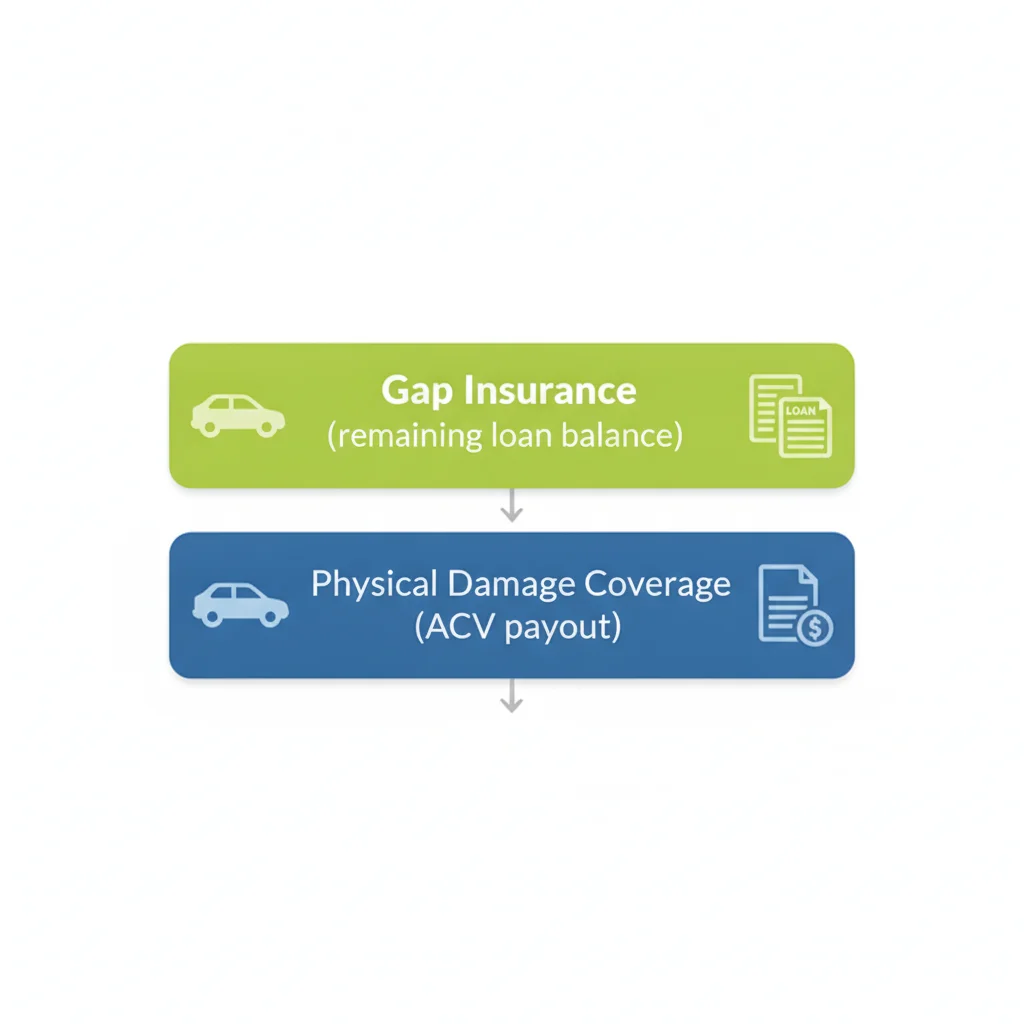
Understanding this chain prevents a costly misunderstanding. Drivers who let their collision or comprehensive lapse while still carrying gap coverage end up with useless protection. Physical damage coverage is the foundation; gap is the supplement built on top of it. Remove the foundation, and the supplement collapses with it.
What Physical Damage Coverage Actually Pays — and Why It's Never Enough for Some Drivers
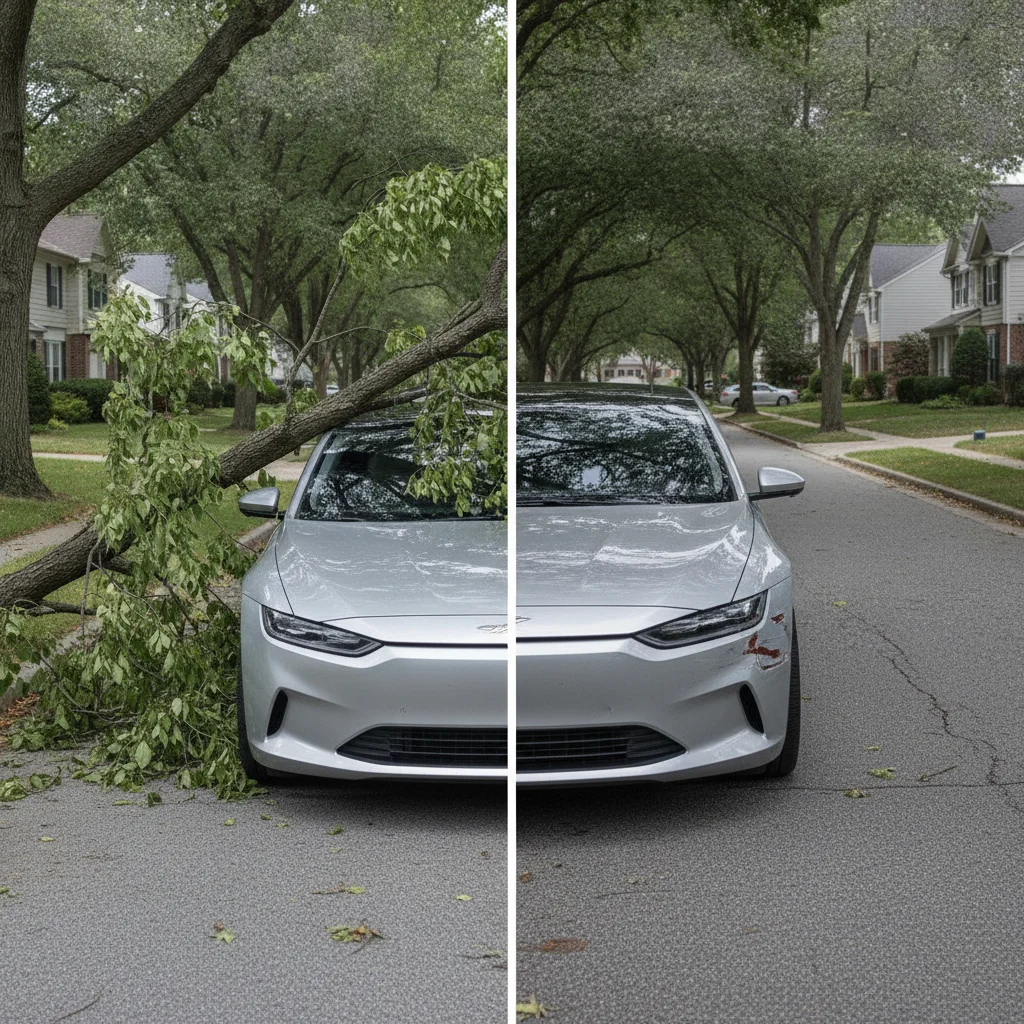
Collision coverage reimburses you when your vehicle strikes another car or object, or rolls over. Comprehensive covers theft and non-collision events — hail, flooding, fire, falling trees. Together, they represent the full scope of physical damage coverage available on a standard auto policy.
The critical number both coverages use is actual cash value: what your vehicle was worth on the open market at the exact moment the loss occurred, not what you paid for it or what you owe on it. Insurers calculate ACV using tools like comparable vehicle sales data, regional market pricing, and mileage adjustments. For most vehicles, that figure is lower — often substantially lower — than the outstanding loan balance, especially in the early years of financing.
~20%
Average new vehicle depreciation in year one
According to Carfax and industry valuation data, most new vehicles lose between 15–25% of their value in the first 12 months of ownership.
72 months
Most common new-car loan term in 2023
Experian's State of the Automotive Finance Market report identified 72-month loans as the most common term for new vehicle financing in recent years, extending the gap-risk window significantly.
$6,054
Average amount underwater on auto loans
Edmunds data from recent years found that buyers trading in vehicles with negative equity were underwater by an average of more than $6,000, which is often rolled into the new loan — immediately widening the gap.
30–40%
New cars losing value within first three years
Most vehicles depreciate by roughly one-third of their original value within the first three years, according to data from NADA Guides and insurance industry actuarial studies.
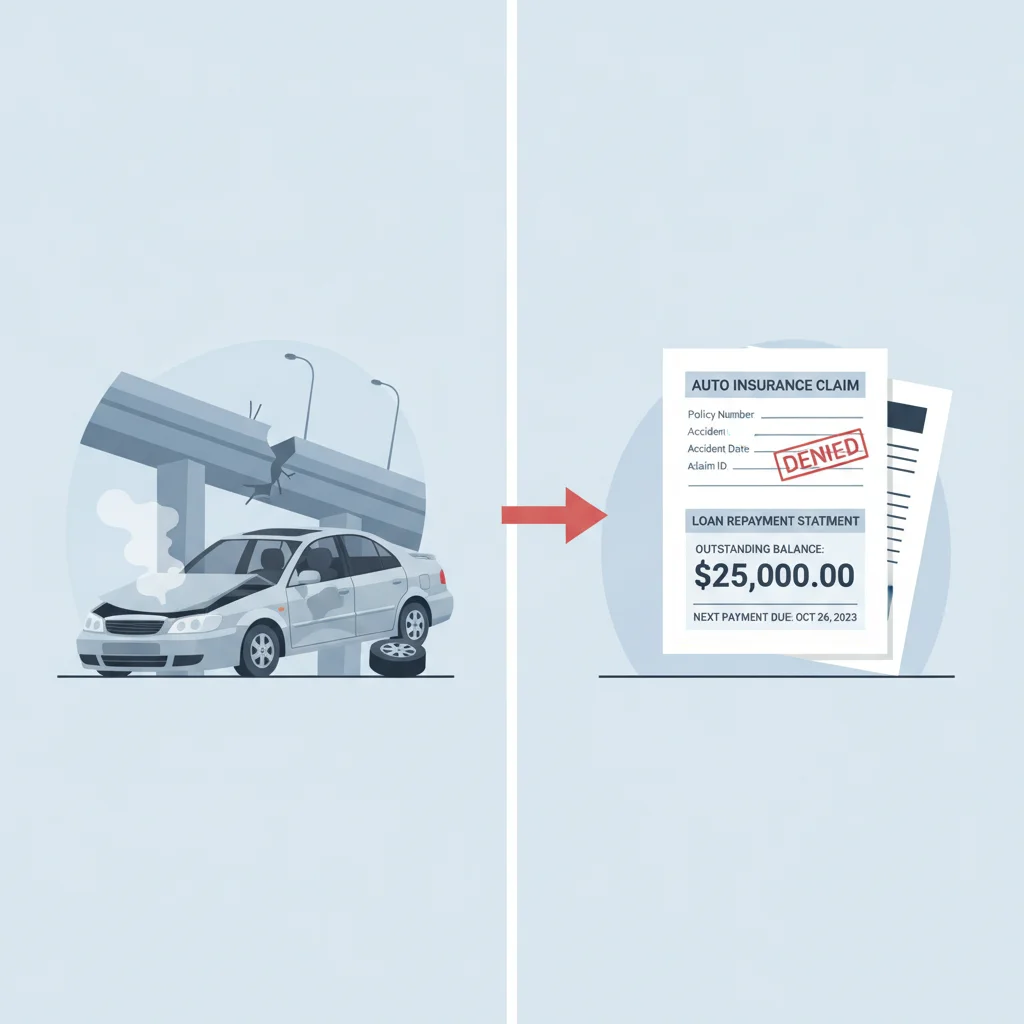
Consider a common scenario: you buy a new vehicle for $38,000, finance it over 72 months with a modest down payment, and nine months later a driver runs a red light and totals it. Your insurer determines ACV is $29,500 — reasonable given first-year depreciation. After your $1,000 deductible, the settlement is $28,500. But you still owe $35,200 on the loan. That $6,700 shortfall is real money you owe the lender regardless of what happened to the car.
Depreciation is the engine that creates the gap. New vehicles typically lose 15–25% of their value in the first year alone, while loan balances decrease slowly in the early months due to front-loaded interest payments. That mismatch is the structural problem gap insurance was designed to solve.
Lender Requirements and Physical Damage Coverage
When you finance or lease a vehicle, your lender almost universally requires you to carry both collision and comprehensive coverage for the duration of the loan or lease. This isn't optional — it's a contract condition. If your physical damage coverage lapses, the lender is entitled to force-place insurance on your vehicle at your expense, typically at rates far above market. That force-placed policy also won't include gap coverage, leaving your loan exposure unaddressed.
Gap Coverage Has a Shelf Life
Gap insurance is not a permanent necessity. As your loan balance decreases and your car's depreciation curve flattens, you will eventually reach positive equity — meaning the car is worth more than you owe. At that point, gap coverage costs money without providing any realistic benefit. Review your loan balance against current vehicle market values annually and drop gap coverage once the math no longer justifies it.
State Regulations Affect How Gap Is Sold
In some states, gap insurance is regulated as an insurance product and must be sold by licensed insurers. In others, it's categorized as a debt-cancellation contract and sold by banks or dealers under different regulatory frameworks. This distinction affects your consumer protections and refund rights if you cancel the product mid-loan. Check your state's insurance department resources or the terms of your gap contract for specifics.
How Gap Insurance Calculates Its Payout
Once the physical damage settlement is issued, the gap calculation is straightforward in principle — though real-world claims sometimes surface complications.
The basic formula: Outstanding loan balance − ACV payout (after deductible) = Gap payout.
So using the earlier example: $35,200 loan payoff − $28,500 ACV settlement = $6,700 gap payout. If you have gap coverage, that $6,700 goes directly to your lender — not to you — effectively zeroing out the loan.
But several factors can reduce or complicate that payout:
- Deductibles: Most gap policies don't cover your collision or comprehensive deductible. The ACV settlement your insurer pays has already accounted for your deductible, but gap starts calculating from that post-deductible figure.
- Loan add-ons: Extended warranties, credit life insurance premiums, and other products rolled into your loan balance may not be covered by gap insurance. The gap policy covers the vehicle financing — not everything you financed alongside it.
- Overdue payments: If you're behind on loan payments at the time of the loss, some gap policies exclude those arrears from the covered balance.
- Policy limits: Some gap products cap the payout at a percentage above ACV — typically 125–150%. If your loan significantly exceeds that threshold, you may still owe money after gap pays out.
“Gap insurance is only as useful as the physical damage policy underneath it. Drivers who think of it as a standalone product often discover its limitations at the worst possible moment — right after a total loss.”
— Mark Friedlander, Director of Corporate Communications, Insurance Information Institute
Reading the fine print of any gap policy before purchasing it is essential. Gap coverage in a finance contract can vary significantly from a standalone policy added to your auto insurance — and those differences matter when a claim actually happens.
Where to Buy Gap Coverage — and Why the Source Matters
Gap insurance is sold through two primary channels: auto insurers and dealership finance offices. Each option has distinct cost structures and claim processes.
Through Your Auto Insurer
Many major carriers offer gap coverage — sometimes called "loan/lease payoff coverage" — as an endorsement on your existing policy. Pricing varies by insurer, but industry data consistently shows this route costs less than dealership gap over the coverage period. You pay for it monthly as part of your premium, and when you no longer need it (because your loan balance is below your car's value), you simply remove the endorsement.
Through the Dealership Finance Office
Dealers sell gap coverage through third-party administrators, typically rolling the cost into the loan itself. The upfront cost often appears lower, but you end up paying interest on that cost over the loan term — increasing total expense. Additionally, canceling dealership gap mid-loan requires a separate refund process that can be more cumbersome than simply removing a policy endorsement.
Shop Gap Coverage Before the Finance Office
Before sitting down with the dealership's finance and insurance (F&I) manager, call your current auto insurer and ask what gap or loan/lease payoff coverage would cost as a policy endorsement. In most cases, insurer-provided gap coverage is meaningfully cheaper over the life of a loan than the product offered in the F&I office. Having that number in hand gives you a realistic benchmark.
Keep Documentation Ready for a Gap Claim
If you face a total loss, gather your loan payoff statement, your physical damage settlement letter, and your gap policy documents before filing. Delays in gap claims often stem from missing documentation, not claim disputes. Contacting your gap administrator as soon as your physical damage claim settles keeps the process moving.
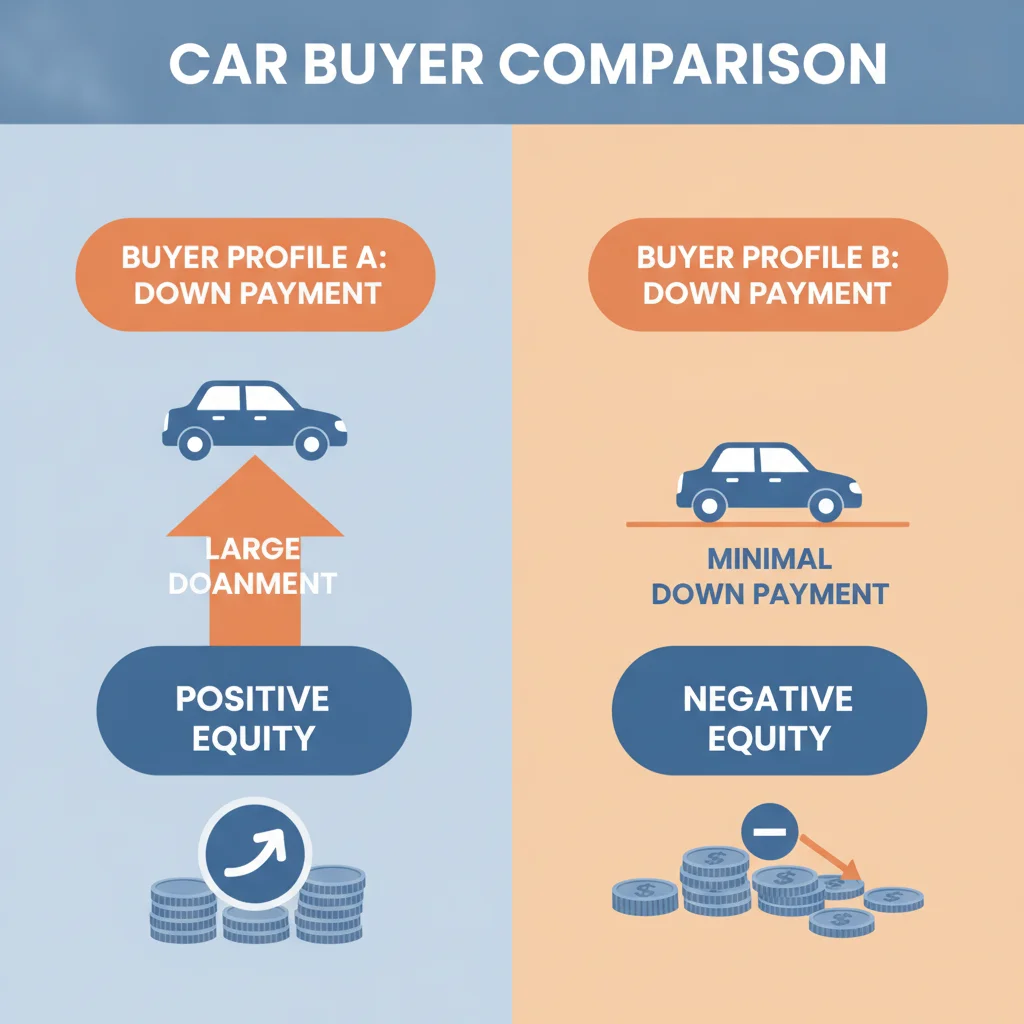
Down payment size directly shapes your gap insurance need. A buyer who puts 20% down on a new vehicle starts much closer to positive equity, dramatically shrinking the window during which gap coverage provides meaningful protection. A buyer who puts nothing down — or rolls negative equity from a prior loan — may face a gap that persists for years.
The optional add-ons section of any insurer's policy offering is worth reviewing carefully. Some carriers bundle gap with new-car replacement coverage, which pays for a brand-new equivalent vehicle (not just ACV) for a defined period — typically the first year or two of ownership. That's a meaningfully different product than standard gap, and it may be worth the premium for buyers of new vehicles.
When You Don't Need Gap Insurance
Gap coverage is genuinely useful for certain buyers, but it's not universally necessary — and carrying it beyond its useful window is wasted money.
You likely don't need gap insurance if:
- You own your vehicle outright with no financing.
- You made a substantial down payment (generally 20% or more) that put you at or near positive equity from day one.
- Your loan balance is already close to or below your car's market value — check with a source like Kelley Blue Book or NADA Guides.
- Your loan term is short (48 months or less) and you're in the later stages of repayment.
- You're financing a vehicle that depreciates slowly and holds its value well.
Conversely, the profile where gap coverage makes the clearest financial sense: new vehicle purchase, long loan term (60–84 months), minimal down payment, and a model known for rapid initial depreciation. Understanding the specific conditions under which gap pays out helps buyers avoid purchasing coverage they'll never use.
If you're financing a used vehicle, the calculus changes somewhat. Used cars have already absorbed the steepest depreciation curve, so the likelihood of a significant gap between ACV and loan balance is smaller — though not zero, particularly for buyers who financed with little down or over extended terms. A detailed look at who benefits most from gap coverage is worth reading before deciding either way.
How These Coverages Interact on a Total Loss Claim
Understanding the practical claim process reinforces why these two coverages must function together. Here's what a total loss claim typically looks like when both coverages are in place.
- The loss occurs. Your vehicle is totaled in a covered accident (collision) or stolen and not recovered (comprehensive).
- You file a claim with your auto insurer. The insurer assigns an adjuster to determine the vehicle's ACV using market data. This process can take days to a couple of weeks.
- The ACV settlement is issued. After subtracting your deductible, your insurer pays the ACV to you or directly to your lender (if you have a lienholder on the title).
- The gap is calculated. Your lender determines the remaining loan balance after applying the ACV payment. That remainder is the gap.
- The gap claim is filed. If you have gap coverage through your insurer, your adjuster typically handles this as part of the same claim. If your gap coverage is through a dealership product, you or your lender will need to contact the gap administrator separately to file a claim and submit documentation.
- Gap pays the lender. The gap insurer or administrator pays the remaining balance directly to the lender — not to you. Your loan is now zero.
Shop Gap Coverage Before the Finance Office
Before sitting down with the dealership's finance and insurance (F&I) manager, call your current auto insurer and ask what gap or loan/lease payoff coverage would cost as a policy endorsement. In most cases, insurer-provided gap coverage is meaningfully cheaper over the life of a loan than the product offered in the F&I office. Having that number in hand gives you a realistic benchmark.
Keep Documentation Ready for a Gap Claim
If you face a total loss, gather your loan payoff statement, your physical damage settlement letter, and your gap policy documents before filing. Delays in gap claims often stem from missing documentation, not claim disputes. Contacting your gap administrator as soon as your physical damage claim settles keeps the process moving.
One thing many drivers overlook: if you have a refundable extended warranty or other add-on products tied to the totaled vehicle, proactively cancel those and apply any refund to the remaining balance. Some gap policies require this, and doing so reduces the outstanding balance gap has to cover — potentially simplifying the claim.
The Bottom Line: Coverage Coordination Is Everything
Gap insurance and physical damage coverage are not interchangeable or redundant — they're complementary layers that address different financial risks after the same event. Collision and comprehensive protect against the loss of your vehicle's market value. Gap protects against the liability you still carry to a lender when that market value falls short.
The practical implication for car buyers: if you're financing a vehicle and your loan-to-value ratio puts you at risk of owing more than the car is worth in the event of a total loss, carrying both coverages is sound financial risk management. If you're well into positive equity — or you own your car free and clear — gap adds nothing.
Regularly reassessing your coverage as your loan balance decreases and your car's value stabilizes is good practice. At some point, usually within two to four years for buyers who made a reasonable down payment, the gap closes and the coverage becomes unnecessary. At that point, dropping it reduces your premium with no meaningful increase in financial exposure.
For a fuller picture of how physical damage and optional add-on coverages fit into a complete auto insurance strategy, the optional add-ons hub is a useful reference point — as is a direct conversation with your insurer about your current loan balance and vehicle value.
Lender Requirements and Physical Damage Coverage
When you finance or lease a vehicle, your lender almost universally requires you to carry both collision and comprehensive coverage for the duration of the loan or lease. This isn't optional — it's a contract condition. If your physical damage coverage lapses, the lender is entitled to force-place insurance on your vehicle at your expense, typically at rates far above market. That force-placed policy also won't include gap coverage, leaving your loan exposure unaddressed.
Gap Coverage Has a Shelf Life
Gap insurance is not a permanent necessity. As your loan balance decreases and your car's depreciation curve flattens, you will eventually reach positive equity — meaning the car is worth more than you owe. At that point, gap coverage costs money without providing any realistic benefit. Review your loan balance against current vehicle market values annually and drop gap coverage once the math no longer justifies it.
State Regulations Affect How Gap Is Sold
In some states, gap insurance is regulated as an insurance product and must be sold by licensed insurers. In others, it's categorized as a debt-cancellation contract and sold by banks or dealers under different regulatory frameworks. This distinction affects your consumer protections and refund rights if you cancel the product mid-loan. Check your state's insurance department resources or the terms of your gap contract for specifics.

All claims are backed by peer-reviewed research. Sources on request.