Key Takeaways
Why Gap Insurance Is a Math Problem, Not a Sales Decision
Walk into most dealership finance offices and gap insurance is presented as a near-mandatory add-on. The finance manager slides it into the payment menu alongside paint protection and tire warranties, often bundled so quietly you don't notice the line item until you're already signing. That's by design.
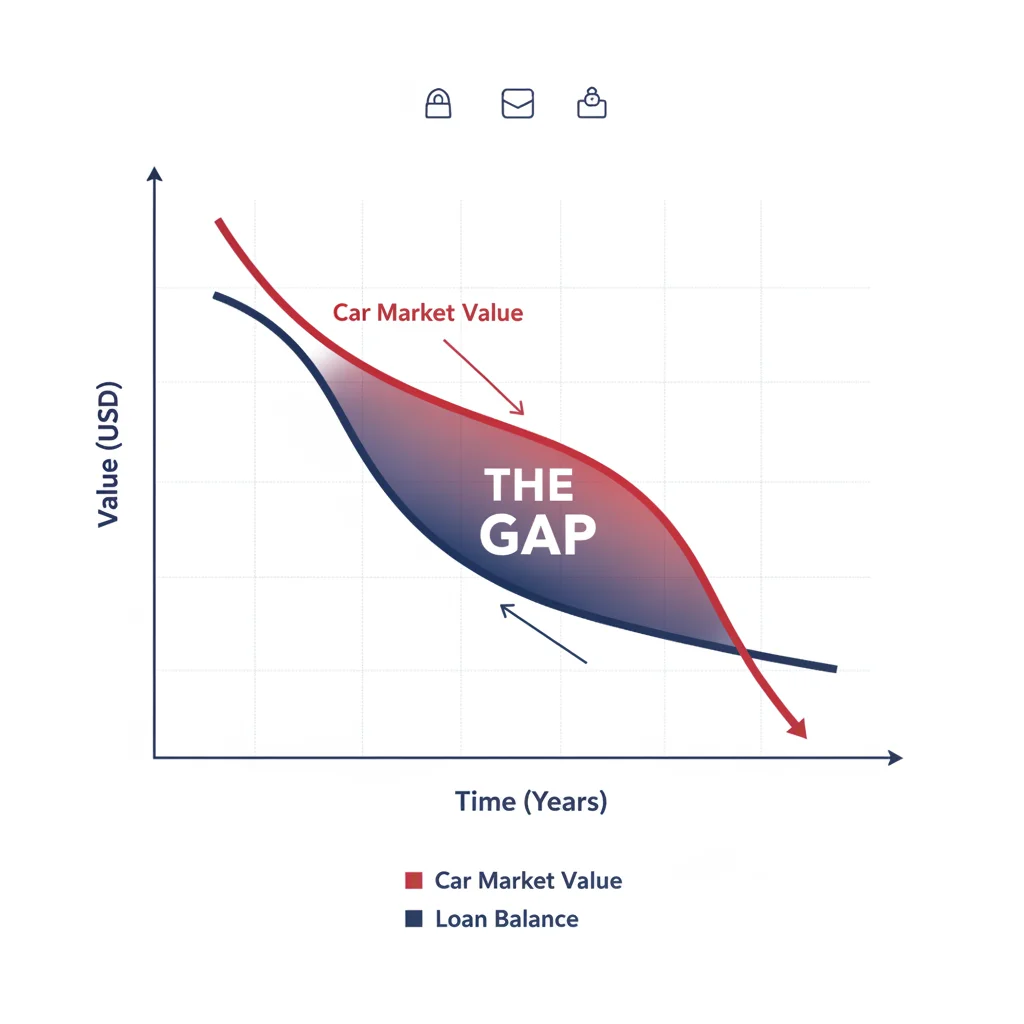
The reality is that gap insurance is a product with a specific and narrow use case: it protects you when your loan balance exceeds your car's market value and the car gets totaled or stolen. That's it. If you don't have a gap, you don't need gap insurance — and whether you have a gap is determined almost entirely by two variables you control before you ever sit in the F&I chair: how much you put down and how long your loan term is.
Gap insurance pays the difference between your car's value and your loan balance — but only if that difference exists at the time of a covered loss. Understanding whether that difference exists for your specific loan requires doing the math yourself, not taking the finance manager's word for it.
The steps below walk you through exactly how to calculate your exposure, interpret what it means, and make a rational decision about whether gap coverage is worth your money.
What you will need
Loan Amortization Calculator
Shows your exact remaining loan balance at any point in time, which is the number you compare against vehicle value.
Kelley Blue Book or Edmunds Valuation Tool
Provides a realistic current market value estimate for your vehicle so you can compare it against your loan balance.
Vehicle Depreciation Schedule
Projects how much your vehicle will lose in value year by year so you can forecast future gap exposure.
Auto Insurance Policy Declaration Page
Confirms whether you already carry comprehensive and collision coverage, which gap insurance requires as a prerequisite.
Gap Insurance Quote from Your Insurer
Provides a cost comparison so you don't overpay for the same coverage through the dealership F&I office.
The Depreciation Reality Behind the Gap
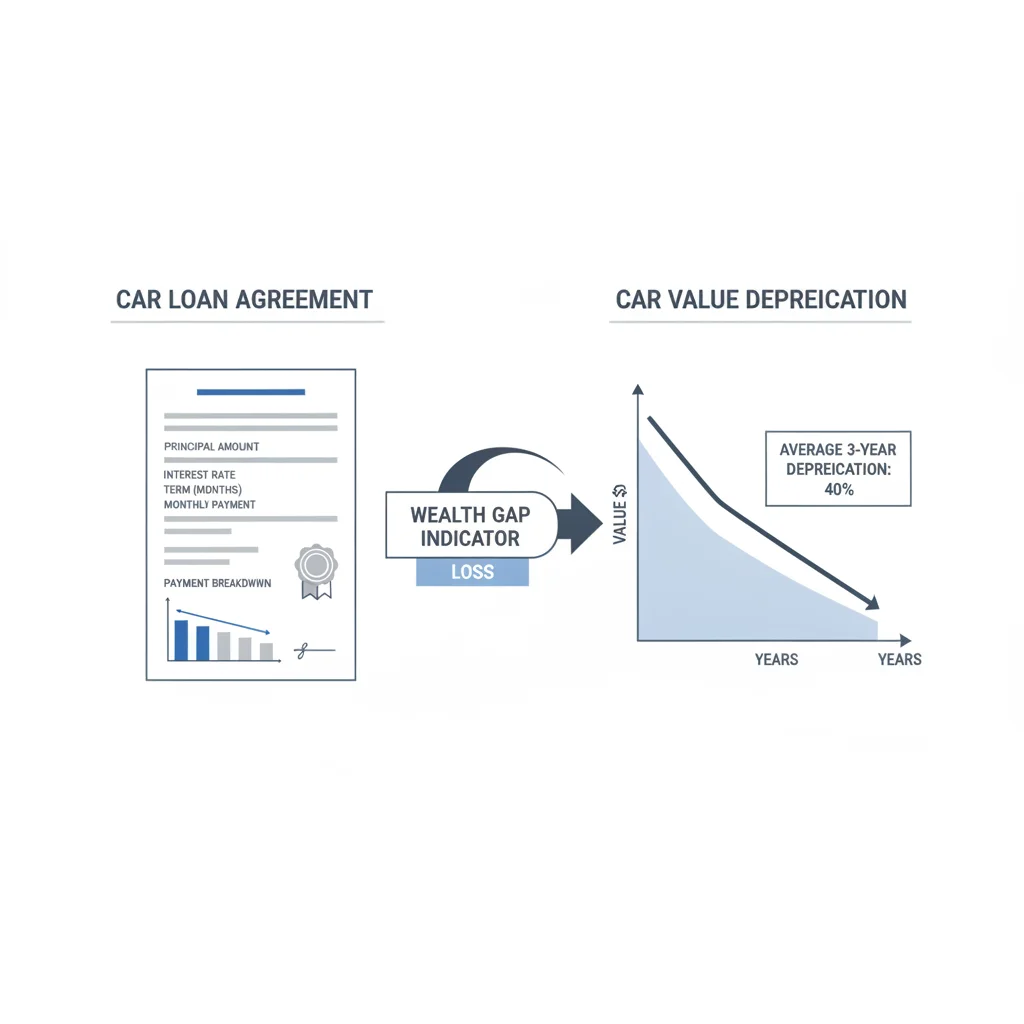
Cars depreciate fast — faster than most loans are designed to pay down. A new vehicle can lose 15–20% of its value the moment it's driven off the lot and another 10–15% over the following 12 months. Meanwhile, a 72-month loan in its first year might reduce your balance by only 8–10% of the original amount financed, because the early months are heavily weighted toward interest, not principal.
This mismatch — fast depreciation against slow loan paydown — is the mechanical reason gap insurance exists at all. The gap exists precisely because of how depreciation and amortization interact, and the size of that gap depends heavily on your loan structure.
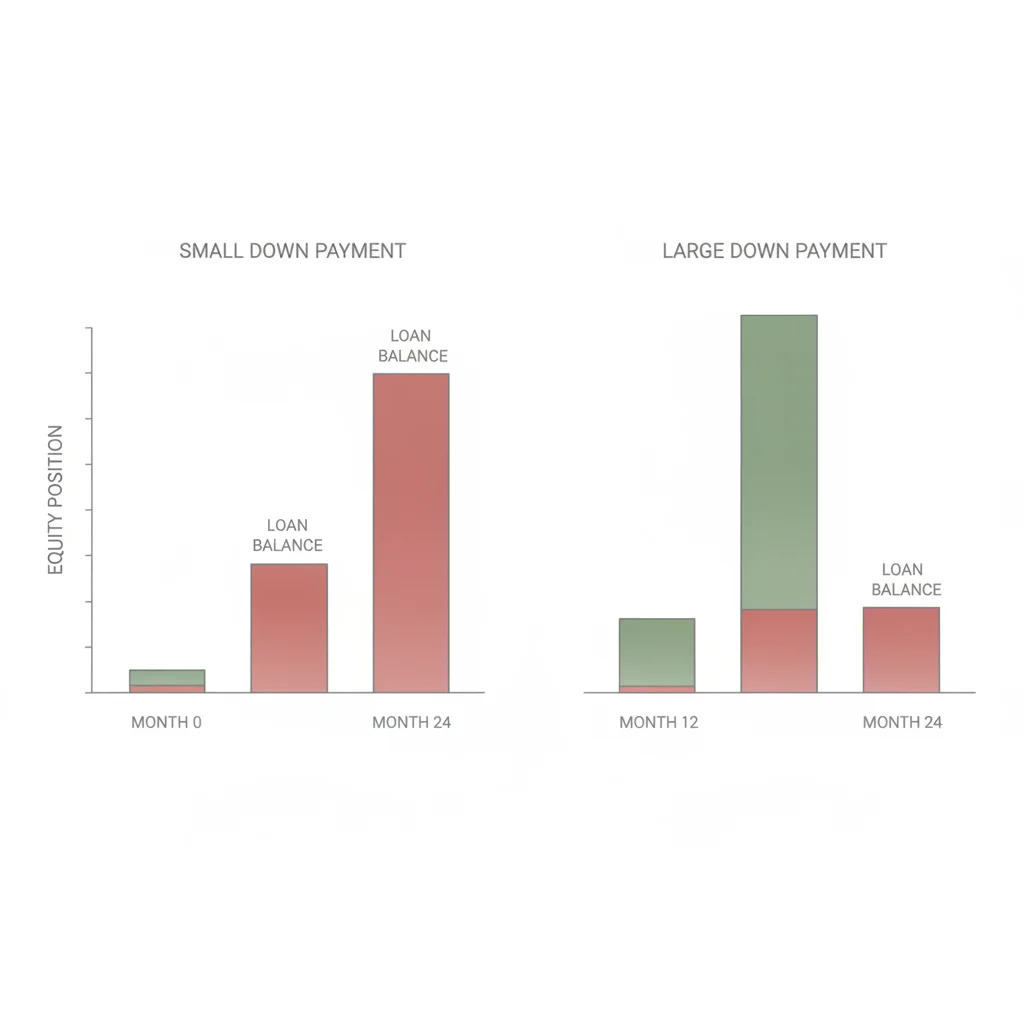
The good news: you can front-load your protection by putting more money down, choosing a shorter loan term, or both. The bad news: most car buyers do the opposite — minimum down payment, maximum loan term — and then wonder why they're upside down two years later.
Rolled-In Negative Equity Is a Hidden Gap Multiplier
When you trade in a car you still owe money on and the dealer rolls the shortfall into your new loan, your starting loan balance is higher than the new car's value before depreciation even starts. This is one of the most common ways buyers end up deeply underwater with no clear path to positive equity. Always settle negative equity separately if you can — don't compound the problem into a new 72-month loan.
Long Loan Terms Extend Your Vulnerability Window
An 84-month loan isn't just a longer commitment — it means you spend more years in the danger zone where your balance exceeds your car's value. If anything goes wrong during that period — total loss, theft, a desire to sell — you could be stuck paying thousands out of pocket. Gap insurance helps, but it's treating a symptom rather than the cause.
If you financed a used vehicle, the depreciation math is more favorable. Used cars have already absorbed the steepest part of their depreciation curve, so the gap between loan balance and value tends to be smaller and closes faster. That said, if you financed a used car with zero down on a 72-month term, you can still be underwater — especially if the dealer marked up the price.
Down payment size and gap insurance are directly linked: every dollar you put down is a dollar of buffer between your starting loan balance and the vehicle's day-one depreciation hit.
Step-by-Step: Evaluate Your Gap Exposure
Use the steps below to determine your current gap position. If you haven't purchased yet, you can run this analysis in advance using projected numbers — it takes about 15 minutes and could save you hundreds of dollars in unnecessary premiums or thousands in uncovered loan balance.
Find your current loan balance
Log into your lender's online portal or call their customer service line and get your current payoff amount — not just the remaining payments. These are not the same number. The payoff amount accounts for interest accrued to date and gives you the precise figure you'd need to settle the debt today.
If you're buying new and calculating in advance, use a loan amortization calculator. Enter your loan amount, interest rate, and term. Look at the balance column at month 1, 6, and 12 to understand how slowly the balance drops in the early months.
Get your vehicle's current market value
Visit Kelley Blue Book (kbb.com) or Edmunds and pull the private party value or trade-in value for your specific vehicle — year, make, model, mileage, condition, and your ZIP code all factor in. Do not use the sticker price or what you paid. What matters is what the car is worth today, because that's what your insurer would pay out in a total loss.
Get at least two valuations from different sources and average them if they diverge. A $1,000–$2,000 spread is normal. Use the lower figure to be conservative.
Calculate your loan-to-value (LTV) ratio
Divide your current loan balance by the vehicle's current market value, then multiply by 100 to get your LTV percentage:
LTV = (Loan Balance ÷ Vehicle Market Value) × 100Example: If you owe $24,000 on a car worth $20,000, your LTV is 120%. That means you're $4,000 underwater — you have a gap.
If you owe $18,000 on a car worth $22,000, your LTV is about 82%. You have positive equity — roughly $4,000 — and gap insurance provides zero benefit to you right now.
The break-even point is 100% LTV. Above 100%, you are financially exposed. Below 100%, you are not.
Map your down payment against depreciation curves
The size of your down payment determines how far underwater you start. New cars typically lose 15–25% of their value in the first year, with the steepest drop happening the moment the car is titled. Here's how different down payment levels interact with that first-year depreciation hit:
| Down Payment | Starting LTV (approx.) | Gap Exposure After Year 1 |
|---|---|---|
| 0% | 100%+ | High — deeply underwater |
| 5–9% | 95–100% | Moderate to high |
| 10–14% | 88–93% | Moderate — may clear by year 2 |
| 15–19% | 82–87% | Low — may never be meaningfully underwater |
| 20%+ | 80% or below | Minimal — positive equity likely from day one |
Down payment size is the single most powerful variable you control before signing. A larger down payment is often a better financial hedge than buying gap insurance to cover a small down payment.
Factor in your loan term length
Loan term is the multiplier that determines how long your gap exposure lasts. A 48-month loan amortizes much faster than a 72- or 84-month loan at the same balance, because you're paying more principal each month.
Consider two borrowers who finance $30,000 at 7% APR:
- 48-month term: Monthly payment ≈ $718. By month 12, balance is roughly $23,200. A car depreciating 20% in year 1 is worth about $24,000. They may already have positive equity.
- 84-month term: Monthly payment ≈ $450. By month 12, balance is roughly $26,800. The same car is worth $24,000. They're still $2,800 underwater — and the gap won't close for another year or more.
Longer loan terms dramatically extend the window during which gap insurance has value. If you're on a 72- or 84-month loan with less than 15% down, gap insurance is very likely worth carrying for at least the first 24–36 months.
See how loan term length shapes your total cost for a deeper breakdown of what longer terms actually cost you in interest.
Determine whether your gap exposure justifies the cost
Now that you know your LTV, you need to price gap coverage and decide if the premium is proportional to your actual risk. Here's how to frame that decision:
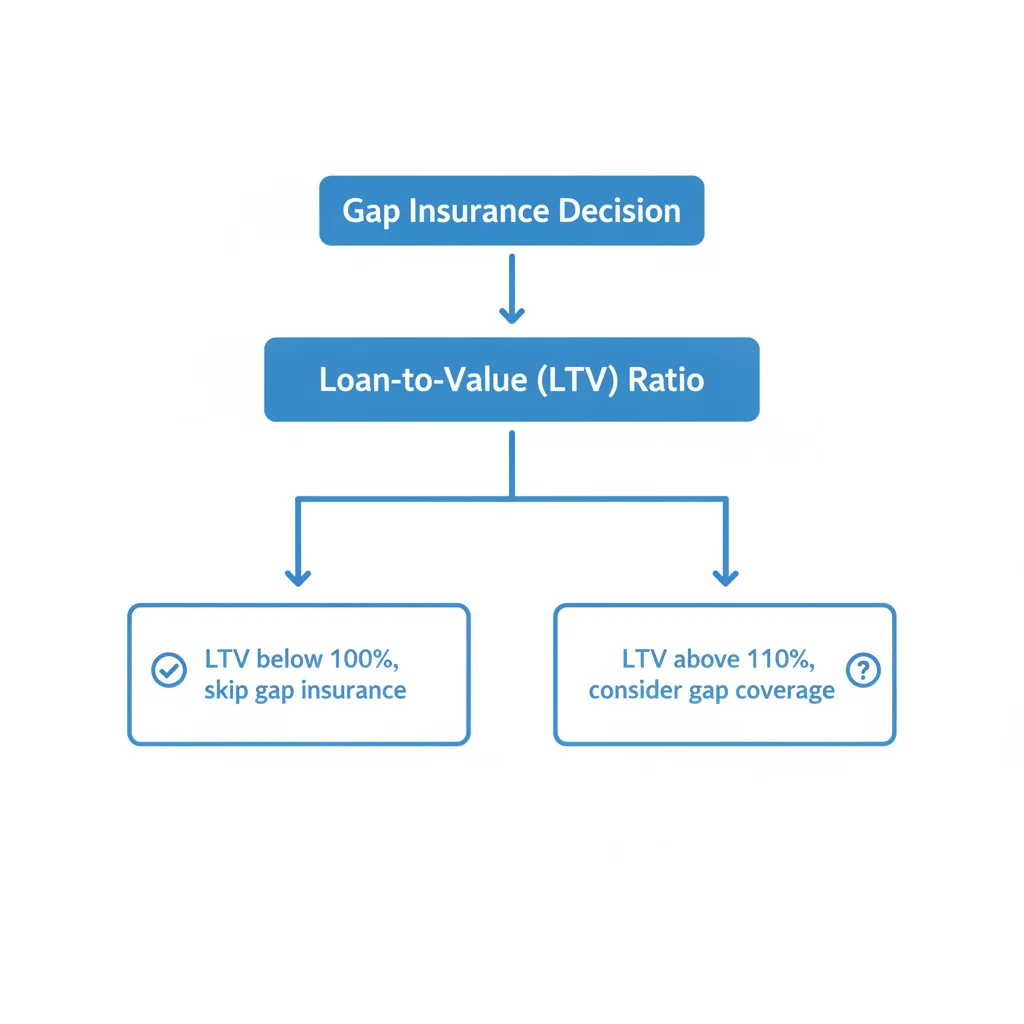
- If LTV is below 100%: You have equity. Gap insurance pays you nothing in this scenario. Don't buy it.
- If LTV is 100–110%: Your exposure is $1,000–$3,000 depending on the vehicle. Compare that against the cost of gap coverage. If gap insurance costs $300–$600 for a 2-year policy through your insurer and you're exposed to a $2,000 risk, it's likely worth it.
- If LTV is above 120%: Your exposure is significant. Gap insurance is almost certainly worth carrying — but be aware that some policies have payout caps (often 25% above vehicle value). Check your policy terms. Gap insurance doesn't always pay the full balance for high-balance borrowers.
Always get a quote from your auto insurer first. Dealership-sold gap through the F&I office typically costs $400–$900 rolled into the loan (which means you also pay interest on it), while the same coverage from your insurer often runs $20–$40 per year added to your policy.
Set a calendar reminder to reassess every 12 months
Gap exposure is not static. As you pay down the loan and the car's depreciation rate slows (it slows after year 2–3 for most vehicles), your LTV ratio changes. You may cross into positive equity territory without realizing it — and continue paying for gap insurance you no longer need.
Set a yearly reminder to repeat steps 1–3: get your payoff balance, get a current market valuation, calculate your LTV. If you're below 100% LTV, cancel gap coverage. If you're on a lender-added product through the dealership, check whether early cancellation earns you a prorated refund — most contracts offer this.
Loan Structures That Almost Always Require Gap Insurance
Certain loan configurations create a near-certain gap from day one. If your situation matches any of the following, gap insurance isn't optional — it's basic financial protection:
- Zero or low down payment (under 10%) on a new vehicle: Instant depreciation will put you underwater the moment you take title.
- 72- or 84-month loan term: Slow principal paydown means you stay underwater for two or more years even with a modest down payment.
- Rolled-in negative equity from a trade-in: You're borrowing more than the car is worth from the start.
- High-depreciation vehicles: Luxury sedans, certain domestic trucks, and vehicles with known reliability reputations can lose value faster than average.
- Subprime loan with a higher interest rate: Higher rates mean more of each payment goes to interest, extending the underwater period. Subprime borrowers are often the most exposed to a meaningful gap, though some are also the most aggressively upsold.
Gap Insurance Has Payout Caps — Know Them
Most gap policies cap their payout at 25% above the vehicle's actual cash value at the time of loss. If you're significantly more than 25% underwater — which can happen with deep negative equity rollovers or heavily depreciated luxury vehicles — gap insurance won't cover the full balance. You'll still owe the remaining shortfall out of pocket. Read the policy maximum before assuming you're fully protected.
Declining Gap Insurance Doesn't Mean Declining Protection
You still need comprehensive and collision coverage regardless of your gap position — gap insurance only activates after your primary coverage pays out. If you drop comp and collision to save money, you void any gap policy you have. Make sure your base coverage is solid before layering any add-on product on top of it.
On the flip side, if you put 20% or more down on a vehicle with average depreciation and chose a 48-month loan, you may never be meaningfully underwater. Running the numbers at signing will tell you definitively.
Also understand that gap insurance isn't a single product — there are subtle but important differences between dealer-sold gap and insurer-added loan/lease payoff coverage. Gap insurance and loan/lease payoff coverage are not identical, and the differences in payout caps and eligibility can matter when you actually file a claim.
Check for a Prorated Gap Refund
If you bought gap insurance through the dealership and you've since built positive equity, you may be entitled to a prorated refund on the unused portion of the policy. Contact the dealer's finance department in writing and ask for the cancellation and refund process. Many buyers leave $100–$400 on the table simply because they don't ask.
Buy Gap Through Your Insurer, Not the Dealer
Your auto insurer's version of gap or loan/lease payoff coverage is almost always cheaper than what the F&I office sells. Ask your insurer for a quote before you sign any finance contract. If you've already signed, you can still add it to your policy and ask the dealer to cancel the financed version for a refund.
Reassess After Any Major Paydown
If you make a large lump-sum payment toward your loan principal — say, from a tax refund or bonus — recalculate your LTV immediately. A $2,000–$3,000 principal paydown can shift you from underwater to positive equity faster than you'd expect, especially if depreciation has already slowed on an older vehicle.
When to Skip Gap Insurance Entirely
There are scenarios where gap insurance is genuinely unnecessary and buying it is wasted money. Here's when you can confidently decline:
- You have 20%+ equity from day one. Your down payment exceeded the first-year depreciation hit. You're already in positive equity territory.
- You're on a short loan term (48 months or less). You're paying down principal fast enough to keep pace with depreciation. Run the LTV calculation — you may already be close to or below 100%.
- You're financing a used vehicle that has already absorbed steep depreciation. A 3-year-old vehicle that you financed at fair market value with a reasonable down payment is unlikely to create a meaningful gap.
- You have savings that could cover a $2,000–$4,000 shortfall. Gap insurance is a risk transfer product. If you can self-insure a modest gap, the premium cost isn't justified.
- Your vehicle holds its value exceptionally well. Trucks, SUVs, and certain Japanese brands depreciate more slowly. Check historical depreciation data for your specific model.
The goal isn't to avoid gap insurance at all costs — it's to make the decision based on your actual financial position, not a finance manager's sales pitch. Calculate your LTV, price gap coverage through your own insurer, and decide from there.
Practical Moves to Reduce or Eliminate Your Gap Exposure
If you haven't bought yet, you have significant leverage to restructure the deal before a gap becomes an issue:
- Increase your down payment. Even moving from 5% to 15% down meaningfully reduces your exposure window. If you don't have cash, consider delaying the purchase by 6–9 months to save.
- Choose a shorter loan term. The payment difference between a 60-month and 72-month loan is often $50–$80 per month — and you'll save hundreds in interest while exiting the underwater zone faster.
- Negotiate the purchase price down. A lower price means a smaller loan and a lower starting LTV. Every dollar off the price is a dollar of reduced gap exposure.
- Avoid rolling in negative equity. If your trade-in is worth less than what you owe, don't just fold that shortfall into the new loan. Pay it off separately or wait until the loan is closer to payoff.
- If you do need gap coverage, buy it from your insurer. The same protection that costs $600–$900 at the dealership (often financed, so you pay interest on it) typically costs $20–$40 per year added to your auto policy.
Understanding exactly what gap insurance covers — and what it excludes is essential before you buy it anywhere. Deductibles, payout caps, and eligibility windows differ between policies and can leave you with less protection than you expected.

Check for a Prorated Gap Refund
If you bought gap insurance through the dealership and you've since built positive equity, you may be entitled to a prorated refund on the unused portion of the policy. Contact the dealer's finance department in writing and ask for the cancellation and refund process. Many buyers leave $100–$400 on the table simply because they don't ask.
Buy Gap Through Your Insurer, Not the Dealer
Your auto insurer's version of gap or loan/lease payoff coverage is almost always cheaper than what the F&I office sells. Ask your insurer for a quote before you sign any finance contract. If you've already signed, you can still add it to your policy and ask the dealer to cancel the financed version for a refund.
Reassess After Any Major Paydown
If you make a large lump-sum payment toward your loan principal — say, from a tax refund or bonus — recalculate your LTV immediately. A $2,000–$3,000 principal paydown can shift you from underwater to positive equity faster than you'd expect, especially if depreciation has already slowed on an older vehicle.
The bottom line: gap insurance is a legitimate financial product for borrowers who are genuinely underwater. But it's not a substitute for a sound loan structure. Get your LTV right from the start, and you may not need it at all.

All claims are backed by peer-reviewed research. Sources on request.