Key Takeaways
Protects you from out-of-pocket loan balance after total loss
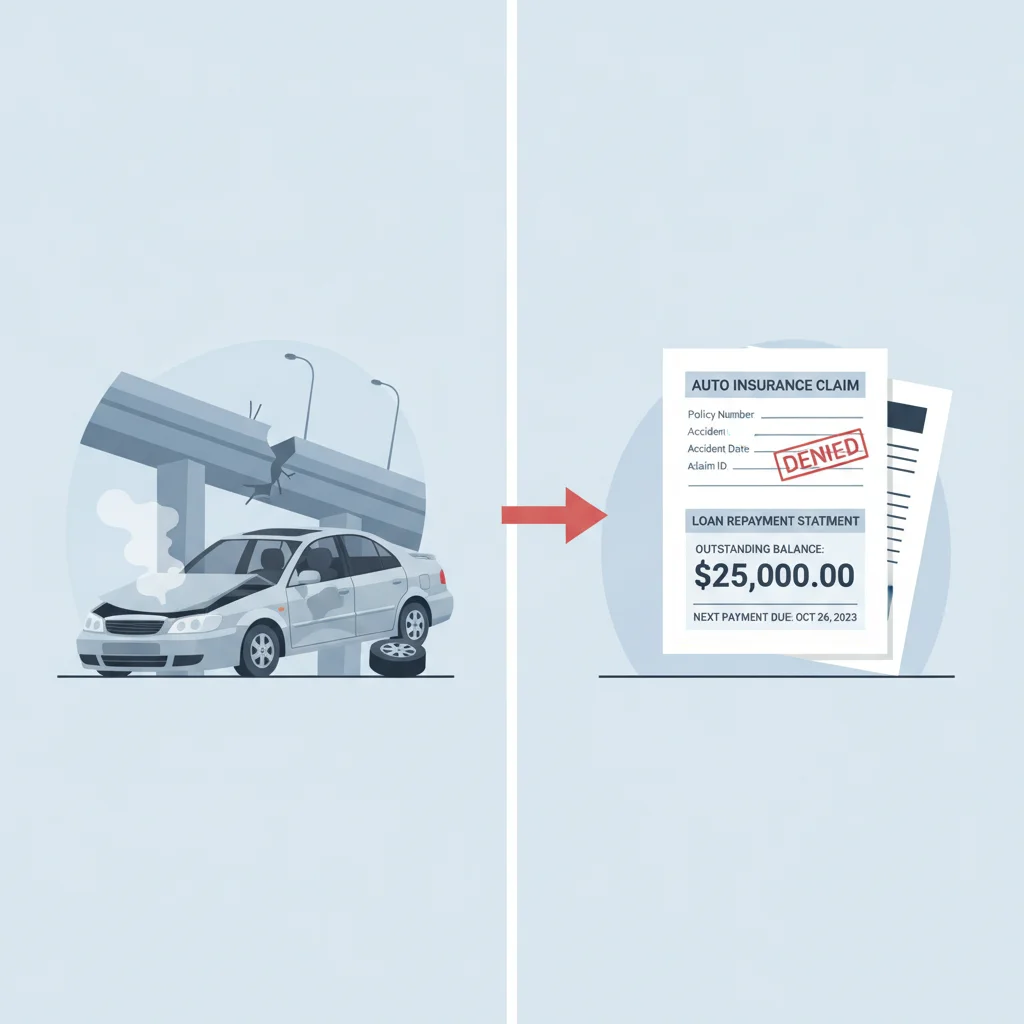
If your car is totaled or stolen, your insurer pays ACV — which may be thousands less than your loan balance. GAP covers that shortfall so you're not paying for a car you can no longer drive.
Relatively inexpensive when purchased through an insurer
Added through your auto insurance policy, GAP typically costs $20–$40 per year — a low premium for meaningful protection during the high-risk early period of a loan.
Especially valuable with long loan terms or small down payments
72- and 84-month loans keep you underwater longer. GAP coverage directly addresses the financial exposure created by slow-amortizing loan structures.
Reduces financial stress after an already difficult event
A total loss is disruptive enough without the additional burden of owing thousands on a destroyed vehicle. GAP eliminates one major financial consequence of the worst-case scenario.
Can be canceled once you build equity
Unlike many insurance products, GAP is not a long-term commitment. Once your loan balance drops below your car's market value, you can cancel and stop paying.
Unnecessary if you have significant equity
Buyers who put 20% or more down on a short-term loan may never be underwater. Paying for GAP in that situation is spending money on a risk that doesn't actually apply to you.
Dealer-sold GAP is significantly overpriced
Dealership F&I departments commonly charge $400–$900 for GAP coverage, often rolled into the loan so you pay interest on the premium. The same protection can cost a fraction of that through your insurer.
Doesn't cover your deductible or past-due payments
GAP only covers the spread between ACV and loan balance — it won't pay your insurance deductible, late fees, or any amount you're behind on payments. You're still responsible for those costs.
Only pays out after collision or comprehensive coverage does
GAP has no standalone trigger. If you don't carry comprehensive and collision, GAP won't activate — a dependency that catches some policyholders off guard.
May be a waste if negative equity was rolled in from a prior loan
If your previous loan's remaining balance was folded into this one, the gap is even larger and GAP coverage may not fully cover it. Most GAP policies have caps or exclusions for rolled-in negative equity.
Our Verdict
GAP insurance is a genuinely useful product for a specific window of time — when your loan balance outpaces your car's depreciating value. For buyers with small down payments, long loan terms, or vehicles prone to steep early depreciation, the math clearly supports it. For buyers who put down 20% or more and chose a 48-month term, the gap closes fast enough that the coverage may never pay out. Know where you stand on the depreciation curve, shop for the policy outside the dealership, and cancel it the moment you're no longer underwater.
Best for buyers who financed with less than 20% down, chose a loan term of 60 months or longer, or purchased a vehicle with a known history of rapid depreciation.
Why the Gap Exists in the First Place
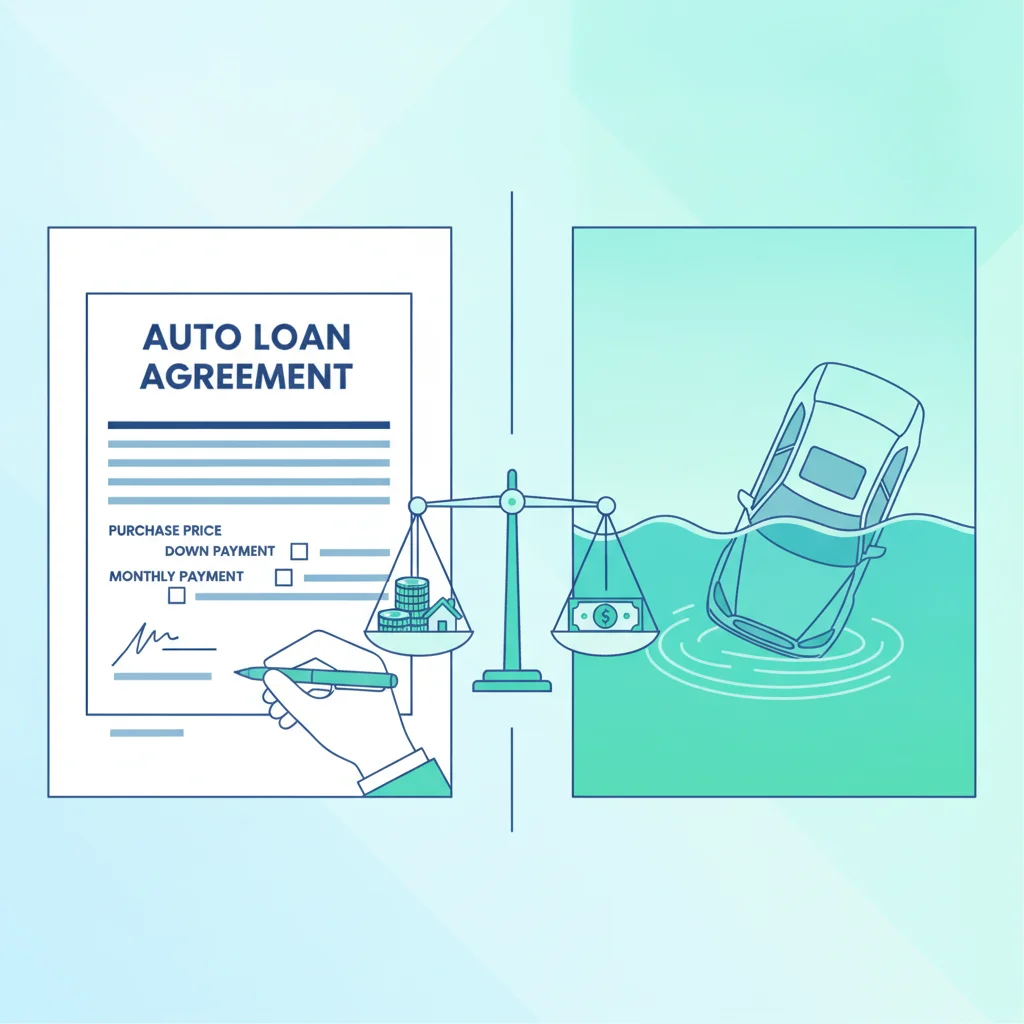
The moment you drive a new car off the lot, two numbers start moving in opposite directions: your loan balance and your car's market value. The loan balance drops slowly — most of your early payments are interest, not principal. The car's value drops fast. That spread between the two numbers is the gap.
Depreciation doesn't slow down much in the first couple of years. A new vehicle can shed 15–25% of its value in year one, and another 10–15% in year two. A $40,000 car could be worth $30,000 or less before you've made two years of payments. Meanwhile, if you financed at 72 months with 5% down, your loan balance might still be sitting north of $35,000.
That's not a hypothetical — that's exactly how most car purchases are structured today. Loan terms have stretched longer, down payments have gotten smaller, and depreciation hasn't changed. The gap is a predictable consequence of how new car financing works.
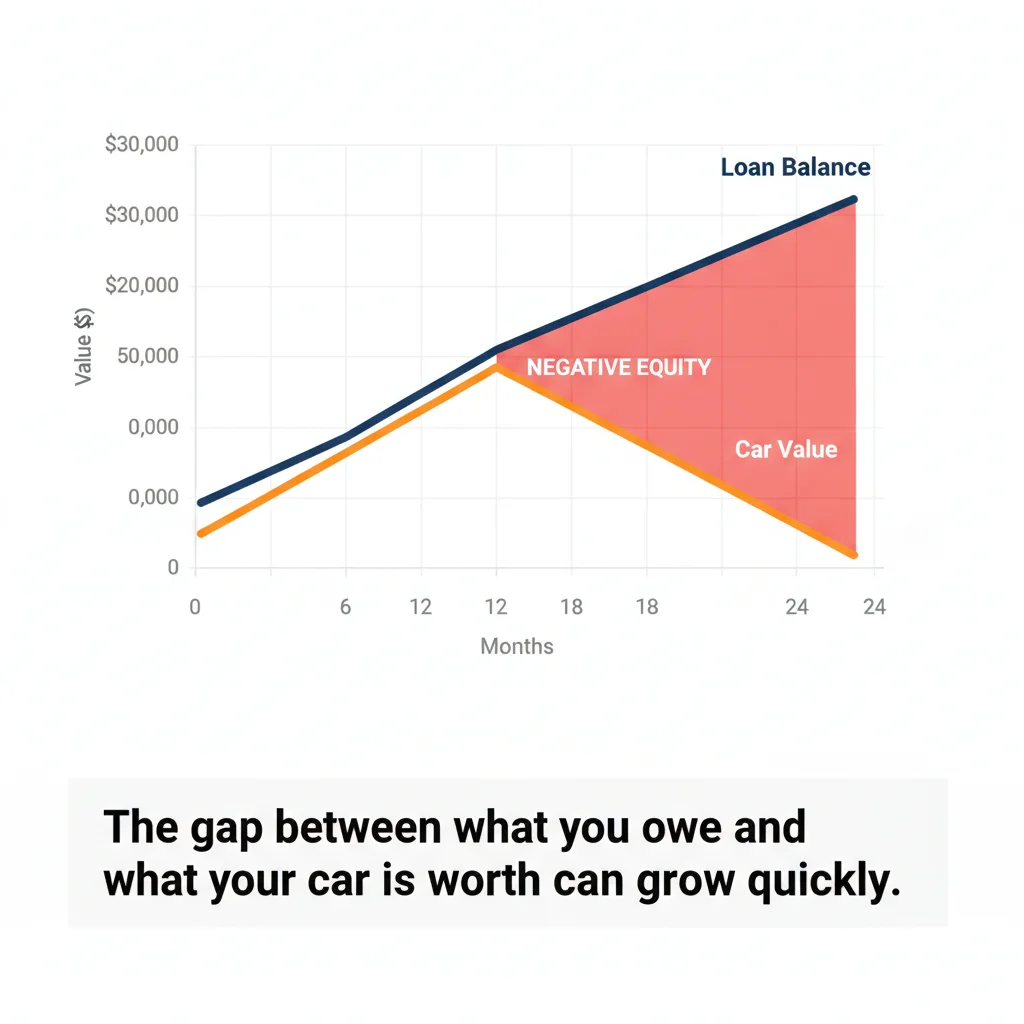
Understanding this spread matters whether you're deciding on GAP coverage, thinking about when to sell, or figuring out if you're underwater right now. The coverage exists because the problem is real — it's just not evenly distributed across all buyers and all loan structures.
How GAP Insurance Actually Works
GAP insurance — Guaranteed Asset Protection — pays the difference between what your standard auto insurance pays out and what you still owe the lender after a total loss or theft. Your collision or comprehensive coverage pays your car's actual cash value (ACV) at the time of the claim. GAP covers the remainder up to your outstanding loan balance.
Here's a concrete example. Your car gets totaled. Your insurer determines it's worth $22,000. You still owe $27,500. Your standard policy pays $22,000. Without GAP, you're writing a check for $5,500 out of pocket on a car you can no longer drive. With GAP, that $5,500 gets covered.
What GAP Typically Excludes
Most GAP policies will not cover your collision or comprehensive deductible, overdue loan payments, fees for extended warranties or credit insurance rolled into the loan, or negative equity carried over from a prior vehicle. Some policies also cap the payout at a percentage above ACV — often 125% — which may not cover the full balance on a heavily underwater loan. Always request the full policy document before agreeing to coverage.
Leased Vehicles and GAP
Many lease agreements include GAP-like protection by default, meaning you may already be covered without purchasing a separate policy. Check your lease contract carefully before adding GAP at the dealership — you could be paying for duplicate coverage. If your lease doesn't include it, the case for adding GAP is strong because lease structures often create significant exposure in the early months.
How to Check if You're Still Underwater
Pull your current loan payoff amount from your lender — most will provide it instantly by phone or through their online portal. Then check your vehicle's market value on Edmunds, Kelley Blue Book, or CarGurus. If the payoff amount is higher than the market value, you're underwater and GAP is still serving a purpose. If market value exceeds your payoff, you have equity and can cancel the coverage.
It's important to know what GAP doesn't cover. Most policies exclude your insurance deductible, past-due payments, finance charges, extended warranties rolled into the loan, and any negative equity carried over from a previous vehicle. Read the actual policy document — what GAP covers and what it doesn't can be narrower than the dealer's pitch suggests.
GAP doesn't pay out on its own, either. It only activates after your collision or comprehensive coverage has paid first. No physical damage coverage, no GAP payout. That dependency matters — understanding how these coverages work together helps you avoid surprises when a claim actually happens.
The Depreciation Curve: When the Risk Is Highest
Not all loan months carry the same risk of being underwater. The gap between ACV and loan balance typically peaks somewhere between months 6 and 18, then narrows as depreciation flattens out and amortization starts biting into principal in earnest.
20%
Average first-year depreciation for new vehicles
According to Carfax and Edmunds data, most new cars lose roughly 20% of their value in the first year of ownership.
~37%
Average depreciation over first three years
iSeeCars research shows the average new vehicle retains about 63% of its value after three years, meaning over a third of the purchase price is gone.
72+ months
Share of new car loans with terms of 72 months or more
Experian's State of the Automotive Finance Market report found that loans of 72 months or longer represent a growing share of new vehicle financing, extending the underwater window.
$6,054
Average amount underwater on negative equity trade-ins
Edmunds data shows that buyers who trade in vehicles with negative equity owe an average of over $6,000 more than their vehicle is worth — equity often rolled into the new loan.
The shape of the curve varies by vehicle type. Luxury cars and some trucks depreciate steeply early on. Certain pickup trucks and SUVs hold value well enough that the gap is narrow to begin with. Electric vehicles are a special case — some EVs depreciate at a rate that makes even a modest loan term risky. GAP coverage and EVs deserve their own conversation because the numbers can be genuinely alarming.
The loan structure amplifies or dampens the curve's effect. A 48-month loan with a 20% down payment means you're building equity fast enough that the gap may close within the first year. A 72 or 84-month loan with 0% down means you could be underwater for three or four years — and that's before you account for any missed payments, rolled-in negative equity, or deferred interest.
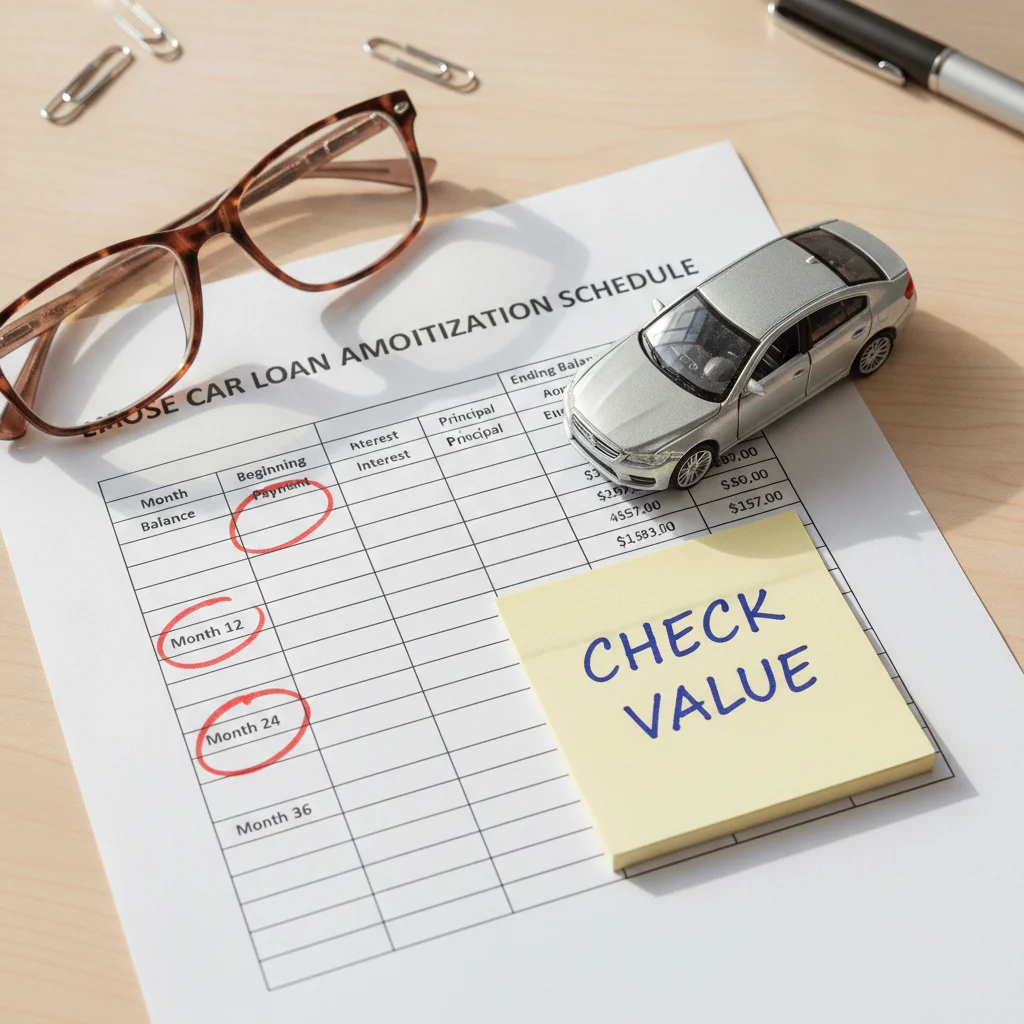
Down payments and GAP coverage are directly linked: the less you put down, the longer you stay exposed. If you're trying to decide whether you actually need GAP right now, pull your current loan payoff amount and compare it to your car's market value on a pricing site. That number tells you everything.
Pros and Cons of GAP Insurance
GAP coverage makes obvious financial sense in some situations and is a waste of money in others. Here's the honest breakdown.
Protects you from out-of-pocket loan balance after total loss
If your car is totaled or stolen, your insurer pays ACV — which may be thousands less than your loan balance. GAP covers that shortfall so you're not paying for a car you can no longer drive.
Relatively inexpensive when purchased through an insurer
Added through your auto insurance policy, GAP typically costs $20–$40 per year — a low premium for meaningful protection during the high-risk early period of a loan.
Especially valuable with long loan terms or small down payments
72- and 84-month loans keep you underwater longer. GAP coverage directly addresses the financial exposure created by slow-amortizing loan structures.
Reduces financial stress after an already difficult event
A total loss is disruptive enough without the additional burden of owing thousands on a destroyed vehicle. GAP eliminates one major financial consequence of the worst-case scenario.
Can be canceled once you build equity
Unlike many insurance products, GAP is not a long-term commitment. Once your loan balance drops below your car's market value, you can cancel and stop paying.
Unnecessary if you have significant equity
Buyers who put 20% or more down on a short-term loan may never be underwater. Paying for GAP in that situation is spending money on a risk that doesn't actually apply to you.
Dealer-sold GAP is significantly overpriced
Dealership F&I departments commonly charge $400–$900 for GAP coverage, often rolled into the loan so you pay interest on the premium. The same protection can cost a fraction of that through your insurer.
Doesn't cover your deductible or past-due payments
GAP only covers the spread between ACV and loan balance — it won't pay your insurance deductible, late fees, or any amount you're behind on payments. You're still responsible for those costs.
Only pays out after collision or comprehensive coverage does
GAP has no standalone trigger. If you don't carry comprehensive and collision, GAP won't activate — a dependency that catches some policyholders off guard.
May be a waste if negative equity was rolled in from a prior loan
If your previous loan's remaining balance was folded into this one, the gap is even larger and GAP coverage may not fully cover it. Most GAP policies have caps or exclusions for rolled-in negative equity.
The cost question matters a lot. GAP sold at the dealership can run $400–$900 or more when rolled into the loan — you're paying interest on the premium for the life of the loan. The same coverage purchased through your auto insurer typically runs $20–$40 per year added to your existing policy. Why dealers push GAP and what that markup looks like is worth understanding before you sign anything in the F&I office.
If you're financing and the dealership offers GAP, you can say no at that moment and add it through your insurer the same week — usually within the first 30 days of the loan. Loan terms and down payments ultimately determine your actual exposure, so run your own numbers before deciding.
Where to Buy It and What to Watch Out For
You have three main options: the dealership, your auto insurer, or a standalone GAP provider. Each comes with trade-offs.
Dealership (F&I office): Convenient, but almost always the most expensive route. The premium often gets rolled into the loan principal, meaning you pay interest on it. Some contracts also include clauses that are hard to cancel. Review what you're agreeing to in the finance contract before signing.
Your auto insurer: Usually the best deal. Most major insurers offer GAP or loan/lease payoff coverage as a relatively cheap add-on. Coverage terms may differ slightly from dealership policies — payout caps are the most common limitation. GAP insurance and loan/lease payoff coverage aren't always identical, so confirm what your insurer's version actually covers before assuming it's equivalent.
Standalone provider: Some credit unions and third-party companies offer GAP at competitive rates. If you're financing through a credit union, ask about their GAP product before the dealer even brings it up.

One thing to monitor regardless of where you buy it: cancel the policy — or remove the add-on — once your loan balance drops below your car's market value. Carrying GAP past that point is pure waste. Set a calendar reminder to check your loan-to-value ratio annually. Most lenders will give you a payoff quote over the phone in two minutes.
Situations Where GAP Is Worth It — and Where It Isn't
The clearest case for GAP: you financed a new vehicle with less than 10% down, your loan term is 60 months or longer, and the vehicle type has a history of above-average depreciation. In that scenario, you are almost certainly underwater in year one and possibly year two. GAP is cheap insurance against a painful outcome.
Subprime borrowers face an even more acute version of this problem. Higher interest rates mean amortization is slower — more of each payment goes to interest, less to principal. GAP on a subprime auto loan can be genuinely valuable, but it can also be oversold to buyers who are already being squeezed on rate.
The case against GAP gets stronger as your down payment increases and your loan term shortens. Put 20% down on a 48-month loan for a vehicle that holds value reasonably well — a Honda CR-V, a Toyota Tacoma — and you may never be underwater at all. Paying for GAP coverage in that scenario is buying protection against a risk that doesn't exist for you.
It's also worth comparing GAP to new car replacement coverage if your vehicle is brand new. New car replacement and GAP insurance serve different purposes after a total loss: replacement coverage pays for a comparable new vehicle, while GAP only zeroes out your loan. For a total loss in year one, replacement coverage may actually put you in a better position. The case for new car replacement coverage is worth considering alongside GAP, not instead of it.
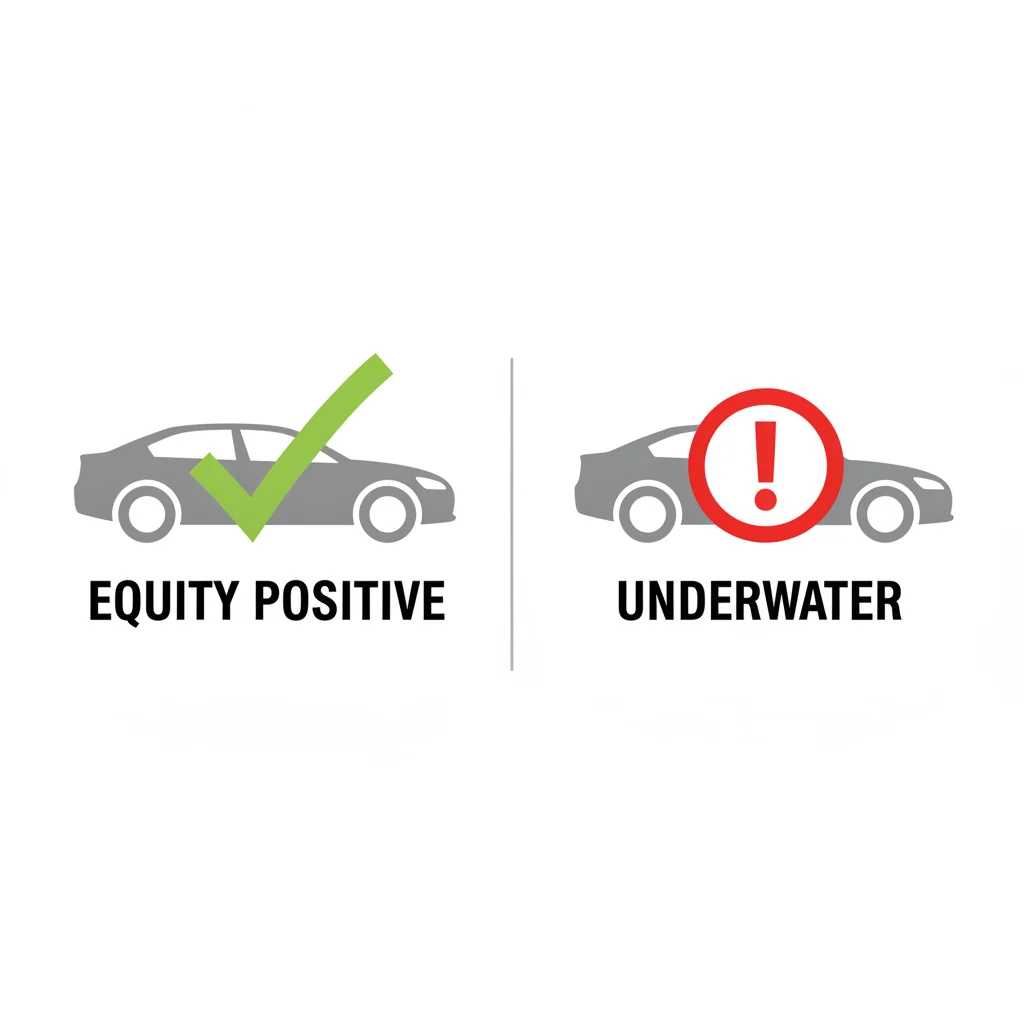
Bottom line: run your numbers, not someone else's assumptions. Your loan payoff amount minus your car's current market value is the only figure that matters. If that number is positive — meaning you owe more than it's worth — GAP is worth having. If it's negative, you're building equity and GAP is an unnecessary expense. Check it once a year and adjust accordingly.

All claims are backed by peer-reviewed research. Sources on request.