Key Takeaways
The Gap Insurance Promise vs. the Fine Print Reality
Walk into any finance office and the pitch sounds airtight: "If your car gets totaled and you owe more than it's worth, gap insurance covers the difference." For many buyers, that's reason enough to sign. But that pitch leaves out the word "some." Gap insurance covers some of the difference, under some conditions, for some borrowers.
I spent years on the dealership side watching F&I managers sell gap to every customer with a pulse. The product has genuine value in the right situation. But it's routinely sold to borrowers whose loan structure makes the coverage far less useful than advertised — or in a few cases, completely useless when a total loss actually happens.
The core problem is that gap insurance isn't a blank check. It's a contract with eligibility requirements, calculation formulas, and caps that the salesperson almost never mentions. If your loan is structured in ways that push your negative equity beyond those limits, you'll file a claim after a total loss and discover you still owe money to the lender.

This article breaks down exactly where gap insurance fails, who it fails, and what you can do to protect yourself before signing anything. For a foundational look at how negative equity builds in the first place, see why upside-down loans happen and how down payments prevent them.
Common Myths About Gap Insurance — Corrected
These are the misconceptions I hear most often from buyers — and the facts that every borrower should understand before paying for this coverage.
Myth
Gap insurance covers the entire difference between what I owe and what the insurance company pays out after a total loss.
Fact
Most gap policies cap their payout at 20–25% of the vehicle's actual cash value, leaving borrowers with deep negative equity still on the hook for thousands.
This is the myth that causes the most financial pain at claim time. Buyers picture gap insurance as a complete bridge — whatever the primary insurer doesn't cover, gap picks up. In reality, nearly every gap policy contains a maximum payout expressed as a percentage of the vehicle's ACV.
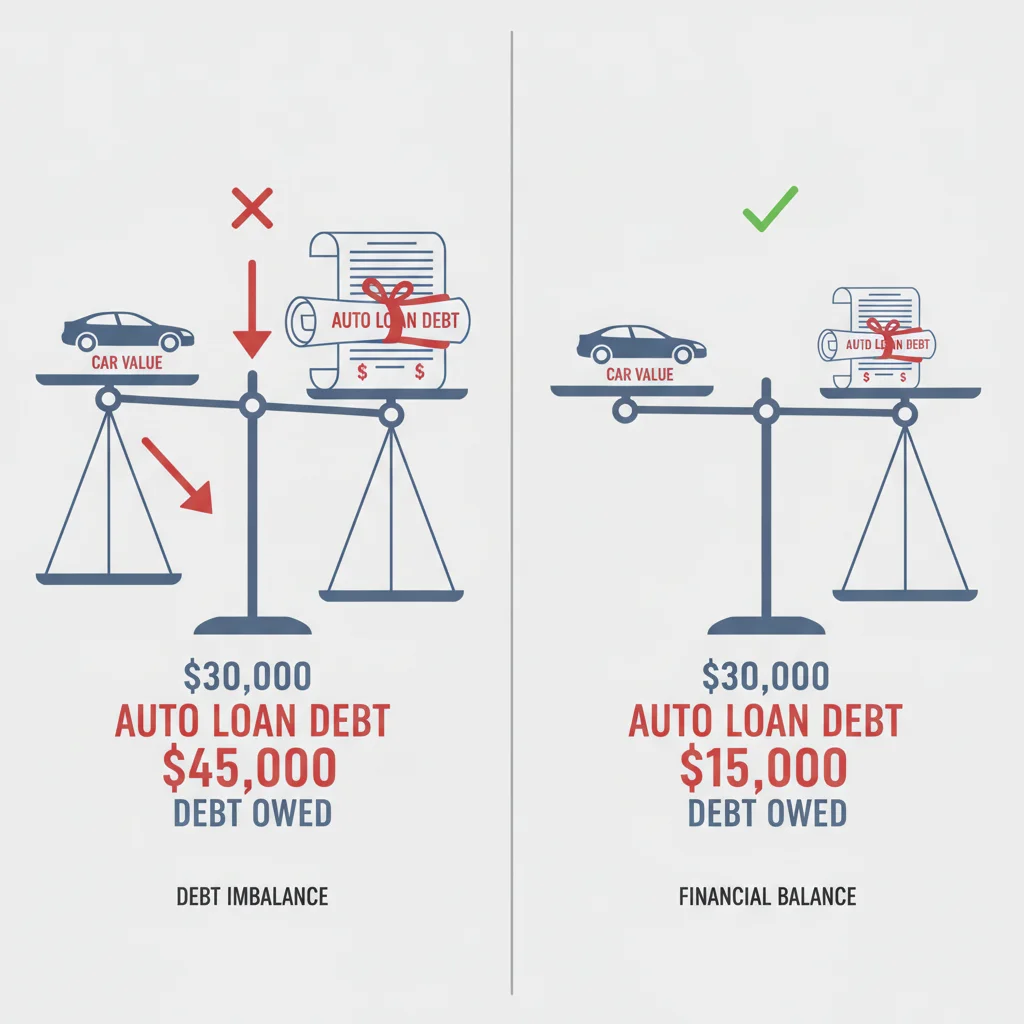
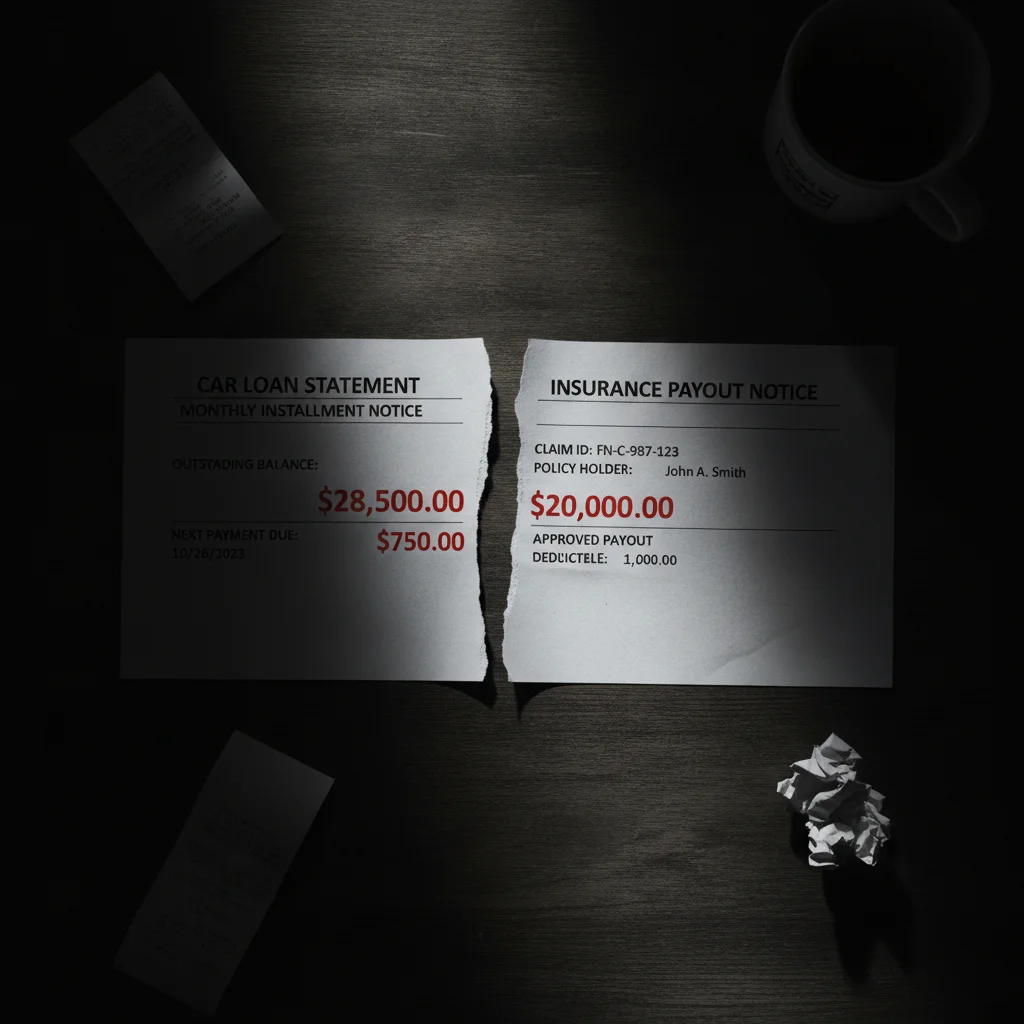
If your insurer determines your totaled car's ACV is $22,000 and your loan balance is $30,000, your gap is $8,000. A policy capped at 25% of ACV covers a maximum of $5,500. You still owe $2,500 to the lender — with no car to drive. The larger your negative equity relative to the vehicle's value, the more likely you are to hit that cap and absorb the remainder personally.
Borrowers on 72- and 84-month loans with little or no down payment are most exposed to this limitation because their negative equity can run 30–40% of ACV in the early years of the loan.
Myth
Gap insurance will cover the negative equity I rolled over from my previous car loan.
Fact
Virtually all gap policies explicitly exclude prior loan balances rolled into the new loan from their coverage calculations.
Rolling negative equity from a trade-in into a new auto loan is one of the most common ways buyers end up deeply underwater from day one. Dealers facilitate this because it lets customers escape a bad trade situation — but they rarely disclose that the rolled-in balance is invisible to gap coverage.
Here's how it works in practice: you owe $18,000 on a car worth $13,000. You roll the $5,000 shortfall into a new $30,000 loan, making your actual financed amount $35,000. The gap policy is written against the new vehicle — valued at $30,000. Your covered gap maximum might be $7,500 (25% of ACV). But your actual loan-to-value deficit on day one is $5,000 from the old loan plus whatever depreciation hits on the new one. The rolled amount is excluded from coverage entirely.
Dealers pushing gap insurance on trade-in customers with rolled debt are selling a product that doesn't address a core component of the buyer's risk. See how rolled-in negative equity compounds your loan exposure for a full breakdown of how this trap works.
Myth
Buying gap insurance from the dealership is the easiest and most cost-effective option.
Fact
Dealer gap coverage routinely costs $400–$900 — two to four times what the same coverage costs through an independent insurer or credit union — and rolls that cost into your loan where it accrues interest.
The convenience framing is intentional. F&I managers present gap as a simple add-on: "It's just a few dollars more per month." What they don't say is that those few dollars per month translate to several hundred dollars in premium, rolled into a loan you'll pay interest on for 60 to 84 months.
A gap policy added to your existing auto insurance policy typically costs $20 to $40 per year — meaning the dealer version may represent a 500–1,000% markup over the same protection bought independently. Credit unions that finance auto loans often include gap coverage for free or at a nominal flat fee as a member benefit.
The practical advice: always get a price from your insurer or credit union before you sit in the finance office. Having that number in hand gives you a baseline the F&I manager can't easily dismiss, and in some states, you can decline dealer gap and add it to your policy the same day.
Myth
As long as I have gap insurance, I don't need to worry about the size of my down payment.
Fact
Gap insurance is a partial backstop, not a substitute for adequate equity — a large down payment eliminates the need for gap coverage entirely and protects you in ways gap cannot.
This myth is particularly damaging because it encourages buyers to skip the down payment, reasoning that gap insurance covers them if something goes wrong. In practice, the relationship works the opposite way: the larger your down payment, the less you need gap insurance; the smaller your down payment, the more you need it — but also the more likely you are to exceed its caps.
A 20% down payment on most vehicles means you're at or near the car's value from day one, depreciation notwithstanding. You'd likely be above water or very close to it within 12 months. Gap coverage in that scenario is nearly irrelevant. A zero-down buyer on a 72-month loan may be 25–35% upside-down in month one, sitting squarely in the zone where gap either caps out or provides only partial relief.
How your down payment and loan term determine your actual gap risk is worth reading before you decide how much to put down. Gap insurance is risk mitigation for imperfect loan structures — it is not a financial planning tool.
Myth
Gap insurance covers missed payments, late fees, and other charges added to my loan balance.
Fact
Gap policies cover only the difference between the vehicle's ACV and the outstanding principal balance — late fees, deferred payments, and penalty charges are universally excluded.
Loan balances grow for reasons beyond just the original financed amount. If you've missed payments, deferred payments through a hardship program, or had late fees capitalized into the balance, your payoff amount will be higher than your original amortization schedule predicted — and gap insurance won't cover any of that excess.
This matters most for borrowers who experience financial difficulty mid-loan and then suffer a total loss. They arrive at the claim with a loan balance that's been inflated by fees and deferred interest, a gap payout capped at a percentage of the vehicle's depreciated ACV, and a net shortfall that can run into several thousand dollars they still owe the lender.
The practical implication: if you're going through a financial hardship and considering a payment deferral, understand that you are simultaneously increasing your gap exposure. Gap policies calculate against the original amortized balance trajectory, not the inflated actual payoff.
Myth
Gap insurance pays out automatically and quickly after a total loss claim.
Fact
Gap claims require the primary insurer to finalize and pay the ACV settlement first — the gap claim cannot even be filed until that process is complete, and delays are common.
Buyers imagine gap as a seamless parallel process that runs alongside the primary claim. In reality, it's sequential. First, your auto insurer must complete its total loss evaluation, dispute any ACV disagreements, and issue its settlement payment. Only after that payment is made can you file the gap claim with the gap insurer — a separate entity in almost every case.
The gap insurer then requires its own documentation: the primary insurer's settlement letter, your loan payoff statement as of the loss date, and often a copy of your original loan agreement. Processing typically takes two to four weeks after submission. During this entire period, you are still legally obligated to continue making loan payments — even on a car that no longer exists — because the lender's obligation doesn't pause during the claim process.
Budget for one to two months of loan payments after a total loss before the full gap settlement resolves. Failing to make payments during this window can result in derogatory marks on your credit report and late fees that — as noted above — gap won't cover.
The Borrowers Gap Insurance Fails Most Often
Not all upside-down loans are equally risky from a gap coverage standpoint. The borrowers who get hurt worst share a recognizable profile.
Zero-Down, Long-Term Loan Buyers
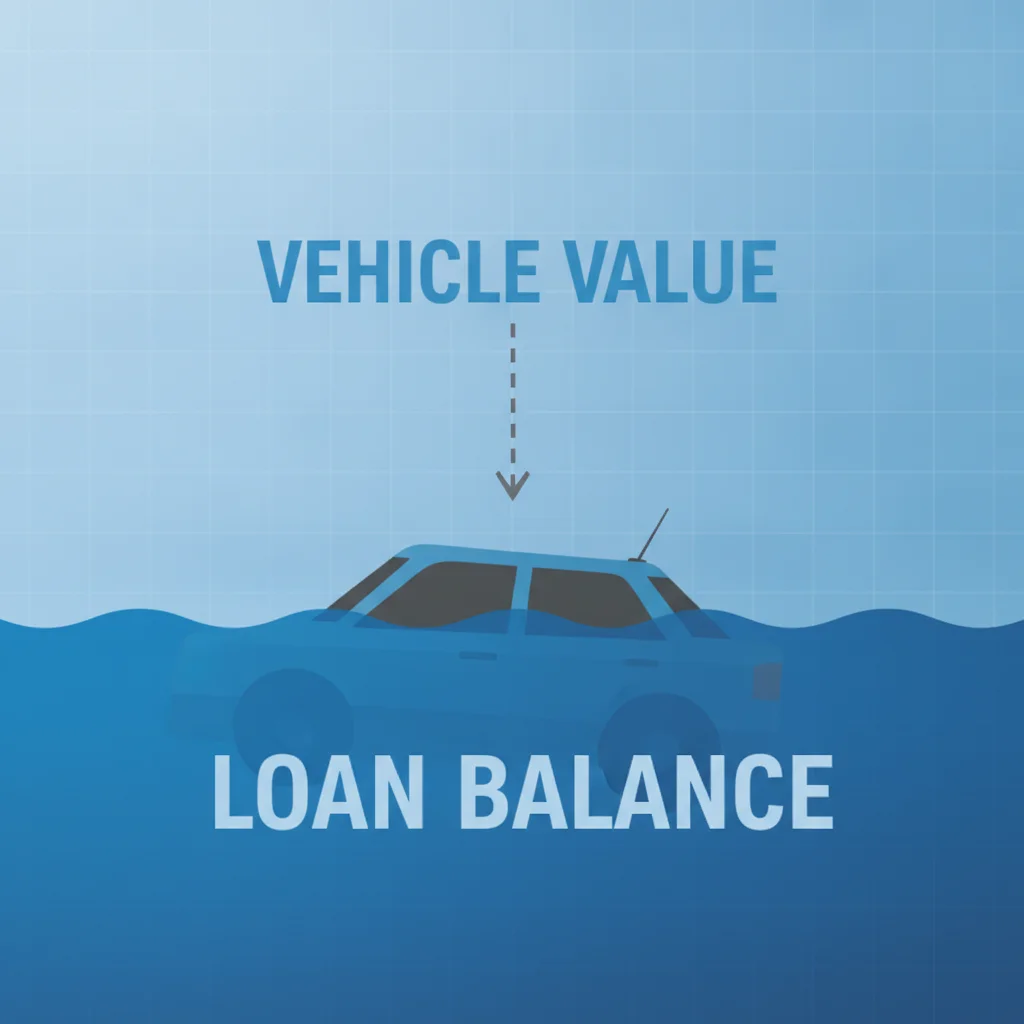
Financing 100% or more of a vehicle's purchase price on a 72- or 84-month loan is the fastest route to deep negative equity that gap won't fully cover. In the first 12 to 18 months, you're paying almost entirely interest while the car depreciates aggressively. The gap between what you owe and what the car is worth can easily exceed a typical policy's 25% cap.
~44%
Share of new car loans with negative equity at origination
According to Edmunds data, nearly 44% of trade-ins used toward new vehicle purchases in recent years carried negative equity, with the average amount rolled in exceeding $5,000.
25%
Typical gap insurance payout cap as percentage of ACV
Most standard gap insurance policies limit their payout to no more than 25% of the vehicle's actual cash value at the time of total loss, regardless of the borrower's loan balance.
$5,341
Average negative equity rolled into new auto loans
Edmunds reported that borrowers who traded in vehicles with negative equity rolled in an average of over $5,000 into their new loan — an amount typically excluded from gap coverage.
3–5x
Cost premium for dealer-sold vs. insurer-sold gap coverage
Consumer finance analysts consistently find that gap insurance purchased through a dealership costs three to five times more than equivalent coverage added to a standalone auto insurance policy.
19.8%
Average first-year depreciation on new vehicles
According to iSeeCars research, new vehicles lose an average of nearly 20% of their value in the first year, making early loan months the highest-risk window for total loss gap exposure.
Subprime Borrowers With Rolled-In Debt
Subprime deals routinely involve rolling negative equity from a trade-in into the new loan, then financing add-ons on top of that. A buyer who is $4,000 upside-down on a trade, adds a $2,500 extended warranty, and puts nothing down may be $8,000 to $10,000 underwater on day one. Gap policies typically exclude the rolled debt and the warranty from coverage. Subprime gap insurance coverage has important limits that make it less useful in exactly the situations where dealers push it hardest.
Rolled-In Debt Is the Gap Policy's Blind Spot
If your deal involves rolling negative equity from a trade-in into the new loan, understand that gap insurance treats that rolled amount as invisible. Your actual financial exposure at total loss will be significantly higher than what your gap policy will pay. Before agreeing to any roll-in, calculate the exact shortfall and compare it to your policy's ACV cap. In many cases, you are better served declining the trade and selling the old vehicle privately to pay off the prior loan.
Don't Skip Payments While Awaiting a Gap Claim
Your loan obligation does not pause during a total loss claim or a gap claim settlement. Missing payments while waiting for gap to pay out will generate late fees that gap won't cover, and can result in derogatory marks on your credit report. Continue making minimum payments on your loan until the gap settlement is confirmed and applied to your balance by the lender.
Check Gap Eligibility Before Your Policy Lapses
Gap coverage purchased through a dealer is typically tied to that specific loan and expires when the loan does or when you refinance. If you refinance your auto loan to get a lower rate, your dealer-issued gap policy may be automatically cancelled. Always confirm coverage status after any loan modification, and check whether your new lender or insurer offers a replacement policy before the old one terminates.
Buyers Who Overpaid for the Vehicle
If you paid sticker price or above on a vehicle that the insurer values at invoice minus depreciation, your ACV payout at total loss will be lower than you expect. Gap covers the difference between the ACV and your loan balance — but if the ACV itself is lower than you assumed, the gap widens further and may exceed your policy cap.
How to Evaluate Whether Gap Is Worth Buying in Your Situation
Gap insurance makes financial sense when your loan-to-value ratio at origination is moderately above 100% and the loan term is short enough that depreciation and amortization will bring you above water within two to three years. It makes little sense when your negative equity is so deep that no standard policy cap will protect you fully.
Run the Numbers Before You Buy
- Find the vehicle's current market value using Kelley Blue Book, Edmunds, or NADA Guides.
- Subtract your loan payoff amount to find your current negative equity.
- Divide negative equity by market value to get your gap percentage.
- Compare that percentage to your policy's cap — typically 20–25% of ACV.
If your gap percentage already exceeds the cap at origination, you are buying coverage that will not fully protect you from day one. That's a problem worth knowing before you pay for the product.
Know Your Cap Before You Buy Gap Coverage
Before agreeing to gap insurance — at the dealership or anywhere else — ask for the policy's maximum payout cap expressed as a percentage of ACV. Then calculate your current loan-to-value ratio and your projected LTV at 12 and 24 months. If your negative equity exceeds the cap at origination, you are buying coverage that provides only partial protection from day one. A product that covers 60% of your risk is not the same as full protection, and you deserve to know the difference before signing.
Gap Insurance Cannot Fix a Structurally Bad Loan
No insurance product can substitute for sound loan structure. If the deal requires rolling in negative equity, financing 100% or more of the vehicle's value, and stretching to a 72- or 84-month term to make the payment work — gap insurance is not the answer to the risk you're taking on. The right move is to restructure the deal: increase the down payment, shorten the term, decline the roll-in, or walk away. Gap is a safety net for moderate risk, not a license to accept an unworkable loan.
Shop Gap Coverage Outside the Dealership
Dealer-sold gap insurance is almost always marked up significantly. The same product — sometimes the exact same underwriter — is available directly from your auto insurer or a credit union for $20 to $40 per year added to your comprehensive policy, versus $400 to $900 as a dealer add-on rolled into your loan. When you roll the dealer gap premium into your loan, you also pay interest on it for the life of the loan, compounding the overpayment.
For a full comparison of what gap policies actually cover versus what buyers expect, see gap insurance coverage explained in detail and what gap insurance doesn't cover and when you need it.
Consider Structural Solutions Instead
The most reliable protection against negative equity isn't an insurance product — it's loan structure. A larger down payment, a shorter loan term, or declining an underwater trade-in deal reduces or eliminates the gap exposure entirely. Loan terms and down payment size directly determine your gap risk. And understanding how down payment strategy shapes your entire loan is foundational before you ever sit in a finance office.

If you're in a bad credit loan situation, the calculus is harder — but the due diligence matters even more. Lenders in that space often build in structures that make gap coverage look essential while simultaneously making it less effective.
What to Do If You're Already Upside-Down Without Adequate Coverage
If you've already signed a loan and you're realizing gap won't fully protect you — or you didn't buy it at all — you still have options.
Add Gap Coverage Now If You're Within the Window
Many insurers will add gap coverage to an existing policy as long as the loan is less than one year old and the LTV hasn't exceeded a certain threshold (often 150%). Call your insurer directly and ask. It's almost always cheaper than the dealer's price even retroactively added.
Accelerate Paydown on the Principal
Making one or two extra principal-only payments per year dramatically accelerates the point at which your loan balance drops below the car's market value. Even $100 to $200 extra per month applied exclusively to principal can move you above water six to twelve months sooner on a 72-month loan.
Avoid Additional Debt Against the Vehicle
Cash-out refinancing or rolling in other costs after origination deepens negative equity further and typically voids or reduces gap coverage. If you're already underwater, treat the loan balance as a fixed obligation to pay down — not a resource to borrow against.

The bottom line: gap insurance is a real product with real value in the right circumstances. But it is not a backstop for every upside-down loan, and the dealership finance office is not the place to expect a balanced explanation of its limits. Know the caps, know your numbers, and make the purchase decision — or skip it — based on whether the math actually works for your specific loan.

All claims are backed by peer-reviewed research. Sources on request.