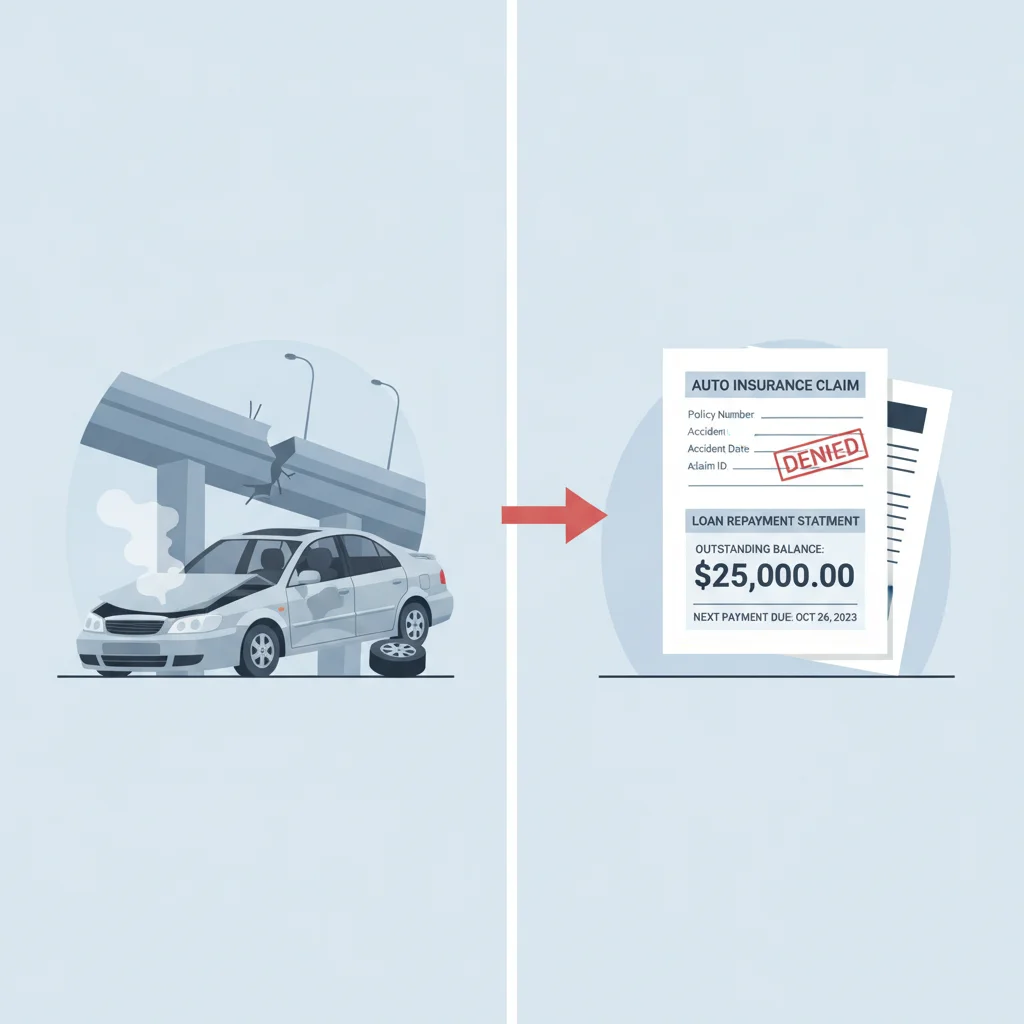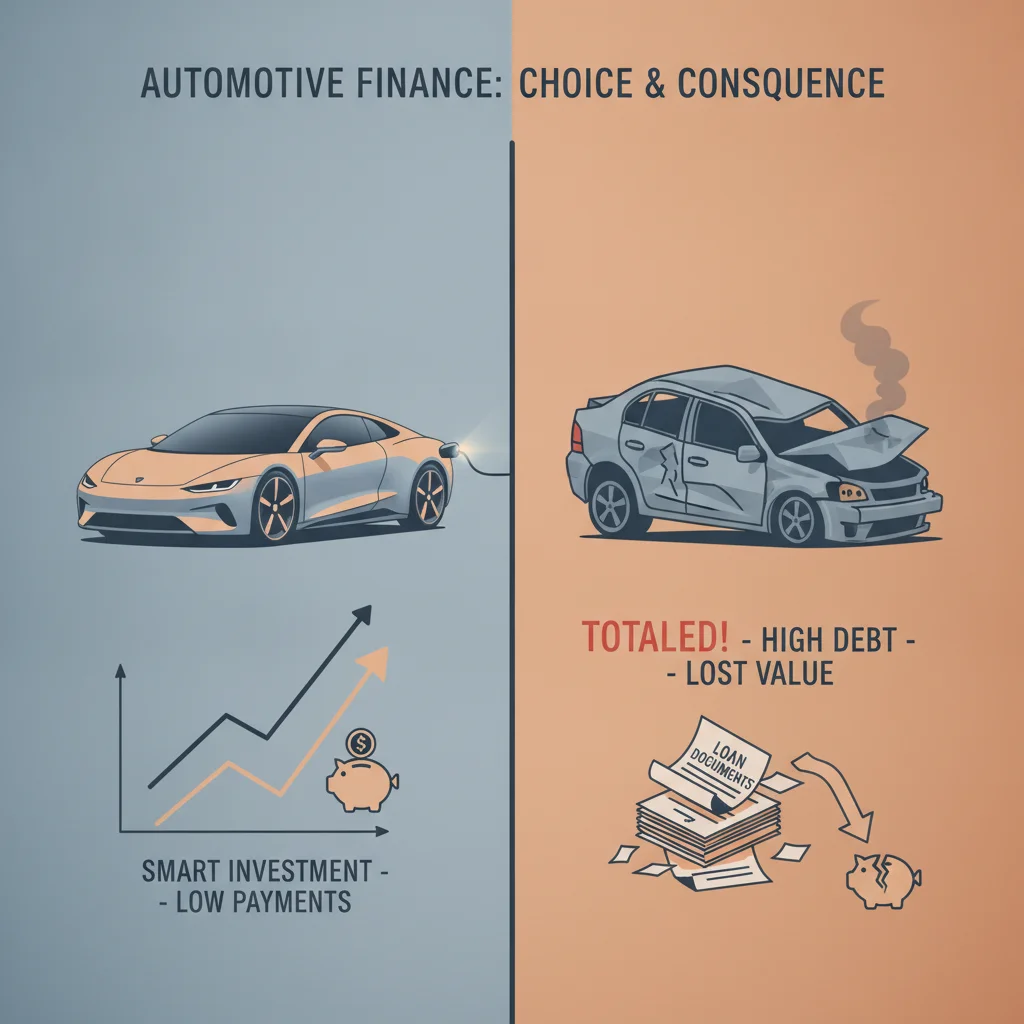
Key Takeaways
Option A
New Car Replacement Coverage
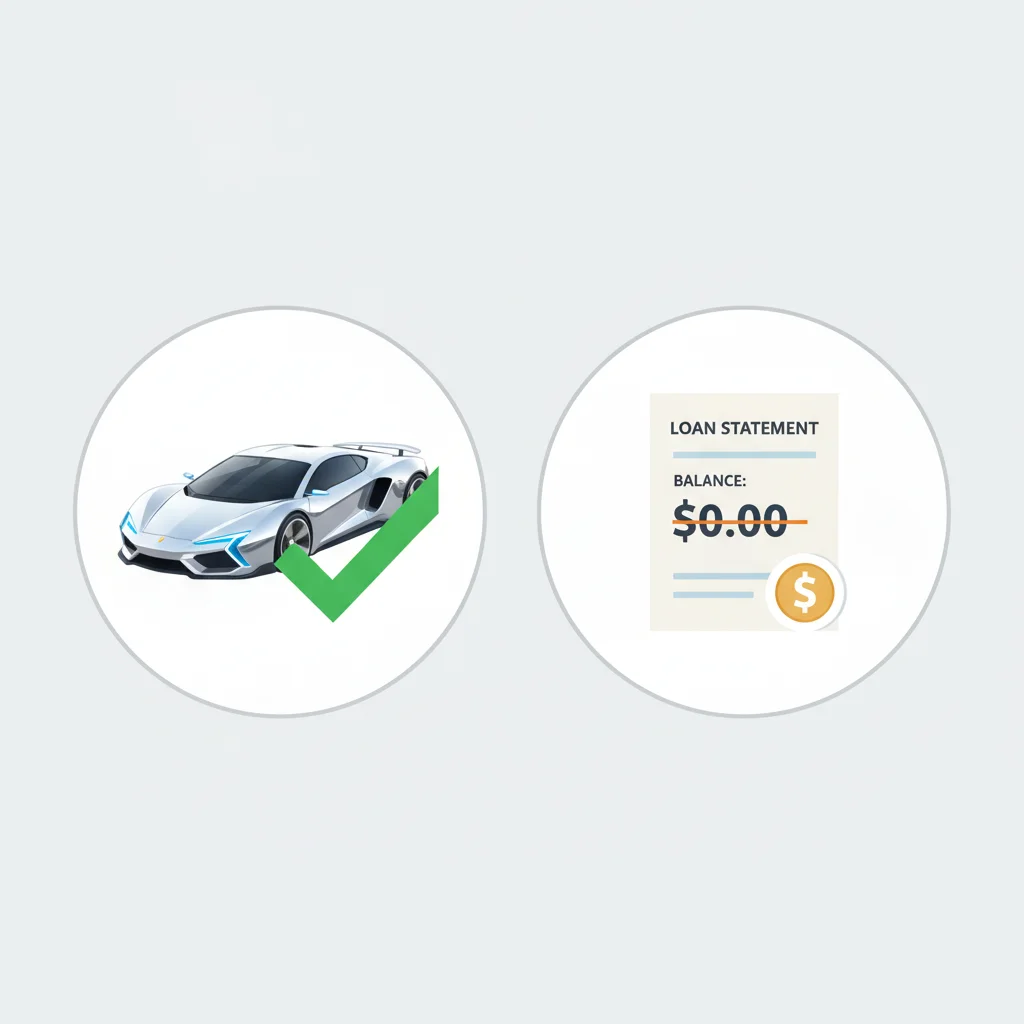
The upgrade that replaces your totaled car with a brand-new equivalent.
Best for: New car buyers who want a like-for-like replacement vehicle, not just a check that covers their loan balance.
Option B
Gap Insurance
The loan-balance safety net that zeroes out what you still owe after a total loss.
Best for: Buyers who financed a large percentage of their vehicle's purchase price and want to avoid being upside-down after a total loss.
If you put less than 10% down and financed over 60 months
Gap Insurance
You're almost guaranteed to be underwater in the first two years. Gap insurance is the cheaper fix for a loan-balance problem, not a replacement-vehicle problem.
If you want to drive away in an equivalent new car — not just clear a debt — after a total loss
New Car Replacement Coverage
Gap insurance won't put you in a new car; it just zeroes out your loan. New car replacement actually funds the next vehicle.
If you financed 100% of the purchase price on a fast-depreciating model
Gap Insurance
The gap between ACV and loan balance can exceed several thousand dollars in the first year alone — gap insurance closes that hole at a low annual cost.
If you made a large down payment and your loan balance is close to the car's market value
New Car Replacement Coverage
With little to no gap between ACV and loan balance, gap insurance delivers minimal value. New car replacement gives you a meaningful upgrade for a marginal premium.
If you leased your vehicle instead of financing
Gap Insurance
Most lease agreements require gap coverage, and new car replacement doesn't apply to leased vehicles. Gap insurance is the correct tool for lease-gap exposure.
What Each Coverage Actually Does
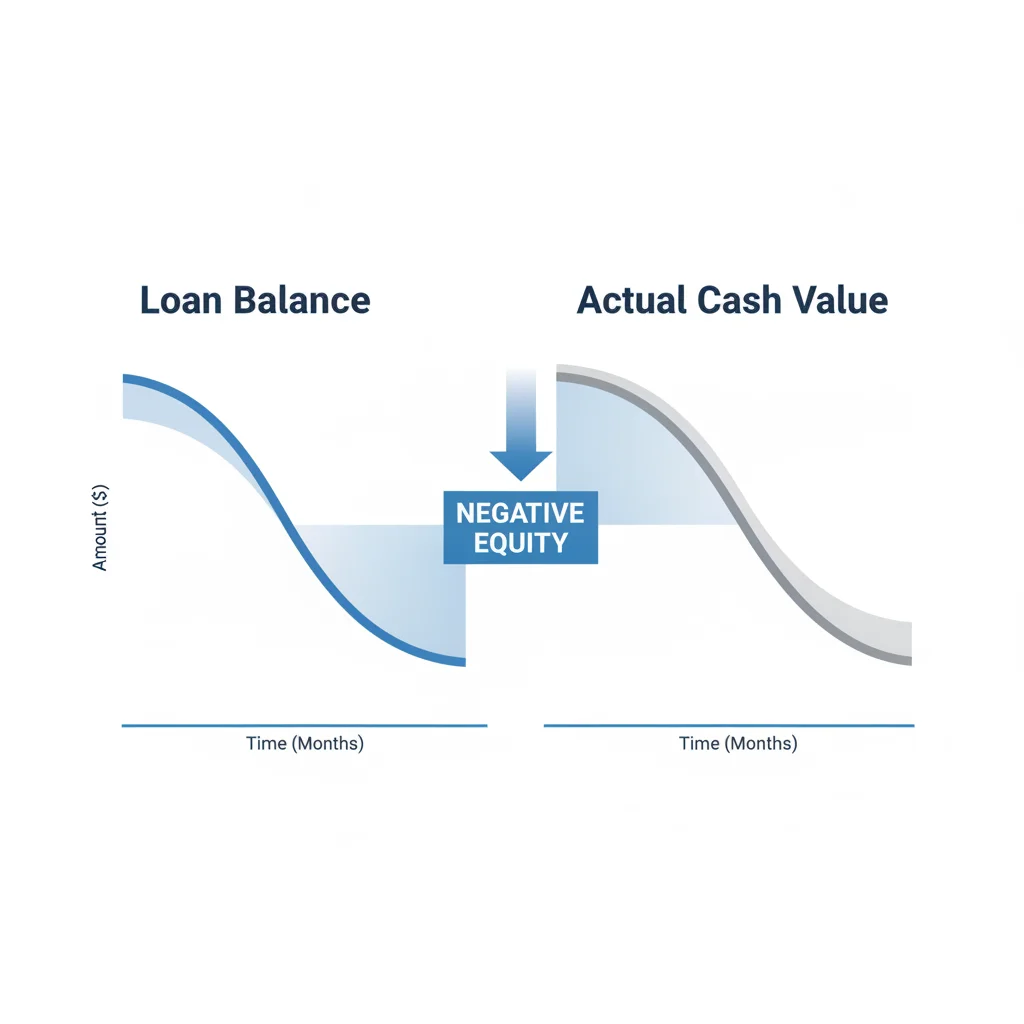
After a total loss, your standard collision or comprehensive policy pays out the actual cash value (ACV) of your vehicle — what the market says it's worth on the day it's destroyed, minus your deductible. That number is almost always less than what you paid, and it may be far less than what you still owe. That's where optional add-on coverages step in, but they don't both solve the same problem.
New car replacement coverage (sometimes called "better car replacement" or "new vehicle replacement") instructs your insurer to pay whatever it costs to replace your totaled car with a brand-new vehicle of the same make, model, and trim — regardless of how much your wrecked car had depreciated. If you bought a $42,000 SUV, drove it for 14 months, and the ACV at the time of the total loss is $33,000, new car replacement makes up that $9,000 gap and then some, because the replacement vehicle's sticker price may have risen due to inflation or trim changes.
Gap insurance (Guaranteed Asset Protection) does something narrower: it pays the difference between your car's ACV and your outstanding loan or lease balance — nothing more. Using the same example, if you owe $36,500 on that $42,000 SUV when it's totaled and the ACV payout is $33,000, gap covers the $3,500 shortfall. You walk away debt-free. You do not walk away with a new car.
That distinction is the entire ballgame. New car replacement is a vehicle replacement tool. Gap insurance is a debt-elimination tool. Conflating them is one of the most expensive mistakes a new car buyer can make.
For a deeper look at how gap insurance interacts with your base policy, see how gap and physical damage coverage work together.
Side-by-Side: How They Stack Up on the Criteria That Matter
Before you spend a dollar on either coverage, you need to understand exactly where each one performs — and where it falls flat. The table below cuts through the marketing language both dealers and insurers use.
| Criterion | New Car Replacement | Gap Insurance |
|---|---|---|
| What it pays | Cost of a brand-new equivalent vehicle | Difference between ACV and loan/lease balance |
| Primary benefit | Puts you in a new car after a total loss | Eliminates remaining loan debt after a total loss |
| Typical annual cost | $100–$300+ added to premium | $20–$40/year through insurer |
| Where to buy | Auto insurer only | Insurer, lender, or dealership (avoid dealer) |
| Eligibility window | New vehicles only, typically within 1–2 model years | Any time a loan gap exists |
| Deductible applies | Yes — base policy deductible applies first | Yes — base ACV payout is net of deductible |
| Useful on leased vehicles | No | Yes — often required by lessors |
| Covers rolled-in negative equity | No | Varies — many policies exclude prior negative equity |
| Auto-cancels when no longer needed | Policy expires by age/mileage limit | Should cancel when loan balance falls below ACV |
A few things jump out immediately. First, new car replacement has a hard expiration — most policies limit eligibility to vehicles that are less than one to two model years old at the time of the loss, and they're only sold when the car is new. Miss that window and the option is gone. Gap insurance, by contrast, can be purchased at any point during the life of a loan as long as a gap actually exists between ACV and loan balance.
Second, cost structure is very different. Gap insurance bought through your auto insurer typically runs $20–$40 per year added to your premium. Gap sold at the dealership finance office — the version most buyers actually sign up for, usually buried in the contract — can cost $400–$900 as a lump sum rolled into the loan itself. That means you're paying interest on your gap coverage. Always buy gap through your insurer or a standalone provider, not the F&I office.
Third, new car replacement is a premium coverage that costs meaningfully more, but it delivers meaningfully more: an actual replacement vehicle, not just loan forgiveness.
20%
Average first-year depreciation on a new vehicle
According to Edmunds and Kelley Blue Book historical depreciation data, the average new car loses approximately 20% of its value within the first 12 months of ownership.
$400–$900
Typical dealer-sold gap insurance cost
Consumer advocates and state insurance regulators consistently report that gap sold through dealership F&I offices costs several times more than the same coverage purchased from an insurer.
~$20–$40/year
Insurer-sold gap insurance annual premium
Major auto insurers including Progressive and Allstate price gap coverage as a low-cost endorsement, far below the lump-sum figure dealers charge.
1 in 4
Financed new cars underwater within year one
Experian auto financing data indicates a significant share of new vehicle loan holders owe more than their car is worth within the first 12 months, particularly with 72- and 84-month loan terms.
72–84 months
Loan terms that maximize gap exposure
The Consumer Financial Protection Bureau notes that longer loan terms — now common on new vehicles — slow principal paydown significantly, extending the period a buyer remains underwater.
The Depreciation Math That Determines Which One You Need
Both coverages exist because of one uncomfortable truth: new cars depreciate brutally fast. The average new vehicle loses roughly 20% of its value in the first year and close to 50% over five years. Meanwhile, if you financed with a small down payment on a long loan term, your loan balance drops far more slowly than your car's value. The result is a "gap" — sometimes a large one.
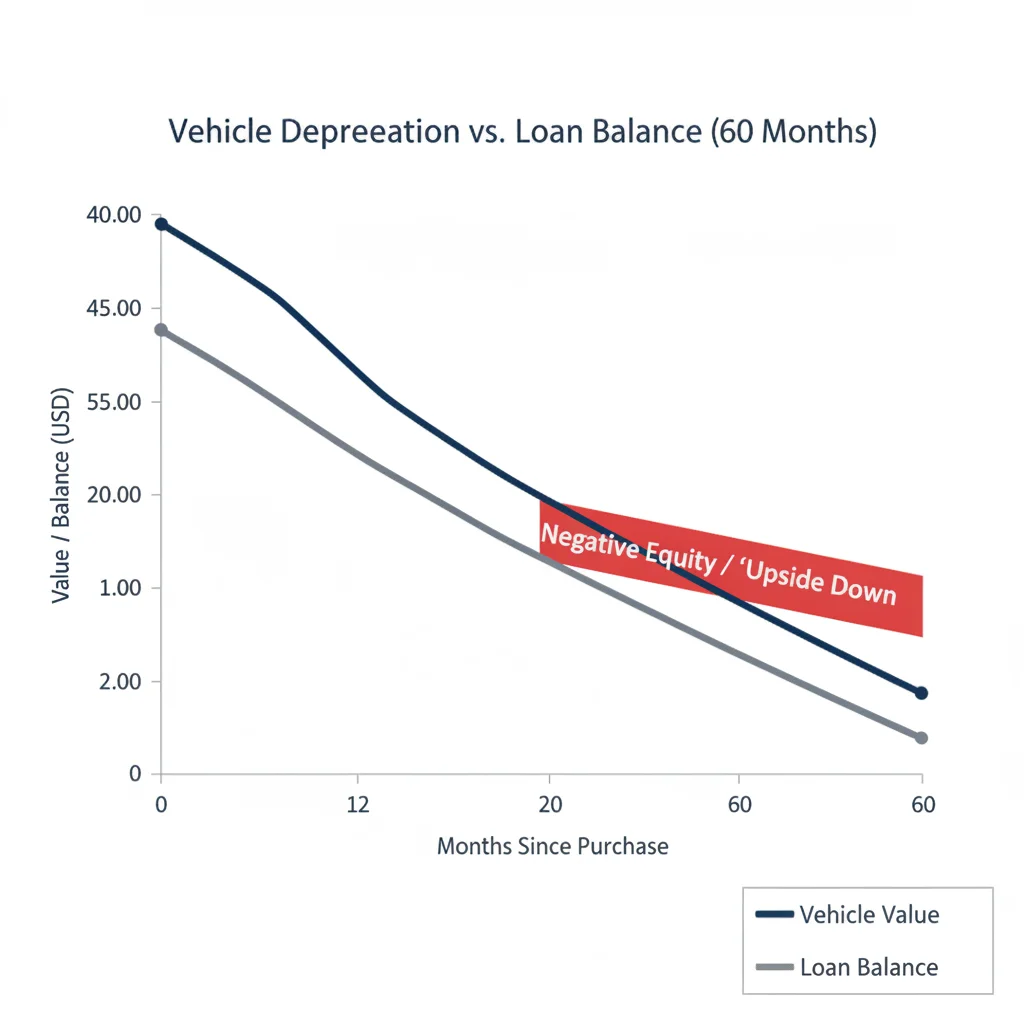
Here's how to run the numbers for your own situation:
- Find your car's current ACV — use Kelley Blue Book, Edmunds, or NADA Guides. Be honest; use the private-party value, not the dealer retail figure.
- Pull your current loan payoff amount — call your lender or check your online account. This is different from your remaining balance; payoff includes any interest owed through a target date.
- Calculate the gap — subtract ACV from payoff. If the result is positive, you're underwater. If it's zero or negative, you have no gap to insure.
- Compare the gap to your replacement cost exposure — if the gap is large but your primary concern is loan payoff, gap insurance is efficient. If you also want a new car in your driveway after a total loss, new car replacement addresses both (because it exceeds the ACV payout enough to also close a typical gap).
For a full breakdown of why depreciation creates this exposure in the first place, gap insurance and depreciation: why the gap exists walks through the math in detail.
What Gap Insurance Does NOT Cover
Gap insurance has several well-known exclusions that catch buyers off guard. Most policies will not cover negative equity that was rolled into the new loan from a prior trade-in, past-due payments at the time of the loss, or loan amounts that exceed the vehicle's original MSRP. If your loan includes financed warranties, dealer add-ons, or prior negative equity, your gap payout may be smaller than you expect. Always read the gap insurance certificate — not the dealer's verbal pitch — before assuming full coverage. See <a href="/car-insurance/rates-and-savings/comparing-policies/gap-insurance-what-it-covers-what-it-doesnt-and-when-you-actually-need-it">gap insurance: what it covers and what it doesn't</a> for a full exclusions breakdown.
New Car Replacement Has a Mileage Cap Too
Beyond the age restriction, most new car replacement policies also impose a mileage limit — commonly 15,000 miles — at the time of a total loss claim. If you're a high-mileage driver who racks up 20,000+ miles per year, you could lose eligibility before the first year is even up. Check your policy's specific mileage threshold before assuming the coverage will still be in force when you need it.
Where Each Coverage Is Sold — and Where You'll Get Overcharged
Knowing what to buy is only half the battle. Knowing where to buy it — and what to refuse — will save you real money.
Gap insurance sources, ranked by cost:
- Your existing auto insurer — cheapest option, typically $20–$40/year added to your premium. Cancels automatically when your loan payoff drops below ACV.
- A standalone gap insurance provider — moderately priced, often $200–$300 for the life of the loan. Good if your insurer doesn't offer gap.
- Your lender or credit union — reasonable pricing, sometimes bundled with loan origination as a flat fee.
- The dealership F&I office — most expensive, least transparent. Gap sold here is frequently marked up 200–400% above cost and then rolled into the loan so you pay interest on it for the life of the financing. When a finance manager says "it's only $8 a month," they're quoting you the payment impact, not the actual cost.
New car replacement coverage sources:
- This is an insurer-only product — you cannot buy it at the dealership. It must be added to your auto insurance policy at or near the time of purchase, typically within 30 days of buying the new vehicle.
- Not every insurer offers it. USAA, Liberty Mutual, Travelers, and Nationwide are among the larger carriers that do. Shop explicitly for this endorsement if it matters to you.
- Annual cost varies by insurer and vehicle but typically adds 5–10% to your comprehensive and collision premium.
If you're purchasing a new vehicle, what to know before buying a new car from a dealership covers the broader landscape of add-ons and fees the finance office will try to layer in.
Can You Carry Both at the Same Time?
Yes — and in some situations, it's worth considering. The two coverages are not mutually exclusive. A buyer who financed 90% of a $50,000 vehicle and wants both the loan protection and the assurance of a new replacement vehicle could, theoretically, carry both.
In practice, however, new car replacement coverage will often make gap insurance redundant in the first one to two years. Here's why: if your insurer is paying to replace your totaled vehicle with a brand-new equivalent, the payout will almost certainly exceed both your ACV and your loan balance. The replacement cost effectively closes the gap on its own.
The scenario where both make sense is narrow: you financed a high-gap vehicle (large loan, small down payment, fast depreciation), your insurer offers new car replacement, and you're concerned that the replacement cost payout might not fully cover a loan that includes rolled-in fees, negative equity from a trade-in, or extended warranty costs that were financed. In that case, gap insurance acts as a backup for costs new car replacement doesn't reach.
More commonly, the right move is to choose one based on your primary risk:
- Risk = being stuck with loan debt on a totaled car → Gap insurance
- Risk = receiving an ACV check that can't buy you back into an equivalent vehicle → New car replacement
For more on how replacement valuation methods affect your payout, see agreed value vs. actual cash value: which policy pays out more after a total loss.
One final note: both coverages require that you carry collision and comprehensive coverage on your policy. Neither gap insurance nor new car replacement pays out on its own — your base physical damage coverage must trigger first. If you drop to liability-only, both add-ons become worthless immediately.
For more on when gap coverage makes sense for your specific situation, gap insurance explained: what it covers and when you actually need it is worth reading before you commit. And if depreciation on your specific model is the core concern driving this decision, the case for new car replacement coverage lays out exactly when that coverage earns its premium.

All claims are backed by peer-reviewed research. Sources on request.