Key Takeaways
GAP Insurance in a Finance Contract
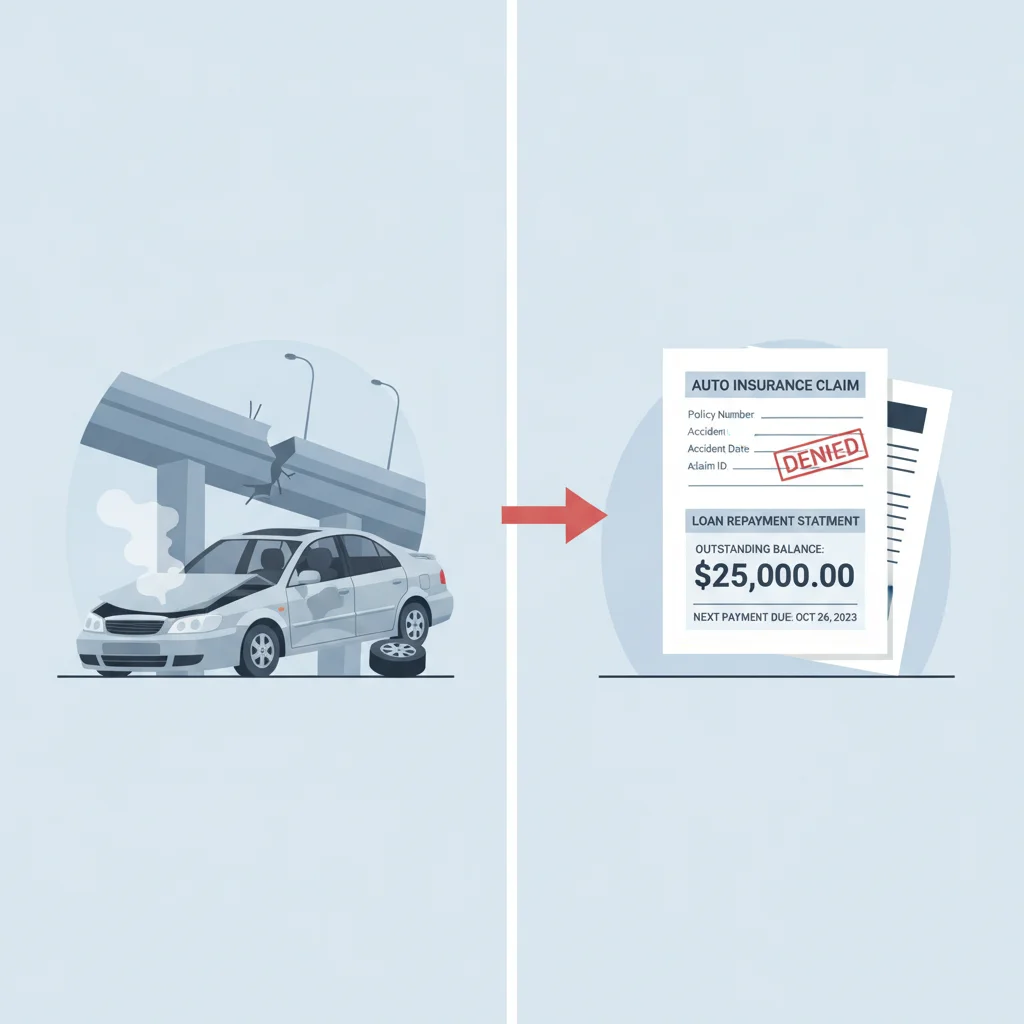
GAP insurance — short for Guaranteed Asset Protection — is an optional add-on product that covers the difference between what your car insurance pays out after a total loss and what you still owe on your auto loan. When you buy a car through dealer financing, the F&I (finance and insurance) office will often include GAP coverage as a line item in your loan contract. Signing that contract means you're agreeing to pay for the product, usually by rolling its cost into your loan balance.
GAP coverage sold through dealers is typically a debt cancellation agreement or addendum to the retail installment contract, not a traditional insurance policy — which affects how it's regulated and what consumer protections apply.
What the F&I Office Is Actually Selling You
After you agree on a vehicle price, you're guided into the finance and insurance (F&I) office — a room where the real paperwork happens. The F&I manager's job is to finalize your loan and present a menu of optional products. GAP insurance is almost always on that menu.
Here's where buyers get confused: the way GAP is presented — quickly, matter-of-factly, sandwiched between mandatory disclosures — can make it feel like a required part of the deal. It isn't. It's a product the dealership sells, and the dealership earns a margin on every policy it places.
Understand why dealers push GAP so hard before you walk into that office. The short version: dealerships make meaningful profit on F&I add-ons, and GAP is one of the most reliably sold items on the menu. That doesn't mean it's a bad product — it means you need to evaluate it on your own terms, not theirs.

The contract language for GAP coverage varies by lender and product, but the core agreement is consistent: in the event your vehicle is declared a total loss, the GAP product will cancel (or pay) the remaining loan balance after your primary insurer pays out the actual cash value of the vehicle. You are agreeing to pay for that protection — usually by adding its cost to your financed amount.
How GAP Coverage Actually Works: The Payout Mechanics
Understanding what you're buying requires understanding the sequence of events after a total loss. Let's walk through it step by step.
- Your car is totaled or stolen. Your primary auto insurer determines the vehicle is a total loss.
- Your insurer pays actual cash value (ACV). ACV is what your car was worth at the time of the loss — not what you paid for it, and not what you owe. Depreciation typically reduces ACV significantly within the first year of ownership.
- Your lender receives the insurance payout. The check goes to your lender, not to you, and is applied to your outstanding loan balance.
- If ACV is less than your loan balance, a gap exists. You still owe the difference — potentially thousands of dollars — on a car you can no longer drive.
- GAP coverage cancels or pays that remaining balance. The GAP product steps in to cover the shortfall, so you don't owe anything further to the lender (subject to the terms of the specific policy).
This is why GAP only works alongside collision or comprehensive coverage. GAP doesn't replace your primary insurance — it supplements it. If you don't have comp and collision active on your policy, your insurer won't issue an ACV payment, and GAP has nothing to build on.
It's also worth noting what GAP does not cover. Most products exclude: past-due loan payments, fees rolled into your original loan (like extended warranties), any previous loan balance carried over from a trade-in, and your insurance deductible — unless the policy specifically includes a deductible waiver.
Rolling GAP Into Your Loan: The Real Cost
When the F&I manager adds GAP to your contract, the cost is almost always folded into your financed amount rather than paid upfront. That seems convenient — but it means you're paying interest on the GAP premium for the duration of your loan.
Debt Cancellation vs. Insurance: What's the Difference?
Dealer-sold GAP products are frequently structured as debt cancellation agreements rather than insurance policies. This distinction matters because debt cancellation agreements are regulated as credit products — not insurance — which means they may not be subject to the same state insurance oversight. Your rights to cancel, the refund method, and dispute resolution processes can differ. Always read the product type disclosure in the addendum before signing.
GAP Refunds When You Pay Off Early
If you pay off your loan early or sell the vehicle before the loan term ends, you may be entitled to a prorated refund of unused GAP coverage. Some dealers use a calculation method called the Rule of 78s, which front-loads earned premium and reduces your refund — particularly if you cancel in the second half of the loan. Request a simple daily prorated refund method in writing before signing.
Here's a concrete example. Say your loan is $32,000 at 7% APR over 60 months, and GAP is priced at $700. If that $700 is rolled into your loan:
- Your total financed amount becomes $32,700.
- Over 60 months at 7% APR, you'll pay roughly $70–$80 in additional interest on just the GAP portion.
- Total cost of dealer GAP: approximately $770–$780.
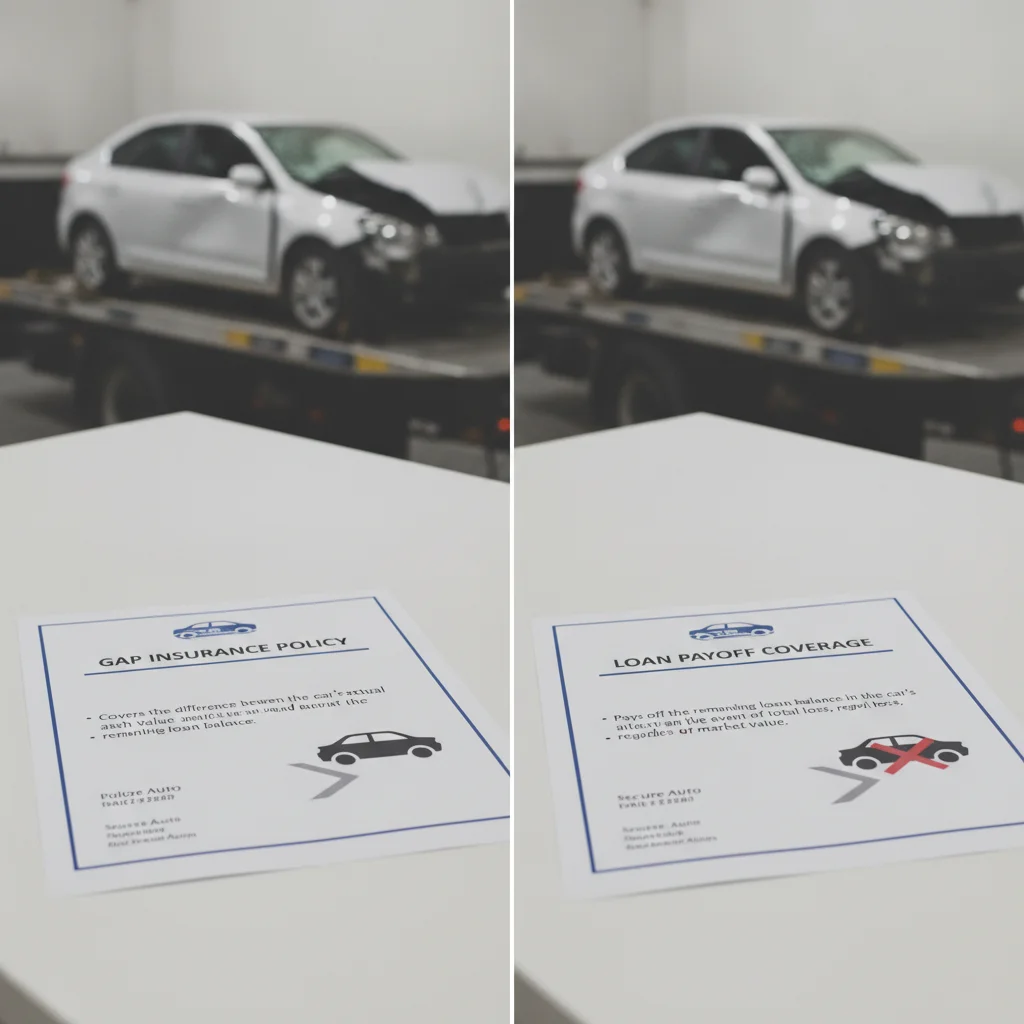
Compare that to buying the same protection through your auto insurer as a policy add-on. Many major insurers offer GAP or loan/lease payoff coverage for $20–$40 per year. Over five years, that's $100–$200 total — a fraction of the dealer price.
Loan/lease payoff coverage and GAP insurance aren't identical — there are differences in how they cap payouts and what they exclude. But for most buyers financing a new or late-model used vehicle, the insurer version provides comparable protection at far lower cost.
Ask for the GAP Addendum Separately
Before signing anything in the F&I office, ask the manager to separate the GAP addendum from the main contract stack. Read it on its own. Confirm the premium amount, exclusions, deductible waiver status, and cancellation terms. If you don't get satisfactory answers to those questions, you can decline and purchase coverage elsewhere.
Get Competing GAP Quotes Before Your Dealer Visit
Call your auto insurer and your bank or credit union before your dealership appointment and ask specifically what GAP or loan/lease payoff coverage costs through them. Having a number in hand gives you a clear benchmark. If the dealer's price is significantly higher, you have the information you need to decline and purchase it separately.
If you're committed to purchasing GAP, asking to pay for it separately — outside the financed amount — is always worth trying. Not all dealers will agree, but eliminating the interest markup is a straightforward way to reduce total cost.
When GAP Coverage Makes Financial Sense
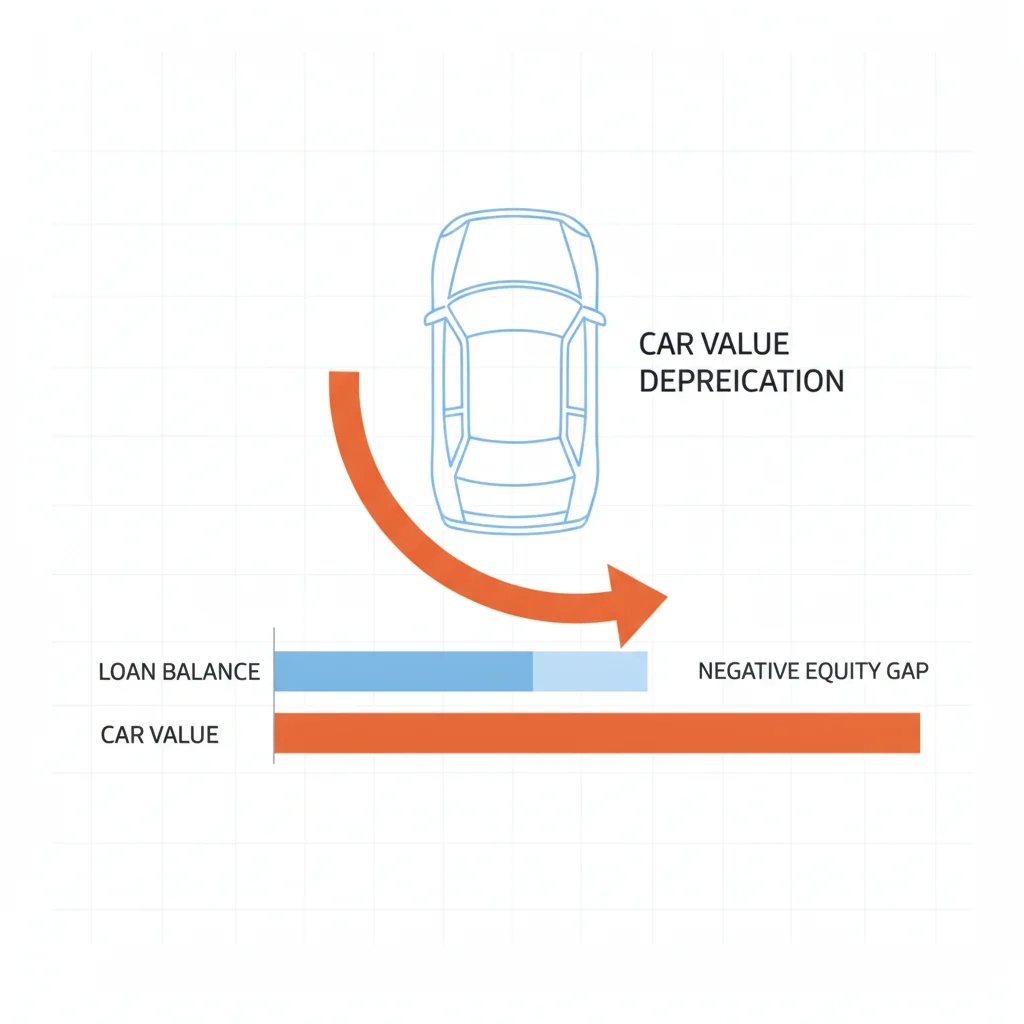
GAP isn't the right product for every buyer. The value of the coverage depends almost entirely on how much negative equity you're carrying and how quickly your loan balance declines relative to your car's depreciation curve.
The gap between what you owe and what your car is worth is widest in the first 12–24 months of a loan — especially if you financed with little or no money down. After that, the loan balance typically starts catching up with vehicle value as you pay down principal.
GAP coverage is most appropriate when one or more of these conditions apply:
- Low or zero down payment: You started the loan already owing more than the car's market value. Down payments directly affect your need for GAP.
- Long loan term (72 or 84 months): Longer terms mean slower principal paydown, extending the period during which you're most likely underwater.
- High-depreciation vehicle: Certain brands and models lose value faster than average. If your car depreciates quickly, the gap between ACV and loan balance stays wider longer.
- Negative equity rolled in from a trade-in: If you owed more on your old car than it was worth and that balance was added to your new loan, you're starting significantly underwater.
Conversely, if you put 20% or more down, chose a short loan term, and financed a vehicle known to hold its value well, you may never be meaningfully underwater — making GAP coverage an unnecessary expense.
Reading the GAP Addendum in Your Contract
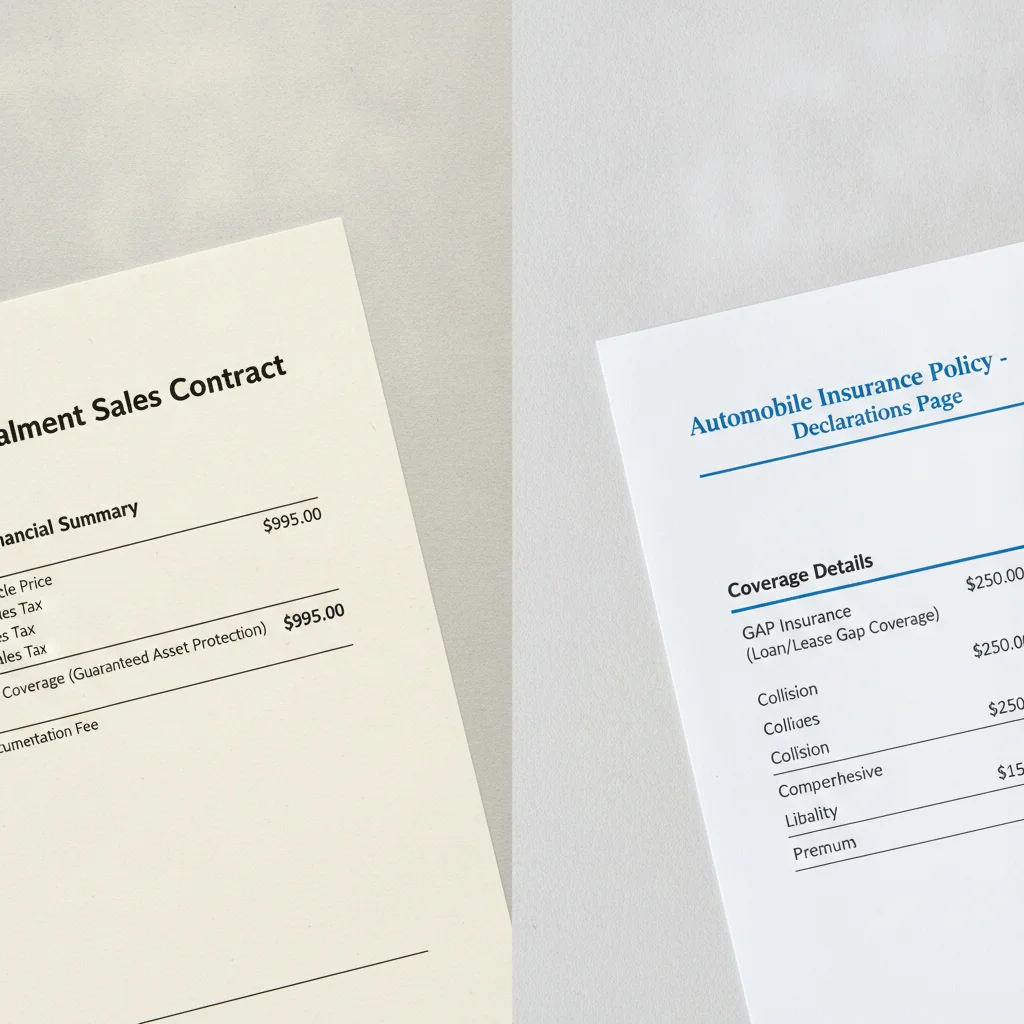
GAP coverage in a dealer finance contract typically appears as a separate addendum or rider attached to your retail installment sales contract (RISC). It is not buried in the main loan agreement — it should be a distinct, signable document. Here's what to look for when you review it:
- Product type
- Is this a debt cancellation agreement or an insurance certificate? Debt cancellation is regulated differently than insurance and may have fewer consumer protections depending on your state.
- Cost and financing terms
- The total premium should be clearly stated. Confirm whether it's being rolled into your loan or paid separately.
- Coverage term
- GAP coverage typically matches your loan term, but verify. Some products have a shorter coverage window than your actual loan.
- Exclusions
- Look for any balance cap (some products won't cover a gap exceeding a certain dollar amount or percentage of vehicle value), and check whether your deductible is covered.
- Cancellation terms
- You should see a clear statement of your right to cancel, the refund method (prorated vs. Rule of 78s), and who processes the refund — the dealer or the administrator.
“The F&I office is designed to move quickly. Every minute you spend reviewing an add-on product is a minute the dealership would rather not wait. Slow down anyway. A few minutes of reading could save you hundreds of dollars.”
— Jack Gillis, Executive Director, Consumer Federation of America and longtime auto consumer advocate
If the F&I manager is moving quickly through the stack of papers, it's completely appropriate to ask to slow down and read the GAP addendum separately. You have that right. A legitimate dealer will wait.
For a broader look at what GAP covers and excludes beyond the contract context, see this full breakdown of GAP coverage.
Your Alternatives to Dealer GAP
Declining GAP at the dealership doesn't mean going without protection. It means you're choosing where to buy it — and that choice can save you several hundred dollars.
Through Your Auto Insurer
Most major insurers offer GAP or loan/lease payoff coverage as a rider on your existing policy. The annual premium is typically far lower than the dealer price, and because it's part of your insurance policy, it's subject to standard state insurance regulations. You can shop it, compare it, and cancel it like any other coverage.
Through a Bank or Credit Union
Many banks and credit unions offer GAP coverage when you take out an auto loan directly with them. Credit unions in particular often price GAP very competitively — sometimes as low as $200–$300 as a one-time fee — and the coverage quality is generally on par with dealer products.
Third-Party Administrators
Some independent GAP administrators sell directly to consumers. This is a less common route, but it's worth exploring if you've already financed through a dealer and want to add coverage after the fact.
Ask for the GAP Addendum Separately
Before signing anything in the F&I office, ask the manager to separate the GAP addendum from the main contract stack. Read it on its own. Confirm the premium amount, exclusions, deductible waiver status, and cancellation terms. If you don't get satisfactory answers to those questions, you can decline and purchase coverage elsewhere.
Get Competing GAP Quotes Before Your Dealer Visit
Call your auto insurer and your bank or credit union before your dealership appointment and ask specifically what GAP or loan/lease payoff coverage costs through them. Having a number in hand gives you a clear benchmark. If the dealer's price is significantly higher, you have the information you need to decline and purchase it separately.
If you're starting the loan process before visiting the dealership, getting preapproved for financing through a bank or credit union lets you compare their GAP offerings before you sit in the F&I office. Walking in with your own financing — and your own GAP option — puts you in a far stronger negotiating position.
Whatever route you choose, understand the full scope of what GAP does and doesn't cover before you commit. The price matters less if the coverage terms don't actually match your situation.

All claims are backed by peer-reviewed research. Sources on request.