Key Takeaways
Rideshare Gap Coverage
Rideshare gap coverage is an optional insurance add-on that fills the coverage void between your personal auto policy and the limited protection provided by Uber or Lyft during specific phases of a trip. Personal auto policies typically exclude commercial activity, and the rideshare company's insurance only applies under narrow conditions. This endorsement bridges that gap so you're not left financially exposed while waiting for a ride request or driving between trips.
Also called a transportation network company (TNC) endorsement, this add-on modifies your personal policy to extend coverage during Period 1 — when the app is on but no ride has been accepted — where the greatest coverage gap exists.
The Insurance No-Man's Land Every Rideshare Driver Enters
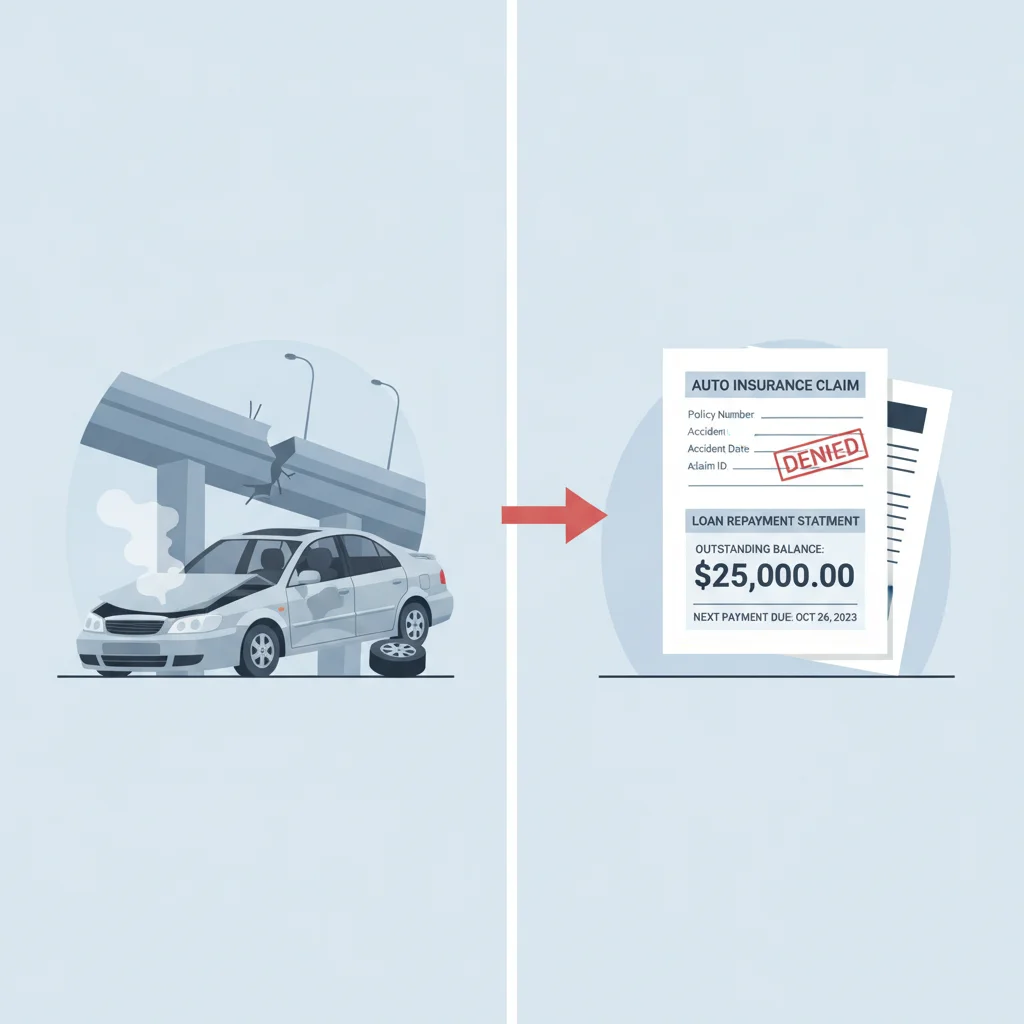
Here's a scenario that plays out every day across the country: a driver opens the Uber or Lyft app, waits for a ping, and gets rear-ended at a red light. They call their personal auto insurer to file a claim. The insurer asks one question — "Was the app on?" — and then denies the claim. No collision coverage. No liability protection. Nothing.
This isn't fine print buried in a 40-page policy document. It's a standard exclusion that virtually every personal auto policy carries. The moment you activate a rideshare app, your personal insurance treats your vehicle as a commercial conveyance — a category it explicitly refuses to cover.
What makes this particularly dangerous is that most drivers assume they're covered because Uber and Lyft advertise $1 million liability policies. What those ads don't say clearly enough is that the company's coverage only kicks in at specific moments during a trip — and during the stretch of time when most drivers operate, there's almost nothing protecting them.
Understanding exactly when each coverage layer applies is the most important thing any rideshare driver can do before their next shift.
The Three Periods of a Rideshare Trip — and Who Covers What
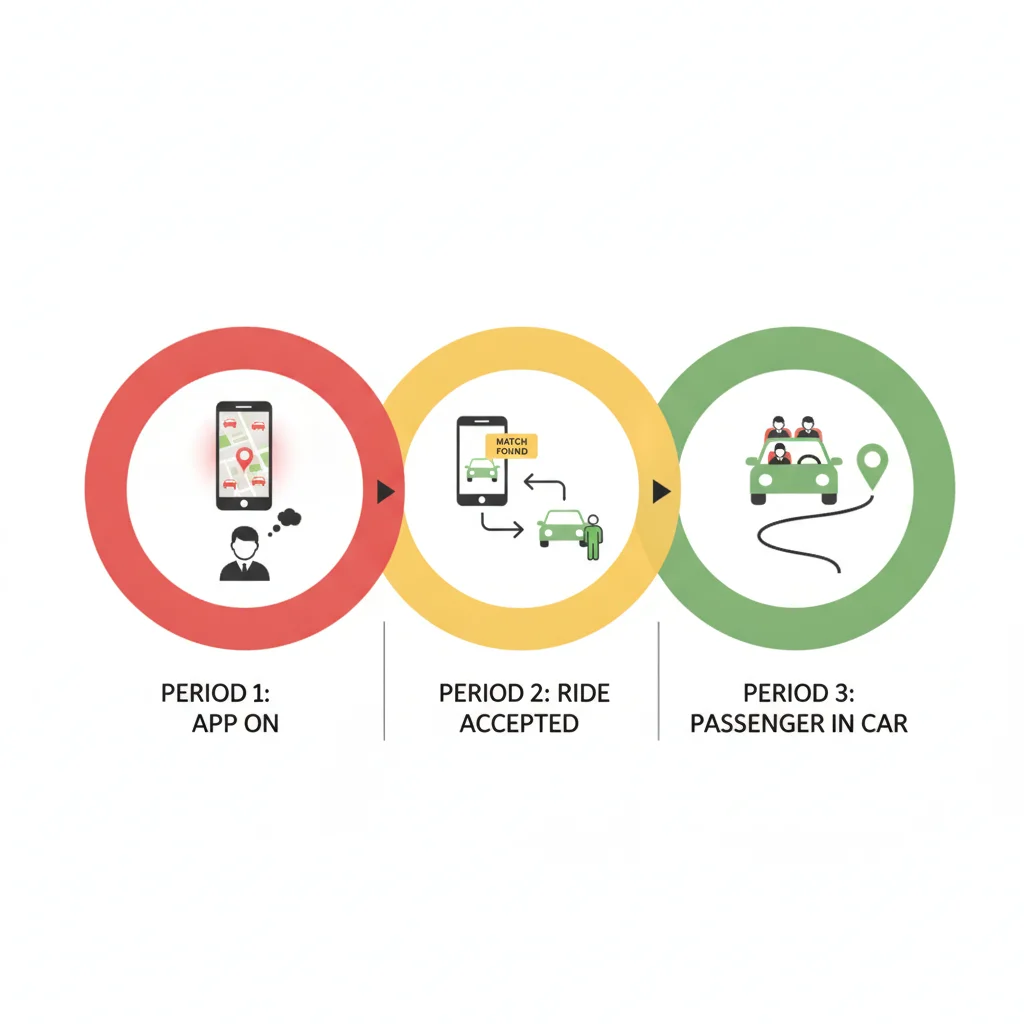
Rideshare insurance operates across three distinct periods. Knowing which period you're in at any given moment tells you exactly how much — or how little — protection you actually have.
Period 1: App On, No Ride Accepted
This is the danger zone. Your personal policy has excluded you, and Uber or Lyft provides only a thin contingent liability backstop — typically $50,000 per person / $100,000 per accident for bodily injury, and $25,000 for property damage. Critically, this contingent coverage only applies if your personal insurer has already denied the claim. There is zero collision or comprehensive coverage from the TNC during Period 1. If you're at fault or hit by an uninsured driver, your vehicle repair is entirely your problem.
Period 2: Ride Accepted, En Route to Pickup
Once you accept a ride, Uber and Lyft both step in with full $1 million liability coverage, plus collision and comprehensive (subject to a deductible, typically $1,000–$2,500). Your personal policy still won't touch this, but the TNC coverage is now genuinely substantial.
Period 3: Passenger In the Vehicle
Same as Period 2. Full TNC coverage applies from the moment a passenger enters your car until they exit. This is the period rideshare companies advertise, and the coverage here is legitimately strong.
73%
Rideshare drivers unaware of Period 1 gap
A 2019 survey by the Insurance Research Council found that approximately 73% of rideshare drivers did not fully understand when TNC coverage applied versus their personal policy.
$1M
TNC liability limit during Periods 2 & 3
Both Uber and Lyft maintain $1 million in third-party liability coverage once a ride is accepted, a figure often cited in their marketing materials.
$25K
Max property damage coverage in Period 1
During Period 1, Uber and Lyft's contingent property damage liability is capped at $25,000 — a limit that can be exceeded quickly in multi-vehicle accidents.
$0
Collision/comprehensive from TNC in Period 1
Neither Uber nor Lyft provides any physical damage coverage (collision or comprehensive) to the driver's own vehicle during Period 1 — the gap endorsement is the only solution.
$15–$40
Typical monthly endorsement cost
Most major carriers offering TNC endorsements price the add-on between $15 and $40 per month, depending on state, driver profile, and coverage scope.
The gap that matters most — the one that costs drivers real money — is Period 1. And that's precisely what rideshare gap coverage is designed to fix.
What Rideshare Gap Coverage Actually Does
A rideshare endorsement (formally called a Transportation Network Company or TNC endorsement) modifies your personal auto policy to recognize that you're driving for a rideshare platform. Instead of your policy going dark the moment the app activates, the endorsement explicitly extends your coverage into Period 1.
Depending on the carrier and the specific endorsement, this typically means:
- Collision and comprehensive coverage apply during Period 1, subject to your existing deductibles
- Liability coverage from your personal policy bridges the gap above what the TNC provides
- Uninsured/underinsured motorist coverage may also apply, protecting you if you're hit by a driver with no insurance
- Medical payments or PIP can extend to cover your own injuries during the app-on period
The endorsement does not replace Uber or Lyft's coverage during Periods 2 and 3 — it simply ensures that Period 1 doesn't leave you exposed. Think of it as completing the circle of protection across your entire shift.
Ask for the Endorsement in Writing
When your insurer confirms they offer a TNC endorsement, request a written policy amendment — not just a verbal confirmation. Some agents mistakenly tell drivers they're covered when the policy language actually excludes rideshare activity. A written endorsement attached to your declarations page is the only proof that will hold up at claim time.
Stack Coverage Intelligently, Not Blindly
The goal is no gaps and no expensive duplication. Your TNC endorsement should cover Period 1; Uber or Lyft's policy covers Periods 2 and 3. Confirm your endorsement doesn't charge you for coverage that the TNC already provides. A good independent agent who understands rideshare insurance can help you map this out precisely.
It's worth noting that this is fundamentally different from traditional gap insurance, which addresses loan-balance shortfalls after a total loss. See our explanation of how standard gap insurance works if you're also carrying a loan on your rideshare vehicle — both coverages may be relevant to your situation.

Which Insurers Offer It and What It Costs
Availability is the first obstacle. Not every carrier offers a TNC endorsement in every state, and some states have mandated that insurers make this option available while others have not. Here's a practical breakdown of where you can typically find coverage:
| Insurer | Endorsement Available | Approximate Monthly Add-On Cost |
|---|---|---|
| State Farm | Most states | $15–$30/mo |
| GEICO | Select states | $20–$40/mo |
| Allstate | Many states | $15–$25/mo |
| Progressive | Most states | $15–$30/mo |
| Farmers | Select states | $20–$35/mo |
If your current insurer doesn't offer a rideshare endorsement in your state, you have two options: switch carriers or purchase a standalone rideshare-specific policy (offered by companies like Slice or Hugo in some markets). A third path — commercial auto insurance — provides the strongest coverage but costs significantly more and is typically only worth pursuing if you're driving full-time at high volume.
State Laws Vary Significantly
Several states — including California, Colorado, and Illinois — have enacted legislation requiring insurers to offer TNC endorsements to policyholders who request them. In states without such mandates, carriers can simply decline to offer the product. Always check your state's Department of Insurance website if your carrier claims the endorsement isn't available — they may be legally required to offer it.
Rideshare Gap vs. Traditional Gap Insurance
These are two entirely separate products that happen to share a word. Rideshare gap coverage addresses the void between your personal policy and TNC coverage during specific trip phases. Traditional gap insurance addresses the difference between your loan payoff and your car's actual cash value after a total loss. If you're financing a vehicle used for rideshare, you may need to evaluate both. See our comparison of <a href="/car-insurance/rates-and-savings/comparing-policies/gap-insurance-what-it-covers-what-it-doesnt-and-when-you-actually-need-it">when traditional gap insurance makes sense</a> for context.
Deductibles Still Apply During Period 1
Even with a rideshare endorsement, you're responsible for your collision or comprehensive deductible if you file a physical damage claim during Period 1. Some drivers assume the TNC's deductible structure applies across all periods — it doesn't. Your personal policy deductible is what governs Period 1 claims under the endorsement, so factor that into your financial planning.
When shopping for the endorsement, always ask whether it covers Period 1 specifically, whether collision and comprehensive are included, and what the deductible looks like. Some cheaper endorsements only extend liability — leaving your vehicle physically unprotected. That's a significant distinction. The same scrutiny you'd apply to comparing any policy feature applies here; our overview of policy features drivers overlook can help you ask better questions across the board.
Real Scenarios Where the Gap Costs Drivers Dearly
Abstract policy language becomes concrete very fast when you're standing on the side of the road after an accident. Here's what the coverage gap looks like in practice:
The common thread in these scenarios is that drivers assumed they were covered when they weren't. The rideshare app's presence on their phone wasn't a protective umbrella — it was a trigger for their personal insurer to walk away.
“Most rideshare drivers think they have coverage because they see the TNC's $1 million figure in the app. What they don't realize is that number is irrelevant the moment they're waiting for a ride. That's the moment they're most exposed, and most unprotected.”
— Michael Barry, Spokesperson, Insurance Information Institute
How to Get Properly Covered: A Step-by-Step Approach
Getting the right coverage isn't complicated, but it does require deliberate action. Here's the sequence I'd walk through if I were advising a new rideshare driver:
- Call your current insurer first. Ask directly whether they offer a TNC endorsement in your state and what it costs. Get the answer in writing — a verbal assurance means nothing when a claim is denied.
- Confirm what the endorsement actually covers. Specifically ask: Does it cover Period 1? Does collision and comprehensive apply? What's the deductible? Does it extend uninsured motorist protection?
- If your insurer doesn't offer it, shop aggressively. Get quotes from at least three carriers that do offer the endorsement in your state. The total premium including the endorsement — not just the endorsement cost — is what matters.
- Review what Uber or Lyft already provides. Download your TNC's insurance documentation and understand exactly what periods and coverage types are included. This helps you avoid paying for duplicate coverage you don't need.
- Reassess annually. Your driving volume, vehicle value, and the TNC's own coverage terms can all change. A coverage structure that made sense when you drove 10 hours a week may need revisiting if you go full-time.
Ask for the Endorsement in Writing
When your insurer confirms they offer a TNC endorsement, request a written policy amendment — not just a verbal confirmation. Some agents mistakenly tell drivers they're covered when the policy language actually excludes rideshare activity. A written endorsement attached to your declarations page is the only proof that will hold up at claim time.
Stack Coverage Intelligently, Not Blindly
The goal is no gaps and no expensive duplication. Your TNC endorsement should cover Period 1; Uber or Lyft's policy covers Periods 2 and 3. Confirm your endorsement doesn't charge you for coverage that the TNC already provides. A good independent agent who understands rideshare insurance can help you map this out precisely.
If you're also financing your rideshare vehicle, your lender almost certainly requires comprehensive and collision coverage. The rideshare endorsement ensures those coverages remain valid during rideshare activity — without it, a claim denial could trigger a lender dispute on top of an out-of-pocket repair bill. This is a different concern than traditional loan-balance gap insurance, which you can read more about in our piece on how gap insurance and physical damage coverage work together.

Is the Cost Worth It? Doing the Math for Your Situation
Adding $15–$40 per month to your insurance bill feels more significant when you're trying to maximize rideshare earnings. But the calculation becomes obvious when you price out the alternative.
Consider: the average collision claim in the U.S. runs between $3,500 and $5,000. If you're in an at-fault accident during Period 1 without an endorsement, that repair bill is entirely yours — plus any liability exposure if the other driver is injured and your personal insurer declines to defend you. A single incident can cost more than a decade of endorsement premiums.
The value calculus shifts depending on a few factors:
- How much you drive. If you're averaging 20+ hours per week on the app, you're accumulating significantly more Period 1 exposure than a weekend driver. Higher volume = higher endorsement value.
- Your vehicle's value. If you're driving a 10-year-old car worth $4,000, paying for collision coverage on it may not pencil out — the same logic that might lead you to drop collision on a paid-off beater applies here. But if you have a newer vehicle with a loan, the calculus is clear.
- Your financial cushion. Can you absorb a $5,000 surprise expense without derailing your finances? If not, the endorsement isn't optional — it's a necessity.
State Laws Vary Significantly
Several states — including California, Colorado, and Illinois — have enacted legislation requiring insurers to offer TNC endorsements to policyholders who request them. In states without such mandates, carriers can simply decline to offer the product. Always check your state's Department of Insurance website if your carrier claims the endorsement isn't available — they may be legally required to offer it.
Rideshare Gap vs. Traditional Gap Insurance
These are two entirely separate products that happen to share a word. Rideshare gap coverage addresses the void between your personal policy and TNC coverage during specific trip phases. Traditional gap insurance addresses the difference between your loan payoff and your car's actual cash value after a total loss. If you're financing a vehicle used for rideshare, you may need to evaluate both. See our comparison of <a href="/car-insurance/rates-and-savings/comparing-policies/gap-insurance-what-it-covers-what-it-doesnt-and-when-you-actually-need-it">when traditional gap insurance makes sense</a> for context.
Deductibles Still Apply During Period 1
Even with a rideshare endorsement, you're responsible for your collision or comprehensive deductible if you file a physical damage claim during Period 1. Some drivers assume the TNC's deductible structure applies across all periods — it doesn't. Your personal policy deductible is what governs Period 1 claims under the endorsement, so factor that into your financial planning.
One thing I always tell drivers: don't think of the endorsement as an added cost. Think of it as the real cost of doing business as a rideshare driver. The personal policy you were already paying for simply doesn't cover your actual use case — the endorsement is what makes your existing coverage legitimate for how you actually use your car.

All claims are backed by peer-reviewed research. Sources on request.