Key Takeaways
Our Verdict
Slow depreciators reward sellers who held their vehicle in good condition and planned their exit strategically. Fast depreciators punish sellers who bought new and sell early, but they offer real opportunity for used buyers willing to absorb someone else's loss. Knowing which camp your car falls into is the first step to pricing it right.
| Best for | Recommended |
|---|---|
| Sellers who want maximum resale return | Slow Depreciators (e.g., Toyota Tacoma, Honda CR-V) |
| Used buyers seeking near-new features at a discount | Fast Depreciators (e.g., luxury sedans, large domestic SUVs) |
| Owners planning to keep a car 10+ years | Slow Depreciators — lower cost of ownership over time |
| Sellers pricing a 3-year-old vehicle for private sale | Segment-specific data — match your car's actual depreciation curve |
Why Depreciation Rates Vary So Widely
If you've ever looked up two different three-year-old cars and found that one is worth 65% of its original price while another has collapsed to 42%, you've seen depreciation inequality in action. Cars don't all age the same because the used-car market doesn't value them the same. What buyers are willing to pay for a five-year-old vehicle is driven by demand, reliability perception, segment utility, and how many identical units are floating around at auction.
Think of it this way: a car's resale value is essentially a vote of confidence from the used-car market. High demand, low supply, and a proven reliability track record keep that vote positive. Weak reliability history, an oversaturated used-car inventory, or a vehicle that no longer fits consumer tastes pulls it down fast.
Multiple factors drive depreciation rates — mileage, color, fuel type, and more — but the broadest and most consistent dividing line is between slow depreciators and fast depreciators as categories. Understanding which type you own shapes every expectation you should have as a seller.
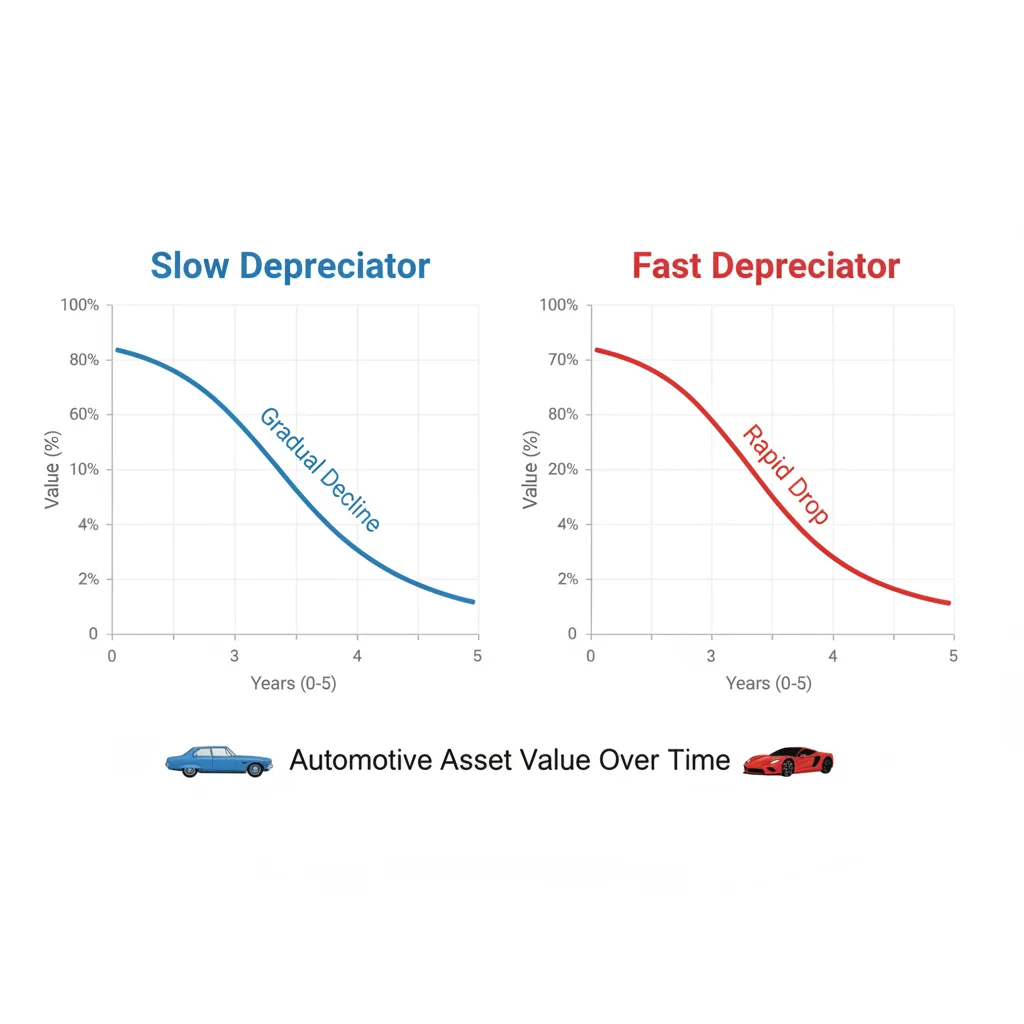
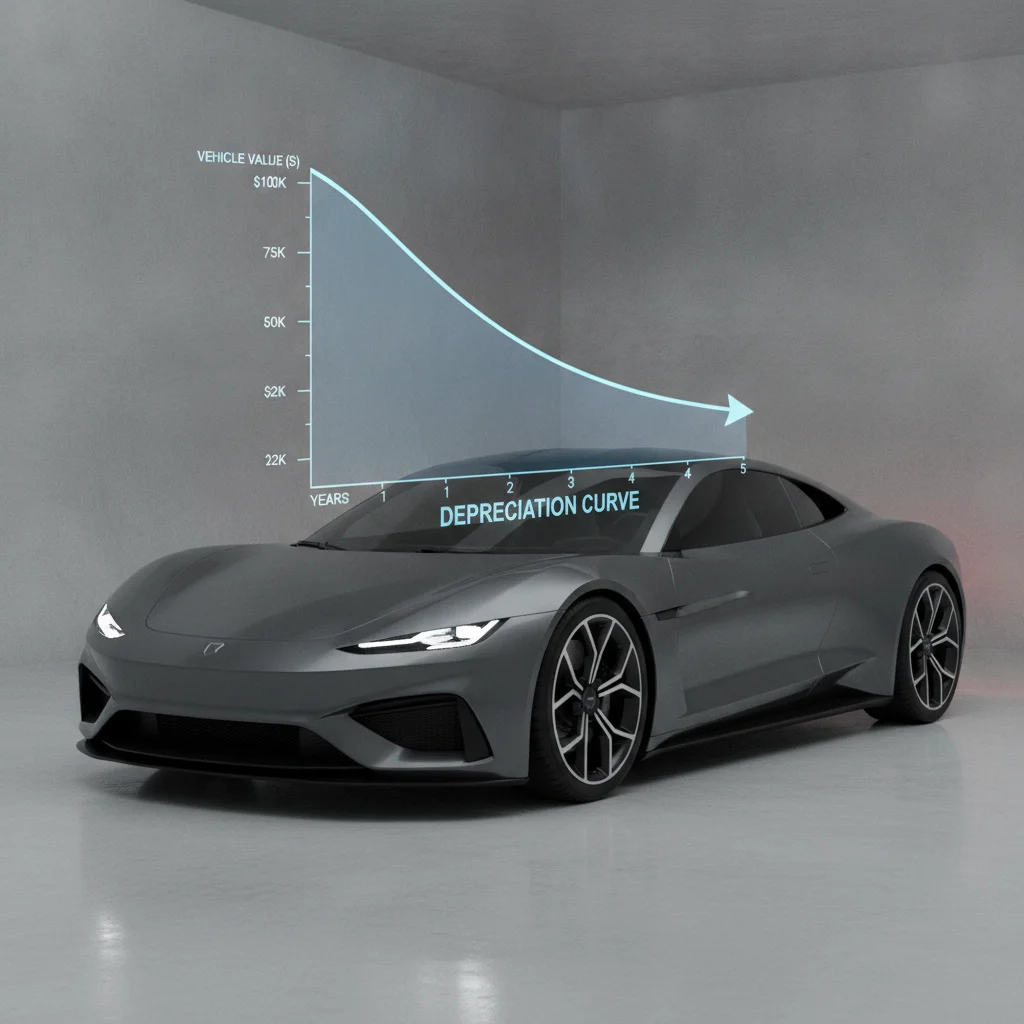
The depreciation curve itself varies by vehicle type — the steepness of year one, the stabilization period, and when a car hits the value floor all differ meaningfully across segments. Let's break down what makes one car a slow depreciator and another a fast one.
Defining the Two Categories: What Slow and Fast Actually Mean
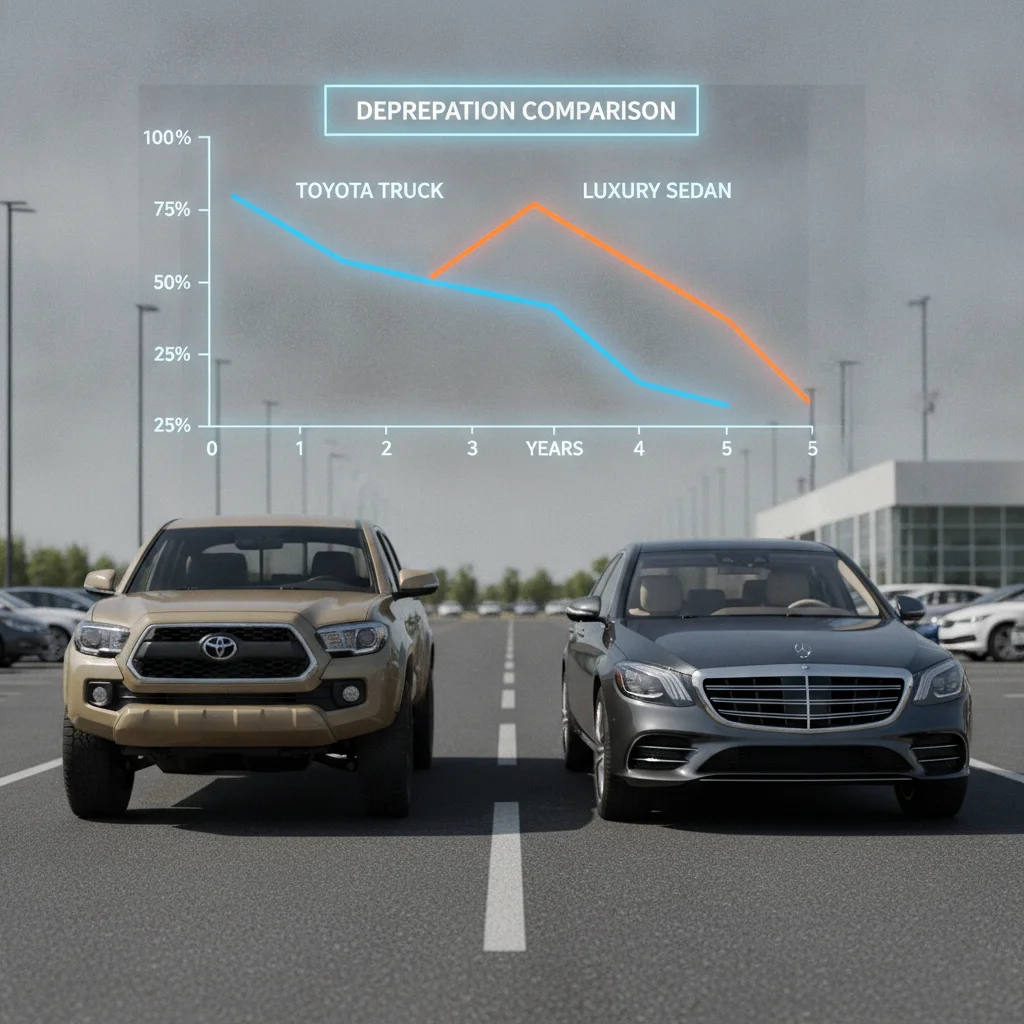
In practical terms, a slow depreciator retains roughly 50–60% or more of its original MSRP after five years. A fast depreciator may shed 50% or more of its value within just three years. Those aren't hypothetical extremes — they're real ranges that show up in market data consistently.
Slow Depreciators: The Profile
Slow depreciators tend to share several traits:
- High demand relative to supply — more buyers are competing for used examples than there are units available.
- Strong reliability reputation — brands like Toyota and Honda have earned decades of owner trust, which carries directly into resale premiums.
- Practical utility that doesn't go out of style — trucks, compact SUVs, and workhorse vehicles hold value because their use cases remain constant.
- Reasonable base pricing — a lower MSRP means there's less absolute value to lose in year one.
Real-world examples include the Toyota Tacoma (frequently cited as retaining over 60% of its value after five years), the Honda CR-V, and the Jeep Wrangler. The Wrangler is a particular outlier — it sometimes sells used for more than its original retail price in high-demand markets because supply is constrained and the brand carries cult-like loyalty.
Fast Depreciators: The Profile
Fast depreciators usually have:
- High MSRP with deep discounting pressure — luxury vehicles often carry large manufacturer incentives, which signal to the market that the real transaction price is below sticker, compressing used values.
- Reliability uncertainty — models with below-average owner satisfaction scores lose used-market confidence quickly.
- Style-driven demand — anything whose desirability depends heavily on being new (certain coupes, sports sedans, or trendy crossovers) fades when the next generation arrives.
- High operating costs — expensive maintenance and insurance deter used buyers, which softens demand and prices.
Classic fast depreciators include large domestic luxury sedans, full-size American SUVs in the three-row segment (outside of the Chevy Suburban/Tahoe, which are outliers), and many European luxury models. A BMW 7 Series or Mercedes-Benz S-Class can lose 55–65% of its value in five years — a staggering dollar figure given six-figure MSRPs.
| Slow Depreciators | Fast Depreciators | |
|---|---|---|
| 5-Year Value Retention | 50–65% of MSRP | 35–48% of MSRP |
| Typical Segments | Trucks, compact SUVs, Wrangler | Luxury sedans, large 3-row SUVs, coupes |
| Reliability Reputation | Consistently above average | Mixed or below average |
| Used-Market Demand | High, sustained demand | Lower demand, price-sensitive buyers |
| Seller Pricing Power | Strong — price near market top | Limited — must price competitively |
| Best Selling Window | Flexible — holds value over time | Early or late — avoid 3–5 year zone |
| Impact of Condition | Positive but less critical | Critical — buyers heavily scrutinize |
| Impact of Color | Minor — demand absorbs unusual colors | Significant — unusual colors hurt badly |
The Segment Factor: Trucks vs. Sedans vs. Luxury
Segment is one of the most reliable predictors of depreciation pace, even before you consider brand. Here's how major segments generally stack up:
Pickup Trucks
Full-size and mid-size trucks are the strongest value holders in the U.S. market. The Toyota Tacoma, Ford F-150 (especially higher trims), and Chevy Colorado consistently outperform nearly every other segment. Utility is the key driver — a truck can haul, tow, and serve both work and recreational roles, meaning the pool of potential used buyers is enormous. Segments diverge sharply in how they hold value, and trucks sit near the top of that hierarchy.
Compact and Midsize SUVs
This is the sweet spot of the current market. Models like the Honda CR-V, Toyota RAV4, and Subaru Outback benefit from a combination of high consumer demand, family-oriented utility, and well-established reliability reputations. Five-year retention rates in the 50–58% range are common here.
Full-Size Three-Row SUVs
Mixed picture. The Chevrolet Tahoe and Suburban hold value remarkably well — largely because of law enforcement and fleet demand keeping used prices elevated. But many three-row import competitors lose value faster, partly because buyers can negotiate heavily on new units.
Sedans
The sedan segment has been under sustained pressure as buyers migrate toward crossovers and SUVs. Even reliable nameplates like the Honda Accord and Toyota Camry depreciate faster than their SUV counterparts, though they still outperform luxury sedans by a wide margin. The Accord and Camry typically retain 45–52% of value at five years.
Luxury and Near-Luxury
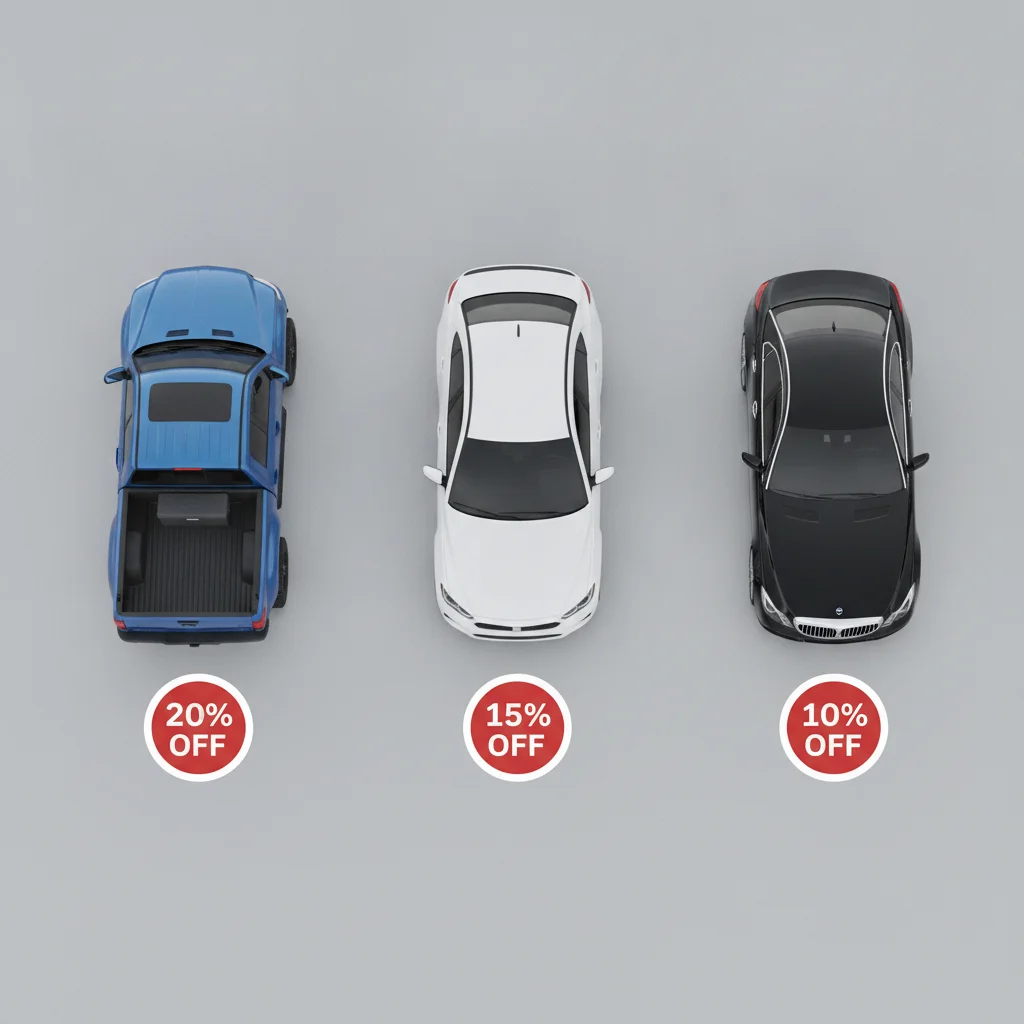
Luxury vehicles lose more in raw dollars while economy cars hold a higher percentage of value. A $65,000 entry-luxury sedan losing 55% of its value costs its owner $35,750 in depreciation over five years. A $28,000 compact holding 54% costs $12,880 over the same period. For sellers, the math is sobering.
60%+
Toyota Tacoma 5-year value retention
According to iSeeCars annual depreciation studies, the Tacoma consistently tops value-retention rankings among all vehicle segments.
55–65%
Value lost by large luxury sedans in 5 years
Models like the BMW 7 Series and Mercedes S-Class shed a majority of MSRP within five years, per Edmunds long-term depreciation data.
6–10 pts
Retention gap from reliability reputation alone
Vehicles with top-quartile J.D. Power dependability scores retain 6 to 10 percentage points more value than below-average counterparts in the same segment.
$35,750
5-year depreciation on a $65K luxury sedan
At a 55% depreciation rate, a $65,000 luxury sedan loses over $35,000 in value — highlighting the raw dollar cost of fast-depreciating segments.
Reliability Reputation: The Hidden Multiplier
Segment tendencies don't explain everything. Within the same segment, a Toyota will almost always hold value better than a comparable Chrysler product — and the gap traces directly to reliability reputation. Used-car buyers are making a bet on how much the car will cost to own after purchase. When they trust a brand, they bid up. When they don't, they discount heavily to compensate for perceived future repair costs.
Reliability reputation shapes long-term depreciation rates in a compounding way: a model that gets poor reliability scores in year three doesn't just lose value in year three — it pre-depreciates the future years as well, because buyers apply that risk discount to the entire remaining life of the vehicle.
Consider two midsize SUVs with similar MSRPs. One carries a J.D. Power dependability score in the top quartile; the other falls below average. After five years, studies consistently show a 6–10 percentage point retention gap between them — purely attributable to reputation. On a $40,000 vehicle, that's $2,400–$4,000 that evaporates based solely on brand trust, not the condition of that specific car.
Service Records Are Your Value Insurance
If you own a slow depreciator with strong reliability heritage, documented service records let you price at the top of comparable listings — buyers will pay for documented peace of mind. Keep every receipt, no matter how minor. A $45 oil change receipt signals conscientiousness; a folder full of them signals a car worth the asking price. For <a href="/maintenance-and-ownership/ownership-costs/depreciation-basics/how-to-slow-your-cars-depreciation-without-spending-a-fortune">practical ways to preserve your car's value</a>, consistent maintenance is the single highest-return activity.
This is why sellers of well-maintained Toyotas and Hondas can often price above market averages and still move their cars — buyers are paying a premium for peace of mind. Sellers of brands with mixed reliability histories need to be aggressive on price to compete, even when their specific vehicle is in excellent condition.
How Production Volume and Incentives Accelerate Depreciation
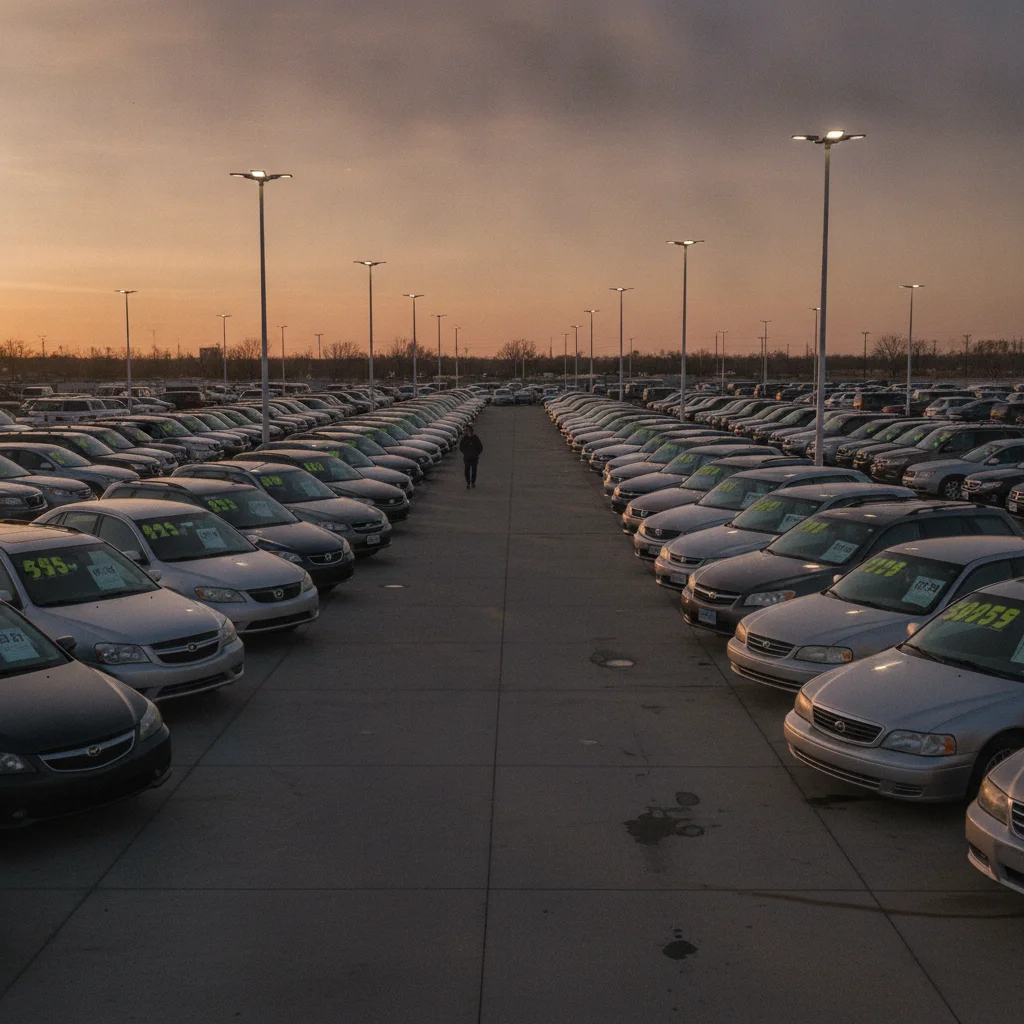
A car that sold very well new creates a large used-car supply pool a few years later. High supply with stable demand equals lower prices — which is why high-volume models sometimes depreciate faster than their reliability or quality would suggest. This is especially visible in full-size domestic cars sold aggressively to rental fleets: when those fleets rotate inventory, thousands of near-identical, low-mileage units hit the used market simultaneously, crushing prices.
Manufacturer incentives have a similar compressing effect. When a brand consistently offers $3,000–$6,000 in cash back or 0% financing on new models, it signals to the market that the real price of that vehicle is well below MSRP. Used buyers anchor their expectations accordingly. European luxury brands that run aggressive lease programs face this constantly: three-year lease returns flood dealer certified-pre-owned lots, and the sheer volume suppresses prices across the board.
Don't Price a Fast Depreciator Like a Slow One
One of the most common seller mistakes is using a competitor's slow-depreciating model as a pricing reference for a fast depreciator in the same segment. A five-year-old Toyota 4Runner and a five-year-old comparable-MSRP luxury SUV are not priced anywhere near the same — the market won't let you price them that way. Always benchmark against your specific model's actual transaction history, not category averages or MSRP minus a percentage.
Accelerated depreciation models more accurately reflect how most cars actually lose value — especially for high-incentive vehicles where year-one and year-two losses are disproportionately steep. Sellers who assume a car lost the same percentage each year will systematically overprice a fast depreciator in the early years.
Contrast this with low-volume specialty vehicles. A Jeep Wrangler or Toyota 4Runner never gets sold in massive incentivized volumes to fleets. Used supply stays tighter relative to demand, and prices hold. Limited production isn't the only path to value retention, but it helps — especially when paired with a devoted buyer base.
What This Means If You're Selling Right Now
If you're preparing to sell, the first thing to do is honestly categorize your vehicle. Ask yourself three questions:
- What segment is it? Truck or SUV? Compact economy? Luxury sedan?
- What brand reputation does it carry? Is reliability above average, average, or below average for the nameplate?
- When did you buy it, and how was it used? Condition and age both pull on your asking price — but they pull differently depending on which depreciation type your car is.
If you own a slow depreciator, you're in a strong position. Price confidently using recent comparable sales — don't leave money on the table by anchoring to what you paid minus a round-number discount. If a three-year-old Toyota Tacoma is selling for 62% of new MSRP in your market, price yours accordingly and let the market validate it.
If you own a fast depreciator, aggressive pricing is your best strategy for moving it quickly. Buyers of these vehicles are typically sophisticated — they know the depreciation curve and they're shopping for value. Price above real market data and you'll sit; price at or slightly below and you'll sell. Maintenance records, clean condition, and service history become especially important for fast depreciators, because buyers need extra confidence to bid up on a segment already marked by skepticism.
One more thing: color matters more on fast depreciators than slow ones. On a Tacoma, an unusual color is a minor issue — demand is strong enough to absorb it. On a luxury sedan, an unusual color can be the difference between a sale and months on the market. Unpopular colors accelerate depreciation in segments where buyers are already selective.
Using Depreciation Type to Set a Data-Backed Asking Price
Setting a price without knowing your car's depreciation type is like navigating without a map. Here's a practical framework:
Step 1: Identify the five-year retention benchmark for your model
Sources like iSeeCars, Edmunds, and Kelley Blue Book publish annual depreciation studies. Look up your specific model — not just the brand or segment. A Honda Ridgeline depreciates differently than a Honda Civic, even within the same brand.
Step 2: Apply that retention curve to your car's original MSRP
Example: If your car's MSRP was $32,000 and your model retains 54% at four years, the baseline market value is roughly $17,280. This is your anchor — not what you paid after negotiation, and not what you wish you could get.
Step 3: Adjust for condition and mileage
Depreciation and mechanical wear both hit your selling price, but mileage is the fastest single adjustment lever. A vehicle with 20,000 fewer miles than the average for its age will command a premium; one with 30,000 more will need a discount. Use your valuation tool's mileage adjustment calculator rather than guessing.
Step 4: Check current market supply in your area
Even a slow depreciator can be oversupplied locally. If there are 14 identical-year Toyota Tacomas listed within 100 miles of you, you're not in a strong position to price at the top of the range. Check listings before you commit to a number.
Vehicle age and the sweet spot for value cut both ways — what's a great buying opportunity for a used shopper (a fast depreciator at year three) is a cautionary tale for the seller who bought that same car new. Knowing which side of that equation you're on is the most important first step.

Understanding the full picture — brand, segment, reliability reputation, production volume, and your specific vehicle's condition — gives you the data-backed footing to price with confidence. The sellers who get the most from their cars aren't lucky; they understand the mechanics of why their car holds value, and they communicate that story to buyers.

All claims are backed by peer-reviewed research. Sources on request.