Key Takeaways
Vehicle Age Sweet Spot
The vehicle age sweet spot refers to the range of model years — typically three to six years old — where a used car has already absorbed its steepest depreciation losses but hasn't yet entered high-cost repair territory. Buying in this window lets you pay significantly less than new-car price while still getting a reliable, modern vehicle. The exact sweet spot shifts depending on the make, model, segment, and how the car was maintained.
Depreciation curves are non-linear: most vehicles lose 15–25% of their value in year one alone, then depreciate more gradually. The sweet spot targets the inflection point where per-dollar reliability is maximized relative to purchase price.
Why Age Alone Is a Misleading Buying Signal
Most buyers use a car's model year as a quick proxy for quality — newer means better, older means risky. That shortcut costs people money in both directions. You can overpay for a three-year-old car that suffered severe depreciation for good reason, or you can pass on a seven-year-old model that has another 80,000 reliable miles ahead of it.
Age is one input, not the whole equation. What actually matters is where a specific vehicle sits on its depreciation curve, what its reliability record looks like at that mileage, and whether the maintenance history supports the asking price. Once you understand how those three factors interact, you stop chasing model years and start chasing value.
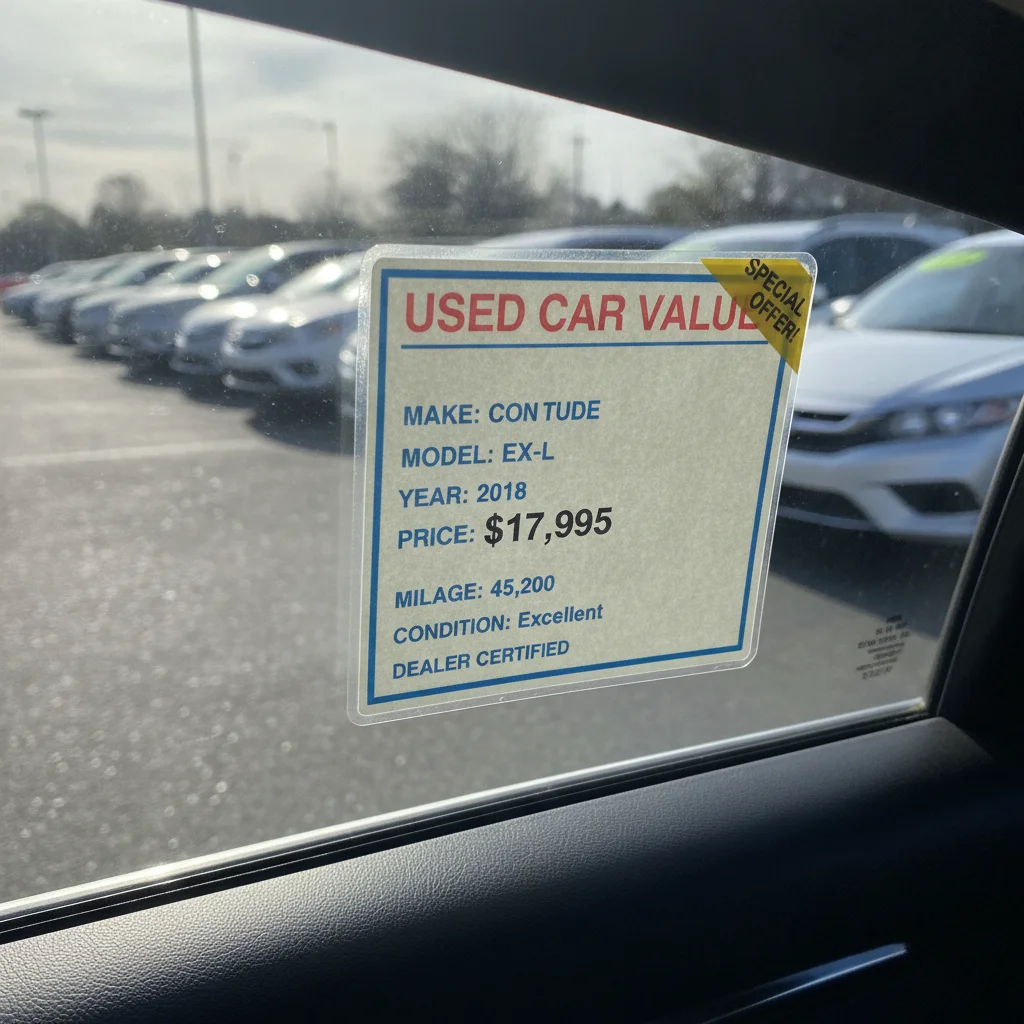
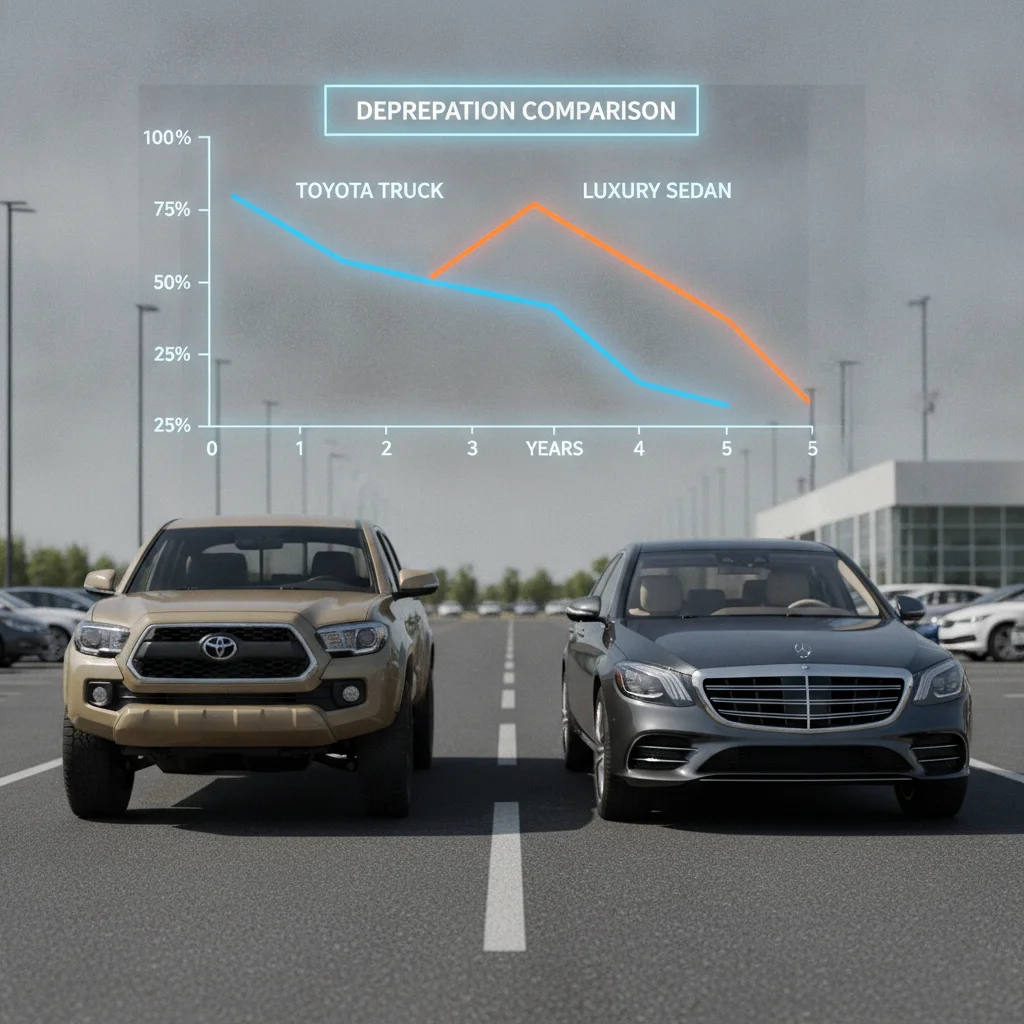
The used car market has gotten tighter since 2021. Elevated new-car prices pushed buyers into the used segment, which pushed used prices up. That distortion has partially corrected, but it reinforced one important lesson: the "safe" age range you read about in a general buying guide may not apply to the specific segment or brand you're shopping. Depreciation curves vary significantly by segment — trucks hold value far longer than compact sedans, and that changes everything about where the sweet spot falls.
How Depreciation Actually Works — and Where the Drop Stops
New cars lose value fast. The moment a vehicle leaves the dealership lot, it typically drops 10–15% of its purchase price. By the end of year one, that loss has usually grown to 20–25%. By year three, cumulative depreciation commonly reaches 35–45% of the original MSRP depending on the segment.
20–25%
Typical first-year new car depreciation
Industry data consistently shows new vehicles lose roughly one-fifth of their value in the first twelve months of ownership.
35–45%
Cumulative depreciation by year three
By the three-year mark, most mainstream vehicles have absorbed the steepest portion of their total depreciation curve.
$100–$150
Cost of pre-purchase inspection
An independent mechanic's inspection on a used vehicle is one of the highest-ROI expenses in the car-buying process.
12,000–15,000
Average annual miles driven in the U.S.
According to the Federal Highway Administration, this is the benchmark for evaluating whether a used car's mileage is above or below average for its age.
8–10 years
Typical lender age cutoff for auto loans
Most traditional auto lenders restrict financing on vehicles beyond this age threshold, which affects your effective buying options.
The rate of loss then slows dramatically. A car that dropped $10,000 in its first year might only drop $2,000–$3,000 in years four through six. This deceleration is exactly what makes the mid-age range so attractive for buyers — you're paying for a used asset, but the seller's price-cut runway is mostly exhausted.
Beyond year six to eight, something changes again. The vehicle's absolute market value is low, but repair risk starts climbing. Rubber seals age, timing components wear, and systems that were engineered to a 10-year lifespan start approaching that limit. This doesn't mean older is always worse — it means the risk calculation shifts and you need more due diligence to justify the purchase.
“The best time to buy a used car is about three years after someone else bought it new. You get most of the car's useful life for a fraction of what they paid, because depreciation does the heavy lifting on price — not because anything is actually wrong with the vehicle.”
— Jack Nerad, Former Executive Market Analyst, Kelley Blue Book
Understanding where on this curve any given car sits requires looking at segment-specific data, not just calendar years. A five-year-old pickup truck is in a completely different depreciation position than a five-year-old midsize sedan. For a side-by-side look, see the breakdown of slow vs. fast depreciators.
The Classic Sweet Spot: Years Three Through Six
For the average mainstream vehicle — sedans, crossovers, minivans — the three-to-six year window consistently delivers the best combination of price, reliability, and remaining service life. Here's what that range typically looks like in practice:
- Year 3: The original buyer has absorbed the steepest depreciation. The car is still covered by any remaining powertrain warranty from the manufacturer. Technology is still recognizably current.
- Year 4–5: Most factory warranties have expired, but the vehicle hasn't yet reached the mileage thresholds (typically 80,000–100,000 miles) where major components become statistically likely to fail. Third-party extended warranties are still widely available and reasonably priced.
- Year 6: Prices drop again as vehicles cross into what some lenders call the "older vehicle" bracket — financing terms may be shorter or rates slightly higher. For cash buyers or buyers with excellent credit, this dip is a buying opportunity.
CPO Timing Is a Legitimate Buying Hack
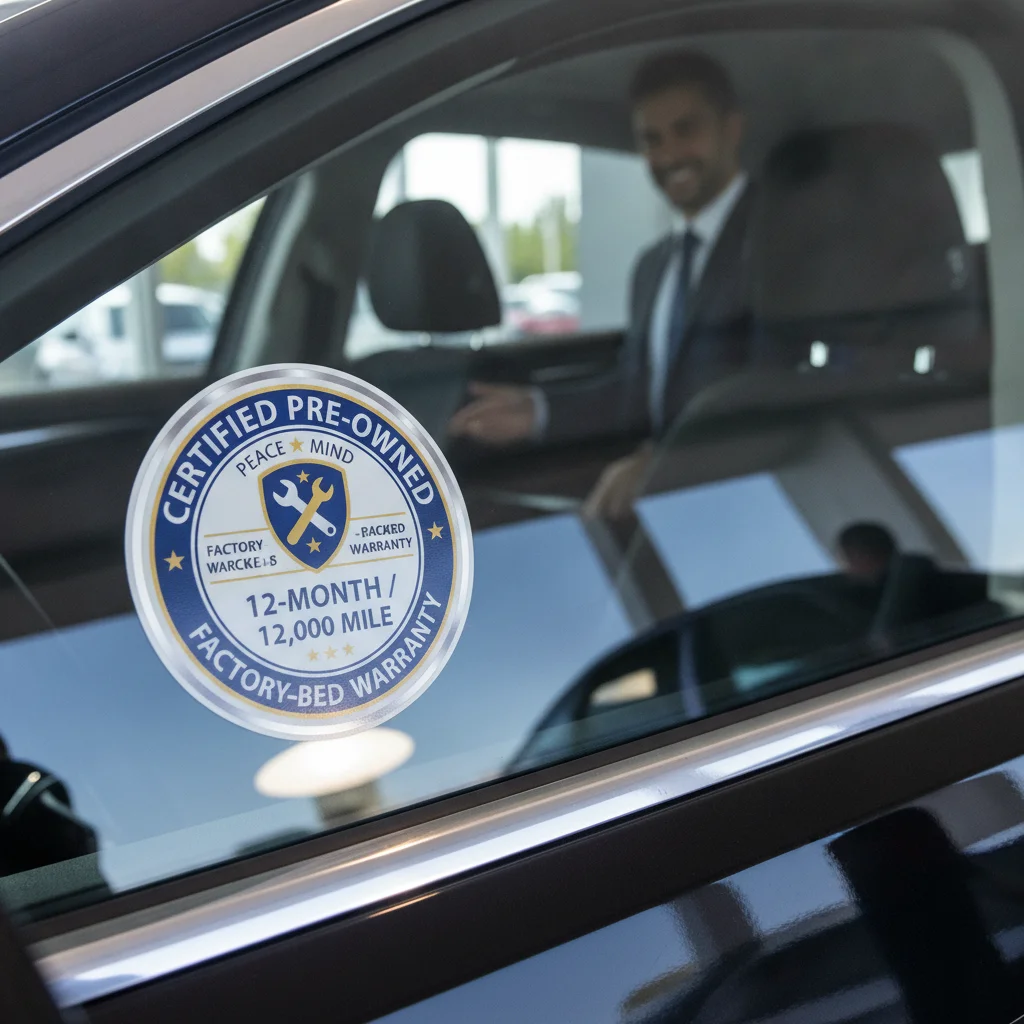
Manufacturer certified pre-owned programs typically cap eligibility at five to six model years and 80,000 miles. Vehicles right at those boundaries are often the best CPO deals — they've depreciated maximally within the program's eligibility window, but still carry the factory-backed warranty. Shop near the edge of CPO eligibility for the best overlap of low price and warranty coverage.
Run Total Cost of Ownership Numbers Before You Commit
Get an insurance quote on the specific vehicle before you buy — not an estimate, an actual quote. Add projected maintenance costs from sources like RepairPal, and factor in expected depreciation over your holding period. A car that costs $4,000 less to buy can easily cost more overall if insurance and repair costs are meaningfully higher.
One thing buyers often overlook in this range: certified pre-owned (CPO) programs. Manufacturer CPO vehicles must meet specific age and mileage thresholds — usually under five or six years old and under 80,000 miles — and come with extended warranty coverage. If you find a CPO vehicle near the upper edge of that range, you're getting a factory-backed used car at close to maximum depreciation. That combination is hard to beat.
Always cross-reference the asking price against tools like Kelley Blue Book or Edmunds True Market Value, and check whether the specific trim and mileage combination lines up. Dealers sometimes price CPO vehicles as if the warranty has no cost — it does, and they've built it into the price.
When Buying Older Than Six Years Makes Sense
The sweet spot isn't a cliff. For certain models, pushing into the seven-to-ten year range makes excellent financial sense — provided you do your homework. The key variables are reliability reputation, parts availability, and the specific vehicle's documented history.
Models with strong reliability reputations — Toyota Camry, Honda Accord, Toyota Tacoma, Honda CR-V among them — often remain excellent used buys well past the six-year mark. Consumer Reports and J.D. Power reliability data for specific model years will tell you whether a given car had known issues at higher mileage. This matters more than the brand's general reputation, because individual model years within reliable brands can still have specific problems.
Reliability Data Is Model-Year Specific
Don't rely solely on a brand's general reputation. Consumer Reports reliability ratings break down by model year, and specific years can diverge significantly from the model's average. A 2016 version of a reliable vehicle may have had a problem year that the 2017 corrected. Always look up the exact model year you're considering, not just the nameplate.
Financing Terms Change With Vehicle Age
Lenders typically reduce maximum loan terms and may raise interest rates for vehicles over five to seven years old. Some banks won't finance vehicles older than eight to ten years at all. If you're planning to finance an older car, check with your bank or credit union before you shop — your effective budget depends on what terms you can actually get, not just the purchase price.
The financial case for buying older is straightforward: purchase prices compress dramatically. A reliable sedan at eight years old might cost $8,000–$12,000 where the same model at four years costs $18,000–$22,000. If your goal is minimizing total cost of ownership rather than maximizing resale value when you eventually sell, the older car can win even if you spend $2,000–$3,000 more on maintenance over your ownership period.
One real constraint: financing. Most lenders restrict auto loans on vehicles older than eight to ten years, or cap loan terms at 36–48 months. Some credit unions are more flexible. If you're financing an older car, get pre-approved before you shop so you know your actual budget ceiling. And keep in mind that older vehicles have different insurance discount profiles than newer ones — sometimes favorably so.
Mileage, Condition, and the Real Determinants of Value
Age sets the frame, but mileage and condition fill in the details. The national average is roughly 12,000–15,000 miles per year, so a six-year-old car with 75,000 miles is roughly average. A six-year-old car with 40,000 miles is underdriven and likely commands a premium. A six-year-old car with 110,000 miles needs closer scrutiny.
High mileage isn't automatically disqualifying. Consistent highway miles are easier on a vehicle than city stop-and-go driving. A car with 100,000 mostly-highway miles may be mechanically sounder than one with 70,000 city miles. The only way to know is a pre-purchase inspection by an independent mechanic — budget $100–$150 for this and treat it as non-negotiable on any car over five years old.

Condition interacts with age in ways that surprise many buyers. A well-maintained eight-year-old car with clean paint, fresh fluids, and documented service history can genuinely be a better buy than a five-year-old car with deferred maintenance, worn tires, and faded interior. The condition vs. age tradeoff often favors condition when both are quantified honestly.
Practical checklist for evaluating an older vehicle:
- Pull the vehicle history report (Carfax or AutoCheck) — look for accident reports, title issues, and service records.
- Check for open recalls at the NHTSA website using the VIN.
- Look up the model year on Consumer Reports and J.D. Power for known reliability issues at the mileage range you're buying.
- Get an independent pre-purchase inspection — not the dealer's shop, an independent mechanic.
- Verify timing belt or chain service intervals and whether they've been done.
- Ask about brake pad life, tire age (not just tread), and battery replacement history.
Total Cost of Ownership: The Number That Actually Matters
Purchase price is just the entry fee. Total cost of ownership — which includes depreciation, insurance, fuel, maintenance, and repairs over your expected holding period — is the number that tells you whether you actually got a deal.
A three-year-old car bought for $24,000 might depreciate another $8,000 over four years of ownership, cost $1,400/year in insurance, and require minimal repairs. Total ownership cost over four years: roughly $18,000 in depreciation plus $5,600 in insurance, plus routine maintenance — call it $26,000–$28,000 all-in before fuel.
A seven-year-old car bought for $10,000 might depreciate only $3,000 over four years, cost $900/year in insurance, but require $4,000 in repairs over that period. Total: $3,000 depreciation plus $3,600 insurance plus $4,000 repairs plus maintenance — call it $12,000–$14,000 all-in. The math can still favor older, even with repair costs factored in.
CPO Timing Is a Legitimate Buying Hack
Manufacturer certified pre-owned programs typically cap eligibility at five to six model years and 80,000 miles. Vehicles right at those boundaries are often the best CPO deals — they've depreciated maximally within the program's eligibility window, but still carry the factory-backed warranty. Shop near the edge of CPO eligibility for the best overlap of low price and warranty coverage.
Run Total Cost of Ownership Numbers Before You Commit
Get an insurance quote on the specific vehicle before you buy — not an estimate, an actual quote. Add projected maintenance costs from sources like RepairPal, and factor in expected depreciation over your holding period. A car that costs $4,000 less to buy can easily cost more overall if insurance and repair costs are meaningfully higher.
The key variable is how accurately you can predict repair costs. This is where reliability data earns its value. Buying an older model with a poor reliability record at high mileage flips the math entirely — repair costs can easily outpace the purchase price savings. Stick to models with documented reliability at the mileage you're buying, and the older-car economics work in your favor.
For a full picture of how to keep ownership costs down over time, see strategies that slow your car's depreciation — useful whether you're buying new or used, young or old.
Finding the Actual Sweet Spot for Your Budget and Needs
There's no universal answer, because the sweet spot is personal. A buyer who keeps cars for ten years should weight total cost of ownership heavily and may find excellent value in a seven-year-old, low-mileage, well-maintained vehicle. A buyer who trades every three to four years should weight residual value more carefully, because their depreciation exposure resets with every transaction.

A practical framework for finding your sweet spot:
- Step 1: Define your holding period.
- If you plan to keep the car five-plus years, total cost of ownership matters most. If you'll sell in three years, residual value matters more — lean toward segments that depreciate slowly.
- Step 2: Set a realistic repair budget.
- Older cars need more maintenance. If you can't absorb a $1,500–$2,500 unexpected repair in a given year, buying a car with a remaining manufacturer or CPO warranty makes more sense than buying older to save on purchase price.
- Step 3: Research the specific model year, not just the brand.
- Use Consumer Reports, J.D. Power, and owner forums to identify whether the specific year you're considering had known issues. A 2017 version of a model may have reliability problems the 2018 corrected.
- Step 4: Get a pre-purchase inspection on anything over five years old.
- No exceptions. This $100–$150 investment has prevented countless $5,000+ surprises.
- Step 5: Compare total cost, not sticker price.
- Run the numbers on insurance (get a quote before you buy), expected maintenance for that model at that mileage, and projected depreciation over your holding period.
The depreciation basics hub is a useful reference for understanding how all these factors feed into a vehicle's actual value trajectory. And if timing your purchase matters to you, the timing your purchase guide covers when deals on used inventory are most likely to emerge.
Bottom line: buying older is smarter when the reliability data supports it, the price reflects realistic condition, and your financial situation can handle the trade-off between lower purchase price and higher repair exposure. That's not a guess — it's a calculation. Run the numbers and let them tell you where your sweet spot actually is.
Reliability Data Is Model-Year Specific
Don't rely solely on a brand's general reputation. Consumer Reports reliability ratings break down by model year, and specific years can diverge significantly from the model's average. A 2016 version of a reliable vehicle may have had a problem year that the 2017 corrected. Always look up the exact model year you're considering, not just the nameplate.
Financing Terms Change With Vehicle Age
Lenders typically reduce maximum loan terms and may raise interest rates for vehicles over five to seven years old. Some banks won't finance vehicles older than eight to ten years at all. If you're planning to finance an older car, check with your bank or credit union before you shop — your effective budget depends on what terms you can actually get, not just the purchase price.

All claims are backed by peer-reviewed research. Sources on request.