Key Takeaways
Option A
City Driving
The fuel-hungry, stop-and-go environment most daily commuters know well.
Best for: Short trips, urban errands, and commutes where low speeds and frequent stops are unavoidable.
Option B
Highway Driving
The steady-speed environment where engines cruise efficiently — up to a point.
Best for: Long-distance trips and commutes where sustained cruising speeds allow peak thermal efficiency.
If you do mostly short urban errands and commutes
City Driving awareness techniques
Smooth acceleration, anticipating stops, and minimizing idle time yield the biggest fuel savings in city traffic. These habits can improve real-world city MPG by 10–20%.
If you primarily drive long highway stretches
Highway speed discipline
Keeping your speed at or below 65 mph and using cruise control on flat roads will consistently deliver the best fuel economy your car is rated for.
If you drive a mix of city and highway daily
City Driving
City habits offer more room for improvement since efficiency losses there are larger and more controllable through behavior changes alone.
If you're considering an EV and want to maximize efficiency
City Driving
Unlike gas vehicles, EVs recover energy through regenerative braking in stop-and-go traffic, making city driving their most efficient environment.
If you want to reduce wear and fuel costs on long road trips
Highway Driving
Sustained moderate highway speeds reduce thermal cycling stress on the engine, and fewer acceleration events mean less fuel wasted on repeated speed changes.
Why City and Highway Driving Are Fundamentally Different for Your Engine
Your car's fuel economy rating comes in two numbers for a reason: city and highway driving make completely different demands on your engine. At a fundamental level, these two environments aren't just different speeds — they're different energy problems.
In city driving, your engine is constantly transitioning: accelerating from stops, decelerating to red lights, idling at intersections, and then repeating the whole cycle. Every time you accelerate from a stop, your engine must overcome inertia and bring the car back up to speed. That takes a significant burst of energy, most of which gets lost as heat rather than motion.
Highway driving operates on a different principle. Once your car reaches cruising speed, it mostly needs to overcome two forces: rolling resistance from the tires and aerodynamic drag from the air. At moderate speeds — roughly 45 to 65 mph — most gasoline engines operate near their thermal efficiency sweet spot. The engine isn't working hard to accelerate, it isn't idling uselessly, and it can often sustain a single gear ratio for miles at a time.
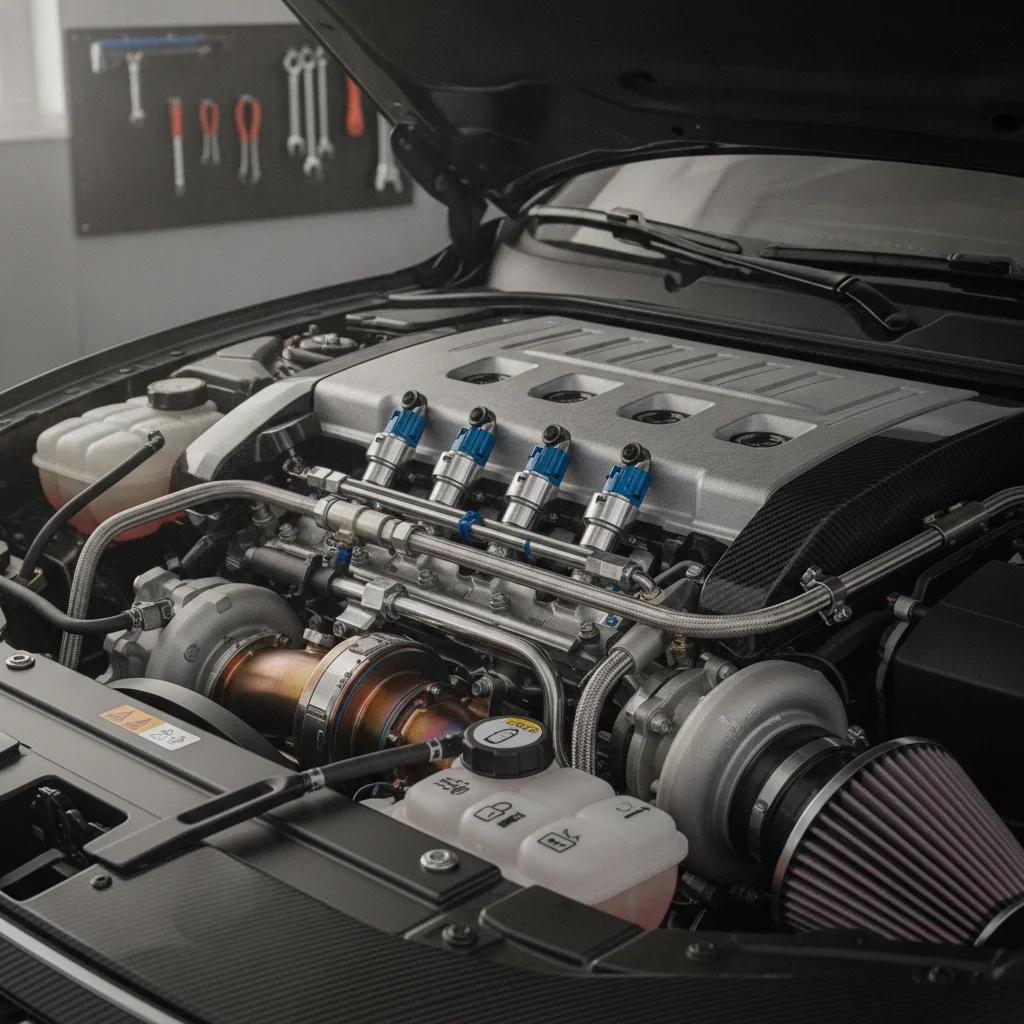
Understanding how your car's core fuel systems work — from fuel injection to variable valve timing — helps clarify why these two environments produce such different results. The short version: engines are most efficient when they run at a consistent, moderate load. City driving fights that constantly. Highway driving supports it — at least until speed climbs too high and drag takes over.
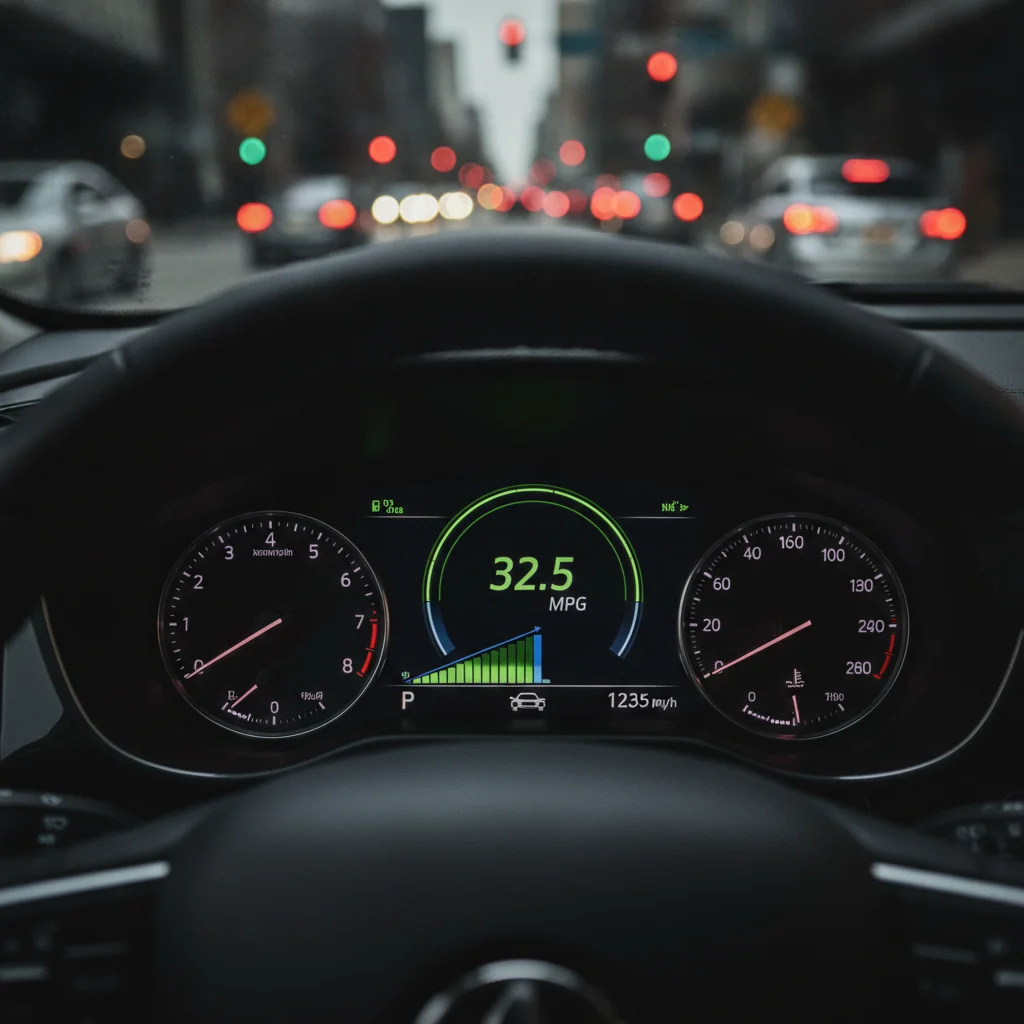
The practical takeaway is that improving your fuel economy means different things depending on where you spend most of your time behind the wheel. The levers available to a city driver are almost entirely different from those available to a highway driver.
City Driving: Where Fuel Goes and Why
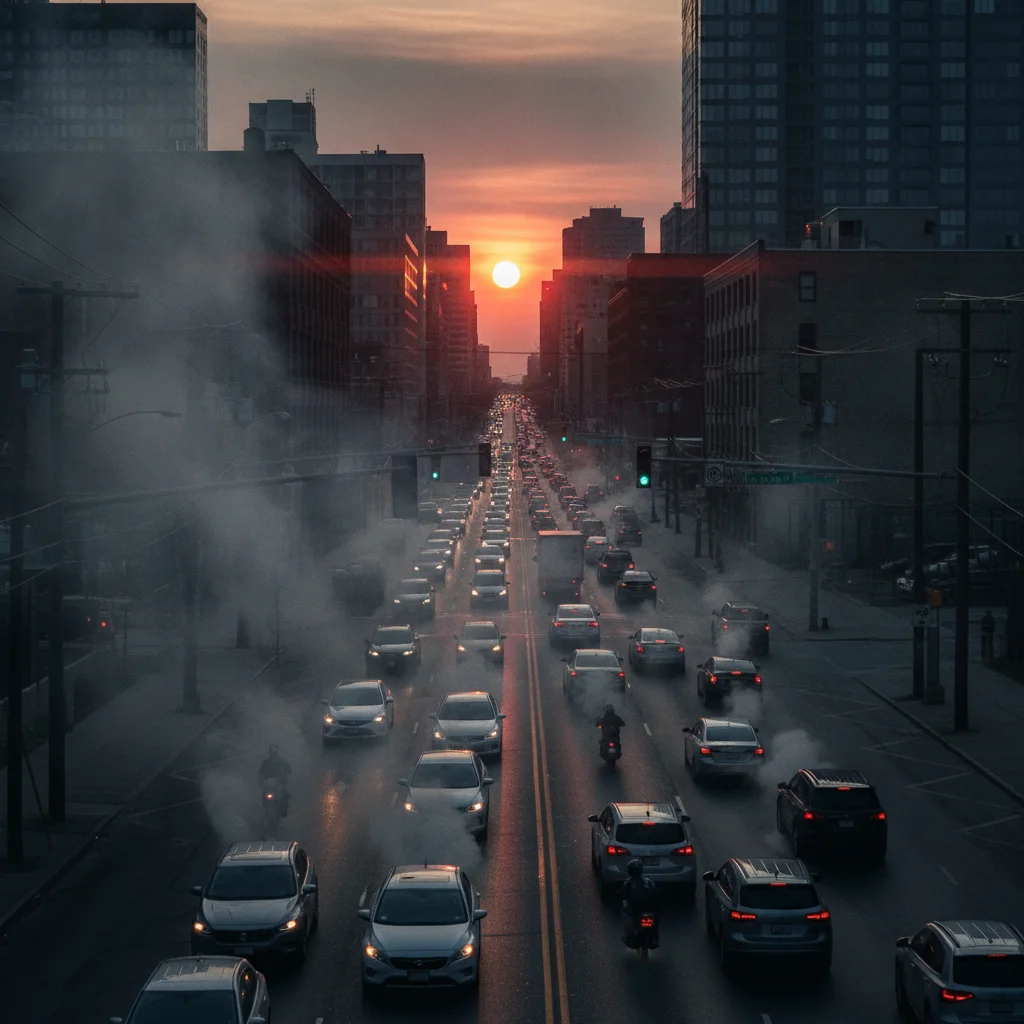
Stop-and-go traffic is an efficiency killer, and it's worth understanding exactly where the fuel disappears. There are three primary culprits in city driving: acceleration energy loss, idle consumption, and cold engine inefficiency.
Acceleration from Zero
The single biggest fuel drain in city driving is repeated acceleration from a standstill. Moving a 3,500-pound vehicle from zero to 30 mph requires substantial energy. In a gasoline engine, much of that energy is generated at low throttle efficiency — meaning the engine converts a smaller percentage of fuel energy into motion compared to steady-speed cruising. The faster and harder you accelerate, the worse this ratio becomes.
Hard acceleration is consistently ranked as one of the top fuel economy killers, and it's most damaging in city conditions because it happens over and over again. A smooth, gradual acceleration uses significantly less fuel for the same speed gain — and gives you more control over the outcome.
Idling: Burning Fuel for Zero Movement
Every minute your engine runs while the car sits still, fuel is consumed and zero miles are traveled. That makes idling the most mathematically pure form of fuel waste. Idling typically burns between 0.1 and 0.5 gallons per hour depending on engine size and accessories running — meaning a 10-minute idle stop on a large engine can consume roughly as much fuel as driving a mile or two at moderate speed.
City commuters in heavy traffic can spend 20–30% of their driving time at a complete standstill. Modern vehicles with start-stop systems help by shutting the engine off automatically, but older vehicles and those with the feature disabled simply bleed fuel the entire time.
| Criterion | City Driving | Highway Driving |
|---|---|---|
| Primary fuel loss cause | Repeated acceleration from stops | Aerodynamic drag at high speed |
| Idle fuel waste | High — frequent stop phases | Minimal — continuous movement |
| Engine temperature efficiency | Often suboptimal — cold starts frequent | Optimal — engine reaches full temp |
| Braking energy loss | High — frequent braking cycles | Low — rare braking events |
| Optimal speed range | N/A — speed dictated by traffic | 55–65 mph for peak efficiency |
| Driver behavior impact | Very high — acceleration style critical | Moderate — speed choice is key |
| Effect of vehicle load | Low — low speeds limit drag effect | High — drag grows with speed |
| EV efficiency comparison | EVs excel here via regen braking | EVs lose efficiency vs. gas cars |
| Typical MPG vs. EPA rating | Often 10–20% below EPA city | Often near EPA — if speed controlled |
| Best efficiency tool | Smooth acceleration + anticipation | Cruise control + speed discipline |
Cold Engine Penalties Hit City Drivers Hardest
A cold engine runs rich — meaning it burns more fuel to generate heat and reach operating temperature. This warm-up phase typically lasts 1 to 5 minutes depending on ambient temperature. On a long highway trip, that warm-up cost is amortized over 50 or 100 miles. On a 2-mile city errand, the engine may barely reach full operating temperature before you arrive. Short trips are therefore disproportionately expensive on a per-mile basis, and city drivers who make multiple short trips throughout the day pay this penalty repeatedly.
0.1–0.5 gal/hr
Fuel burned while idling
The U.S. Department of Energy estimates idling consumes between 0.1 and 0.5 gallons per hour depending on engine size and climate control use.
~14%
MPG loss at 70 vs. 55 mph
The EPA estimates a roughly 7–14% fuel economy penalty when driving at 70 mph compared to 55 mph due to increased aerodynamic drag.
Up to 30%
Of city commute time spent idling
Studies of urban commute patterns suggest heavy-traffic city drivers can spend 20–30% of their driving time completely stationary.
10–20%
City MPG improvement possible through behavior
The U.S. Department of Energy notes that aggressive driving can lower city fuel economy by 10–40%, meaning smoother habits recover a substantial portion of that loss.
1–5 min
Engine warm-up time in cold weather
Cold engines run rich until they reach operating temperature — a 1 to 5 minute window that penalizes short city trips disproportionately compared to long highway drives.
Braking: Throwing Away Momentum
Every time you brake in a conventional gasoline car, the kinetic energy of your moving vehicle is converted to heat and dissipated through the brake rotors. That energy came from fuel. Braking hard essentially transforms expensive gasoline into heat that serves no purpose. Coasting to a stop rather than braking hard can meaningfully reduce this waste — and in city traffic, where you can often see a red light well in advance, coasting is a practical habit to develop.
Highway Driving: The Efficiency Sweet Spot — and Where It Breaks Down
Highway driving gets a well-deserved reputation for fuel efficiency, but it comes with conditions. The gains are real at moderate speeds; above a certain threshold, physics starts working against you hard.
Why Steady Cruising Is Efficient
At highway speeds, your engine maintains a consistent load in a higher gear, which keeps it operating near its efficiency peak. Fuel injection is precisely calibrated, the transmission stays in its highest practical gear, and there's no repeated acceleration from stops draining extra energy. For most modern gasoline engines, this sweet spot occurs somewhere between 45 and 65 mph on flat terrain.
The Speed Penalty Above 55 mph
Aerodynamic drag grows with the square of velocity. That means doubling your speed quadruples the drag force your engine must overcome. The practical result: fuel consumption rises steeply as highway speed increases beyond the mid-50s. Each additional 10 mph above 55 mph carries a measurable cost at the pump — one that compounds over thousands of highway miles per year.
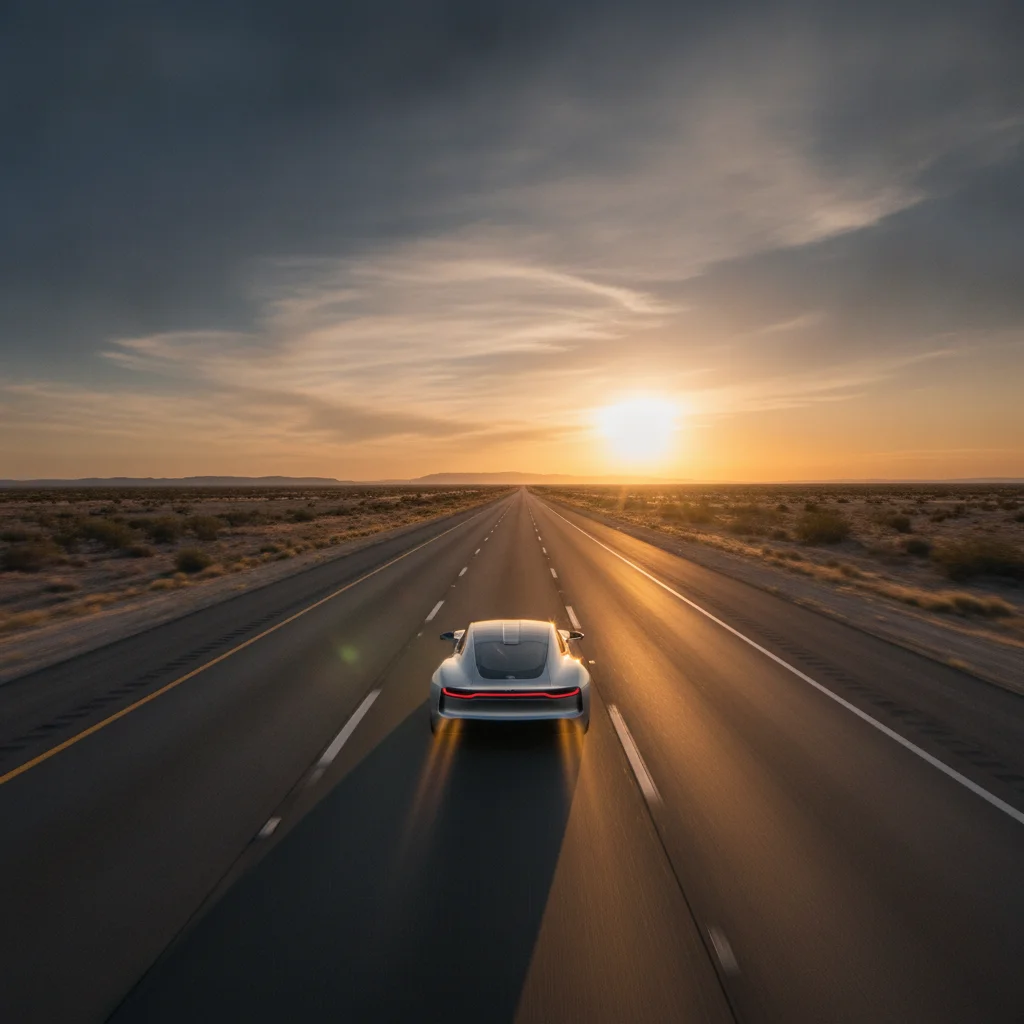
The EPA estimates that for most vehicles, fuel economy drops roughly 7–14% when driving at 70 mph versus 55 mph. At 80 mph, the penalty is even steeper. The aerodynamic effect also interacts with other choices, like whether you run air conditioning or open your windows — a debate that becomes meaningfully relevant above 45 mph.
Cruise Control and Consistency
One of the most effective highway fuel-saving tools is cruise control on flat roads. Human drivers unconsciously vary speed more than they realize — accelerating slightly up gentle grades and coasting on descents in ways that add up to extra fuel use. Cruise control eliminates that variability on level terrain. The caveat: on hilly roads, cruise control can actually cause the engine to over-accelerate to maintain speed on climbs, so manual speed management is often better in rolling terrain.
Load and Roof Accessories
Everything you carry or mount on your vehicle affects highway efficiency more than city efficiency. A roof rack, cargo box, or heavy load increases aerodynamic drag and rolling resistance — costs that are negligible at 25 mph city speeds but significant at 70 mph. If you're planning a long highway trip, load management is one of the levers that can meaningfully affect how far your tank takes you.
Hybrids Change the City Math Significantly
If you drive primarily in the city, a hybrid powertrain essentially solves the two biggest efficiency problems: it recovers braking energy through regeneration and shuts the engine off at idle automatically. This is why many hybrids achieve their best real-world MPG in city conditions — sometimes matching or exceeding their EPA highway rating. If your driving is predominantly urban stop-and-go, the efficiency case for a hybrid is strongest precisely there.
Your EPA Rating Is a Comparison Tool, Not a Promise
EPA fuel economy figures are generated under controlled laboratory conditions designed for consistent comparison between vehicles — not to predict exactly what you'll achieve on your specific commute. Real-world temperatures, traffic patterns, road grades, and driving habits all affect actual MPG. Use the EPA rating to compare vehicles against each other and to understand the city-vs-highway gap for your car. Use your actual fill-up data to understand your real efficiency.
Head-to-Head: Comparing the Efficiency Factors
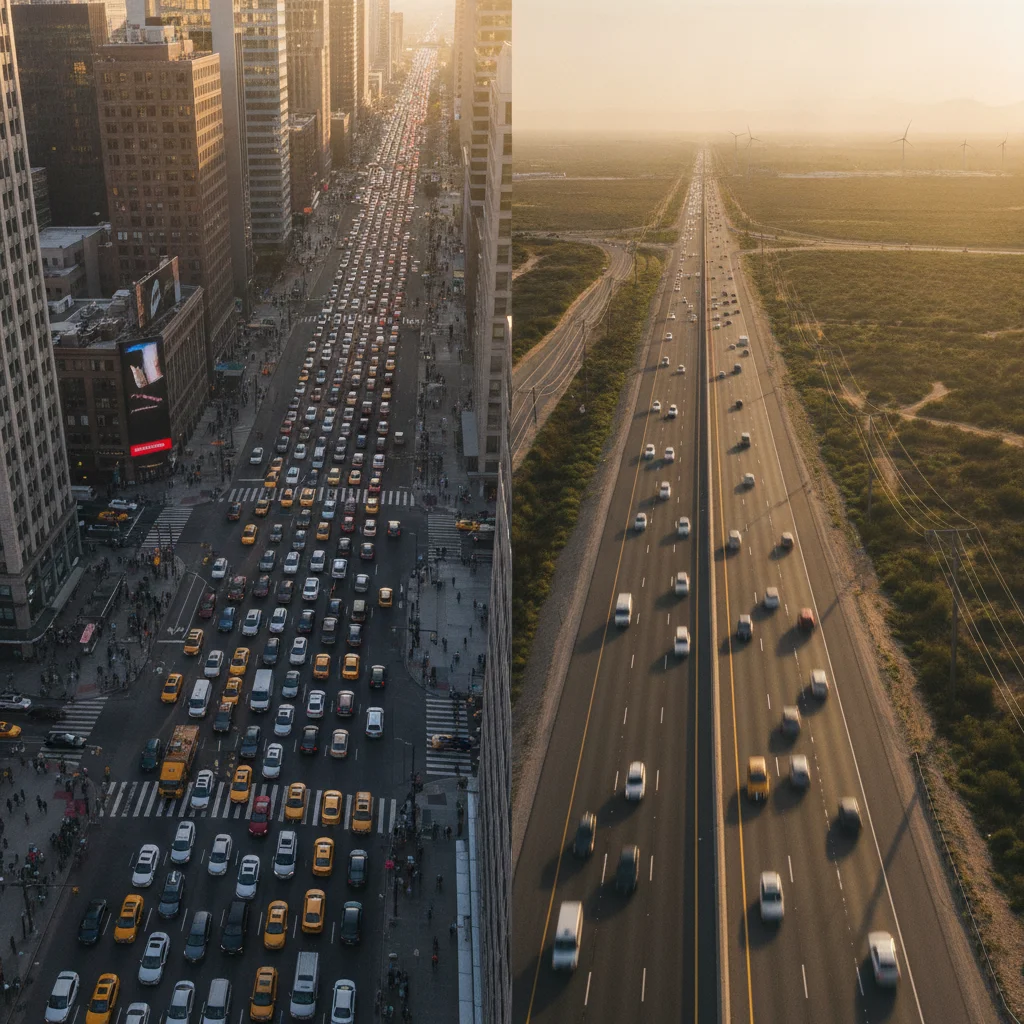
Putting city and highway driving side by side reveals just how differently each environment challenges your vehicle. The factors that matter most shift almost completely between the two contexts.
It's also worth noting that EVs flip this comparison entirely. Regenerative braking recovers energy that gas cars simply waste as heat, making stop-and-go city traffic a net efficiency advantage for electric vehicles. The reasons EVs often outperform their EPA city ratings in real-world urban driving come down to exactly this regeneration advantage.
For conventional gasoline vehicles, the table below captures where each driving environment gains or loses efficiency:
| Criterion | City Driving | Highway Driving |
|---|---|---|
| Primary fuel loss cause | Repeated acceleration from stops | Aerodynamic drag at high speed |
| Idle fuel waste | High — frequent stop phases | Minimal — continuous movement |
| Engine temperature efficiency | Often suboptimal — cold starts frequent | Optimal — engine reaches full temp |
| Braking energy loss | High — frequent braking cycles | Low — rare braking events |
| Optimal speed range | N/A — speed dictated by traffic | 55–65 mph for peak efficiency |
| Driver behavior impact | Very high — acceleration style critical | Moderate — speed choice is key |
| Effect of vehicle load | Low — low speeds limit drag effect | High — drag grows with speed |
| EV efficiency comparison | EVs excel here via regen braking | EVs lose efficiency vs. gas cars |
| Typical MPG vs. EPA rating | Often 10–20% below EPA city | Often near EPA — if speed controlled |
| Best efficiency tool | Smooth acceleration + anticipation | Cruise control + speed discipline |
One important nuance: your specific vehicle's city-to-highway MPG gap is a useful indicator of how much stop-and-go traffic costs you. A car rated 22 city / 32 highway loses nearly a third of its efficiency in city conditions. A hybrid rated 52 city / 48 highway has largely solved the stop-and-go problem through its battery system.
Your transmission type also plays a significant role in how these dynamics play out — CVTs and modern dual-clutch automatics handle city cycling more efficiently than traditional torque-converter automatics in many cases.
Practical Strategies to Stretch Every Gallon
The good news is that most of the fuel waste in both environments is addressable through driving behavior alone — no modifications required. The strategies just need to match the environment.
In the City: Smooth Is Everything
- Accelerate gently. Aim to reach your target speed over 10–15 seconds rather than 3–5. You'll barely notice the difference in arrival time on most city legs.
- Read the road ahead. Watch traffic signals and brake lights 3–4 car lengths ahead. Anticipating a red light lets you coast rather than accelerate up to it.
- Minimize idle time. If you're parked and waiting more than 60 seconds, shutting the engine off saves fuel. Modern fuel-injected engines use less fuel restarting than idling for a minute or more.
- Combine short trips. Leaving when the engine is already warm from a previous trip eliminates cold-start inefficiency. Grouping errands into a single outing is one of the highest-leverage habits for city drivers.
- Use engine braking. Lifting off the throttle well before a stop lets the drivetrain slow the car with minimal or zero fuel injection on most modern vehicles.
On the Highway: Speed and Consistency
- Target 55–65 mph. This range hits the efficiency sweet spot for most gasoline vehicles. The time cost of driving 60 versus 75 on a 200-mile trip is about 40 minutes — often less than it feels.
- Use cruise control on flat roads. Removes the micro-accelerations that human drivers introduce unconsciously.
- Reduce frontal load. Remove roof racks and cargo carriers when not in use. Even an empty rack adds measurable drag at highway speeds.
- Maintain tire pressure. Under-inflated tires increase rolling resistance — a cost that compounds over every highway mile.
- Plan passes carefully. Frequent lane changes and acceleration to overtake can erode the efficiency benefits of highway cruising quickly.
Many of the habits that hurt fuel economy most appear in both environments, just with different magnitudes. Hard acceleration is worse in the city; excessive speed is worse on the highway. Addressing the right problem for your commute pattern is what separates meaningful savings from marginal ones.
It's also worth thinking about the fuel itself. Not all gasoline is created equal, and the detergent additives in Top Tier certified fuels can help keep injectors clean over time — which matters for maintaining peak efficiency in both environments.
What the Numbers Tell You About Your Own Driving
Your fuel economy readout — whether it's a trip computer, a fuel log, or an OBD-II app — is one of the most useful pieces of feedback available to any driver. If your real-world city MPG is dramatically lower than your EPA city rating, that gap tells you something specific: you're likely accelerating hard, idling frequently, or making many short cold-engine trips.
If your highway MPG is lower than expected, the culprit is almost always speed. Check your average cruising speed honestly. Most drivers traveling at 75–80 mph on interstates are giving up 10–15% of their rated highway efficiency without realizing it.
Tracking fuel economy over several fill-ups — rather than relying on the trip computer's instant or recent-average readings — gives you the most accurate picture. Divide total miles driven by total gallons purchased, and compare that number against your EPA rating. The gap reveals where to focus.
For drivers navigating both environments daily, the differences between urban and rural driving extend beyond fuel economy — risk profiles, road conditions, and driving demands shift significantly between settings, and it's worth understanding the full picture of what each environment requires from you and your vehicle.
Hybrids Change the City Math Significantly
If you drive primarily in the city, a hybrid powertrain essentially solves the two biggest efficiency problems: it recovers braking energy through regeneration and shuts the engine off at idle automatically. This is why many hybrids achieve their best real-world MPG in city conditions — sometimes matching or exceeding their EPA highway rating. If your driving is predominantly urban stop-and-go, the efficiency case for a hybrid is strongest precisely there.
Your EPA Rating Is a Comparison Tool, Not a Promise
EPA fuel economy figures are generated under controlled laboratory conditions designed for consistent comparison between vehicles — not to predict exactly what you'll achieve on your specific commute. Real-world temperatures, traffic patterns, road grades, and driving habits all affect actual MPG. Use the EPA rating to compare vehicles against each other and to understand the city-vs-highway gap for your car. Use your actual fill-up data to understand your real efficiency.
The core insight is straightforward: city driving rewards behavioral discipline at low speeds, and highway driving rewards speed restraint. Neither environment is inherently wasteful if you approach it with the right habits. The drivers who get closest to their EPA ratings in both settings are simply the ones who understand what the engine needs — and give it that, consistently.

All claims are backed by peer-reviewed research. Sources on request.