
Key Takeaways
Why This Question Has a Real Answer
The debate over air conditioning versus open windows has been argued in front seats and comment sections for decades. Most people have a gut feeling — usually shaped by whichever piece of advice they heard first — and they stick with it. But this is one of those rare automotive arguments that physics actually settles, once you understand two competing forces: mechanical engine load and aerodynamic drag.
Your engine doesn't care whether it's working harder because a compressor is spinning or because wind is pushing back against an open window. Either way, extra work means extra fuel. The question is which of these two penalties is larger at any given speed — and that answer changes as you accelerate.
Understanding this isn't just trivia. On a long summer road trip, smarter climate choices can meaningfully stretch your range and reduce what you spend at the pump. Let's look at what the data actually shows.
The Core Myths, Corrected
Before we get into the numbers, it helps to lay out the most persistent misconceptions drivers carry about this topic. These myths aren't random — they each contain a kernel of truth, which is exactly what makes them stick.
Myth
Running the air conditioner always wastes more fuel than opening your windows, no matter what speed you're going.
Fact
At highway speeds above roughly 45–50 mph, A/C is typically more fuel-efficient than open windows because aerodynamic drag becomes dominant.
This myth persists because it contains a partial truth: A/C does impose a real fuel penalty through its compressor load. But it treats that penalty as if it exists in a vacuum, ignoring the drag cost of open windows entirely.
At low speeds — think city driving, parking lots, or slow suburban streets — aerodynamic drag from open windows is minimal. The breeze costs almost nothing in fuel terms, and avoiding the compressor is a genuine win. But the moment you accelerate toward highway speeds, the physics flip. Drag scales with the square of velocity, so the open-window penalty compounds rapidly while the A/C penalty stays relatively flat. By 55 mph, the drag from open windows reliably exceeds the compressor load in most vehicle classes.
So the statement isn't wrong in every situation — it's just incomplete. The answer depends entirely on how fast you're driving.
Myth
Opening just one window instead of all four makes almost no difference to fuel economy at highway speeds.
Fact
Partially open or fewer windows significantly reduce drag compared to all four windows fully down — the effect is not linear.
Not all window configurations are equal, and the difference matters more than most drivers realize. Four fully lowered windows create a large disruption to the vehicle's aerodynamic envelope — air rushes in on one side, creates turbulence inside the cabin, and spills out chaotically on the other sides. This pressure imbalance is what the engine has to fight.
One slightly cracked rear window, by contrast, creates a much smaller disturbance. The airflow disruption is localized, turbulence is reduced, and the drag penalty is a fraction of what you'd see with all windows down. If you're in that 45–55 mph transition zone and need some ventilation, cracking one rear window is a reasonable middle ground — you get some airflow with meaningfully less drag than a full four-window configuration.
This is also why some drivers find that a mix of settings — one front window cracked, A/C fan on low — can feel comfortable at moderate speeds without maximizing either penalty.
Myth
Modern cars are efficient enough that the A/C penalty is basically negligible — maybe 1–2% at most.
Fact
The U.S. Department of Energy estimates A/C can reduce fuel economy by 5–25%, with the higher end typical on hot days or in stop-and-go conditions.
This myth likely gained traction because car manufacturers have improved A/C efficiency considerably over the past two decades. Variable-displacement compressors, improved refrigerants, and better thermal insulation in modern cabins all help. But the improvement is relative, not absolute — even a more efficient system still draws substantial power when conditions demand it.
On a hot summer day, especially when a car has been sitting in direct sun, the A/C system runs at or near full capacity for an extended period just to bring the cabin to a comfortable temperature. That sustained high-load operation is where the 20–25% penalty figures come from. On milder days or when the car is already pre-cooled, the average penalty shrinks considerably — but it never disappears.
For city driving in peak summer heat, the A/C penalty is real and worth accounting for. It's one reason fuel use patterns in city vs. highway driving look so different in summer versus cooler months.
Myth
You should always warm up the cabin with windows open before switching on A/C, regardless of your speed.
Fact
At highway speeds, briefly purging hot air with windows then closing them for A/C is smart — but keeping windows open at high speed to 'help' the A/C costs more than it saves.
There's a logical-sounding belief that opening windows to let hot air escape before running A/C reduces the system's overall workload and saves fuel. The first part is actually true: flushing a 130°F cabin with outside air before engaging the compressor helps the system reach a set temperature faster, reducing the duration of peak-load operation.
Where the logic breaks down is in how long you keep the windows open. On a city street, this makes sense — the drag cost is low, and you're reducing how long A/C runs at full blast. But if you're already on the highway, keeping windows open past the initial purge quickly becomes counterproductive. The drag penalty accumulates fast at 60+ mph, and you're offsetting whatever A/C demand you've reduced.
The efficient approach: purge the cabin briefly at low speed or while still parked, then close windows and let A/C take over before you reach highway cruising speed. That sequence uses each strategy where it's strongest.
Myth
The crossover speed where A/C beats open windows is the same for every car.
Fact
Vehicle body style, drag coefficient, and A/C system size all shift the crossover point — for some SUVs it may be as low as 40 mph.
The 45–50 mph figure cited in most discussions is a reasonable average, but it hides meaningful variation across vehicle types. A compact sedan with a low drag coefficient (Cd around 0.28) slips through air more efficiently than a boxy crossover with a Cd closer to 0.38. When you open windows on the crossover, you're disrupting a less aerodynamic profile to begin with — the percentage increase in drag is larger.
Truck and SUV owners may find their crossover point is closer to 40 mph because of this effect. Sports car owners with particularly sleek profiles and modest A/C systems might find they can push the open-window advantage slightly higher. The 45–50 mph guideline is a reliable starting point, but if you want precision for your specific vehicle, the EPA's fuel economy testing data for your model year sometimes includes climate control impact estimates in the vehicle-specific documentation.
Understanding the Two Competing Fuel Penalties
To make sense of the crossover point, it helps to understand what's actually happening mechanically and aerodynamically in each scenario.
The Air Conditioning Penalty
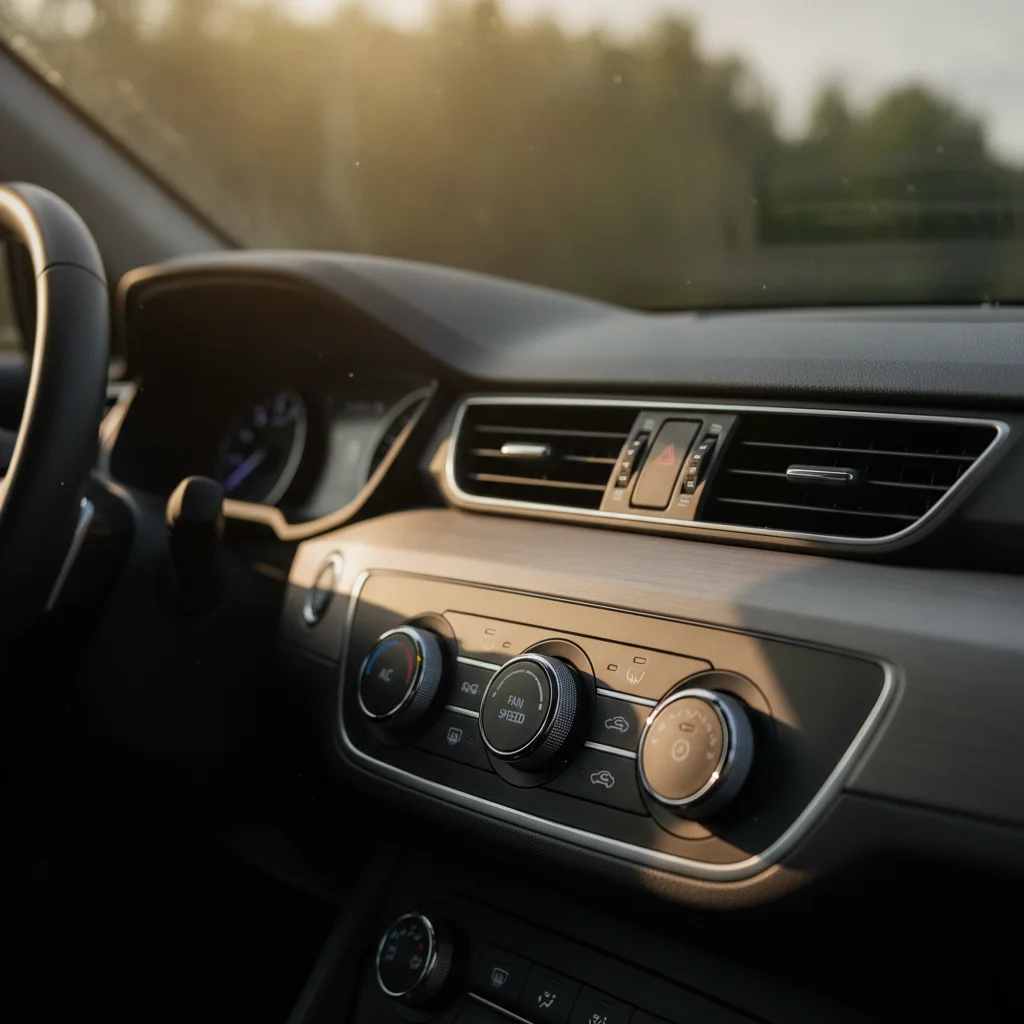
When you run A/C, your car's compressor — driven by a belt attached to the engine — places a continuous mechanical load on the drivetrain. According to the U.S. Department of Energy, this can reduce fuel economy by 5% to 25% depending on outside temperature, humidity, and how hard the system is working. On a 95°F day, with a hot interior, the system draws near maximum capacity. On a mild 75°F day, it cycles less aggressively and the penalty is smaller.
Crucially, this penalty is relatively constant regardless of your speed. Whether you're doing 30 mph or 75 mph, the compressor load is driven by thermal demand, not road speed.
5–25%
Fuel economy reduction from A/C use
According to the U.S. Department of Energy, the penalty is highest on very hot days and in vehicles with poor cabin insulation.
45–50 mph
Speed threshold where A/C beats open windows
Research from Natural Resources Canada and the Society of Automotive Engineers consistently places the crossover in this range for typical passenger vehicles.
3–5 kW
Power drawn by A/C in a typical EV
This continuous draw can reduce electric vehicle range by 10–20% on hot days, according to U.S. Department of Energy estimates.
~4x
Drag increase from doubling speed
Aerodynamic drag scales with the square of velocity — the core reason why open windows become costly at highway speeds.
The Open Window Penalty
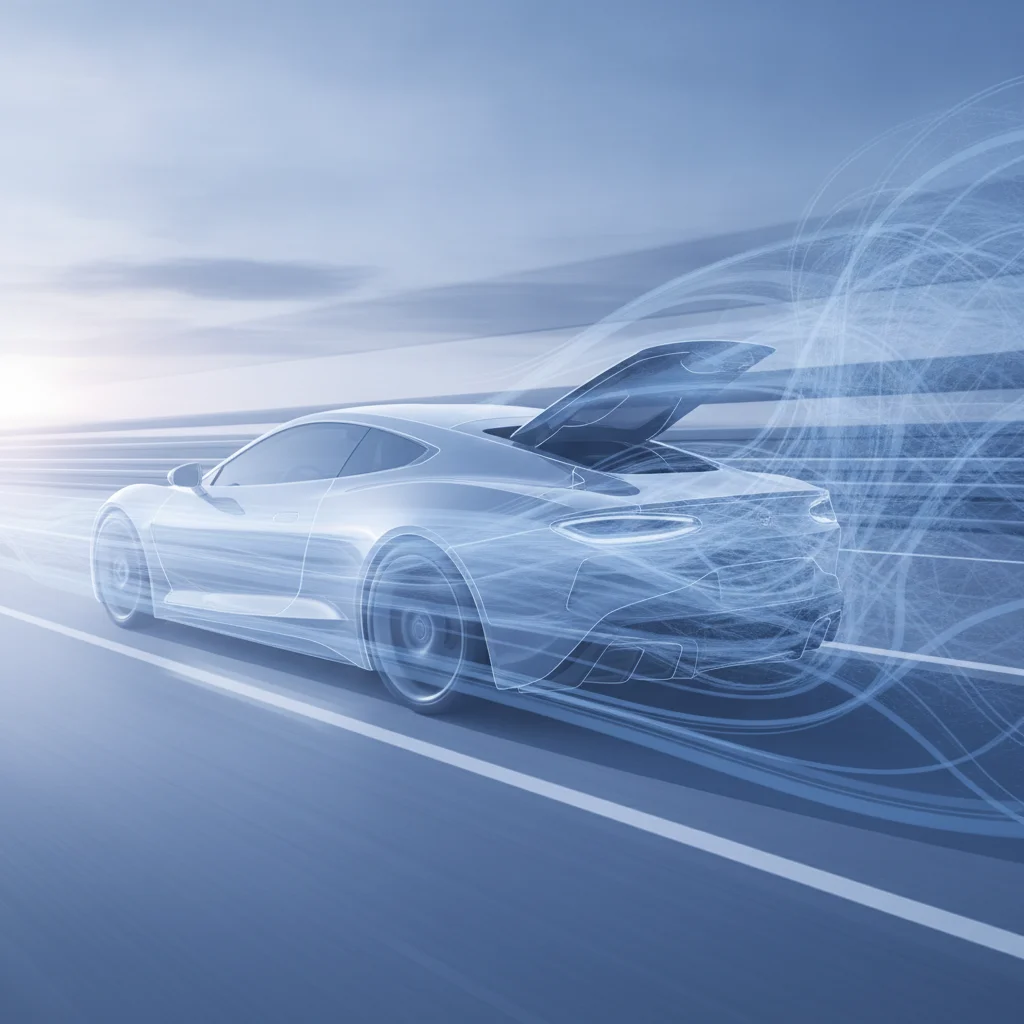
Aerodynamic drag is not constant. It increases with the square of your speed — meaning that at 60 mph, drag is roughly four times what it is at 30 mph. Open windows disrupt a vehicle's designed airflow profile, creating turbulence and a pressure difference that the engine must overcome. At low speeds, this effect is minor. At highway speeds, it becomes substantial.
The exact drag penalty from open windows depends heavily on vehicle shape. A boxy SUV with a high coefficient of drag (Cd) will suffer more than a sleek sedan already designed to cut through air efficiently. This is one reason the crossover speed isn't identical for every car.
See our guide to where your fuel actually goes for a deeper look at how speed affects efficiency in city and highway environments separately.
The Speed Threshold That Decides It
Multiple independent studies — including work published by the Society of Automotive Engineers and fuel economy research from Natural Resources Canada — have pointed to a crossover point somewhere between 45 and 55 mph for most passenger vehicles. Below that threshold, open windows win. Above it, A/C wins.
Don't Rely on 'Feel' to Judge Efficiency
Open windows often feel more refreshing than A/C at moderate speeds, which can mislead drivers into thinking they're making the more efficient choice. Above 50 mph, how comfortable a setting feels has no relationship to how much fuel it costs. Trust the speed threshold, not your comfort instinct.
Sunroofs Add More Drag Than You'd Expect
An open sunroof at highway speed creates a significant pressure disturbance inside the cabin — in some cases generating more drag than a single open side window. If fuel economy is your priority on a highway run, keep the sunroof closed and rely on A/C instead.
Here's a practical way to think about it:
- Under 45 mph (city streets, slow suburban roads): Roll the windows down. The drag penalty is small, the breeze is effective at lower temps, and you're avoiding the compressor load entirely.
- 45–55 mph (transition zone): The answer is genuinely uncertain and depends on your specific vehicle, outside temperature, and how many windows are open. A single cracked rear window causes less drag than four fully lowered windows.
- Above 55 mph (highway): Close the windows and use A/C. Aerodynamic drag at these speeds costs more fuel than the compressor does.
It's worth noting that sunroofs complicate this further. An open sunroof at highway speed creates a significant pressure disturbance — often worse than a single open side window — and should generally be kept closed on the highway if fuel economy matters to you.
For a related perspective on how speed shapes efficiency for electric vehicles, see how EVs handle highway vs. city driving differently — the dynamics are almost reversed compared to gas cars.
Smart Habits That Reduce A/C Demand on the Highway
If the highway math favors A/C, the real efficiency win isn't choosing windows — it's reducing how hard your A/C has to work in the first place. A system that's fighting a 120°F interior baked in a parking lot is going to run at full capacity for a long time. One that's starting from a cooler baseline cycles off sooner and imposes a smaller average load.
Pre-Cooling Is the Biggest Highway Win
The single most effective thing you can do before a highway trip in summer is reduce how hot your cabin gets in the first place. Parking in shade, using a windshield sun shade, and briefly flushing cabin air before engaging A/C can dramatically cut how long your system runs at full capacity. A compressor that cycles off quickly imposes a fraction of the fuel penalty of one running continuously for the first 20 minutes of your drive.
Pre-Cool Before You Hit Highway Speeds
If you're parked and need to cool the car before a highway drive, open the windows briefly while the A/C runs at low speed. This purges the super-heated cabin air quickly, letting the system reach a comfortable temperature faster. Once you're on the highway, close the windows and let A/C maintain — not fight — the temperature.
Use Recirculation Mode
Most A/C systems have a recirculation setting (usually indicated by a cabin icon with a circular arrow). When active, it recycles already-cooled interior air rather than pulling in hot outside air. On a hot day, this can meaningfully reduce how hard the compressor works and speed up cooling.
Park Strategically
Shade parking is the simplest efficiency hack available. A study from the American Council for an Energy-Efficient Economy found that a car parked in full sun on a hot day can reach interior temperatures of 130–170°F. That's a massive thermal load your A/C then has to overcome. A parking structure or shaded spot can reduce interior temps by 40–50°F before you even start the car.
For those interested in other practical ways to improve fuel economy, our review of fuel-saving accessories separates what's worth your money from what isn't.
What This Means for Hybrid and EV Drivers
If you drive a hybrid or electric vehicle, the A/C vs. windows calculation shifts — but doesn't disappear. In a hybrid, the A/C compressor can be electrically driven, meaning it doesn't impose a direct mechanical load on the combustion engine the way it does in a conventional car. This slightly softens the penalty, though it still draws from the system's energy budget.
In a fully electric vehicle, the stakes are higher. A/C typically draws 3–5 kilowatts of power from the battery — a non-trivial amount when you're also fighting highway aerodynamic drag and trying to maximize range. On a hot day, EV drivers may see 10–20% range reduction from climate control alone.
The open-window trade-off still applies to EVs at highway speeds, but many EV drivers find that using the seat cooling function (where available) and pre-conditioning the cabin while still plugged in dramatically reduces in-trip A/C demand. Learn how HVAC use specifically affects EV range and what settings preserve the most battery.

The bottom line is the same whether you drive a gas car, a hybrid, or an EV: work with the physics, not against them. At city speeds, let the air in. At highway speeds, seal up and cool smart. That's not a compromise — it's just how the numbers work out.

All claims are backed by peer-reviewed research. Sources on request.