Key Takeaways
Engine Idling
Engine idling happens whenever your vehicle's engine is running but the car isn't moving. This includes waiting at a drive-through, warming up the car on a cold morning, sitting in traffic with the engine on, or running the heater in a parked vehicle. During all of those moments, your engine is consuming fuel and producing emissions without moving you an inch closer to your destination.
At idle, a typical gasoline engine operates at roughly 600–1,000 RPM and consumes fuel at a rate proportional to engine displacement — larger engines waste more per minute than smaller ones.
The Hidden Fuel Drain Most Drivers Don't Think About
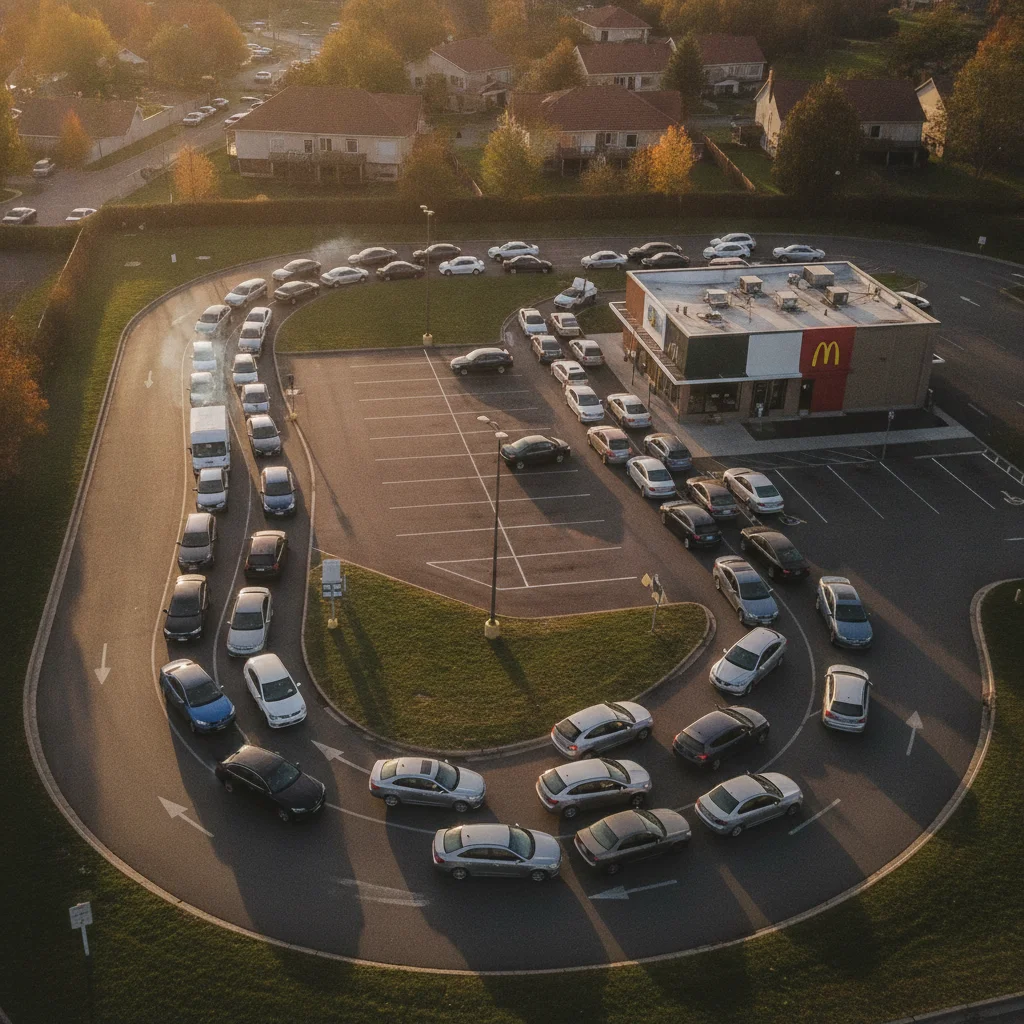
Most drivers are pretty conscious about fuel economy when they're actually moving — choosing the highway over city streets, watching their speed, keeping tires inflated. But there's a significant fuel drain happening before the car even leaves the driveway, or while it sits in the school pickup line: idling.
It doesn't feel like it costs anything. The car is just sitting there, after all. But your engine doesn't know the difference between running at a stoplight and running at highway speed — it's still consuming fuel either way, just not doing any useful work with it.
The good news is that understanding idling costs doesn't require a mechanical background. Once you see what the numbers actually look like, the habit change becomes pretty obvious. And for most drivers, even small adjustments can save real money over the course of a year.
This article focuses on idling in the context of everyday driving decisions — not race tracks, not specialized equipment. If you're already thinking about where your fuel dollars go, this is one of the clearest places to find savings. For a broader look at where efficiency is lost in different driving environments, see our companion piece on city versus highway fuel use.
What the Numbers Actually Look Like
Let's put some real figures to the problem, because the abstract idea of "wasting gas" doesn't stick the way that dollar amounts do.
3B gal
Fuel wasted annually by idling passenger vehicles in the U.S.
According to the U.S. Department of Energy, idling passenger vehicles collectively burn approximately 3 billion gallons of gasoline per year.
~$190–$510
Annual idling fuel cost for average driver
Based on 30 minutes of daily idling, engine size, and an assumed fuel price of $3.50/gallon — costs are higher for larger vehicles.
10 seconds
Fuel equivalent used to restart a modern engine
Engineers and energy researchers consistently find that modern fuel-injected engines use only about 10 seconds' worth of idle fuel to restart.
3–5%
City fuel economy improvement from stop-start technology
EPA and manufacturer data show that automatic stop-start systems, which cut idling at traffic stops, improve city fuel economy by roughly 3–5%.
0°F to 212°F
Engine temperature range during cold-start idle
An engine at idle in cold weather can take 5–10 minutes to reach operating temperature — a process that takes half the time under light driving load.
The U.S. Department of Energy estimates that idling passenger vehicles collectively waste about 3 billion gallons of fuel per year in the United States. For an individual driver, the math looks something like this:
- Small 4-cylinder sedan: roughly 0.2 gallons per hour at idle
- Mid-size V6 sedan or crossover SUV: roughly 0.3–0.4 gallons per hour
- Large truck or full-size SUV: 0.5–0.8 gallons per hour or more
If gas is around $3.50 per gallon and you idle for a combined 30 minutes per day — school pickups, drive-throughs, warming up the car, waiting in parking lots — that's roughly $190 to $510 per year depending on your vehicle, purely in fuel that moved you nowhere.
And that's just fuel. There are also indirect costs.
AC and Idling: A Double Hit on Fuel Economy
Running your air conditioning system while the engine idles creates a compounding fuel drain. The AC compressor places additional load on the engine, increasing fuel consumption by 10–20% above baseline idle rates. On a 95°F day in a parking lot, running the engine just to stay cool can burn through fuel at nearly the same rate as slow city driving — without the benefit of actually going anywhere.
Idling Laws Vary Widely by State and City
Dozens of U.S. states and municipalities have enacted anti-idling regulations, particularly targeting commercial trucks, buses, and school vehicles. Fines can range from $50 to over $1,000 for repeat violations in strict jurisdictions like California and New York. Even if your area doesn't have a specific law, many schools and hospitals post voluntary no-idling zones — and following them costs you nothing.
Cold Weather and Oil Circulation
In temperatures below freezing, a brief idle of 30 seconds before driving gives engine oil a moment to circulate through critical components. This is the legitimate case for a short cold-weather idle. Beyond 30–60 seconds, however, the engine is better served by gentle driving, which warms it more evenly and quickly than sitting still at low RPM.
Running the air conditioning while idling pushes fuel consumption even higher. On a hot day with the AC compressor running at full load, you can add another 10–20% to your idle fuel burn rate. That's worth knowing if you're the type to run the AC while waiting in a parked car on a summer afternoon.
The Restart Myth (And Why It Keeps Costing People Money)
One of the most persistent beliefs about idling is that restarting the engine uses more fuel than just leaving it running. This idea made intuitive sense with old carburetor-era vehicles from the 1970s and 80s, but it hasn't been accurate for decades.
Modern fuel-injected engines use a precisely calibrated burst of fuel to restart — the equivalent of approximately 5 to 10 seconds of idling. That's it. So if you expect to be stopped for more than about 60 seconds, turning the engine off and restarting it later is almost certainly the better choice from a fuel standpoint.
“Idling gets you zero miles per gallon. Modern cars are designed to be driven, not to sit and run. The best warm-up is a gentle drive.”
— Erin Vogt, Senior Engineer, U.S. Department of Energy Vehicle Technologies Office
This is exactly why stop-start technology has become standard equipment on so many new vehicles. The system automatically cuts the engine when the car comes to a complete stop at a traffic light and restarts it the instant you lift your foot off the brake. Drivers rarely notice it after a few days, and the fuel savings are real — typically 3–5% improvement in city fuel economy, according to manufacturer and EPA data.
For more on common fuel economy beliefs that turn out to be wrong, it's worth reading through our piece on fuel efficiency myths that cost drivers money. The warm-up idling habit is addressed there in detail, and the answer might surprise long-time drivers.
The 60-Second Rule Is Easy to Remember
If you expect to be stopped for more than 60 seconds, turn the engine off. That single rule covers drive-throughs, school pickups, parking lot waits, and long traffic backups. It requires almost no judgment in the moment and will meaningfully reduce your idling fuel spend over the course of a year.
Use Remote Start Sparingly in Winter
Remote start systems are convenient, but using them for 10-minute warm-ups every winter morning defeats most of their benefit and adds real fuel cost. If you use remote start, limit it to the time it takes to grab your bag and coat — 1–2 minutes is plenty for a modern vehicle to be ready to drive safely.
Park and Walk When You Can
The simplest way to eliminate drive-through idling is to park and walk inside. You'll skip the line in most cases, spend less time idling, and burn a few more calories. It's the rare fuel-saving tip that also saves time — drive-through lines at peak hours can easily run 10–15 minutes.
Winter Warm-Ups: A Costly Habit Built on Outdated Advice
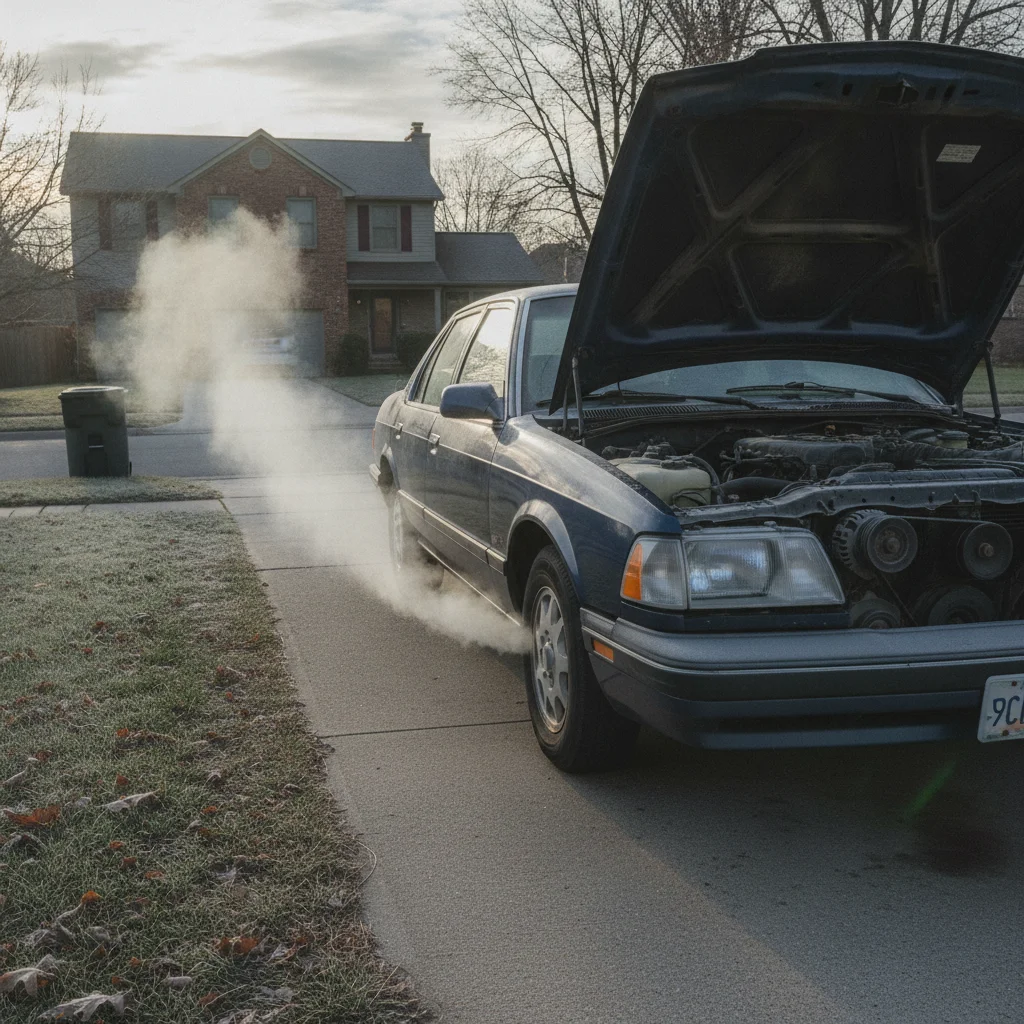
Cold-weather idling is where most drivers feel the most justified letting the engine run. And honestly, the intention makes sense — you want the engine warm, the heater working, and the windows defrosted before you drive. The problem is that extended warm-up idling doesn't accomplish most of those goals efficiently.

Here's what actually happens during a cold start in a modern vehicle:
- The engine management system enriches the fuel mixture to compensate for cold temperatures — meaning it's running less efficiently during idle than it will once it warms up.
- The engine warms up faster under light load (gentle driving) than it does sitting still at idle. The cooling system circulates fluid more actively when the engine is under load.
- The cabin heats up faster when you're driving, because the heater only blows warm air once coolant temperature rises — and that happens more quickly in motion.
A 30-second idle to let oil circulate and give the engine a moment to stabilize is perfectly reasonable in very cold weather. But the old 5-to-10-minute warm-up routine? It's wasting fuel, increasing emissions, and — somewhat ironically — keeping you cold longer than if you'd just driven off gently after 30 seconds.
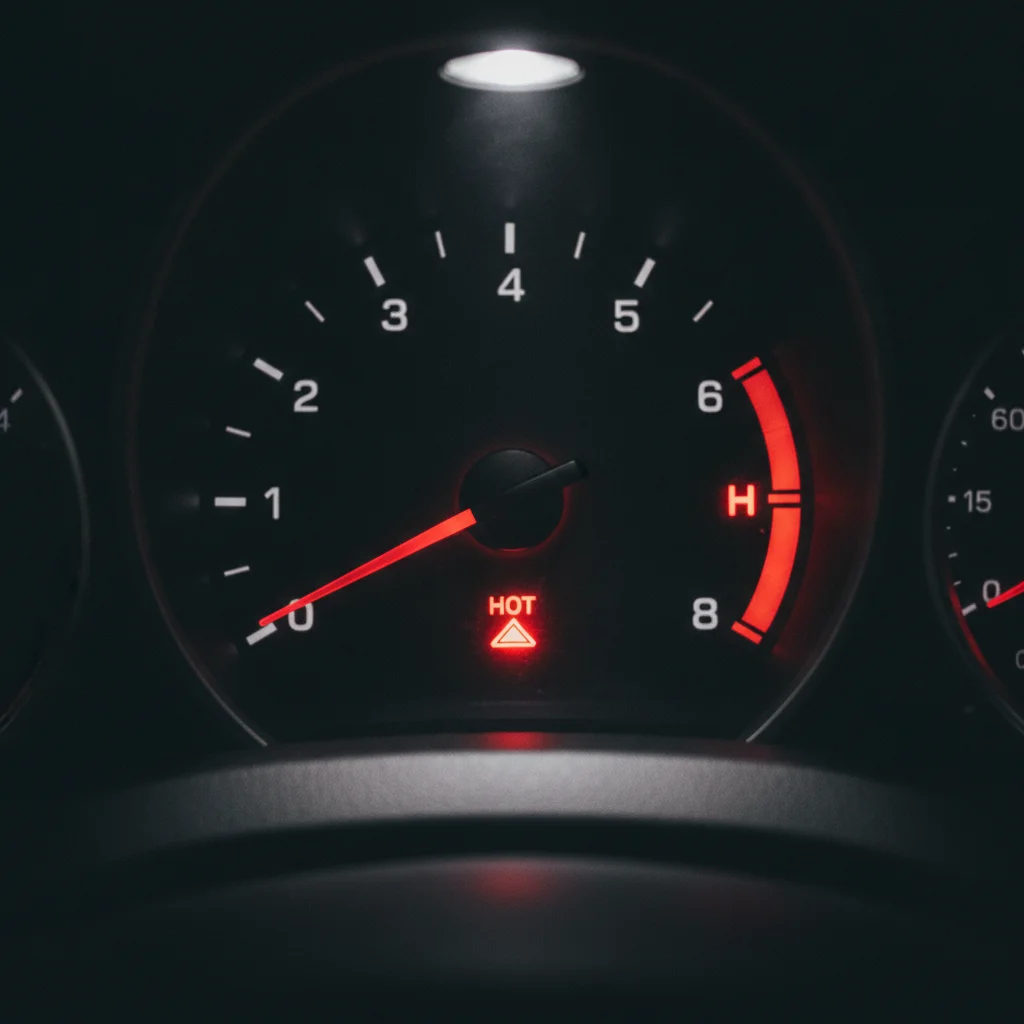
If you're watching your temperature gauge closely during winter starts, you're already ahead of most drivers. For anyone unfamiliar with what that gauge is actually telling you, our article on why ignoring the temperature gauge is a costly mistake is worth a few minutes of your time.
AC and Idling: A Double Hit on Fuel Economy
Running your air conditioning system while the engine idles creates a compounding fuel drain. The AC compressor places additional load on the engine, increasing fuel consumption by 10–20% above baseline idle rates. On a 95°F day in a parking lot, running the engine just to stay cool can burn through fuel at nearly the same rate as slow city driving — without the benefit of actually going anywhere.
Idling Laws Vary Widely by State and City
Dozens of U.S. states and municipalities have enacted anti-idling regulations, particularly targeting commercial trucks, buses, and school vehicles. Fines can range from $50 to over $1,000 for repeat violations in strict jurisdictions like California and New York. Even if your area doesn't have a specific law, many schools and hospitals post voluntary no-idling zones — and following them costs you nothing.
Cold Weather and Oil Circulation
In temperatures below freezing, a brief idle of 30 seconds before driving gives engine oil a moment to circulate through critical components. This is the legitimate case for a short cold-weather idle. Beyond 30–60 seconds, however, the engine is better served by gentle driving, which warms it more evenly and quickly than sitting still at low RPM.
What Idling Does to Your Engine Over Time
Beyond fuel cost, extended idling has a slow but measurable effect on engine health. It's not something you'll notice after one long warm-up session, but it accumulates over years of consistent idling habits.
Here's the core mechanical problem: at idle RPM, combustion is less complete than at driving RPM. That means a small amount of unburned fuel ends up in the cylinder. Over time, this contributes to:
- Carbon deposits on intake valves, injector tips, and spark plugs, which reduce combustion efficiency
- Oil dilution as trace amounts of unburned fuel make their way past piston rings into the crankcase, thinning your engine oil slightly
- Catalytic converter strain — the catalytic converter operates most efficiently at higher exhaust temperatures, and prolonged idling keeps exhaust temps low, reducing its effectiveness and potentially shortening its life
None of these effects are catastrophic on their own, but they're real costs that show up in more frequent maintenance, reduced engine longevity, and dirtier emissions. For drivers trying to squeeze maximum value from their vehicle over a long ownership period, idling habits genuinely matter.
Practical Situations: When to Shut It Off and When It's Fine to Wait
I don't want to leave you with a blanket "never idle" rule that doesn't account for real life. There are situations where brief idling is completely reasonable, and situations where it's clearly worth turning off the engine. Here's a simple framework:
Turn the engine off when:
- You're waiting in a school pickup or carpool line for more than 60 seconds
- You're parked and waiting for a passenger, a store pickup, or a drive-through order
- You're warming up the car on a cold morning for longer than 30 seconds
- You're sitting in a long traffic backup that's clearly not moving
Brief idling is generally fine when:
- You're at a red light (though stop-start systems handle this automatically)
- You've just started the engine and are about to leave immediately
- You're defrosting windows briefly before pulling out
The 60-Second Rule Is Easy to Remember
If you expect to be stopped for more than 60 seconds, turn the engine off. That single rule covers drive-throughs, school pickups, parking lot waits, and long traffic backups. It requires almost no judgment in the moment and will meaningfully reduce your idling fuel spend over the course of a year.
Use Remote Start Sparingly in Winter
Remote start systems are convenient, but using them for 10-minute warm-ups every winter morning defeats most of their benefit and adds real fuel cost. If you use remote start, limit it to the time it takes to grab your bag and coat — 1–2 minutes is plenty for a modern vehicle to be ready to drive safely.
Park and Walk When You Can
The simplest way to eliminate drive-through idling is to park and walk inside. You'll skip the line in most cases, spend less time idling, and burn a few more calories. It's the rare fuel-saving tip that also saves time — drive-through lines at peak hours can easily run 10–15 minutes.
If you want to start tracking exactly where your fuel is going — idling included — apps connected to an OBD-II port can show you real-time fuel consumption data. Our guide to fuel economy tracking tools and methods covers the most practical options available to everyday drivers.
And if you're curious about what eliminating idling costs entirely looks like, that's one of the clearest advantages of an electric vehicle. EVs don't idle in the traditional sense — when stopped, power consumption drops to nearly nothing. For a comparison of fuel costs to EV charging costs, the EV charging costs and savings hub is a useful starting point.
Making the Habit Change Without Overthinking It
Here's the honest truth: you don't need to obsess over every red light or be militant about engine shutoffs to see meaningful savings. The biggest idling waste for most drivers comes from a few predictable situations — long waits in parked cars, extended morning warm-ups, and sitting in school or drive-through lines. Addressing just those three habits is where most of the savings live.
A reasonable starting point: treat 60 seconds as your threshold. If you expect to be stopped longer than a minute, turn the engine off. It costs you almost nothing to restart, and the habit becomes automatic within a few weeks.
The math is on your side. Even cutting 15 minutes of daily idling for a mid-size SUV owner saves roughly $95–$130 per year at current gas prices — money that costs nothing except a few seconds of mindfulness.
Small habits, repeated daily, are where real fuel savings live. Idling is one of the easiest to address once you understand what it's actually costing you.

All claims are backed by peer-reviewed research. Sources on request.