Key Takeaways
Start here
How Fuel Delivery Has Evolved
Core knowledge
Key Efficiency Technologies in Today's Engines
Put it into practice
How Your Driving Habits Interact With the System
Stay on top of it
Maintenance That Keeps Efficiency On Track
Make the right call
Choosing the Right Fuel for Your Engine
Long-term wins
Building Efficient Habits From the Start
How Fuel Delivery Has Evolved
If you've driven a car from the 1980s and one from today, you've experienced two very different ideas about how to get fuel from the tank into the engine. The core challenge has always been the same: mix fuel and air in just the right ratio, ignite it at exactly the right moment, and repeat thousands of times per minute without wasting a drop. How engineers solve that problem has changed dramatically over the decades.
Early cars relied on carburetors — mechanical devices that mixed air and fuel using air pressure and simple float-controlled valves. They were serviceable but imprecise. As the engine's needs changed with speed and load, the carburetor was slow to respond. The result was a system that tended to run rich (too much fuel) at low loads and struggled to adapt to temperature, altitude, and driving conditions.
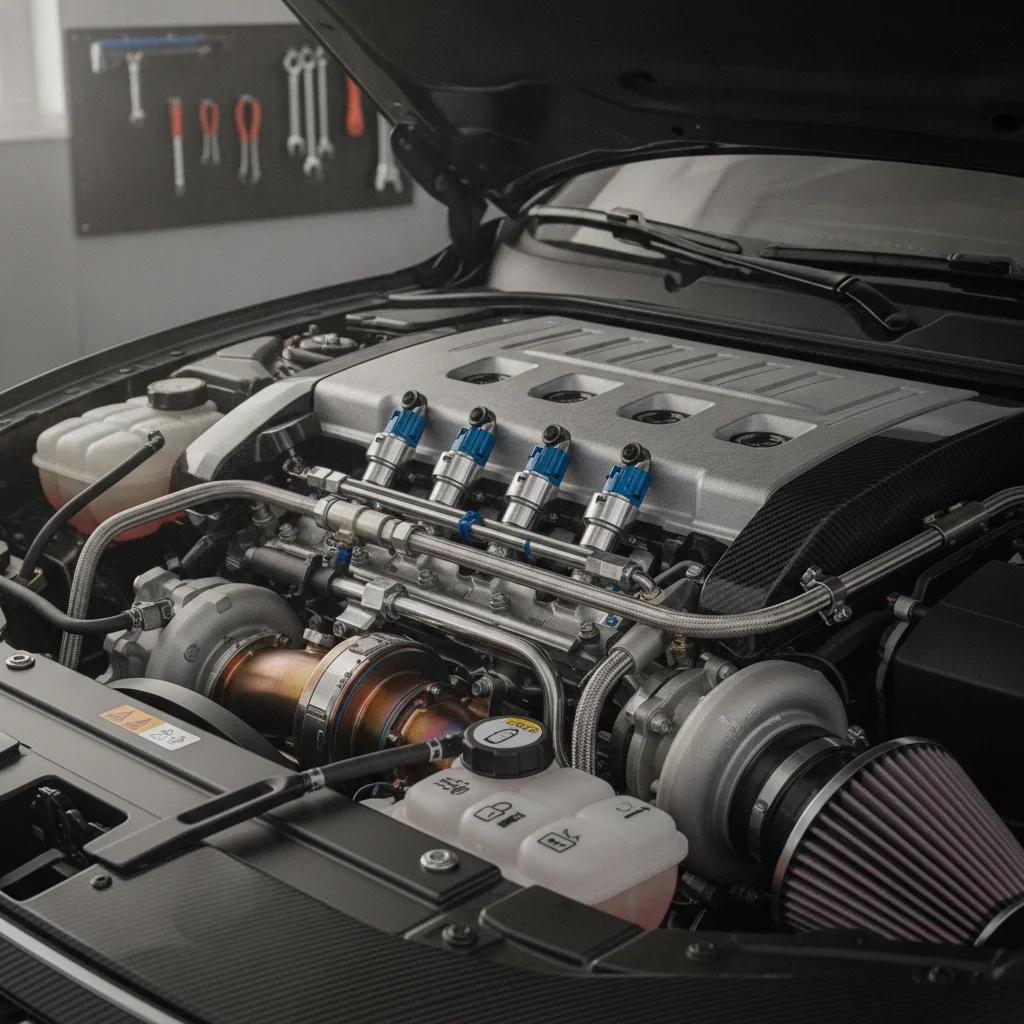
The shift to electronic fuel injection (EFI) beginning in the 1980s changed everything. Instead of relying on mechanical principles alone, EFI uses sensors throughout the engine to measure oxygen levels in exhaust, throttle position, air temperature, and engine speed. A computer — the engine control unit (ECU) — processes all of this data in real time and commands injectors to spray precise amounts of fuel at precisely the right moment.
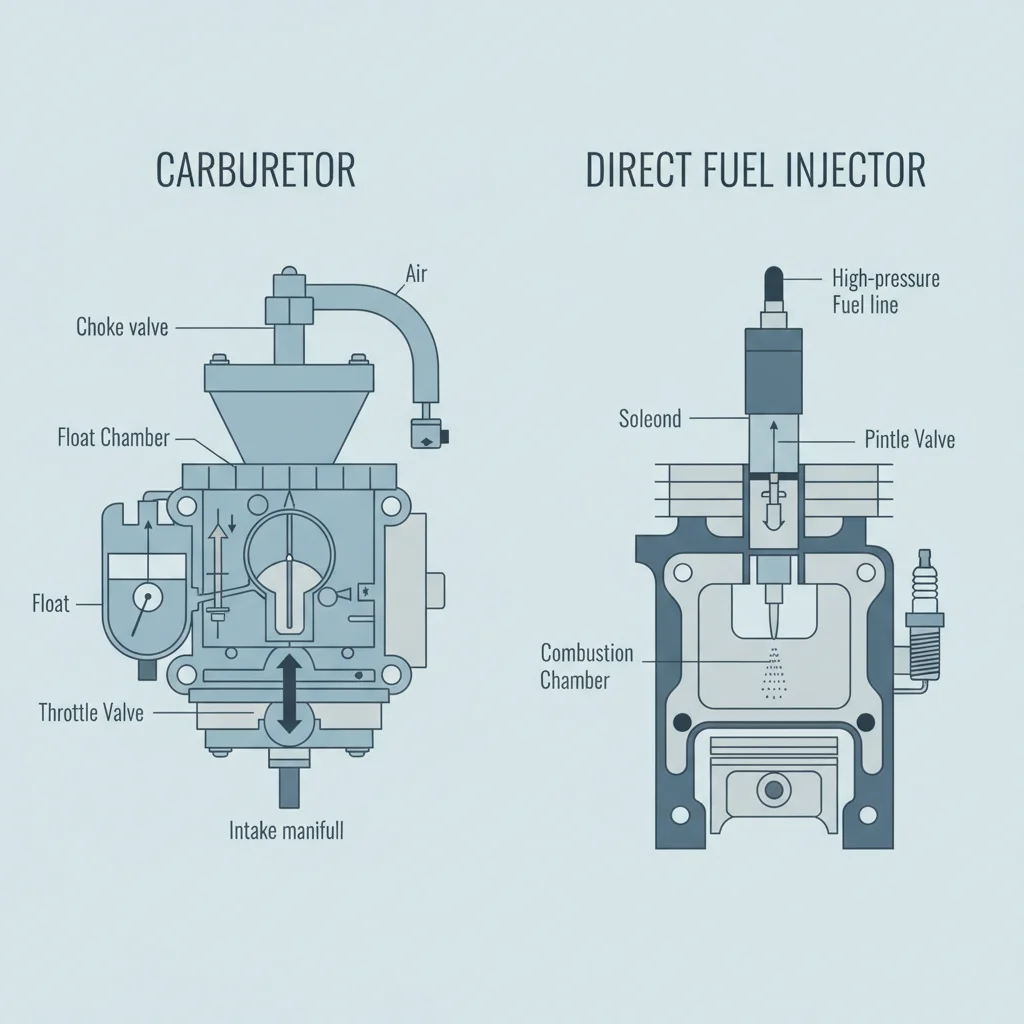
The earliest EFI systems used port injection, where fuel is sprayed just outside the intake valve. This was a major leap forward in precision. Later, direct injection arrived — fuel is sprayed directly into the combustion chamber at much higher pressure, allowing for even finer control over combustion. Today, many engines use a combination of both, called dual injection, capturing the benefits of each approach depending on the driving situation.
Understanding this evolution isn't just history — it explains why modern cars are so much more efficient than older ones, and why maintaining the sensors and systems that feed the ECU with accurate data is so important to sustaining that efficiency.
Fuel injection
A system that delivers precise amounts of fuel directly into the engine using electronically controlled injectors, replacing older carburetor systems and significantly improving efficiency and performance.
Engine Control Unit (ECU)
The car's onboard computer that processes sensor data and controls fuel delivery, ignition timing, and other engine functions in real time to optimize performance and efficiency.
Variable valve timing (VVT)
A technology that adjusts when the engine's intake and exhaust valves open and close depending on speed and load, allowing the engine to be efficient at low speeds and powerful at high speeds.
Cylinder deactivation
A system that automatically shuts down some cylinders when full power isn't needed — such as highway cruising — to reduce fuel consumption, then reactivates them when more power is demanded.
Octane rating
A measure of a fuel's ability to resist pre-ignition (knocking) in the engine. Higher-octane fuel is required for high-compression or turbocharged engines to prevent damage and maintain efficiency.
Start-stop system
An automatic feature that shuts the engine off when the car is stationary and restarts it when the driver releases the brake, saving fuel that would otherwise be burned while idling.
Direct injection
A fuel delivery method where fuel is sprayed directly into the combustion chamber at high pressure rather than into the intake port, allowing for more precise control and better fuel economy.
Rolling resistance
The force that opposes a tire's motion along the road surface. Underinflated tires increase rolling resistance, making the engine work harder and reducing fuel economy.
Key Efficiency Technologies in Today's Engines
Beyond the fuel delivery system itself, modern engines pack in a remarkable number of technologies that work together to reduce waste. You don't need to be a mechanic to benefit from understanding them — you just need to know what they do and what conditions they need to work properly.
Variable Valve Timing (VVT)
The intake and exhaust valves in your engine control when fuel-air mixture enters and when exhaust gases exit each cylinder. Older engines had fixed valve timing — the valves opened and closed at the same points in every revolution, regardless of speed or load. Variable valve timing adjusts when and how long valves stay open, optimizing airflow for whatever the engine is being asked to do at that moment. At low speeds, it prioritizes fuel economy. At high speeds, it prioritizes power. The result is an engine that's efficient across a broader range of driving conditions.
Cylinder Deactivation
If you're cruising on the highway at a steady speed, you don't need all eight cylinders firing. Cylinder deactivation (also called Active Fuel Management or Dynamic Skip Fire depending on the manufacturer) shuts down half the cylinders under light load, effectively turning your V8 into a V4 temporarily. When you accelerate or demand more power, the cylinders reactivate — typically faster than you'd notice. Done well, this technology can improve highway fuel economy by 5–25%.
Start-Stop Systems
When you're idling at a red light, your engine is burning fuel to produce zero forward motion. Automatic start-stop systems cut the engine when the car comes to a complete stop and restart it the moment you lift your foot off the brake. The system uses a reinforced starter motor and battery to handle the frequent restarts without premature wear. In heavy urban traffic, this technology can deliver meaningful fuel savings — typically in the 3–8% range for city driving cycles.
Don't Disable Start-Stop in City Traffic
It can feel intrusive at first, but automatic start-stop works best exactly where most drivers want to turn it off — in heavy, stop-and-go urban traffic. Give yourself a week to adjust to the feel of it. The fuel savings in city conditions are real and add up across thousands of miles of commuting.
Track a Baseline Before Making Changes
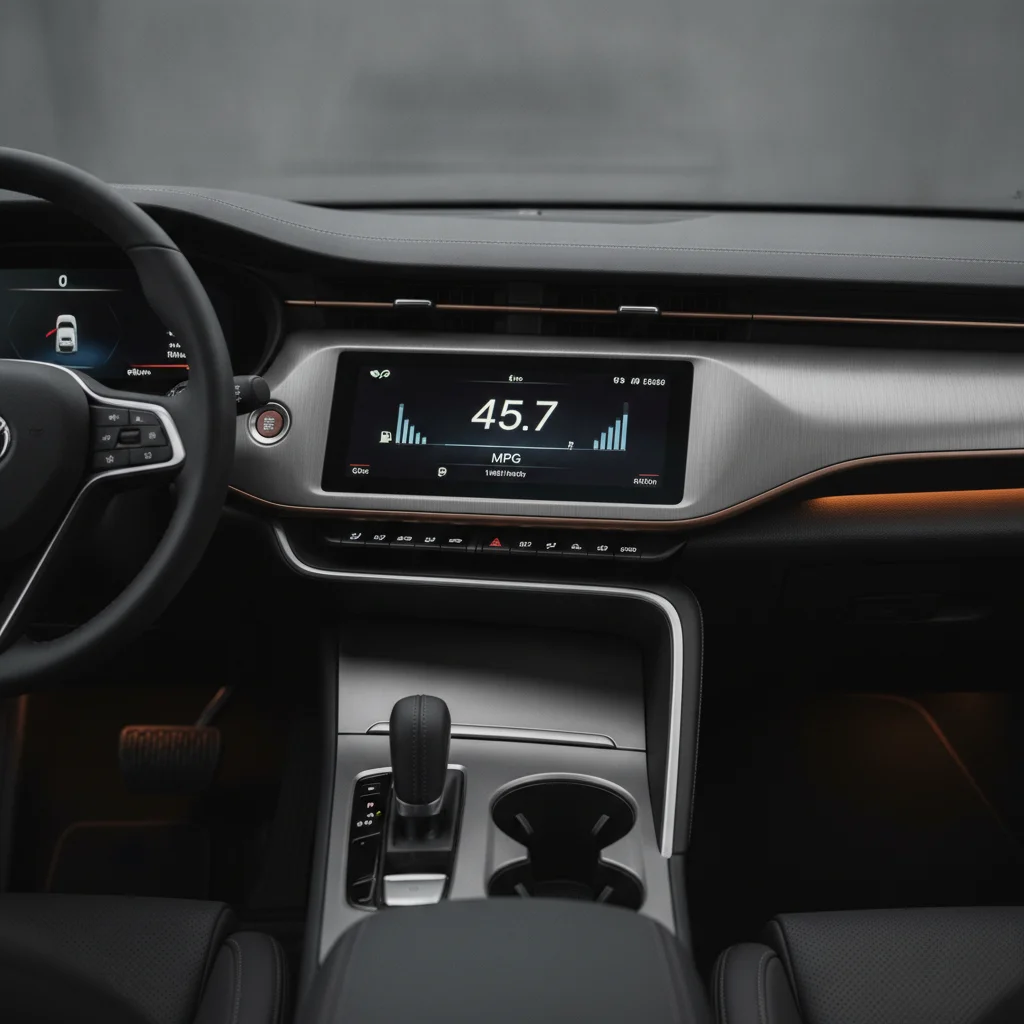
Before adopting new driving habits, record your current fuel economy over two or three fill-ups. This gives you a concrete before-and-after comparison and makes it easy to see which changes are actually working. Even a simple miles-per-gallon calculation at each fill-up is enough to spot meaningful trends.
Turbocharging for Downsizing
Many modern cars use a smaller, turbocharged engine in place of a larger naturally aspirated one. A 2.0-liter turbocharged four-cylinder can produce the power of a 3.0-liter V6 while consuming less fuel under normal driving conditions. The trade-off is that turbocharged engines tend to be more sensitive to driving style — aggressive acceleration forces the turbo to work hard, erasing much of the efficiency advantage. Driving smoothly is especially rewarding in a turbocharged car.
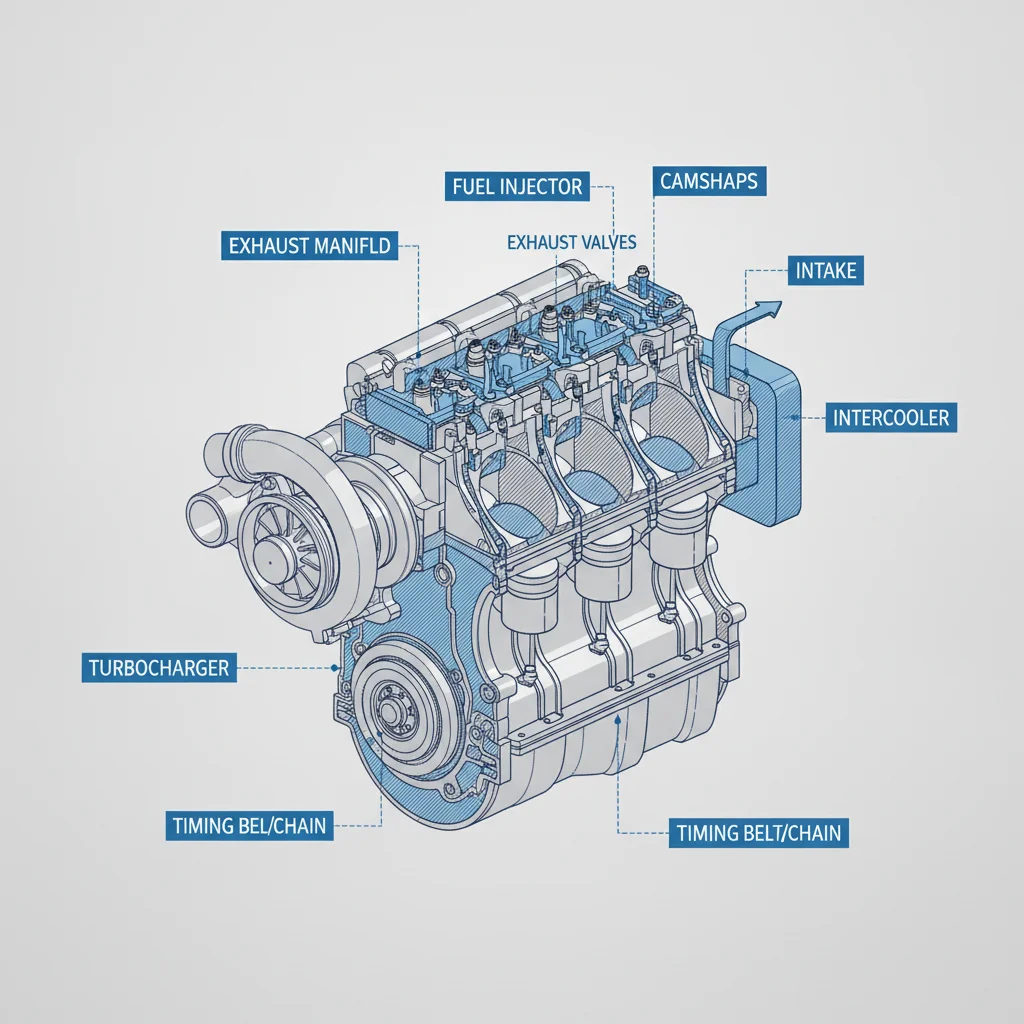
All of these systems work together under the management of the ECU. They're doing their best work when they're operating with accurate sensor data, clean components, and a driver whose habits aren't constantly working against them.
If you're curious how these concepts compare to the way electric drivetrains work, our plain-language guide to how EVs work covers the electric side of the equation clearly.
How Your Driving Habits Interact With the System
Here's something that doesn't get said enough: your car's fuel system is optimized for smooth, predictable inputs. Every time you demand sudden acceleration, hold a higher speed than necessary, or brake hard at the last moment, you're asking the system to work outside the conditions it was designed to be most efficient in.
Acceleration and Throttle Control
Hard acceleration is the single biggest fuel-economy killer in everyday driving. When you mash the throttle, the ECU commands a large fuel delivery to meet the sudden power demand. A gentle, progressive acceleration allows the engine to load up gradually, keeping fuel delivery lean and combustion efficient. The difference between aggressive and smooth acceleration on a typical urban commute can be 20–30% in fuel consumption — a staggering gap for such a simple habit change.
Speed and Aerodynamic Drag
Aerodynamic drag increases with the square of your speed. That means driving at 75 mph doesn't just require a little more fuel than 65 mph — it requires significantly more. Most cars reach their peak fuel efficiency somewhere between 45 and 55 mph. On the highway, maintaining a steady 65 rather than 75 can improve fuel economy by 10–15% on a long drive. Using cruise control on flat highways helps maintain the most efficient constant speed and removes the subtle speed fluctuations that occur with manual throttle control.
Coasting and Anticipation
Skilled, efficient drivers look further ahead. When you see a red light ahead, lifting off the throttle and coasting to a gentle stop lets the engine cut fuel delivery during deceleration — on most modern cars, the ECU actually shuts fuel injectors off during engine braking. This recovers some of the kinetic energy that would otherwise be turned into heat by your brakes. The habit of anticipating stops and coasting is one of the most consistently effective techniques fuel-economy enthusiasts use.
Aggressive Driving Erases Technology Gains
Variable valve timing, cylinder deactivation, and other efficiency systems are calibrated for moderate, predictable driving inputs. Frequent hard acceleration overrides these systems and forces the engine into its least efficient operating modes. The efficiency advantage of modern engines over older ones can be partially or fully lost through aggressive driving habits.
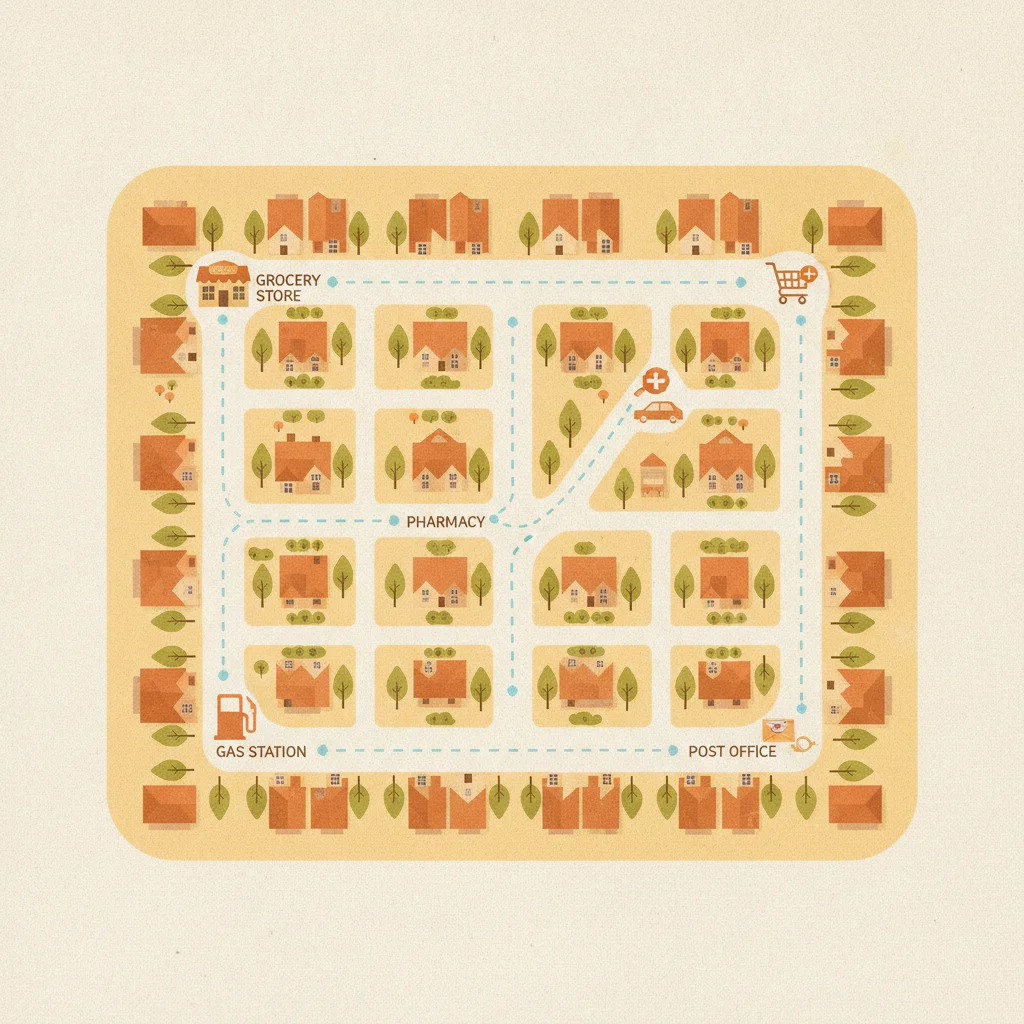
Trip structure also plays a bigger role than most drivers realize. Cold engines run rich — they use more fuel until they warm up to operating temperature. If you're making three separate short trips instead of one combined outing, you're taking three cold-start fuel penalties instead of one. Trip chaining — combining errands into a single outing — is one of the easiest structural changes you can make to reduce weekly fuel consumption.
Maintenance That Keeps Efficiency On Track
A fuel system is only as efficient as the components supporting it. Neglecting maintenance doesn't just risk breakdowns — it quietly erodes fuel economy in ways that are easy to miss until you're filling up noticeably more often.
Air Filter
The engine needs to breathe. A clogged air filter restricts airflow and forces the ECU to compensate with a richer fuel mixture to maintain the right combustion conditions. Replacing a severely restricted air filter can restore up to 10% in fuel economy. Check yours at every oil change and replace it according to your manufacturer's schedule — typically every 15,000–30,000 miles, or sooner in dusty environments.
Spark Plugs
Worn spark plugs misfire — they fail to ignite the fuel-air mixture cleanly, which wastes fuel and increases emissions. Modern iridium and platinum plugs last much longer than the old copper plugs (60,000–100,000 miles is typical), but they do wear eventually. Misfires from degraded plugs can reduce fuel economy by 4% or more, and in a modern engine with direct injection, consistent ignition quality is especially important.
Tire Pressure
Underinflated tires increase rolling resistance — the engine has to work harder to push the car forward. For every 1 PSI below the recommended pressure, you lose about 0.2% in fuel economy. Check your tire pressure monthly (use the number on the door placard, not the maximum on the sidewall) and inflate to the correct specification. This is free, takes two minutes, and pays off immediately.
Check Pressure When Tires Are Cold
Tire pressure rises as tires warm up during driving — typically by 4–6 PSI. Always check and adjust tire pressure when the vehicle has been sitting for at least three hours or has traveled less than a mile. Checking hot tires gives you an inaccurate reading and can lead to underinflation once they cool.
EVs Sidestep Many of These Concerns
If you're considering an electric vehicle, many of the fuel-system maintenance items in this guide — air filters feeding combustion, spark plugs, oxygen sensors — don't apply. EVs have far fewer moving parts in their powertrains. <a href="/electric-vehicles/ev-ownership-costs/ev-maintenance-basics">EV maintenance basics</a> is a helpful starting point for understanding what routine upkeep electric vehicles actually require.
Oxygen Sensors and Fuel Trims
The oxygen sensor monitors the composition of exhaust gases and feeds that data back to the ECU, which uses it to adjust fuel delivery in real time. A faulty oxygen sensor gives the ECU bad data, causing it to run either too rich or too lean. Fuel economy drops, and over time, a running-rich condition can damage the catalytic converter — an expensive repair. If your check engine light comes on, don't ignore it. It's often something straightforward like this, and addressing it quickly protects both efficiency and your wallet.
If you want a methodical way to track whether your maintenance efforts are actually moving the needle on your real-world MPG, fuel economy tracking tools and methods can help you spot changes early and catch problems before they compound.
Fuel Economy Tracking: Tools and Methods
Learn how to accurately measure your real-world MPG using manual calculations, OBD-II apps, and built-in displays — and how to use that data to spot efficiency problems early.
Fuel Efficiency Myths That Cost Drivers Money
Separates widely believed fuel economy myths from fact, covering topics like engine warm-up, premium fuel in regular cars, and more — so you stop wasting money on things that don't work.
fueleconomy.gov
The U.S. Department of Energy's official fuel economy database lets you compare EPA ratings across makes and models and calculate real-world ownership costs by fuel type.
GasBuddy
A crowd-sourced app that tracks local gas prices in real time, helping you find the lowest prices near you and log your fill-ups to monitor fuel economy over time.
Choosing the Right Fuel for Your Engine
Walk into a gas station and you're typically faced with three choices: regular (87 octane), mid-grade (89), and premium (91–93). Choosing correctly isn't about paying more for better quality — it's about matching the fuel to what the engine was designed to use.
What Octane Rating Actually Means
Octane rating measures a fuel's resistance to pre-ignition — also called knock or ping — where the fuel-air mixture ignites before the spark plug fires. High-compression engines, including most turbocharged engines, are more susceptible to knock and require higher-octane fuel to prevent it. Low-compression engines, like those in most economy cars, are designed to work perfectly with regular 87-octane fuel.
Required vs. Recommended
Your owner's manual will say one of two things: fuel is either required or recommended at a certain octane level. If the manual says premium is required, using regular will cause knock, reduce performance, and over time can cause engine damage — even though modern knock sensors will adjust timing to compensate in the short term. If premium is merely recommended, the engine will run acceptably on regular, but you may see a modest drop in power and fuel economy.
What you should never do is pay for premium when your car only requires regular. You won't get better mileage, better performance, or any other benefit — just a higher fuel bill. This is one of the most persistent fuel efficiency myths out there. Our fuel efficiency myths article covers this and other common misconceptions in detail.
Ethanol Content
Most regular gasoline in the U.S. contains up to 10% ethanol (E10). Ethanol has a lower energy density than gasoline, so fuel containing more ethanol (like E85 used in flex-fuel vehicles) produces fewer miles per gallon, even at a lower per-gallon price. Unless you're driving a flex-fuel vehicle and the price math works in your favor, standard E10 is the right everyday choice.
Building Efficient Habits From the Start
The good news about fuel efficiency is that the most impactful changes are almost entirely behavioral. The technology in your car is already doing a remarkable job — your role is to drive in ways that let it do that job well.
The Habits That Move the Needle Most
- Accelerate gently. Give yourself more space in traffic and let speed build gradually. This single habit has more impact on fuel economy than almost anything else you can do.
- Look ahead and coast. Anticipate stops and slow down gradually instead of braking hard. On most modern cars, the engine cuts fuel delivery during deceleration — you're essentially getting free deceleration.
- Keep a steady highway speed. Use cruise control on flat stretches. Avoid unnecessary speed increases that force the engine to work harder.
- Let the start-stop system do its job. Resist the urge to disable it in normal city driving. It exists specifically for stop-and-go conditions and does save meaningful fuel over time.
- Combine your errands. Cold starts are expensive in fuel terms. One warm-engine outing covering five stops beats five separate cold-start trips by a significant margin.
Don't Disable Start-Stop in City Traffic
It can feel intrusive at first, but automatic start-stop works best exactly where most drivers want to turn it off — in heavy, stop-and-go urban traffic. Give yourself a week to adjust to the feel of it. The fuel savings in city conditions are real and add up across thousands of miles of commuting.
Track a Baseline Before Making Changes
Before adopting new driving habits, record your current fuel economy over two or three fill-ups. This gives you a concrete before-and-after comparison and makes it easy to see which changes are actually working. Even a simple miles-per-gallon calculation at each fill-up is enough to spot meaningful trends.
What to Track and When
You don't need to obsess over every fill-up, but keeping an occasional eye on your fuel economy gives you early warning when something is off — whether it's a maintenance issue, a change in driving conditions, or a habit that's crept in. A simple manual calculation (miles driven divided by gallons filled) every few fill-ups is enough to stay informed. If you want more precision, OBD-II adapters and apps can show you real-time consumption data that makes the connection between your throttle inputs and fuel use immediately visible.
For detailed strategies on longer drives, maximizing fuel economy on long road trips covers route planning, speed discipline, and load management in practical detail. And if you're thinking about how transmission choice affects all of this, how transmission type affects fuel economy in real-world driving is worth a read before your next vehicle decision.
Check Pressure When Tires Are Cold
Tire pressure rises as tires warm up during driving — typically by 4–6 PSI. Always check and adjust tire pressure when the vehicle has been sitting for at least three hours or has traveled less than a mile. Checking hot tires gives you an inaccurate reading and can lead to underinflation once they cool.
EVs Sidestep Many of These Concerns
If you're considering an electric vehicle, many of the fuel-system maintenance items in this guide — air filters feeding combustion, spark plugs, oxygen sensors — don't apply. EVs have far fewer moving parts in their powertrains. <a href="/electric-vehicles/ev-ownership-costs/ev-maintenance-basics">EV maintenance basics</a> is a helpful starting point for understanding what routine upkeep electric vehicles actually require.
Fuel efficiency isn't a single switch you flip — it's the accumulated result of dozens of small decisions made consistently over time. The drivers who get the best real-world mileage aren't doing anything dramatic. They've just built habits that work with their car's systems instead of against them. Start with the basics here, and the savings will compound steadily from day one.

All claims are backed by peer-reviewed research. Sources on request.