Key Takeaways
Option A
Conventional Motor Oil
The time-tested, widely available standard.
Best for: Older vehicles, low-mileage drivers with simple engines operating in moderate conditions.
Option B
Synthetic Motor Oil
The high-performance, longer-lasting upgrade.
Best for: Modern engines, turbocharged vehicles, extreme climates, and drivers seeking extended oil change intervals.
If you drive an older, high-mileage vehicle on a tight budget
Conventional Motor Oil
Older engines designed before synthetic became standard often run fine on conventional oil. The lower per-quart cost can offset the need for slightly more frequent changes.
If you own a modern turbocharged or high-performance engine
Synthetic Motor Oil
Turbochargers generate intense heat that degrades conventional oil rapidly. Synthetic's molecular stability protects critical components far more effectively under these conditions.
If you drive in extreme hot or cold climates
Synthetic Motor Oil
Synthetic oil flows more reliably at cold startup and resists thermal breakdown in summer heat, giving your engine consistent protection year-round.
If you drive infrequently or put on very low annual mileage
Conventional Motor Oil
Low-mileage drivers who change oil on a time-based schedule rather than mileage may not see enough benefit from synthetic's longer-interval advantages to justify the extra cost.
If you want extended oil change intervals without compromising protection
Synthetic Motor Oil
Full synthetic formulations are engineered to maintain viscosity and additive integrity for 7,500 to 15,000 miles, meaningfully reducing how often you need a service appointment.
What's Actually Inside Each Bottle
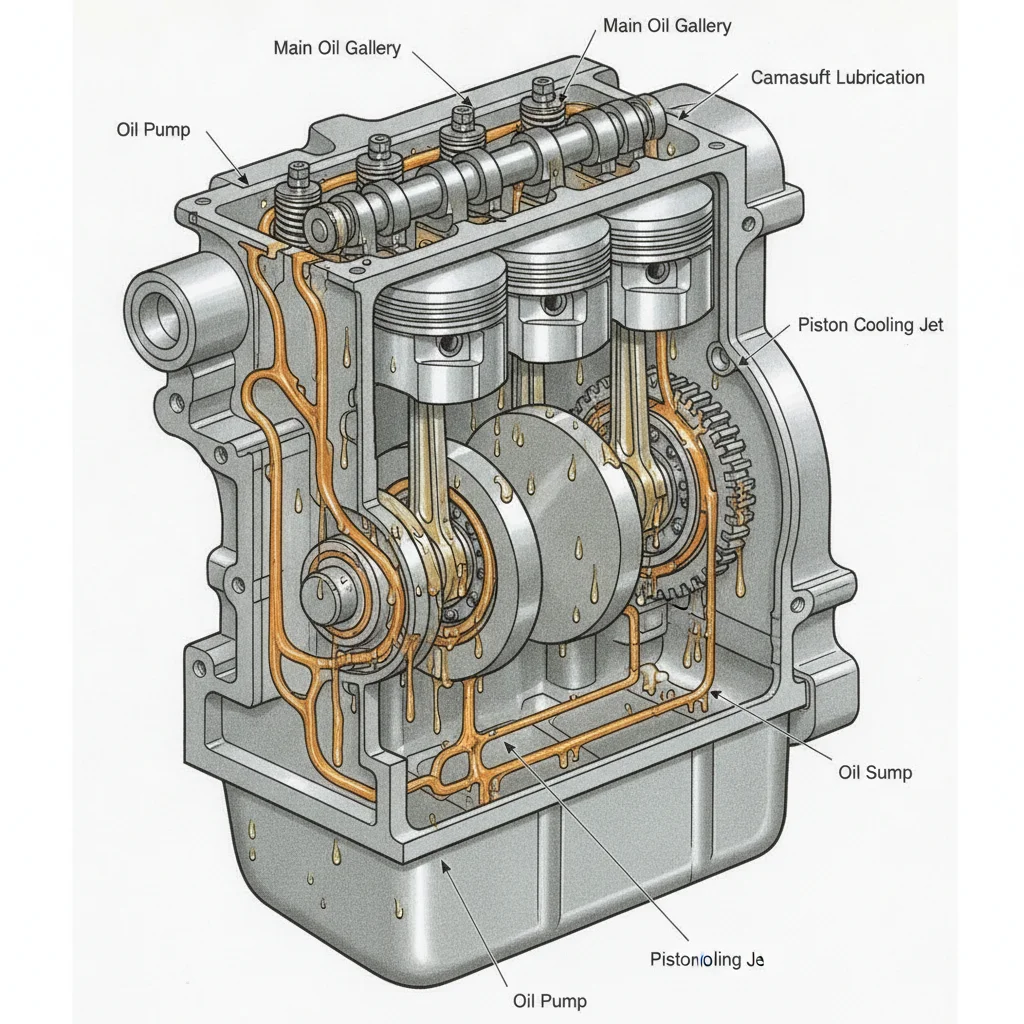
Motor oil does several jobs simultaneously: it lubricates moving metal parts, carries heat away from the combustion chamber, suspends and transports contaminants to the filter, and forms a protective film that prevents metal-on-metal contact during cold starts. The difference between conventional and synthetic oil lies in how the base stock — the majority of the fluid — is manufactured and refined.
Conventional motor oil is derived directly from crude petroleum. It's refined to remove impurities, but the refining process isn't perfect. What remains is a mix of hydrocarbon molecules of varying sizes and shapes, along with trace sulfur compounds, wax, and other naturally occurring materials. Additive packages are then blended in to boost performance characteristics like viscosity stability, oxidation resistance, and detergent action. The result is a capable lubricant — and one that has protected engines reliably for over a century.
Synthetic motor oil starts from a different premise. Rather than refining crude oil until it's good enough, synthetic oil is engineered from the molecular level up. The base stocks — most commonly polyalphaolefins (PAOs) or Group III highly refined petroleum — are chemically constructed to produce uniform molecular chains. That uniformity is the core advantage: consistent molecule size means more predictable performance across a wider range of temperatures, less volatility (meaning less oil burns off during operation), and greater resistance to oxidative breakdown over time.
It's worth noting that "full synthetic" doesn't mean petroleum-free. Most synthetics still originate from crude oil, just refined and restructured to a far higher degree. What you're paying for is precision engineering, not an entirely different raw material. For a deeper look at what those labels actually mean — including viscosity grades and API certification codes — see how to read motor oil specifications.
Head-to-Head: How They Compare Across Key Criteria
When choosing between conventional and synthetic oil, it helps to look at specific performance dimensions rather than making a broad judgment. The two oils aren't equally suited to every situation — and neither is universally superior in every metric that matters to every driver.
| Criterion | Conventional Oil | Synthetic Oil |
|---|---|---|
| Average cost per quart | $4–$7 | $8–$13 |
| Typical change interval | 3,000–5,000 miles | 7,500–15,000 miles |
| Cold-start performance | Slower flow at low temps | Superior cold-pour fluidity |
| High-temperature stability | Degrades faster under heat | Resists oxidation longer |
| Turbo engine suitability | Not recommended | Required by most manufacturers |
| Molecular consistency | Variable molecule sizes | Engineered uniform molecules |
| Availability | Universal | Universal |
| Compatibility with older engines | Fully compatible | Fully compatible (modern formulas) |
70%+
New U.S. vehicles specifying synthetic oil
Industry estimates suggest more than 70% of new passenger vehicles sold in the U.S. now carry factory specifications for full synthetic motor oil.
10,000–15,000 mi
Typical full synthetic change interval
Most major synthetic oil brands and automakers support intervals of 10,000 to 15,000 miles under normal driving conditions with full synthetic formulations.
~40%
Engine wear occurring at cold startup
Engineering studies cited by the American Petroleum Institute estimate a significant share of total engine wear happens in the first seconds before oil reaches operating pressure.
$30–$50
Typical annual cost difference, synthetic vs. conventional
When accounting for fewer change intervals, the real annual cost gap between synthetic and conventional oil services often narrows to under $50 for most drivers.
The cost gap is real but often overstated once you factor in change intervals. A conventional oil change might run $35–$55 at a quick-lube shop; a full synthetic service typically costs $65–$100. But if synthetic allows you to go 10,000 miles between changes versus 5,000 for conventional, you're paying roughly the same amount per mile of protection — sometimes less with synthetic, once you account for your time and the shop's fees.
Temperature performance is where synthetic earns its reputation most clearly. In cold weather, conventional oil thickens and flows slowly at startup — the period when most engine wear actually occurs. Synthetic oil's engineered viscosity profile allows it to reach critical engine surfaces faster at sub-zero temperatures. In high heat, conventional oil breaks down (oxidizes) more quickly, thickening as it degrades and losing its ability to flow freely. Synthetic resists this process substantially longer.
What Your Owner's Manual Actually Says
This is the section most oil change conversations skip — and it matters more than anything a shop attendant recommends. Your vehicle's owner's manual contains the manufacturer's oil specification, and following it is the single most important variable in keeping your engine warranty intact and your engine healthy.
As of the mid-2010s, the majority of new passenger vehicles sold in the United States are factory-specified for full synthetic oil. Automakers including BMW, Mercedes-Benz, Honda, Ford, and General Motors have moved aggressively toward synthetic-only specifications for their modern engine designs. This is partly driven by tighter manufacturing tolerances (modern engines have smaller clearances between moving parts, requiring oil that flows precisely), partly by the demands of turbocharged engines (now found on most new vehicles, including economy cars), and partly by fuel economy requirements that mandate thinner viscosity grades like 0W-20 that only synthetic can reliably deliver.
When Your Manual Specifies a Viscosity Grade
Manufacturer oil specifications include both the type (conventional, synthetic) and the viscosity grade — such as 0W-20 or 5W-30. Modern thin-grade oils like 0W-16 and 0W-20 are almost exclusively available in synthetic formulations because conventional oil cannot reliably maintain such low cold-pour viscosity. If your manual calls for 0W-20, you're effectively required to use synthetic regardless of what the service advisor recommends. Using a heavier grade to cut costs can reduce fuel economy and, in some engines, affect variable valve timing systems that depend on precise oil pressure.
If your manual specifies synthetic, using conventional oil isn't a neutral choice — it's a departure from spec that can affect both engine longevity and your warranty coverage. Conversely, if your manual calls for conventional oil (common in many vehicles built before 2005), upgrading to synthetic won't harm your engine. The old concern about synthetic oil causing leaks in older engines was tied to a specific additive found in early synthetic formulations; modern synthetics are fully compatible with contemporary and legacy engine seals.
One scenario worth flagging: high-mileage vehicles. Once a car crosses roughly 75,000 miles, some owners switch to a high-mileage oil — a category that exists in both conventional and synthetic formulations. These blends contain seal conditioners and additional detergents designed to address the wear patterns of aging engines. Whether you choose conventional or synthetic in this category depends on the same criteria as any other vehicle, weighted against your engine's specific condition.
Driving Conditions That Tip the Balance
If you've read your manual and it gives you latitude (some manufacturers allow either, particularly for older models), your driving conditions become the deciding factor.
Short trips and stop-and-go driving
Engines that rarely reach full operating temperature — common in urban commuters making multiple short trips — accumulate moisture and combustion byproducts in the oil faster than highway drivers. Synthetic oil's superior detergent action and resistance to oxidation make it a better choice for this use pattern, even if your manual doesn't require it.
Towing and hauling
Towing puts sustained thermal stress on an engine. Oil temperatures climb higher and stay there longer. Conventional oil degrades faster under these conditions; synthetic maintains its protective viscosity more reliably. Most truck and SUV manufacturers specify synthetic for towing applications regardless of what they allow for standard driving.
Extreme cold climates
If you regularly start a vehicle in temperatures below 0°F, the oil's cold-pour properties become critical. Synthetic oils are formulated to flow at temperatures where conventional oils approach the consistency of molasses, protecting bearings and cylinder walls during those first critical seconds of startup.

Track days and performance driving
High-RPM, sustained performance driving generates heat that overwhelms conventional oil relatively quickly. If you drive a performance vehicle hard on a regular basis, synthetic isn't optional — it's the baseline.
For drivers wondering how these conditions map to actual change intervals, oil change intervals by driving condition walks through the logic in full detail.
Synthetic Blends: The Middle Option
Between full conventional and full synthetic sits a third category: synthetic blend (also called semi-synthetic) oil. These products mix conventional base stock with a portion of synthetic base stock — typically 20–30% synthetic — and are priced accordingly, usually $10–$20 less per service than full synthetic.
Synthetic blends offer a genuine middle ground for drivers whose engines don't require full synthetic but who want better oxidation resistance and cold-start performance than conventional alone provides. They're particularly common in light trucks and SUVs where manufacturers allow either conventional or synthetic but the vehicles see occasional towing or off-road use. The trade-off is that you get neither the full cost savings of conventional nor the full performance ceiling of synthetic — but for moderate-use driving, the gap rarely matters in practice.
If you're considering doing your own oil changes with a synthetic blend or full synthetic product, the trade-offs of DIY oil changes covers what you need to know before you drain that first quart.
The Bottom Line on Cost and Value
The conventional-vs.-synthetic debate often gets framed as a pure cost question, but that framing misses the actual variable: cost per mile of protection, not cost per quart or cost per service.
Run the math on a 15,000-mile year. Using conventional oil at a 5,000-mile interval means three oil changes annually. Using full synthetic at a 10,000-mile interval means one to two. Even if each synthetic service costs $30 more than a conventional one, the annual cost difference narrows dramatically — and may favor synthetic once you account for your time.
The more meaningful question for most drivers is whether their specific engine and driving profile requires synthetic's additional capabilities. For a 2020 turbocharged four-cylinder commuter car in Minnesota, the answer is almost certainly yes — and the manufacturer has already made that decision for you. For a 2003 naturally aspirated V6 doing 8,000 miles per year in mild Southern California weather, conventional oil with regular changes does the job at lower cost.
For a deeper look at whether the upgrade makes financial and mechanical sense for your particular situation, when synthetic oil is worth the cost breaks down the decision by vehicle type and use case.

All claims are backed by peer-reviewed research. Sources on request.