
Key Takeaways
Set your tire pressure to the door-jamb specification — not the sidewall number — and check it cold in the morning before any driving. Warm tires read artificially high and can lead you to under-inflate.
Tire pressure is one of the few pre-trip checks that costs nothing and has a measurable, immediate impact on rolling resistance and fuel consumption.
On hilly highway stretches, turn off cruise control and let your speed drop 3–5 mph on steep grades rather than letting the system hammer the throttle to maintain pace. You'll recover most of the speed on the downslope.
Cruise control is optimized for speed consistency, not fuel efficiency — on grades, maintaining speed costs disproportionately more fuel than the modest speed loss costs in time.
Use your AC's recirculation mode on hot days. It cools air that's already been conditioned rather than drawing in hot outside air, significantly reducing how hard the compressor has to work.
Recirculation mode can reduce AC compressor load noticeably on extremely hot days, which has a direct effect on engine load and fuel consumption.
Why Road Trips Are a Unique Fuel Economy Challenge
Most fuel economy advice is designed for everyday driving — commutes, errands, city loops. A long road trip introduces a completely different set of variables: sustained high speeds, heavy cargo loads, unfamiliar terrain, and hours of continuous climate control use. Each of these factors stacks on top of the others, and the result is often a real-world MPG figure that falls well short of what your window sticker promised.
The good news is that road trips are also one of the most controllable driving environments you'll encounter. You can choose your route, manage your speed, decide what to pack, and plan your fuel stops in advance. Unlike stop-and-go city driving — where traffic dictates a lot of your behavior — highway driving puts most of the efficiency variables directly in your hands. Understanding how city and highway driving burn fuel differently helps put road-trip-specific strategies in context.
This guide walks through every major efficiency lever available to you before and during a long drive, in the order that matters most. We'll start with the highest-impact changes and work toward the finer details — so even if you only apply the first two or three sections, you'll come out ahead.
Pre-Trip Preparation: Setting the Stage for Efficiency
The single most overlooked efficiency opportunity happens before you even start the engine. A few straightforward mechanical checks can make the difference between hitting your car's rated highway MPG and falling several miles per gallon short of it.
Tire Pressure
Underinflated tires increase rolling resistance — the energy your engine must constantly overcome to keep the car moving. According to the U.S. Department of Energy, you can improve your gas mileage by up to 0.5–3% simply by keeping tires inflated to the proper pressure. That might sound small in isolation, but over 1,500 miles of highway driving, it translates to a meaningful volume of fuel.
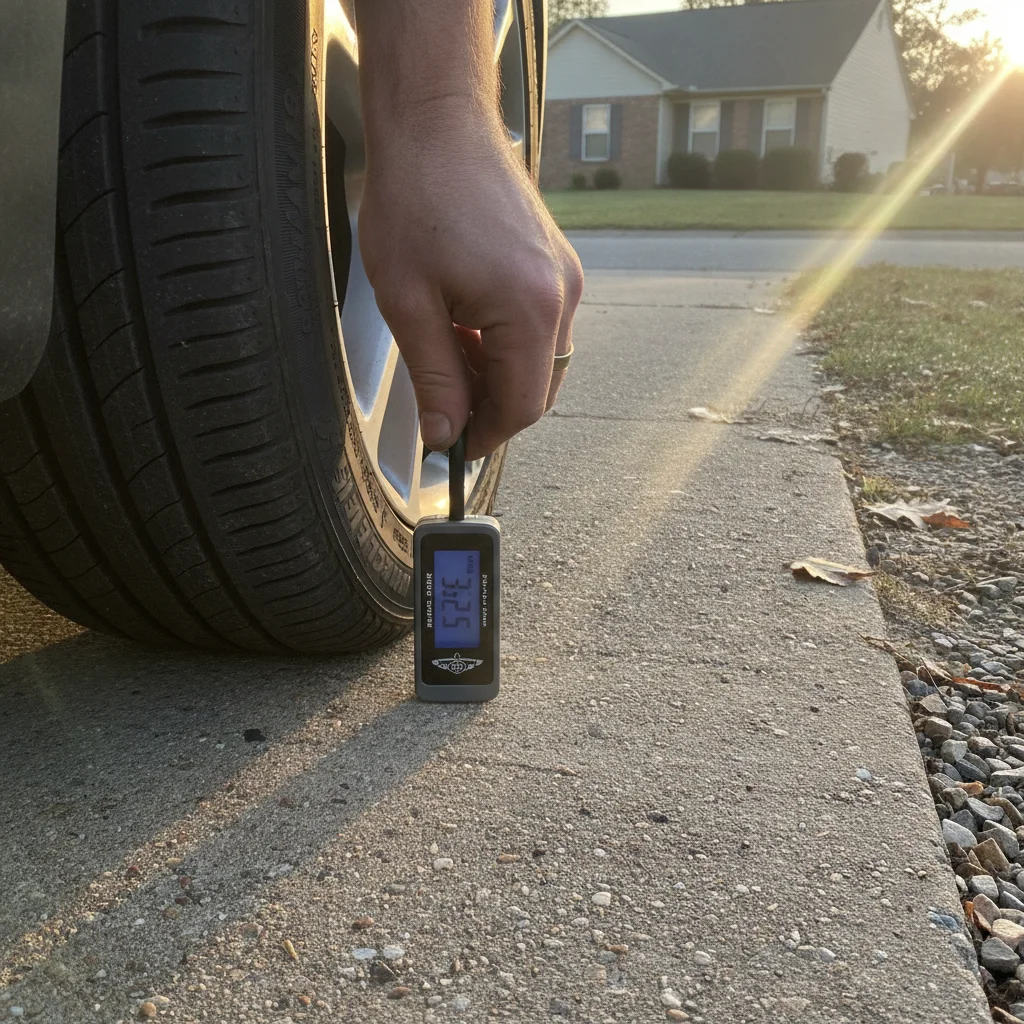
Check your tire pressure the morning of departure, before the tires warm up. The correct pressure is on the sticker inside your driver's door jamb — not on the tire sidewall, which lists the maximum pressure, not the recommended one.
Check Tire Pressure Before You Leave the Driveway
Tire pressure should always be checked cold — meaning before you've driven more than a mile. Even driving to a gas station to use their air gauge introduces heat that inflates the reading slightly. Keep a quality digital tire gauge in your glove box and check all four tires (plus the spare) the morning of departure. This five-minute check is one of the highest-return prep tasks available to you.
Engine Air Filter
A clogged air filter forces your engine to work harder to pull in the air it needs for combustion. If you haven't replaced yours in the past 15,000–20,000 miles, it's worth checking. On older vehicles with carbureted engines, a dirty filter can directly reduce fuel economy. On modern fuel-injected vehicles, the effect is smaller but still real — and a clean filter is inexpensive insurance before a long haul.
Oil and Fluids
Fresh engine oil reduces internal friction. If you're within a thousand miles of your next oil change interval, do it before the trip rather than after — you'll benefit from the full 3,000–5,000 miles of efficient lubrication rather than arriving home to an overdue change. Using the viscosity grade your owner's manual specifies (not a heavier grade) also supports fuel economy.
Wheel Alignment
Misaligned wheels create uneven tire drag. If your car has been pulling to one side or your steering wheel isn't centered when you drive straight, have alignment checked. It's one of those maintenance items that quietly drains efficiency across every mile you drive.
Set your tire pressure to the door-jamb specification — not the sidewall number — and check it cold in the morning before any driving. Warm tires read artificially high and can lead you to under-inflate.
Tire pressure is one of the few pre-trip checks that costs nothing and has a measurable, immediate impact on rolling resistance and fuel consumption.
On hilly highway stretches, turn off cruise control and let your speed drop 3–5 mph on steep grades rather than letting the system hammer the throttle to maintain pace. You'll recover most of the speed on the downslope.
Cruise control is optimized for speed consistency, not fuel efficiency — on grades, maintaining speed costs disproportionately more fuel than the modest speed loss costs in time.
Use your AC's recirculation mode on hot days. It cools air that's already been conditioned rather than drawing in hot outside air, significantly reducing how hard the compressor has to work.
Recirculation mode can reduce AC compressor load noticeably on extremely hot days, which has a direct effect on engine load and fuel consumption.
Speed Discipline: The Single Biggest Lever You Have
If you're only going to change one thing about how you drive on a road trip, change your cruising speed. Aerodynamic drag increases with the square of your speed — meaning as your speed goes up, air resistance grows disproportionately fast. The practical consequence is that fuel consumption rises sharply as you push past 60 mph.
10–25%
MPG loss driving 75 vs. 65 mph
Aerodynamic drag increases with the square of speed; the U.S. Department of Energy estimates significant fuel economy loss above 50 mph.
3%
MPG gain from proper tire inflation
The U.S. Department of Energy estimates up to 3% fuel economy improvement when tires are kept at the correct pressure.
25%
Fuel economy reduction with rooftop cargo box
The EPA estimates a loaded rooftop cargo carrier can reduce highway fuel economy by up to 25% compared to driving without one.
5–25%
Fuel economy cost of running AC
According to the U.S. Department of Energy, air conditioning can reduce fuel economy by 5–25% depending on conditions and vehicle type.
$0.20–$0.50
Per-gallon premium at tourist-area fuel stops
Stations at highway exits near national parks and resort areas routinely charge a significant premium over nearby off-highway alternatives.
The EPA's fuel economy ratings don't fully capture this effect because they're derived from standardized test cycles, not real sustained highway speeds. At 75 mph — a common real-world highway speed — most vehicles are already operating outside their efficiency sweet spot. At 80–85 mph, which is common in Western states with higher speed limits, fuel economy on many vehicles drops 15–25% compared to 65 mph.
Using Cruise Control Strategically
On flat to gently rolling terrain, cruise control maintains a more consistent speed than most drivers do manually, which improves efficiency. The key word is "consistent" — constant speed burns less fuel than gradual acceleration and deceleration cycles.
On hilly terrain, however, standard cruise control can work against you. It will often hold the set speed aggressively up grades, causing the engine to downshift and rev hard — burning extra fuel to maintain pace on a climb that your momentum would have partially carried you through anyway. On very hilly routes, switching to manual speed management on grades is often more efficient.
Gradual Acceleration After Stops
Rest stops, fuel stops, and slow zones all require acceleration back to highway speed. How quickly you accelerate matters. Flooring it back to 70 mph burns significantly more fuel than a moderate 15–20 second ramp-up. Think of it as treating your throttle like a volume knob rather than a light switch.
“The most fuel-efficient drivers aren't the ones with special techniques — they're the ones who treat the accelerator and brake as things to use as little as possible. Momentum is free fuel.”
— John Nielsen, Managing Director of Automotive Engineering and Repair, AAA
Load Management: What You Carry Costs You
Every extra pound your engine moves down the road requires fuel. On a road trip where cargo weight can easily be 200–600 lbs higher than your normal commute configuration, this is a real variable — not a rounding error.
Roof Racks and Cargo Carriers
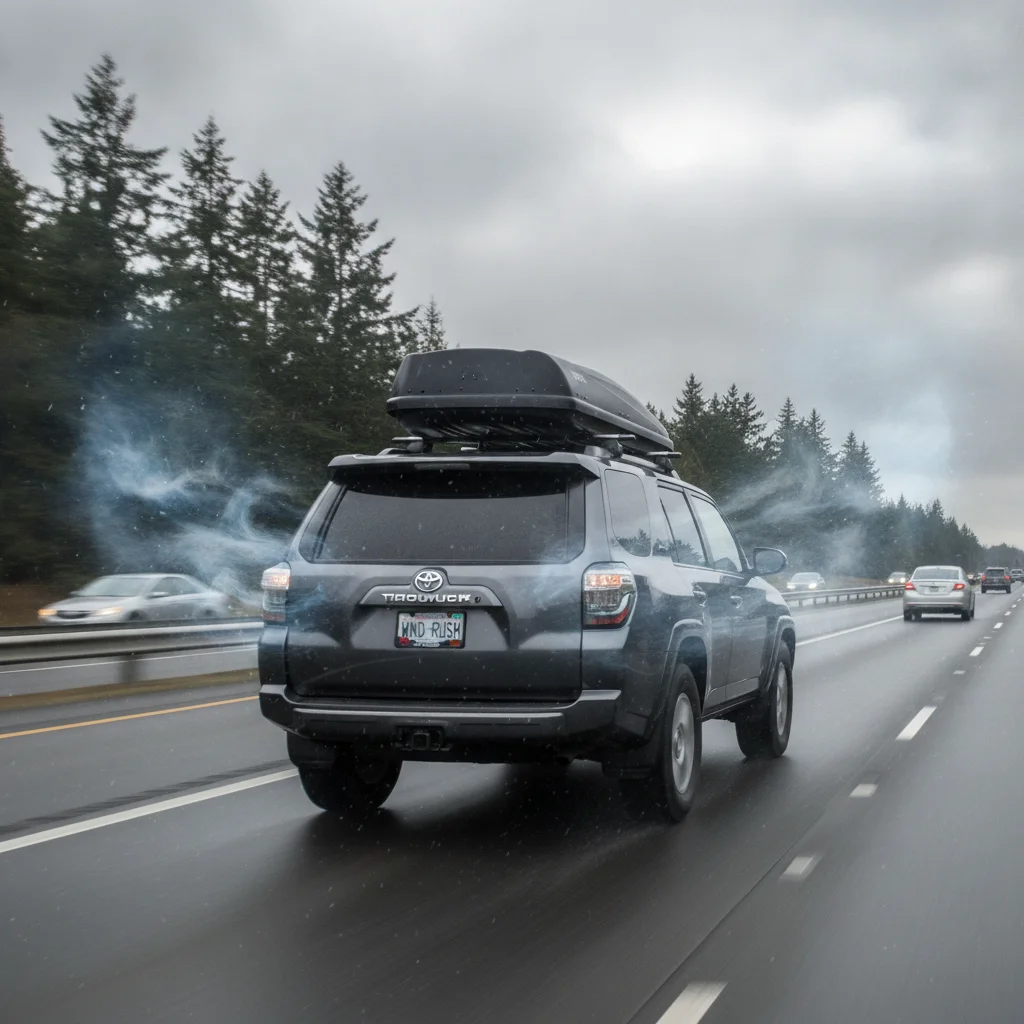
A bare roof rack — even without cargo on it — can reduce fuel economy by 2–8% at highway speeds due to added aerodynamic drag. A loaded rooftop cargo box can cut efficiency by 10–25% depending on its size, shape, and how it's packed. If your road trip luggage can fit in the trunk or interior, remove the rack before you leave.
If you must use a roof carrier, a aerodynamically shaped cargo box performs better than an open basket, and keeping the load low and centered reduces drag further. Hitch-mounted cargo carriers have less aerodynamic impact than roof-mounted ones, which is worth factoring in when you choose between the two.
Interior and Trunk Weight
Pack what you genuinely need, but audit what's living in your car full-time. A trunk that's been accumulating tools, camping gear, and sports equipment over months can add surprising weight before you even pack for the trip itself. Clear it out before you load up.
Full Gas Tank Weight
A full tank of gas in a 15-gallon tank weighs about 91 pounds. Some ultra-efficiency-focused drivers prefer to keep tanks around half full to save weight. In practice, this rarely pencils out meaningfully unless you're driving a very fuel-sensitive vehicle and have frequent fueling options available.
Don't Over-Inflate Tires to Save Fuel
Some drivers assume that higher tire pressure means less rolling resistance and better efficiency — so they inflate above the recommended spec. This is a risky shortcut. Over-inflated tires have a smaller contact patch, which reduces braking grip and handling response. The fuel savings from over-inflation are marginal at best; the safety downside is real. Always inflate to the manufacturer's specification, not higher.
Don't Top Off Your Fuel Tank After the Pump Clicks
Continuing to pump fuel after the automatic shutoff triggers can force liquid gasoline into the evaporative emissions canister — a component designed to capture vapors only. This can damage the canister over time and cause the check engine light to illuminate. Stop at the first click and save yourself a maintenance headache.
Route Planning and Driving Conditions
The path you choose has a direct impact on how much fuel you use — and not always in the way you'd expect. Shorter isn't always more efficient if the shorter route involves more elevation gain, more stops, or slower average speeds.
Elevation Changes
Climbing burns more fuel than flat driving. Descending recovers some of that energy through momentum, but not all of it — braking dissipates energy as heat. If two routes are similar in distance but one involves a mountain pass, the flatland route will almost always be more efficient for a gasoline vehicle, even if it's slightly longer in miles.
Traffic Avoidance
Highway traffic in stop-and-go patterns on a long trip can turn your 30 MPG highway car into something behaving closer to city fuel economy. Departing early in the morning or later in the evening to skip congested windows around major cities is one of the most effective efficiency choices you can make on a long trip — and it makes the drive less stressful at the same time.
Road Surface and Wind
Headwinds increase aerodynamic drag in the same way higher speeds do. A 20 mph headwind effectively adds 20 mph to the wind resistance your car is fighting. If a particular travel day has strong forecast headwinds, leaving earlier (when winds are typically calmer in many regions) or adjusting your speed down slightly can partially offset the effect. Tailwinds, on the other hand, provide a genuine efficiency benefit — enjoy them.
Rough road surfaces also increase rolling resistance. Interstate highways in good condition are more efficient to travel than worn or chip-seal state routes, even at identical speeds.
Hybrids Behave Differently on the Highway
If you're driving a hybrid, some of these dynamics are reversed from what you'd expect. Hybrids typically shine in city driving where regenerative braking recovers energy, and they lose some of their efficiency advantage on sustained highway drives compared to their EPA city ratings. That said, all of the speed discipline and load management principles still apply — hybrids just start from a more efficient baseline.
GPS Routing Apps Don't Optimize for Fuel
Standard navigation apps like Google Maps and Waze optimize primarily for time, not fuel efficiency. A route that's 10 minutes faster due to higher speed limits or more direct routing may cost you meaningfully more in fuel. Apple Maps now offers an 'eco-friendly route' option for some vehicles, and some automakers' built-in navigation includes fuel-aware routing. It's worth checking what options your specific system or app offers before defaulting to the fastest route.
Climate Control and Accessories: The Hidden Drain
Air conditioning is run by a compressor that places a direct mechanical load on your engine. At highway speeds, running the AC can reduce fuel economy by 5–25% depending on ambient temperature, how hard the system is working, and your vehicle's overall power output. On a smaller four-cylinder engine, the percentage impact is larger than on a V6 or V8 simply because AC represents a larger share of the total power being produced.
Windows vs. AC: The Real Answer
You've probably heard that at highway speeds, rolling windows down creates enough drag that it costs more than running the AC. This is partially true — but the crossover point varies by vehicle and is generally somewhere around 45–55 mph. At true highway speeds of 65–75 mph, closing the windows and running AC at a moderate setting is usually more efficient than driving with windows fully down.
The practical sweet spot: set your AC to around 72–74°F rather than pushing it to the coldest setting, use recirculation mode (which cools air that's already been conditioned rather than pulling in hot outside air), and park in shade during rest stops to reduce cabin heat load when you return to the vehicle.
Other Electrical Loads
Phone chargers, seat heaters, rear window defrosters, and entertainment systems all draw current that your alternator must generate — which adds a small additional load to your engine. Individually these are minor. Collectively, running every accessory simultaneously adds up. On a hot day where AC is already working hard, reducing other electrical loads has a real effect on a long trip.
Set your tire pressure to the door-jamb specification — not the sidewall number — and check it cold in the morning before any driving. Warm tires read artificially high and can lead you to under-inflate.
Tire pressure is one of the few pre-trip checks that costs nothing and has a measurable, immediate impact on rolling resistance and fuel consumption.
On hilly highway stretches, turn off cruise control and let your speed drop 3–5 mph on steep grades rather than letting the system hammer the throttle to maintain pace. You'll recover most of the speed on the downslope.
Cruise control is optimized for speed consistency, not fuel efficiency — on grades, maintaining speed costs disproportionately more fuel than the modest speed loss costs in time.
Use your AC's recirculation mode on hot days. It cools air that's already been conditioned rather than drawing in hot outside air, significantly reducing how hard the compressor has to work.
Recirculation mode can reduce AC compressor load noticeably on extremely hot days, which has a direct effect on engine load and fuel consumption.
Heated vs. Cooled Seats
Heated seats are actually more efficient than cabin heating systems on short trips because they warm you directly rather than heating all the air around you. On a hot summer road trip, cooled seats (if your vehicle has them) can supplement AC and allow you to run a slightly higher thermostat setting — marginally reducing compressor load.
Fueling Strategy: When and Where to Fill Up
Where and how you fuel up on a road trip isn't just a cost question — it affects whether you're driving with an inefficiently heavy tank or making unnecessary detours that add miles to your trip.
Fuel Price Geography
Gas prices vary significantly by region, state, and proximity to tourist destinations. Stations directly adjacent to highway exits in resort areas or national park corridors frequently charge 20–50 cents per gallon more than stations a few miles off the main route. Planning your major fill-ups to occur before entering high-cost zones — and keeping your tank healthy enough to bypass expensive stops — is a practical money-saver.
Apps like GasBuddy and Waze surface real-time price data along your route, making it straightforward to identify where the value stops are without much extra research.
Plan Fuel Stops Before Entering Remote Stretches
On long road trips through the American West, rural stretches of 80–150 miles with no fuel available are common. Running your tank below a quarter on these segments isn't just financially risky — it can leave you stranded. Before departing each leg of a remote stretch, confirm the next available fuel stop and ensure you have comfortable margin to reach it. A fuel planning app or a quick map check takes two minutes and eliminates a genuinely serious risk.
EV Road Trip Costs Work Very Differently
The efficiency and fueling strategies in this guide are written for gasoline vehicles. If you're driving an electric vehicle, the variables are fundamentally different — charging network pricing, battery degradation from fast charging, and weather impacts on range all require a separate planning approach. Don't apply gas-vehicle fueling logic to EV trip planning, as it can lead to significant range miscalculations.
Optimal Fill Level
Running your tank very low introduces risk on long stretches between stations. Consistently filling to about three-quarters full rather than topping off completely keeps weight reasonable and ensures you have enough buffer to seek better prices ahead. Topping off after the pump clicks off can also force gasoline into the evaporative emissions canister, which is bad for your fuel system and wastes money.
Fuel Grade
If your vehicle requires regular unleaded, premium fuel provides no benefit — it's pure extra cost. If your vehicle recommends premium but doesn't require it, using regular may cause modest knock retarding by the engine management system, which slightly reduces power and efficiency. For vehicles that require premium (typically turbocharged or high-compression engines), using regular can cause enough knock retarding to noticeably reduce fuel economy — at which point the price savings partially or fully evaporate.
Tracking Your Efficiency in Real Time
Most modern vehicles display an instantaneous or average MPG readout in the instrument cluster, and it's one of the most useful feedback tools you have. Watching it during acceleration, at different speeds, and with or without AC gives you a concrete sense of how your driving behavior is translating into fuel use in the moment — not after you've already spent the fuel.
For a more complete picture, dedicated MPG tracking tools and methods can help you compare your actual road trip performance against your EPA rating and identify the specific conditions where you're losing efficiency.
OBD-II Apps
A Bluetooth OBD-II adapter (available for $15–$40) paired with an app like Torque Pro or Car Scanner gives you access to real-time fuel trim data, throttle position, engine load, and more. For drivers who want to genuinely understand their vehicle's behavior at different speeds and conditions, this is a low-cost data source that the factory display can't match.
Manual Tank-to-Tank Calculation
The simplest tracking method still works well: reset your trip odometer at each fill-up, note the gallons dispensed at the next fill-up, and divide miles by gallons. This gives you a real-world figure unaffected by display calibration quirks. Doing this at each stop on a road trip lets you see how efficiency varied by road segment, driving conditions, or changes in your behavior.
10–25%
MPG loss driving 75 vs. 65 mph
Aerodynamic drag increases with the square of speed; the U.S. Department of Energy estimates significant fuel economy loss above 50 mph.
3%
MPG gain from proper tire inflation
The U.S. Department of Energy estimates up to 3% fuel economy improvement when tires are kept at the correct pressure.
25%
Fuel economy reduction with rooftop cargo box
The EPA estimates a loaded rooftop cargo carrier can reduce highway fuel economy by up to 25% compared to driving without one.
5–25%
Fuel economy cost of running AC
According to the U.S. Department of Energy, air conditioning can reduce fuel economy by 5–25% depending on conditions and vehicle type.
$0.20–$0.50
Per-gallon premium at tourist-area fuel stops
Stations at highway exits near national parks and resort areas routinely charge a significant premium over nearby off-highway alternatives.
If you find your road trip MPG falling significantly short of expectations, it's worth reviewing how to interpret your efficiency data to distinguish between driving behavior issues and mechanical ones.
Road Trip Efficiency for EVs vs. Gas Vehicles
Almost everything in this guide applies to gasoline-powered vehicles. Electric vehicles face a related but distinct set of efficiency challenges on long trips — range anxiety, charging station availability, and the steep efficiency penalty that high-speed driving imposes on battery range.
If you're planning a long trip in an EV, the strategy playbook is meaningfully different. Speed discipline matters even more (EV range drops sharply above 70 mph), elevation gain has a bigger proportional impact, and climate control — particularly cabin heating in cold weather — can substantially reduce how far you travel between charges. See our guide on maximizing EV range on a long road trip for strategies tailored to battery-powered travel.
The financial side also works differently. Rather than fuel price geography, EV road trippers need to manage charging network costs and understand that fast-charging stops on a road trip add up quickly — sometimes erasing the per-mile cost advantage over gasoline if you rely heavily on DC fast chargers at premium rates.
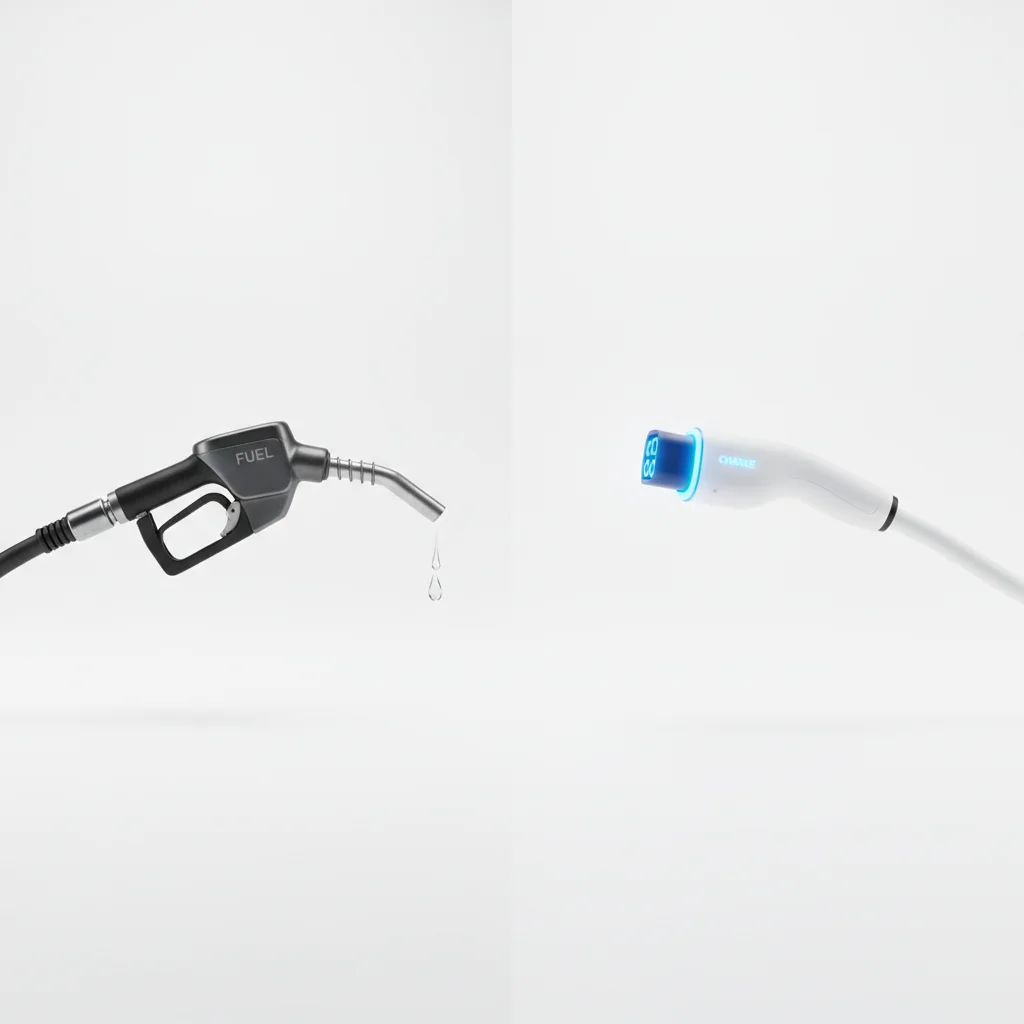
Plan Fuel Stops Before Entering Remote Stretches
On long road trips through the American West, rural stretches of 80–150 miles with no fuel available are common. Running your tank below a quarter on these segments isn't just financially risky — it can leave you stranded. Before departing each leg of a remote stretch, confirm the next available fuel stop and ensure you have comfortable margin to reach it. A fuel planning app or a quick map check takes two minutes and eliminates a genuinely serious risk.
EV Road Trip Costs Work Very Differently
The efficiency and fueling strategies in this guide are written for gasoline vehicles. If you're driving an electric vehicle, the variables are fundamentally different — charging network pricing, battery degradation from fast charging, and weather impacts on range all require a separate planning approach. Don't apply gas-vehicle fueling logic to EV trip planning, as it can lead to significant range miscalculations.
Whether you're driving a hybrid, a gas-powered SUV, or an EV, the core principle is the same: efficiency on a long trip is not a single decision — it's a series of small, compounding choices. Speed, load, tire pressure, route, and fuel strategy each contribute a few percent. Together, they can add up to 20–30% better real-world efficiency than a driver making none of these choices would achieve. That's not just better for your fuel budget — it's a more relaxed, deliberate way to travel.
GasBuddy
Real-time gas price tracker with route-based filtering. Essential for identifying the cheapest fuel stops along your planned highway route before you leave and while you're driving.
Torque Pro (OBD-II App)
Pairs with an inexpensive Bluetooth OBD-II adapter to give you real-time fuel economy, engine load, and throttle data — far more detailed than most factory displays.
Fuel Economy Tracking: Tools and Methods That Give You Real Insight
A comprehensive breakdown of how to accurately measure your real-world MPG using both manual calculations and digital tools, so you know exactly where efficiency is being lost.
Maximizing EV Range on a Long Road Trip
If you're driving an EV, this guide covers the battery-specific strategies for managing range, charging stops, and high-speed efficiency loss on long-distance drives.
Road Trip Charging Costs: Planning the Financial Side of Long-Distance EV Travel
Fast-charging costs on road trips can add up faster than expected. This guide helps EV drivers estimate, budget, and minimize charging expenses on long drives.

All claims are backed by peer-reviewed research. Sources on request.