Key Takeaways
Why Your Driving Habits Matter More Than Your Car's Badge
Automakers spend billions engineering efficient engines, but a surprising amount of that engineering gets undone in the first mile of a daily commute. The EPA's fuel economy ratings are tested under controlled conditions — smooth acceleration, steady speeds, no jackrabbit starts. Real-world driving rarely looks like that, and the gap between your window sticker and your actual MPG is almost always a behavior gap.
The good news: you don't need a new car or an expensive tune-up to close that gap. You need to understand which specific habits are costing you the most, and by how much. Some behaviors drain fuel in dramatic, measurable ways. Others are subtler, compounding losses quietly over weeks and months until your annual fuel bill is hundreds of dollars higher than it needs to be.
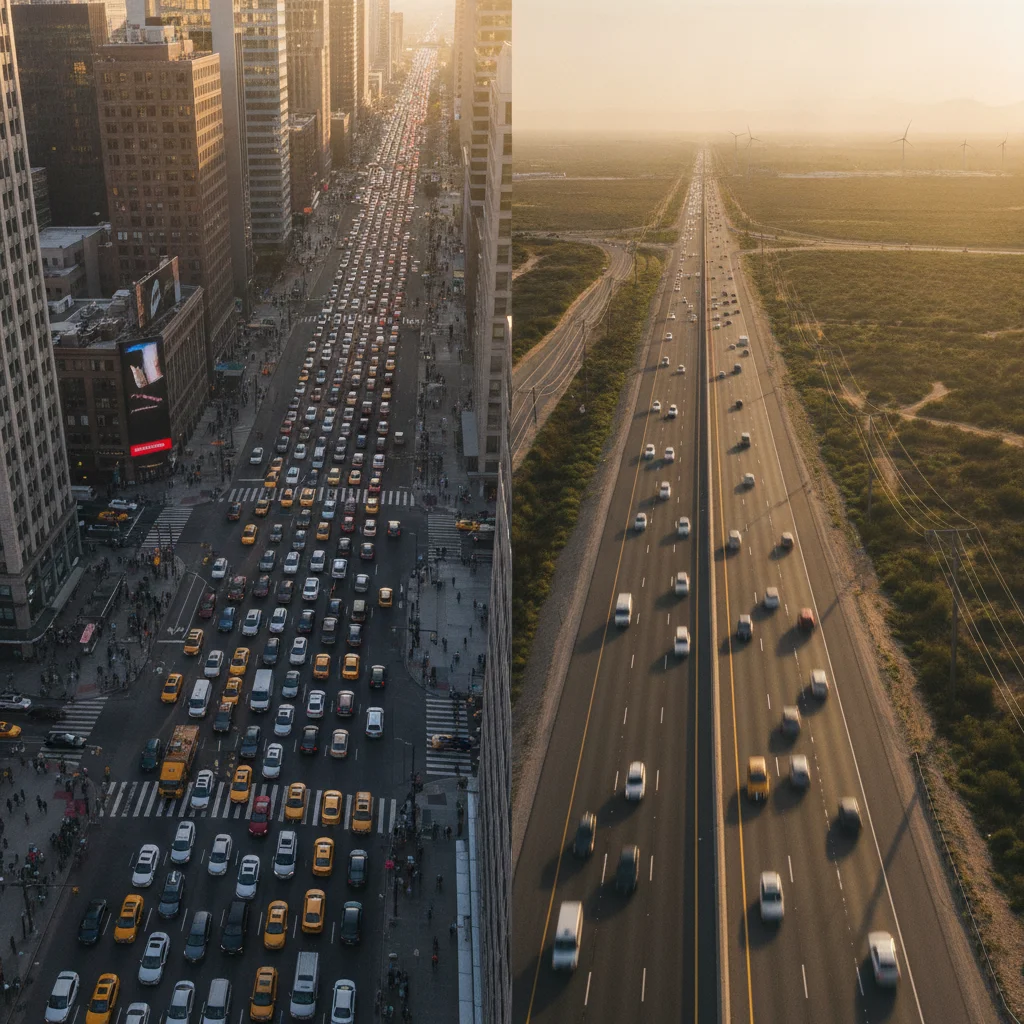
This list ranks the most damaging driving habits by their impact on fuel economy — starting with the worst offenders. If you want to understand how stop-and-go commuting and highway cruising each eat fuel differently, City Driving vs. Highway Driving: Where Your Fuel Actually Goes is worth reading alongside this. For now, let's focus on what you're doing — and what it's costing you.
The Habits Ranked by Fuel Economy Impact
Hard Acceleration from Stops
Estimated impact: Up to 30–40% reduction in MPG in city driving.
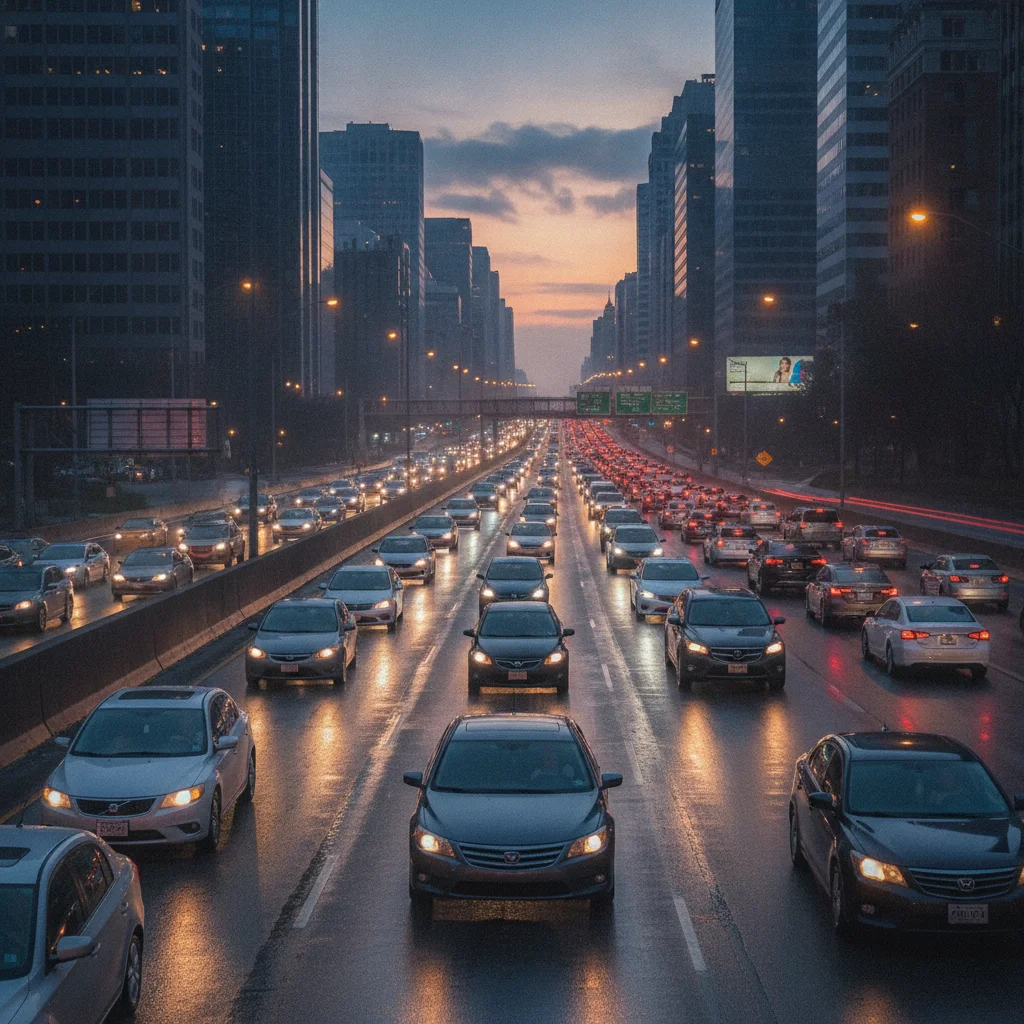
This is the heavyweight champion of fuel waste. Every time you floor the accelerator from a stoplight or a slow-speed merge, your engine demands a sudden, massive surge of fuel to generate rapid power. Your fuel injectors essentially flood the cylinders. The energy produced is largely wasted as heat and noise rather than forward momentum — and because city driving is full of stops, the habit compounds relentlessly.
The Department of Energy estimates that aggressive driving can lower your gas mileage by 15–30% on the highway and up to 40% in stop-and-go traffic. That's not a rounding error — that's the difference between 25 MPG and 15 MPG in some cases.
The fix is simpler than it sounds: accelerate as if you have a full cup of coffee on the dashboard. Smooth, steady pressure on the pedal allows the engine to build power efficiently. You'll still get up to speed — you'll just use a fraction of the fuel to do it.
[in_content_images:1]Aggressive acceleration can slash city fuel economy by up to 40% — the single costliest driving habit.
Excessive Engine Idling
Estimated impact: 0.16–0.3 gallons per hour burned at zero MPG.
Idling gets a lot of attention because the math is so stark: you're burning fuel and going nowhere. A typical passenger car consumes roughly a quarter to a half gallon of gasoline per hour while idling, depending on engine size and whether the AC is running. A large SUV or truck can burn even more.
Many drivers idle out of habit — warming up the engine on cold mornings, waiting in long drive-throughs, or sitting in a parking lot with the AC on. Modern fuel-injected engines don't need more than 30 seconds of warm-up time in most conditions. Beyond that, you're just burning money.
What Engine Idling Is Really Costing You goes deep into the data if you want the full picture. The short version: if you'll be stopped for more than 60 seconds and it's safe to do so, shutting the engine off almost always saves fuel compared to idling.
Idling burns up to half a gallon per hour while delivering exactly zero miles per gallon.
Driving Too Fast on the Highway
Estimated impact: 15–25% MPG reduction going from 65 to 80 mph.
Aerodynamic drag — the resistance your car faces pushing through air — increases with the square of your speed. That means going from 65 to 80 mph doesn't just add a little drag; it nearly doubles it. Your engine has to work significantly harder just to maintain that higher speed, and the fuel consumption climbs steeply.
The EPA's data is consistent on this point: fuel economy drops roughly 7–14% for every 10 mph above 50 mph. At 80 mph, most vehicles are operating far outside their efficiency sweet spot, which typically falls between 45 and 60 mph for most passenger cars.
Cruise control is your best friend on long highway drives. It eliminates the unconscious speed creep that happens when you're not actively watching the speedometer, and it maintains the kind of steady throttle input that engines handle most efficiently.
Every 10 mph above 50 mph costs roughly 7–14% in fuel economy — and the losses compound quickly.
Late, Hard Braking
Estimated impact: 5–15% efficiency loss in city driving cycles.
Hard braking is really just the other side of the hard acceleration coin — and they almost always go together. If you're driving with your eyes only on the car directly in front of you, you're constantly reacting: accelerating to fill gaps, then braking hard when traffic slows. Every hard brake converts forward momentum (kinetic energy your engine worked hard to create) into heat at the brake pads. That energy is simply gone.
Experienced, fuel-efficient drivers look further down the road — several cars ahead if possible. This gives them time to coast and decelerate naturally when traffic slows, reducing both brake wear and fuel use. In manual transmission vehicles, engine braking accomplishes this even more effectively.
Keeping more following distance isn't just good for fuel economy — it's foundational road safety practice. The two goals align perfectly here.
Hard braking converts your engine's hard-earned momentum into wasted heat — every stop is a fuel loss.
Running Underinflated Tires
Estimated impact: 0.2% MPG loss per 1 PSI drop below recommended pressure.
This one is almost invisible to most drivers — the tire looks fine, the car drives fine, and nothing seems wrong. But a tire that's 8 PSI below its recommended pressure (which is common among cars that haven't had tires checked in months) is rolling with significantly more resistance against the road surface. Your engine has to work harder to push the car forward.
The DOE estimates that keeping tires properly inflated can improve gas mileage by 0.5–3%. That might sound small, but it's effortless and free. Check your tire pressure monthly — the correct PSI is on the sticker inside your driver-side door jamb, not on the tire sidewall.
Tire pressure also drops naturally as temperatures fall: roughly 1 PSI for every 10°F drop in ambient temperature. Seasonal transitions are particularly important times to check.
Tires just 8 PSI low can quietly reduce fuel economy by up to 3% — a loss most drivers never notice.
Excessive Use of Air Conditioning
Estimated impact: 5–25% MPG reduction depending on conditions.
Air conditioning is one of the biggest parasitic loads on your engine. When the compressor kicks in, it can draw 5–10 horsepower from the engine — power that has to come from burning extra fuel. In city driving with frequent stops and a small engine, the AC's impact on fuel economy can be dramatic.
That said, the common advice to "roll down the windows instead" is only half right. At low speeds (under 45–50 mph), open windows create very little aerodynamic drag, so they're usually a better choice than AC. At highway speeds, the drag from open windows can actually exceed the fuel cost of running the AC — so use AC on the highway and open windows in city driving when practical.
Many modern vehicles also have an "ECO" AC mode that cycles the compressor less aggressively. Use it. And parking in shade whenever possible keeps the interior cooler so the AC doesn't have to work as hard when you start up.
AC can rob your engine of up to 10 horsepower — use open windows in city driving to ease the load.
Carrying Unnecessary Weight
Estimated impact: 1–2% MPG loss per 100 lbs of extra weight.
Your engine has to accelerate and move everything in and on the vehicle — not just the car itself. Extra weight means extra fuel at every acceleration, on every hill, through every stoplight cycle. For the average passenger car, every 100 extra pounds reduces fuel economy by roughly 1–2%.
Many drivers are carrying trunk cargo they've forgotten about: gym bags, tools, sports equipment, sandbags left over from winter. It adds up. A 300-pound overload on a 30 MPG car might push you to 28–29 MPG — not catastrophic, but a persistent, unnecessary drag.
How Much Cargo Weight Drains Your Fuel Economy breaks down the math in more detail, including how passenger weight factors in over annual mileage. The fix is simple: clear out what you don't need to carry.
Every 100 pounds of unnecessary cargo quietly costs 1–2% in fuel economy on every single trip.
Using Roof Racks and Cargo Carriers When Empty
Estimated impact: 2–8% MPG reduction for an empty rooftop cargo box at highway speeds.
A rooftop cargo box is wonderfully useful on a ski trip. Left on the car for the rest of the year, it's a constant aerodynamic penalty. Even when empty, a rooftop carrier dramatically disrupts the airflow over the vehicle, creating drag that your engine must continuously overcome — especially at highway speeds.
The DOE has found that an aerodynamic rooftop cargo box reduces fuel economy by 2–8% in city driving and 10–25% at highway speeds compared to driving without the carrier. A less aerodynamic box or a roof-mounted bike rack performs even worse.
The simple rule: remove roof-mounted accessories when they're not in use. It takes 10 minutes and the fuel savings on a long commute or road trip are real and measurable.
An empty roof cargo box can cut highway fuel economy by up to 25% — remove it when it's not in use.
Making Multiple Short, Cold-Engine Trips
Estimated impact: Engines running cold use 20–50% more fuel until fully warmed up.
A cold engine is an inefficient engine. Modern fuel injection systems compensate for cold starts by running a richer fuel mixture — more fuel per combustion cycle — until the engine reaches operating temperature, which typically takes 5–15 minutes depending on ambient temperature and driving conditions. Every short trip that ends before the engine warms up means most of your driving happened in that inefficient cold phase.
Drivers who make several short, separate trips throughout the day are essentially suffering this cold-start penalty multiple times. One driver making four separate 1-mile trips might burn significantly more fuel than another driver who combines all four stops into a single 4-mile loop with a warm engine throughout.
Trip Chaining: The Driving Habit That Quietly Saves Gallons Per Week is a simple strategy that directly addresses this: plan your errands as a single loop rather than separate outings. The fuel savings are consistent and significant over a full year.
Cold engines burn 20–50% more fuel — multiple short trips mean suffering that penalty over and over.
Neglecting Routine Maintenance
Estimated impact: 4–40% MPG loss depending on the neglected service item.
This one sits at the intersection of habits and maintenance, but it belongs on this list because it's a choice — a habit of omission. A clogged air filter forces your engine to work harder to pull in air for combustion. Dirty engine oil increases internal friction. Worn spark plugs create incomplete combustion, wasting fuel. A faulty oxygen sensor can cause the engine management system to run an overly rich fuel mixture continuously.
Any one of these issues can quietly cost you several miles per gallon. Together, they can push a vehicle well below its rated fuel economy — sometimes dramatically so. The EPA estimates a misfiring spark plug alone can reduce fuel economy by up to 4%, while a faulty oxygen sensor can hurt it by up to 40%.
The good news is these are all fixable. The Maintenance Tasks That Have the Biggest Impact on Fuel Economy identifies the highest-leverage service items, so you can prioritize what actually moves the needle at the pump rather than paying for unnecessary services.
[in_content_images:2]A single faulty oxygen sensor can cut fuel economy by up to 40% — maintenance neglect is a hidden fuel thief.
Use Your Trip Computer as a Real-Time Coach
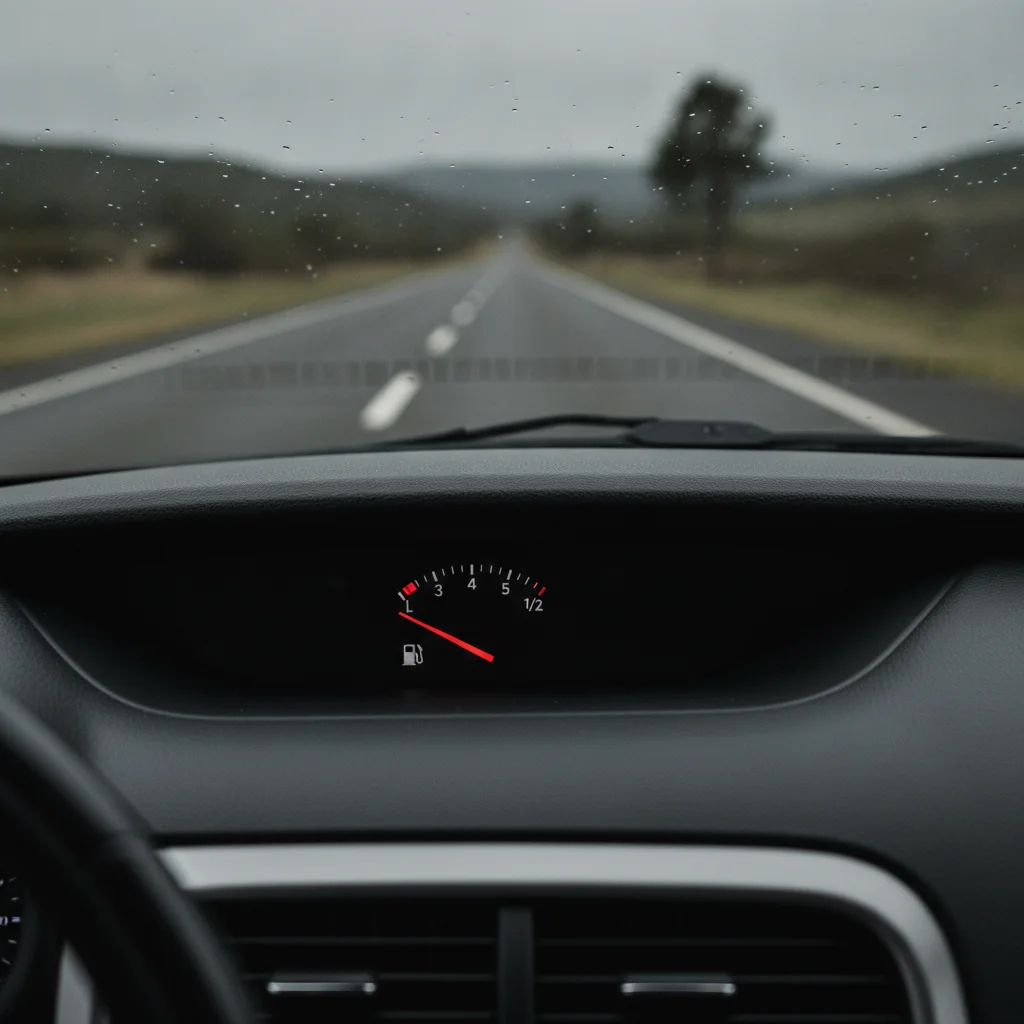
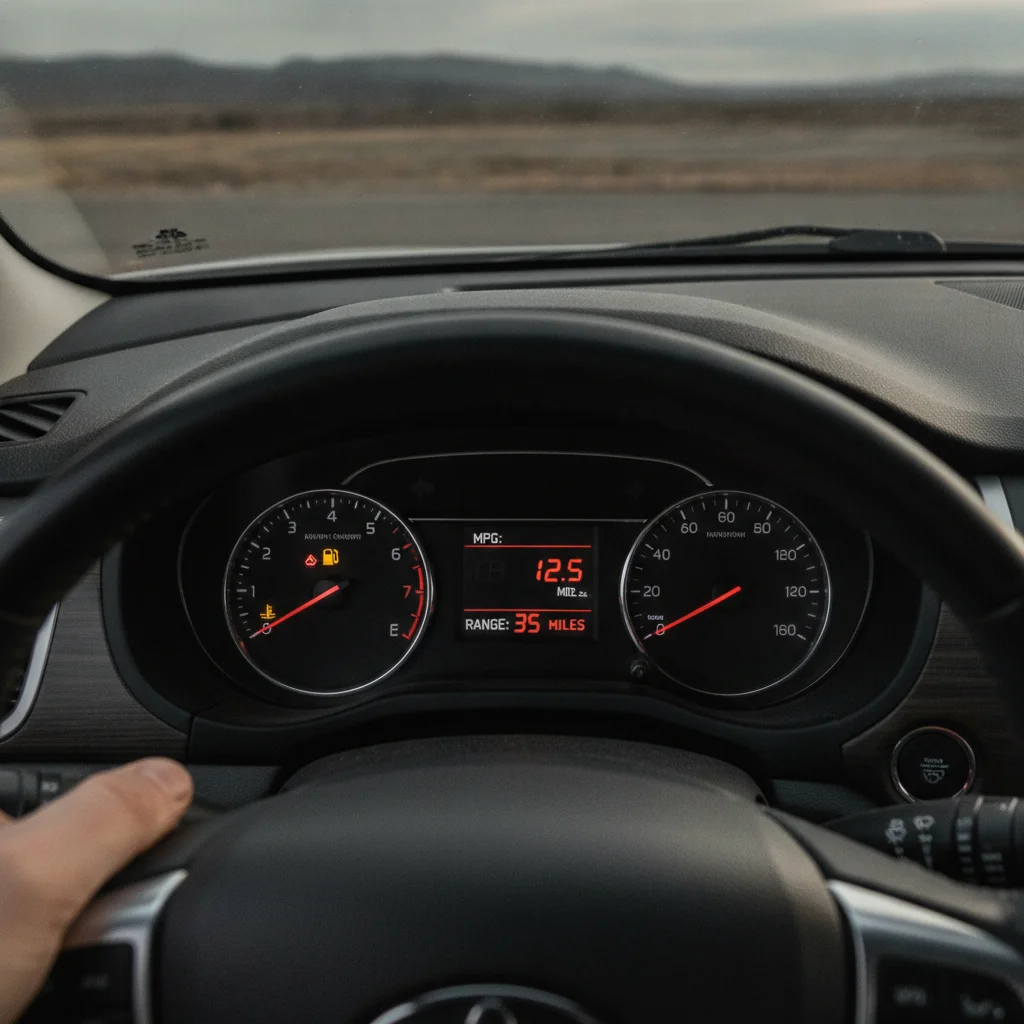
Most vehicles built after 2010 have an instant fuel economy display in the instrument cluster. Use it actively while driving — it provides immediate feedback on how your acceleration and braking habits are affecting efficiency. Many drivers who start watching this number find their habits improve naturally within a week simply from increased awareness.
Combine Errands to Cut Cold-Start Penalties
Before you drive anywhere, ask whether you could combine this trip with other nearby stops. Running three errands in one warm-engine loop instead of three separate cold-start trips can meaningfully reduce your weekly fuel consumption. <a href="/maintenance-and-ownership/ownership-costs/fuel-efficiency/trip-chaining-the-driving-habit-that-quietly-saves-gallons-per-week">Trip chaining</a> is one of the simplest and most underrated fuel-saving strategies available to any driver.
MPG Losses Are Often Cumulative
It's tempting to look at each habit in isolation and dismiss a 2–3% loss as trivial. But these losses stack. A driver with underinflated tires, a dirty air filter, a rooftop cargo box, and an aggressive acceleration style might be running 25–35% below their vehicle's rated efficiency. That's not a small number. Treating each habit as part of a system — rather than evaluating each in isolation — is how you find the real savings.
Some Myths Belong Off This List
Not every commonly blamed fuel-waster actually has meaningful impact. Premium fuel in a regular car, manual transmission vs. automatic, and ethanol content are areas where driver intuition often diverges from data. <a href="/maintenance-and-ownership/ownership-costs/fuel-efficiency/fuel-efficiency-myths-that-cost-drivers-money-every-year">Fuel Efficiency Myths That Cost Drivers Money Every Year</a> separates real culprits from folklore — worth checking if you've been making decisions based on conventional wisdom.
Putting It All Together
The habits at the top of this list — aggressive acceleration, excessive idling, and excessive speed — are each worth addressing on their own. But the real opportunity is compounding: drivers who tackle all of these together often report real-world fuel economy improvements of 20–30%, which at today's gas prices can mean $400–$800 back in your pocket annually depending on how much you drive.
None of these changes require sacrifice or inconvenience. Smooth acceleration actually reduces wear on your drivetrain. Aggressive driving habits accelerate how often your car needs service, so the fuel savings are just the beginning of the financial benefit.
If you suspect your MPG has recently taken a hit beyond just your habits, The Fuel Economy Audit walks through a systematic checklist to find the cause. And if you're curious about the more extreme end of fuel-saving tactics, Hypermiling Techniques That Are Safe — and Some That Aren't separates the smart from the dangerous.
The bottom line: the most powerful fuel-saving tool you own is already in your hands — literally. How you use the pedals matters more than almost anything else.

All claims are backed by peer-reviewed research. Sources on request.