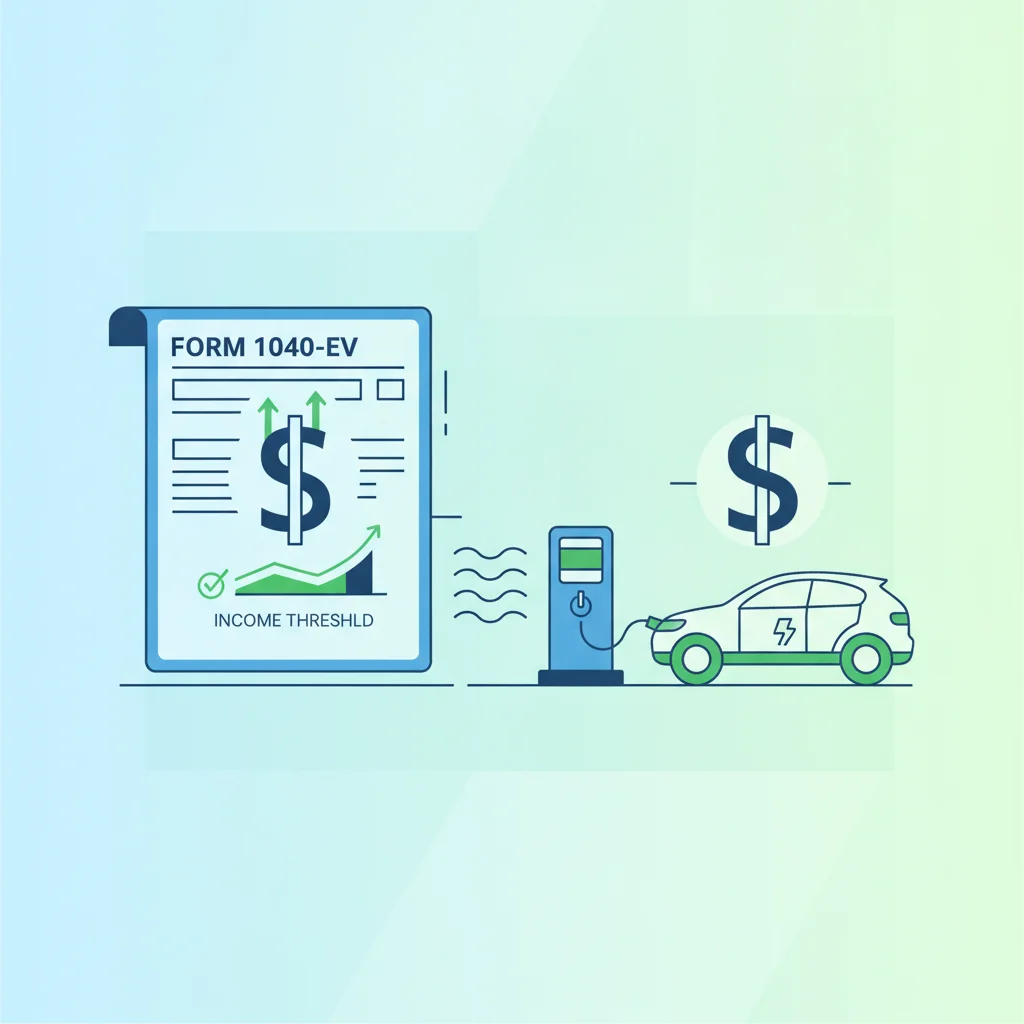
| Maximum new vehicle credit | $7,500 (IRS Section 30D, Inflation Reduction Act 2022) |
| Maximum used vehicle credit | $4,000 or 30% of sale price (IRS Section 25E) |
| MSRP cap — SUVs, vans, trucks | $80,000 (IRS Section 30D) |
| MSRP cap — sedans, other cars | $55,000 (IRS Section 30D) |
| Income limit — single filers (new vehicle) | $150,000 MAGI (IRS Section 30D) |
| Income limit — joint filers (new vehicle) | $300,000 MAGI (IRS Section 30D) |
| Point-of-sale transfer available since | January 1, 2024 (IRS Notice 2023-29) |
| Battery component credit tranche | $3,750 (IRS Section 30D) |
| Critical minerals credit tranche | $3,750 (IRS Section 30D) |
| Used vehicle minimum age | 2+ model years old (IRS Section 25E) |
Why This Glossary Exists
The federal EV tax credit — formally the Clean Vehicle Credit under IRC Section 30D — is one of the most valuable incentives available to new car buyers. A single qualifying purchase can cut your tax bill by up to $7,500. Yet the program's rules are dense enough that many buyers either miss credits they could have claimed or assume they qualify when they don't.
The problem isn't necessarily the rules themselves. It's the terminology. Words like MAGI, critical minerals requirement, final assembly, and transfer election each carry a precise legal meaning that directly determines your eligibility. If you don't know what they mean, you can't optimize around them — and you may end up leaving real money on the table.
This glossary defines every major term in the EV tax credit universe in plain language. Use it as a reference while you research vehicles, as a pre-purchase checklist, or as a companion to our complete EV tax credit walkthrough that covers how to claim the credit step by step.
| Maximum new vehicle credit | $7,500 (IRS Section 30D, Inflation Reduction Act 2022) |
| Maximum used vehicle credit | $4,000 or 30% of sale price (IRS Section 25E) |
| MSRP cap — SUVs, vans, trucks | $80,000 (IRS Section 30D) |
| MSRP cap — sedans, other cars | $55,000 (IRS Section 30D) |
| Income limit — single filers (new vehicle) | $150,000 MAGI (IRS Section 30D) |
| Income limit — joint filers (new vehicle) | $300,000 MAGI (IRS Section 30D) |
| Point-of-sale transfer available since | January 1, 2024 (IRS Notice 2023-29) |
| Battery component credit tranche | $3,750 (IRS Section 30D) |
| Critical minerals credit tranche | $3,750 (IRS Section 30D) |
| Used vehicle minimum age | 2+ model years old (IRS Section 25E) |
The Core Credit Mechanics: Terms You'll See Everywhere
Before you get into eligibility specifics, you need to understand the architecture of the credit itself. These terms define the basic structure.
Section 30D Credit
The federal tax credit for new clean vehicles, named for its location in the Internal Revenue Code. Worth up to $7,500 depending on battery sourcing compliance. Applies to purchases, not leases.
MAGI (Modified Adjusted Gross Income)
Your Adjusted Gross Income with certain deductions added back in, used by the IRS to determine EV credit eligibility. For most W-2 employees, MAGI equals AGI. For self-employed or investment-income earners, the two figures can diverge.
Final Assembly
The stage of manufacturing where a vehicle is put together in its final form. For EV credit eligibility, this must occur in North America (U.S., Canada, or Mexico) as required by the Inflation Reduction Act.
Critical Minerals Requirement
One of two battery-related tests for the 30D credit. Requires that a specified percentage of critical minerals (lithium, cobalt, nickel, etc.) be extracted, processed, or recycled in the U.S. or a free-trade-agreement partner country. Worth $3,750 of the total credit.
Battery Component Requirement
The second battery-related test for the 30D credit. Requires a specified and annually increasing percentage of battery component value to be manufactured or assembled in North America. Worth $3,750 of the total credit.
MSRP Cap
The maximum manufacturer's suggested retail price a vehicle can carry to qualify for the EV credit. Currently $80,000 for SUVs, vans, and trucks; $55,000 for sedans and other passenger cars. Dealer markups above MSRP are excluded from this calculation.
Transfer Election
The option, available since January 2024, for buyers to assign their anticipated tax credit to the dealer at the point of sale, effectively receiving it as an immediate price reduction rather than waiting for a tax refund.
Foreign Entity of Concern (FEOC)
Countries or entities — primarily China, Russia, North Korea, and Iran — identified by the U.S. government as concerning for national security purposes. Vehicles with battery components or critical minerals sourced from FEOCs are ineligible for the relevant portion of the EV credit starting in 2025.
Section 25E Credit
The federal tax credit for used clean vehicles. Capped at $4,000 or 30% of the sale price, whichever is less. Has lower income thresholds than the new vehicle credit and requires the vehicle to be at least two model years old.
Prior-Year Lookback Rule
An IRS rule allowing buyers to qualify using their income from either the purchase year or the prior tax year, whichever is lower. Useful when income fluctuates between years.
Nonrefundable Credit
A tax credit that can reduce your federal tax liability to zero but cannot generate a refund if it exceeds what you owe. The 30D new vehicle credit is nonrefundable when claimed on your tax return, though the point-of-sale transfer option sidesteps this limitation.
Time-of-Sale Report
A document the dealer must file with the IRS and provide to the buyer to substantiate an EV credit claim. Required when transferring the credit at the point of sale. Buyers should retain a copy for their tax records.
Nonrefundable vs. refundable credits is the distinction that trips up the most buyers. A nonrefundable credit reduces your tax liability to zero but cannot generate a refund. If you owe $4,000 in taxes and claim a $7,500 credit, you save $4,000 — you don't receive the remaining $3,500 back. That said, if you use the point-of-sale transfer option (explained below), the dealer effectively advances the full credit regardless of your liability, making refundability less of a personal concern.
The Section 30D credit applies to new clean vehicles. Its sibling, Section 25E, covers previously owned clean vehicles with a separate $4,000 cap and different income thresholds. A third provision, Section 45W, covers commercial clean vehicles — relevant if you're buying through a business entity. If you're self-employed or your income structure is unusual, see our guide on maximizing EV credits with variable income.
IRS Qualified Vehicle List Updates Frequently
The IRS publishes and regularly revises its list of vehicles that meet the battery component and critical minerals requirements. A vehicle that qualified last month may not qualify today if a manufacturer's certification has changed. Always check the IRS Clean Vehicle Credits page or the Department of Energy's AFDC tool before finalizing a purchase — and ideally verify the specific VIN with the dealer.
Transfer Election Comes With Repayment Risk
If you elect the point-of-sale transfer and it later turns out your income exceeded the threshold, you must repay the credit when you file. There is a good-faith exception for buyers who estimated in good faith, but it has limits. If your income is near the threshold — especially if you're self-employed or have variable earnings — consider running a conservative MAGI estimate before committing to the transfer.
Leasing May Unlock Credits You Can't Access Directly
Because lessors claim the commercial vehicle credit (Section 45W) rather than the consumer credit (Section 30D), leased vehicles sidestep income limits, MSRP caps, and the final assembly requirement entirely. If you don't qualify for the consumer credit due to income or vehicle price, getting quotes on a lease for the same model is worth doing — you may find that the lessor has priced in a meaningful portion of that credit.
Income Eligibility: MAGI and Filing Status
The IRS uses your Modified Adjusted Gross Income (MAGI) — not your salary, not your gross pay — to determine whether you qualify. Getting this number wrong is one of the most common and costly mistakes EV buyers make.
$7,500
Max federal credit for new EVs
Established by the Inflation Reduction Act; split into two $3,750 tranches based on battery sourcing compliance.
~50%
Share of EVs earning full $7,500 credit
As of early 2025, roughly half of models on the IRS qualified vehicle list earn the full dual-tranche credit, per DOE tracking data.
$300,000
MAGI limit for married joint filers
The highest income threshold for new EV credit eligibility; single filers are capped at $150,000 under IRS Section 30D.
$4,000
Maximum used EV credit (Section 25E)
Capped at the lesser of $4,000 or 30% of the vehicle's sale price, with lower income thresholds than the new vehicle credit.
2024
Year point-of-sale transfers became available
Starting January 1, 2024, buyers can assign their credit to a registered dealer for an immediate price reduction at signing.
Adjusted Gross Income (AGI) is your total gross income minus specific above-the-line deductions: contributions to a traditional IRA, student loan interest, self-employed health insurance premiums, and others. It appears on line 11 of IRS Form 1040.
Modified Adjusted Gross Income (MAGI) starts with your AGI and adds back certain deductions that were excluded — most commonly foreign earned income exclusions, tax-exempt interest income, and excluded employer adoption benefits. For most W-2 employees with no foreign income, MAGI and AGI are identical. For self-employed buyers, freelancers, or investors with complex returns, the gap can be meaningful. Our in-depth explainer on MAGI rules for the EV credit walks through every adjustment in detail.
The income thresholds differ by filing status:
- Single filers: $150,000 MAGI limit (new vehicles)
- Head of household: $225,000 MAGI limit
- Married filing jointly: $300,000 MAGI limit
Importantly, the IRS checks your MAGI for either the year of purchase or the prior tax year — whichever is lower. This is called the prior-year lookback rule and it matters if your income fluctuates. If you earned $280,000 in 2024 but expect to earn $240,000 in 2025, you could still qualify using your 2025 income. Conversely, if you had a high-income year in 2024 and bought a vehicle expecting to use 2024 income, the IRS will use whichever figure disqualifies you.
Vehicle Eligibility: MSRP Caps, Assembly Rules, and Battery Requirements
Not every EV on the market qualifies. The vehicle itself must clear several independent hurdles, and if any one of them fails, the credit is zero — not reduced, zero.
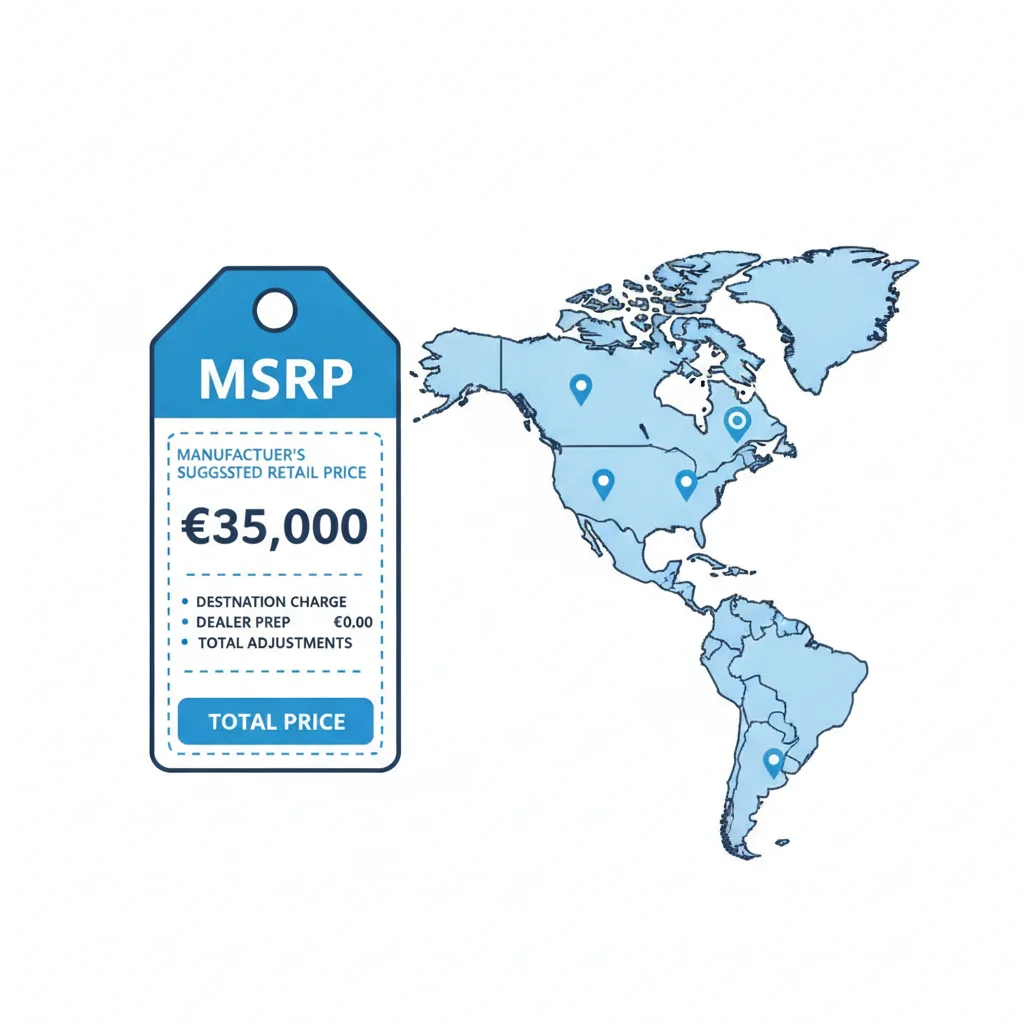
MSRP Caps
The Manufacturer's Suggested Retail Price (MSRP) of the vehicle cannot exceed:
- $80,000 for vans, SUVs, and pickup trucks
- $55,000 for sedans, hatchbacks, and other passenger cars
The MSRP used for this test is the vehicle's base price plus options, but it explicitly excludes destination and delivery fees. If a dealer adds market adjustment markups, those markups do not count toward the MSRP cap — but they do increase what you actually pay. This can matter for negotiation leverage.
The vehicle classification — whether a model counts as an SUV or a sedan — is determined by the IRS, not the manufacturer. Some vehicles that automakers market as crossover SUVs have been classified as passenger cars by the IRS, subjecting them to the lower $55,000 cap. Always verify the IRS classification for the specific model you're considering.
Final Assembly Requirement
Final assembly must occur in North America — defined as the United States, Canada, or Mexico. This requirement was introduced by the Inflation Reduction Act and immediately disqualified a large portion of EVs that had previously been eligible. The Vehicle Identification Number (VIN) encodes assembly location, and the Department of Energy's Alternative Fuels Station Locator and NHTSA's VIN decoder both provide this information for free.
Assembly location is determined at the time the dealer takes possession of the vehicle — not when you sign — which is why vehicles in transit can sometimes lose eligibility mid-order.
Battery Component and Critical Minerals Requirements
This is the most complex and evolving part of the credit. The full $7,500 is split into two $3,750 tranches, each tied to a different supply chain test:
- Battery component requirement ($3,750): A specified percentage of the value of battery components must be manufactured or assembled in North America. The threshold increases each year under the law.
- Critical minerals requirement ($3,750): A specified percentage of the critical minerals in the battery must be extracted or processed in the U.S. or in a country with which the U.S. has a free trade agreement — or recycled in North America.
Critical minerals include lithium, cobalt, nickel, manganese, graphite, and several others designated by the IRS. The sourcing rules are designed to reduce reliance on supply chains from Foreign Entities of Concern (FEOCs) — primarily China, Russia, North Korea, and Iran. Starting in 2025, vehicles whose battery components or critical minerals originate from FEOCs are entirely ineligible for the relevant half of the credit. Because battery supply chains are complex, manufacturers must certify compliance, and the IRS publishes a running list of qualifying vehicles updated as certifications are filed or revised.
For a buyer, the practical takeaway is: check the IRS qualified vehicles list — specifically noting whether the vehicle earns the full $7,500 or only $3,750 — before you sign. A vehicle can pass the assembly test and fail both battery tests, resulting in no credit at all.
Dealer and Transfer Terms: Point-of-Sale Credits Explained
Starting in January 2024, buyers can elect to transfer the tax credit directly to the dealer at purchase — effectively receiving the credit as an immediate price reduction rather than waiting until tax time. This mechanism changed how most buyers should think about the credit.

The transfer election (also called a point-of-sale transfer) allows you to assign your anticipated tax credit to the dealer. The dealer then reduces your out-of-pocket price by that amount and is reimbursed by the IRS. You still need to certify your eligibility — income, filing status, and other factors — at the time of purchase. If it turns out you did not qualify (say, your income was higher than you estimated), you must repay the credit when you file your taxes.
A registered dealer is required to participate in the transfer program. Not every dealership has registered, so if you want the upfront reduction, confirm the dealer is in the IRS system before you start negotiating. Dealers who are registered must provide you with a time-of-sale report — a document the IRS requires to substantiate the credit. Keep this; you'll need it when filing.
The used clean vehicle credit (Section 25E) also supports point-of-sale transfers starting in 2024. The rules are parallel but the caps are different: the used credit is limited to the lesser of $4,000 or 30% of the sale price. Income thresholds are also lower — $75,000 for single filers, $112,500 for head of household, and $150,000 for joint filers. The vehicle must be at least two model years old at the time of sale, and this must be the first time the credit has been claimed on that specific vehicle.
One term to understand here: dealer markup vs. MSRP. Some dealers charge above sticker for in-demand EVs. As noted above, dealer markups don't push you over the MSRP cap — but they do increase your total cost. Dealers are prohibited from requiring you to waive the tax credit as a condition of purchase, though this rule isn't always enforced uniformly.
For a broader look at how common misunderstandings around transfer elections and refundability cost buyers money, see our article on EV tax credit myths.
IRS Qualified Vehicle List Updates Frequently
The IRS publishes and regularly revises its list of vehicles that meet the battery component and critical minerals requirements. A vehicle that qualified last month may not qualify today if a manufacturer's certification has changed. Always check the IRS Clean Vehicle Credits page or the Department of Energy's AFDC tool before finalizing a purchase — and ideally verify the specific VIN with the dealer.
Transfer Election Comes With Repayment Risk
If you elect the point-of-sale transfer and it later turns out your income exceeded the threshold, you must repay the credit when you file. There is a good-faith exception for buyers who estimated in good faith, but it has limits. If your income is near the threshold — especially if you're self-employed or have variable earnings — consider running a conservative MAGI estimate before committing to the transfer.
Leasing May Unlock Credits You Can't Access Directly
Because lessors claim the commercial vehicle credit (Section 45W) rather than the consumer credit (Section 30D), leased vehicles sidestep income limits, MSRP caps, and the final assembly requirement entirely. If you don't qualify for the consumer credit due to income or vehicle price, getting quotes on a lease for the same model is worth doing — you may find that the lessor has priced in a meaningful portion of that credit.
State Credits, Stacking, and Other Incentive Terms
Federal credits are the headline number, but state and utility incentives often add meaningfully to total savings — and they come with their own vocabulary.
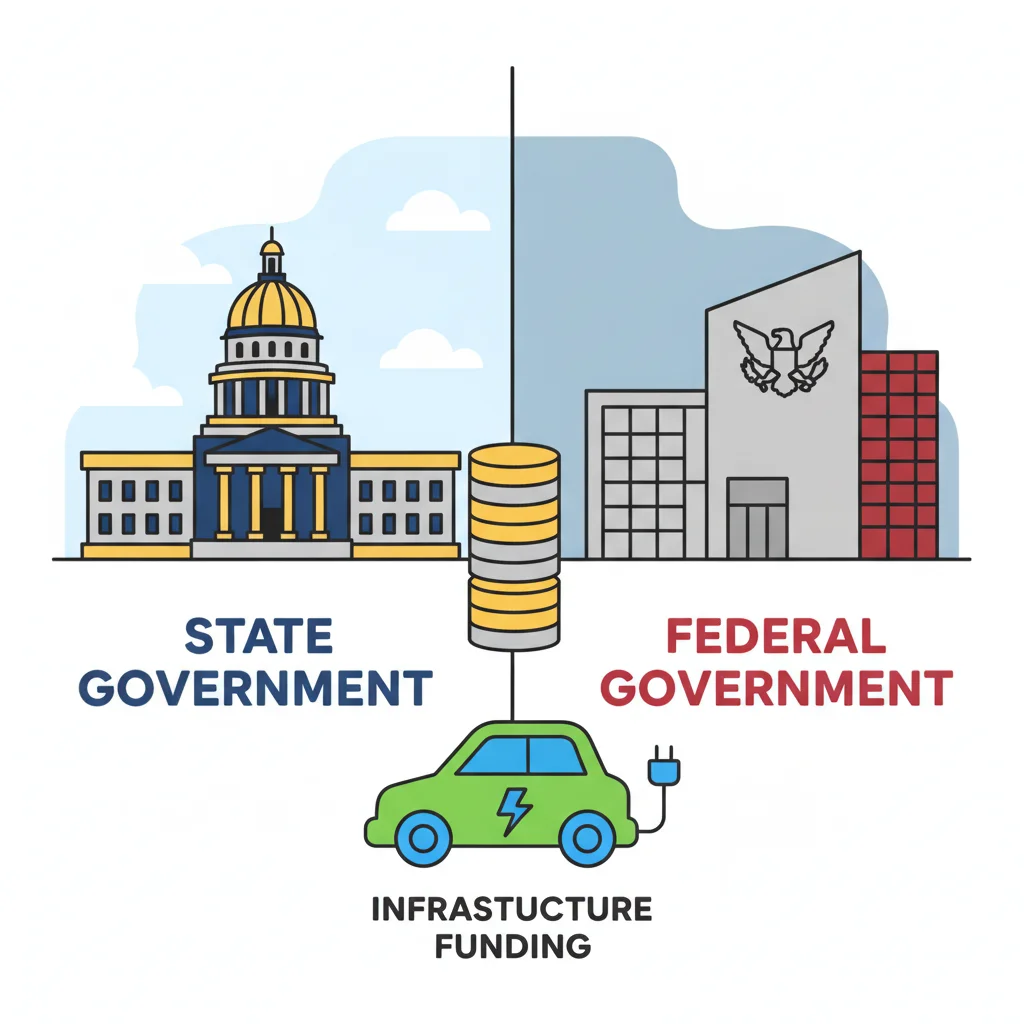
Incentive stacking refers to combining multiple incentives on a single purchase — for example, a $7,500 federal credit, a $2,000 state rebate, and a $500 utility rebate applied to the same vehicle. Federal law does not prohibit stacking with state or utility programs. Some state programs, however, prohibit stacking with other state incentives or require the vehicle to meet additional criteria. Always check your state's program rules independently.
State EV rebates are distinct from tax credits. A rebate is a direct payment — you receive cash, either at the dealership or by mail after purchase — and it is not dependent on your tax liability. A state tax credit, like the federal credit, reduces what you owe the state. Some states offer both.
A clean fuel vehicle rebate and a clean vehicle credit sound similar but may have different eligibility criteria. Some state programs cover plug-in hybrids that the federal credit now excludes; others are narrower. The phrase zero-emission vehicle (ZEV) is a regulatory classification used by states like California and those in the CARB coalition — it typically means battery electric only, no tailpipe emissions. Plug-in hybrid electric vehicle (PHEV) buyers often qualify for reduced federal credits (the battery capacity rules still apply) and may or may not qualify under state programs depending on how those programs define eligibility.
Lease vs. purchase is an important structural term in this context. When you lease a vehicle, the leasing company (the lessor) takes title and can claim the commercial clean vehicle credit under Section 45W — which has no income limits, no MSRP cap, and no final assembly requirement. Lessors may pass some or all of this benefit to you through reduced capitalized cost or lower monthly payments, but they are not required to. This is why some EVs that don't qualify for the consumer credit under 30D are effectively cheaper to lease than to buy.
This glossary focuses on EV purchase and tax terminology. If you want to broaden your EV vocabulary into technical specs, see our EV terminology glossary covering battery, powertrain, and charging terms. For what you'll pay to keep the car charged, our charging cost terms glossary covers kWh pricing, demand charges, and efficiency ratings. And once you own the vehicle, our EV insurance terms glossary will help you navigate coverage decisions.
IRS Qualified Vehicle List Updates Frequently
The IRS publishes and regularly revises its list of vehicles that meet the battery component and critical minerals requirements. A vehicle that qualified last month may not qualify today if a manufacturer's certification has changed. Always check the IRS Clean Vehicle Credits page or the Department of Energy's AFDC tool before finalizing a purchase — and ideally verify the specific VIN with the dealer.
Transfer Election Comes With Repayment Risk
If you elect the point-of-sale transfer and it later turns out your income exceeded the threshold, you must repay the credit when you file. There is a good-faith exception for buyers who estimated in good faith, but it has limits. If your income is near the threshold — especially if you're self-employed or have variable earnings — consider running a conservative MAGI estimate before committing to the transfer.
Leasing May Unlock Credits You Can't Access Directly
Because lessors claim the commercial vehicle credit (Section 45W) rather than the consumer credit (Section 30D), leased vehicles sidestep income limits, MSRP caps, and the final assembly requirement entirely. If you don't qualify for the consumer credit due to income or vehicle price, getting quotes on a lease for the same model is worth doing — you may find that the lessor has priced in a meaningful portion of that credit.
IRS Clean Vehicle Credits Portal
The IRS's official hub for EV tax credit guidance, including the updated qualified vehicles list, income requirements, and Form 8936 instructions. The most authoritative source for current eligibility rules.
DOE Alternative Fuels Station Locator & Vehicle Data
The Department of Energy's AFDC tool lets you look up a specific vehicle's assembly location, battery sourcing compliance status, and credit eligibility by make and model — updated as manufacturers file new certifications.
NHTSA VIN Decoder
Enter any VIN to retrieve the vehicle's country of final assembly and other build data. Useful for verifying that a specific unit on a dealer's lot meets the North America assembly requirement.
EV Tax Credits: Complete Walkthrough
Our step-by-step guide covering how to claim the federal EV credit, what documentation you need, and how to file Form 8936 — a natural next step after understanding this glossary.
IRS Form 8936 Instructions
The official instructions for Form 8936, which is how the clean vehicle credit is reported on your federal return. Covers both the new vehicle and used vehicle credits with line-by-line explanations.
State EV Incentives Database (DSIRE)
A comprehensive database of state, utility, and local EV incentives maintained by the NC Clean Energy Technology Center. Useful for identifying stackable credits and rebates available in your state.
$7,500
Max federal credit for new EVs
Established by the Inflation Reduction Act; split into two $3,750 tranches based on battery sourcing compliance.
~50%
Share of EVs earning full $7,500 credit
As of early 2025, roughly half of models on the IRS qualified vehicle list earn the full dual-tranche credit, per DOE tracking data.
$300,000
MAGI limit for married joint filers
The highest income threshold for new EV credit eligibility; single filers are capped at $150,000 under IRS Section 30D.
$4,000
Maximum used EV credit (Section 25E)
Capped at the lesser of $4,000 or 30% of the vehicle's sale price, with lower income thresholds than the new vehicle credit.
2024
Year point-of-sale transfers became available
Starting January 1, 2024, buyers can assign their credit to a registered dealer for an immediate price reduction at signing.

All claims are backed by peer-reviewed research. Sources on request.