| Average EV insurance premium vs. gas vehicle | Roughly 15–25% higher on average (Insurance.com, 2023) |
| Primary driver of higher EV premiums | Higher repair and battery replacement costs (IIHS, 2023) |
| Typical high-voltage battery replacement cost | $5,000–$20,000+ (RepairPal industry estimates, 2023) |
| EV first-year depreciation range | 15–30% of purchase price (iSeeCars depreciation study, 2023) |
| Insurers offering dedicated EV policies or endorsements | Fewer than 10 major carriers as of 2024 (NerdWallet insurer survey, 2024) |
| Telematics discount potential | Up to 40% off base premium (Progressive Snapshot program data, 2023) |
Why EV Insurance Has Its Own Vocabulary
Insuring an electric vehicle is not simply a matter of transferring your existing auto policy to a new car. High-voltage battery packs, proprietary software, expensive sensors, and home charging equipment introduce risks that standard policy language — written largely in the era of internal combustion — may handle poorly or not at all.
The result is a coverage landscape where the same familiar terms — comprehensive, actual cash value, endorsement — can mean something meaningfully different in practice when applied to an EV. A total-loss payout calculated on ACV may not come close to replacing a battery pack, let alone the car itself. A comprehensive claim that should cover a thermal event might get routed toward an exclusion for mechanical or electrical failure. Knowing the precise language matters financially.
This reference covers the terms most likely to affect EV owners at the point of purchase, after a loss, and at renewal. For the broader set of standard insurance vocabulary, see our full auto insurance glossary. For EV-specific technical terms like kWh and battery capacity, the EV terminology glossary is the companion reference.
| Average EV insurance premium vs. gas vehicle | Roughly 15–25% higher on average (Insurance.com, 2023) |
| Primary driver of higher EV premiums | Higher repair and battery replacement costs (IIHS, 2023) |
| Typical high-voltage battery replacement cost | $5,000–$20,000+ (RepairPal industry estimates, 2023) |
| EV first-year depreciation range | 15–30% of purchase price (iSeeCars depreciation study, 2023) |
| Insurers offering dedicated EV policies or endorsements | Fewer than 10 major carriers as of 2024 (NerdWallet insurer survey, 2024) |
| Telematics discount potential | Up to 40% off base premium (Progressive Snapshot program data, 2023) |
Valuation Terms: ACV, Agreed Value, and GAP
How your insurer calculates what your car is worth at the time of a total loss is one of the most consequential decisions in your policy — and EV owners face specific valuation challenges that gas-car owners rarely encounter.
Actual Cash Value (ACV)
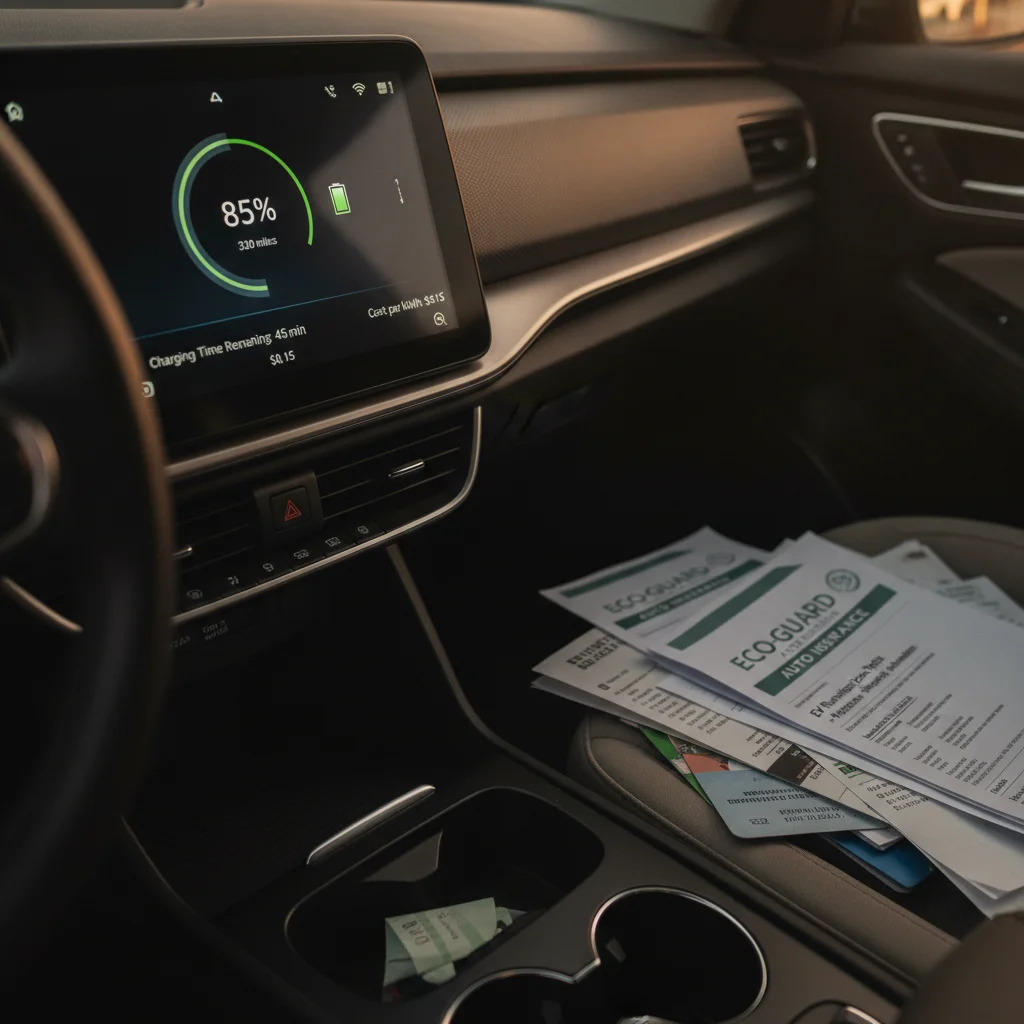
ACV is the default settlement method for most auto policies. The insurer determines the market value of your vehicle immediately before the loss, subtracting depreciation. For EVs — particularly models that depreciated sharply in 2022–2024 as inventories normalized — ACV settlements can leave a significant gap between the payout and what you still owe on a loan. Always check whether your policy settles on ACV or replacement cost.
Agreed Value
Under an agreed value policy, you and the insurer lock in the vehicle's worth at underwriting. There is no depreciation calculation at claim time — you receive the agreed amount. This approach is more common in collector or specialty vehicle policies, but some insurers are beginning to offer it for newer EVs. It provides certainty that ACV cannot.
GAP Insurance
If you financed your EV, GAP coverage is worth serious consideration. When a vehicle is totaled, your lender expects the full loan payoff — not the car's depreciated market value. GAP insurance covers that difference. Given that some EVs shed 15–30% of their value in the first year, a buyer who put down 10% at purchase could be thousands of dollars underwater by month twelve. GAP is often available through the dealer, the lender, or your insurer; the insurer route is typically the most cost-effective.
15–25%
Higher average EV insurance premium vs. gas vehicles
According to Insurance.com's 2023 rate analysis, higher repair complexity and battery costs are the primary drivers.
$20,000+
Maximum high-voltage battery replacement cost
RepairPal and dealer service data show that large-format battery packs in premium EVs can exceed $20,000 to replace out of pocket.
30%
First-year depreciation for some EV models
An iSeeCars 2023 depreciation study found several mainstream EVs losing up to 30% of their value in year one, elevating GAP insurance importance.
Up to 40%
Potential savings through telematics programs
Carriers such as Progressive report that top-performing telematics participants — often EV drivers — can earn discounts up to 40% on their base rate.
Coverage Terms Specific to EV Batteries and Charging
The battery pack is both the most expensive component of an electric vehicle and the one most underserved by standard policy language. Three coverage concepts are especially relevant here.
Battery Endorsement
Some insurers offer an optional rider that extends coverage explicitly to the high-voltage battery. This may include degradation beyond a defined threshold, damage from electrical surges during charging, or partial failures that reduce range. Without this endorsement, a battery that fails for non-collision reasons may fall under a mechanical breakdown exclusion rather than a covered peril. Ask your insurer precisely what battery scenarios trigger a covered claim — and get the answer in writing.
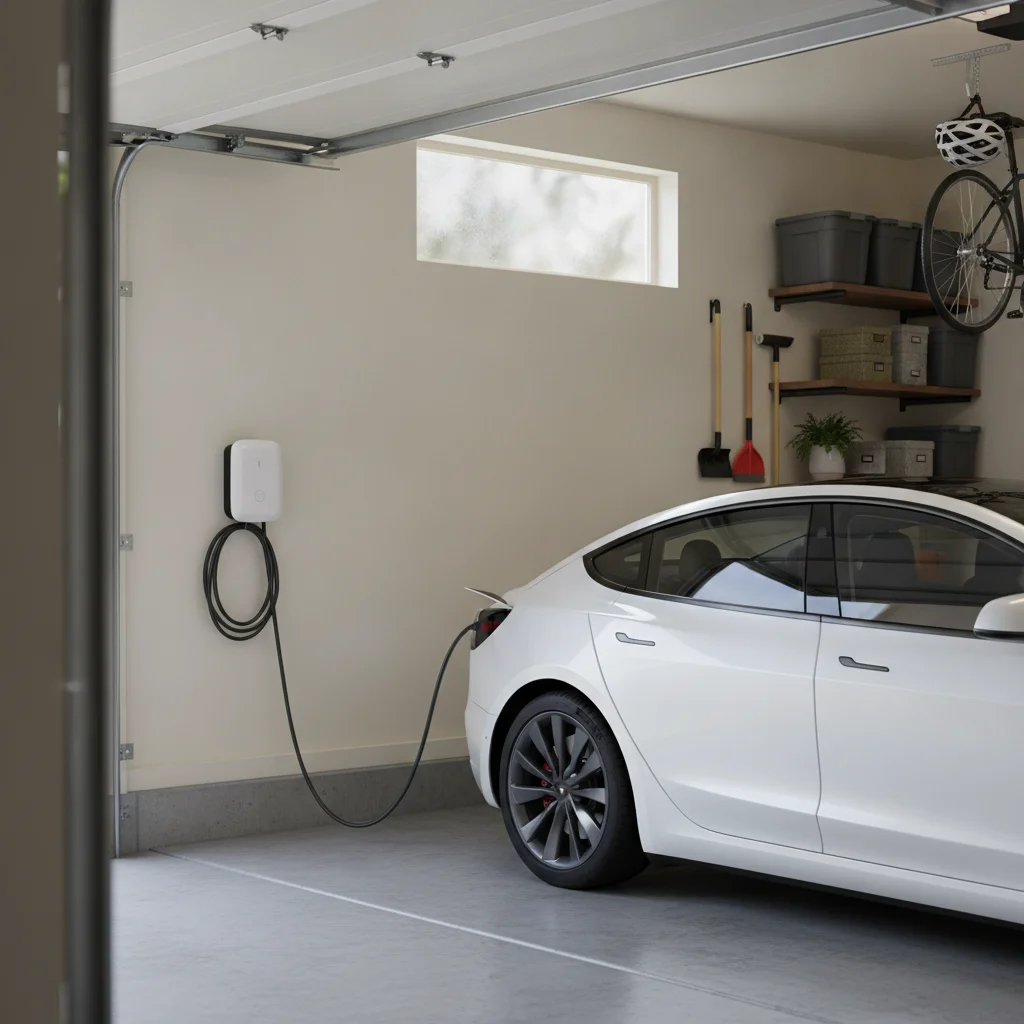
EVSE (Electric Vehicle Supply Equipment) Coverage
Your home Level 2 charger — the wall-mounted unit drawing from a 240V circuit — represents an investment that can range from $400 to $2,000 installed. Whether it is covered depends on which policy you're looking at. Homeowners insurance often covers EVSE as personal property or a home fixture, depending on how it's installed. Some auto policies include EVSE under comprehensive. The gap occurs when neither policy clearly claims it. Confirm coverage before installation, not after a storm or electrical fault destroys the equipment.
Thermal Event Coverage
A thermal event — the insurance and engineering term for a high-voltage battery fire — is one of the most expensive and complex loss scenarios an EV owner could face. Standard comprehensive coverage typically covers fire, but some insurers have language that could classify a battery fire as an electrical failure or a mechanical defect rather than a covered peril. Review your policy's fire and electrical exclusions carefully. If language is ambiguous, request a written clarification or obtain an endorsement that explicitly names thermal events as a covered comprehensive peril.
Repair and Parts Terms That Affect Claim Outcomes
After any collision or covered loss, how your insurer authorizes repairs has a direct impact on your vehicle's safety, performance, and resale value. For EVs, this matters more than most owners realize.
OEM Parts Clause
Original Equipment Manufacturer parts are components made or approved by the vehicle's manufacturer — not the lower-cost aftermarket alternatives insurers sometimes prefer. For a gas-powered vehicle, using an aftermarket fender or door panel is largely a cosmetic trade-off. For an EV, substituting non-OEM parts in the battery management system, charging circuitry, or sensor arrays can create software compatibility issues, void manufacturer warranties, and potentially introduce safety risks. A policy with an OEM parts clause or OEM endorsement requires the insurer to use factory-authorized components in repairs.
Diminished Value
Even after a perfect repair, a vehicle that has been in an accident carries a lower resale value than an identical vehicle with a clean history. That reduction is called diminished value, and in many states you have the right to claim it from an at-fault driver's liability insurer. EV buyers scrutinize accident histories closely — tools like Carfax reports are standard in used EV transactions — meaning EV diminished value claims can be proportionally larger than for comparable gas vehicles. Understand whether your state allows first-party diminished value claims (against your own insurer) or only third-party claims.
Rental Reimbursement and EV-Specific Delays
EV repairs frequently take longer than conventional repairs because of parts scarcity, specialized technician requirements, and the need to source high-voltage battery components. A rental reimbursement rider that caps daily payment at $30–$40 may be inadequate if a repair stretches three to six weeks and EV rentals command higher rates. Check both the daily limit and the maximum total payout — and consider whether your policy allows you to rent an EV specifically. For a full checklist of these policy provisions, see the EV insurance policy checklist.
Pricing and Data Terms: Telematics, Underwriting, and Risk Factors
EV owners are not a monolithic risk category, and insurers are increasingly using data-driven tools to price policies more individually. Understanding how your data is used gives you leverage to seek better rates.
Telematics and Usage-Based Insurance (UBI)
Telematics programs collect real-time driving behavior data — hard braking, acceleration patterns, cornering, night driving, and total mileage — to adjust your premium. EV drivers have a structural advantage in some of these metrics: regenerative braking produces smooth deceleration profiles that telematics algorithms typically score favorably. If you're a cautious, low-mileage EV driver, opting into a UBI program could meaningfully lower your premium. Understand what data is collected and how long it is retained before enrolling.
Underwriting Factors Specific to EVs
Insurers weigh several EV-specific variables when setting your base rate. These include the cost and availability of battery replacement, the concentration of advanced driver assistance systems (ADAS) in the vehicle — which are expensive to recalibrate after a collision — the vehicle's charging speed capability (which affects battery thermal management risk), and the insurer's own claims history for that model. A vehicle with a novel battery chemistry or a thin repair network will carry higher base rates regardless of your driving record.
Subrogation in Battery Loss Cases
When your insurer pays a claim caused by a third party — a defective charger, a charging network malfunction, or a manufacturer battery defect — it typically reserves the right to pursue that party to recover its costs. This process is called subrogation, and it has emerged as a live issue in EV battery fire litigation. From the owner's perspective, subrogation generally operates transparently; the insurer pursues the recovery without requiring your active participation. However, you may be asked to cooperate, and you should preserve any documentation related to the charging session, the equipment used, and the events leading up to the loss.
Putting the Terms Together: What to Look for in Your Policy
Armed with this vocabulary, a targeted policy review becomes straightforward. The questions below correspond directly to the terms defined in this glossary — work through them before binding coverage or at your next renewal.
- Valuation method: Does the policy settle on ACV or agreed value? If ACV, is GAP coverage in place for financed vehicles?
- Battery coverage: Is the high-voltage battery pack explicitly included under comprehensive and collision? Is a battery endorsement available and priced out?
- Thermal events: Are battery fires named as a covered comprehensive peril, or does the policy contain language that could route the claim to an electrical/mechanical exclusion?
- EVSE protection: Which policy — auto or homeowners — covers the home charger, and what is the claim limit?
- OEM parts: Does the policy guarantee OEM or manufacturer-approved components for repairs, particularly for battery management and ADAS systems?
- Rental reimbursement: Is the daily and total cap sufficient for extended EV repairs, and does it allow EV rentals?
- Telematics option: Is a UBI discount available, and what data does enrollment require?
If any answer is unclear, the next step is to request a written policy endorsement — not just a verbal assurance. EV insurance is a category that carriers are still calibrating, and policy language varies considerably even among top-tier insurers.
For common misconceptions that can lead EV owners to carry the wrong coverage, see EV insurance myths that cost owners real money. And if you're still building foundational EV knowledge, the how EVs work hub explains the battery and drivetrain systems that underlie so many of these insurance considerations.
EV Insurance Policy Checklist Before You Sign
A structured checklist to verify battery coverage, EVSE protection, rental reimbursement, and OEM parts clauses before you finalize an EV policy. Pairs directly with the glossary terms covered here.
EV Insurance Myths That Are Costing Owners Real Money
Debunks common misconceptions — such as assuming a standard policy covers thermal events — that lead EV owners to carry inadequate coverage without realizing it.
The Auto Insurance Terms You Need to Know Before Comparing Policies
A broader plain-language reference covering deductibles, exclusions, and endorsements that applies to all vehicle types, providing helpful context alongside this EV-specific glossary.
EV Terminology Glossary: 40 Terms Every Buyer Should Know
Defines the technical EV terms — from kWh to CCS — that underpin the battery and charging concepts referenced throughout this insurance glossary.
All claims are backed by peer-reviewed research. Sources on request.