Key Takeaways
Why the Owner's Manual Is the Only Source That Actually Matters
Walk into almost any quick-lube shop and you'll find a laminated chart on the wall claiming your oil needs changing every 3,000 miles. Glance at the service reminder sticker on your windshield — probably the same figure. The problem is that number may have nothing to do with your car. It's a marketing convention, not an engineering specification.
Your vehicle's owner's manual contains the only maintenance schedule designed specifically for your engine, transmission, cooling system, and drivetrain. Automakers spend years testing these intervals. When a Toyota Camry Hybrid and a Ram 1500 with a 6.4-liter V8 sit side by side at a service counter, they have almost nothing in common in terms of maintenance needs — and a generic shop chart can't account for that.
Staying on the manufacturer's schedule also has direct financial consequences. Most new-vehicle warranties require documented adherence to the recommended maintenance plan. If a powertrain problem arises and you can't demonstrate that you followed the schedule, a dealer has grounds to deny a warranty claim. The complete introduction to scheduled maintenance covers this warranty connection in fuller detail.
Beyond warranty protection, following the correct schedule — not an overly conservative or lax one — prevents the two most common and costly owner mistakes: servicing too infrequently (leading to mechanical wear) and servicing unnecessarily often (wasting hundreds of dollars per year on premature fluid changes).

Where to Find Your Maintenance Schedule and How It's Organized
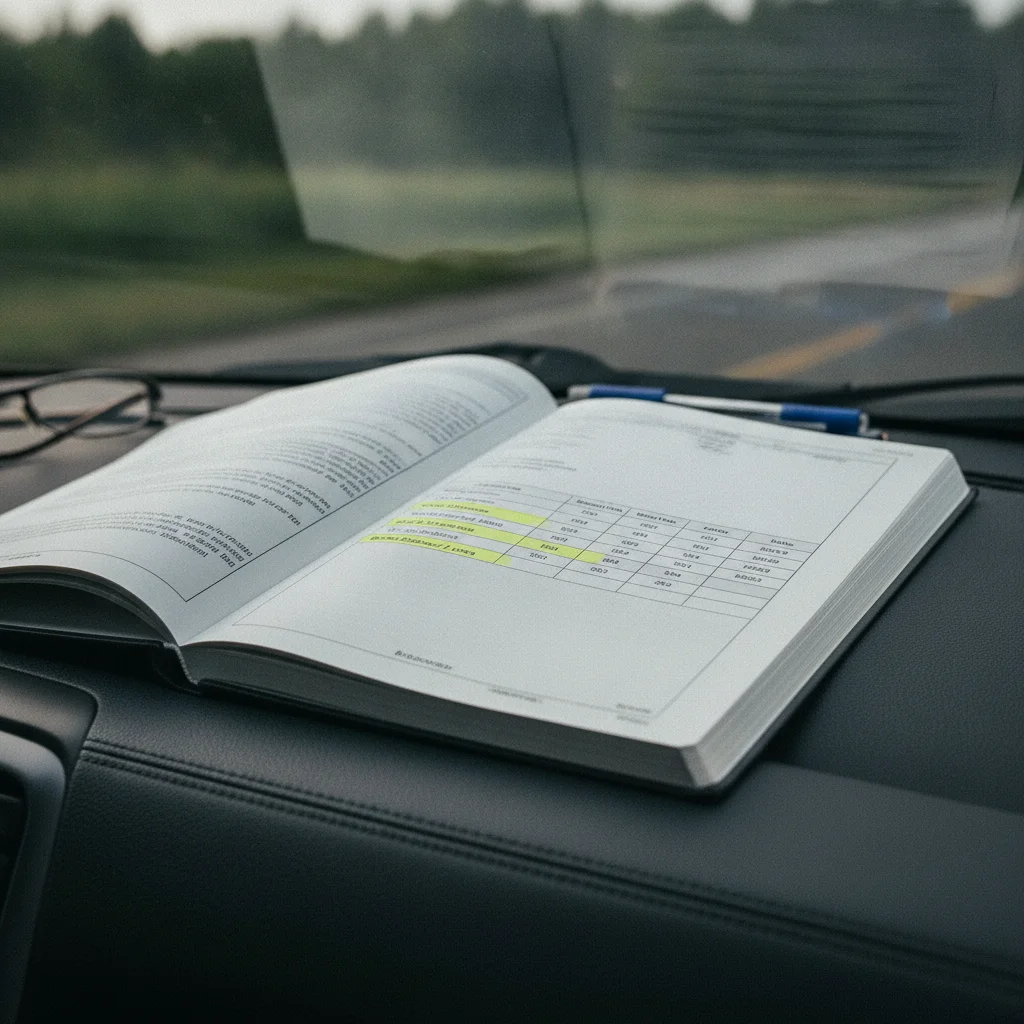
Before you can read the schedule, you have to find it. Owner's manuals vary in length from around 250 pages for compact cars to over 700 pages for trucks with complex infotainment and towing systems. The maintenance section is almost never near the front.
What you will need
Here's how to locate it efficiently:
- Physical manual: Look in the table of contents under headings like "Scheduled Maintenance," "Maintenance and Care," "Service Schedule," or "Do-It-Yourself Maintenance." Many automakers place this section in the final quarter of the manual.
- Digital manual: If you've lost your physical copy, manufacturer websites (Toyota Owners, GM Owner Center, Ford Owner, etc.) host free PDF downloads organized by year, make, and model. Search " owner's manual PDF" and you'll almost always find an official source within the first two results.
- In-vehicle display: Many 2018-and-newer vehicles include a maintenance menu within the infotainment system that tracks intervals and alerts you when service is due. This is a useful reminder tool, but it is not a substitute for reading the actual schedule — it won't explain what the service involves or why it matters.
Once you locate the maintenance section, you'll typically encounter one of two organizational formats. The first is a mileage-based table — a grid where rows represent service items and columns represent mileage milestones (5,000 mi, 10,000 mi, 15,000 mi, and so on). The second is a narrative list grouped by interval, which reads more like a checklist at each service milestone. Both communicate the same information; the table format is generally easier to scan.
Owner's Manual (Physical or PDF)
The primary source document containing your vehicle's official maintenance schedule, fluid specifications, and service intervals.
Manufacturer Owner Portal Account
Online account (e.g., Toyota Owners, GM Owner Center, Ford Owner) that gives access to digital manuals, service reminders, and maintenance history.
Odometer Log or Mileage Tracker App
Tracks accumulated mileage between service visits so you never have to guess where you are in the schedule.
Service Receipt File or Folder
Physical or digital storage for all maintenance receipts, organized chronologically to document warranty compliance and service history.
Calendar App or Reminder System
Used to set future service reminders based on projected milestone dates so you don't miss a time-based interval.
Decoding the Language: What Each Entry Is Actually Asking
The maintenance schedule uses a small vocabulary of action words that carry specific meanings. Misreading them is how drivers either overspend at the shop or miss something genuinely important.
| Term | What It Means | What to Watch For |
|---|---|---|
| Inspect | A trained technician visually examines the component for wear, leaks, cracks, or deterioration. | An inspection should result in a written finding — either "within spec" or a specific recommendation. Vague "everything looks fine" reports are not inspections. |
| Check | Verify a fluid level, tire pressure, or setting against a known specification. | Many checks are owner-level tasks you can perform yourself between service visits. |
| Replace | Remove and install a new part or fluid regardless of apparent condition. | This is a time- or mileage-based replacement driven by material degradation you can't see. Don't skip it because the old part looks fine. |
| Rotate | Move tires between positions to equalize wear patterns. | Skipping rotations can void tire warranties and accelerate uneven wear, especially on front-wheel-drive vehicles. |
| Lubricate | Apply grease or oil to a specific joint, fitting, or mechanism. | Often applies to door hinges, driveshaft U-joints, and chassis components on trucks. |
| Flush | Completely drain and replace a fluid system — not just top it off. | Brake and coolant flushes are frequently upsold prematurely. Confirm your manual's actual interval before authorizing one. |
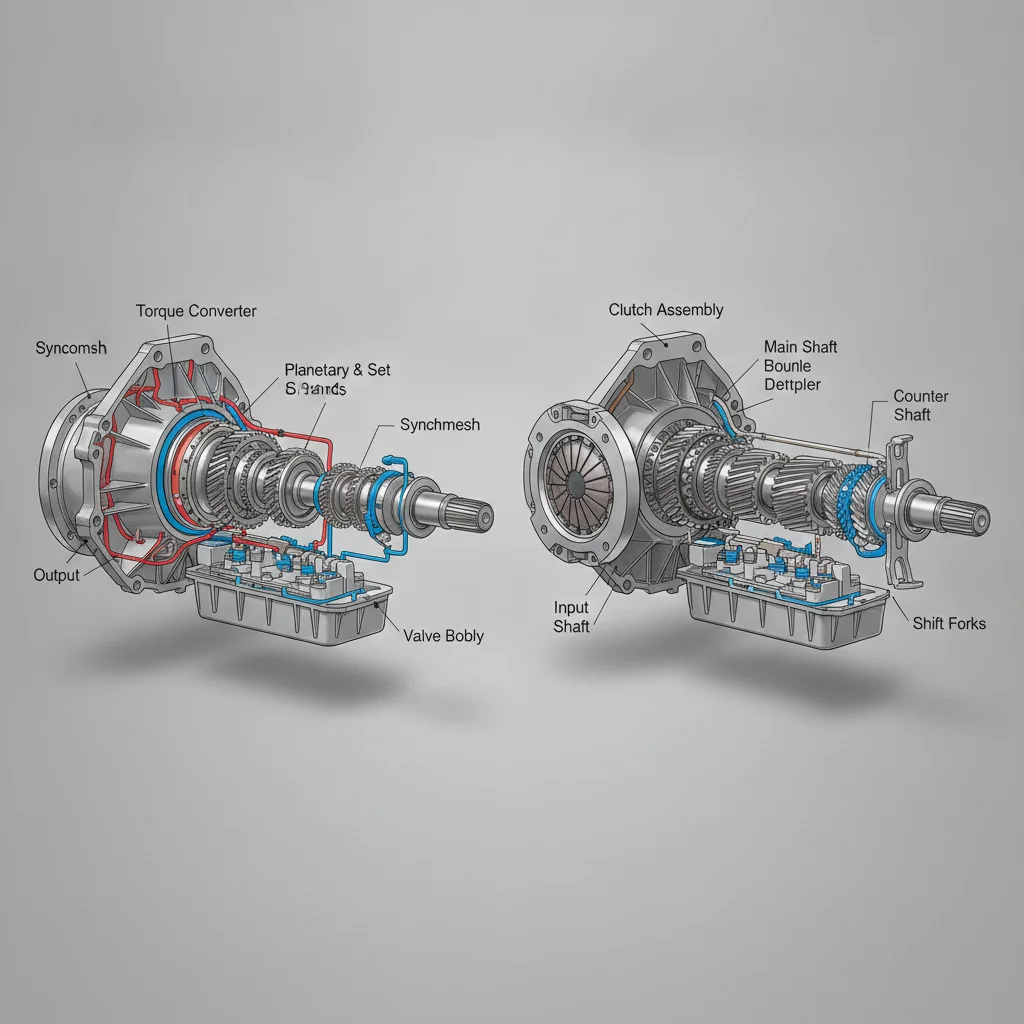
Pay particular attention to entries for the transmission. Automatic and manual transmissions have meaningfully different service approaches, and automatic vs. manual transmission service differences vary considerably by vehicle type and driving pattern. Your manual will specify fluid type, quantity, and interval — and those details aren't interchangeable between vehicles.
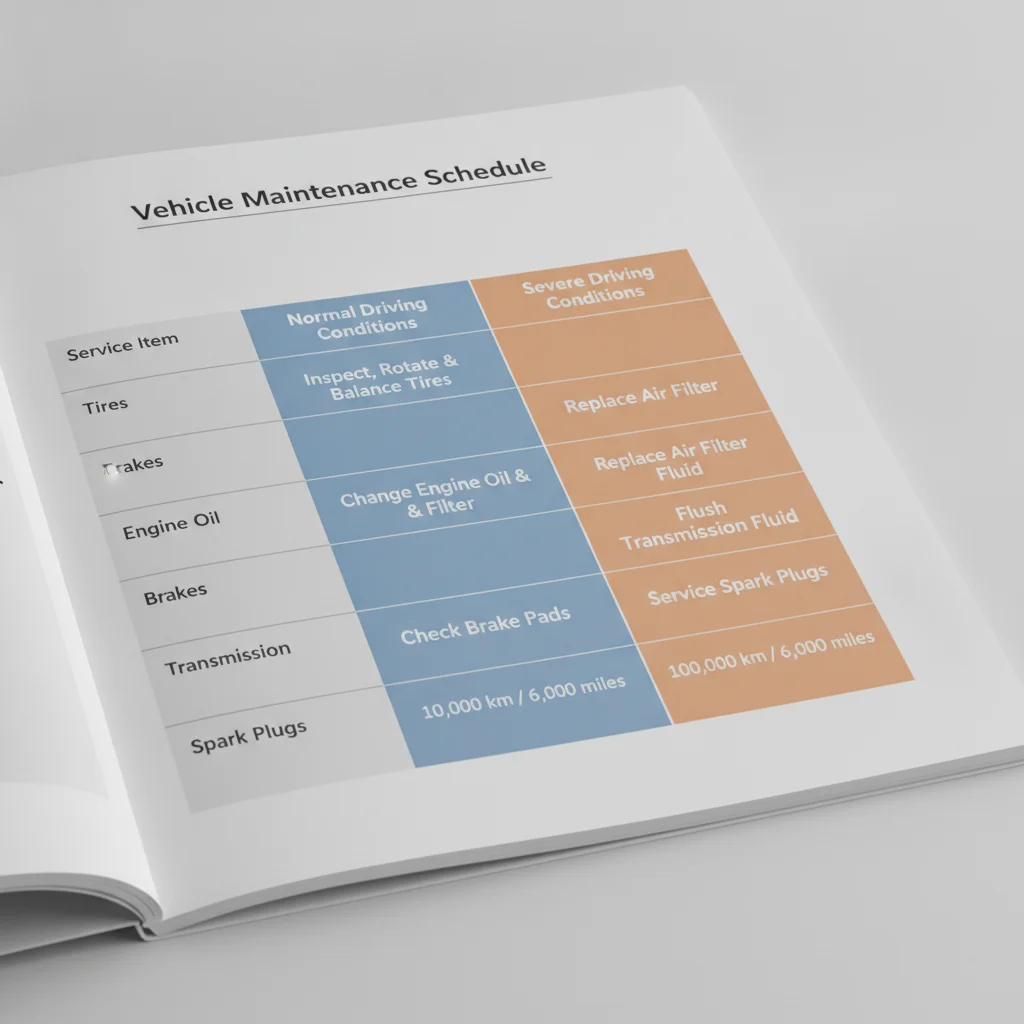
Also note that some items carry a footnote symbol (an asterisk, a dagger, or a number) that refers to a condition-specific note at the bottom of the table. These footnotes often say something like "replace more frequently if operating in dusty or off-road conditions" or "inspect every 12 months if mileage interval has not been reached." These footnotes are not decorative — they're where the schedule accounts for real-world variation.
Normal vs. Severe Driving: Which Schedule Applies to You
Most maintenance schedules in U.S. owner's manuals include two parallel tracks: one for "Normal" driving conditions and one for "Severe" (sometimes called "Special" or "Difficult") driving conditions. The severe schedule calls for more frequent service on certain items — sometimes twice as often.
The industry-standard definition of severe driving conditions typically includes any of the following:
- Frequent short trips of less than 5 miles, especially in cold weather (below 32°F)
- Extensive idling — common for rideshare drivers, delivery vehicles, or anyone sitting in heavy traffic regularly
- Towing or hauling heavy loads frequently
- Operating in extreme heat (above 90°F for extended periods)
- Driving on dusty, gravel, or unpaved roads
- Mountainous terrain with frequent steep grades
Most City Drivers Qualify as 'Severe'
If your commute is primarily short urban trips — say, under five miles each way — your engine rarely reaches full operating temperature, which accelerates oil degradation and moisture accumulation. This is one of the most commonly overlooked severe-condition triggers. Check the severe-use criteria in your manual before assuming the standard interval applies to you.
Windshield Stickers Are Not Your Schedule
The oil change reminder sticker applied by a quick-lube shop reflects that shop's recommendation, not your manufacturer's specification. Some vehicles with synthetic oil and modern engines go 10,000 or even 15,000 miles between oil changes. Following a sticker that says 3,000 miles adds unnecessary expense without any engineering benefit.
If any of these conditions describe your typical driving pattern — even part of the time — you likely qualify for the severe schedule on at least some service items. That doesn't mean every item shifts to the severe interval, however. Read the footnotes carefully; some components (like timing belt replacement) remain unchanged regardless of driving conditions, while others (like engine oil and air filter) are specifically flagged for more frequent attention under severe use.
The manufacturer service intervals decoded piece expands on how these dual-track schedules work across different vehicle classes and what skipping the severe schedule can cost you over time.
How to Follow the Schedule: Step-by-Step
Now that you understand the structure and language of the maintenance section, here's a practical process for putting it to work. This is not a one-time read — it's a system you return to every time service comes due.
Locate your current mileage and note the date
Before opening the manual, write down your odometer reading and today's date. This is your baseline. You'll use it to determine which maintenance milestones you've already passed and which are coming up next. If you bought the car used and don't know its full service history, note that as well — you'll need to treat certain items as overdue until you can verify they've been completed.
Find and bookmark the maintenance schedule pages
Use the table of contents to locate the maintenance section. In a physical manual, fold the corner of the first page or use a sticky tab. In a PDF, add a bookmark at the schedule page. You want to be able to open directly to this section in under ten seconds — if it's buried, you won't use it consistently.
Determine whether you qualify for the Normal or Severe schedule
Read the criteria for each schedule track carefully. Compare each condition listed under "Severe" against your actual driving habits. If short urban trips, frequent idling, or towing describe any significant portion of your driving, note which service items have different intervals under the severe track and use those intervals going forward. It's acceptable to use the severe interval for some items (oil, air filter) while using the normal interval for others (coolant, spark plugs) if only certain conditions apply to you.
Map out the next three service milestones
From your current mileage and date, identify the next three upcoming service milestones in the schedule. Write them down in a simple list: milestone mileage, calendar date trigger (if time-based), and what services are due at each. This three-milestone horizon gives you enough lead time to budget for larger services (like spark plug replacement or a timing belt inspection) without being surprised.
Example format:
- Next service: 45,000 miles or June 2025 — Oil/filter change, tire rotation, cabin air filter inspect
- Following service: 52,500 miles or December 2025 — Oil/filter change, tire rotation, brake inspection
- Major upcoming: 60,000 miles — Spark plugs replace, transmission fluid replace, coolant inspect
Verify which services you can perform yourself
Go through each item on your upcoming service list and identify which ones fall within your skill level and tool access. Common owner-level tasks include checking tire pressure, inspecting wiper blades, checking fluid levels, and replacing cabin air filters (typically a 5-minute job requiring no tools). Oil changes are within reach for many drivers with basic equipment. Brake pad inspection requires safely lifting the vehicle. Understanding this division helps you budget your time and money realistically.
The at-home car maintenance playbook is a useful reference for determining exactly what's safely DIY-able and what warrants a professional.
Create a simple service log and file your receipts
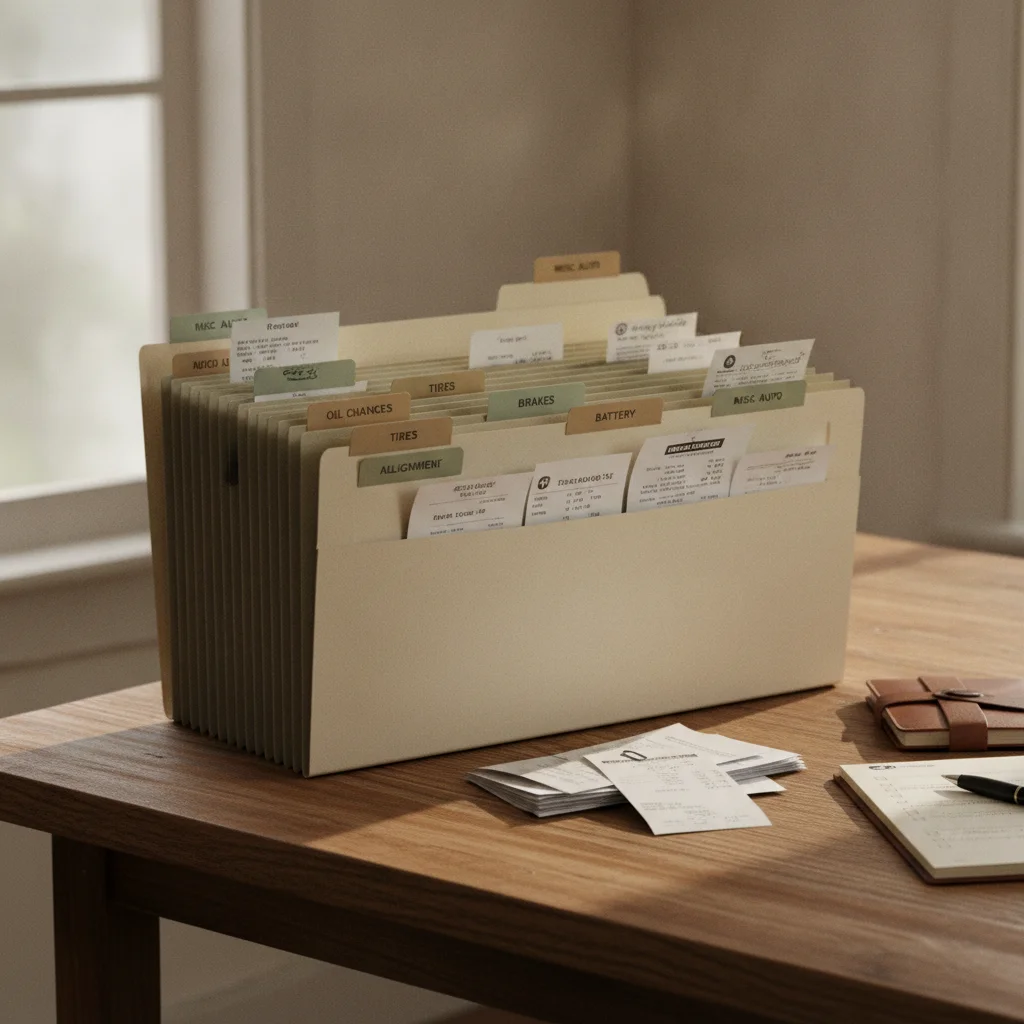
Start a log — a notes app, a spreadsheet, or a dedicated folder with paper receipts — that records each service with the date, odometer reading, work performed, and shop or parts cost. Every receipt or work order goes into this file in chronological order. This log is your proof of compliance if a warranty issue arises, and it's one of the strongest tools for maintaining resale value. A documented service history is a credible selling point that justifies higher asking prices in private sales.
For electric vehicle owners, note that your manual's maintenance section will look substantially different — battery, regenerative braking, and thermal management systems replace many traditional service items. The EV maintenance guide for new owners walks through what those schedules actually contain.
EVs Have Their Own Manual Logic
If you drive an electric vehicle, your maintenance section will look notably different — and considerably shorter in some areas. Battery conditioning, regenerative brake system checks, and software update schedules replace many traditional entries. The <a href="/electric-vehicles/ev-ownership-costs/ev-maintenance-basics/the-ev-maintenance-schedule-what-to-check-and-when">EV maintenance schedule reference guide</a> provides a practical parallel checklist organized the same way this article describes for conventional vehicles.
When the Manual Is Missing
If you've purchased a used vehicle without a manual, don't skip this step — download the PDF from the manufacturer's owner portal or a verified source before your next service. Operating without the official schedule means you're relying on generic advice that may not match your powertrain's actual requirements. Most manufacturer portals allow you to download the correct manual by entering your VIN.
Build In a Mileage Buffer
Rather than scheduling service at exactly the indicated mileage, aim to come in 300–500 miles before the milestone. This buffer accounts for a busy week that delays your appointment without pushing you past the interval. It also gives the shop flexibility to complete multi-item services without rushing.
Common Pitfalls and How to Avoid Them
Even drivers who have read their manual carefully run into predictable trouble spots. Here's where the process most often breaks down — and what to do instead.
Assuming the dealer's service reminder is the same as the manual
It isn't, necessarily. Dealers often program reminder systems to conservative intervals (which happen to generate more service revenue). Always cross-reference a dealer's service recommendation against your manual before approving work. Ask the service advisor to show you where in the manual the recommended service appears.
Ignoring the time component of intervals
Almost every maintenance item carries two triggers: a mileage interval and a time interval. Oil change schedules, for example, are commonly listed as "every 7,500 miles or 12 months, whichever comes first." A low-mileage driver who puts only 4,000 miles on the car in a year still needs to change the oil annually. The time component degrades the fluid chemically even when the engine isn't working hard.
Confusing "inspect" with "replace"
A shop telling you an inspection found your brake fluid is fine is different from one telling you it's time for a scheduled flush. If a service writer tells you a component "needs" replacement but your manual says only "inspect" at that interval, ask for the specific finding that justifies the replacement. A reputable shop will explain it clearly.
Skipping Services Can Void Your Warranty
Under the Magnuson-Moss Warranty Act, manufacturers can deny warranty claims if they can demonstrate that neglected maintenance caused the failure. You don't have to use the dealership for service — independent shops are legally valid — but you must follow the manufacturer's schedule and retain documented proof. A single missed timing belt service or skipped transmission fluid change at the specified interval can turn a covered repair into a five-figure out-of-pocket expense.
Time Intervals Apply Even at Low Mileage
Every maintenance item in your schedule carries both a mileage trigger and a time trigger. If you drive very little — under 7,500 miles per year — the calendar-based interval will almost always hit first. Fluids degrade chemically over time regardless of use, and rubber components dry out and crack on a time schedule, not a mileage one. Never rely solely on your odometer to determine when service is due.
Losing track of what's been done
Without a service log, you don't know where you are in the schedule — and neither does a future buyer. The full ownership maintenance timeline from month one to year ten shows how this compounds over a vehicle's life, and why documentation from the first service visit matters. Keep every receipt, organize them by date, and note the odometer reading on each one.
Not asking the right questions at the shop
Walking out of a service visit without understanding what was done is a missed opportunity. Questions worth asking your mechanic at every visit gives you a practical framework for those conversations — one that helps you verify the work aligns with your manual's actual requirements.
Finally, if your vehicle is a newer model with a timing belt rather than a chain, your manual will include a specific replacement interval that carries serious consequences if ignored. The distinction between these two systems — and why it matters for your service budget — is explained in the timing belt vs. timing chain service guide.

All claims are backed by peer-reviewed research. Sources on request.