Key Takeaways
Option A
Single-Speed EV Drivetrain
The dominant, elegantly simple standard.
Best for: Best for everyday commuters and performance buyers who want low maintenance, instant torque, and a seamless driving experience.
Option B
Multi-Speed EV Drivetrain
The engineered exception for edge-case performance.
Best for: Best for high-performance or long-range applications where motor efficiency at sustained highway speeds justifies added mechanical complexity.
If you want the lowest long-term maintenance costs
Single-Speed EV Drivetrain
Fewer moving parts means fewer things to service or replace. Single-speed reduction units rarely need attention beyond periodic fluid checks.
If you drive frequently at sustained highway speeds above 70 mph
Multi-Speed EV Drivetrain
A second gear can keep the motor operating in a more efficient RPM band at high speed, reducing energy consumption on long highway runs.
If you want the fastest 0–60 mph acceleration
Single-Speed EV Drivetrain
No gear shifts means no interruption in torque delivery. Single-speed EVs like the Tesla Model S Plaid dominate straight-line acceleration precisely because of this.
If you're buying a performance sports EV or supercar-class vehicle
Multi-Speed EV Drivetrain
For vehicles chasing top speeds above 150 mph, a second or third gear lets engineers optimize both acceleration and high-speed power delivery without over-spinning the motor.
If you're a first-time EV buyer focused on reliability and simplicity
Single-Speed EV Drivetrain
It's the industry-standard setup for a reason — proven, reliable, and requiring virtually no drivetrain-specific maintenance over the vehicle's life.
Why EVs Don't Need a Traditional Transmission
When you drive a gas-powered car, the engine has a narrow power band — a range of RPM where it produces usable torque. Too low, and the engine bogs. Too high, and it's spinning past peak efficiency. The transmission exists to keep the engine in that sweet spot across the full range of road speeds. That's the entire job of a gearbox: compensating for the combustion engine's RPM limitations.
Electric motors work differently. They produce maximum torque from the moment they start spinning — at zero RPM — and they maintain strong, controllable torque across a far wider RPM range than any internal combustion engine. There's no power band to manage. There's no bog zone to avoid. That's the physics behind what people call "instant torque," and it's covered in detail in our article why EVs feel so fast off the line.
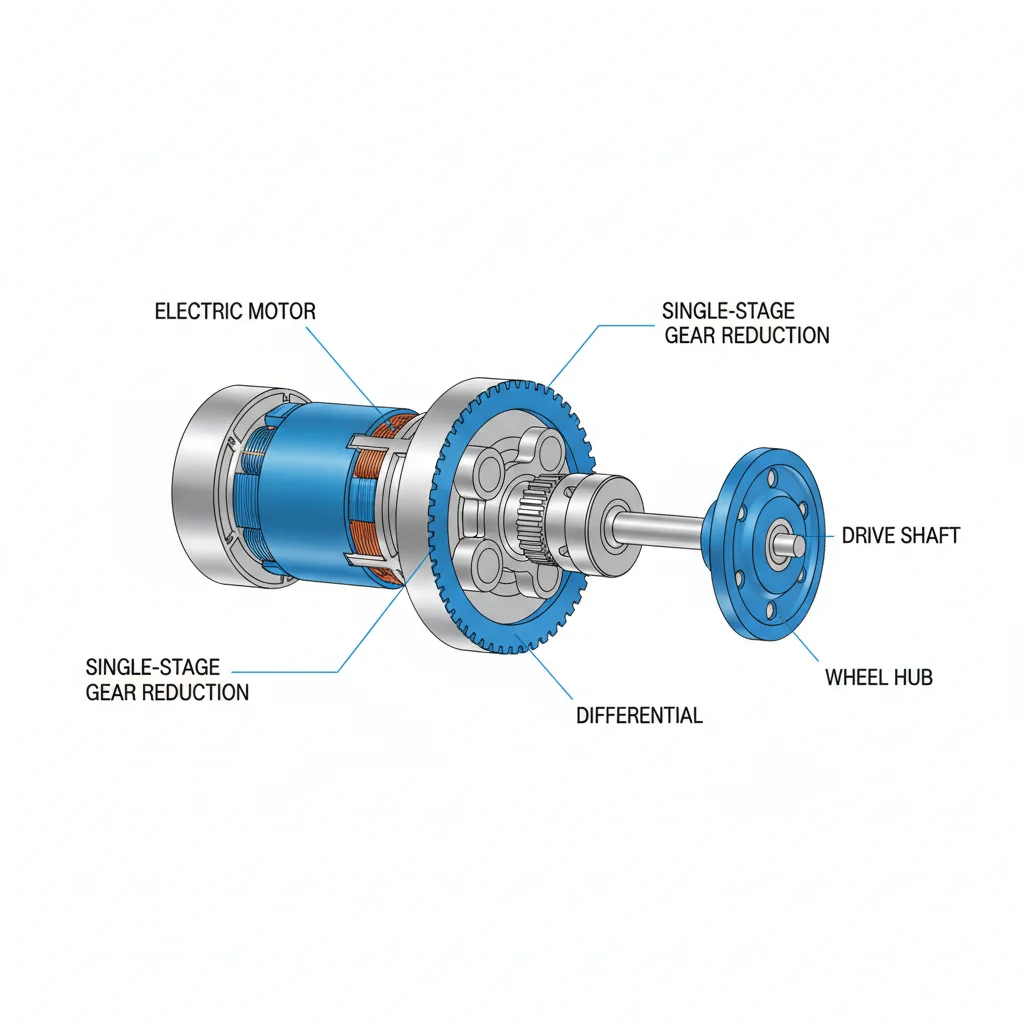
The practical result: electric motors simply don't need multiple gears to be effective. One fixed ratio — typically somewhere between 7:1 and 10:1 — steps down motor speed and steps up torque to drive the wheels. That's the entire drivetrain between the motor and your wheels in most EVs.
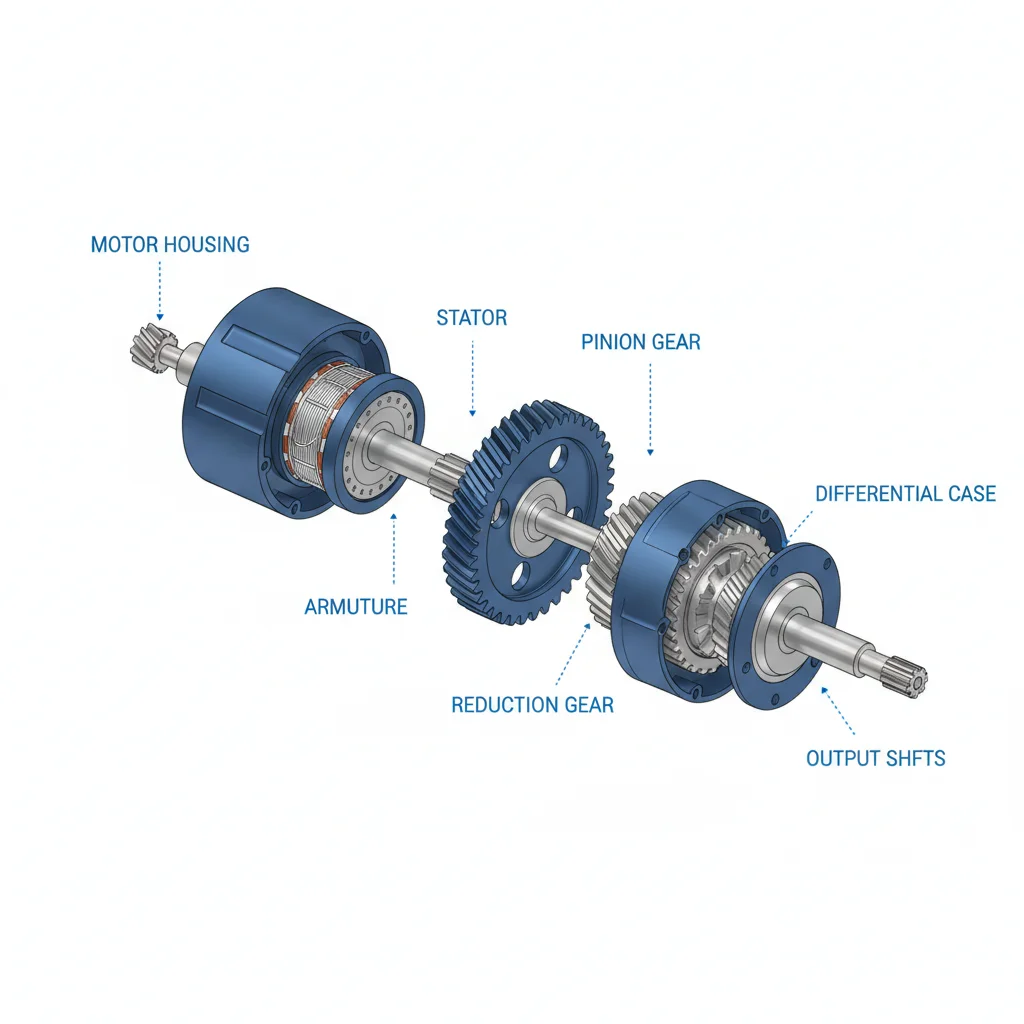
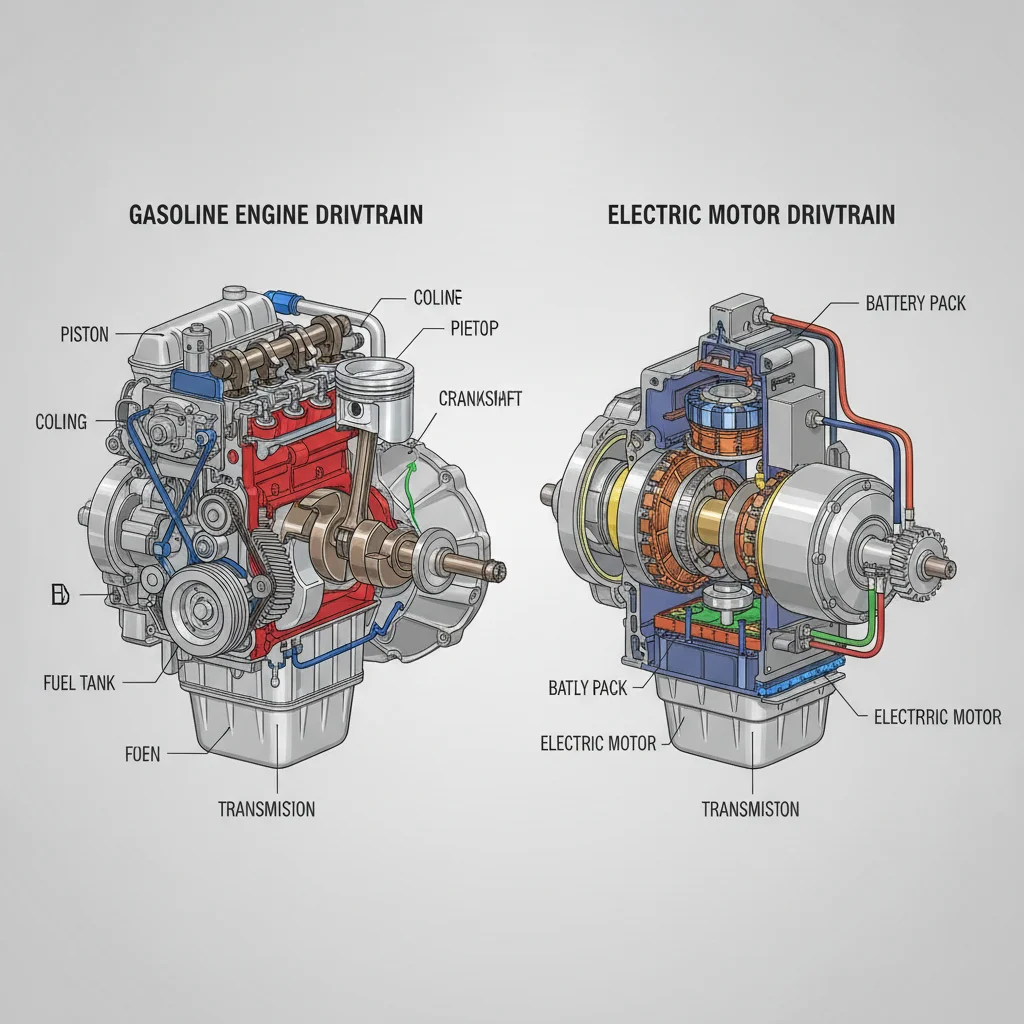
This is fundamentally different from the 6-, 8-, or 10-speed automatic transmissions you find in modern gas vehicles. Those transmissions have clutch packs, planetary gear sets, hydraulic controls, and dozens of wear components. A single-speed EV reduction unit has a handful of gears and bearings. The comparison to a gas drivetrain is explored thoroughly in our gas engine vs. electric drivetrain breakdown.
How Single-Speed Drivetrains Actually Work
The term "single-speed" is shorthand for a fixed-ratio gear reduction unit. It's not a transmission in the conventional sense — there's nothing to shift, no clutch to engage, and no torque converter absorbing energy during gear changes. The motor shaft connects through a fixed set of reduction gears to the differential and then to the drive wheels. The ratio is locked.
When you press the accelerator, the motor spins faster. When you lift off, it slows. The gear ratio doesn't change. This means the motor's RPM is always directly proportional to your road speed, scaled by that fixed ratio.
~8:1
Typical single-speed reduction ratio
Most passenger EV reduction units use a fixed gear ratio between 7:1 and 10:1, optimized for the motor's torque and RPM characteristics.
20,000+
Peak motor RPM in modern EVs
Some EV motors spin above 20,000 RPM at top speed, far exceeding any gas engine and making precision gear design critical in multi-speed units.
2
Speeds in Porsche Taycan rear transmission
The Taycan remains the most prominent production example of a multi-speed EV drivetrain, using two gears on its rear axle.
~100k mi
Typical reduction unit fluid service interval
Many EV manufacturers specify single-speed gearbox fluid inspection at 100,000 miles or more under normal operating conditions.
The advantages of this setup compound quickly:
- No shift lag. Torque delivery is continuous. There's no fraction-of-a-second interruption while a transmission selects a new gear.
- No shift shock. The power curve is smooth from 0 mph to top speed.
- Minimal drivetrain maintenance. The fluid in a single-speed reduction unit might need to be checked and replaced on a long service interval — some manufacturers specify 100,000 miles or more. This is expanded on in our article single-speed gearbox maintenance costs.
- Simpler packaging. A compact reduction unit is easier to integrate into tight spaces, enabling more flexible motor placement — front axle, rear axle, or both.
The tradeoff is that the fixed ratio has to compromise. It must work reasonably well at 0 mph, at 35 mph in city traffic, and at 75 mph on the highway. Engineers pick a ratio that optimizes for the most common use cases, which is generally urban and suburban mixed driving. At very high road speeds, the motor is spinning fast and may operate outside its most efficient range.
Regenerative Braking Isn't Affected by Gear Count
Regardless of whether an EV uses a single- or multi-speed setup, regenerative braking works the same way: the motor acts as a generator when decelerating, converting kinetic energy back into electricity. The number of gear ratios doesn't change this dynamic. One-pedal driving capability — where lifting off the accelerator provides strong regenerative deceleration — is a function of motor calibration and software, not drivetrain gear count. See our article on <a href="/electric-vehicles/ev-basics/how-evs-work/the-pros-and-cons-of-one-pedal-driving">the pros and cons of one-pedal driving</a> for more.
"Single-Speed" Doesn't Mean No Gears At All
It's a common misconception that single-speed EVs have a direct motor-to-wheel connection with no gears whatsoever. In reality, the reduction unit contains a small set of gears — they're just fixed in a single ratio rather than selectable. Think of it less like a bicycle with one gear and more like the final drive ratio in any vehicle: always engaged, never shifted. The simplicity is in the elimination of ratio selection, not the elimination of gears entirely.
When Multi-Speed Drivetrains Enter the Picture
A multi-speed EV drivetrain solves the high-RPM efficiency problem by giving the motor two or more gear ratios to choose from — similar in concept to how a gas engine uses a transmission, but for different reasons and with different engineering constraints.
The Porsche Taycan is the most prominent mainstream example. Its rear motor uses a two-speed transmission. First gear is a short ratio optimized for maximum acceleration. Second gear is a taller ratio that lets the motor operate more efficiently at highway speeds, and it enables a higher theoretical top speed without the motor over-revving. The Taycan's 0–60 time benefits from first gear's aggressive ratio; its autobahn-speed efficiency benefits from second.
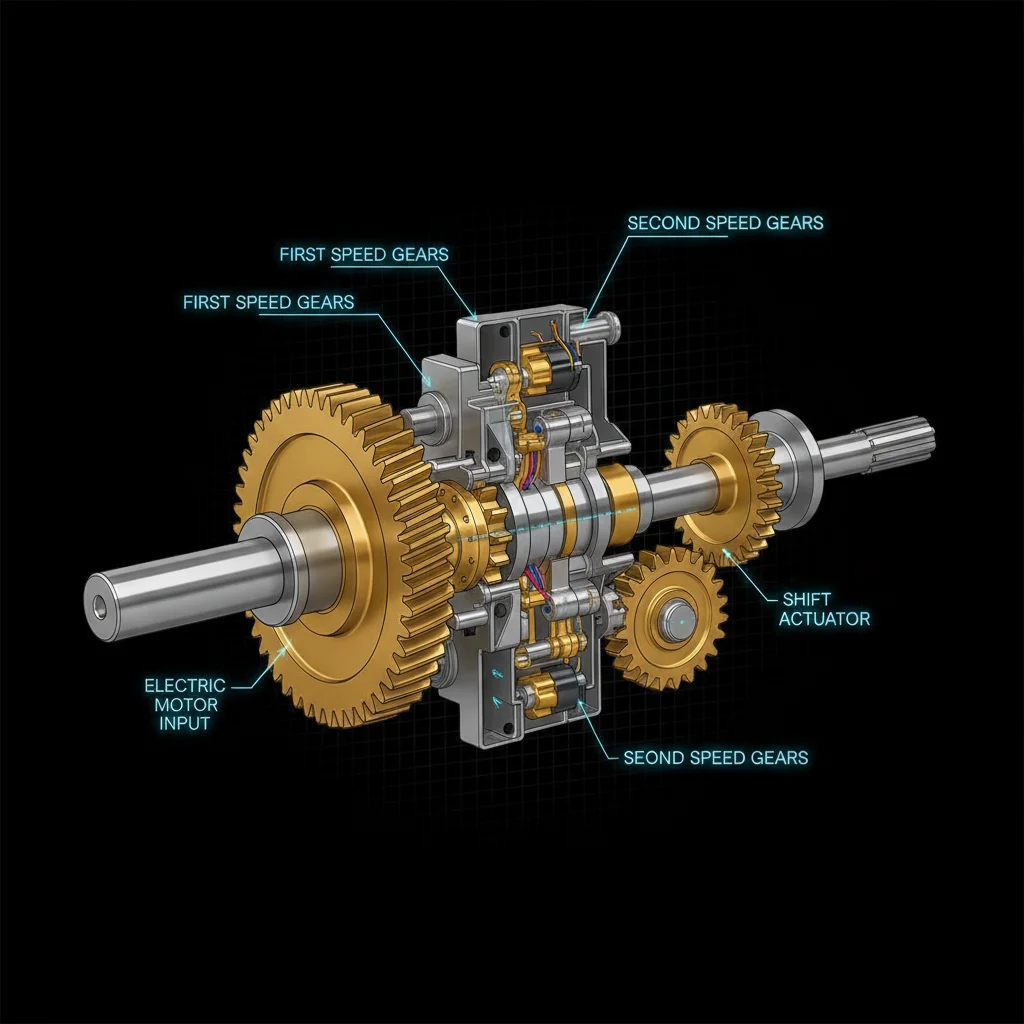
The Audi e-tron GT shares the same basic architecture, as it's built on the same platform. Some high-performance electric motorcycles also use two-speed setups. Commercial EVs — particularly electric trucks operating across widely varying load conditions — have also explored multi-speed systems because load variability creates a scenario closer to the gas engine's RPM problem.
Beyond two speeds, true multi-speed EV transmissions become rare quickly. The engineering challenge is significant: EV motors spin to very high RPM (often 15,000–20,000+ RPM), which demands precision engineering in any multi-speed unit. The shifts also need to be nearly seamless — an EV buyer who has experienced the smooth single-speed power delivery will immediately notice any harshness in a gear change.
It's also worth noting that multi-motor EV setups offer an alternative path to optimized performance without a multi-speed gearbox. Running a smaller, efficient motor for highway cruising and a larger motor for acceleration — or using torque vectoring between axles — can accomplish similar goals. Our article on dual-motor EVs covers how that architecture works in practice.
Head-to-Head: Single-Speed vs. Multi-Speed
The table below shows how these two approaches compare across the dimensions that actually matter to an EV buyer. Neither setup is universally superior — the right answer depends on what you're optimizing for.
| Criterion | Single-Speed | Multi-Speed |
|---|---|---|
| Mechanical complexity | Very low — fixed ratio only | Moderate — shift actuators added |
| 0–60 mph acceleration | Seamless, no shift interruption | First gear optimized, minimal shift lag |
| High-speed efficiency | Motor may over-rev at top speed | Higher gear keeps motor efficient |
| Top speed potential | Limited by single ratio | Higher ceiling possible |
| Drivetrain maintenance | Minimal — fluid check only | More frequent inspection needed |
| Manufacturing cost | Lower | Higher |
| Weight | Lighter | Heavier |
| Real-world adoption | Industry standard | Rare — performance segment only |
| Driving feel | Perfectly smooth, linear | Near-seamless with rare shift sensation |
One nuance worth calling out: the efficiency gap between single-speed and multi-speed is real but modest for most real-world driving. EPA range ratings for single-speed EVs are competitive with multi-speed competitors in the same segment. Where multi-speed starts to show clear efficiency gains is in sustained high-speed driving — think cross-country highway trips at 75–80 mph rather than typical daily commuting. If your driving is primarily urban and suburban, the single-speed efficiency compromise is largely invisible.
On the maintenance side, the difference is more clear-cut. Single-speed reduction units are among the lowest-maintenance drivetrain components in any consumer vehicle. Multi-speed EV transmissions, while still simpler than automatic transmissions in gas cars, add fluid circuits, shift actuators, and mechanical complexity that requires periodic inspection.
What This Means When You're Buying an EV
For the vast majority of EV buyers, the drivetrain speed count is not a meaningful purchase decision factor. Here's a practical framework for when it does matter:
Top-Speed Goals
If you regularly drive at speeds above 130 mph — track days, German-spec autobahn driving — multi-speed becomes relevant. The Porsche Taycan's two-speed rear transmission is a meaningful advantage in that context. For road-legal driving in the United States, where speed limits cap at 85 mph and most highway driving occurs between 65–75 mph, a well-engineered single-speed EV will reach its electronic speed limit (usually 120–155 mph) without drama.
Acceleration Character
Paradoxically, the quickest-accelerating street EVs — including the Tesla Model S Plaid — use single-speed drivetrains. Eliminating shift events removes any interruption in torque delivery. If raw 0–60 time is your metric, single-speed has an edge in street-legal conditions.
Highway Efficiency on Long Trips
This is where multi-speed can earn its keep. If you regularly do 300-mile highway runs at 75+ mph, a two-speed EV may offer slightly better range on that specific drive cycle. But the range difference is typically small — often within the margin of variation caused by headwinds, temperature, or tire pressure. It's a real factor, not a decisive one.
Maintenance Budget
Single-speed wins cleanly on simplicity. The reduction in moving parts relative to a gas drivetrain is dramatic, as detailed in why EVs have fewer moving parts. Multi-speed adds components back — still far fewer than an ICE transmission, but more than a single-speed unit.
Drivetrain Layout Flexibility
Single-speed reduction units are compact and easy to package, which is one reason they're common in both front- and rear-axle motor installations. This packaging flexibility is part of why dual-motor AWD EVs can exist without a traditional driveshaft connecting the axles — each motor and its reduction unit sits at its own axle. The FWD, RWD, and AWD in EVs article explains how that layout changes the driving dynamics picture.
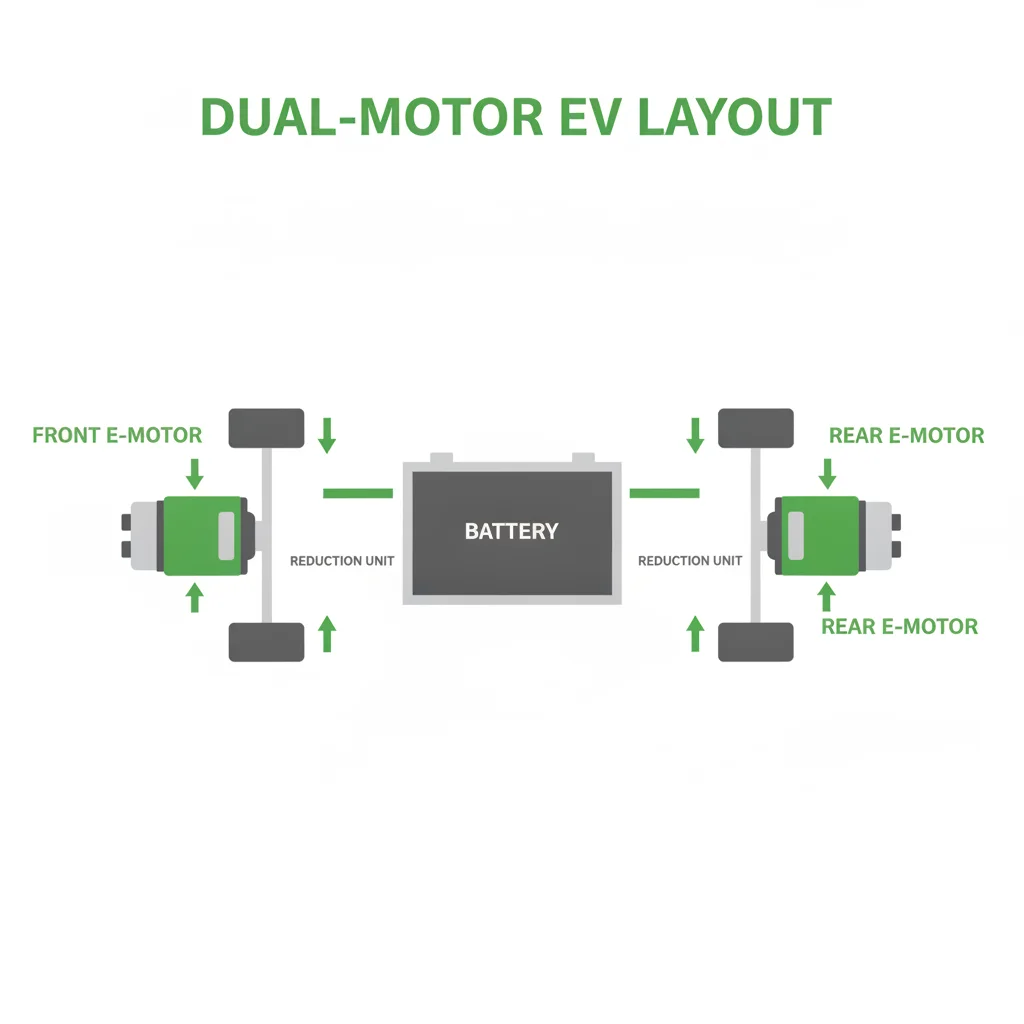
The bottom line: unless you're cross-shopping vehicles where one happens to have a two-speed transmission and the other doesn't, this is unlikely to be a deciding factor. Focus on range, charging network access, total cost of ownership, and how the car actually drives — the drivetrain architecture will likely fade into background detail once you've lived with the vehicle for a month.
For EV buyers still orienting to the full landscape of drivetrain and powertrain choices, the EV types explained hub is a good place to calibrate the bigger picture before going deep on drivetrain mechanics.

All claims are backed by peer-reviewed research. Sources on request.