Key Takeaways
Recovers energy to extend driving range
By converting braking energy back into electricity, regenerative braking can recover 10–30% of energy during urban driving cycles, meaningfully reducing how often you need to charge.
Dramatically reduces brake pad wear
With friction brakes used far less frequently, many EV owners go 80,000 miles or more before needing a pad replacement — roughly double or triple the interval of a gas vehicle.
Simplifies stop-and-go driving
Managing speed with one pedal in traffic eliminates constant pedal switching, which many drivers find less fatiguing on long city commutes once adapted to the feel.
Encourages smoother, more anticipatory driving
Because one-pedal driving rewards reading traffic early, it naturally builds better driving habits — smoother inputs, more forward attention, and fewer abrupt stops.
Most systems are adjustable or can be turned off
Very few EVs force strong regen on you — most offer a range of settings from aggressive one-pedal to a near-coast feel, giving you flexibility to match your driving style.
Steep adaptation curve for experienced gas drivers
Decades of muscle memory around lifting and braking separately can make strong regen feel unnatural or abrupt for weeks, and misjudging stopping distances is common early on.
Less efficient at steady highway speeds
Regenerative braking is only valuable when you are decelerating. On long highway stretches with minimal speed changes, strong regen can actually add unnecessary drag.
Can cause passenger discomfort or motion sickness
Abrupt deceleration when lifting the accelerator can unsettle passengers — particularly children or those prone to motion sensitivity — who are not anticipating the slowdown.
Rear brakes may corrode from underuse
Rear rotors and calipers that rarely engage friction braking can corrode or seize in wetter climates. This requires periodic inspection even if pads show almost no wear.
Not universally available or equally strong across all EVs
Some EVs — particularly from certain European and Japanese brands — default to a coast-like feel and require manual configuration to achieve true one-pedal stopping capability.
Our Verdict
One-pedal driving is a genuinely useful feature that delivers real efficiency gains in urban and suburban driving — but it is not for everyone, and it does not have to be. The ability to tune or disable regenerative braking strength means most EV buyers will find a setting that suits their style. If you do your heaviest driving in city traffic, learning to embrace it pays off in extended range and lower brake maintenance costs.
Best for city commuters, stop-and-go drivers, and anyone who wants to maximize EV range and minimize brake maintenance — less compelling for highway-heavy drivers or those who strongly prefer a traditional driving feel.
What One-Pedal Driving Actually Is
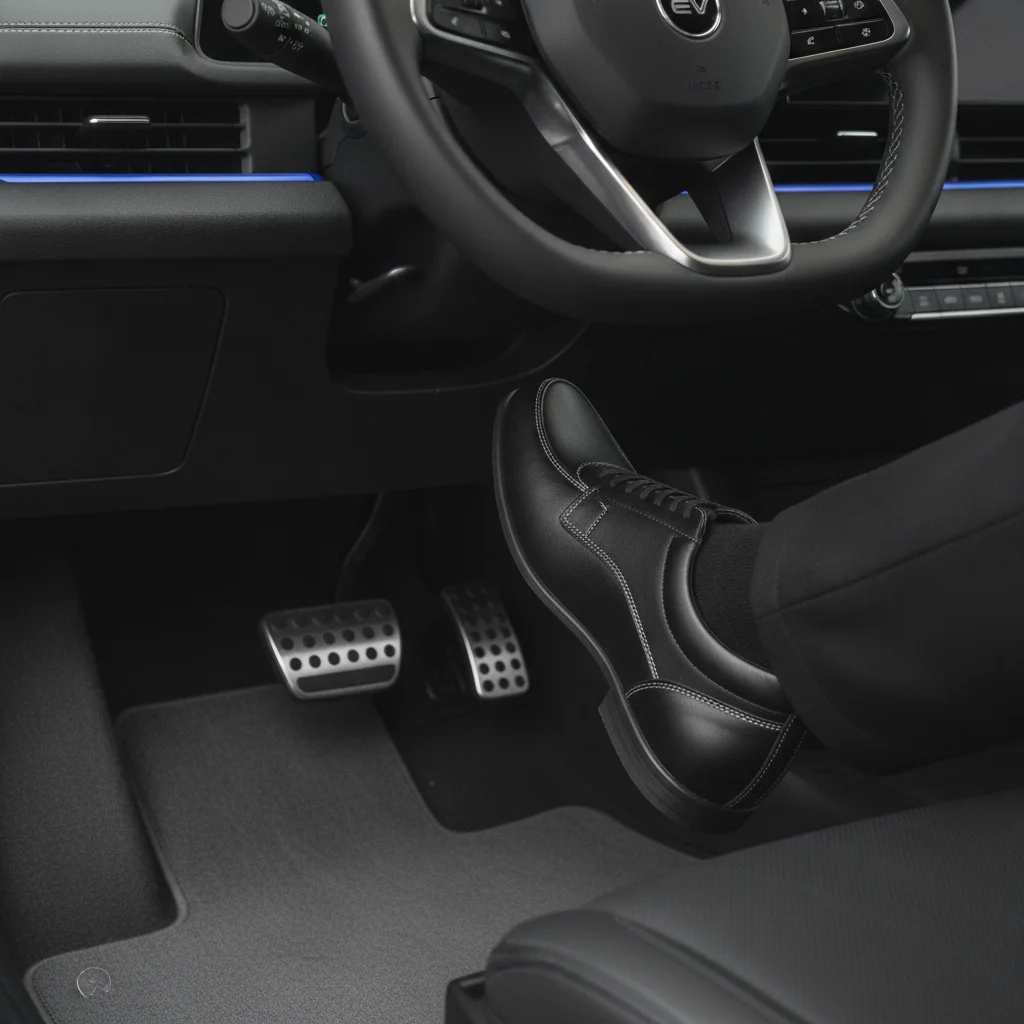
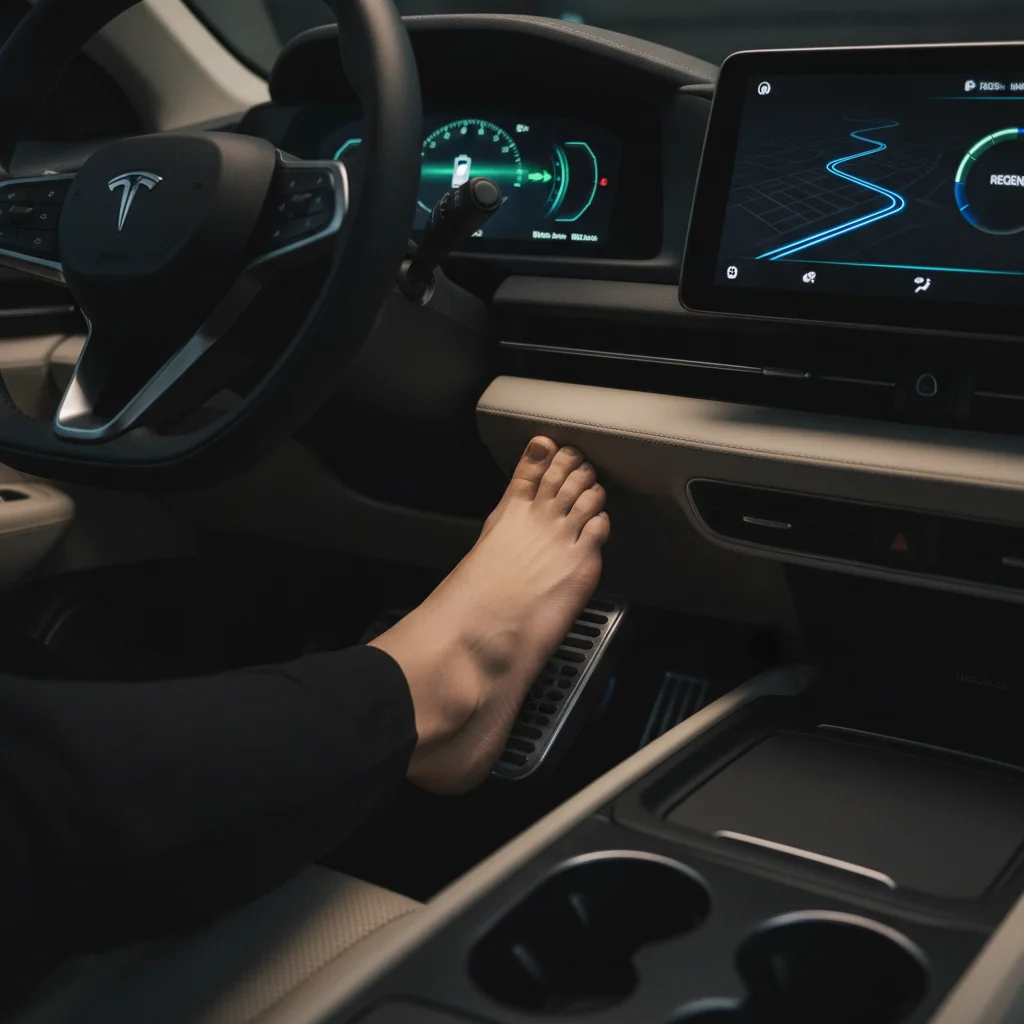
The name is a little misleading, so let's clear it up first. One-pedal driving does not mean your EV literally has one pedal — you still have both an accelerator and a brake. What it means is that in typical driving, you can manage your speed using only the accelerator: press it to go, lift off to slow down and stop.
The mechanism behind this is regenerative braking. When you release the accelerator in a compatible EV, the electric motor reverses its role and acts as a generator, converting your car's kinetic energy back into electricity that gets stored in the battery. That process creates resistance — enough, in most EVs with strong regen settings, to bring the car to a complete stop without touching the brake pedal at all.
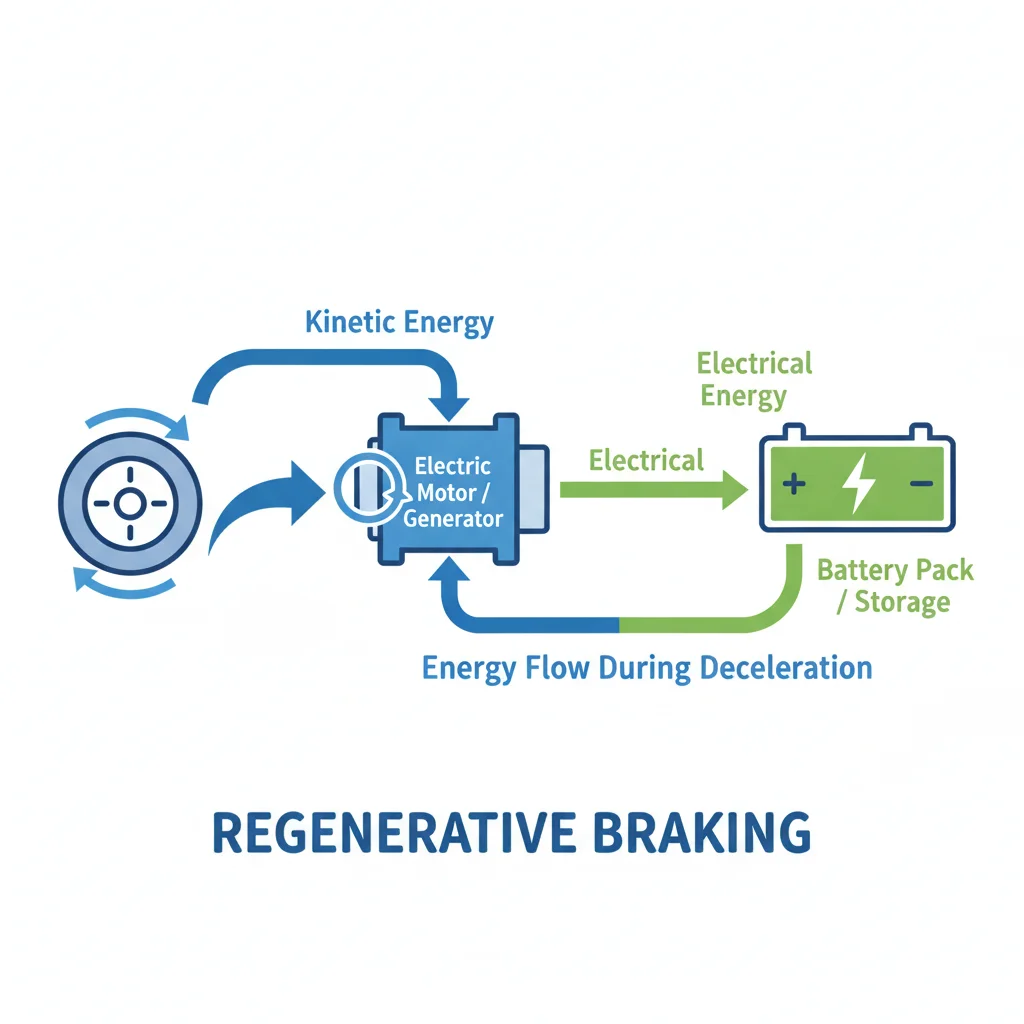
This is distinct from the light engine braking you get in a gas car when you lift off the throttle. Regenerative braking can be significantly more aggressive, and that's the source of most of the polarization around this feature. How hard the system brakes — and how much energy it recovers — depends on the vehicle, the driving mode selected, and how quickly you lift your foot.
Not all EVs offer full one-pedal capability. Some, like early Nissan LEAFs, had strong regen by default. Others, like Teslas, let you toggle between strong and light regen. A few EVs — particularly some from Korean and European manufacturers — default to a more coast-like feel and require deliberate setup to achieve true one-pedal stopping.
The Pros of One-Pedal Driving
Let's start with what makes this feature genuinely compelling for a large share of EV drivers.
Recovers energy to extend driving range
By converting braking energy back into electricity, regenerative braking can recover 10–30% of energy during urban driving cycles, meaningfully reducing how often you need to charge.
Dramatically reduces brake pad wear
With friction brakes used far less frequently, many EV owners go 80,000 miles or more before needing a pad replacement — roughly double or triple the interval of a gas vehicle.
Simplifies stop-and-go driving
Managing speed with one pedal in traffic eliminates constant pedal switching, which many drivers find less fatiguing on long city commutes once adapted to the feel.
Encourages smoother, more anticipatory driving
Because one-pedal driving rewards reading traffic early, it naturally builds better driving habits — smoother inputs, more forward attention, and fewer abrupt stops.
Most systems are adjustable or can be turned off
Very few EVs force strong regen on you — most offer a range of settings from aggressive one-pedal to a near-coast feel, giving you flexibility to match your driving style.
The efficiency gains are most pronounced in dense urban traffic. Every time a traditional vehicle brakes, kinetic energy is lost as heat through the brake pads and rotors. Regenerative braking captures a meaningful portion of that energy and sends it back to the battery — effectively extending your range. Studies and real-world testing suggest that regenerative braking can recover anywhere from 10% to 30% of energy in urban driving cycles, though the exact figure depends heavily on driving style and conditions.
10–30%
Energy recovered via regen braking in city driving
Industry testing and OEM efficiency data consistently show regenerative braking recovers 10–30% of energy in urban stop-and-go driving cycles.
~80,000 mi
Typical brake pad life on high-regen EVs
Many EV owners with strong regenerative braking settings report brake pad intervals of 80,000 miles or more, compared to 30,000–50,000 miles on gas vehicles.
1–3 weeks
Average driver adaptation period
Driver feedback across EV forums and owner surveys suggests most new EV owners feel comfortable with strong regen settings within one to three weeks of consistent use.
Beyond efficiency, many drivers report that one-pedal driving simply feels more intuitive over time. You develop a finer sense of throttle modulation — how quickly you lift, how early you anticipate a stop — and the car rewards that smoothness with a more fluid ride. It eliminates the two-foot dance between pedals at traffic lights and intersections, which some drivers find cognitively simpler once they have adapted.
The brake pad savings are also real. Because regen handles most deceleration, friction brakes see far less use. Some EV owners report going 80,000–100,000 miles before needing a brake pad replacement — compared to the 30,000–50,000-mile interval typical in gas vehicles. That translates to genuine out-of-pocket savings over time.
The Cons of One-Pedal Driving
One-pedal driving has real limitations, and they are worth taking seriously before you decide how you want to configure your EV.
Steep adaptation curve for experienced gas drivers
Decades of muscle memory around lifting and braking separately can make strong regen feel unnatural or abrupt for weeks, and misjudging stopping distances is common early on.
Less efficient at steady highway speeds
Regenerative braking is only valuable when you are decelerating. On long highway stretches with minimal speed changes, strong regen can actually add unnecessary drag.
Can cause passenger discomfort or motion sickness
Abrupt deceleration when lifting the accelerator can unsettle passengers — particularly children or those prone to motion sensitivity — who are not anticipating the slowdown.
Rear brakes may corrode from underuse
Rear rotors and calipers that rarely engage friction braking can corrode or seize in wetter climates. This requires periodic inspection even if pads show almost no wear.
Not universally available or equally strong across all EVs
Some EVs — particularly from certain European and Japanese brands — default to a coast-like feel and require manual configuration to achieve true one-pedal stopping capability.
The adaptation curve catches a lot of new EV owners off guard. If you have driven a conventional automatic for years, your foot has deeply ingrained habits. In a one-pedal setup, lifting the accelerator even slightly initiates braking — which can feel abrupt or disorienting when you are first learning. Misjudging your deceleration point and stopping several feet short of where you intended is a common early experience.
At highway speeds, the efficiency argument also weakens considerably. Regenerative braking is most valuable when there is frequent deceleration — city lights, roundabouts, suburban cross streets. On a steady 65 mph highway run, you are lifting off the pedal rarely, so there is less energy to recover. In that context, a smoother coast setting may actually be more efficient because it reduces unnecessary drag on the drivetrain.

There is also a passenger comfort dimension. Abrupt regen deceleration can unsettle passengers who are not expecting it, particularly on the first few rides. Some drivers with motion-sensitive passengers — children, elderly relatives — find that backing off the regen strength or using a coast mode makes the ride more pleasant for everyone in the car.
Regen Braking Does Not Replace Your Brake Pedal
Even with maximum one-pedal driving settings, your friction brakes remain fully functional and will engage when you press the brake pedal. In emergency situations, always use the brake pedal — regen alone may not provide stopping distances as short as full friction braking. Most EVs also automatically apply friction brakes to assist regen when deceleration demand exceeds what the motor can provide.
Battery Temperature Affects Regen Strength
In very cold weather, a cold lithium-ion battery has limited capacity to absorb a fast charge from regenerative braking. As a result, some EVs automatically reduce regen strength when the battery is cold, which can catch drivers off guard during winter months. Once the battery warms up — typically within the first 10–15 minutes of driving — full regen strength returns.
Finally, while friction brake pads wear much more slowly, the rear brakes in particular can develop issues from the opposite problem: too little use. Brake rotors that never get used can corrode, and in some climates, rear calipers can seize if they go long stretches without engagement. This is a known maintenance item on high-regen EVs and worth discussing with a service advisor every couple of years.
How One-Pedal Driving Compares Across EV Types
If you are evaluating different EVs or even comparing full electrics to hybrids, one-pedal driving capability varies significantly across vehicle types.
Full battery electric vehicles (BEVs) typically offer the strongest regen settings and the most complete one-pedal experience. Because there is no combustion engine providing any natural engine braking, manufacturers have built sophisticated regen systems to fill that gap — and because BEVs are solely dependent on battery energy, there is also the greatest incentive to recover as much as possible.
Traditional hybrids (HEVs) use regenerative braking too, but the system is typically less aggressive and rarely produces a true one-pedal stop. The gas engine is always present, and the driving feel remains closer to a conventional car. Plug-in hybrids (PHEVs) sit in between — they often have more capable regen than HEVs when running in EV mode, but still tend to default to a softer, more traditional deceleration feel.
It's also worth noting that EV drivetrain architecture affects the regen experience. Single-speed EV drivetrains, which are the norm in most battery electrics, are particularly well-suited to strong regenerative braking because the motor is directly coupled to the wheels with no gear changes interrupting the energy recovery process.
Tips for Getting Comfortable With One-Pedal Driving
If you have just bought an EV or are test-driving one, here is a practical approach to getting comfortable without frustrating yourself or your passengers.
- Start with reduced regen settings. Most EVs allow you to select low, medium, or high regen strength. Starting on a lighter setting lets you get used to the EV's throttle response before you add aggressive braking to the equation.
- Practice in a parking lot first. Before you take on real traffic, spend ten minutes in an empty lot learning exactly how quickly the car decelerates when you lift off at various speeds. This calibrates your instincts before the stakes are real.
- Look further ahead on the road. One-pedal driving rewards forward-looking attention. If you lift the accelerator 200 feet before a light instead of 50, you will come to a smooth, comfortable stop. Early reading of traffic is the core skill.
- Use paddles or steering-wheel controls if available. Many EVs — including Hyundai, Kia, and BMW models — give you steering wheel paddles to adjust regen strength on the fly. This is useful for highway stretches where you want to coast and city sections where you want full regen.
- Give it at least two weeks of consistent use. Almost every driver who sticks with strong regen for two weeks reports that reverting to a traditional brake setup afterward feels strange. The adaptation is real, and it happens faster than you expect.
Should You Use One-Pedal Driving or Turn It Off?
The honest answer is: it depends on your driving environment and personal preference, and neither choice is wrong.
If the majority of your driving is urban or suburban — commuting through traffic, running errands, school pickups — one-pedal driving with strong regen is a straightforward win. It extends your range, reduces brake wear, and once learned, simplifies your interaction with the car in stop-and-go conditions.
If you are primarily a highway driver — long interstate runs, rural highways with light traffic — strong regen is less valuable. You will spend most of your time at steady speeds where the accelerator is constant, and the few times you do decelerate, a light regen or coast setting is smoother and arguably more efficient because it avoids unnecessary resistance while cruising.
Many experienced EV owners end up using a hybrid approach: strong regen in city driving modes, lighter regen or coast on the highway. If your EV has drive mode selection (Eco, Normal, Sport), these modes often adjust regen strength automatically alongside other parameters, which handles some of this switching for you.
The broader point is that one-pedal driving is a tool, not a religion. Configure it for your actual driving, not for the way EV enthusiasts on forums say you should drive. The range of EV types available today means there is almost certainly a regenerative braking profile that fits your habits — it just takes a little time to find it.

All claims are backed by peer-reviewed research. Sources on request.