Key Takeaways
Dual-Motor EV
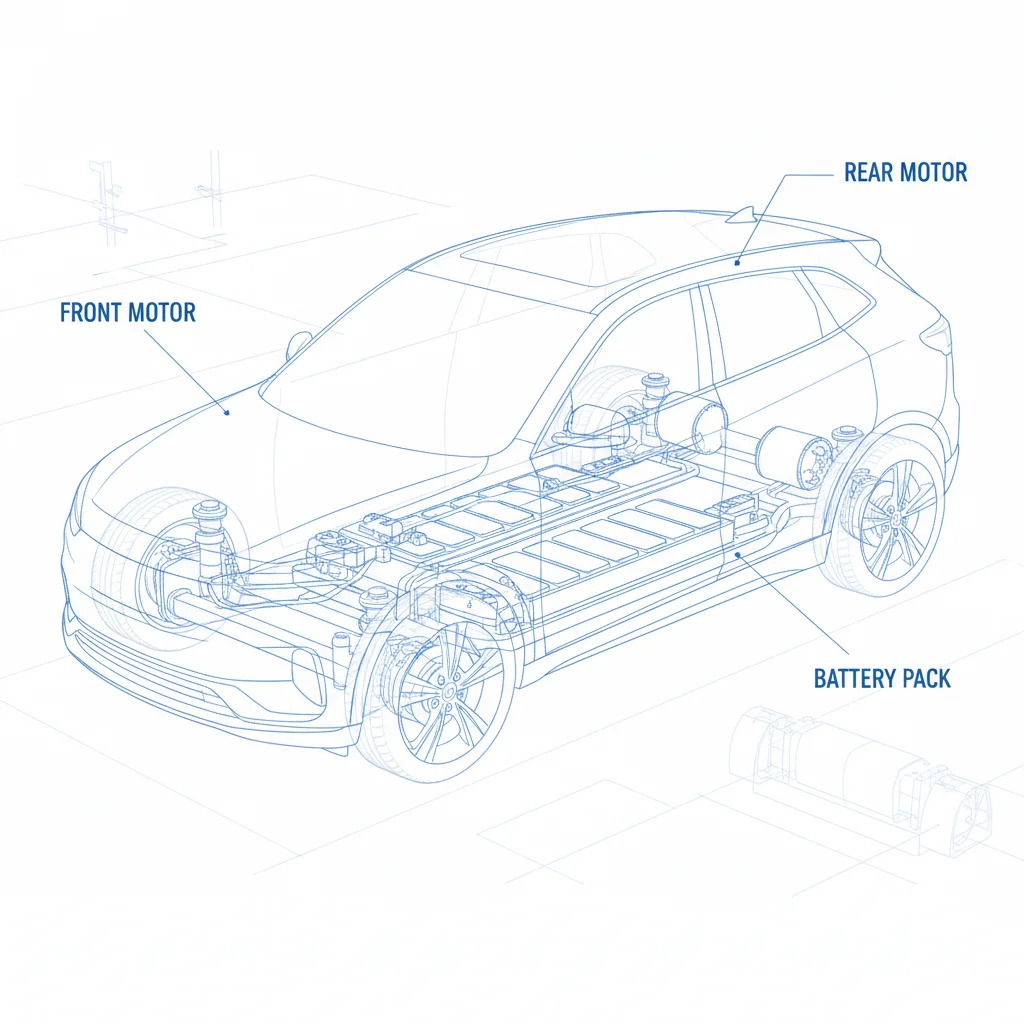
A dual-motor electric vehicle uses two separate electric motors — typically one for the front axle and one for the rear — instead of a single motor driving one set of wheels. Each motor can operate independently, giving the car's control system precise command over how much power goes to each axle at any given moment. The result is all-wheel drive traction, faster acceleration, and more sophisticated handling than a single-motor setup can deliver.
In most implementations, the front and rear motors are different sizes and types: a permanent magnet synchronous motor at one axle pairs with an induction motor at the other, allowing the system to deactivate one motor at highway speeds to conserve energy.
Why the Number of Motors Actually Matters
When you're shopping for an EV, the motor count shows up in trim names constantly — Long Range AWD, Dual Motor, Performance — but the marketing copy rarely explains what a second motor actually changes about the driving experience. It's more than just a traction upgrade.
A single-motor EV works exactly as you'd expect: one motor spins either the front or rear wheels, and the other axle is just along for the ride. That's fine for most daily driving. But a dual-motor EV is a fundamentally different mechanical system — one where the car's software becomes an active participant in deciding, thousands of times per second, how much power goes where.
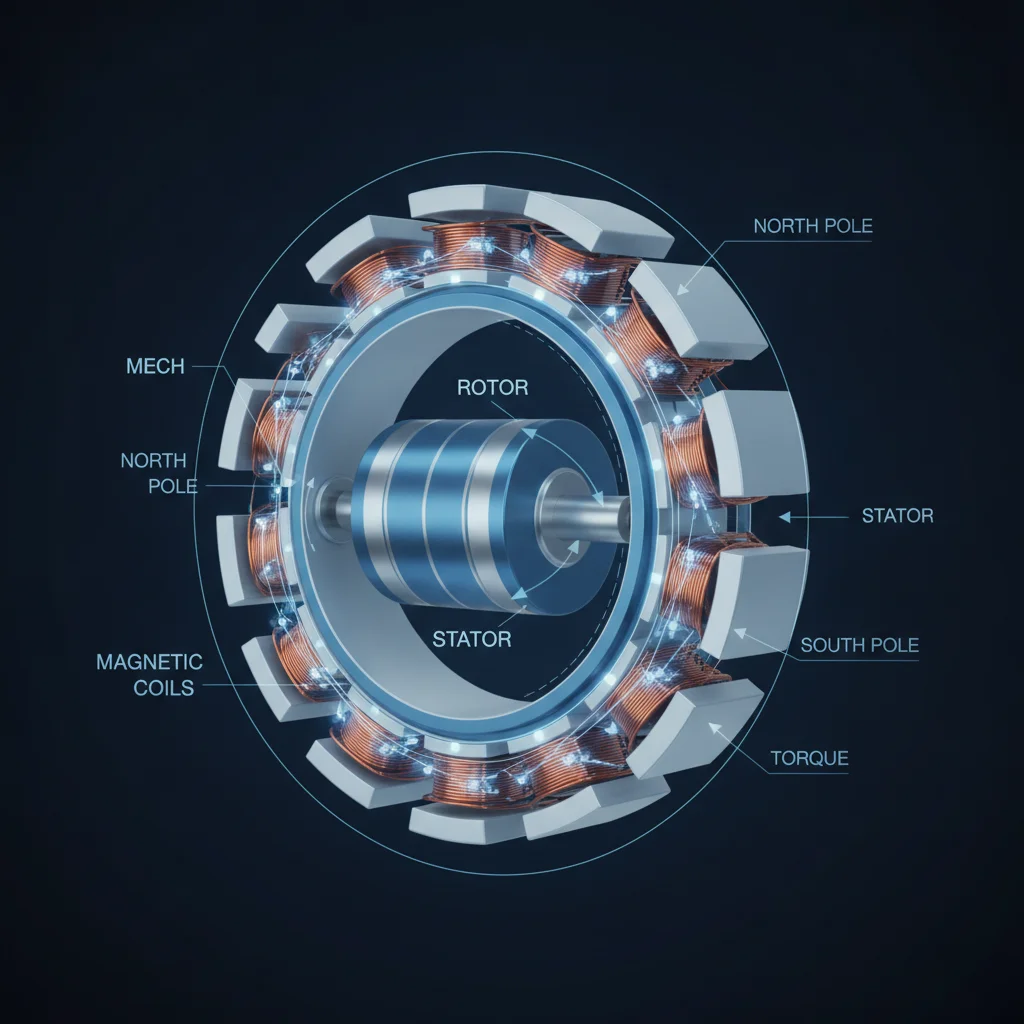
To understand why that matters, it helps to know how an electric motor converts battery energy into motion. Inside an electric motor, the magic is in electromagnetic force acting on a rotor — and that force is available instantly, from zero RPM, without any rev-building delay. When you add a second motor at the opposite axle, you double that instant-torque capability and you give the system a tool for precise, real-time power distribution.
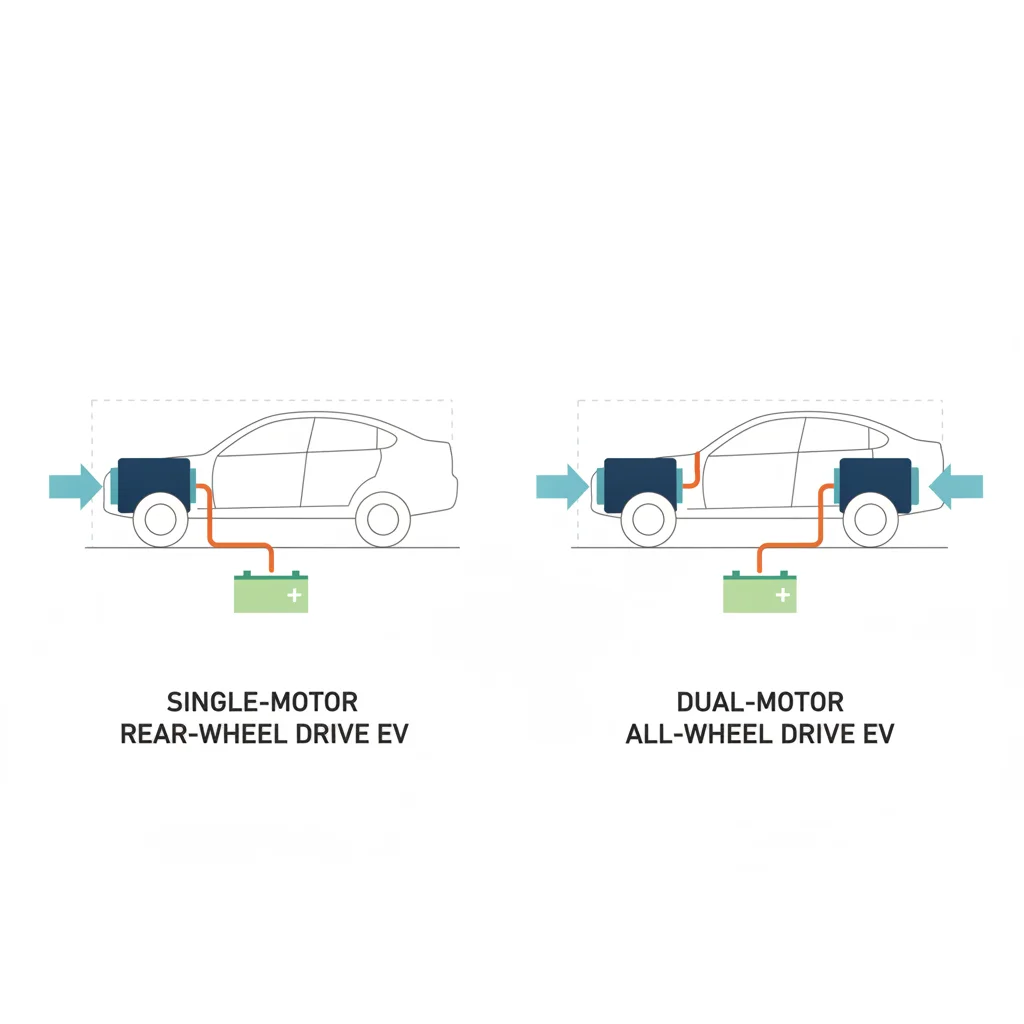
This explainer breaks down the mechanical reality of dual-motor EVs in plain terms: how they deliver AWD, why they're faster, what torque vectoring actually means for your daily commute, and when the extra cost is — and isn't — worth paying.
How a Second Motor Creates All-Wheel Drive
In a conventional all-wheel drive vehicle, a single combustion engine sends power through a complex arrangement of driveshafts, differentials, and transfer cases to reach all four wheels. The system is heavy, mechanically complex, and inherently slow to respond because physical hardware has to redirect power through rotating shafts.
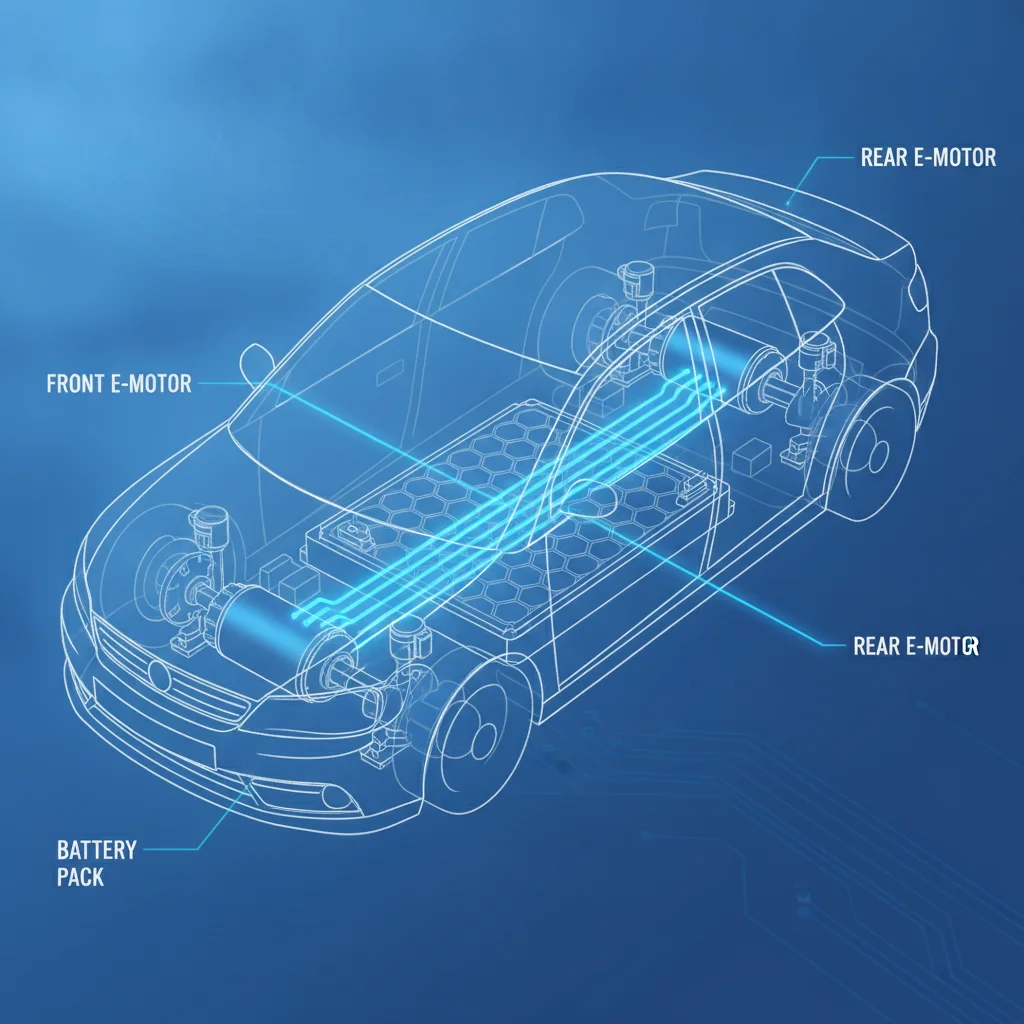
In a dual-motor EV, there is no driveshaft connecting the front and rear axles. Each motor is mechanically independent. The front motor drives the front wheels; the rear motor drives the rear wheels. They share a battery pack and a central control unit, but mechanically they're separate systems. This is what makes electric AWD fundamentally different from conventional AWD — the two axles are linked electronically, not physically.
No Driveshaft Required
One of the most counterintuitive facts about dual-motor EVs is that the two axles have no physical connection. There's no driveshaft running the length of the car, no transfer case, no mechanical differential between front and rear. The 'connection' is entirely electronic — a control unit sending commands to two separate motors. This is why dual-motor EVs can offer AWD without the weight, complexity, or efficiency losses of conventional AWD hardware.
Range Penalty Is Smaller Than You Think
Many buyers overestimate the range hit from choosing a dual-motor trim. Because modern systems deactivate one motor during steady highway driving, real-world efficiency losses are modest. EPA-rated range typically drops 5–10% on dual-motor trims. If you're doing mostly city and suburban driving with frequent acceleration and deceleration, the penalty can be even smaller, since regenerative braking recovery helps offset the added energy consumption.
The practical consequence is speed of response. When you hit ice and a rear wheel starts to slip, a traditional mechanical AWD system might take 300–500 milliseconds to mechanically shift torque away from the spinning wheel. An electronically controlled dual-motor EV can reduce or reverse torque on a motor in under 20 milliseconds — roughly 20 times faster than your ABS can react. The control system doesn't wait for a problem to develop; it's continuously adjusting power delivery in anticipation.
For a deeper look at how FWD, RWD, and AWD layouts work differently in the EV context, see how electric drivetrains rewrite the rules of drive layout.
< 20ms
Dual-motor torque response time
Electronic torque redistribution between motors occurs in under 20 milliseconds — far faster than mechanical AWD systems, which typically take 300–500ms to respond.
~1.8s
0–60 mph improvement, dual vs. single motor
The Tesla Model Y rear-wheel drive runs 0–60 in 6.6 seconds; the dual-motor AWD version does it in 4.8 seconds — a 1.8-second improvement from the same basic vehicle.
5–10%
Typical range penalty for dual-motor trims
EPA range ratings for dual-motor EVs are typically 5–10% lower than equivalent single-motor trims, largely offset by smart motor deactivation at highway speeds.
$3,000–$6,000
Typical dual-motor premium over single-motor
Most automakers price the dual-motor AWD upgrade between $3,000 and $6,000 above the base single-motor trim on the same model line.
The Performance Equation: Why Two Motors Accelerate Faster
Acceleration is limited by two things: how much total power you have, and how effectively you can put that power to the ground. A single-motor rear-wheel drive EV has one set of tires doing all the work. Push too hard and those tires break loose; traction control intervenes and cuts power, slowing acceleration. The same car with a front motor now has twice as many tires sharing the load. You can apply full power sooner and maintain it longer without overwhelming tire grip.
This is why 0–60 times drop dramatically between single- and dual-motor trims — not just because of added total power, but because of better power utilization. Even if a dual-motor car had the same total kilowatt output, it would still accelerate faster because the load is shared across more contact patches.
“The combination of instant torque and independent axle control in a dual-motor electric vehicle gives engineers a level of dynamic precision that simply isn't achievable with any mechanical all-wheel drive system. The limiting factor becomes the tire, not the drivetrain.”
— Sandy Munro, Automotive manufacturing analyst and founder of Munro & Associates
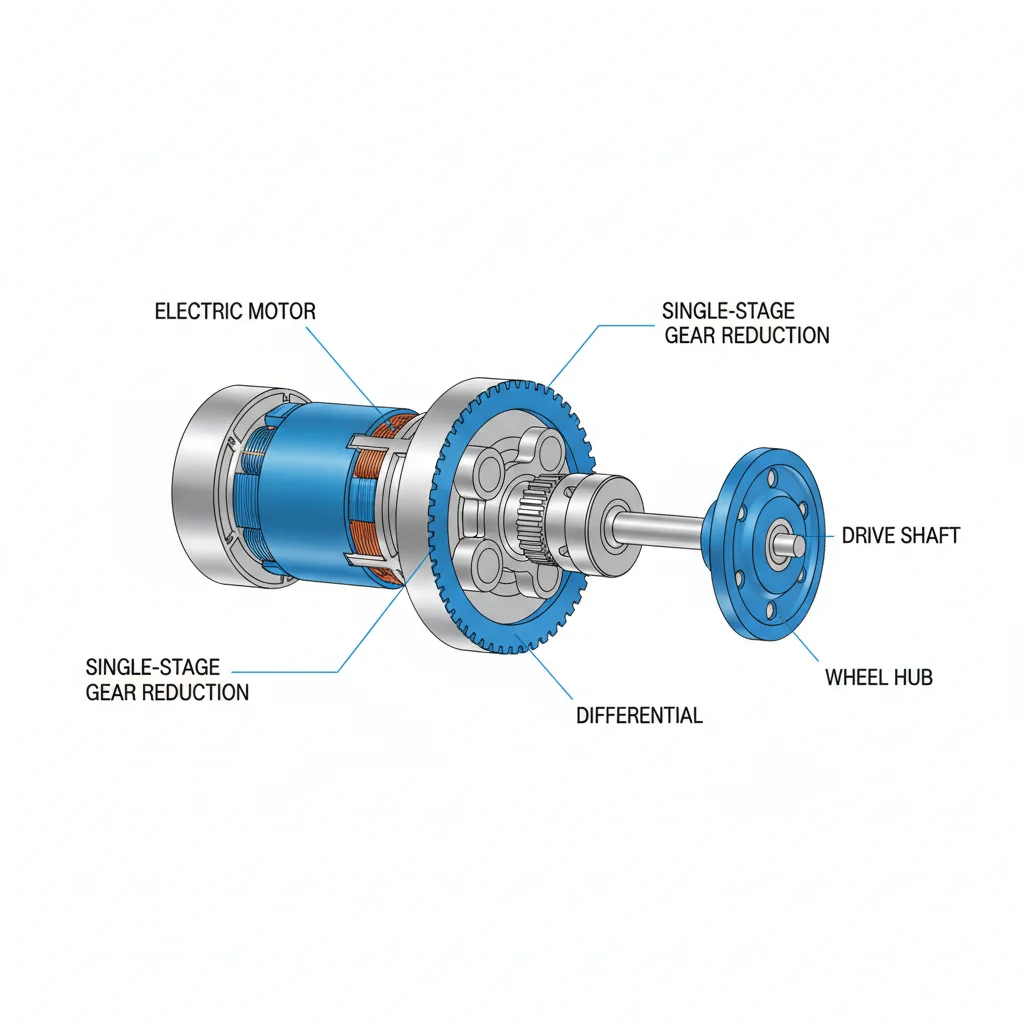
There's also the gearing question. Most EVs use a single-speed reduction gear rather than a multi-gear transmission — single-speed vs. multi-speed EV drivetrains explains why that works so well for electric motors. When you have two motors, each one can be optimized for a different part of the speed range if the manufacturer chooses. One motor might be geared for low-speed torque; the other for high-speed power. Tesla, Rivian, and others have used this approach to deliver both explosive off-the-line acceleration and sustained highway performance from the same powertrain.
Test Both Modes Before You Decide
If you're comparing single- and dual-motor trims of the same EV, ask for a test drive in both — ideally on a wet or low-grip surface. The handling difference is immediately noticeable. Torque vectoring makes the car feel more planted and intuitive in corners, and that's something a spec sheet won't convey.
Factor Tire Costs Into Dual-Motor Ownership
Dual-motor EVs are typically heavier and faster than their single-motor siblings. Higher weight plus higher torque output equals faster tire wear. Budget for more frequent rotations and potentially shorter tire life — particularly if you drive the performance variant aggressively. <a href="/electric-vehicles/ev-ownership-costs/ev-maintenance-basics/tire-wear-on-electric-vehicles-why-it-happens-faster-and-what-to-do">EV tire wear patterns</a> are different from ICE vehicles and worth understanding before you commit.
Torque Vectoring: The Hidden Handling Benefit
Most buyers understand that two motors mean more traction. Fewer understand that two independent motors also enable torque vectoring — and that this changes how a car handles corners, not just how it grips in snow.
Torque vectoring means distributing different amounts of torque to different axles (or wheels) to steer the car dynamically. When you turn into a corner, the physics of the turn want the car to push wide (understeer) or swing the rear out (oversteer). A torque vectoring system counters both tendencies by shifting power: sending more torque to the rear during corner entry to rotate the car, then redistributing toward the front as you accelerate out to maintain stability.
In a dual-motor EV, the control unit can do this instantaneously because it's just adjusting electrical signals to two separate motors. There's no hydraulic actuator, no clutch pack to engage — just software commanding motors. The result is handling that feels more planted and responsive than the tire specs would suggest.
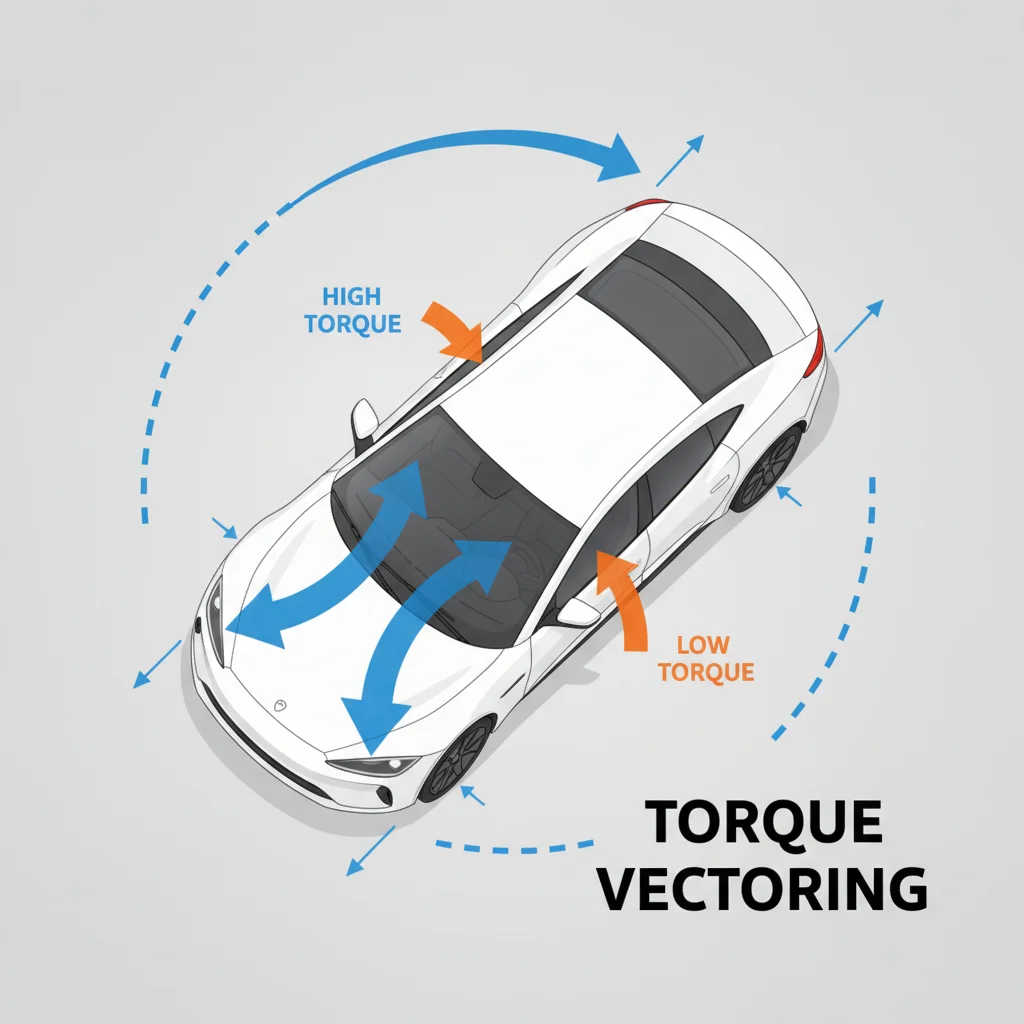
Some manufacturers go further, adding left-right torque vectoring within an axle using a specialized twin-motor or planetary gear arrangement. This is distinct from front-to-rear vectoring and is found in performance-oriented EVs like the Rivian R1T, Lexus RZ 450e (in its Force torque vectoring variant), and certain Mercedes EQ models. But even basic front-to-rear vectoring from a standard dual-motor setup is a meaningful handling upgrade over single-motor equivalents.
Motor Deactivation: The Efficiency Story
A common concern when buyers see dual-motor EVs is range. If you're running two motors instead of one, doesn't that use more energy? The answer is: sometimes, but less than you'd think.
Modern dual-motor EVs are designed to deactivate one motor — almost always the front motor — when steady-state cruising conditions don't require all-wheel drive capability. On a flat highway at 65 mph with light traffic, most dual-motor EVs are effectively running as single-motor vehicles. The deactivated motor's rotor disconnects or freewheels, reducing drag. The second motor reactivates within milliseconds when the system detects wheel slip, a sudden throttle input, or challenging conditions.
This on-demand architecture is why the range gap between single- and dual-motor trims is narrower than buyers often expect. The EPA-rated range penalty for choosing dual-motor is typically 5–10% on most current models — meaningful, but not the dramatic efficiency cliff many assume.
No Driveshaft Required
One of the most counterintuitive facts about dual-motor EVs is that the two axles have no physical connection. There's no driveshaft running the length of the car, no transfer case, no mechanical differential between front and rear. The 'connection' is entirely electronic — a control unit sending commands to two separate motors. This is why dual-motor EVs can offer AWD without the weight, complexity, or efficiency losses of conventional AWD hardware.
Range Penalty Is Smaller Than You Think
Many buyers overestimate the range hit from choosing a dual-motor trim. Because modern systems deactivate one motor during steady highway driving, real-world efficiency losses are modest. EPA-rated range typically drops 5–10% on dual-motor trims. If you're doing mostly city and suburban driving with frequent acceleration and deceleration, the penalty can be even smaller, since regenerative braking recovery helps offset the added energy consumption.
Where dual-motor setups do consume more energy is during aggressive driving: repeated hard acceleration, towing near maximum capacity, or driving in conditions that keep both motors active continuously. If your primary use case is spirited driving or regular towing, build that range reduction into your planning.
Redundancy: The Practical Safety Benefit Nobody Talks About
There's one dual-motor advantage that rarely makes it into marketing materials: drivetrain redundancy. A single-motor EV with a motor failure is immobile — you need a flatbed. A dual-motor EV with one motor that fails or is disabled still has another motor capable of moving the car.
This isn't a theoretical scenario. Electric motors are extremely reliable, but their associated power electronics — inverters, control modules — can fail. In a dual-motor vehicle, many manufacturers program a limp-home mode that limits power but keeps the vehicle mobile on the surviving motor. That's a meaningful real-world benefit, especially on longer road trips or in areas with limited roadside assistance.
It's also worth noting that heavier, more powerful EVs — which tend to be dual-motor — place greater demands on tires. The combination of additional weight and higher torque output accelerates wear. Tire wear on electric vehicles is a real ownership cost consideration, particularly if you're driving a performance dual-motor model aggressively.
Test Both Modes Before You Decide
If you're comparing single- and dual-motor trims of the same EV, ask for a test drive in both — ideally on a wet or low-grip surface. The handling difference is immediately noticeable. Torque vectoring makes the car feel more planted and intuitive in corners, and that's something a spec sheet won't convey.
Factor Tire Costs Into Dual-Motor Ownership
Dual-motor EVs are typically heavier and faster than their single-motor siblings. Higher weight plus higher torque output equals faster tire wear. Budget for more frequent rotations and potentially shorter tire life — particularly if you drive the performance variant aggressively. <a href="/electric-vehicles/ev-ownership-costs/ev-maintenance-basics/tire-wear-on-electric-vehicles-why-it-happens-faster-and-what-to-do">EV tire wear patterns</a> are different from ICE vehicles and worth understanding before you commit.
Is a Dual-Motor EV Worth the Extra Cost?
The dual-motor premium varies by manufacturer and model, but the range is consistent: expect to pay $3,000–$6,000 more than the base single-motor trim. On some performance variants, the gap is larger. That's a real sum of money, and it deserves a clear-eyed answer.
Pay the premium if: you live in a region with meaningful winter driving, you tow regularly, performance is a priority, or you're buying a heavier vehicle like a truck or SUV where AWD traction management matters more. The handling improvements and snow-weather capability are genuine and consistent.
Skip the upgrade if: you live in a mild climate, you're primarily optimizing for maximum range and efficiency, and straight-line performance isn't a priority. A single-motor rear-drive EV is a competent, capable vehicle for the vast majority of daily driving scenarios.
For buyers still deciding which EV category fits their lifestyle, the EV types explained hub is a useful starting point — it covers BEV, PHEV, and HEV options across different use cases. And if you're thinking about the broader drivetrain architecture question, the comparison of front-wheel, rear-wheel, and all-wheel drive in EVs will give you the full context before you decide.
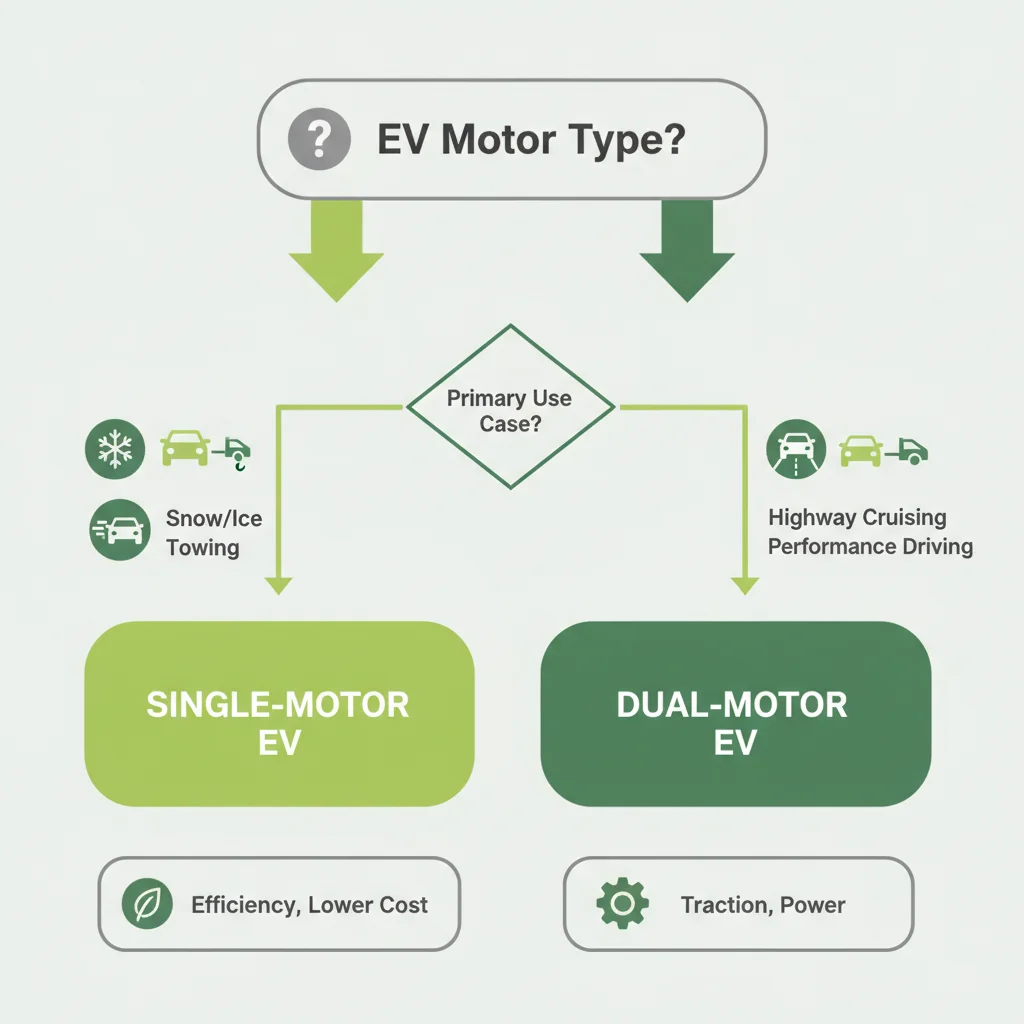
Bottom line: dual-motor EVs aren't just a performance toy. They're a different class of drivetrain architecture that changes traction, handling, safety, and capability in ways that matter to real drivers. Whether those changes justify the cost premium depends entirely on how and where you drive.

All claims are backed by peer-reviewed research. Sources on request.