Key Takeaways
EVSE (Electric Vehicle Supply Equipment)
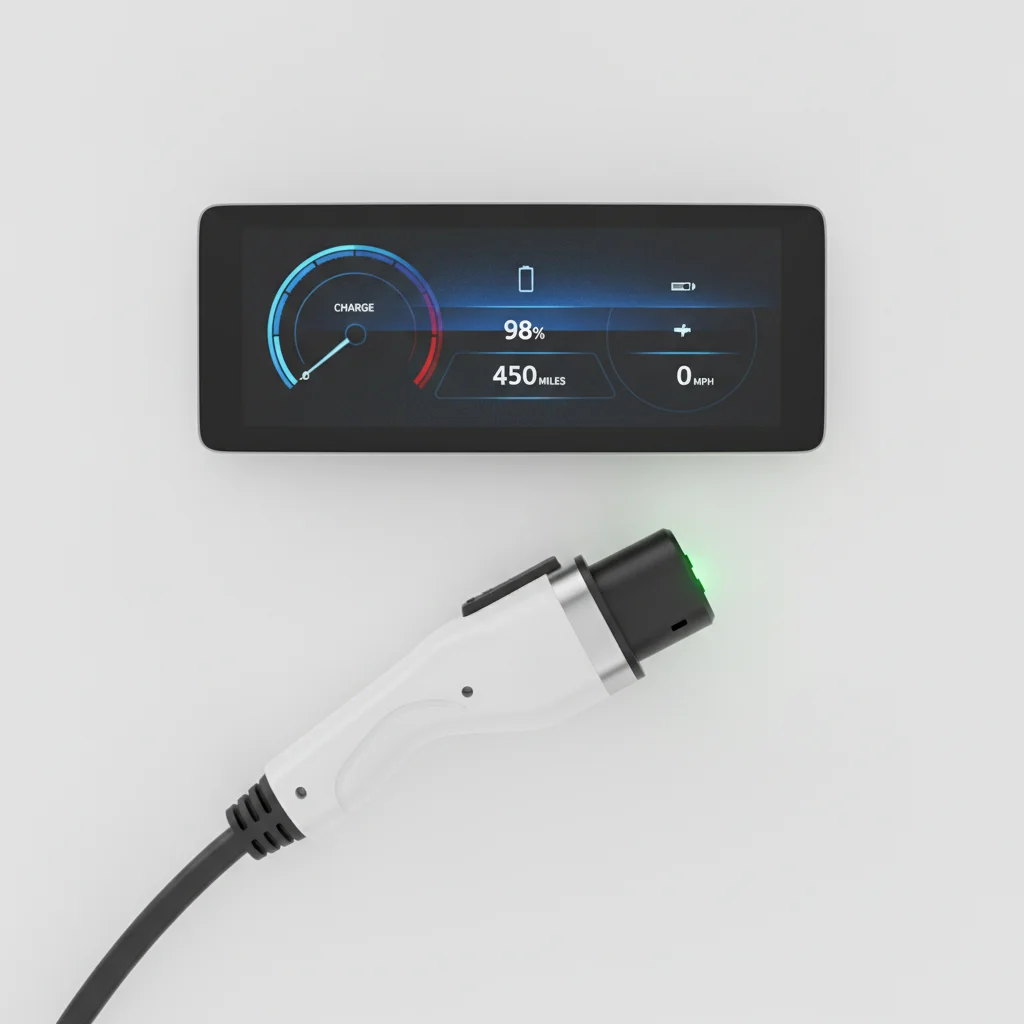
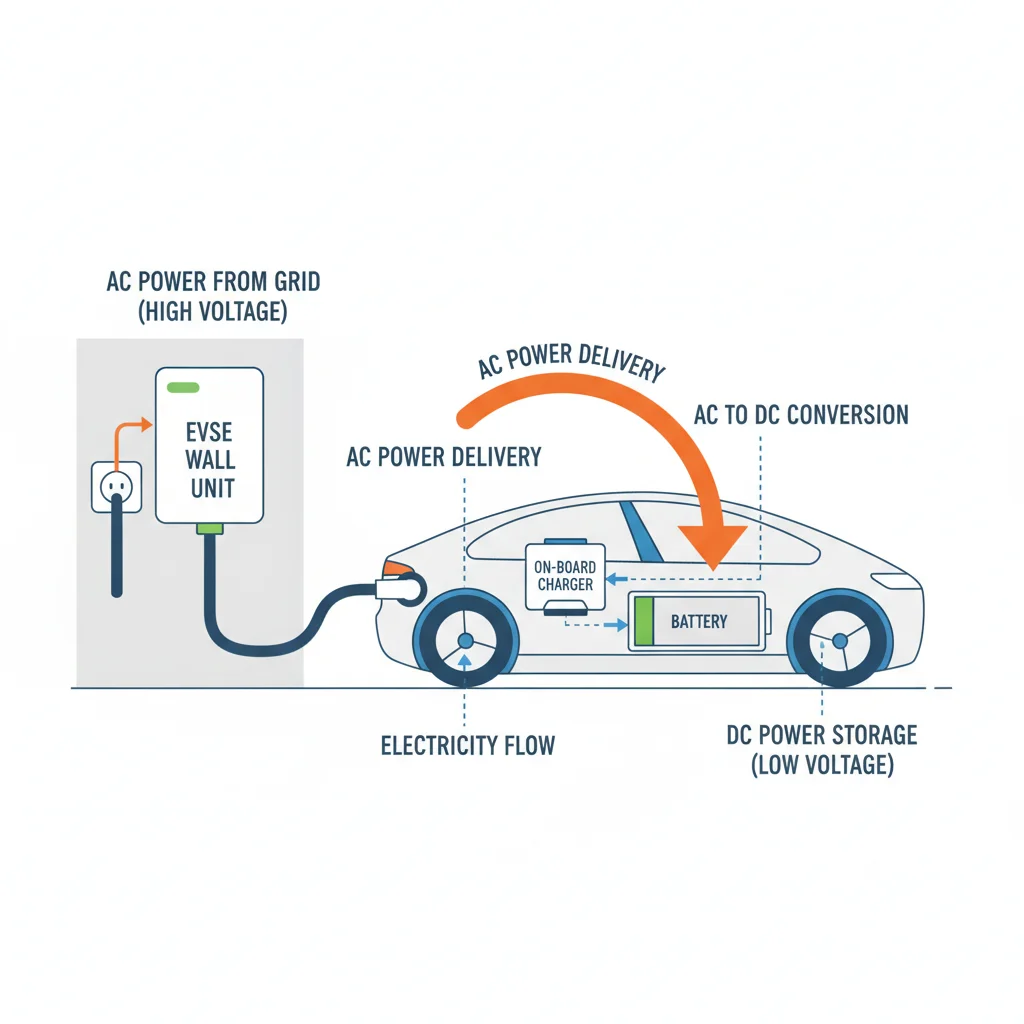
EVSE stands for Electric Vehicle Supply Equipment. It is the infrastructure — the wall unit, cable, and plug — that safely delivers electricity from your home or a public station to your car. Despite what most people call it, an EVSE is not technically a charger. The actual charger is a component built inside the vehicle itself that converts AC electricity into the DC power used to fill the battery.
Per SAE J1772 and NEC Article 625, EVSE includes all conductors, connectors, attachment plugs, and other equipment needed to transfer energy between a power source and an EV. The on-board charger (OBC) inside the vehicle performs the AC-to-DC conversion.
Why This Terminology Actually Matters
Most people call the box on their garage wall a 'charger.' Automakers call it a 'charging station.' The federal government and electrical codes call it Electric Vehicle Supply Equipment, or EVSE. These aren't just interchangeable labels — they reflect genuinely different components, and using the wrong term can cost you real money.
When you call an electrician and say 'I need to install an EV charger,' you might get a 120V outlet installed when you actually needed a 240V dedicated circuit. When you shop for 'a home charging station' without understanding Level 1 versus Level 2, you may overspend on equipment your panel can't support — or underspend on gear that can barely keep pace with your daily driving.
This guide cuts through the acronyms. By the end, you'll know exactly what EVSE means, how it differs from the actual charger inside your car, and how that knowledge directly informs one of the most practical decisions every EV owner faces: choosing between Level 1 and Level 2 home charging.
For a broader look at EV ownership vocabulary, the EV Terminology Glossary is a useful companion reference. But for this article, we're going deep on one specific concept that shapes your charging setup from day one.
EVSE vs. Charger: Where the Line Actually Falls
Here's the distinction that matters most: the charger lives inside your car.
Every battery-electric vehicle and plug-in hybrid contains an on-board charger (OBC) — a piece of electronics that takes the alternating current (AC) from your home's electrical grid and converts it into the direct current (DC) that fills the battery. That conversion happens inside the vehicle, not in the wall-mounted unit.
The EVSE's job is to act as a smart, safe conduit. It monitors the connection, communicates with the vehicle, controls the flow of electricity, and ensures nothing dangerous happens during the handshake between grid and car. It is, in essence, a sophisticated extension cord with built-in safety logic — not a charger in the technical sense.
“The confusion between 'charger' and 'charging station' is understandable, but it matters more than people realize. When consumers use vague language, they can end up with equipment that doesn't match their vehicle's capability — and that mismatch costs them either in speed or in money spent on capacity they'll never use.”
— Britta Gross, Director of Transportation Electrification, Rocky Mountain Institute
Why does that distinction matter practically? Because the speed at which your EV charges at home is limited by whichever component is the bottleneck: either the output capacity of your EVSE or the maximum input the vehicle's on-board charger can accept. If you buy a 48-amp Level 2 EVSE but your car's OBC maxes out at 7.2 kW (about 30 amps at 240V), you're paying for capacity you'll never use.
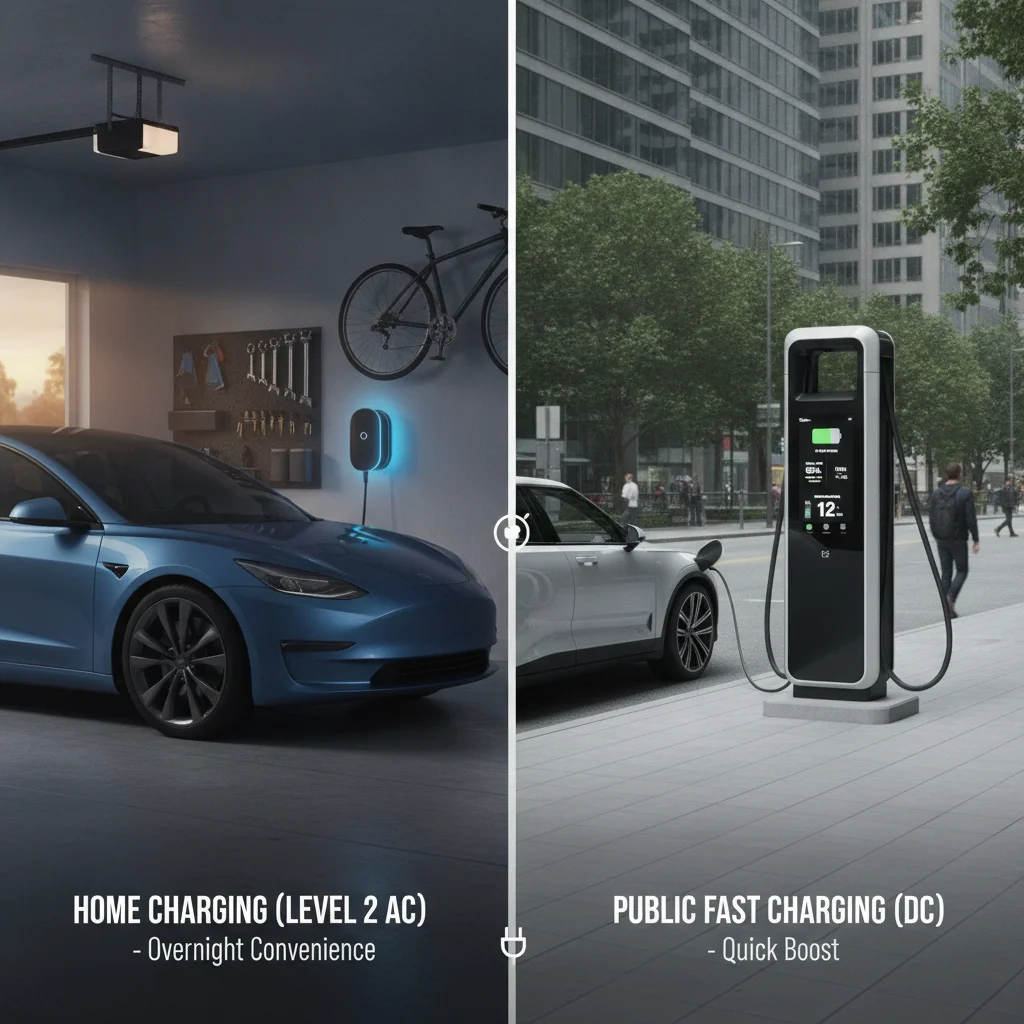
Understanding this also clarifies why DC fast charging (Level 3) works differently — those stations bypass the on-board charger entirely and push DC power directly into the battery pack. That's why they can deliver 50–350 kW instead of the 7–19 kW typical of home Level 2 setups. See AC vs. DC Charging for a full breakdown of how each power type works inside your EV.
80%
EV charging that happens at home
According to the U.S. Department of Energy, approximately 80% of EV charging sessions in the U.S. take place at the owner's residence.
3–5 mph
Miles of range added per hour, Level 1
Level 1 EVSE operating at 120V/12A delivers roughly 1.4 kW, translating to 3–5 miles of range per charging hour for most EVs.
20–30 mph
Miles of range added per hour, Level 2
A typical 7.2 kW Level 2 EVSE at 240V adds approximately 20–30 miles of range per hour, depending on vehicle efficiency.
30%
Federal tax credit for EVSE installation
The Alternative Fuel Vehicle Refueling Property Credit covers 30% of equipment and installation costs, up to $1,000 for residential EVSE through 2032.
$500–$1,700
Typical all-in Level 2 EVSE cost
Combined unit and installation costs for residential Level 2 EVSE typically fall between $500 and $1,700 before federal and utility incentives.
Level 1 vs. Level 2 EVSE: The Decision Most Owners Actually Face
For the vast majority of EV owners, the real-world charging decision comes down to two options at home: Level 1 or Level 2 EVSE. Understanding what each one is — and what it isn't — makes that decision much easier.
Level 1 EVSE
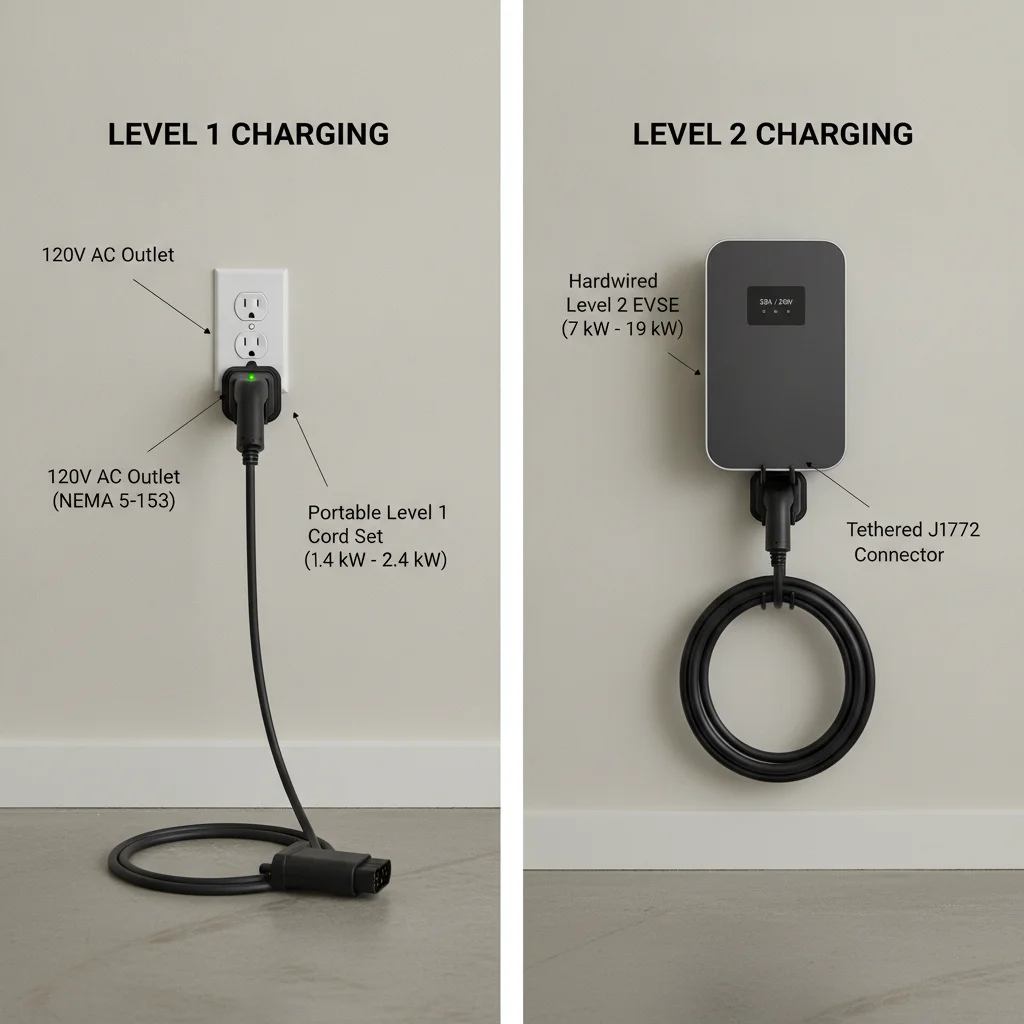
Level 1 EVSE delivers electricity at 120 volts, the same voltage as a standard U.S. wall outlet. The 'EVSE' in this case is often just the portable cord set that comes in the box with your vehicle — a unit with a standard three-prong plug on one end and a J1772 connector on the other.
- Charge rate: 1.2–1.8 kW, adding roughly 3–5 miles of range per hour
- Installation cost: $0 if a standard 120V outlet already exists in the garage
- Best for: Drivers covering fewer than 30–40 miles per day, plug-in hybrids with small batteries, or households where Level 2 installation isn't feasible
Level 2 EVSE
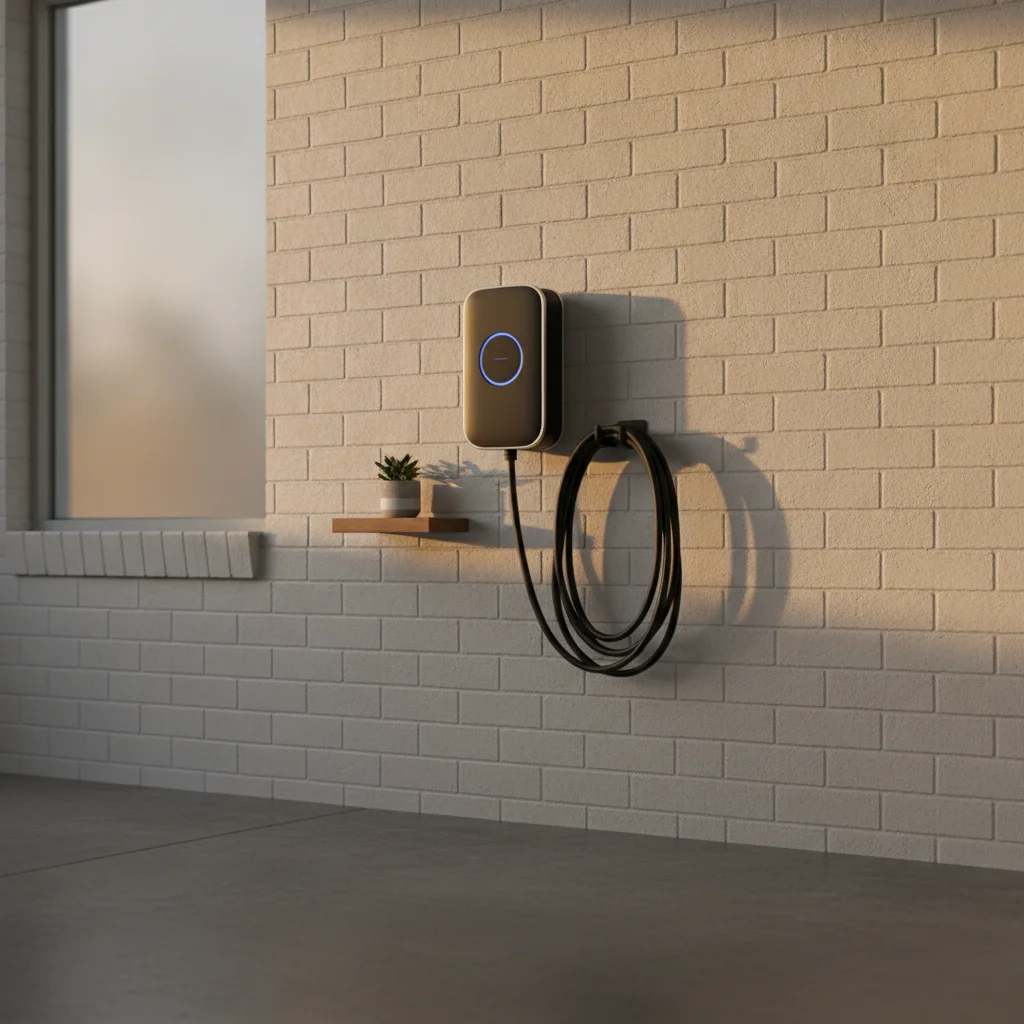
Level 2 EVSE operates at 240 volts — the same voltage used by a clothes dryer or electric range. This requires either a dedicated 240V outlet (NEMA 14-50 or NEMA 6-50) or a hardwired installation. The wall unit itself is a separate purchase beyond what comes with the vehicle.
- Charge rate: 3.3–19.2 kW, adding 20–30 miles of range per hour at common 7.2 kW output
- Installation cost: $500–$1,700 combined (unit + electrician), before incentives
- Best for: Full battery-electric vehicles, longer daily commutes, and households that want a fully charged car every morning regardless of when they plugged in
Check Your Car's On-Board Charger Limit First
Before purchasing any Level 2 EVSE, look up your vehicle's maximum AC charging rate in kilowatts — it's usually listed in the spec sheet under 'charging' or 'on-board charger.' Divide that number by 0.24 to estimate the amperage you actually need. Buying an EVSE significantly above that ceiling wastes money without adding any charging speed.
Use Off-Peak Hours to Slash Charging Costs
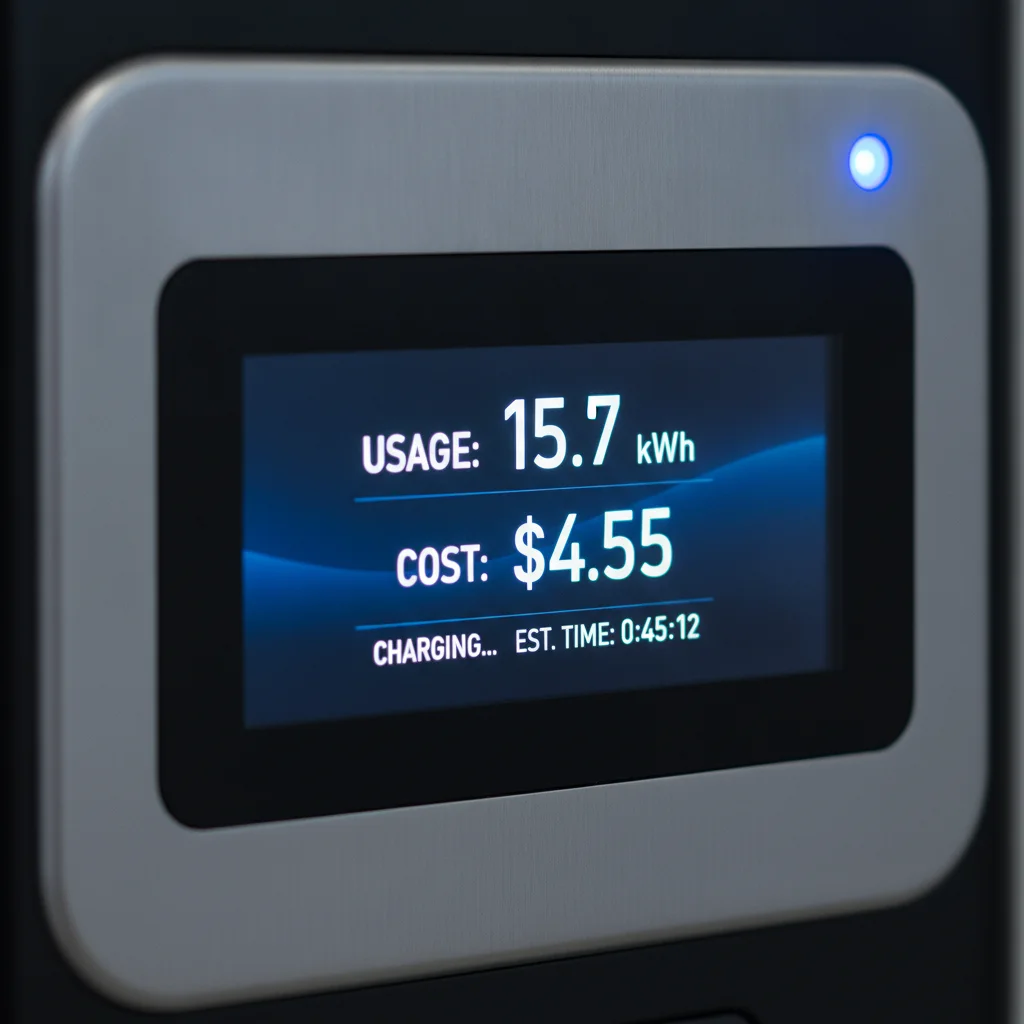
If your utility offers time-of-use rates, a smart Level 2 EVSE that lets you schedule charging for overnight hours can cut your per-kWh electricity cost by 30–50% in many markets. Check your utility's rate schedule before deciding whether to spend extra on a Wi-Fi-enabled unit — for many EV owners, the payback period is well under two years.
The federal Alternative Fuel Vehicle Refueling Property Credit (Form 8911) can cover 30% of Level 2 EVSE and installation costs, up to $1,000 for residential use through 2032. Many utilities also offer rebates of $100–$500. Factor those in before comparing Level 1 vs. Level 2 on cost alone.
What to Look for When Buying Home EVSE
Once you've decided on Level 2, the EVSE market can feel overwhelming. Here's how to cut through the noise.
Match the amperage to your vehicle's on-board charger
Look up your car's maximum AC charging rate in kW. Divide by 240 to get the amperage your vehicle can actually use. A Tesla Model 3 Long Range, for example, accepts up to 11.5 kW, or about 48 amps. Buying a 32-amp unit (7.7 kW) would leave roughly a third of available capacity on the table. Conversely, if your car tops out at 7.2 kW, a 48-amp unit won't charge it any faster — it just costs more.
Hardwired vs. plug-in (NEMA 14-50)
Plug-in Level 2 EVSE units connect to a NEMA 14-50 outlet and can be taken with you if you move. Hardwired units require an electrician but tend to be cleaner installs and are sometimes required by local codes. Either is legitimate — choose based on your housing situation and whether portability matters.
Smart features vs. basic units
Smart EVSE units offer Wi-Fi connectivity, scheduling (charge during off-peak rate hours), energy monitoring, and integration with home energy systems. Basic units just push electricity safely. If your utility has time-of-use rates — where electricity is cheaper overnight — smart scheduling can meaningfully reduce your monthly charging costs. See key terms for EV charging costs for a plain-English breakdown of the billing concepts involved.
UL listing and weatherproofing
Any EVSE you buy for home use should carry a UL listing (or equivalent) and an IP65 or better weatherproof rating if it will be installed in an exposed outdoor location. Don't cut corners here — this equipment operates in damp environments and handles significant amperage continuously.
EVSE Terminology Varies by Source
You'll see 'EVSE,' 'EV charger,' 'charging station,' and 'charge point' used interchangeably in marketing materials, government programs, and even automaker documentation. Technically, only EVSE and 'charging station' are accurate for the external equipment — but knowing what each term refers to helps you interpret specs, rebate eligibility, and installation requirements correctly regardless of what label is used.
PHEVs Often Don't Need Level 2
Plug-in hybrid owners with small battery packs (under 15 kWh) and moderate daily driving distances can often meet their charging needs entirely with Level 1 EVSE. Before investing in a 240V installation, calculate how many hours of Level 1 charging your battery requires overnight — if it's less than eight hours, Level 1 may be entirely sufficient for your situation.
Utility Meters and Rate Plans May Require Specific Documentation
Some utility EV rate programs require applicants to specify 'EVSE' by name in their application and may ask for the unit's model number and UL listing. Keep your EVSE purchase documentation on file — it may also be needed for federal tax credit Form 8911 and any manufacturer or dealer incentive programs tied to home charging setup.
For plug-in hybrid owners, the math often tips differently. PHEVs typically have smaller batteries (8–25 kWh) that can fully charge on Level 1 overnight. Unless you have a specific reason to want faster charging, the cost of Level 2 installation may not be justified for a PHEV. Check your vehicle's charge rate and daily usage before committing.
Talking to an Electrician: How Terminology Protects Your Wallet
The terminology gap between what consumers say and what electricians understand can translate directly into installation problems. Here's how to have the right conversation.
Be specific about voltage and amperage, not just 'EV charging'
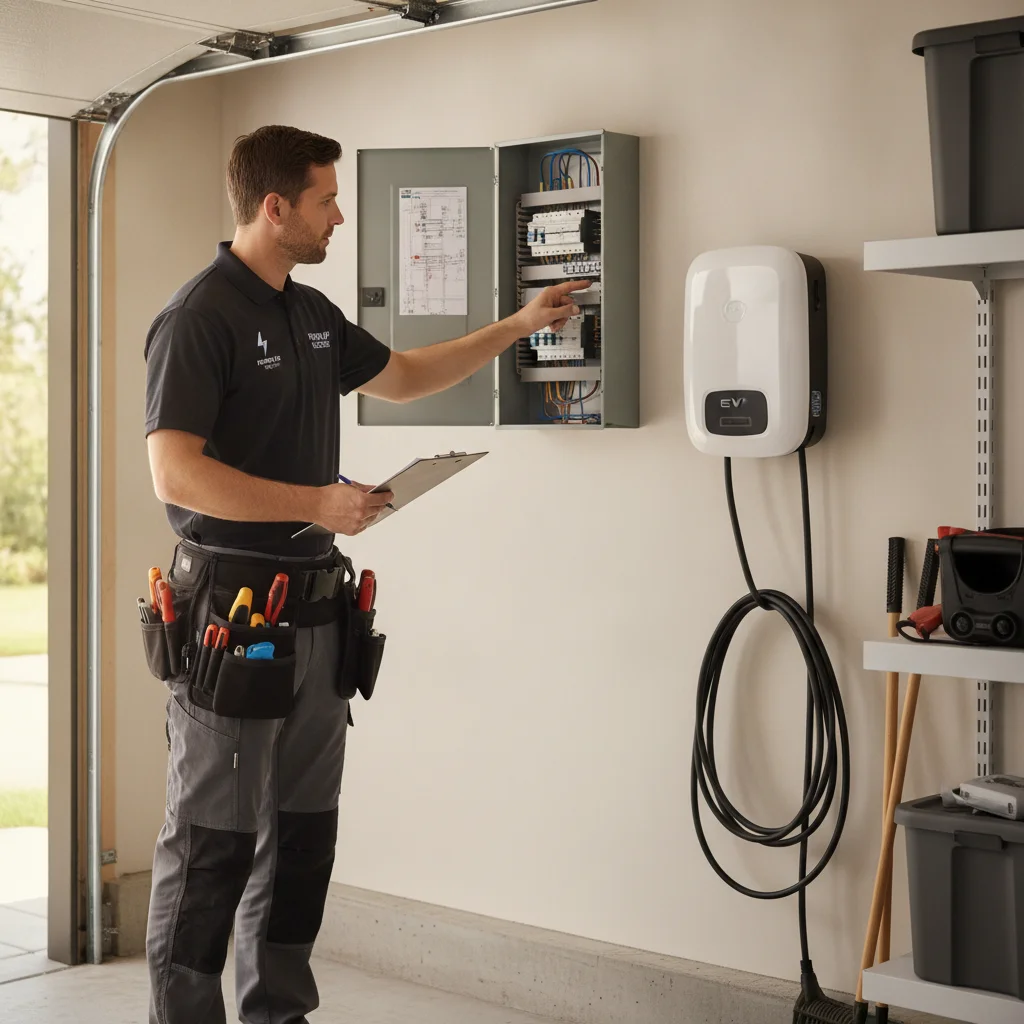
Tell your electrician: 'I need a dedicated 240V, 50-amp circuit for Level 2 EVSE.' That gives them a clear electrical spec. If you just say 'EV charger,' they may default to assumptions based on the last job they did — which may have been a different vehicle with different requirements.
Confirm panel capacity first
A 50-amp dedicated circuit for Level 2 EVSE draws real load. Older homes with 100-amp service panels may not have headroom, especially if they also run electric appliances. Have the electrician assess your panel before you buy the EVSE unit. A panel upgrade adds $1,500–$4,000 to the project — you want to know that upfront.
Permit requirements
Most jurisdictions require an electrical permit for Level 2 EVSE installation. Reputable electricians will pull the permit automatically. If yours doesn't mention it, ask. Unpermitted work can create problems with homeowner's insurance and home sales down the line.
EVSE Terminology Varies by Source
You'll see 'EVSE,' 'EV charger,' 'charging station,' and 'charge point' used interchangeably in marketing materials, government programs, and even automaker documentation. Technically, only EVSE and 'charging station' are accurate for the external equipment — but knowing what each term refers to helps you interpret specs, rebate eligibility, and installation requirements correctly regardless of what label is used.
PHEVs Often Don't Need Level 2
Plug-in hybrid owners with small battery packs (under 15 kWh) and moderate daily driving distances can often meet their charging needs entirely with Level 1 EVSE. Before investing in a 240V installation, calculate how many hours of Level 1 charging your battery requires overnight — if it's less than eight hours, Level 1 may be entirely sufficient for your situation.
Utility Meters and Rate Plans May Require Specific Documentation
Some utility EV rate programs require applicants to specify 'EVSE' by name in their application and may ask for the unit's model number and UL listing. Keep your EVSE purchase documentation on file — it may also be needed for federal tax credit Form 8911 and any manufacturer or dealer incentive programs tied to home charging setup.
Some utilities offer EV-specific rate plans that require a separate meter for your EVSE. If your utility has this option, the application process may require documentation specifying 'EVSE' by name — another reason the correct terminology matters when interacting with official processes.
EVSE and the Broader EV Ecosystem
EVSE doesn't exist in isolation. It connects to a web of standards, connector types, and charging networks that shape the overall EV ownership experience.
Connectors and standards
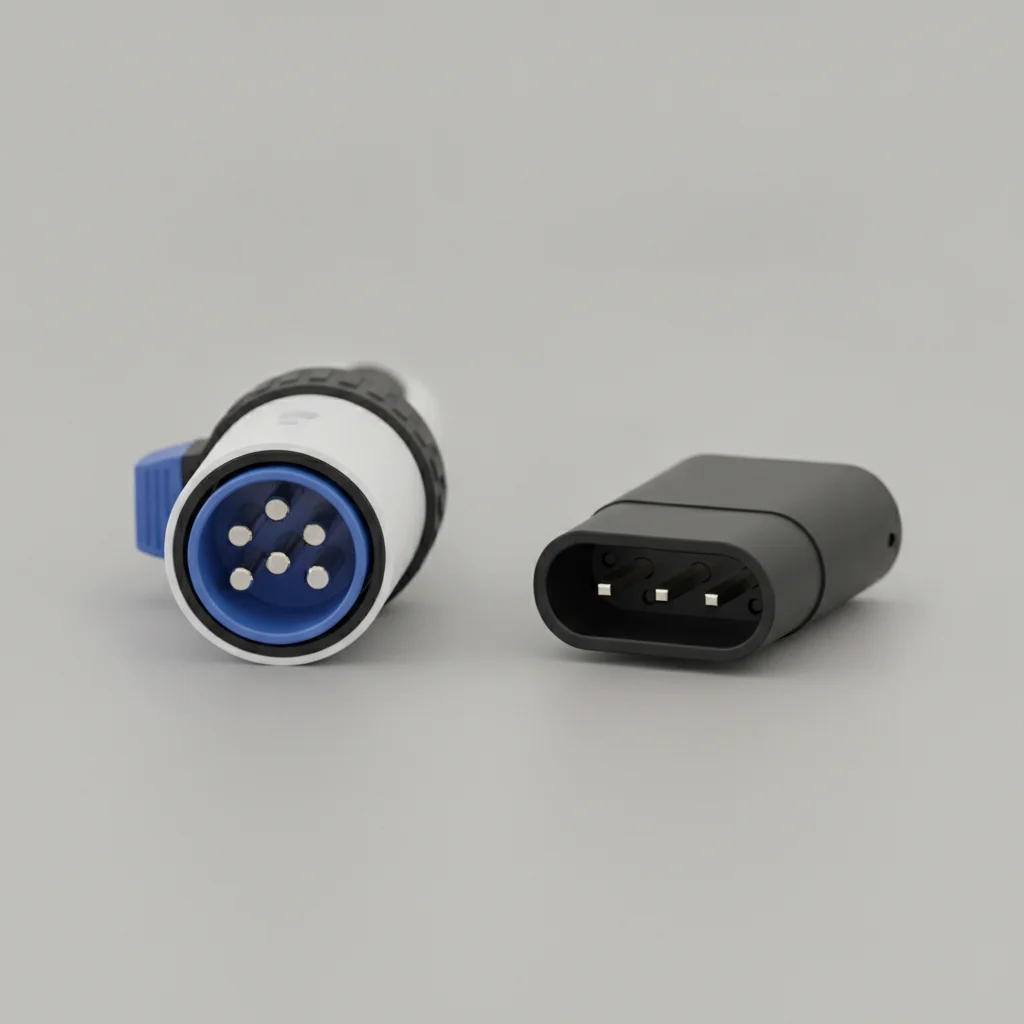
In North America, Level 1 and Level 2 EVSE overwhelmingly use the SAE J1772 connector — a five-pin plug that every non-Tesla EV sold here can accept. Tesla vehicles use a proprietary connector for home EVSE but include a J1772 adapter in the box. Starting in 2023, major automakers began adopting the NACS (North American Charging Standard) — originally Tesla's connector — for new models, so the connector landscape is actively shifting.
DC fast charging uses different connectors entirely: CCS (Combined Charging System) for most North American EVs, CHAdeMO for older Nissan and Mitsubishi models, and Tesla's Supercharger network (which is now opening to other vehicles via adapters).
Where EVSE fits in your EV decision
Before you buy an EV, it's worth knowing that the cost of ownership includes home charging infrastructure. For most buyers, Level 2 EVSE installation is a one-time cost that pays back quickly in convenience. The How EVs Work hub covers the full picture of what powers and manages an electric vehicle, from the motor to the battery management system — all of which interact with the EVSE at the point of charging.
If you're still figuring out which type of electrified vehicle is right for your situation, understanding BEV, PHEV, HEV, and MHEV differences is a logical next step before committing to a home EVSE setup, since your vehicle type directly affects which charging level makes sense.
Bottom line: EVSE is the foundation of your at-home EV experience. Getting the terminology right, matching equipment to your vehicle's actual capability, and having an informed conversation with your electrician are three steps that will save you money and frustration from the start.

All claims are backed by peer-reviewed research. Sources on request.