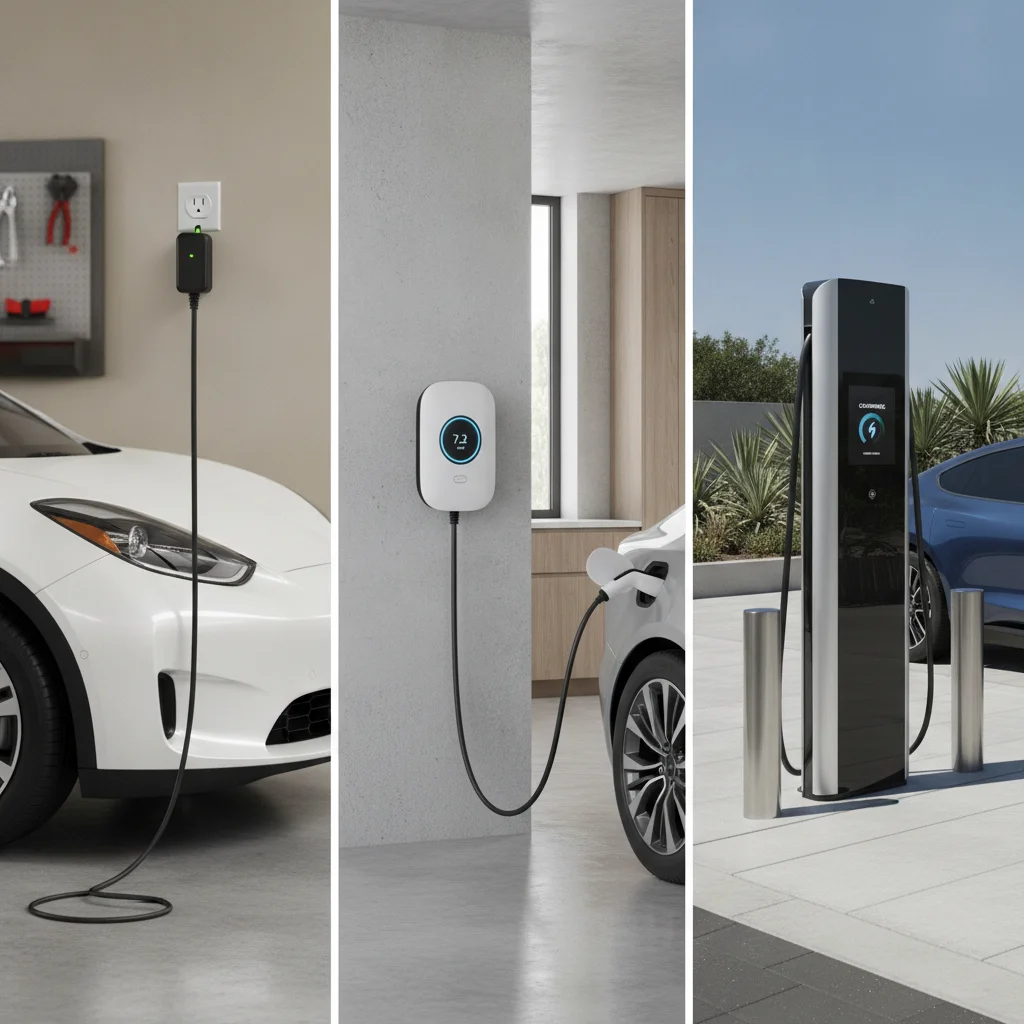
Key Takeaways
Option A
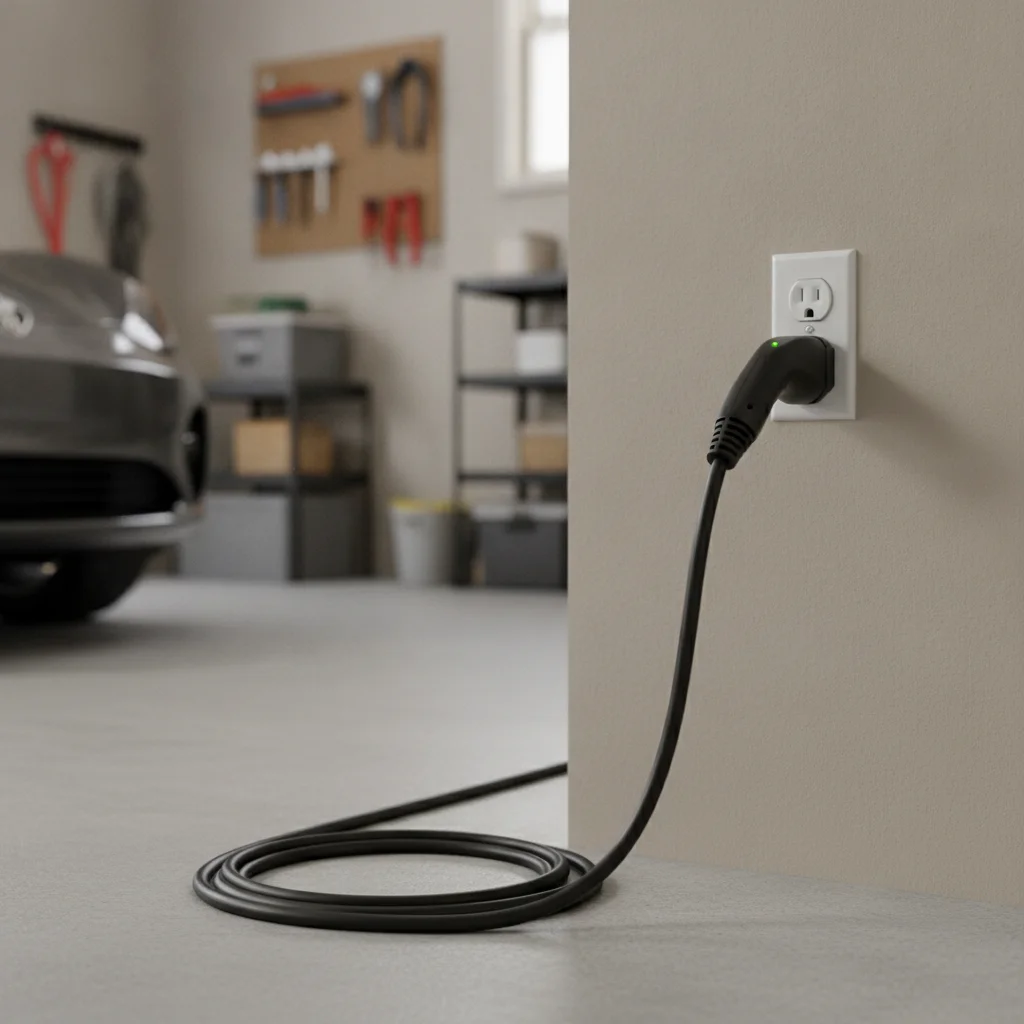
Level 1 Home Charging (120V)
The zero-upfront-cost option that works with what you already have.
Best for: Drivers with short daily commutes who can leave their EV plugged in overnight for 8–12 hours.
Option B
Level 2 Home Charging (240V)
The purpose-built solution that turns overnight charging into a full battery, every time.
Best for: Drivers with longer commutes, larger battery EVs, or multiple drivers sharing one vehicle.
If you drive fewer than 40 miles per day and have 8+ hours overnight
Level 1 Home Charging (120V)
A standard outlet will fully replenish most short commuters overnight at zero installation cost. There's no financial case for upgrading if Level 1 keeps you consistently topped off.
If you drive 50+ miles daily or own a long-range EV with a 60+ kWh battery
Level 2 Home Charging (240V)
Level 1 simply can't recover a large battery overnight. Level 2 ensures you wake up to a full charge regardless of how much range you used the day before.
If you own a plug-in hybrid (PHEV) with a battery under 20 kWh
Level 1 Home Charging (120V)
PHEVs have smaller batteries that Level 1 can fully charge in 4–6 hours. Spending $1,500 on Level 2 installation for a 30-mile electric range vehicle rarely makes financial sense.
If your household has two EVs or you share a car with an unpredictable schedule
Level 2 Home Charging (240V)
Level 2's faster throughput means both vehicles can cycle through charging without scheduling conflicts or anxiety about who gets the outlet.
If you're renting or plan to move within 12 months
Level 1 Home Charging (120V)
Installing a 240V circuit in a rental is often prohibited, and the payback period for Level 2 equipment doesn't work if you're leaving soon. Stick with Level 1 and reassess at your next home.
The Core Speed Difference — and Why It Matters More Than You Think
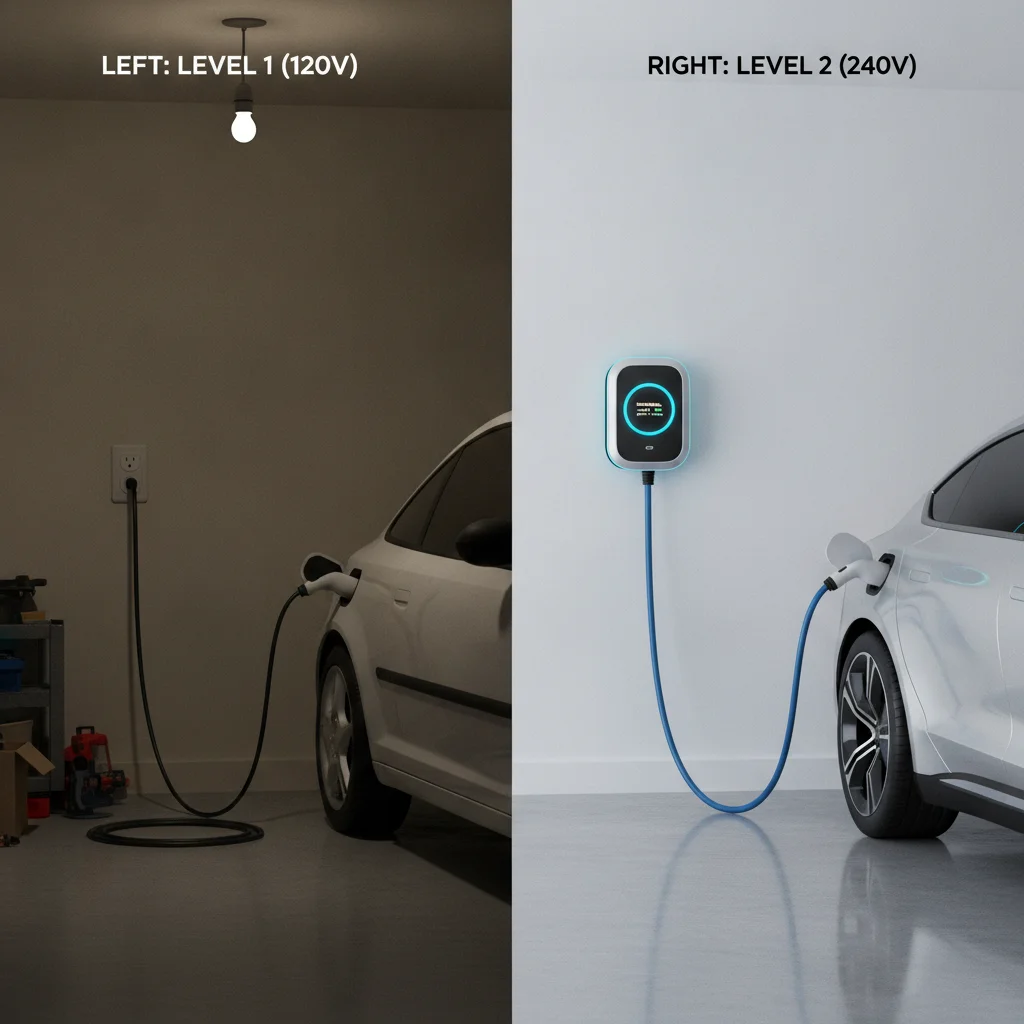
The gap between Level 1 and Level 2 charging isn't subtle. Level 1 uses a standard 120-volt household outlet — the same one you'd use for a lamp or a phone charger — and delivers roughly 1.2 to 1.9 kilowatts of power to your EV's battery. In practical terms, that translates to about 3 to 5 miles of range per hour of charging.
Level 2 operates on a 240-volt circuit — the same voltage as a clothes dryer or electric range. A typical Level 2 home unit delivers 7.2 to 11.5 kilowatts, depending on the charger hardware and your vehicle's onboard AC charging capacity. That's 20 to 30 miles of range per hour, sometimes more.
Run the numbers overnight: plug in a Level 1 cord at 10 PM and unplug at 7 AM — that's nine hours, or roughly 36 to 45 miles of recovered range. With Level 2, those same nine hours recover 180 to 270 miles. For a 300-mile battery pack driven 60 miles that day, Level 1 falls short. Level 2 doesn't.
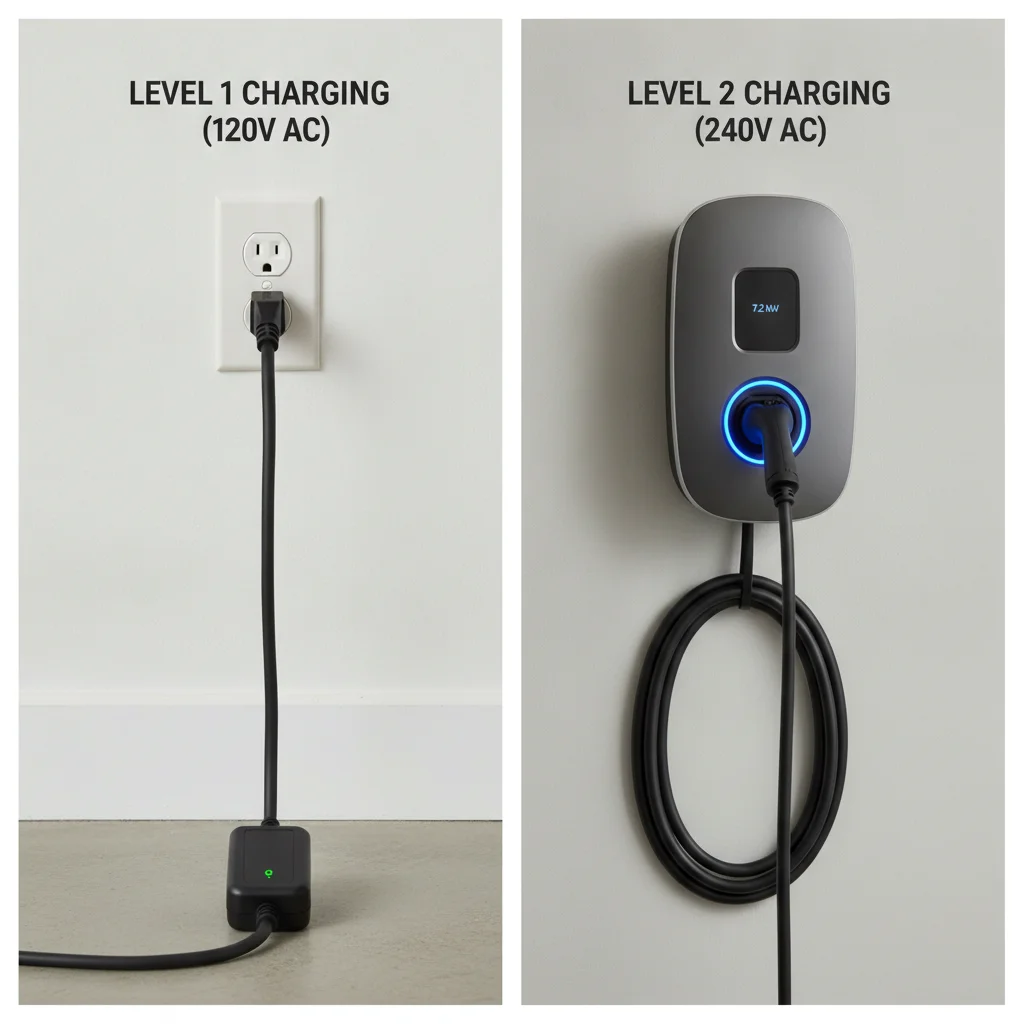
The speed difference has a cascading effect on how you experience EV ownership. With Level 1, range anxiety isn't just about public charging — it can creep into your morning routine if you forgot to plug in early enough or had a longer-than-usual day. Level 2 removes that variable almost entirely. You plug in, you wake up full. That consistency is worth something beyond raw kilowatts.
For a broader look at how these two home options stack up against DC fast charging on the go, see our full speed and cost comparison across all three charging levels.
Head-to-Head: What Each Option Actually Delivers
Before deciding, it helps to see the comparison laid out clearly across the dimensions that actually affect your day-to-day life — not just the marketing specs.
| Criterion | Level 1 (120V) | Level 2 (240V) |
|---|---|---|
| Power delivered | 1.2–1.9 kW | 7.2–11.5 kW |
| Miles of range per hour | 3–5 miles/hr | 20–30 miles/hr |
| Overnight recovery (9 hrs) | ~35–45 miles | ~180–270 miles |
| Equipment upfront cost | $0 (included with EV) | $200–$600 |
| Installation cost | $0 | $400–$1,200 (panel permitting varies) |
| Electrical requirement | Standard 120V outlet | Dedicated 240V, 40–50A circuit |
| Cost per mile (electricity) | ~$0.03–$0.05 | ~$0.03–$0.05 |
| Federal tax credit eligible | No | Yes — 30%, up to $1,000 |
| Best for battery size | Under 40 kWh | 40 kWh and above |
| Works in rentals | Yes, universally | Only with landlord approval |
A few points worth unpacking from that table:
- Upfront cost is the big Level 1 advantage. Every EV sold in the US includes a Level 1 cord set (often called an EVSE — Electric Vehicle Supply Equipment). You plug it in and you're charging. No electrician, no permit, no waiting.
- Equipment and installation for Level 2 is a real expense. The charger unit itself runs $200 to $600; a licensed electrician to run the 240V circuit and install the outlet or hardwire the unit typically adds another $400 to $1,200. If your panel needs an upgrade, costs can exceed $3,000. We break this down in detail in our Level 2 installation cost guide.
- Operating costs are nearly identical. Both Level 1 and Level 2 draw electricity at your local residential rate — typically $0.12 to $0.16 per kWh nationally. Level 2 just moves more electricity in less time. Your cost per mile of EV driving is essentially the same either way.
37 miles
Average American's daily driving distance
According to the U.S. Department of Transportation's Federal Highway Administration — a figure that falls within Level 1's overnight recovery range for most users.
~80%
EV charging that happens at home
The U.S. Department of Energy estimates the majority of EV charging in the US takes place at home, making home charger selection the most consequential infrastructure decision for most owners.
$800–$2,000
Typical all-in Level 2 installation cost
Based on aggregated installer data and utility rebate program disclosures; costs vary significantly based on panel capacity and local labor rates.
30%
Federal tax credit for Level 2 equipment and installation
The Alternative Fuel Vehicle Refueling Property Credit (IRS Form 8911) covers 30% of qualified costs up to $1,000 for individuals through at least 2032 under the Inflation Reduction Act.
The federal Alternative Fuel Vehicle Refueling Property Credit (Form 8911) covers 30% of both the equipment and installation cost for Level 2, up to $1,000 for individuals. Some states and utilities stack additional rebates on top. If you're planning to upgrade, timing your installation to capture those credits meaningfully changes the math.
Who Can Actually Get By on Level 1
Level 1 charging gets dismissed too quickly in EV enthusiast circles. The reality is that a meaningful share of American EV owners — particularly those in urban and suburban settings with shorter commutes — can function perfectly well on 120V, indefinitely.
The threshold test is straightforward: if your typical daily driving is 30 to 40 miles or less, and you plug in every night, Level 1 will keep you topped off. This covers the average American commuter. According to the U.S. Department of Transportation, the average American drives about 37 miles per day. Level 1, delivering 35 to 45 miles overnight, keeps pace with that.
Where Level 1 starts to crack:
- You drive significantly more than average — sales routes, long commutes, frequent evening errands on top of a daily commute.
- You own a larger EV with a 75+ kWh battery and regularly use 60 to 100 miles of range per day.
- You frequently forget to plug in, leaving you to make up the deficit the following night.
- You share the vehicle between two people with different schedules, meaning it's not always home and plugged in from 10 PM to 7 AM.
If none of those describe you, the financial case for Level 2 gets thin. The argument for staying with Level 1 longer than you think is stronger than most EV content acknowledges.
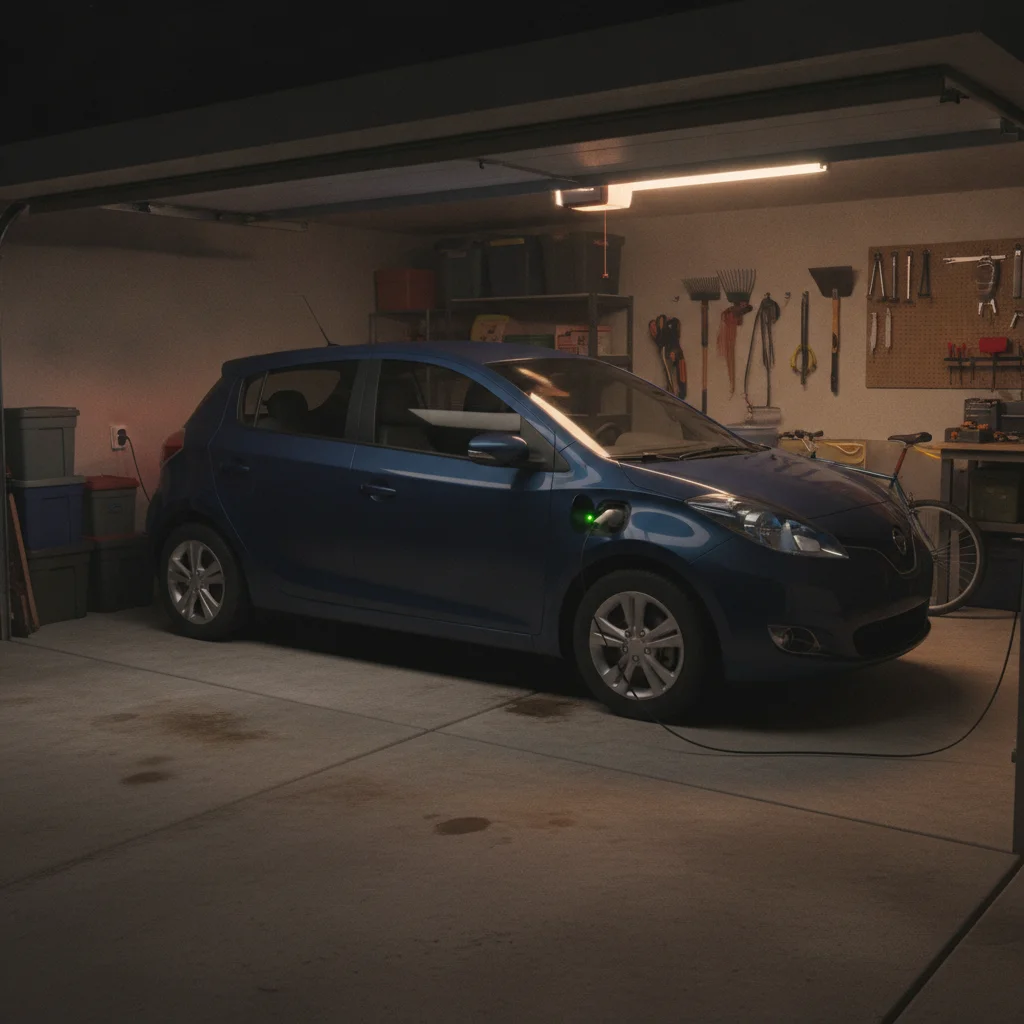
One more practical point: Level 1 works anywhere in the country without modification. If you travel and stay somewhere with a standard outlet — a relative's house, an Airbnb, a hotel — you can charge. That universal compatibility has quiet value that disappears the moment you rely entirely on Level 2.
Who Should Upgrade to Level 2
If you're running a longer-range EV as your primary vehicle and driving a substantial number of miles daily, Level 2 stops being a luxury and starts being a practical necessity. Let's be specific about the scenarios where the upgrade pays off clearly.
Larger Battery EVs
A Tesla Model Y Long Range carries a 75 kWh battery. If you deplete 50% of that in a day — a common scenario for a longer commute — you need to recover 37.5 kWh. Level 1 at 1.4 kW would take 26 hours to do that. Level 2 at 7.2 kW does it in about 5 hours. There's no scheduling workaround for that math.
PHEVs with Larger Electric Ranges
Most PHEVs have modest batteries (10–20 kWh) that Level 1 can fully charge in 4–8 hours. But newer models like the Jeep Wrangler 4xe and certain BMW plug-ins are pushing toward 20+ kWh. If you want to maximize EV-only miles — which is the entire financial point of a PHEV — Level 2 makes more of your driving electric.
Time-of-Use Rate Arbitrage
Many utilities offer time-of-use (TOU) rates with cheap electricity windows from midnight to 6 AM. Level 2 can fully charge most EVs within that window. Level 1 often can't — it may need to run from 10 PM to 8 AM to accomplish the same result, potentially eating into higher-rate hours on either end.
Resale and Home Value
A hardwired Level 2 EVSE is increasingly viewed as a home amenity. It doesn't add dramatic value, but it doesn't hurt — and when you eventually sell, it's a selling point for any buyer who's EV-curious.
Your EV's Onboard Charger Sets the Ceiling
Level 2 speed isn't just about your wall unit — your vehicle's onboard AC charger determines the maximum rate it can accept. A car with a 7.2 kW onboard charger won't charge faster than 7.2 kW even if you install an 11.5 kW unit. Check your vehicle's spec sheet before buying a higher-powered EVSE. The extra capacity is only useful if you upgrade vehicles later.
If you're new to the whole home charging ecosystem and want a ground-up walkthrough before committing to an installation decision, our beginner's guide to home charging options lays out everything from the included cord to full installation in plain language.
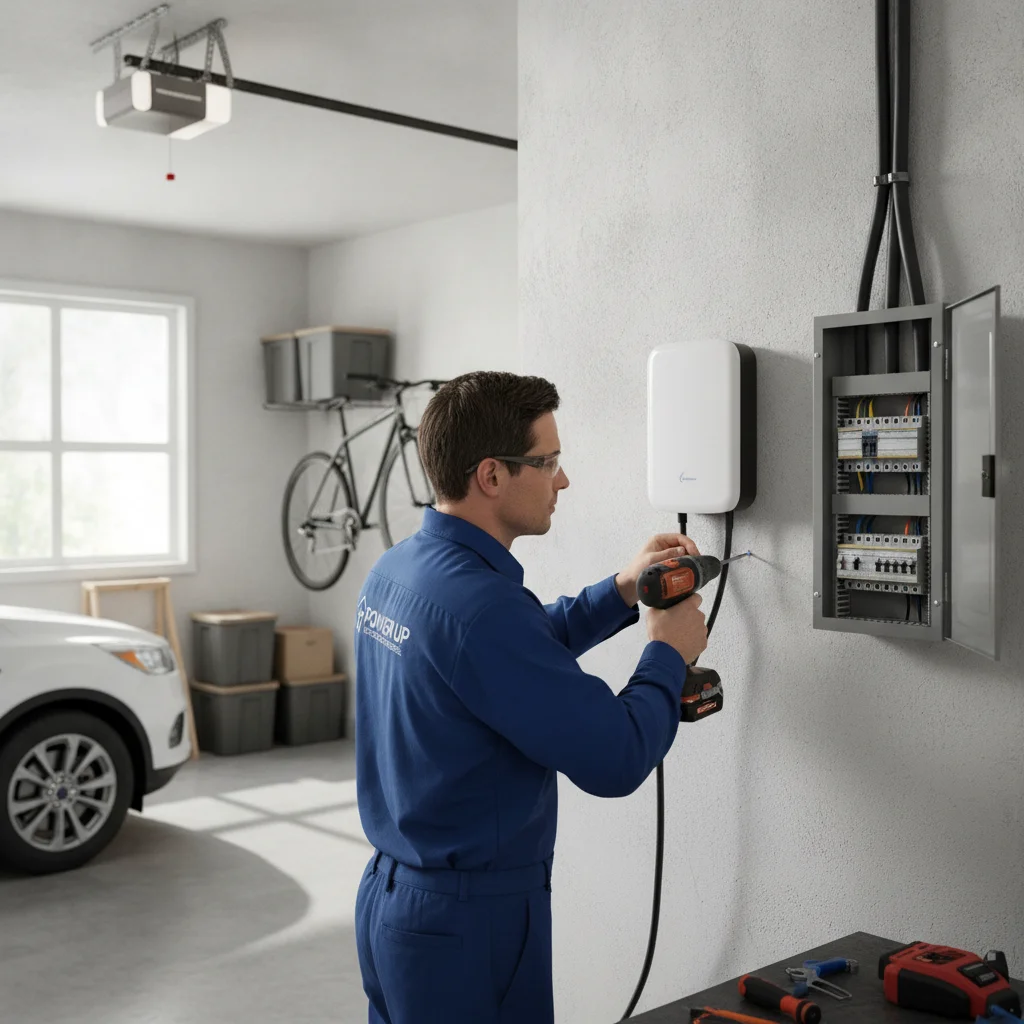
Installation Reality: What Level 2 Actually Involves
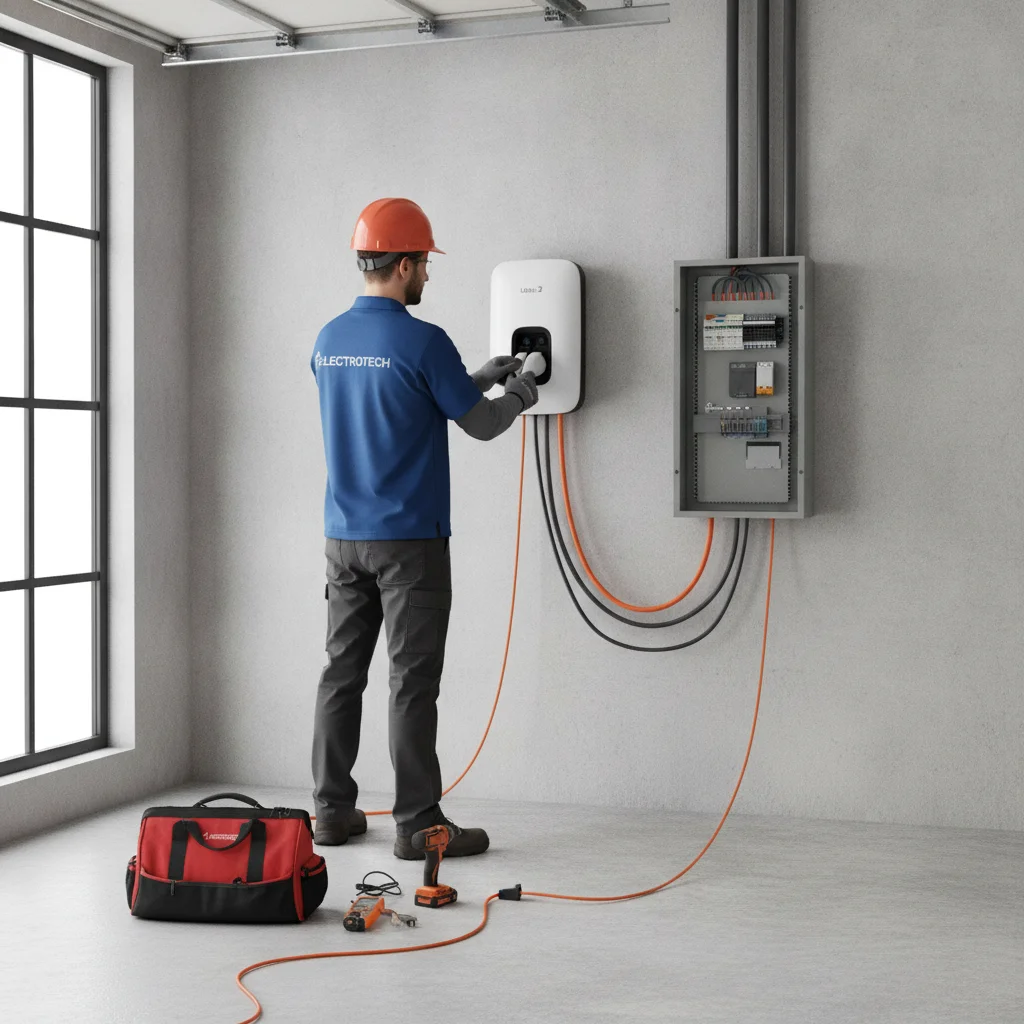
One reason people delay the Level 2 upgrade isn't cost — it's the unknown of the installation process. Here's what it actually looks like in practice.
Step 1: Assess Your Electrical Panel
A Level 2 charger requires a dedicated 240V, 40–50 amp circuit. Most homes built after 1990 have 200-amp panels with room to add a circuit. Older homes with 100-amp panels or already-loaded panels may need a panel upgrade — that's where costs jump significantly. An electrician can assess this in 15 minutes.
Step 2: Choose Hardwired or Plug-In
You can install a NEMA 14-50 outlet (the kind used for RVs and electric ranges) and use a plug-in EVSE, or have an electrician hardwire a dedicated unit. The plug-in approach gives you flexibility if you move. Hardwired units are typically slightly more efficient and can support higher amperage.
Step 3: Permits
Most municipalities require an electrical permit for a new 240V circuit. Your electrician will typically handle this. Don't skip it — unpermitted electrical work can create insurance complications and issues at resale.
Step 4: Rebates and Credits
Before you pay, check your utility's rebate portal. Utilities including Pacific Gas & Electric, Southern California Edison, Xcel Energy, and many others offer rebates of $200 to $500 on Level 2 equipment and sometimes installation. Combined with the federal 30% tax credit (up to $1,000), your out-of-pocket can drop meaningfully.
For a detailed cost breakdown by region and home type, see how much Level 2 home charger installation actually costs.
Making the Right Call for Your Situation
The honest answer is that there's no universal right choice here — and anyone telling you to automatically upgrade to Level 2 the moment you buy an EV isn't accounting for your actual driving life.
Run this quick self-assessment:
- What's your average daily mileage? Under 35 miles: Level 1 likely works. Over 50 miles: Level 2 is worth taking seriously.
- What's your battery size? Under 40 kWh (most PHEVs and smaller EVs): Level 1 is often sufficient. Over 60 kWh: Level 2 is the practical choice.
- Do you own or rent? Renters: stick with Level 1 unless your landlord permits and subsidizes installation. Owners: do the math on installation cost vs. daily convenience.
- Is a federal or state incentive available to you? If yes, the effective cost of Level 2 drops substantially — run the numbers before deciding.
- How often do you use public charging? Heavy public charging users are sometimes compensating for inadequate home charging. If that's you, Level 2 at home might reduce public charging costs enough to pay for itself.
For the curious: home charging — Level 1 or Level 2 — still only covers your local driving. Road trips and longer hauls will still route you through public DC fast charging networks. Understanding how those work alongside your home setup is its own topic. See our overview of public charging networks for how DC fast charging fits into the full picture, and our explanation of how DC fast charging actually works if you want to understand the hardware side.
The bottom line: Level 1 is genuinely good enough for a large slice of EV owners. Level 2 is the right investment for everyone else. Know which category you're in before you call an electrician.

All claims are backed by peer-reviewed research. Sources on request.