| CCS1 Max Power | 350 kW (theoretical) (SAE J1772 Combo 1 specification) |
| CHAdeMO Max Power (US deployed) | 50 kW (typical) (Most US CHAdeMO stations, 2024) |
| NACS (SAE J3400) Standardized | June 2023 (SAE International) |
| Tesla Supercharger connectors (North America) | 17,000+ (Tesla, 2024) |
| NACS Automaker Adopters | Ford, GM, Rivian, Mercedes, Honda, Nissan, Toyota, and more (Announced 2023–2024) |
| J1772 AC Level 2 Max | 19.2 kW (SAE J1772 specification) |
| Primary US CHAdeMO Vehicle | Nissan LEAF (US market, 2024) |
| NACS Voltage / Current Maximum | 1,000V / 900A (SAE J3400 specification) |
Why Connector Standards Matter More Than You Think
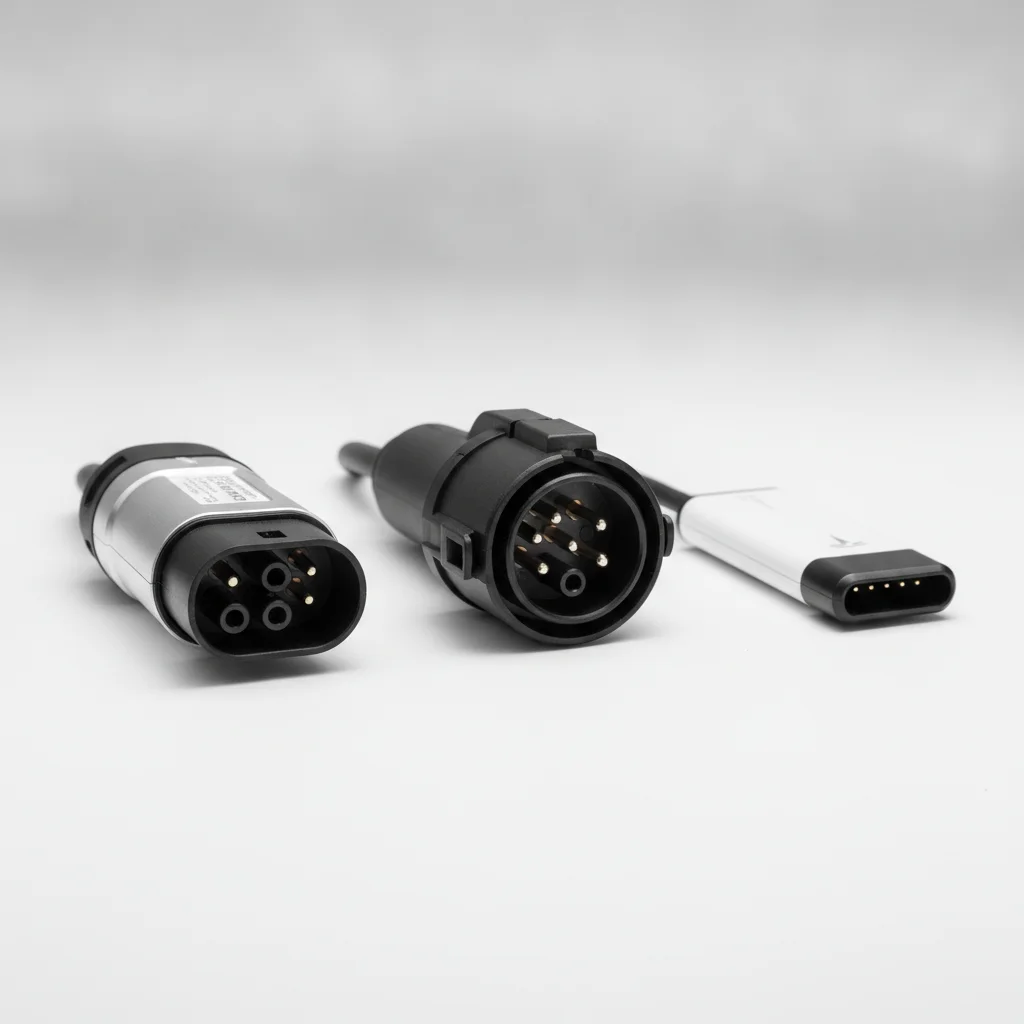
Plug incompatibility is one of the most underappreciated friction points in EV ownership. Unlike gasoline nozzles — effectively universal in the US — electric vehicle charging connectors come in at least four distinct physical formats, each tied to different vehicle brands, power levels, and charging networks. Get the wrong one at a public station and you're not charging.
This guide cuts through the acronyms and decodes every major connector standard in plain language: what they look like, which vehicles use them, what power levels they support, and where the industry is heading. Whether you're shopping for your first EV, planning a road trip, or just tired of not knowing what CCS stands for, this is your reference.
It's worth noting upfront that connector standards are closely tied to charging levels. If you haven't yet distinguished between AC and DC charging — and why it matters for charge speed — our AC vs. DC charging guide is essential reading before diving into connector specifics.
| CCS1 Max Power | 350 kW (theoretical) (SAE J1772 Combo 1 specification) |
| CHAdeMO Max Power (US deployed) | 50 kW (typical) (Most US CHAdeMO stations, 2024) |
| NACS (SAE J3400) Standardized | June 2023 (SAE International) |
| Tesla Supercharger connectors (North America) | 17,000+ (Tesla, 2024) |
| NACS Automaker Adopters | Ford, GM, Rivian, Mercedes, Honda, Nissan, Toyota, and more (Announced 2023–2024) |
| J1772 AC Level 2 Max | 19.2 kW (SAE J1772 specification) |
| Primary US CHAdeMO Vehicle | Nissan LEAF (US market, 2024) |
| NACS Voltage / Current Maximum | 1,000V / 900A (SAE J3400 specification) |
J1772: The AC Charging Baseline Every EV Shares
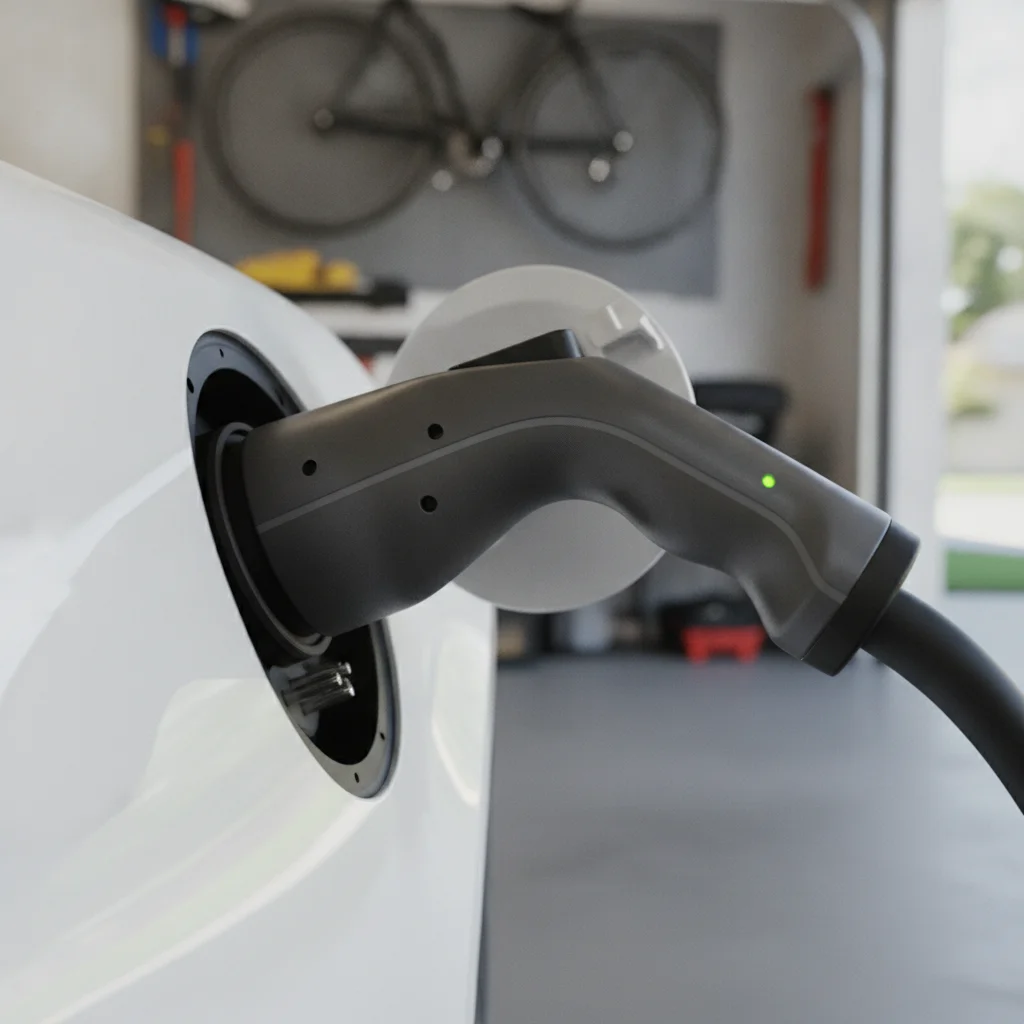
Before getting to the fast-charging connectors, it's worth establishing the baseline. The SAE J1772 — commonly called the J-plug or Type 1 connector — is the North American standard for Level 1 and Level 2 AC charging. It's a five-pin connector with a distinctive rounded-square profile, and virtually every non-Tesla EV sold in the US since 2010 has used it as the primary AC charging port.
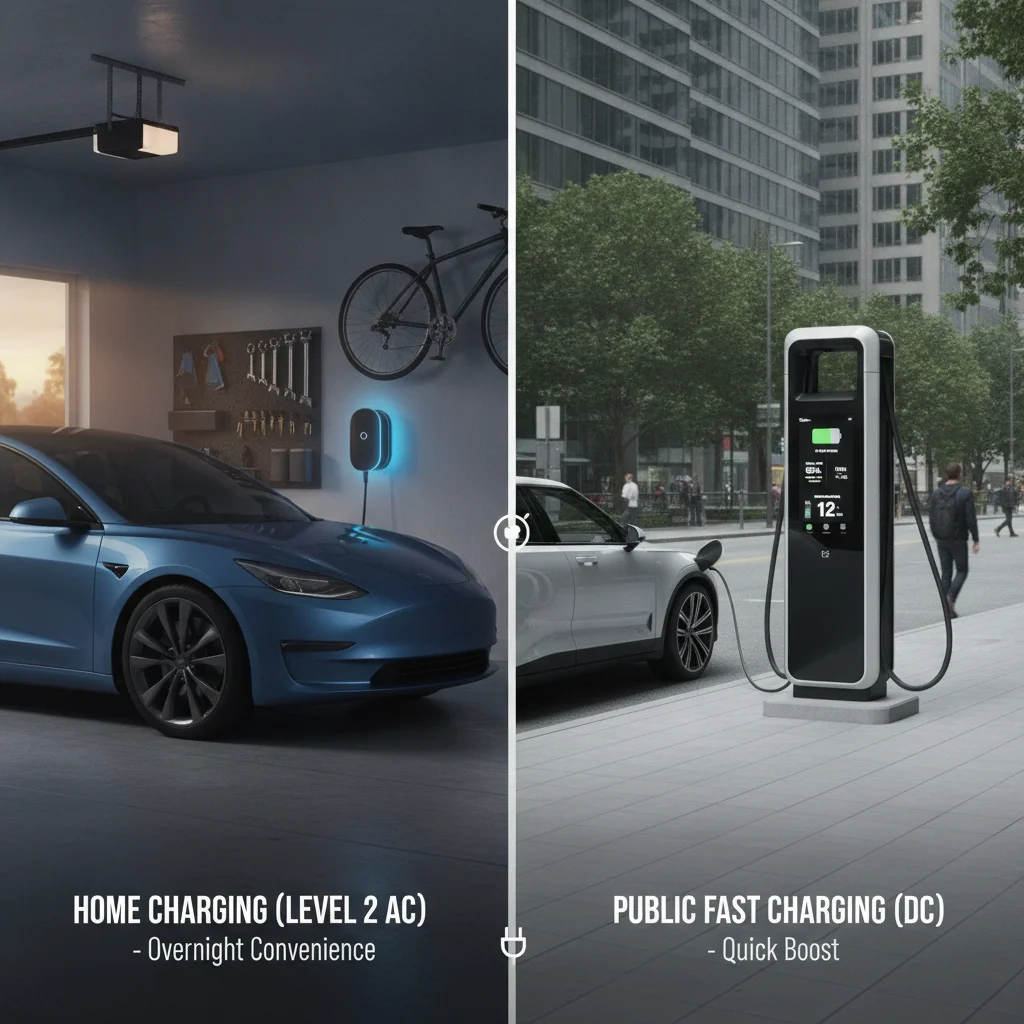
J1772 handles up to 19.2 kW of AC power, though most home Level 2 installations deliver 7.2–11.5 kW in practice. It is not capable of DC fast charging — the connector physically lacks the high-current DC pins needed. For fast charging, vehicles need a separate connector or a combined unit.
Even Tesla vehicles — which use the NACS port — can accept J1772 charging via an included adapter. And the new wave of NACS-native vehicles from Ford, GM, Rivian, and others must also support J1772-compatible Level 2 charging, either through adapters or integrated design. For a deeper look at home charging compatibility, see what the J1772 standard means for home charging.
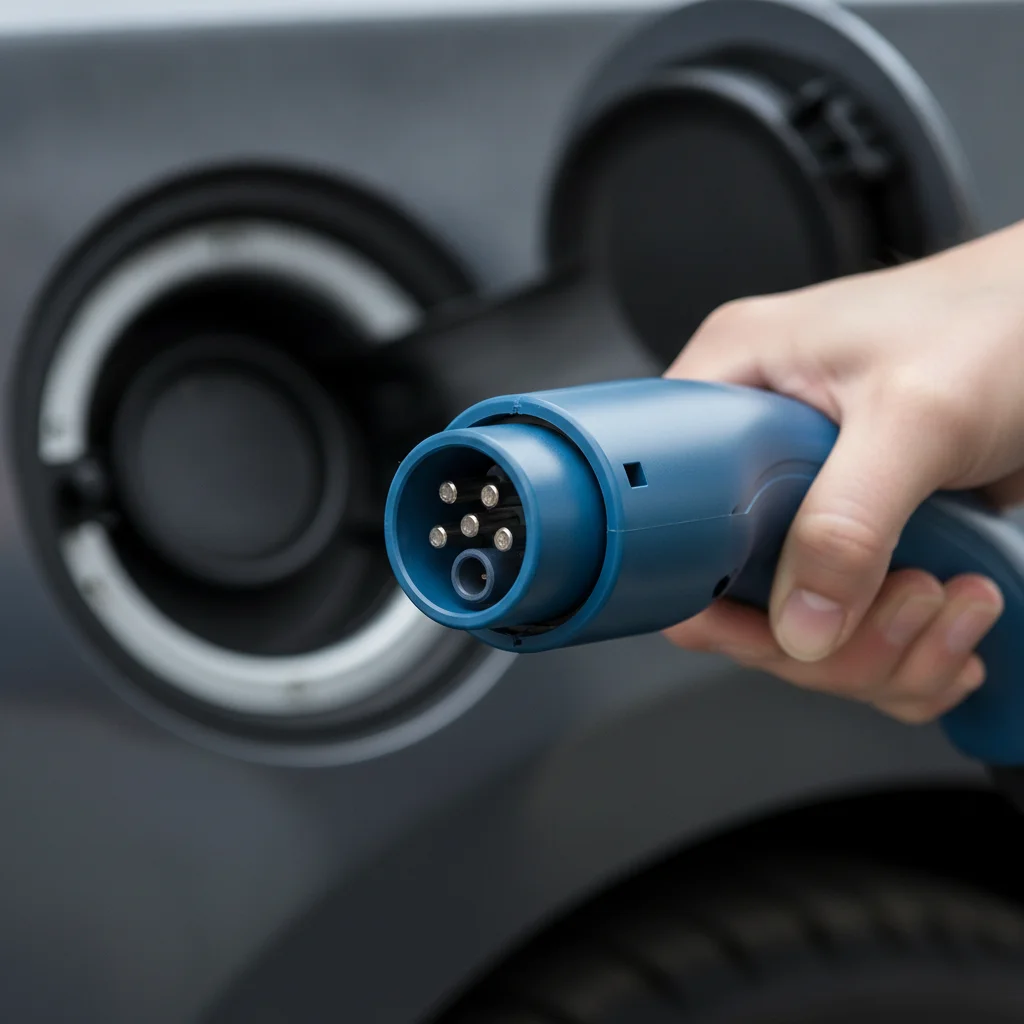
CCS (Combined Charging System)
A DC fast-charging connector standard that adds two large DC pins below a J1772 AC inlet, allowing a single port to handle both Level 2 and DC fast charging. CCS1 is the North American variant; CCS2 is used in Europe.
CHAdeMO
A DC fast-charging connector standard developed by Japanese automakers, identified by its large circular shape and locking mechanism. It requires a separate AC charging port on the vehicle and is primarily associated with the Nissan LEAF in the US market.
NACS (North American Charging Standard)
Formerly Tesla's proprietary connector, now standardized by SAE International as J3400. A compact, single-port connector capable of both AC Level 2 and DC fast charging, and the emerging US industry default for new EVs.
J1772
The SAE standard for Level 1 and Level 2 AC charging in North America. A five-pin connector used by virtually all non-Tesla EVs as their primary AC charging inlet; the upper portion of the CCS1 combo connector.
DC Fast Charging
Charging that delivers direct current (DC) at high power directly to the battery, bypassing the vehicle's onboard AC-to-DC converter. Significantly faster than Level 2 AC charging; requires CCS, CHAdeMO, or NACS connectors.
SAE J3400
The official SAE International standard that codified the NACS connector specification in June 2023, making it a recognized industry standard rather than a proprietary Tesla format.
Magic Dock
A CCS adapter integrated into select Tesla Supercharger stations, allowing non-Tesla CCS-equipped vehicles to charge without carrying their own adapter.
NEVI Program
The National Electric Vehicle Infrastructure program, a federally funded initiative to build a nationwide EV charging network along US highway corridors. NEVI funding requirements have influenced connector standard adoption.
CCS: The Dominant Fast-Charging Standard in North America and Europe
Combined Charging System (CCS) was designed as an elegant solution to a real problem: EVs needed one port for everyday AC charging and another for DC fast charging, which meant two separate inlet openings on the vehicle. CCS solves this by adding two large DC pins below the J1772 connector body, creating a combined "combo" plug.
CCS1 vs. CCS2
There are two regional variants:
- CCS1 (SAE Combo 1) — used in North America, built on the J1772 AC portion
- CCS2 (IEC Type 2 Combo) — used in Europe, built on the Type 2 AC connector
This guide focuses on CCS1, which is the relevant standard for US drivers.
Power Capability
CCS1 supports DC fast charging up to 350 kW in its theoretical maximum, though most deployed stations currently top out at 50–175 kW. As battery technology and thermal management improve, higher-output CCS stations are increasingly common. For AC charging through the same port, the J1772 portion handles Level 1 and Level 2 sessions.
Which Vehicles Use CCS?
Until the NACS transition took hold in 2023–2024, CCS was the near-universal fast-charging standard for non-Tesla EVs in North America. Vehicles using CCS include:
- Chevrolet Bolt EV and Bolt EUV (older model years)
- Ford Mustang Mach-E and F-150 Lightning (2022–2023 model years)
- Volkswagen ID.4
- BMW iX, i4, and i5
- Hyundai IONIQ 5 and IONIQ 6
- Kia EV6
- Rivian R1T and R1S (2022–2023)
- Mercedes EQ lineup
- Audi e-tron and Q8 e-tron
That said, many of these automakers have since announced or begun implementing NACS ports on newer model years, making CCS increasingly a transitional standard for the US market rather than the permanent endpoint.
Where to Charge with CCS
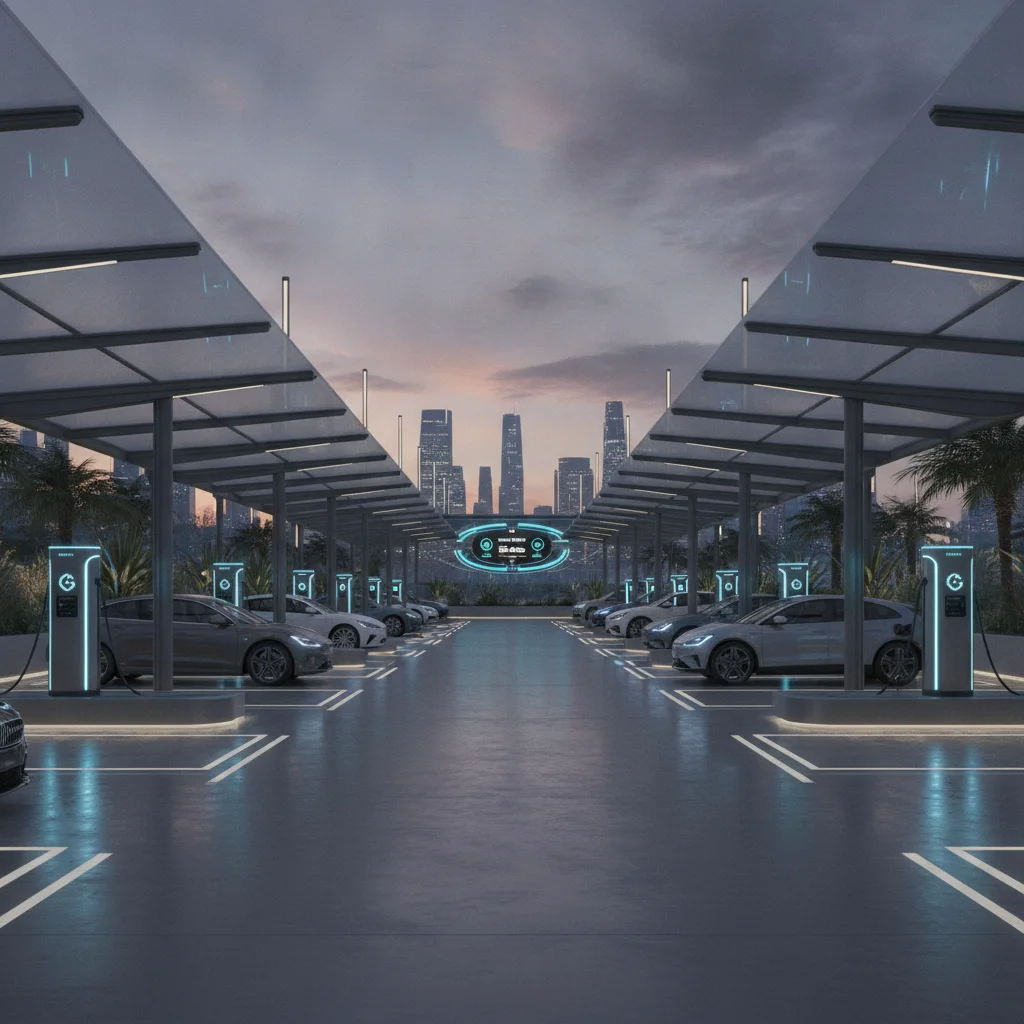
Electrify America, EVgo, and Blink all operate extensive CCS fast-charging networks across the US. ChargePoint — the largest network by station count — handles both Level 2 J1772 and CCS DC fast charging. See our complete public charging network overview for a full breakdown of network coverage.
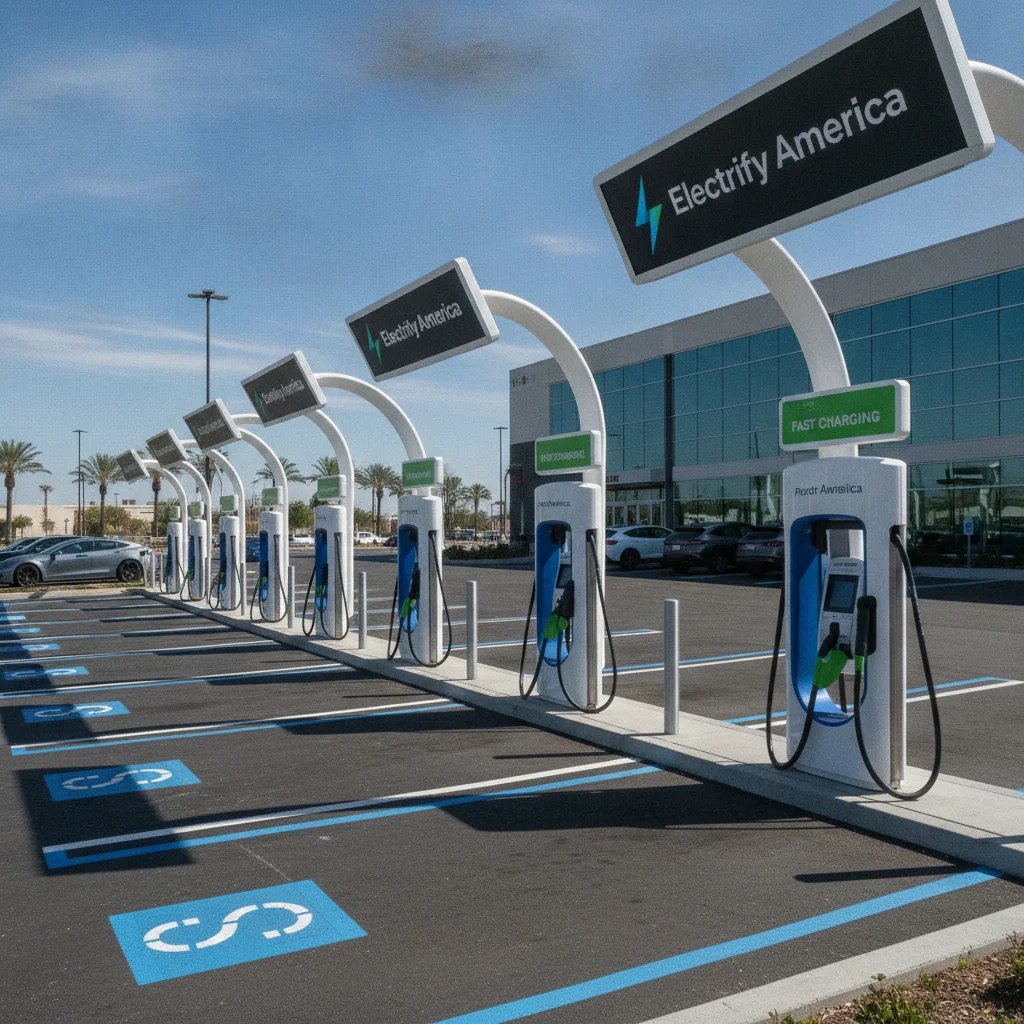
CCS Stations Are Still Being Built
Despite the NACS transition, CCS fast chargers continue to be deployed in the US — particularly through Electrify America and EVgo, which have large rollout commitments. CCS will remain a viable charging option for years even as the industry moves toward NACS. Owners of CCS-equipped vehicles should not feel stranded; the infrastructure remains robust and growing through at least the end of this decade.
CHAdeMO Chargers Are Quietly Disappearing
Some charging networks have begun removing CHAdeMO plugs from dual-port stations and replacing them with additional CCS or NACS hardware. If you own a CHAdeMO-equipped vehicle, it's worth checking current plug availability on route-planning apps like PlugShare before assuming a station's CHAdeMO port is operational — some have been decommissioned even if the station remains listed online.
CHAdeMO: A Pioneer Now Fading from the US Market
CHAdeMO is a DC fast-charging standard developed by a consortium of Japanese automakers — primarily Nissan and Mitsubishi — in 2010. The name is a portmanteau of the Japanese phrase O cha demo ikaga desuka ("How about a cup of tea?"), a nod to the idea of a quick stop while the car charges.
CHAdeMO connectors are large and circular with a locking mechanism and a distinctive pistol-grip handle. Unlike CCS, CHAdeMO is a standalone DC-only connector — vehicles using it require a separate J1772 port for AC charging, meaning two inlets on the vehicle. That complexity is one reason the standard has fallen out of favor with most automakers.
Power Capability
Early CHAdeMO stations delivered 50 kW. The CHAdeMO 2.0 specification raised that ceiling to 400 kW, and the evolving CHAdeMO 3.0 (ChaoJi) standard — developed in partnership with China's GB/T — targets up to 900 kW. In practice, the vast majority of US CHAdeMO stations remain at 50 kW, and ultra-fast CHAdeMO hardware is essentially nonexistent in the domestic market.
Which Vehicles Use CHAdeMO?
In the US, the list is short and shrinking:
- Nissan LEAF — the primary vehicle keeping CHAdeMO relevant in the US; the 2024 LEAF still uses it, though future Nissan EVs are expected to transition
- Mitsubishi Outlander PHEV (older models)
- Some older Kia Soul EV units
CHAdeMO's US infrastructure is also contracting. While EVgo and some independent networks maintain CHAdeMO plugs at many dual-port stations, the incentive to invest in new CHAdeMO hardware has essentially evaporated as Nissan's LEAF — the standard's last major US defender — moves toward retirement.
17,000+
Tesla Supercharger connectors in North America
As of 2024, Tesla operates the largest fast-charging network in North America, now open to non-Tesla NACS vehicles.
350 kW
CCS1 theoretical maximum power delivery
Per SAE J1772 Combo 1 specification; most currently deployed CCS stations deliver 50–175 kW in practice.
12+
Major automakers committing to NACS
Ford, GM, Rivian, Honda, Mercedes, Nissan, Toyota, and others announced NACS adoption between 2023 and 2024.
2010
Year CHAdeMO was introduced
Developed by Nissan, Mitsubishi, and Japanese utility partners as one of the world's first DC fast-charging standards.
900A
NACS maximum current capacity
The SAE J3400 specification supports up to 1,000V and 900A, exceeding current CCS hardware ceilings.
CHAdeMO's Global Picture
Globally, CHAdeMO remains more significant, particularly in Japan and parts of Europe. But in the US context, drivers purchasing a new non-LEAF EV today will almost certainly never need a CHAdeMO cable.
NACS: Tesla's Connector Becomes the US Industry Standard
The North American Charging Standard (NACS) began life as Tesla's proprietary connector, deployed across the entire Supercharger network since 2012. For over a decade it was simply called "the Tesla connector" — sleek, compact, and capable of both AC and DC charging through the same slim port.
Everything changed in November 2022, when Tesla open-sourced the connector specification and submitted it to SAE International for standardization. SAE published it as SAE J3400 in June 2023, and within weeks, Ford, GM, Rivian, Polestar, Mercedes, Honda, Nissan, Toyota, and virtually every other major automaker announced adoption. NACS went from a proprietary Tesla format to the de facto North American industry standard in under a year.
Why NACS Won
Several factors accelerated NACS adoption:
- Tesla's charging network advantage: The Supercharger network has over 17,000 connectors in North America — far more than any competitor — and opening it to non-Tesla vehicles was contingent on those vehicles using the NACS connector
- Simpler design: NACS handles both AC Level 2 and DC fast charging through a single compact port, eliminating the need for the physically larger CCS combo plug
- Power ceiling: NACS supports up to 1,000V and 900A, giving it a theoretical power delivery capacity that exceeds current CCS hardware
- Federal infrastructure incentives: The Biden administration's NEVI program funding requirements began favoring NACS compatibility, adding policy momentum
The CCS-to-NACS Transition Timeline
Most automakers began shipping NACS-native vehicles with 2025 model years. Owners of CCS-equipped vehicles from these automakers can use CCS-to-NACS adapters to access Superchargers, and NACS-equipped vehicles can use CCS stations with a NACS-to-CCS adapter. For first-time public charger users navigating this transition, the first-timer's field guide to public EV charging covers exactly what to expect.
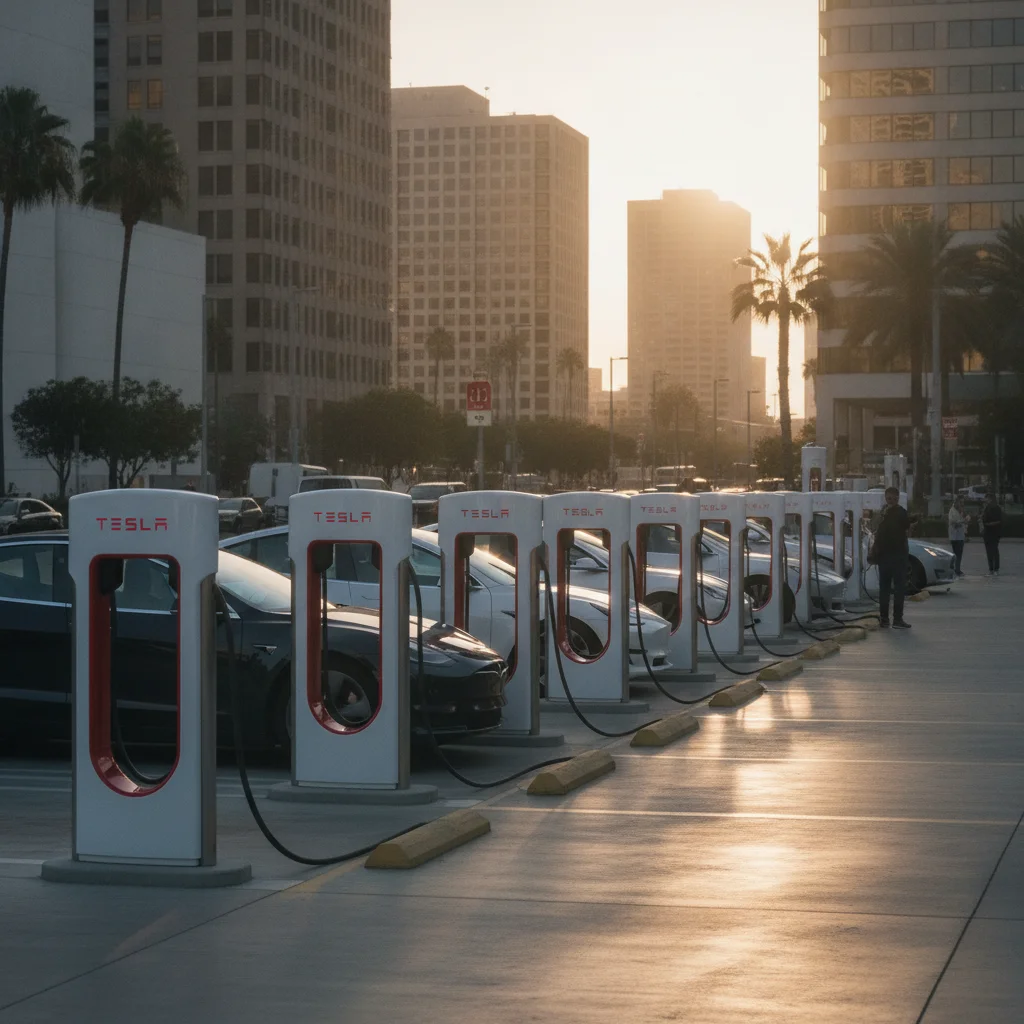
Supercharger Access for Non-Tesla Vehicles
Since early 2023, Tesla has progressively opened Supercharger stations to non-Tesla vehicles. As of 2024, any NACS-equipped EV — regardless of brand — can plug directly into a Supercharger. CCS vehicles can use Magic Dock adapters at select Supercharger locations. The charging cost structure for non-Tesla vehicles typically involves a per-kWh rate through the Tesla app or a flat session fee, comparable to other premium fast-charging networks.
Connector Comparison, Adapters, and What to Carry
With three active connector ecosystems in the US market (J1772/CCS, CHAdeMO, and NACS), the practical question for EV owners is: what do you actually need to carry, and what can you charge at?
| Connector | Charging Type | Max Power | Primary Vehicles | Key Networks |
|---|---|---|---|---|
| J1772 | AC Level 1 & 2 | 19.2 kW | Most non-Tesla EVs | ChargePoint, Blink, workplace/home |
| CCS1 | DC Fast Charging | 350 kW | Most non-Tesla EVs (pre-2025) | Electrify America, EVgo, ChargePoint |
| CHAdeMO | DC Fast Charging | 50–400 kW | Nissan LEAF, older models | EVgo (select), some ChargePoint |
| NACS (J3400) | AC Level 2 + DC Fast | ~250 kW (current) | Tesla + 2024–2025+ EVs | Tesla Supercharger, expanding |
Adapter Reality Check
Adapters bridge the gap but come with caveats:
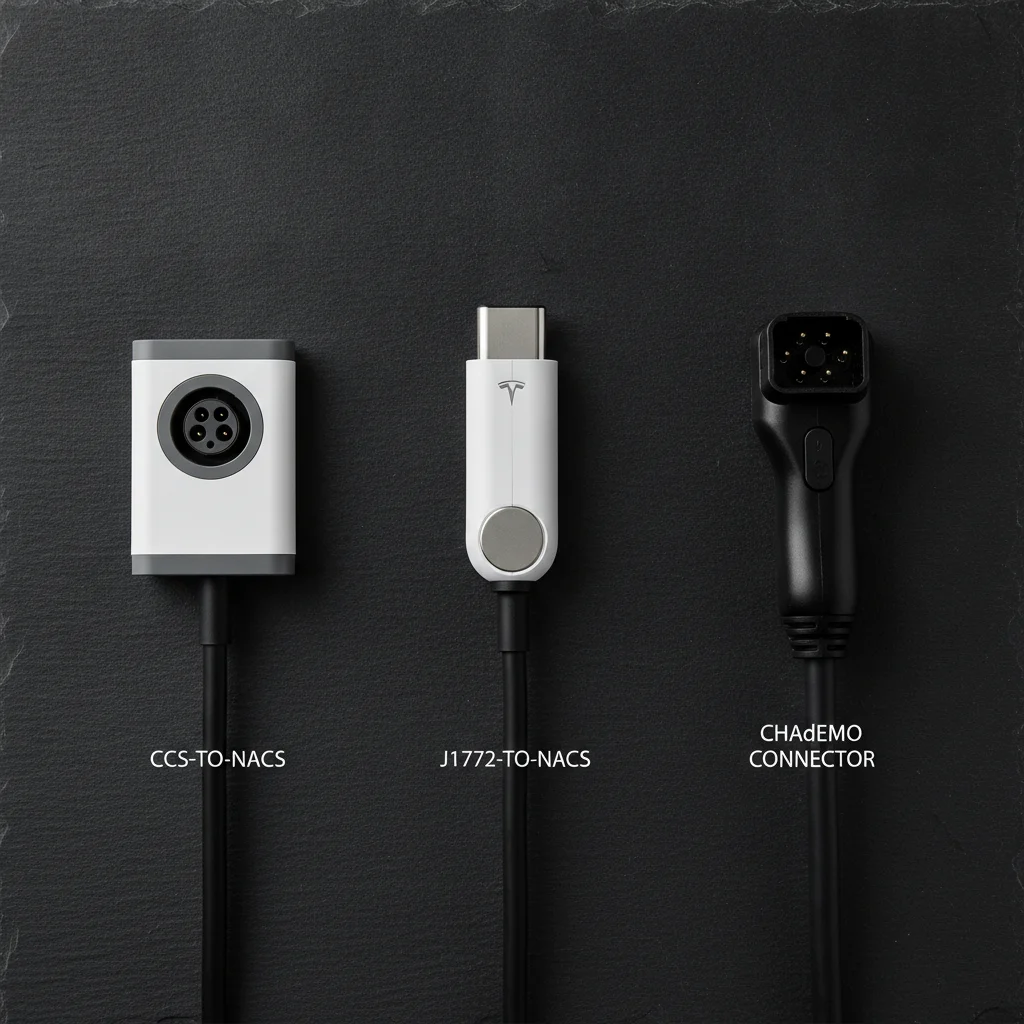
- NACS-to-CCS: Available from Tesla and third parties; allows NACS-equipped vehicles to use CCS DC fast chargers. Power may be capped depending on the station and vehicle.
- CCS-to-NACS: Allows older CCS vehicles to access Superchargers at stations with Magic Dock hardware; not all Supercharger stations have Magic Dock.
- J1772-to-NACS: Tesla includes this adapter with vehicles so NACS-equipped EVs can use Level 2 J1772 stations — critical given how many Level 2 chargers exist.
- CHAdeMO adapters: Tesla sold a CHAdeMO-to-Tesla adapter for years but discontinued it; third-party options exist but are rare and vary in reliability.
The bottom line for road trippers: a NACS-equipped vehicle today has the broadest charging access in North America. A CCS vehicle with a CCS-to-NACS adapter comes close, provided you're near Magic Dock-equipped Superchargers. A CHAdeMO-only vehicle (older LEAF) faces the most constrained network access and warrants careful route planning. Cost comparisons across networks are worth examining — the charging costs and savings hub has detailed breakdowns.
CCS Stations Are Still Being Built
Despite the NACS transition, CCS fast chargers continue to be deployed in the US — particularly through Electrify America and EVgo, which have large rollout commitments. CCS will remain a viable charging option for years even as the industry moves toward NACS. Owners of CCS-equipped vehicles should not feel stranded; the infrastructure remains robust and growing through at least the end of this decade.
CHAdeMO Chargers Are Quietly Disappearing
Some charging networks have begun removing CHAdeMO plugs from dual-port stations and replacing them with additional CCS or NACS hardware. If you own a CHAdeMO-equipped vehicle, it's worth checking current plug availability on route-planning apps like PlugShare before assuming a station's CHAdeMO port is operational — some have been decommissioned even if the station remains listed online.
PlugShare
A crowd-sourced EV charging station map that shows real-time availability, connector types (CCS, CHAdeMO, NACS, J1772), user check-ins, and reliability reviews. Essential for route planning with any EV.
SAE J3400 (NACS) Specification
The official SAE International page for the J3400 standard, where engineers and curious drivers can download the full connector specification that codified NACS as the US industry standard in 2023.
Tesla Charging Compatibility Guide
Tesla's official resource explaining which non-Tesla vehicles can access Superchargers, how Magic Dock adapters work, and current pricing for third-party EV drivers at Supercharger stations.
NEVI Program State-by-State Map
The US Department of Transportation's interactive map showing approved NEVI corridor charging site locations, helping drivers identify upcoming infrastructure along major highway routes.
AFDC EV Charging Station Locator
The Alternative Fuels Data Center's public charging station locator, maintained by the Department of Energy, filters by connector type and network to help you find compatible chargers anywhere in the US.
All claims are backed by peer-reviewed research. Sources on request.