Key Takeaways
Option A
Full Hybrid (HEV)
The plug-free, self-sufficient fuel saver.
Best for: Drivers who want better fuel economy without any change to their routine or infrastructure.
Option B
Plug-In Hybrid (PHEV)
The dual-mode vehicle for short electric, long gasoline trips.
Best for: Drivers with home charging access and predictable daily mileage under 30–50 miles who want to minimize fuel costs.
If you want fuel savings with zero lifestyle changes
Full Hybrid (HEV)
You never need to find or install a charger. The HEV manages everything automatically and consistently delivers 40–55 MPG in real-world driving.
If you have a garage and drive under 40 miles most days
Plug-In Hybrid (PHEV)
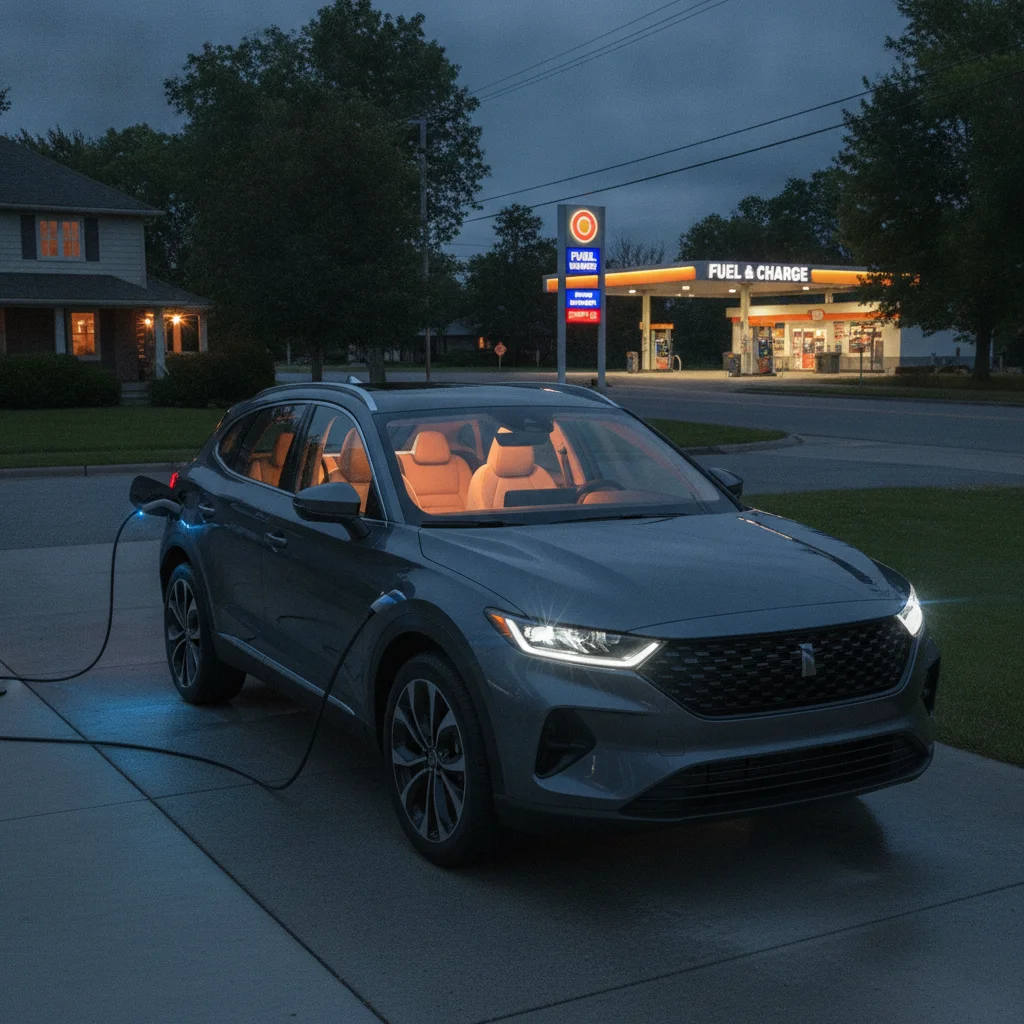
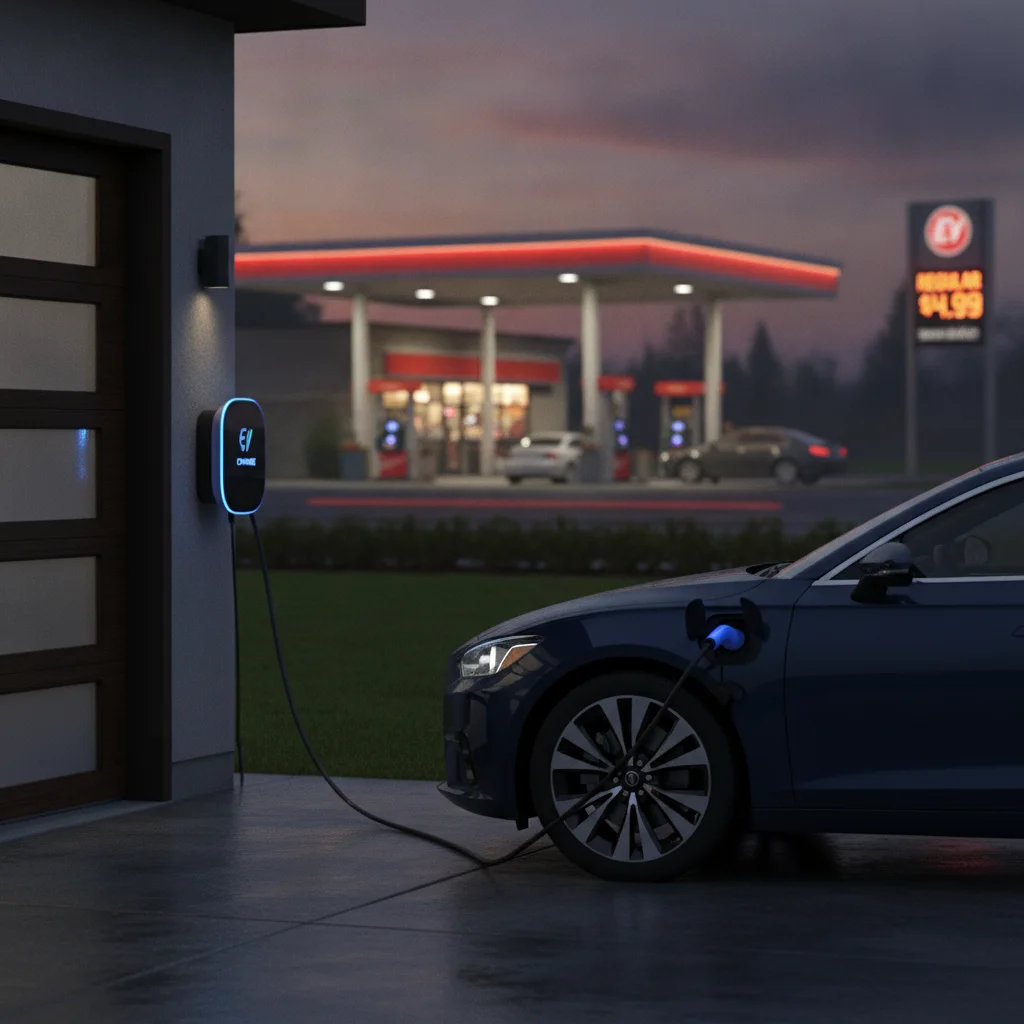
With nightly Level 1 or Level 2 charging, most of your daily driving runs on cheap grid electricity, cutting fuel costs dramatically while the gas engine handles longer trips.
If you frequently take road trips or long highway drives
Full Hybrid (HEV)
HEVs are optimized for sustained highway efficiency and never leave you hunting for a charger mid-trip. PHEVs often revert to less-efficient hybrid mode once the battery depletes on long runs.
If you want a federal tax credit to offset your purchase price
Plug-In Hybrid (PHEV)
PHEVs that meet IRA battery content and assembly requirements qualify for up to $7,500 in federal tax credits. Standard HEVs receive no federal credit whatsoever.
If you live in an apartment or have no dedicated parking
Full Hybrid (HEV)
Without reliable home charging, a PHEV's larger battery often sits depleted, meaning you're hauling extra weight without the fuel savings that justify the higher purchase price.
What Actually Separates These Two Technologies
Both full hybrids and plug-in hybrids combine a gasoline engine with an electric motor and a battery pack. That's where the similarity ends. The fundamental engineering difference — and the one that shapes every ownership decision — is how the battery gets recharged.
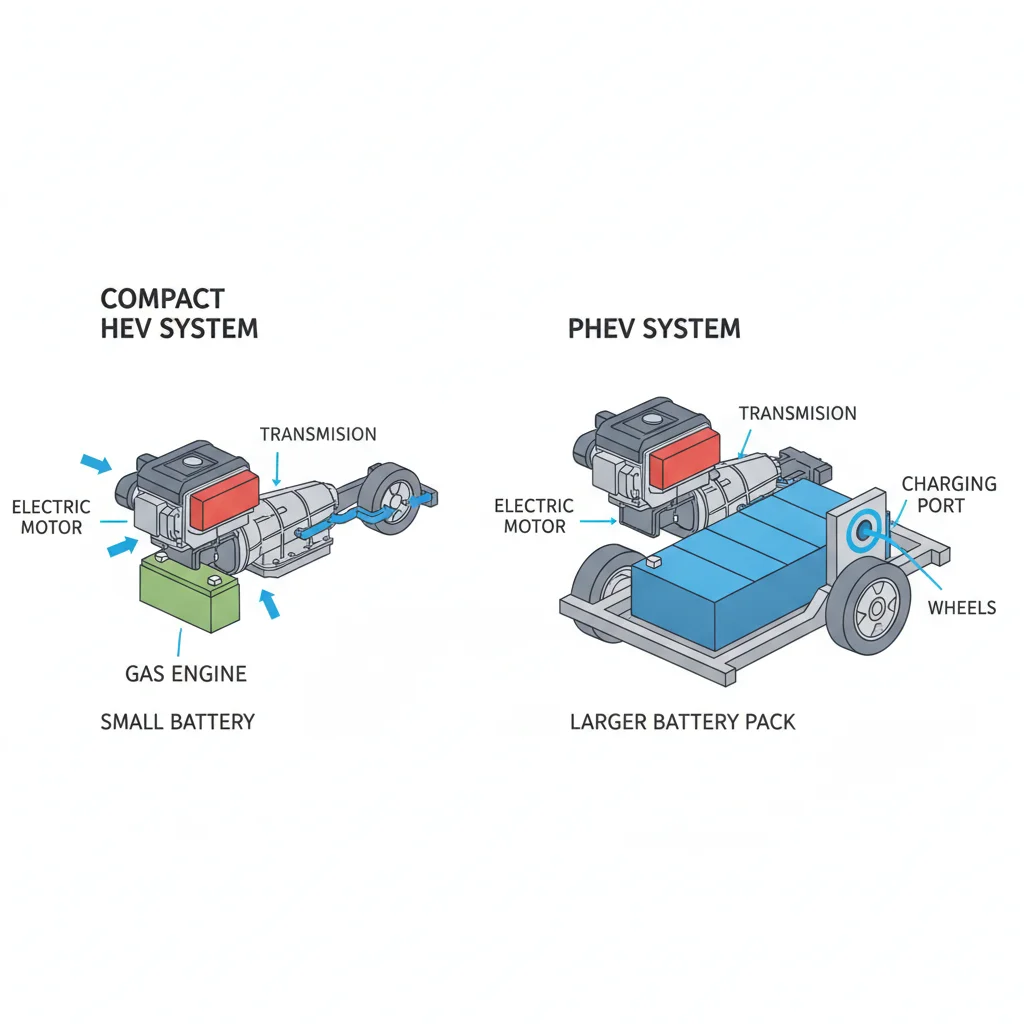
A full hybrid (HEV) closes the loop internally. The gas engine and regenerative braking recapture kinetic energy during deceleration, topping up a relatively small battery (typically 1–2 kWh usable capacity). The system manages charge automatically, and the electric motor assists the gas engine at low speeds and during acceleration. You never touch a plug. You never think about state of charge. It behaves exactly like a conventional car, except at the pump.
A plug-in hybrid (PHEV) does all of that — but adds a much larger battery pack (usually 8–25 kWh) that you recharge from an external power source. When that battery is charged, the vehicle can run in a pure electric mode for 20–60 miles depending on the model. Once that charge depletes, it transitions to conventional hybrid operation, much like an HEV. The key word there is transitions — and that transition has meaningful efficiency consequences we'll cover below.
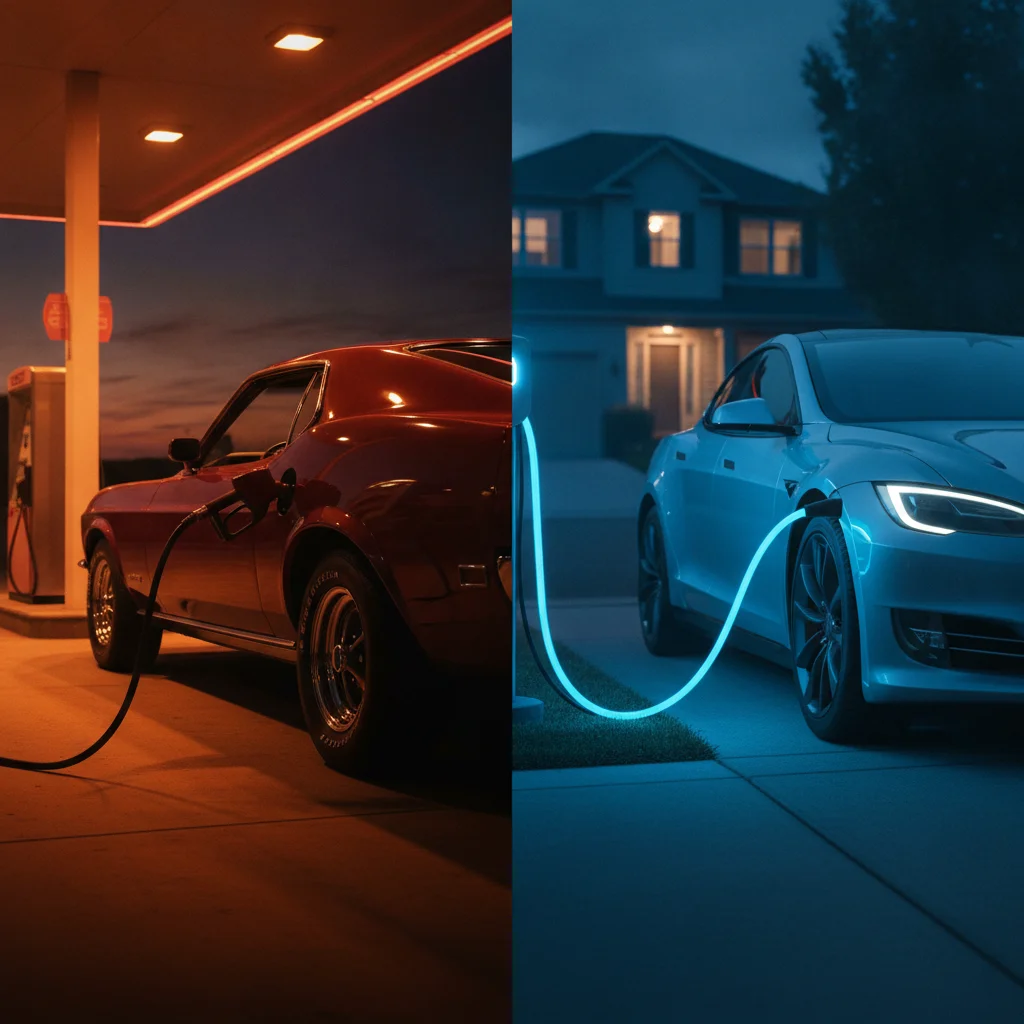
Think of it this way: an HEV is an optimized gasoline car. A PHEV is a part-time electric vehicle with a gasoline safety net. Which description better fits your life determines which technology actually serves you.
For a deeper look at how PHEVs are engineered and marketed, see Plug-In Hybrids Demystified — it covers the original rationale behind the technology and the trade-offs manufacturers accept to make it work.
Head-to-Head: HEV vs. PHEV on the Criteria That Matter
Comparing these two technologies means looking beyond the sticker price. Fuel costs, charging requirements, tax incentives, maintenance complexity, and real-world range all factor into the total ownership picture over three to five years.
| Criterion | Full Hybrid (HEV) | Plug-In Hybrid (PHEV) |
|---|---|---|
| Requires external charging | No — fully self-sufficient | Yes — plug in to maximize benefit |
| Typical battery capacity | 1–2 kWh usable | 8–25 kWh usable |
| All-electric range | 0–2 miles (assist only) | 20–60 miles per charge |
| Average fuel economy | 40–55 MPG (consistent) | Highly variable; 25–55 MPG+ depending on charging |
| Federal tax credit eligibility | None | Up to $7,500 (if vehicle qualifies) |
| Purchase price premium vs. gas equivalent | $2,000–$4,000 more | $5,000–$12,000 more (before credits) |
| Powertrain complexity | Moderate | High (two full systems) |
| Best use case | Mixed driving, no charging access | Short daily commute with home charging |
| Long road trip efficiency | Consistent; no planning needed | Drops after battery depletes |
| Maintenance complexity | Low-moderate | Moderate-high |
A few of these rows deserve elaboration beyond what a table can convey.
Purchase Price and Tax Incentives
PHEVs carry a meaningful price premium — often $3,000 to $8,000 over a comparable HEV — because of the larger battery and dual charging hardware. However, qualifying PHEVs are eligible for the federal clean vehicle tax credit under the Inflation Reduction Act, potentially up to $7,500. Standard HEVs receive no federal credit. That credit can effectively close or reverse the price gap, provided the vehicle meets battery sourcing and final assembly requirements, and you have sufficient tax liability to use it. How the tax credit treats PHEVs vs. BEVs explains the specific rules in detail.
Fuel Economy in the Real World
HEV fuel economy figures — 40 to 55 MPG in most mainstream models — are reliable because the system operates the same way regardless of driver behavior. PHEV efficiency numbers are far more variable. EPA ratings combine an EV-mode figure and a charge-sustaining (CS) mode figure, often presented as a blended number that assumes regular charging. Drivers who charge nightly and stay within the electric range can dramatically outperform the EPA label. Drivers who rarely charge, or who frequently exceed the electric range, often underperform it — sometimes falling below equivalent HEV efficiency because they're lugging a heavier battery pack on the gas engine's budget. Why PHEVs don't always deliver advertised savings examines the data behind this gap.
What Happens When the PHEV Battery Empties
This is the question most buyers don't ask. Once a PHEV's battery is depleted, the car doesn't stop — but it doesn't operate like a purpose-built hybrid either. The gas engine takes over primary propulsion, with the smaller auxiliary hybrid system providing some assistance. Efficiency typically drops compared to a dedicated HEV of similar size. What happens to the gas engine when the PHEV battery runs out walks through the mechanics and the real MPG impact.
68%
PHEV owners who charge daily at home
According to the International Energy Agency's 2023 Global EV Outlook, roughly two-thirds of PHEV owners with home access charge their vehicle daily — but a substantial minority do not.
3–4x
More fuel used by uncharged PHEVs vs. charged
Studies from the International Council on Clean Transportation found PHEVs driven without regular charging can use 3–4 times more fuel than their EPA label suggests.
$7,500
Maximum federal PHEV tax credit (IRA)
Qualifying PHEVs can receive up to $7,500 in federal clean vehicle credits under the Inflation Reduction Act, subject to income limits and vehicle sourcing requirements.
40–55 MPG
Typical real-world HEV fuel economy range
Consumer Reports and EPA data consistently show mainstream full hybrids achieve 40–55 MPG in mixed real-world driving, with minimal variation based on driver behavior.
8 yr / 100K mi
Federal minimum PHEV battery warranty
Federal law requires automakers to warranty EV and PHEV traction batteries for at least 8 years or 100,000 miles, whichever comes first.
The Charging Infrastructure Question
This is the axis that tips the decision for most buyers. A PHEV is only financially advantageous if it's charged regularly — ideally daily for short-range commuters, or at minimum several times per week.
Home Charging: The Make-or-Break Factor
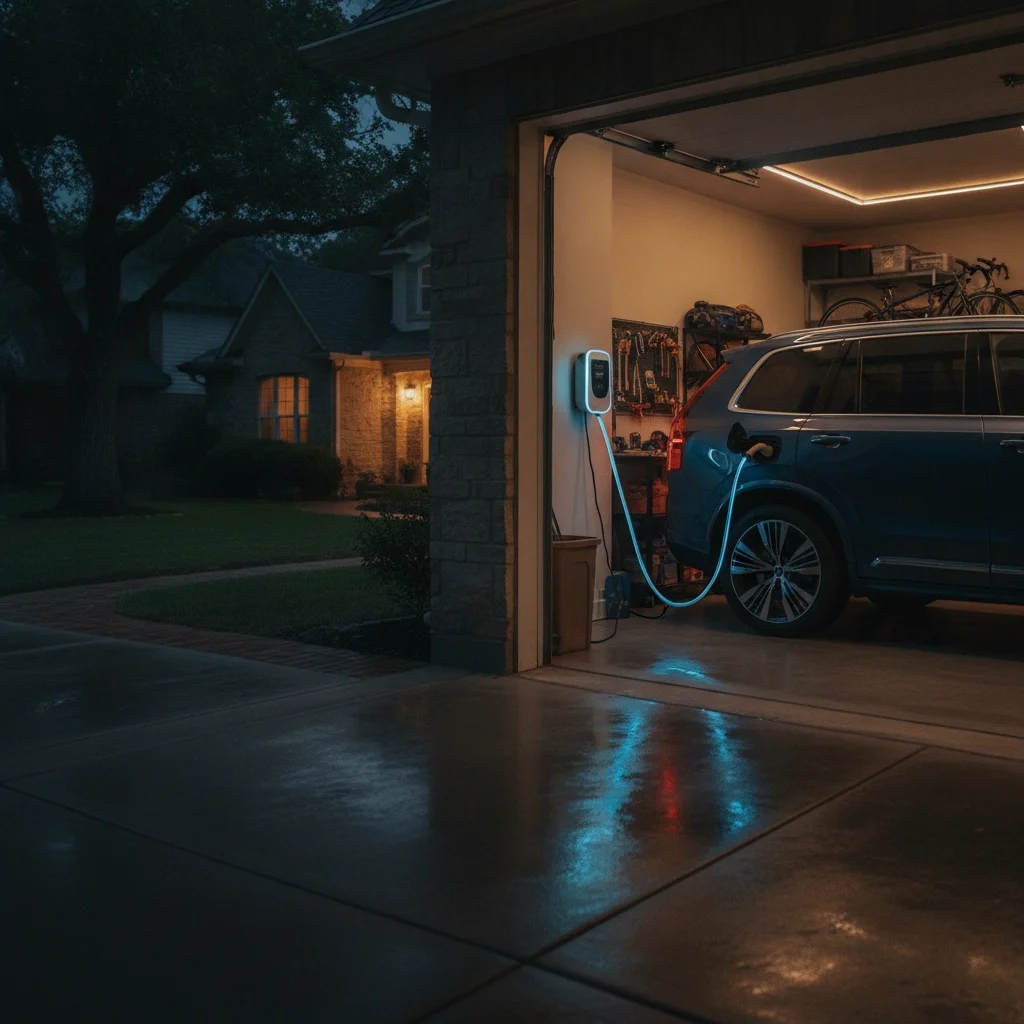
Level 1 charging (a standard 120V household outlet) adds roughly 3–5 miles of range per hour. For a PHEV with 25–30 miles of electric range, that means an overnight Level 1 charge is often sufficient. You don't need to install a Level 2 charger to benefit from PHEV ownership — you just need a dedicated outlet near your parking spot. The problem is that a significant share of American drivers park on streets, in shared garages, or in apartment complexes without outlet access. For them, the PHEV value proposition largely collapses. BEV vs. PHEV without reliable home charging covers this scenario specifically.
Public Charging for PHEVs
Most PHEVs use CCS or J1772 Level 2 connectors and do not support DC fast charging. That means public charging for a PHEV is a 1–3 hour affair at a Level 2 station — practical for destination charging at work or a mall, not useful for a quick mid-trip top-up. For understanding the broader public charging landscape and what networks are available, public charging networks is a useful reference.
HEVs and the Charging Non-Issue
For full hybrid owners, none of this matters. There is no charging decision to make, no outlet to locate, and no behavior change required. This is not a trivial advantage. Studies of EV and PHEV adoption consistently show that charging friction — the mental overhead of managing charge state — is one of the top barriers to satisfaction. HEV owners sidestep it entirely. For a full accounting of what that simplicity delivers and costs, HEV pros and cons is worth reading alongside this piece.
Curious how charging costs compare to gasoline over time? Charging costs and savings breaks down the math in detail.
Maintenance, Complexity, and Long-Term Ownership
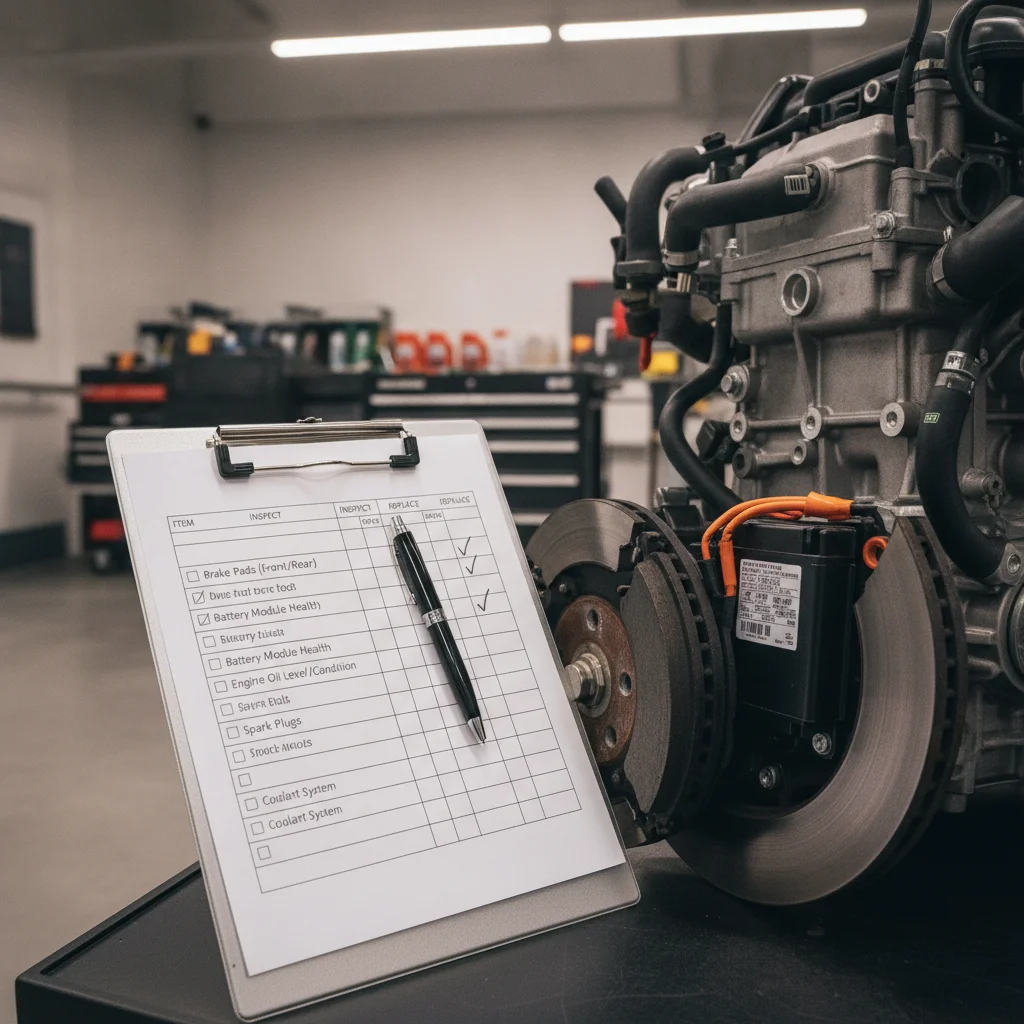
Powertrain complexity has a direct relationship with long-term maintenance costs and reliability risk. Both HEVs and PHEVs eliminate many conventional maintenance items — spark plugs at high intervals, transmission fluid in CVT applications, and significantly reduced brake wear thanks to regenerative braking. But PHEVs layer additional complexity on top.
Battery Degradation
PHEV batteries cycle daily if charged regularly. Like BEV batteries, they experience capacity degradation over time — typically 2–3% per year under normal use, though rates vary by chemistry, climate, and charging habits. Most manufacturers offer 8-year/100,000-mile battery warranties on PHEV packs. As range shrinks, the EV-mode advantage erodes, and the vehicle increasingly operates as a standard hybrid anyway. HEV batteries cycle far less aggressively and have a strong long-term track record; Toyota's hybrid system, now over 25 years old in the market, shows minimal degradation in third-party studies even at high mileage.
Two Powertrains, One Bill
A PHEV maintains two complete propulsion systems: the electric drive system with its inverters, motor, and charging hardware, plus the full gasoline powertrain with engine, exhaust, and transmission. If either system requires major repair, the cost can be significant. This is a rare scenario in the warranty period, but it's a real consideration on higher-mileage used PHEVs.
Insurance Considerations
PHEVs typically carry slightly higher insurance premiums than equivalent HEVs, driven by higher replacement cost for the battery pack and the greater overall vehicle value. The difference is usually modest — $10–$30 per month — but worth factoring into total cost of ownership comparisons.
Used PHEV Buyers: Check the Battery History
If you're considering a used PHEV, the battery's charge history and current capacity are critical. A PHEV that was rarely charged by its first owner may have experienced unusual charging cycles, and its electric range may already be reduced. Request any available telematics or service records, and if possible, have an independent technician perform a battery state-of-health check before purchase. Some manufacturers provide remaining range readouts that give a rough indication of pack health.
Which Drivers Genuinely Benefit From Each
Framing this as a technology debate misses the point. The right answer is almost entirely a function of your driving pattern, your parking situation, and your financial position. Here's how to think through it honestly.
The HEV Is Right for You If...
- You drive a mix of city, suburban, and highway miles without a predictable daily pattern
- You park on the street, in a shared garage, or anywhere without reliable outlet access
- You take frequent long road trips where the PHEV would spend most of its time in charge-sustaining mode
- You want the lowest possible purchase price for a fuel-efficient vehicle
- You prefer minimal technology overhead and maximum simplicity
The PHEV Is Right for You If...
- You have a dedicated parking spot with access to a 120V outlet or Level 2 charger
- Your daily commute falls within 20–50 miles round-trip — reliably within the electric range
- You want the option to take long trips without range anxiety, unlike a BEV
- You qualify for and can fully utilize the federal tax credit, which can offset the price premium
- You're transitioning toward EV ownership and want a lower-stakes entry point

The rider on all of that PHEV advice: model it out. Calculate your expected annual miles driven electrically versus on gas, estimate your per-mile electricity cost versus gasoline cost, and compare that to the after-incentive price premium. For many buyers in suburban apartments or high-highway-mileage roles, the math simply doesn't work out in the PHEV's favor. For a daily suburban commuter with a garage, it often does — convincingly. PHEV pros and cons: the honest accounting puts specific numbers around both sides.
And if you're curious about the other end of the electrification spectrum — vehicles that have a small motor assist but can't drive electrically at all — mild hybrids explained clarifies what MHEV technology actually delivers and where it falls short.

All claims are backed by peer-reviewed research. Sources on request.