Key Takeaways
Electric-only driving for most daily commutes
With 20–50 miles of EV range, most PHEVs can cover the average American's daily driving entirely on electricity when charged overnight, reducing fuel costs substantially.
No range anxiety — gas engine always available
Unlike a BEV, a PHEV lets you refuel at any gas station when the battery runs out, making long trips straightforward without charging stop planning.
Eligible for federal EV tax credit up to $7,500
Most new PHEVs qualify for the Inflation Reduction Act clean vehicle credit, which can meaningfully offset the higher purchase price compared to gas or standard hybrid alternatives.
Lower emissions than equivalent gas-only vehicles
Even with inconsistent charging, a PHEV typically produces fewer tailpipe emissions than a comparable gas vehicle, providing a meaningful emissions reduction without full EV commitment.
Reduced brake wear via regenerative braking
Regenerative braking recovers kinetic energy to recharge the battery while simultaneously reducing mechanical brake use, extending brake pad and rotor life compared to conventional vehicles.
Broad model availability across segments
PHEVs are available in compact cars, SUVs, pickup trucks, and luxury vehicles, giving buyers more choices than the still-limited full BEV market in certain segments.
Higher upfront cost than gas or standard hybrid
PHEV versions of popular models typically cost $4,000–$8,000 more than their conventional or standard hybrid counterparts, a gap not always fully offset by the tax credit.
Significant added weight from dual powertrains
Carrying both a full gas drivetrain and a larger battery pack adds hundreds of pounds, reducing handling sharpness, increasing tire wear, and reducing efficiency when running on gas alone.
Benefits collapse without consistent charging
A PHEV that is rarely plugged in becomes a heavy, expensive, and less fuel-efficient alternative to a well-optimized standard hybrid — negating the core reason to pay more.
Still requires all traditional gas engine maintenance
Unlike a BEV, a PHEV doesn't eliminate oil changes, transmission service, or coolant maintenance — you carry the full maintenance burden of both a gas engine and an electric system.
Requires reliable home charging to maximize value
The PHEV's economics are built around overnight home charging — a genuine barrier for renters, apartment dwellers, or anyone without a dedicated parking space and outlet.
Real-world fuel savings often fall short of EPA estimates
Research consistently shows PHEV fuel consumption in real-world use often far exceeds EPA ratings, particularly among owners who charge inconsistently or primarily drive at highway speeds.
Complex powertrain increases long-term risk
Two complete propulsion systems mean more components that can fail or require repair over time, though modern PHEVs have improved substantially in reliability since early generations.
Our Verdict
A plug-in hybrid is a genuinely useful vehicle for a specific type of driver — someone who commutes within electric range most days, has reliable home charging, and occasionally needs gas-powered range for longer trips. For that person, a PHEV can meaningfully cut fuel costs while eliminating EV range anxiety. For everyone else — especially drivers without home charging or those who rarely plug in — the added cost, weight, and mechanical complexity of carrying two powertrains delivers little real benefit over a conventional hybrid or a full EV.
Best for commuters who drive under 40 miles daily, can charge at home, and want backup gas range for occasional longer trips.
What Is a PHEV, and How Does It Actually Work?
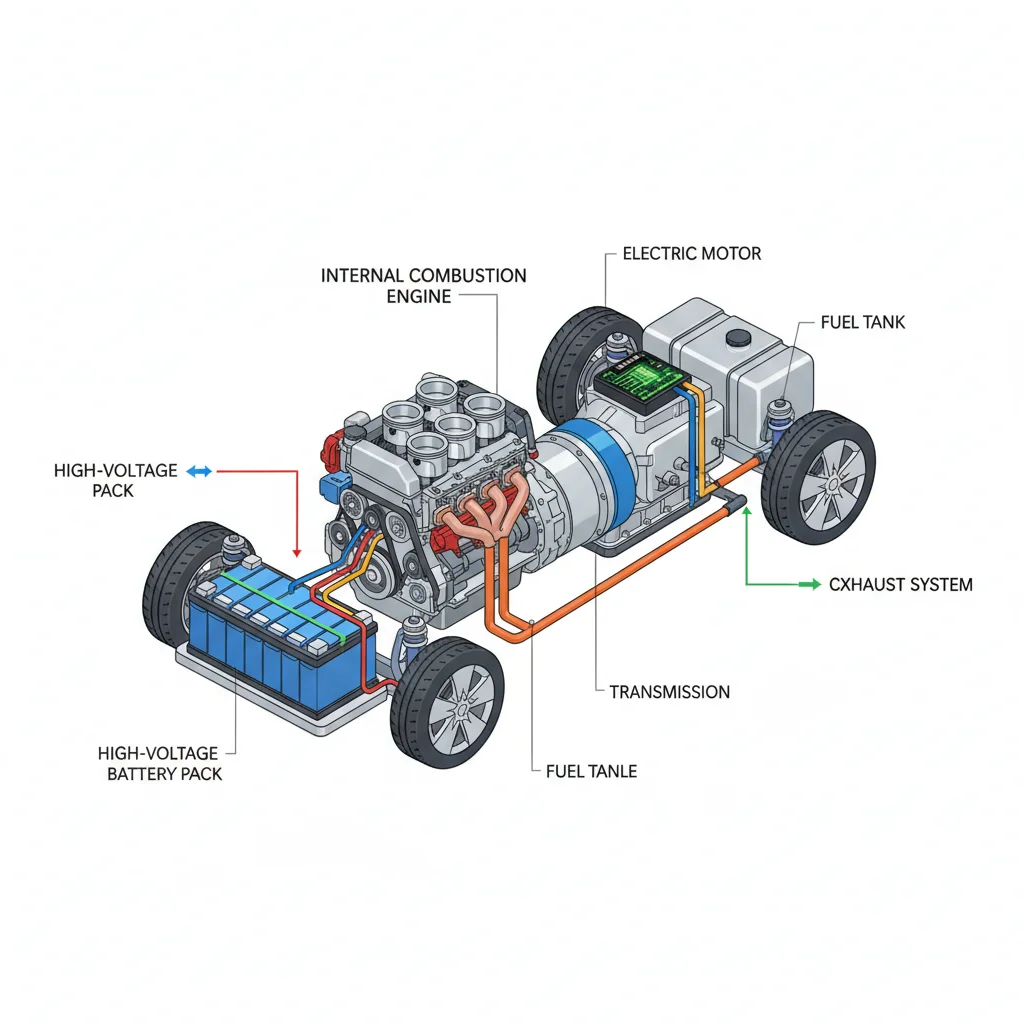
A plug-in hybrid electric vehicle (PHEV) combines a gasoline engine with an electric motor and a battery large enough to support meaningful all-electric driving — typically 20 to 50 miles depending on the model. Unlike a standard hybrid (HEV), which recharges its battery exclusively through regenerative braking and the engine, a PHEV can be plugged into an external power source to top up its battery overnight or during the workday.
In practice, most PHEVs operate in one of two modes: EV mode, where the vehicle runs on battery power alone up to a certain speed or state of charge, and hybrid mode, where the gas engine kicks in once the battery depletes. Some models — like certain Toyota plug-ins — use a blended approach that mixes both power sources from the start for efficiency rather than sequencing them.
That dual-powertrain architecture is both the PHEV's greatest strength and its fundamental complication. You get the range of a gas vehicle and the low-cost, low-emission driving of an EV for short trips. But you also carry two complete systems — engine, fuel tank, electric motor, battery pack — in one vehicle. That has real consequences for weight, complexity, maintenance, and cost. Here's a deeper look at what separates a PHEV from a standard hybrid, particularly around how the charging requirement changes the ownership equation.
The Case For a PHEV: Real Advantages Worth Knowing
Plug-in hybrids have earned their place in the market for concrete reasons. If your driving life lines up with what a PHEV is designed for, the benefits are substantial.
Electric-only driving for most daily commutes
With 20–50 miles of EV range, most PHEVs can cover the average American's daily driving entirely on electricity when charged overnight, reducing fuel costs substantially.
No range anxiety — gas engine always available
Unlike a BEV, a PHEV lets you refuel at any gas station when the battery runs out, making long trips straightforward without charging stop planning.
Eligible for federal EV tax credit up to $7,500
Most new PHEVs qualify for the Inflation Reduction Act clean vehicle credit, which can meaningfully offset the higher purchase price compared to gas or standard hybrid alternatives.
Lower emissions than equivalent gas-only vehicles
Even with inconsistent charging, a PHEV typically produces fewer tailpipe emissions than a comparable gas vehicle, providing a meaningful emissions reduction without full EV commitment.
Reduced brake wear via regenerative braking
Regenerative braking recovers kinetic energy to recharge the battery while simultaneously reducing mechanical brake use, extending brake pad and rotor life compared to conventional vehicles.
Broad model availability across segments
PHEVs are available in compact cars, SUVs, pickup trucks, and luxury vehicles, giving buyers more choices than the still-limited full BEV market in certain segments.
37 miles
Average U.S. daily driving distance
According to the Federal Highway Administration, the average American drives approximately 37 miles per day — within the EV range of most current PHEVs.
20–50 mi
Typical PHEV electric-only range
Most 2024 model year PHEVs offer between 20 and 50 miles of all-electric range, with larger battery packs becoming more common in newer models.
Up to $7,500
Maximum federal PHEV tax credit
The Inflation Reduction Act provides a clean vehicle tax credit of up to $7,500 for qualifying new PHEVs, subject to income, MSRP, and assembly location rules.
~500 lbs
Weight premium of RAV4 Prime vs. RAV4
The Toyota RAV4 Prime weighs approximately 500 pounds more than the standard RAV4, illustrating the real mass penalty of carrying two complete powertrains.
2–4x
Real vs. rated fuel use gap in some studies
The International Council on Clean Transportation found that real-world PHEV fuel consumption can be two to four times higher than EPA ratings among drivers who rarely charge.
You Can Do Most Daily Driving on Electricity
The average American drives around 37 miles per day according to the Federal Highway Administration. Most PHEVs offer 25–50 miles of EV range, meaning a significant share of drivers can complete their entire daily commute without burning a drop of gasoline — as long as they plug in at home overnight. That translates to real fuel cost savings when electricity rates are reasonable.
No Range Anxiety on Long Trips
This is the advantage that wins over the most skeptical buyers. Unlike a battery-electric vehicle, a PHEV lets you pull into any gas station when the battery runs out. You don't need to plan a road trip around fast-charging corridors or wait 20–45 minutes at a charging stop. The gas engine is always there as a backstop. For buyers who aren't ready to fully commit to an EV lifestyle — especially those in areas with limited public charging infrastructure — that fallback has genuine psychological and practical value. See our BEV vs. PHEV comparison for drivers without reliable home charging for a thorough breakdown of this trade-off.
Federal Tax Credit Eligibility
Most new PHEVs qualify for the federal clean vehicle tax credit under the Inflation Reduction Act, up to $7,500 — the same headline figure as full EVs, though the specific qualifying criteria (battery size, assembly location, income limits, MSRP caps) can differ. That credit can meaningfully offset the PHEV's higher sticker price. The rules diverge between PHEVs and BEVs in important ways, so it's worth understanding exactly what you qualify for before you sign.
Lower Emissions Without Full EV Commitment
Even if you only charge half the time, a PHEV will typically produce fewer tailpipe emissions than a comparable gas-only vehicle. For buyers who want to reduce their environmental footprint but aren't in a position to go fully electric — due to apartment living, a long primary commute, or frequent long-distance travel — a PHEV offers a genuine middle path.
The Case Against a PHEV: Drawbacks That Matter
Every advantage of the PHEV architecture comes with a countervailing cost. These aren't edge cases — they're inherent to the design and affect real buyers regularly.
Higher upfront cost than gas or standard hybrid
PHEV versions of popular models typically cost $4,000–$8,000 more than their conventional or standard hybrid counterparts, a gap not always fully offset by the tax credit.
Significant added weight from dual powertrains
Carrying both a full gas drivetrain and a larger battery pack adds hundreds of pounds, reducing handling sharpness, increasing tire wear, and reducing efficiency when running on gas alone.
Benefits collapse without consistent charging
A PHEV that is rarely plugged in becomes a heavy, expensive, and less fuel-efficient alternative to a well-optimized standard hybrid — negating the core reason to pay more.
Still requires all traditional gas engine maintenance
Unlike a BEV, a PHEV doesn't eliminate oil changes, transmission service, or coolant maintenance — you carry the full maintenance burden of both a gas engine and an electric system.
Requires reliable home charging to maximize value
The PHEV's economics are built around overnight home charging — a genuine barrier for renters, apartment dwellers, or anyone without a dedicated parking space and outlet.
Real-world fuel savings often fall short of EPA estimates
Research consistently shows PHEV fuel consumption in real-world use often far exceeds EPA ratings, particularly among owners who charge inconsistently or primarily drive at highway speeds.
Complex powertrain increases long-term risk
Two complete propulsion systems mean more components that can fail or require repair over time, though modern PHEVs have improved substantially in reliability since early generations.

Higher Purchase Price Than Gas or Standard Hybrid Alternatives
A PHEV version of a given model typically costs $4,000–$8,000 more than its conventional or standard hybrid counterpart. The Toyota RAV4 Prime, for example, commands a significant premium over the RAV4 Hybrid. That gap narrows if you qualify for the federal tax credit, but not all buyers do — income caps and MSRP limits apply, and the credit only helps if you owe enough federal tax to use it.
Added Weight Hurts Efficiency and Dynamics
Carrying both a full gas drivetrain and a substantial battery pack adds hundreds of pounds versus a comparable gas vehicle. The RAV4 Prime weighs roughly 500 pounds more than the standard RAV4. That extra mass affects handling, braking distance, and tire wear — and it reduces fuel economy in hybrid mode compared to a vehicle designed around a single powertrain. If you frequently run the PHEV on gas without charging, the weight penalty makes it less efficient than a well-optimized standard hybrid.
The Benefits Collapse If You Don't Plug In
This is the honest truth that PHEV marketing glosses over: a PHEV that never gets plugged in is a heavy, expensive, underperforming hybrid. Studies from the International Council on Clean Transportation have found that real-world PHEV fuel consumption often far exceeds EPA estimates — in some cases approaching conventional gas vehicle fuel use — among owners who rarely or inconsistently charge. The gap between rated and real-world PHEV fuel savings is well-documented and largely driven by charging behavior.
Two Systems Means Two Sets of Maintenance
You still need oil changes, transmission service, coolant flushes, and all the traditional gas-engine maintenance — on top of the battery and electric motor components. A PHEV does not eliminate ICE maintenance the way a BEV does. That said, regenerative braking does reduce brake pad wear meaningfully, which is a genuine offsetting benefit.
Home Charging Is a Practical Prerequisite
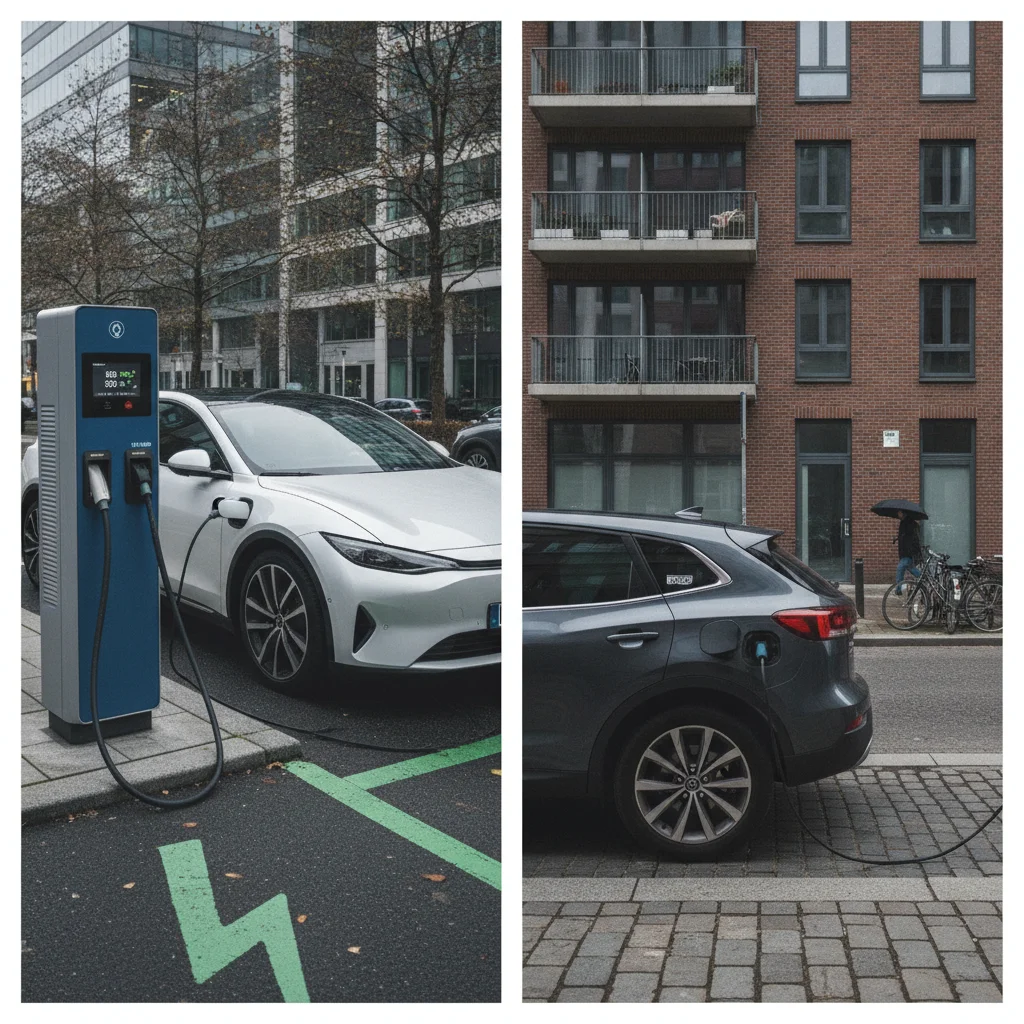
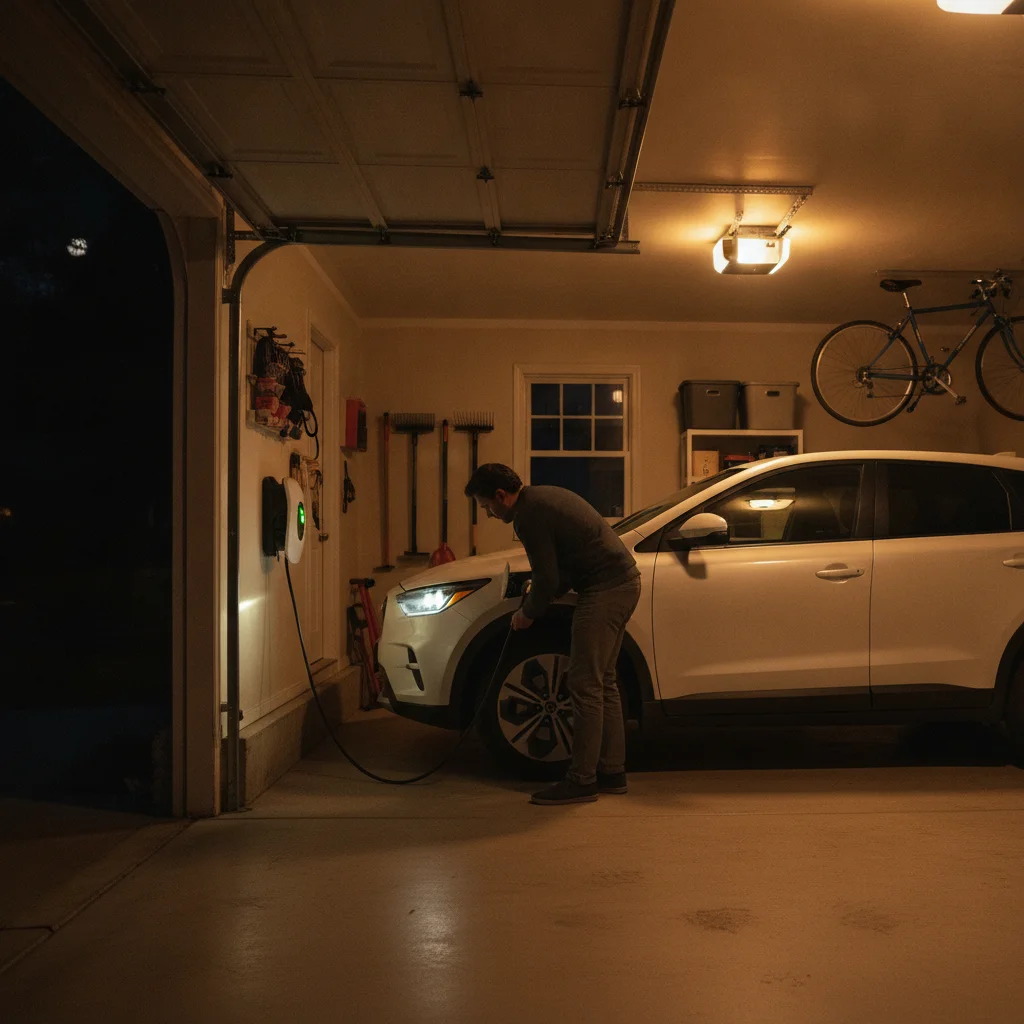
If you live in an apartment without a dedicated outlet, park on the street, or otherwise lack access to reliable home charging, a PHEV's electric range benefit largely evaporates. Public Level 2 chargers help at the margin, but the economics and convenience of a PHEV are built around overnight home charging. Setting up home EV charging is straightforward for homeowners, but it's a genuine barrier for a large share of the U.S. renting population.
PHEV Battery Size and Tax Credit Eligibility
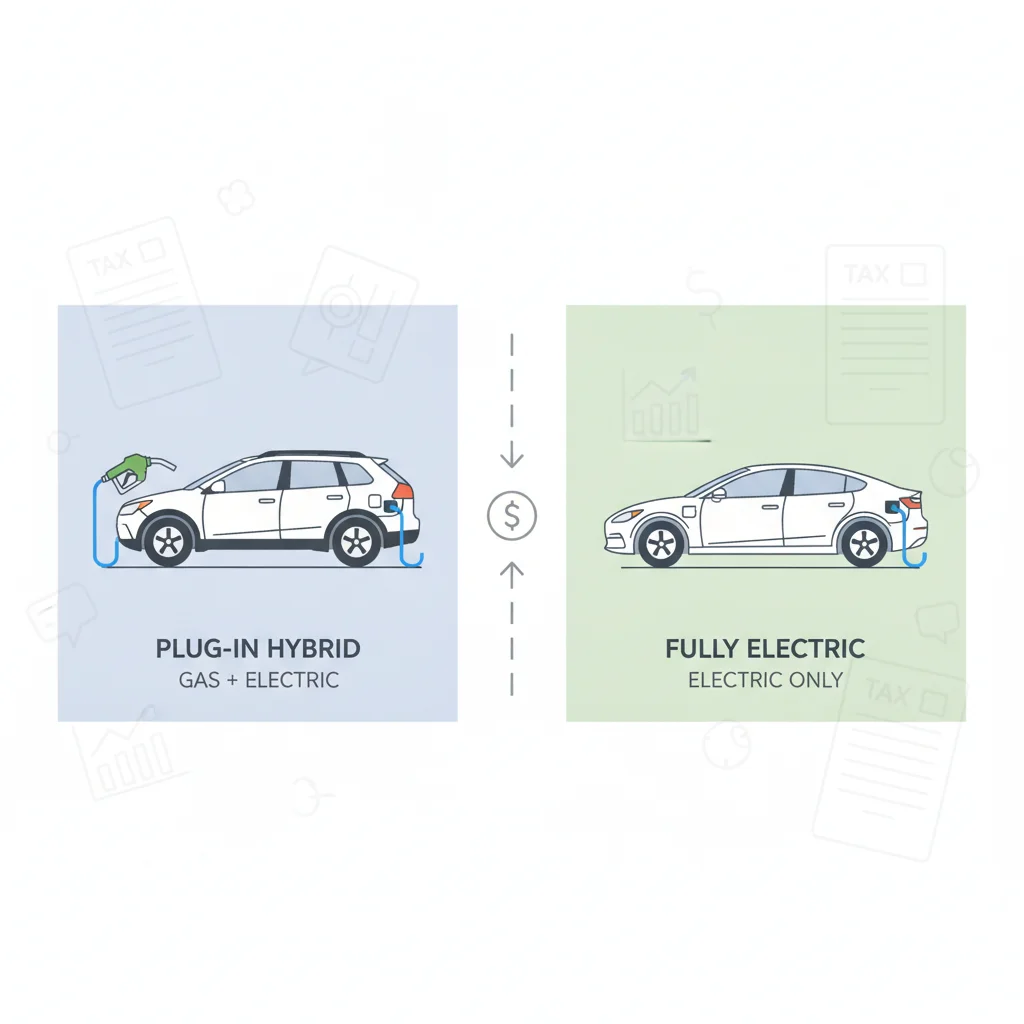
Not all PHEVs qualify for the full $7,500 federal credit — the credit amount is partly determined by battery capacity (kilowatt-hours), with smaller batteries yielding a smaller credit. Additionally, the vehicle must meet final assembly, MSRP, and buyer income requirements under the Inflation Reduction Act. Always verify current eligibility on the IRS or fueleconomy.gov website before purchasing, as the qualifying vehicle list changes regularly.
Level 1 vs. Level 2 Charging for PHEVs
Most PHEVs can be charged using a standard 120V Level 1 outlet, which adds roughly 3–5 miles of range per hour — slow but sufficient for smaller PHEV batteries if plugged in overnight. A Level 2 (240V) home charger can fully replenish most PHEV batteries in 2–4 hours, which is more practical for drivers who need a midday top-up or have larger battery packs. For PHEVs specifically, the investment in a Level 2 charger is optional but worthwhile for models with 30+ miles of EV range.
How PHEVs Compare to HEVs and Full EVs
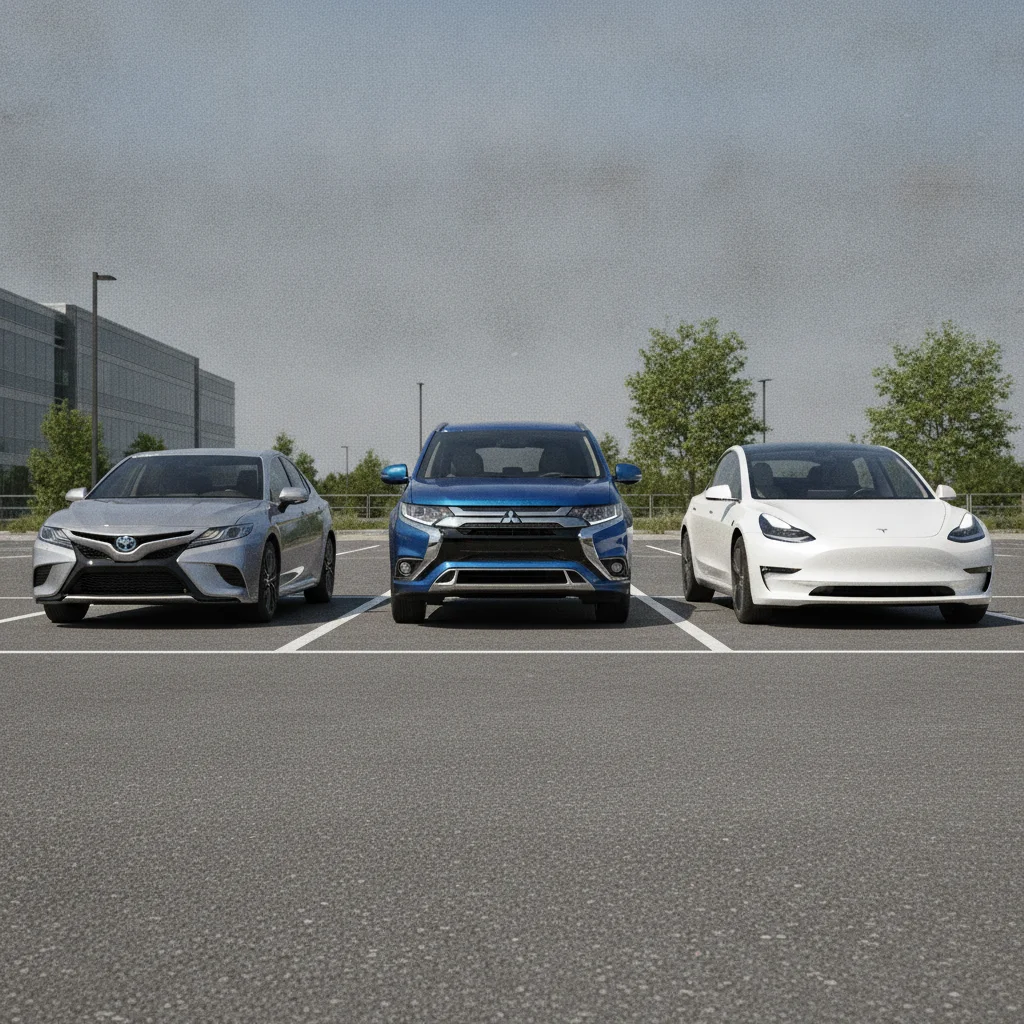
It helps to place PHEVs in context against the two adjacent categories: traditional self-charging hybrids (HEVs) and battery-electric vehicles (BEVs).
| Feature | HEV | PHEV | BEV |
|---|---|---|---|
| Plug-in required | No | Yes | Yes |
| EV-only range | 1–2 miles (blended) | 20–50 miles | 150–400+ miles |
| Gas engine | Yes | Yes | No |
| Upfront cost vs. gas | +$2,000–$4,000 | +$5,000–$10,000 | Varies widely |
| Federal tax credit | No | Up to $7,500 | Up to $7,500 |
| Home charging needed | No | Strongly advised | Essential |
| Long-trip convenience | High | High | Moderate (improving) |
The PHEV sits squarely in the middle — more electric capability than an HEV, less than a BEV, more flexibility than a BEV, more complexity than an HEV. For a head-to-head look at standard hybrids, see the HEV pros and cons breakdown.
Where the PHEV clearly wins over an HEV is in daily electric driving and tax credit access. Where it loses to a BEV is in long-term fuel cost reduction and simplicity. The question for any individual buyer is which trade-off fits their actual driving life — not their idealized version of it.
Who Should Seriously Consider a PHEV — and Who Shouldn't
The most important question isn't whether PHEVs are good or bad in the abstract. It's whether a PHEV is right for your situation. Here's a straight read on that.
A PHEV is likely a strong fit if you:
- Own a home and can install a Level 2 charger (240V outlet) in your garage or carport
- Commute 20–45 miles round-trip daily — within the electric range of most PHEVs
- Take occasional long trips (200+ miles) where gas backup is genuinely useful
- Qualify for the federal tax credit and owe enough in taxes to use it
- Want to reduce fuel costs and emissions but aren't ready for a full EV
A PHEV is likely a poor fit if you:
- Rent an apartment or condo without guaranteed charging access
- Drive very high annual miles at highway speeds — where the battery depletes quickly and the gas engine carries most of the load
- Rarely charge and primarily use the vehicle in gas mode — you're paying for EV capability you're not using
- Are primarily motivated by minimizing long-term total cost of ownership — a standard hybrid or used BEV may win on that metric
- Want the simplest, lowest-maintenance electrified drivetrain — a BEV or HEV beats a PHEV there
For those focused primarily on comparing charging costs to gas fueling costs, the math on a PHEV only works out clearly when the vehicle is consistently charged. Run the numbers for your own electricity rate and driving pattern before assuming the advertised fuel savings will materialize.
The Bottom Line on PHEV Ownership
Plug-in hybrids are neither a perfect compromise nor a cynical marketing exercise. They're a legitimately useful vehicle type for a specific driver profile — and a poor value proposition for everyone outside that profile.
The honest case for a PHEV rests on three pillars: reliable home charging, a daily commute within electric range, and occasional longer trips where gas backup matters. If all three apply to you, a PHEV can deliver meaningful fuel savings, federal tax credit eligibility, and a driving experience that eases the transition from gas toward electric mobility.
The honest case against a PHEV is equally grounded: two powertrains mean two sets of complexity, higher weight, higher purchase price, and — critically — a value proposition that evaporates if you don't plug in consistently. The middle ground the PHEV occupies is genuine, but so is the risk of paying a premium for benefits you don't actually capture in daily use.
Before committing, understand how the PHEV's charging requirement changes the whole ownership equation — it's the single variable that most determines whether a PHEV delivers on its promise or underperforms against a simpler alternative.

All claims are backed by peer-reviewed research. Sources on request.