Key Takeaways
Plug-In Hybrid (PHEV)
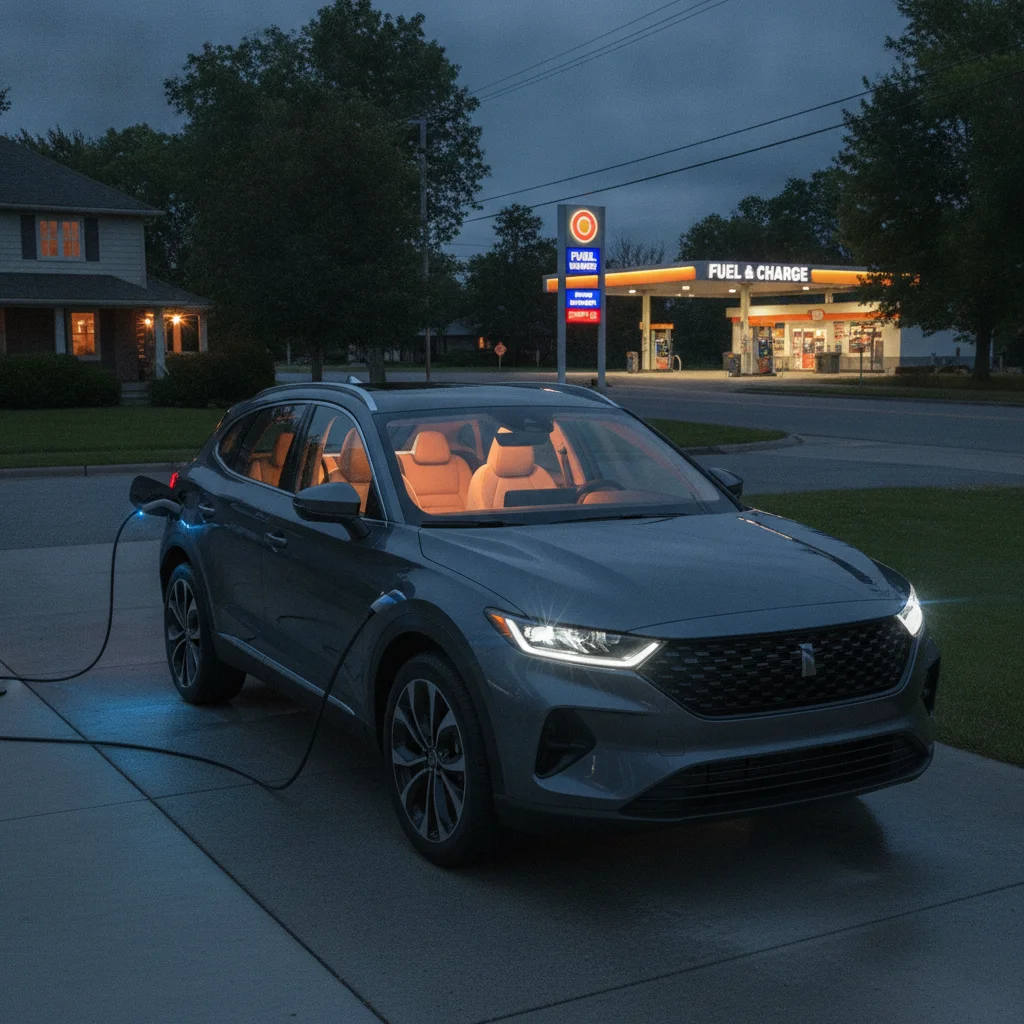
A plug-in hybrid electric vehicle (PHEV) is a car that combines a traditional gasoline engine with a larger battery pack that can be charged from an external power source. Unlike a standard hybrid, it can travel meaningful distances on electricity alone — typically 20 to 50 miles — before the gas engine kicks in. Once the battery is depleted, it operates like a conventional hybrid, using both the engine and motor for fuel efficiency.
PHEVs carry two distinct energy pathways — a traction battery recharged via AC charging and regenerative braking, and a combustion drivetrain that sustains operation indefinitely via the fuel tank. EPA rates them under both charge-depleting (CD) and charge-sustaining (CS) modes, which is why you'll see two separate fuel economy figures on the Monroney label.
What a PHEV Actually Is (and Isn't)
The electrified vehicle market has a jargon problem. Mild hybrids, full hybrids, plug-in hybrids, and battery electrics all get lumped under the umbrella of "electric vehicles," but they work very differently and suit very different buyers. A plug-in hybrid sits at a specific, well-defined point on that spectrum — and understanding where it sits changes every purchasing decision downstream.
At its core, a PHEV has two complete propulsion systems: a gasoline engine and an electric motor powered by a rechargeable battery pack. The distinguishing feature is that battery. It's large enough to move the car under electric power alone — not just assist the engine — and it can be replenished by plugging into an external power source, not only through regenerative braking.
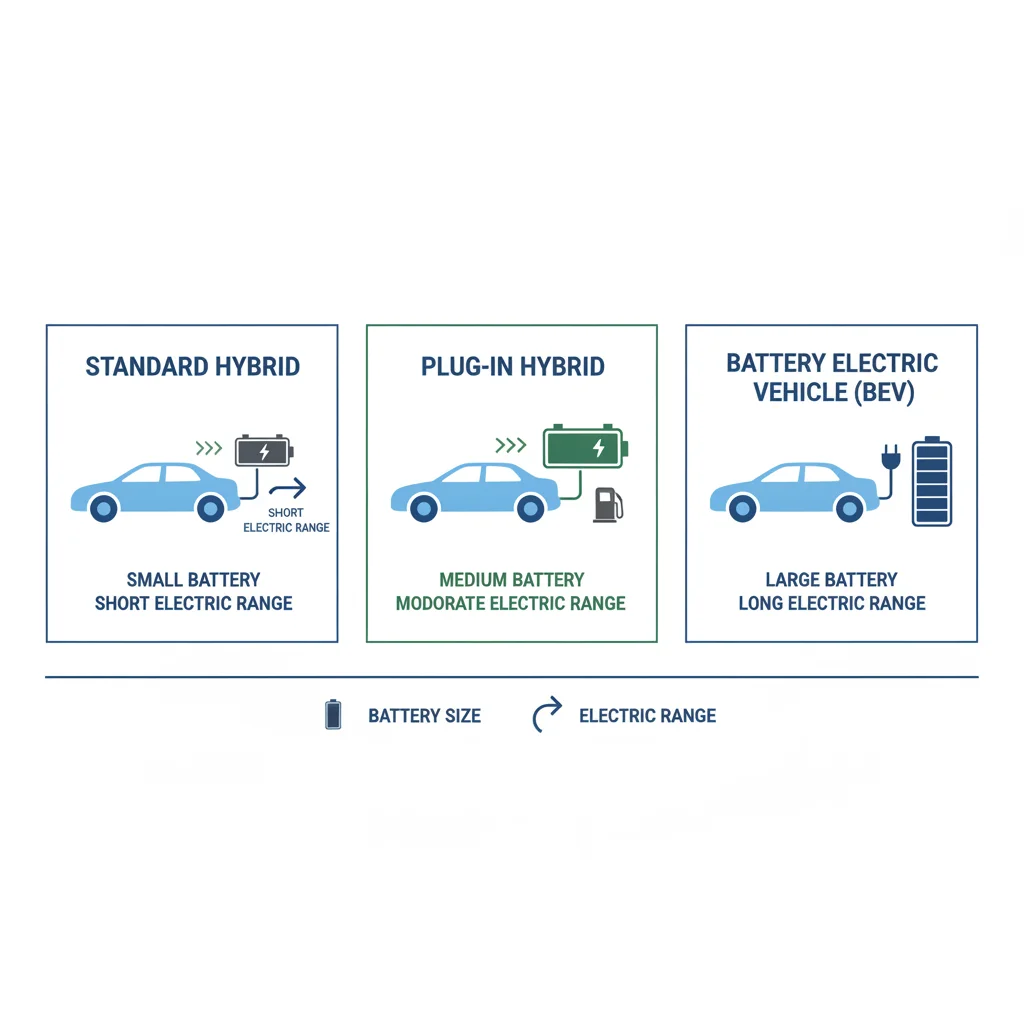
This is what separates a PHEV from a standard full hybrid (HEV). A conventional hybrid like a Toyota Camry Hybrid or Honda Accord Hybrid uses a small battery that self-charges through braking and engine operation. It never needs a plug, but it also can't travel more than a mile or two on electricity alone at low speeds. The advantages of a self-charging hybrid are real, but electric-only range isn't one of them.
A PHEV's battery pack is typically 8–20 kWh, compared to 1–2 kWh in a conventional hybrid. That extra capacity is what delivers meaningful electric-only range — generally 20 to 50 miles in current models. It's also what makes the PHEV larger, heavier, and more expensive than its hybrid counterpart.
It's equally important to clarify what a PHEV isn't: it's not a battery electric vehicle (BEV). A BEV runs exclusively on electricity, requires no gasoline, and typically offers 200–400+ miles of range. PHEVs retain a full internal combustion drivetrain that takes over when the battery is drained, making them fundamentally different in ownership experience, infrastructure dependence, and long-term fuel costs.
How PHEVs Work in Practice
The day-to-day operation of a PHEV is more intuitive than the engineering suggests. You start with a charged battery. For the first portion of your drive — your commute, school run, grocery trip — the car runs on electricity. You feel no difference from a regular EV: smooth, quiet, cheap per mile. Once the battery hits its minimum threshold (PHEVs reserve a small charge buffer for hybrid operation), the gas engine activates seamlessly. Most drivers barely notice the transition.
39 miles
Average PHEV electric range in 2024 models
According to the EPA's 2024 model year database, new PHEVs averaged approximately 39 miles of all-electric range — enough to cover the average American's daily driving without using gas.
29 miles
Average U.S. daily driving distance
The Federal Highway Administration reports the average American drives about 29 miles per day, putting most PHEVs in a position to handle the full daily commute on electricity alone when regularly charged.
$7,500
Maximum federal PHEV tax credit
Under the Inflation Reduction Act, qualifying PHEVs with sufficient battery capacity can earn a federal clean vehicle credit of up to $7,500, subject to income and vehicle price caps.
60–80%
Potential fuel cost reduction on daily driving
Drivers who consistently charge and stay within their PHEV's electric range can reduce per-mile fuel costs by 60–80% versus a comparable gasoline vehicle, based on average U.S. electricity and gas prices.
3x
More fuel used when not plugged in regularly
International Council on Clean Transportation research found that PHEVs driven without regular charging can consume up to three times more fuel than their EPA-rated figures suggest, erasing most of the efficiency advantage.
In charge-depleting (CD) mode — electric-first operation — your per-mile cost is determined by your electricity rate, not gas prices. At the U.S. average of roughly 16 cents per kWh, most PHEVs run for the equivalent of $1.00–$1.50 per gallon in energy cost. That's a significant gap from $3.50–$4.00 gas.
Once the battery depletes, you enter charge-sustaining (CS) mode, where the PHEV behaves like a conventional hybrid. The gas engine powers the car and runs the electric motor as a generator to maintain a baseline battery charge. Fuel economy in this mode is still better than a non-hybrid equivalent, but not dramatically so.
Most PHEVs also allow you to manually hold or charge the battery for later use — useful if you're on a highway leg before a city drive where you want electric range available. Some European models (and a few U.S.-spec vehicles) can even use engine power to actively charge the battery while driving, though this is energy-inefficient and rarely worthwhile.
Cold Weather Reduces Electric Range Significantly
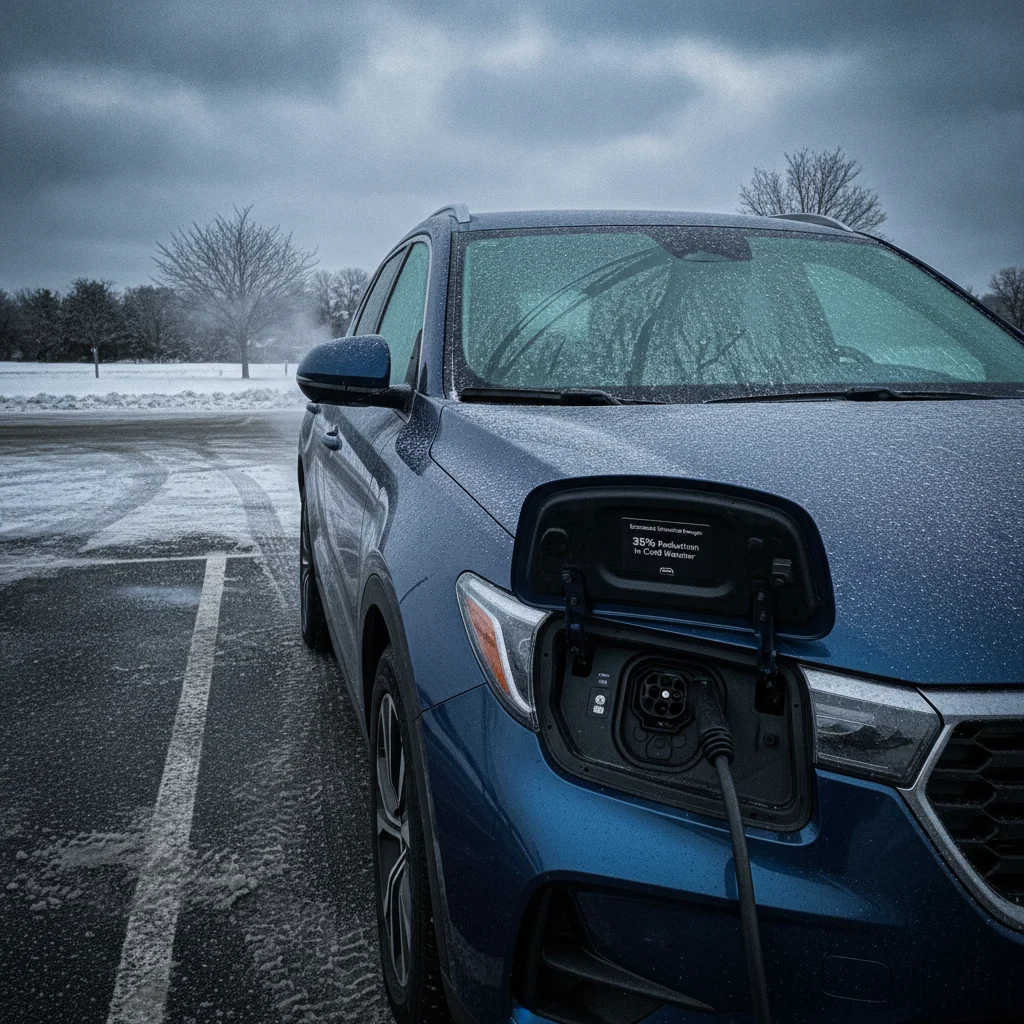
Battery chemistry slows in cold temperatures, and heating the cabin draws directly from the battery pack. At 20°F, most PHEVs lose 20–40% of their rated electric range. If you live in a cold climate, factor this in when evaluating whether a PHEV's electric range will actually cover your commute year-round. Some models handle cold weather better than others — check owner forums for real-world winter data on any model you're considering.
Not All PHEVs Support DC Fast Charging
Unlike most battery electric vehicles, many PHEVs only support Level 1 and Level 2 AC charging. DC fast charging — which can replenish a BEV battery in 20–40 minutes — is available on some PHEVs (including certain Mitsubishi Outlander PHEV trims) but is far from universal. If access to fast public charging is part of your plan, verify the specific model supports it before purchasing.
Charging at home via a standard 120V outlet works, but it's slow — expect 8–12 hours for a full charge on most models. A Level 2 home charger (240V) cuts that to 2–4 hours and is worth the $500–$1,500 installation cost for most PHEV owners. Public DC fast charging, if supported by the model, can top up the battery in 30–45 minutes — though far fewer PHEVs support DC fast charging than BEVs do.
The Honest Case for Buying a PHEV
PHEVs exist because the majority of American car buyers aren't ready to commit to a full BEV — but they're willing to electrify incrementally. That's not a criticism; it reflects legitimate concerns about range, charging infrastructure, and the substantial upfront cost of longer-range EVs. For certain drivers, a PHEV genuinely is the right tool.
The ideal PHEV buyer has a predictable daily driving pattern under 40 miles, reliable home charging access (a garage or dedicated parking with an outlet), and occasional long-distance driving needs that make a pure BEV feel limiting. For this buyer, a PHEV can dramatically reduce fuel spending — often by 60–80% on daily driving — while eliminating range anxiety on road trips.
“The plug-in hybrid is not a compromise vehicle — it's a transition vehicle. For drivers who have the infrastructure and the discipline to use it correctly, it genuinely delivers both worlds. The problem is that 'correctly' requires more active participation than most car buyers are used to.”
— John Voelcker, Long-time EV industry analyst and contributing editor, formerly of Green Car Reports
PHEVs also make strong sense in households that can only own one car. A family that drives 30 miles on weekdays but takes 400-mile road trips on holidays isn't well-served by a 250-mile BEV with today's charging infrastructure gaps. A PHEV handles both duties without compromise.
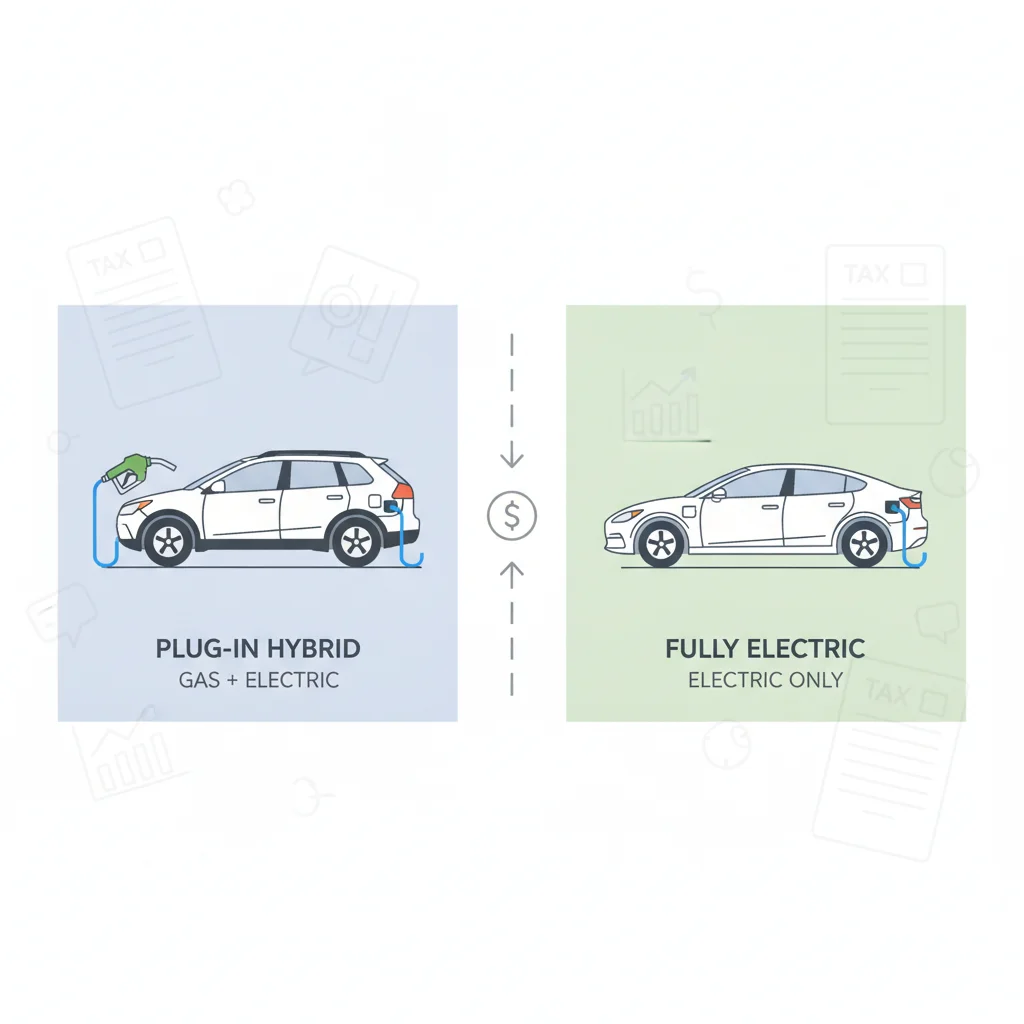
Tax incentives strengthen the case further. Many PHEVs qualify for federal clean vehicle tax credits — up to $7,500 depending on battery size, vehicle price, and buyer income. State incentives vary widely but can add $1,000–$4,500 on top of federal savings. The differences in how the tax credit treats PHEVs versus BEVs are meaningful and worth understanding before you sign.
Calculate Your Payback Before You Buy
Before committing to a PHEV, estimate how many miles per year you'll actually drive in electric mode. Multiply those miles by your per-mile electricity cost, then compare to what you'd spend on gas for the same miles. Divide the PHEV's price premium over an equivalent non-plug-in model by your annual savings — that's your payback period. If it's under 5 years, the math works. Over 7 years, reconsider.
Install a Level 2 Charger If You Buy One
A standard 120V outlet will charge most PHEVs overnight, but a Level 2 home charger makes it practical to top up after short errands and ensures you start every morning with a full battery. Installation typically costs $500–$1,500 depending on your electrical panel, and many utilities offer rebates that cut that figure significantly. Treat it as part of the purchase cost, not an optional extra.
Check Your State Incentives Separately
Federal tax credits get the headlines, but state-level PHEV incentives can add meaningful savings. Colorado, California, and New York all offer state credits or rebates on top of federal savings. Some utilities also offer special low EV charging rates or equipment rebates. Spend 20 minutes researching your state's programs at pluginamerica.org or your state energy office — it's worth the effort before you sign.
Where PHEVs Fall Short
Honesty requires addressing the gap between PHEV marketing and PHEV reality. Studies — including research from the International Council on Clean Transportation — consistently show that real-world PHEV fuel consumption exceeds EPA estimates, often substantially. The reason: many owners don't charge regularly, or they drive in conditions (cold weather, highway speeds) where electric range drops well below the rated figure.
If you don't plug in, a PHEV is just a heavier, more expensive, more mechanically complex hybrid. The added battery and dual-drivetrain architecture add 300–500 pounds versus a comparable non-hybrid model. When running exclusively on gas, a PHEV often gets worse fuel economy than a standard hybrid of similar size. That's not a defect — it's physics. You're hauling extra mass with no offsetting electric benefit. Our explainer on why PHEVs often miss their advertised fuel savings goes deeper on this pattern.
Cost is the other honest challenge. PHEVs typically carry a $4,000–$10,000 premium over non-plug-in equivalents. Even after tax credits, the payback period depends entirely on how consistently you charge. A driver who plugs in every night recovers that premium through fuel savings within 3–5 years. A driver who charges sporadically may never break even.
Maintenance adds another dimension. PHEVs have two powertrains — twice the potential failure points. Oil changes, transmission service, and engine maintenance all still apply. The battery pack, covered by federal mandate for at least 8 years/100,000 miles on the high-voltage components, adds a long-term cost consideration if you plan to keep the vehicle beyond warranty. For a full accounting of the pros and cons, see the detailed PHEV pros and cons breakdown.
Cold Weather Reduces Electric Range Significantly
Battery chemistry slows in cold temperatures, and heating the cabin draws directly from the battery pack. At 20°F, most PHEVs lose 20–40% of their rated electric range. If you live in a cold climate, factor this in when evaluating whether a PHEV's electric range will actually cover your commute year-round. Some models handle cold weather better than others — check owner forums for real-world winter data on any model you're considering.
Not All PHEVs Support DC Fast Charging
Unlike most battery electric vehicles, many PHEVs only support Level 1 and Level 2 AC charging. DC fast charging — which can replenish a BEV battery in 20–40 minutes — is available on some PHEVs (including certain Mitsubishi Outlander PHEV trims) but is far from universal. If access to fast public charging is part of your plan, verify the specific model supports it before purchasing.
PHEVs in the Broader EV Landscape
Understanding PHEVs means placing them accurately within the full spectrum of electrified vehicles. On one end, mild hybrids — like the 48V systems found in many Fords and Rams — use a small battery exclusively to assist the engine during acceleration and reduce idle fuel consumption. They never move the car on electricity alone. For a clear look at what mild hybrid tech actually delivers, see what mild hybrids actually give you.
Full hybrids (HEVs) step up: they can propel the car short distances on electricity alone at low speeds, but the battery is self-charging and range-limited. They're simpler to own, require no behavioral change, and still deliver real fuel economy gains. The charging question that separates HEVs from PHEVs is the single biggest lifestyle factor in choosing between them.
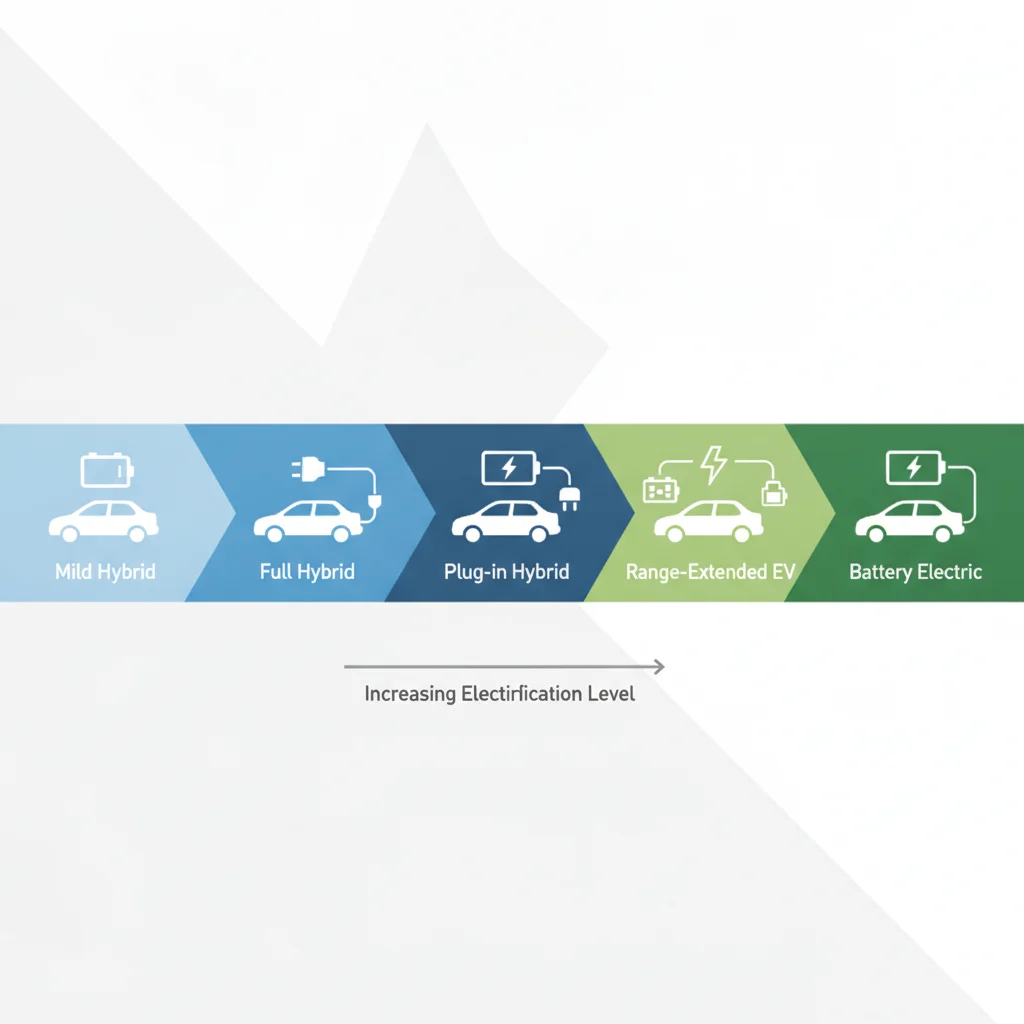
PHEVs sit next on the spectrum, offering genuine electric range but retaining the gasoline backstop. Then come battery electric vehicles — no engine, no gas, pure electric operation. BEVs are the endpoint of the electrification progression, offering the lowest per-mile operating costs and the highest upfront price. The fundamentals of how EVs work is worth reading if you want to understand the underlying technology across all these categories.
For insurance purposes, PHEVs generally fall between hybrids and full EVs in premium cost — more expensive than a comparable gas car to repair (battery and electrical components drive up parts costs), but less expensive than many full BEVs. The EV insurance guide covers how insurers assess these vehicles and why you might pay more than you expect.
Who Should — and Shouldn't — Buy a PHEV
The PHEV decision ultimately comes down to three questions: Do you have reliable charging access? Does your daily driving fall within typical PHEV electric range? And can you justify the upfront premium given your expected mileage and charging behavior?
PHEVs work well for:
- Homeowners or renters with dedicated parking and outlet access
- Drivers with predictable daily commutes under 40 miles
- Households that need one vehicle for both daily local driving and occasional long-distance trips
- Buyers who want to reduce fuel spending but aren't ready to commit to a full BEV
- Buyers in states with additional PHEV incentives that improve payback timing
PHEVs are a poor fit for:
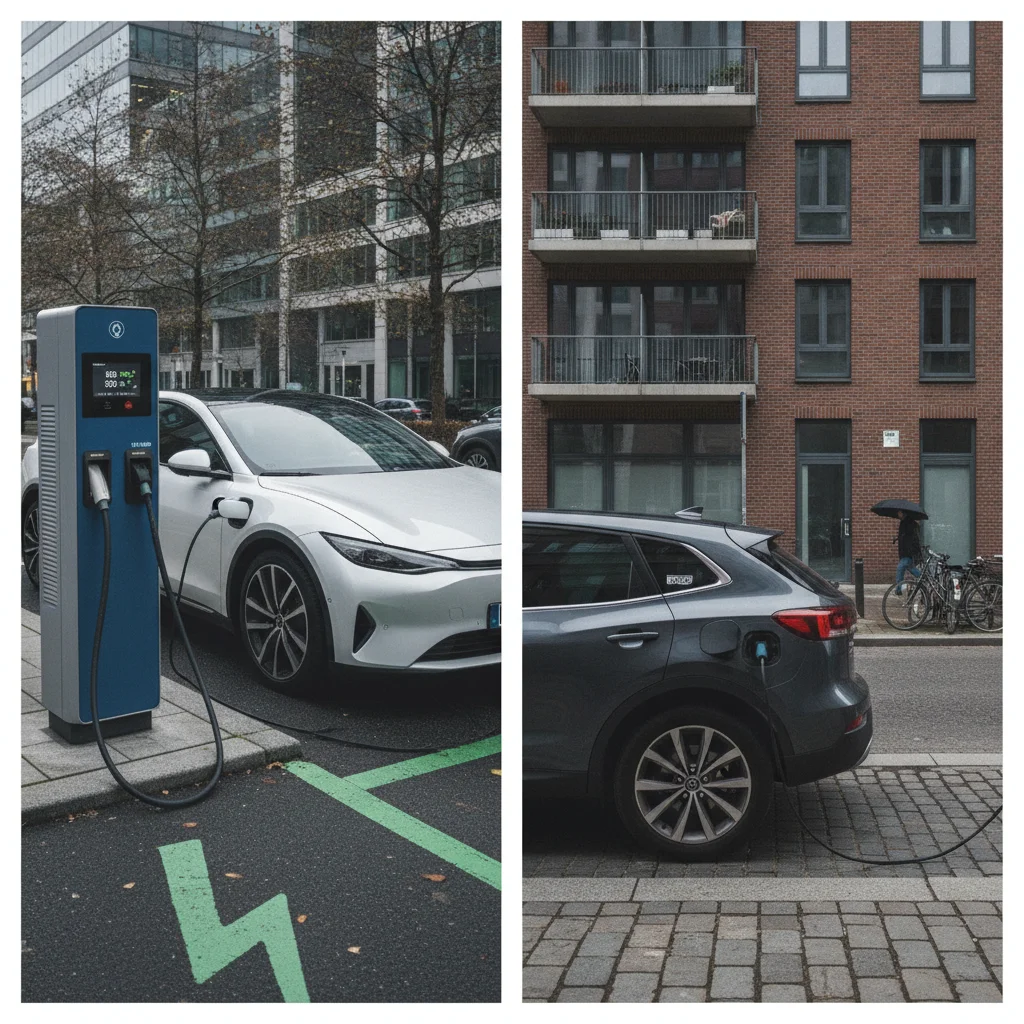
- Apartment dwellers or renters without reliable charging access
- High-mileage highway drivers who will rarely see charge-depleting mode
- Buyers primarily motivated by lowest possible purchase price
- Drivers who won't consistently plug in — they'd be better served by a standard hybrid
Calculate Your Payback Before You Buy
Before committing to a PHEV, estimate how many miles per year you'll actually drive in electric mode. Multiply those miles by your per-mile electricity cost, then compare to what you'd spend on gas for the same miles. Divide the PHEV's price premium over an equivalent non-plug-in model by your annual savings — that's your payback period. If it's under 5 years, the math works. Over 7 years, reconsider.
Install a Level 2 Charger If You Buy One
A standard 120V outlet will charge most PHEVs overnight, but a Level 2 home charger makes it practical to top up after short errands and ensures you start every morning with a full battery. Installation typically costs $500–$1,500 depending on your electrical panel, and many utilities offer rebates that cut that figure significantly. Treat it as part of the purchase cost, not an optional extra.
Check Your State Incentives Separately
Federal tax credits get the headlines, but state-level PHEV incentives can add meaningful savings. Colorado, California, and New York all offer state credits or rebates on top of federal savings. Some utilities also offer special low EV charging rates or equipment rebates. Spend 20 minutes researching your state's programs at pluginamerica.org or your state energy office — it's worth the effort before you sign.
If you can't charge at home, the calculus shifts significantly. Our analysis of whether a BEV or PHEV makes more sense without home charging walks through how to think about that specific constraint.
PHEVs are a genuine solution for a specific buyer profile — not a universal upgrade. The worst outcome is buying one and never plugging it in. If you know yourself well enough to commit to the charging habit, a PHEV can deliver real savings, meaningful electric miles, and a path toward electrification that doesn't require leaping straight to a full BEV. If you're not sure, a conventional hybrid is a safer, simpler choice that still cuts your fuel bill without demanding anything new from your routine.

All claims are backed by peer-reviewed research. Sources on request.