Key Takeaways
The Promise vs. the Reality of PHEV Efficiency
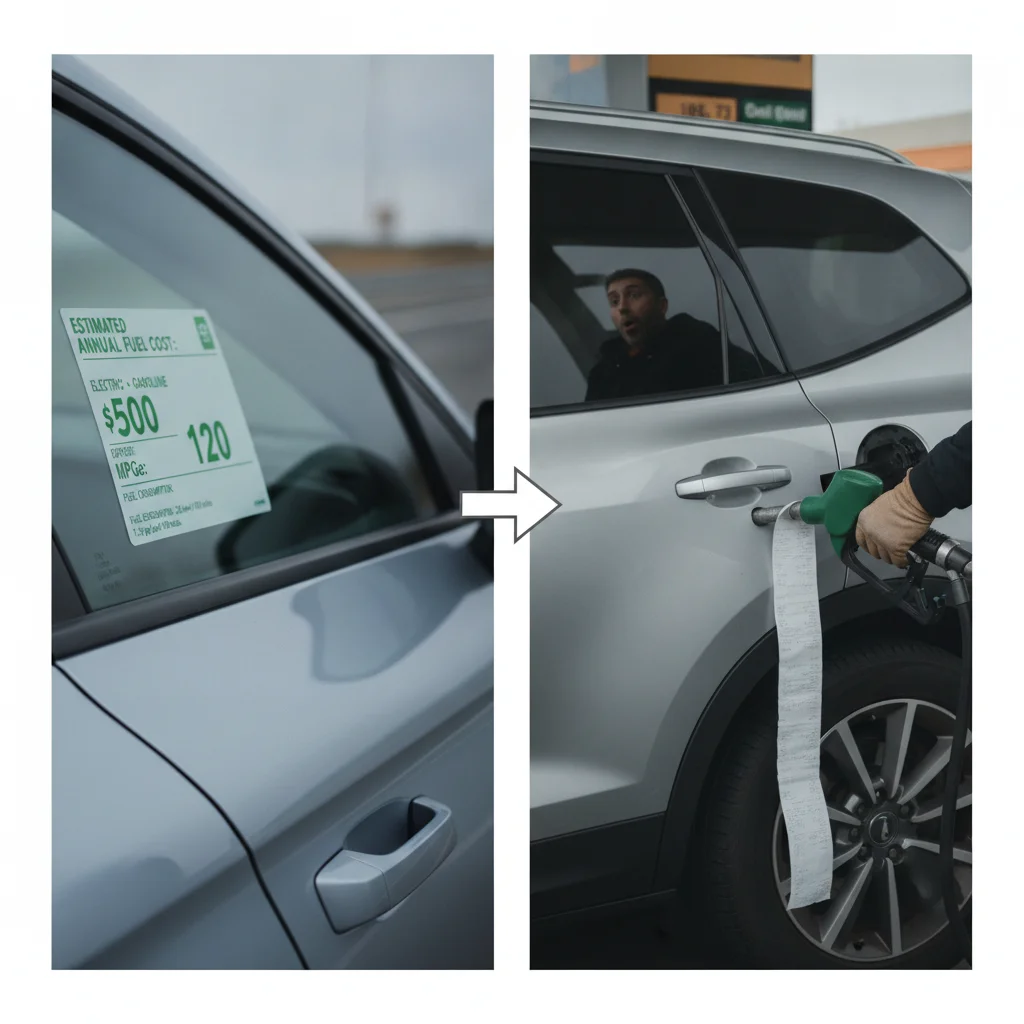
Plug-in hybrids have one of the most compelling pitches in the automotive market: the electric range for your daily commute, the gas engine for everything else. On paper, a PHEV rated at 50+ MPGe with 30 miles of all-electric range sounds like a near-perfect vehicle. In practice, millions of PHEV owners are discovering a gap — sometimes a staggering one — between what the sticker says and what their fuel receipts reflect.
This isn't a flaw in the technology. It's a mismatch between how PHEVs are designed to be used and how most drivers actually use them. Understanding that gap is the difference between a PHEV being a smart buy and an expensive mistake.
If you're still working out whether a PHEV even fits your situation, start with the fundamentals of who PHEVs are actually for before going further. For those already past that stage, here's what goes wrong — and why it goes wrong so consistently.
The Mistakes That Erase Your Fuel Savings
Most PHEV efficiency failures aren't random. They trace back to a predictable set of behaviors and misunderstandings. Work through these, and you'll either adjust your habits to capture the real savings — or decide a different vehicle type suits you better.
Never plugging in — or plugging in too infrequently to matter.
Why it happens: Many buyers purchase a PHEV for the federal tax credit or the fuel economy rating without fully internalizing that the savings require consistent charging. At-home outlet access, charging cost awareness, and routine all play a role in whether charging actually happens.
Assuming the EPA-rated electric range reflects real conditions year-round.
Why it happens: Buyers see '30 miles all-electric range' on the window sticker and plan their commute math around it without accounting for cold weather, highway speeds, or heavy HVAC use — all of which meaningfully reduce the usable range.
Using a PHEV primarily for long highway trips where electric range runs out quickly.
Why it happens: Buyers attracted to PHEV flexibility assume the gas engine seamlessly covers range anxiety — which it does — but they don't account for the fact that a depleted PHEV on the highway is a heavy conventional car with worse aerodynamics than a purpose-built hybrid.
Ignoring the real cost of public charging when home charging isn't available.
Why it happens: Marketing and tax incentive framing emphasize the low per-mile cost of electric driving, but that calculation assumes low residential electricity rates. Drivers without home charging who rely on commercial Level 2 stations may pay rates that close or eliminate the per-mile cost advantage over gasoline.
Buying a PHEV solely for the tax credit without modeling real ownership costs.
Why it happens: The federal clean vehicle tax credit (up to $7,500) and state-level incentives make PHEVs appear far cheaper than they are. Buyers sometimes optimize for the purchase price without accounting for higher insurance premiums, heavier vehicle wear on tires and brakes (partially offset by regen braking), and whether their driving patterns will actually yield fuel savings.
Letting the battery sit depleted for days or weeks without recharging.
Why it happens: Life gets busy. A missed night of charging becomes two, then a week. Without a routine, the PHEV operates perpetually in charge-sustaining mode — which is designed as a fallback, not the primary operating state.
3–5x
Real vs. rated fuel consumption in fleet PHEVs
ICCT and Transport & Environment data from European company car fleets found PHEVs consuming fuel at 3–5 times official test ratings when charging was infrequent.
~30%
Typical electric range loss in cold weather
Real-world testing consistently shows PHEV electric range dropping 20–40% in freezing temperatures due to battery chemistry and cabin heating demands.
$7,500
Maximum federal PHEV tax credit (U.S.)
The Inflation Reduction Act clean vehicle credit offers up to $7,500 for qualifying PHEVs, but income and MSRP caps apply and do not guarantee fuel savings.
20–40 mi
Typical PHEV all-electric range
Most mass-market PHEVs offer 20–40 miles of rated electric range, which covers average U.S. daily commutes only if the battery starts fully charged.
How EPA Ratings Set Unrealistic Expectations
The EPA's MPGe and blended MPG figures for PHEVs are derived from a test cycle that assumes the battery starts fully charged and is recharged between test runs. That's the right methodology for a standardized comparison, but it doesn't represent most real-world usage patterns.
For a PHEV with a 25-mile electric range, the EPA test weights electric-only miles heavily. Owners who charge every night on short commutes will come close to those numbers. Owners who charge sporadically — or live where outlet access is limited — will not. The rating system has no way to account for your charging frequency, and it isn't designed to.

The same physics that affect full battery electric vehicles apply here. Cold temperatures, high speeds, and climate system use all reduce real-world electric range — and because PHEV batteries are small, the percentage impact on usable electric miles is often more severe than what BEV owners experience. A 25-mile rated range might drop to 15–17 miles on a cold January morning before the cabin warms up.
Small Batteries Feel Cold-Weather Losses More Acutely
Because PHEV battery packs are far smaller than those in full EVs, a 30% cold-weather range reduction has a proportionally larger real-world impact. A BEV with 300 miles of range losing 30% still has 210 miles — more than enough for most days. A PHEV with 25 miles of range losing 30% leaves you with about 17 usable electric miles before the engine takes over. Plan your winter commute math around realistic figures, not the window sticker.
Public Fast Charging Often Isn't an Option for PHEVs
Unlike most BEVs, the majority of PHEVs on the U.S. market accept only Level 1 or Level 2 AC charging — DC fast charging is rare or unavailable on current PHEV models. This means you can't recover electric range quickly during a day trip the way you might with a full EV. If you're counting on opportunistic midday charging at a DC fast charger, verify your specific model's charging capability before purchase.
For a deeper look at how electrified powertrains compare on the charging question alone, see our comparison of full hybrids and plug-in hybrids. The charging obligation is the single biggest behavioral difference between those two categories — and it's what separates owners who get great PHEV efficiency from those who don't.
The Company Car Problem: Real-World Data on PHEV Underperformance
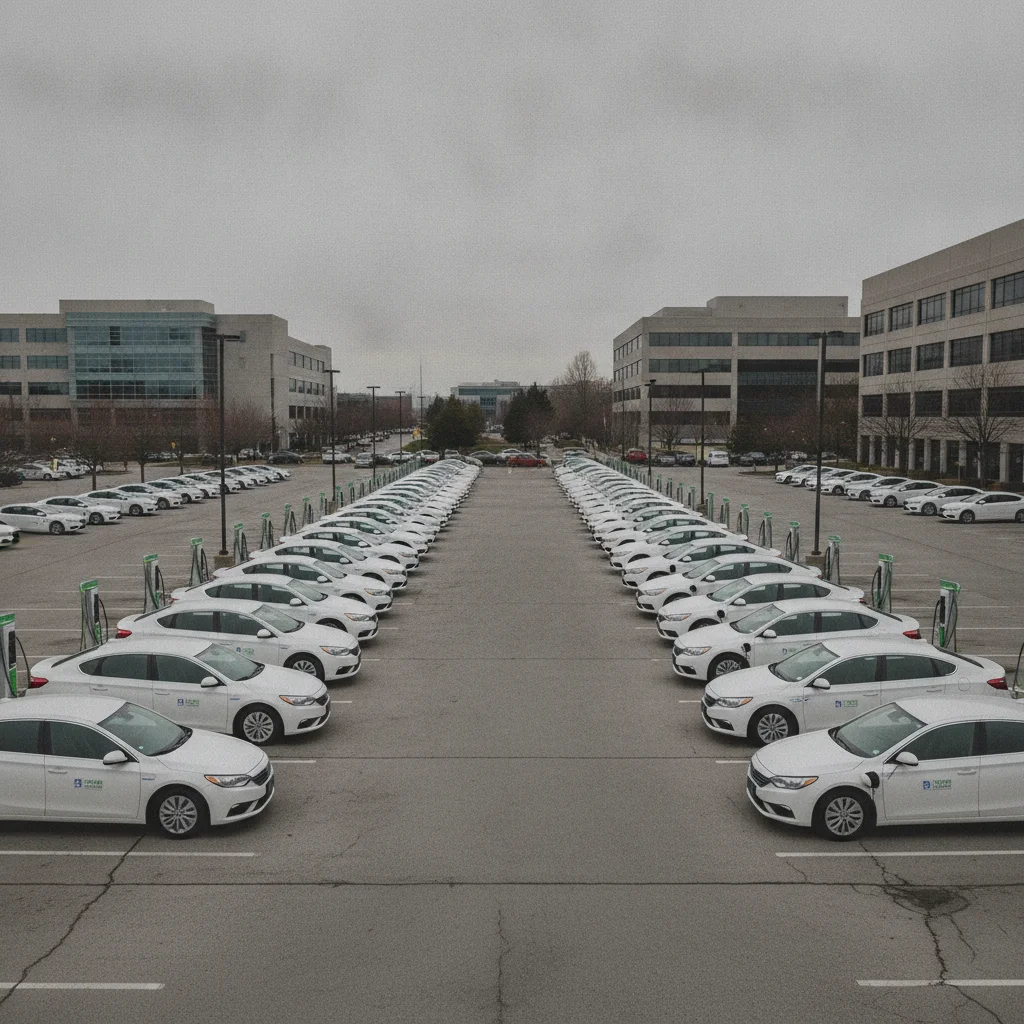
The most damning evidence against PHEV efficiency claims comes not from critics, but from fleet data. Studies in Europe — where PHEVs became extremely popular as company cars due to tax incentives — revealed a pattern so consistent it forced regulatory attention.
Research published by the International Council on Clean Transportation (ICCT) and Transport & Environment found that company-owned PHEVs were consuming fuel at rates 3 to 5 times higher than official test ratings suggested. The cause was straightforward: employees were rarely reimbursed for home electricity, so they defaulted to driving on gasoline. A vehicle rated to emit 44 grams of CO₂ per kilometer was measured emitting over 130 grams in actual use.
Uncharged PHEVs Can Be Less Efficient Than Regular Hybrids
A PHEV driven without charging is not just a car that skips its electric range — it's a heavier-than-normal hybrid running powertrain software optimized for a different use case. The extra battery mass and charging hardware add hundreds of pounds that the gasoline engine must move. In charge-sustaining mode, some PHEVs return fuel economy worse than their non-plug-in hybrid counterparts. If you're not going to charge consistently, a standard hybrid is almost certainly the smarter choice.
Incentives Don't Compensate for Poor Efficiency Habits
A $7,500 tax credit is a one-time benefit. Fuel costs are recurring. If poor charging habits result in real-world fuel economy that's 20 MPG worse than advertised — which is entirely possible based on fleet data — the extra fuel cost over a five-year ownership period can easily exceed the value of any upfront incentive. Run the numbers on your realistic driving and charging patterns before treating the credit as a reason to justify the purchase.
This isn't a European-only phenomenon. The underlying behavior — choosing not to charge when it's inconvenient or uncompensated — is universal. If your employer doesn't offer charging at work, and charging at home adds friction to your routine, the PHEV battery can easily become dead weight that you're hauling around in a heavier-than-necessary car.
The honest PHEV pros and cons breakdown covers this weight penalty in detail. A PHEV is meaningfully heavier than the equivalent non-plug-in hybrid because it carries both a larger battery pack and the full gasoline drivetrain. When you're running on gas without ever touching the electric range, you're paying a fuel penalty for capacity you're not using.
When a Regular Hybrid Might Actually Save You More
It sounds counterintuitive, but a conventional full hybrid can deliver better real-world fuel economy than a PHEV for drivers who won't charge consistently. Here's why: a standard hybrid's smaller battery is optimized for regenerative braking and engine-assist cycles — it's always working, regardless of your charging habits. A PHEV's larger battery, once depleted, contributes less efficiently to those same functions because the system is engineered around deeper charge cycling.
Run the numbers for your actual commute. If you drive 40 miles per day and your PHEV has a 25-mile electric range, you might cover 60% of your miles electrically — if you charge every night. But if you charge every other day, that drops to 30%. At 30%, the fuel economy advantage over a standard hybrid narrows dramatically, especially when you factor in that the PHEV costs several thousand dollars more at the point of purchase.
The HEV vs. PHEV comparison breaks down exactly when each makes financial sense. The short version: if you can't commit to near-daily charging, the simpler vehicle often wins on total cost of ownership.
For context on how engine architecture affects real-world efficiency more broadly, the relationship between engine size and fuel economy is worth understanding — particularly if you're comparing a PHEV SUV against a non-plug hybrid with a smaller, turbocharged engine.
How to Actually Get the Savings PHEVs Advertise
None of this means PHEVs are bad vehicles. For the right driver, they genuinely deliver. But capturing those savings requires a deliberate approach, not passive optimism.
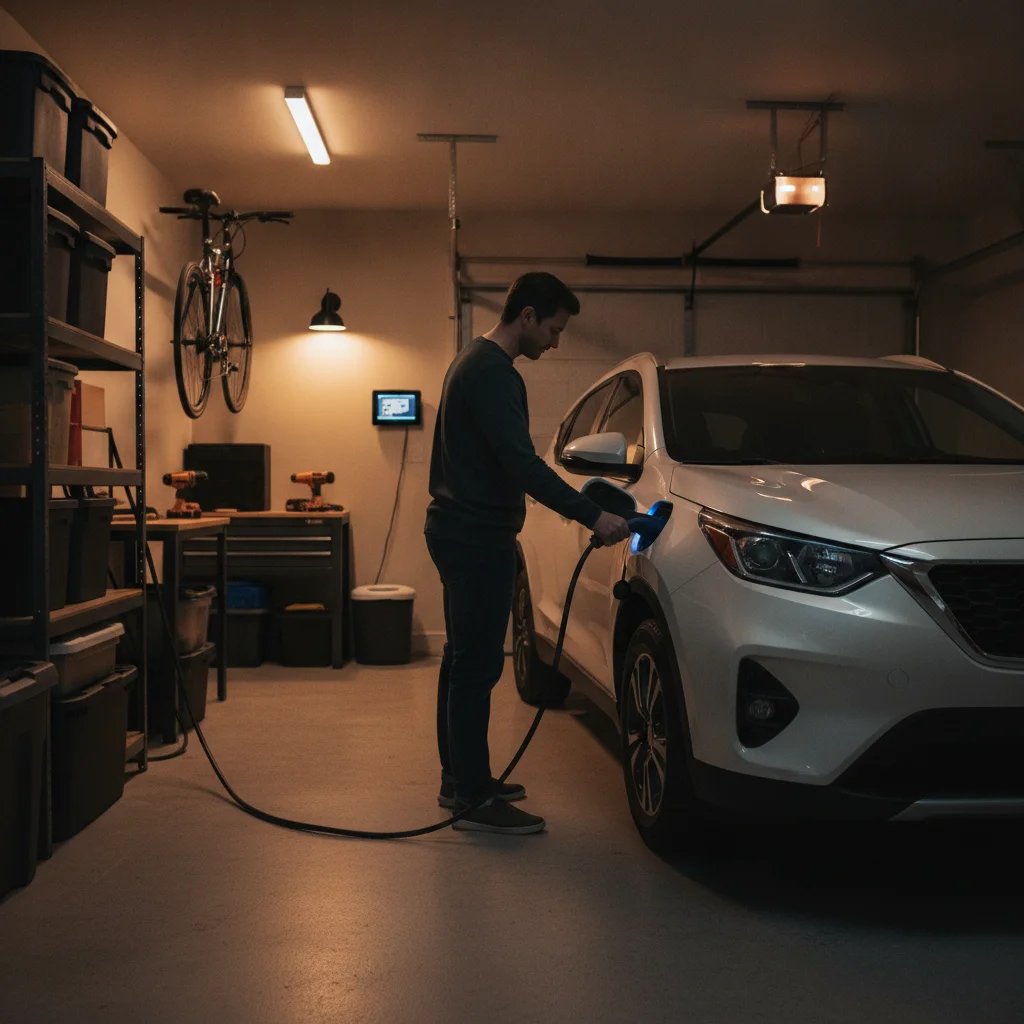
- Charge every night, without exception. This is non-negotiable. A PHEV that starts each day with a full battery captures the vast majority of its efficiency advantage. Even a Level 1 (120V) outlet works fine for most PHEVs with 20–30 mile ranges — overnight charging is sufficient.
- Know your electric range in real conditions. Test your actual electric range in winter, at highway speeds, and with the HVAC running. Plan your charging stops around realistic figures, not EPA ratings. If your rated range is 30 miles but winter drops it to 20, plan accordingly.
- Use your PHEV for short trips, not long highway runs. PHEVs shine on predictable, shorter daily driving. If your primary use case is 300-mile interstate trips, a PHEV is the wrong tool — a standard hybrid or efficient gasoline vehicle will likely serve you better on those routes.
- Understand your electricity costs. Charging at home on off-peak rates is cheap. Relying on DC fast chargers (where available — many PHEVs accept only Level 2) or public Level 2 chargers at high commercial rates can erode the economics. Know what charging actually costs before assuming electricity is always cheaper than gas.
- Use the EV mode selector strategically. Many PHEVs let you hold or prioritize electric mode. On city driving, force EV mode. On highway segments where the gas engine is more efficient anyway, letting the system run in hybrid mode conserves your charge for stop-and-go urban miles where electric wins.
If you're evaluating whether to go further into full electrification, it's also worth understanding the broader EV landscape. Extended-range EVs and fuel-cell vehicles occupy an interesting middle ground that some buyers overlook entirely in the PHEV vs. BEV debate.
Uncharged PHEVs Can Be Less Efficient Than Regular Hybrids
A PHEV driven without charging is not just a car that skips its electric range — it's a heavier-than-normal hybrid running powertrain software optimized for a different use case. The extra battery mass and charging hardware add hundreds of pounds that the gasoline engine must move. In charge-sustaining mode, some PHEVs return fuel economy worse than their non-plug-in hybrid counterparts. If you're not going to charge consistently, a standard hybrid is almost certainly the smarter choice.
Incentives Don't Compensate for Poor Efficiency Habits
A $7,500 tax credit is a one-time benefit. Fuel costs are recurring. If poor charging habits result in real-world fuel economy that's 20 MPG worse than advertised — which is entirely possible based on fleet data — the extra fuel cost over a five-year ownership period can easily exceed the value of any upfront incentive. Run the numbers on your realistic driving and charging patterns before treating the credit as a reason to justify the purchase.
The bottom line: a PHEV can be one of the most cost-effective vehicles on the road — or one of the least efficient alternatives to a plain gasoline car. Which one it becomes depends almost entirely on the habits you bring to ownership, not the technology itself.

All claims are backed by peer-reviewed research. Sources on request.