Key Takeaways
EREV & FCEV
An Extended-Range Electric Vehicle (EREV) runs primarily on battery power but carries a small gasoline engine whose sole job is to generate electricity — never to drive the wheels directly. A Fuel-Cell Electric Vehicle (FCEV) generates its own electricity onboard by combining hydrogen and oxygen in a fuel cell, emitting only water vapor. Both categories deliver an electric driving experience while addressing the range limitations that pure battery EVs can face.
EREVs are sometimes classified as a subset of PHEVs by regulators, but the architecture differs: a true EREV's combustion engine is mechanically decoupled from the drivetrain. FCEVs are classified as zero-emission vehicles (ZEVs) under federal and California regulations, qualifying for many of the same incentives as BEVs.
Why These Two EV Types Keep Getting Skipped
Most conversations about electrified vehicles start and end with four letters: BEV, PHEV, HEV, MHEV. Those four categories cover the overwhelming majority of what's on dealer lots today, and if you've read any introductory EV guide, you've seen them explained to death. What those guides often gloss over are the two categories that sit in genuinely different territory: Extended-Range Electric Vehicles (EREVs) and Fuel-Cell Electric Vehicles (FCEVs).
This isn't a case of marketers creating new acronyms to sell old technology. EREVs and FCEVs use fundamentally different architectures from conventional hybrids and battery EVs. They solve different problems and come with different trade-offs. The reason most buyers overlook them is straightforward: there aren't many of them on the market, and the ones that exist get lumped into adjacent categories by manufacturers, dealers, and even the EPA.
If you've already worked through what BEV, PHEV, HEV, and MHEV actually mean, this article picks up where that one leaves off — covering the two categories that don't fit neatly into that alphabet soup.
Extended-Range EVs: Electric Driving With a Gas Safety Net
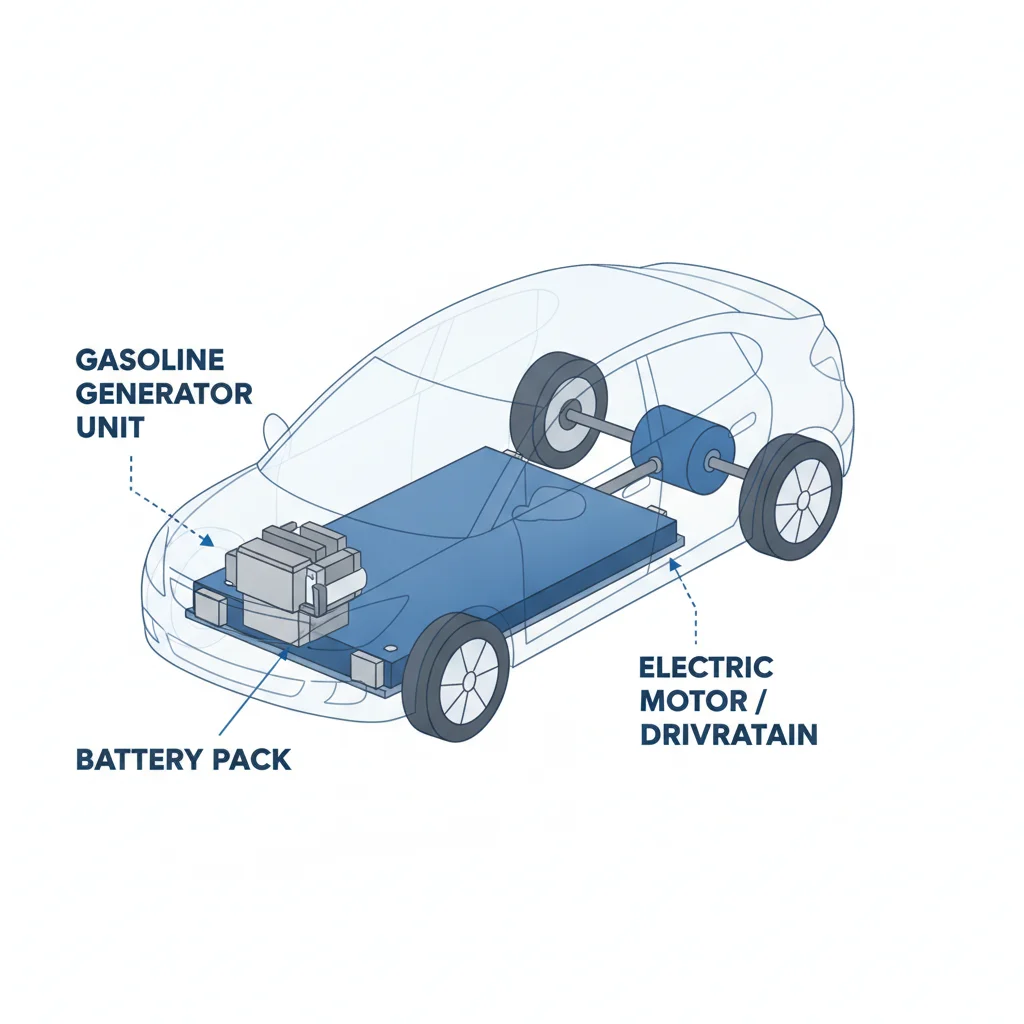
The EREV architecture is deceptively simple in concept: put a large enough battery in the car to handle most daily driving on electricity alone, then add a small gasoline engine that acts purely as a generator when the battery runs low. The wheels are always driven by electric motors. The gas engine never connects to the drivetrain — it just makes electricity.
That distinction matters more than it sounds. In a standard plug-in hybrid (PHEV), the gas engine typically takes over the drivetrain directly once the battery is depleted, switching the vehicle into a conventional hybrid mode. In an EREV, you're driving an electric vehicle the entire time. The driving feel, regenerative braking behavior, and throttle response don't change when the generator kicks on. Many drivers report they can barely detect the transition.
How EREVs Differ From PHEVs in Practice
The practical difference becomes clear on a long highway drive. In a PHEV with 25–40 miles of electric range, you might exhaust the battery within the first hour and spend the rest of the trip running on gas, with the electric motor assisting under load. In an EREV with 200–300 miles of total range (battery plus generator), the electric range alone may be 150+ miles, and when the generator does run, it's maintaining battery charge rather than handing off to an entirely different powertrain mode.
The Chevrolet Volt — discontinued in 2019 but still widely discussed — was the EREV that defined the category for most American buyers. It offered about 53 miles of pure electric range, then ran its 1.5-liter generator to extend total range to roughly 420 miles. The car never felt different to drive at mile 60 vs. mile 10. General Motors' Ultium-based architecture has revived this approach in the Chevy Silverado EV and certain Cadillac models, though GM now markets the technology differently. In China, Li Auto has made the EREV architecture its entire product line, with significant sales volume validating consumer appetite for the approach.
How the EPA Classifies EREVs
The EPA and IRS often categorize EREVs alongside PHEVs for emissions ratings and tax credit eligibility purposes, because both categories have a combustion engine and a plug. This can make it hard to distinguish them in official documentation. Look specifically at whether the engine can mechanically drive the wheels — if it can't, you're looking at a true EREV architecture. Manufacturer spec sheets and owner forums are often more reliable than window sticker classifications for this distinction.
Hydrogen Safety: A Common Concern
Buyers sometimes worry about the safety of storing compressed hydrogen on board a vehicle. FCEVs store hydrogen in high-pressure tanks rated to rigorous crash and puncture standards, and the gas itself is highly diffusible — it disperses rapidly upward in open air rather than pooling like gasoline vapors. NHTSA and fuel-cell manufacturers maintain safety records comparable to gasoline vehicles, though real-world data remains limited given the small number of FCEVs in operation.
EREV Range and Efficiency Numbers
Because EREVs are often classified alongside PHEVs for EPA and IRS purposes, their ratings can be misleading at first glance. The EPA rates them with a combined electric-plus-gas range figure, but the all-electric portion is what most EREV owners optimize around — treating the gas engine as emergency backup the way a pure BEV driver thinks about DC fast charging availability.
<60
Public hydrogen stations in the U.S.
As of 2024, the U.S. Department of Energy counts fewer than 60 publicly accessible retail hydrogen stations, with the vast majority concentrated in California.
~5 min
FCEV hydrogen refueling time
Toyota and Hyundai cite approximately 5 minutes to refuel their FCEV models, comparable to filling a gasoline tank and far shorter than even the fastest DC charging session.
53 miles
Chevrolet Volt all-electric range
The 2019 Chevrolet Volt — the most prominent U.S. EREV — offered an EPA-rated 53 miles of pure electric range before the onboard generator extended total range to about 420 miles.
~95%
U.S. hydrogen from fossil fuel sources
The U.S. Department of Energy estimates approximately 95% of U.S. hydrogen is currently produced via steam methane reforming of natural gas, a process with significant CO₂ emissions.
$7,500
Maximum federal clean vehicle tax credit
Under the Inflation Reduction Act, eligible EREVs that meet assembly and battery sourcing requirements can qualify for up to $7,500 in federal tax credits, subject to income and MSRP limits.
If range anxiety is your primary concern with a BEV, an EREV addresses it differently than a PHEV does. Range anxiety is largely a BEV concern, and EREVs eliminate it without the architectural compromises of a traditional hybrid drivetrain.
Fuel-Cell Electric Vehicles: Hydrogen's Promise and Practical Limits
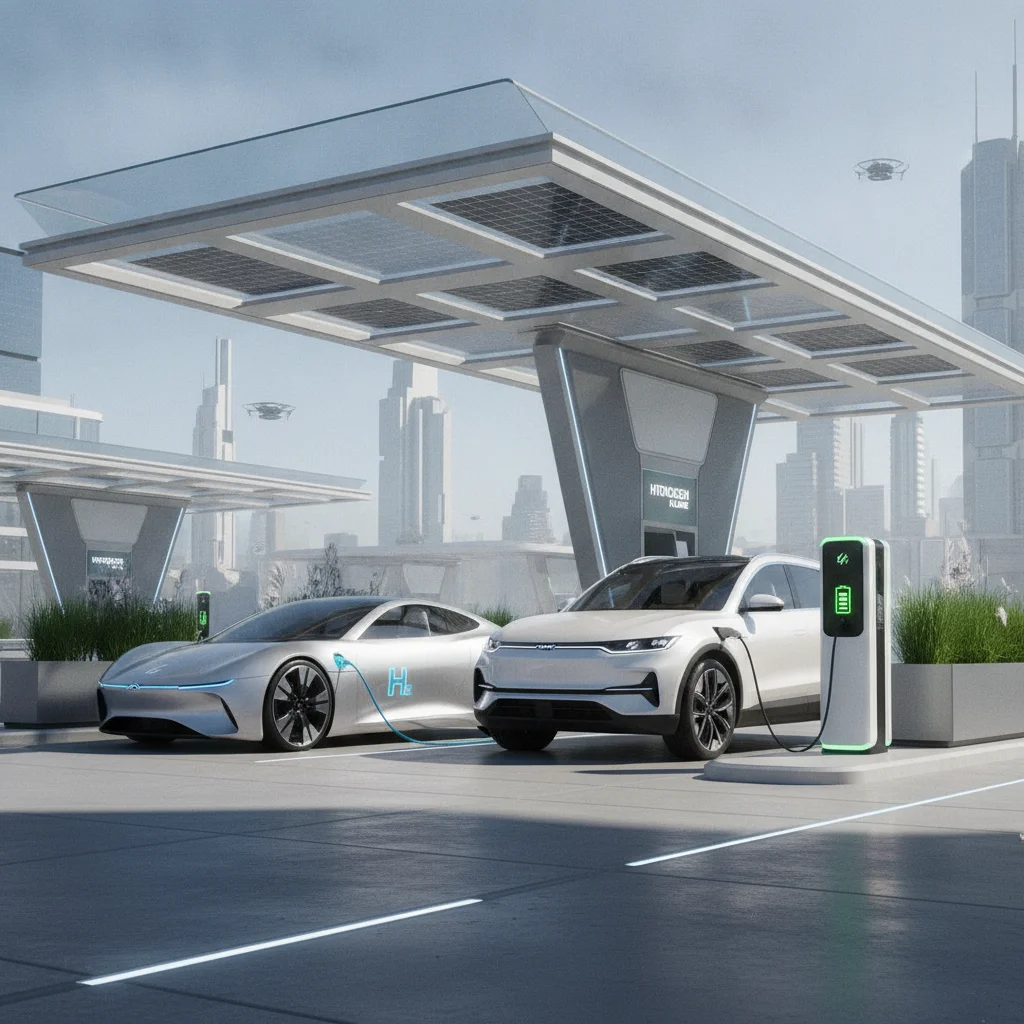
FCEVs are, at their core, electric vehicles. The drivetrain — electric motors, power electronics, regenerative braking — works the same as a BEV. The difference is the energy source: instead of a large lithium-ion pack charged from the grid, an FCEV carries compressed hydrogen that reacts with oxygen in a fuel cell stack to produce electricity on demand. The only byproduct is water.
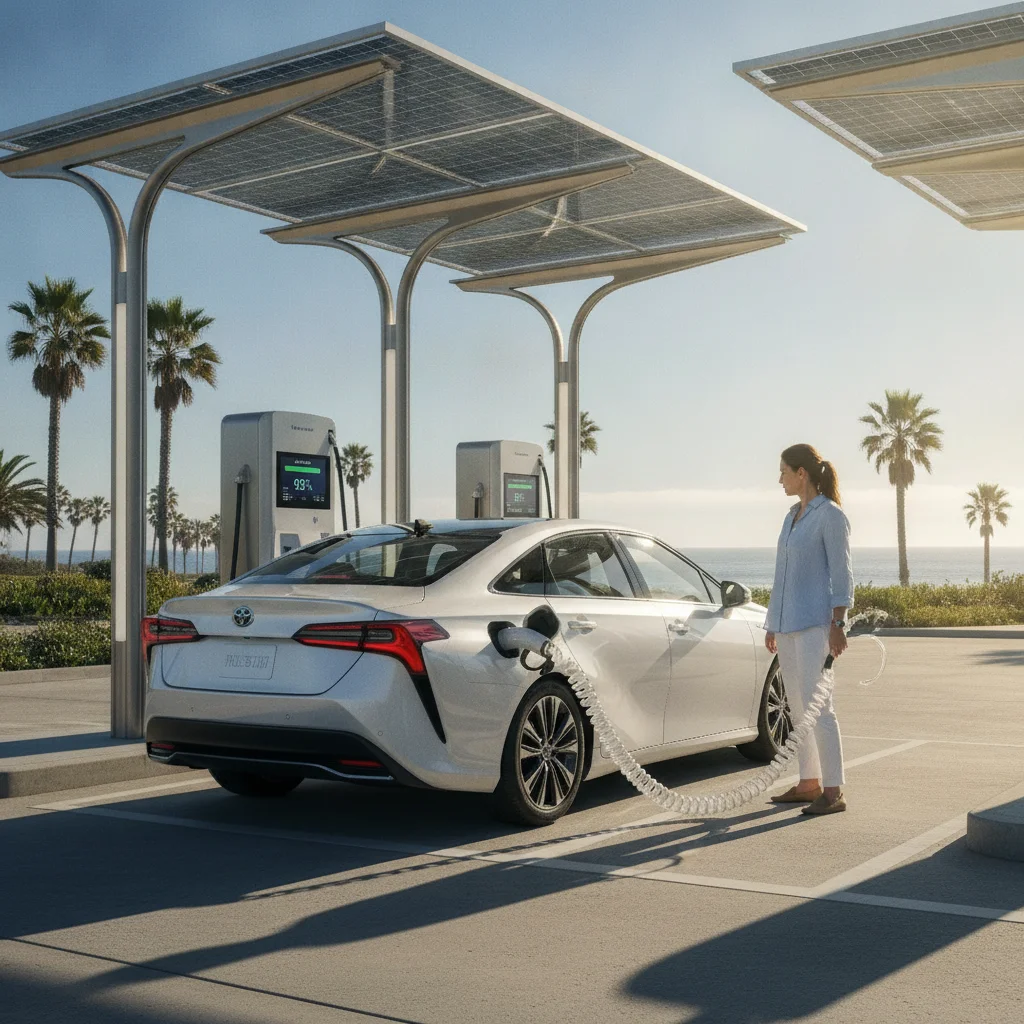
The appeal is obvious. You get zero tailpipe emissions, the quiet and responsive feel of electric driving, and a refueling experience that takes about 5 minutes — closer to filling a gas tank than waiting at a DC fast charger. On paper, FCEVs seem to solve every complaint leveled at BEVs: no range anxiety, no long charging stops, no large battery pack to worry about degrading.
Where Hydrogen Falls Short Today
The reality is constrained by one hard fact: there are fewer than 60 publicly accessible hydrogen stations in the United States, and the vast majority are in California. Toyota's Mirai and Hyundai's Nexo are the only FCEVs readily available to U.S. retail buyers as of 2024, and both manufacturers essentially limit sales and leases to markets near functioning hydrogen infrastructure — primarily the Los Angeles, San Francisco, and Sacramento metro areas.
Hydrogen fuel prices have also been volatile and high. During 2023 hydrogen shortages in California, drivers paid $30 or more per kilogram — with most FCEVs requiring 5–6 kg for a full tank. That's a fueling cost that can easily exceed what you'd pay in gasoline for an equivalent trip. Manufacturers have addressed this partially through fuel credits bundled into leases, but it underscores that the economics of hydrogen are not yet stable.
The supply chain behind hydrogen also matters to understand. The majority of hydrogen produced in the U.S. today is derived from natural gas via steam methane reforming — a process that generates significant CO₂ emissions. "Green hydrogen" produced via electrolysis powered by renewables exists but remains a small fraction of supply. For buyers motivated primarily by environmental impact, this is a meaningful caveat. Understanding how EVs work at a systems level helps put these energy-source questions in context.
Verify Hydrogen Station Status Before Leasing an FCEV
California's hydrogen station network has experienced closures and outages due to supply chain and maintenance issues. Before signing an FCEV lease, use the U.S. DOE's Alternative Fuels Station Locator to verify the status and hours of stations near your home and workplace. Having at least two accessible stations within a reasonable distance is a practical minimum for day-to-day FCEV ownership.
Treat an EREV's Gas Engine Like a Backup Generator
The most cost-effective EREV ownership strategy is to charge at home consistently and let the generator remain idle most of the time. If you find yourself running on gas more than 20–30% of the time, re-evaluate whether an EREV is actually the right fit, or whether your charging habits need adjustment. Like a PHEV, an EREV only delivers its efficiency advantage when it's plugged in regularly.
Who FCEVs Actually Work For Right Now
Despite the limitations, FCEVs make sense for a narrow but real segment of buyers: those in the Southern California market who live near hydrogen stations, drive high annual mileage, don't have home charging access (common in dense urban areas with street parking), and lease rather than buy. Toyota has structured Mirai leases specifically to absorb the infrastructure risk, offering competitive monthly payments and fuel credit allowances that make the total cost of operation palatable for the right driver profile.
Fleet applications — particularly in California, where state agencies, port operators, and some transit authorities are building hydrogen infrastructure — represent a stronger near-term use case than retail ownership for most Americans.
Cost, Insurance, and Incentives: What Buyers Need to Know
The financial picture for EREVs and FCEVs diverges significantly from each other and from mainstream BEVs.
EREVs and Federal Tax Credits
EREVs that meet the IRS criteria for plug-in electric vehicles — which most do, since they charge from an external source — are eligible for the federal clean vehicle tax credit under the Inflation Reduction Act, subject to the usual income, MSRP, and battery sourcing requirements. The credit can be up to $7,500 for new vehicles or $4,000 for used qualifying vehicles. Because EREV eligibility is evaluated the same way as PHEV eligibility, your specific model's credit amount depends on battery capacity, assembly location, and mineral sourcing rules. Check the IRS's published list of eligible vehicles rather than relying on dealer assurances.
FCEVs and Hydrogen Incentives
FCEVs qualify for the federal Alternative Fuel Vehicle Refueling Property Credit (Form 8911) for home hydrogen refueling infrastructure, though residential hydrogen fueling setups are impractical and uncommon. California offers its own Clean Vehicle Rebate Project credits and other state-level incentives for FCEVs. Toyota and Hyundai structure their FCEV lease deals to incorporate many of these incentives upfront, making lease pricing more attractive than it might appear on a purchase basis.
Insurance Considerations
Insurance for EREVs is generally priced similarly to comparable PHEVs — slightly higher than a gas-only equivalent due to battery repair costs, but not dramatically so. FCEVs present a more complex picture for insurers: the fuel cell stack is expensive to repair or replace, hydrogen system components require specialized knowledge, and the small market size means limited actuarial data. EV insurance works differently from gas car coverage, and for FCEVs especially, it's worth getting quotes from multiple carriers before committing to a vehicle.
“Hydrogen and extended-range architectures aren't competitors to battery electrification — they're engineering responses to the places where batteries still create friction for real-world drivers. The market will sort out which approach scales, but buyers benefit from understanding both options clearly.”
— John Voelcker, Longtime automotive journalist and EV analyst, formerly of Green Car Reports
Maintenance costs for EREVs include both battery-related items and conventional engine service for the generator (oil changes, spark plugs, belts). The generator typically runs far fewer hours than a car engine in normal use, so service intervals may be extended, but it does add a maintenance dimension that pure BEVs eliminate entirely. FCEVs have minimal moving parts in the fuel cell stack and generally require less maintenance than ICE vehicles, though the fuel cell itself is the major long-term replacement cost concern.
How EREVs and FCEVs Fit the Broader EV Spectrum
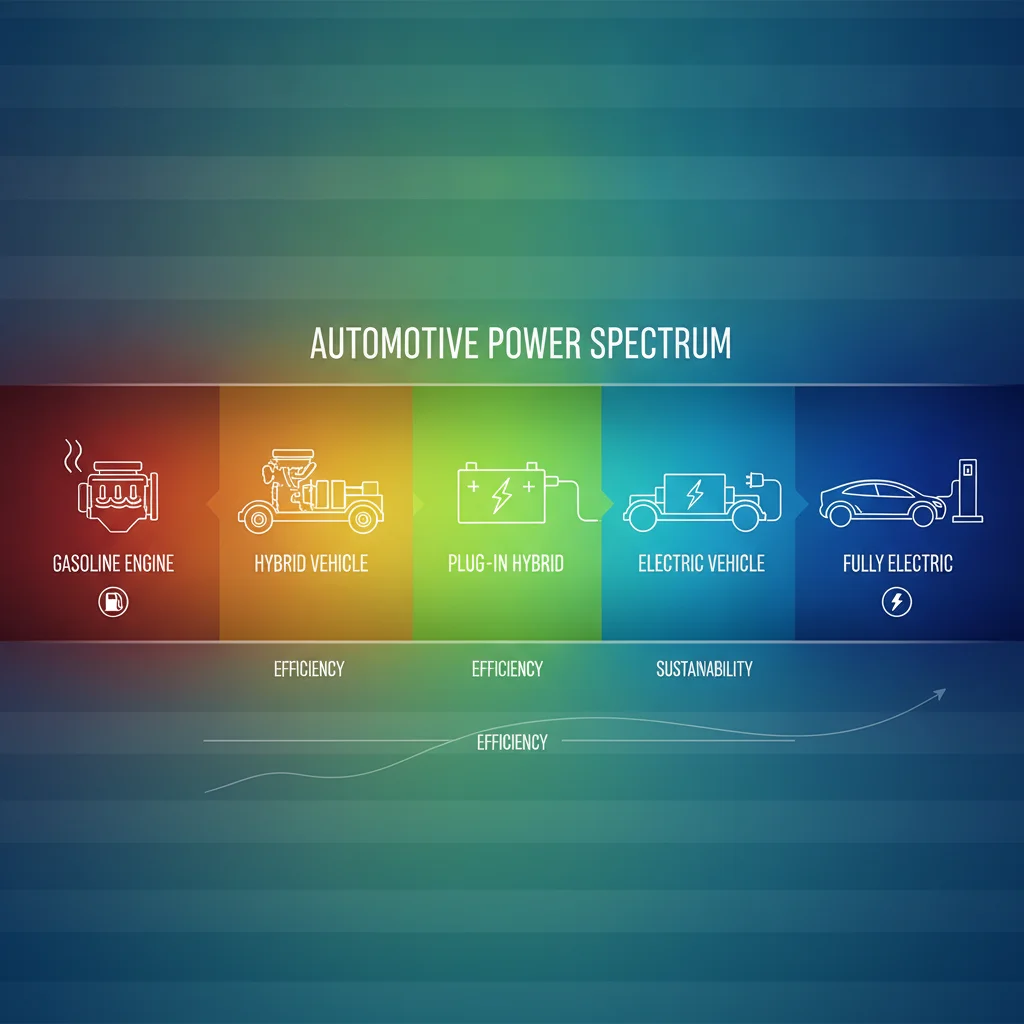
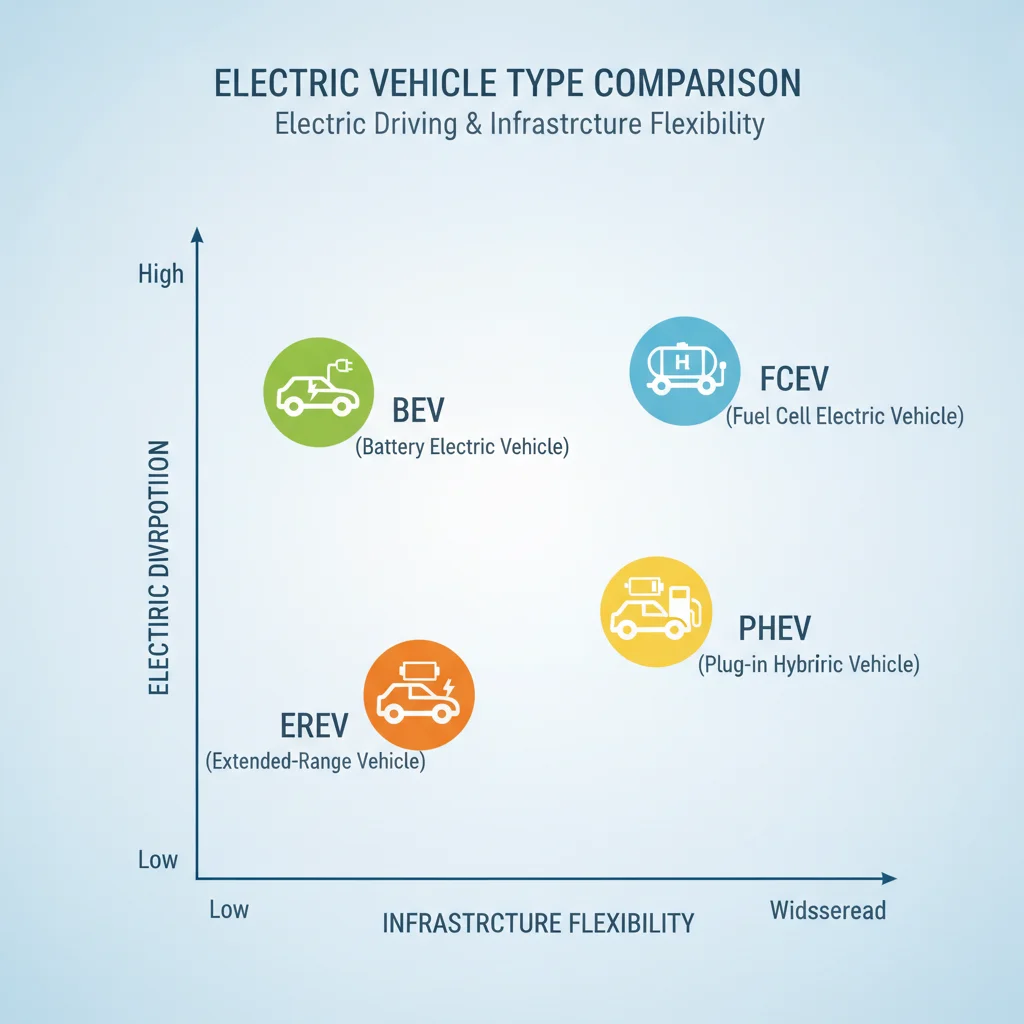
Placing EREVs and FCEVs within the broader electrification landscape clarifies where each makes strategic sense for a buyer. The electrified vehicle spectrum runs from mild hybrids to full BEVs, and EREVs sit closer to the BEV end of that spectrum than most PHEVs do — they drive electric, they charge from the grid, and they're oriented around electric-first operation.
FCEVs exist somewhat off that spectrum entirely, because they don't charge from the grid in the conventional sense. They're refueled with hydrogen, which is then converted to electricity onboard. In terms of the driving experience they're closest to BEVs, but in terms of infrastructure dependence they're in a category of their own.
For buyers trying to decide between all the available electrified options, the practical decision tree typically looks like this:
- No home charging, high mileage, California-based: FCEV worth evaluating on a lease.
- Long daily commutes or frequent long-distance drives, some home charging: EREV may outperform both BEV and PHEV.
- Mostly local driving with home charging: BEV remains the simpler, lower-cost option.
- Mixed driving with no charging access: Conventional HEV or PHEV typically wins on practicality.
A practical decision framework for choosing between electrified vehicle types can help you work through these variables systematically. And if you're approaching the decision cold, these questions to ask yourself before deciding which EV type to buy are a useful starting point.
One dimension that gets underweighted in most comparisons is how much each vehicle type changes your routine. Electrified vehicles ranked by how much they disrupt daily routine addresses exactly that. EREVs rank low on routine disruption — you can ignore the generator entirely for most driving and fill up like a conventional car on longer trips. FCEVs rank low on charging disruption but high on infrastructure risk given the sparse hydrogen network.
The Honest Verdict for Most Buyers
Neither EREVs nor FCEVs are right for most U.S. car buyers today. That's not a dismissal — it's an accurate reading of the current market. FCEV availability is geographically constrained, hydrogen infrastructure is genuinely fragile, and the economics only pencil out in specific lease scenarios in specific markets. EREVs are more broadly viable, but model availability in the U.S. is thin, and the category often gets mislabeled at the point of sale in ways that make comparison shopping harder.
What EREVs and FCEVs do offer is a useful lens for understanding where battery-electric technology still has friction — long-distance range and charging time for BEVs, total carbon lifecycle questions for hydrogen — and how engineers are trying to solve those problems through different architectures.
If you're shopping now and find yourself drawn to an EREV because you're nervous about BEV range, it's worth pressure-testing that concern. PHEVs don't always deliver their advertised fuel savings is a useful parallel read — the same behavioral factors that undercut PHEV efficiency claims can work in an EREV's favor if you commit to charging regularly. And for buyers concerned about battery technology itself, the chemistry differences between lithium-ion and lithium iron phosphate batteries affect how EREVs manage their smaller packs under generator-charging conditions.
The bottom line: know that these categories exist, understand what they actually do, and use that knowledge to make a sharper comparison — whether you end up in one of them or not.
Verify Hydrogen Station Status Before Leasing an FCEV
California's hydrogen station network has experienced closures and outages due to supply chain and maintenance issues. Before signing an FCEV lease, use the U.S. DOE's Alternative Fuels Station Locator to verify the status and hours of stations near your home and workplace. Having at least two accessible stations within a reasonable distance is a practical minimum for day-to-day FCEV ownership.
Treat an EREV's Gas Engine Like a Backup Generator
The most cost-effective EREV ownership strategy is to charge at home consistently and let the generator remain idle most of the time. If you find yourself running on gas more than 20–30% of the time, re-evaluate whether an EREV is actually the right fit, or whether your charging habits need adjustment. Like a PHEV, an EREV only delivers its efficiency advantage when it's plugged in regularly.

All claims are backed by peer-reviewed research. Sources on request.