Key Takeaways
When evaluating an MHEV, ask specifically about the voltage of the hybrid system. A 48V system delivers meaningful regenerative braking and torque assist; a 12V 'mild hybrid' label from some manufacturers is little more than an improved alternator.
Not all MHEV implementations are equal — the voltage and system architecture determine how much real-world efficiency benefit you'll actually see.
Before buying a PHEV, check your actual past 90 days of driving data (most smartphones track this) against the vehicle's advertised electric range. If fewer than 60% of your daily trips fall within that range, the PHEV premium may not pay back as quickly as the brochure implies.
PHEV efficiency claims assume regular charging, but many owners revert to gas-dominant driving habits within months of purchase, dramatically altering the financial case.
When comparing electrified vehicles, always look at the EPA's 'CS mode' MPG figure for PHEVs, not just the MPGe. CS mode tells you the real fuel economy when the battery is depleted — the scenario you'll face on any long trip.
The CS mode figure reveals the vehicle's true hybrid efficiency floor, which is the number that matters most for long-distance driving and for buyers who may not charge consistently.
Why Electrification Is a Spectrum, Not a Switch
Walk into a dealership today and you'll encounter badges like e+, Hybrid, PHEV, 48V, and EV — sometimes on vehicles that look nearly identical from the outside. The industry has a terminology problem, and it costs buyers real money when they choose the wrong powertrain for their life.
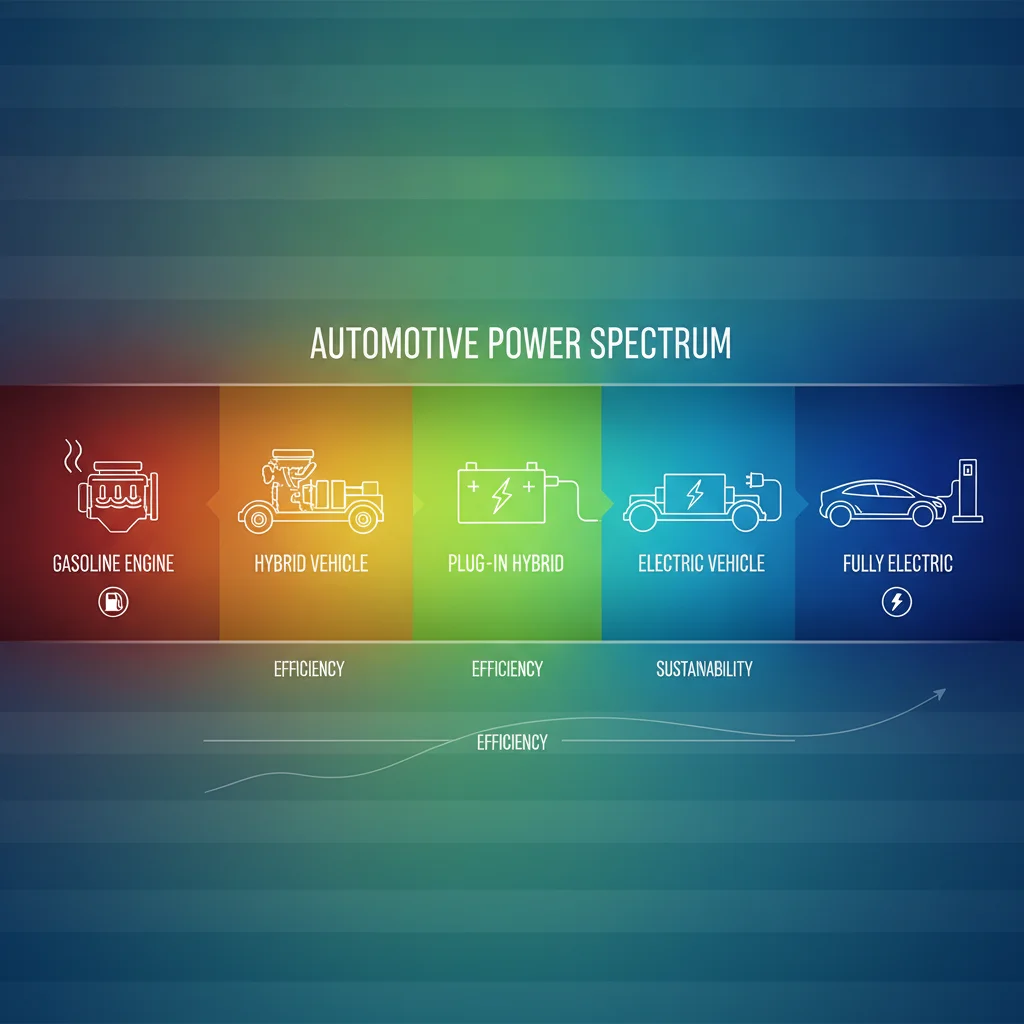
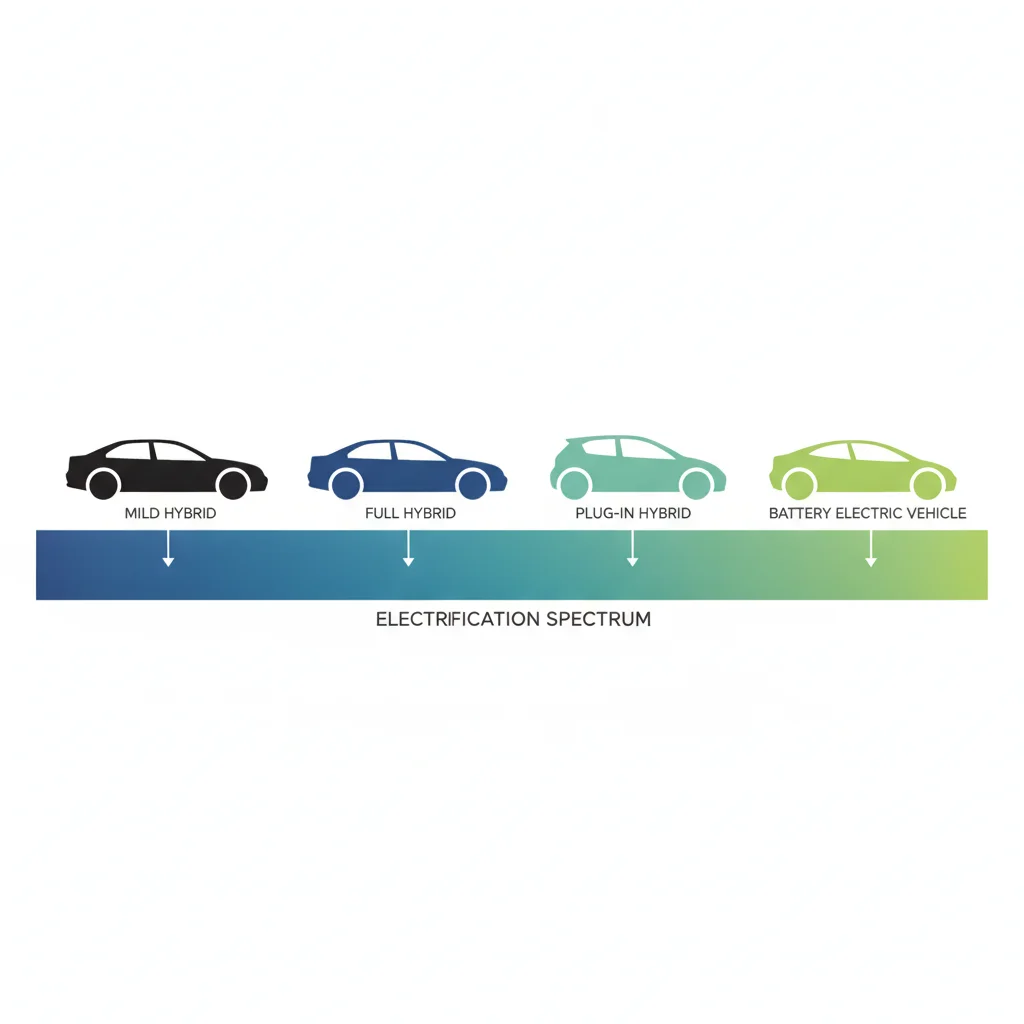
The core insight worth holding onto: electrification is a continuum. At one end sits the mild hybrid, which adds a small electric assist to a conventional drivetrain and barely changes your routine. At the other end is the battery electric vehicle, which eliminates combustion entirely. Every category in between makes a distinct set of trade-offs involving battery size, charging requirements, fuel dependence, and purchase price.
Understanding where each type falls on that spectrum — and why those positions exist — is the most useful frame you can bring to an EV shopping conversation. The alphabet soup of EV terminology has real consequences for your wallet and your driving routine, so let's map it clearly.
One more important caveat before we dive in: automakers don't always use standardized labels. A manufacturer might call their PHEV an "extended range" model, or badge a full hybrid as simply "hybrid" without specifying HEV. The brand-specific naming conventions can obscure what's actually under the hood. Throughout this guide, we use the technical category definitions — not marketing names.
37 miles
Average American's daily driving distance
According to Federal Highway Administration data, the median U.S. driver travels approximately 37 miles per day — well within the electric range of most PHEVs and all BEVs.
~$1.25
Equivalent cost per gallon for BEV electricity
The U.S. Department of Energy's eGallon metric estimates electricity for EV driving costs roughly $1.00–$1.50 per gallon equivalent in most U.S. markets as of 2024.
Up to 40%
Fuel economy improvement with full hybrid vs. ICE
Full hybrids (HEVs) routinely achieve 25–40% better fuel economy than comparable non-hybrid powertrains in real-world urban driving conditions.
$7,500
Maximum federal Clean Vehicle Tax Credit
Under the Inflation Reduction Act, new BEVs, FCEVs, and qualifying PHEVs may be eligible for up to $7,500 in federal tax credits, subject to income, MSRP, and sourcing requirements.
5–15%
Fuel savings from mild hybrid (MHEV) systems
Real-world testing of 48V MHEV systems shows fuel consumption reductions of 5–15% depending on drive cycle, with urban stop-and-go delivering the highest benefit.
Mild Hybrids (MHEV): The Subtlest Step Toward Electrification
The mild hybrid — abbreviated MHEV — is the least dramatic form of electrification on the market. A 48-volt belt-integrated starter-generator (BSG) or similar device captures energy during braking and coasting, storing it in a small auxiliary battery. That energy is then used to assist the combustion engine during acceleration, reduce load at idle, and enable smoother stop-start functionality.
What an MHEV actually does
- Reduces engine load during acceleration by providing electric torque assist
- Recovers energy through regenerative braking — energy that would otherwise be lost as heat
- Improves stop-start performance compared to traditional 12V systems, reducing the annoying hesitation when pulling away from lights
- Cannot drive on electricity alone — the electric system supplements but never replaces the combustion engine
The practical fuel economy improvement from a 48V MHEV system is typically in the range of 5–15% in real-world driving, depending on the drive cycle. Urban stop-and-go traffic captures more benefit than open highway miles.
When evaluating an MHEV, ask specifically about the voltage of the hybrid system. A 48V system delivers meaningful regenerative braking and torque assist; a 12V 'mild hybrid' label from some manufacturers is little more than an improved alternator.
Not all MHEV implementations are equal — the voltage and system architecture determine how much real-world efficiency benefit you'll actually see.
Before buying a PHEV, check your actual past 90 days of driving data (most smartphones track this) against the vehicle's advertised electric range. If fewer than 60% of your daily trips fall within that range, the PHEV premium may not pay back as quickly as the brochure implies.
PHEV efficiency claims assume regular charging, but many owners revert to gas-dominant driving habits within months of purchase, dramatically altering the financial case.
When comparing electrified vehicles, always look at the EPA's 'CS mode' MPG figure for PHEVs, not just the MPGe. CS mode tells you the real fuel economy when the battery is depleted — the scenario you'll face on any long trip.
The CS mode figure reveals the vehicle's true hybrid efficiency floor, which is the number that matters most for long-distance driving and for buyers who may not charge consistently.
What makes MHEVs appealing to many buyers is precisely what they don't require: no plug, no charging cable, no range anxiety, and no changes to your refueling habits whatsoever. You fill it with gasoline exactly as you always have. The electrification is essentially invisible to the driver.
The downside is proportional. MHEVs won't cut your fuel bill dramatically, won't qualify for federal EV tax credits under current IRS rules, and don't meaningfully reduce your emissions footprint the way a PHEV or BEV does. They're an efficiency incrementation, not a transformation.
MHEVs Work Best in City Driving
The efficiency benefit of a mild hybrid system is most pronounced in urban stop-and-go traffic where regenerative braking opportunities are frequent and engine load reduction during acceleration matters most. If you drive primarily on the highway at steady speeds, the MHEV's electric assist captures very little energy and your real-world benefit will be minimal. Factor your actual drive cycle into the calculation.
Install a Home Charger Before Your BEV Arrives
Level 1 charging (standard 120V household outlet) adds only 3–5 miles of range per hour — inadequate for most daily use cases if you're starting with a depleted battery. Arrange a Level 2 charger installation (240V, typically $400–$1,200 including hardware and installation) before your vehicle arrives. Some utilities offer rebates that offset much of this cost.
Full Hybrids (HEV): Self-Charging Efficiency Without a Plug
The full hybrid — or HEV — takes electrification meaningfully further. Unlike an MHEV, a true hybrid can drive on electric power alone for short distances and at low speeds, with the combustion engine shutting off entirely when conditions allow. The electric motor is large enough to propel the vehicle independently in specific scenarios, most commonly in slow urban traffic and parking maneuvers.
How HEVs manage their energy
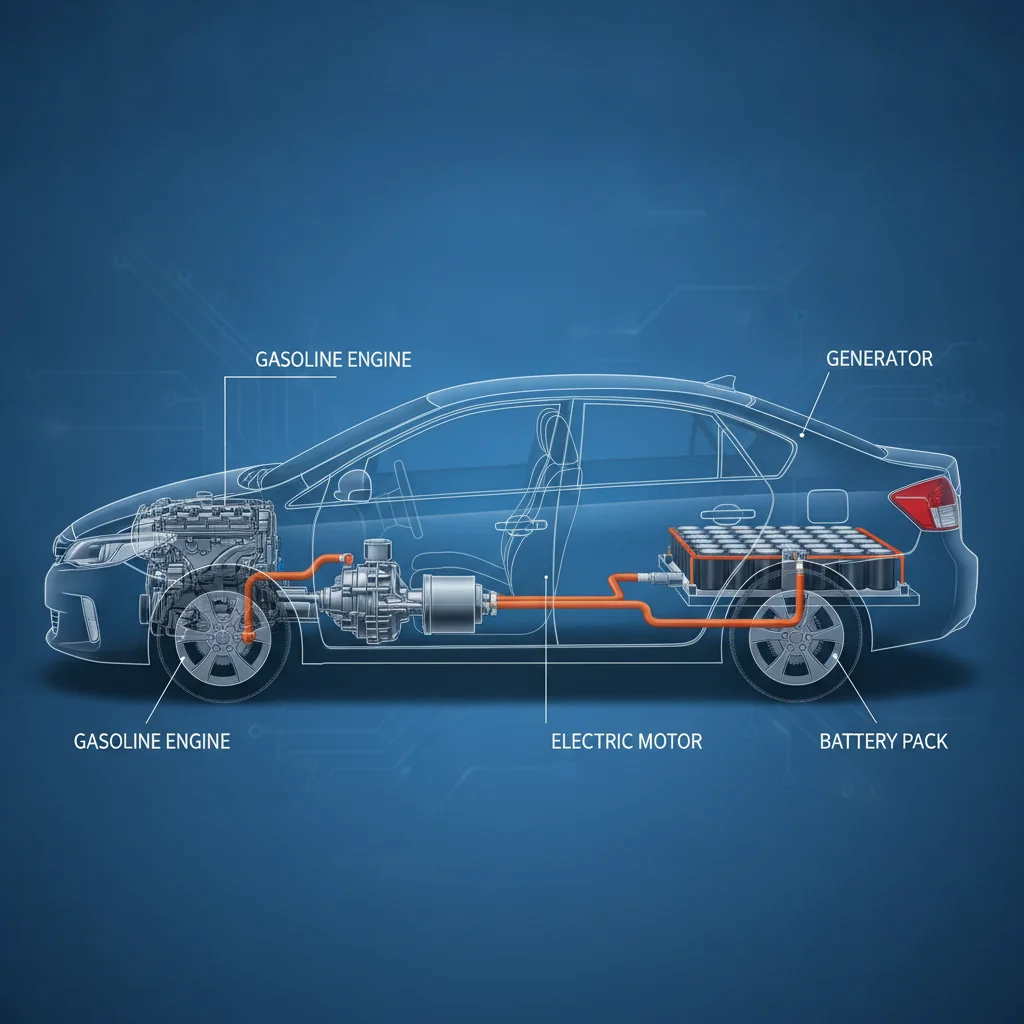
Full hybrids use a more sophisticated power-split or parallel hybrid architecture. Toyota's well-known Hybrid Synergy Drive is the dominant example of a power-split system: the gasoline engine, electric motor, and generator are all connected through a planetary gear set that allows seamless blending of power sources. Ford's hybrid system and most other manufacturers use a parallel or series-parallel architecture with similar outcomes.
The battery in an HEV is larger than an MHEV's but still relatively small — typically 1–2 kWh of usable capacity. It charges itself continuously through regenerative braking and engine-driven generation. You never plug it in. The system manages charge levels automatically to keep the battery within its optimal operating window.
Real-world efficiency gains
HEVs deliver meaningful fuel economy improvements — often 25–40% better than a comparable non-hybrid powertrain in city driving. The Toyota Camry Hybrid, for instance, achieves EPA estimates around 51 mpg city versus the non-hybrid's 28 mpg city. That's a genuine, measurable difference that shows up in your monthly fuel spending.
The trade-off: you're still fully dependent on gasoline. An HEV with a depleted battery (which shouldn't happen under normal use, but can happen in sustained steep climbs) will run on the engine alone, and your efficiency will drop sharply. You also gain no access to HOV lane benefits in most states, which PHEVs and BEVs typically qualify for.
HEV Efficiency Drops Sharply on Sustained Grades
On extended uphill driving — mountain passes, sustained steep grades — an HEV's small battery can deplete faster than it recharges, forcing the vehicle to run on the engine alone for extended periods. In these conditions, the HEV's efficiency advantage over a conventional ICE vehicle nearly disappears. If you drive mountain roads regularly, factor this into your evaluation.
"Hybrid" Badging Does Not Guarantee Meaningful Electrification
Some manufacturers apply hybrid branding to vehicles with very modest 12V electric assist systems that deliver minimal real-world fuel savings. Always verify whether the vehicle is a true 48V MHEV, a self-charging full hybrid, or simply a vehicle with an improved alternator. The specs sheet — not the badge — tells the real story.
Plug-In Hybrids (PHEV): The Bridge Between Gas and Electric
The plug-in hybrid occupies the most strategically interesting position on the electrification spectrum. A PHEV carries a significantly larger battery — typically 8–25 kWh of usable capacity — that can be charged from an external power source, enabling genuine all-electric driving for a defined range before the combustion engine takes over.
The PHEV value proposition
For drivers whose daily commute falls within the vehicle's electric range (commonly 20–50 miles depending on the model), a PHEV can function as a de facto electric vehicle for everyday driving while retaining the combustion engine as an on-demand range extender for longer trips. If you charge consistently at home or work, you may go weeks without visiting a gas station.
The routine disruption from a PHEV sits squarely in the middle of the spectrum — you need to develop a charging habit, but you're never stranded if you forget.
The critical caveat most PHEV shoppers miss
A PHEV's advertised efficiency numbers assume frequent charging. The EPA publishes two fuel economy figures: one for electric-only operation and one for gasoline-only (called CS, or charge-sustaining, mode). A PHEV that achieves 50+ MPGe on electricity might deliver only 35–40 mpg in CS mode — reasonable, but not exceptional.
If a PHEV buyer never plugs in — which happens more often than manufacturers would like to admit — they're essentially driving a heavier, more expensive full hybrid with a large battery they never use. The extra battery weight slightly reduces efficiency in CS mode compared to a purpose-built HEV.
PHEV Efficiency Collapses Without Regular Charging
A plug-in hybrid that is never plugged in is a heavier, less efficient version of a regular hybrid — and the data suggests this is common. Studies from the International Council on Clean Transportation found that real-world PHEV CO2 emissions can be 2–4 times higher than official test values when owners don't charge regularly. If your housing situation or driving pattern makes consistent charging difficult, a well-optimized full hybrid (HEV) will likely serve you better than a PHEV.
Tax Credit Rules Change Frequently — Verify Before You Buy
Federal Clean Vehicle Tax Credit eligibility under the Inflation Reduction Act is subject to income limits (MAGI thresholds), MSRP caps, and battery/assembly sourcing requirements that change as automakers adjust their supply chains. A vehicle that qualifies today may not qualify next month — and vice versa. Always check the IRS's official clean vehicle credit list at IRS.gov before factoring the credit into your purchase math.
PHEVs currently qualify for the federal Clean Vehicle Tax Credit under certain conditions — up to $7,500 for new vehicles — making the upfront cost gap relative to HEVs significantly smaller for eligible buyers. Income limits, MSRP caps, and battery sourcing requirements apply. Always verify current IRS guidance before assuming you qualify.
See our practical decision framework for electrified vehicle types for a structured way to evaluate whether a PHEV's electric range matches your actual driving pattern.
When evaluating an MHEV, ask specifically about the voltage of the hybrid system. A 48V system delivers meaningful regenerative braking and torque assist; a 12V 'mild hybrid' label from some manufacturers is little more than an improved alternator.
Not all MHEV implementations are equal — the voltage and system architecture determine how much real-world efficiency benefit you'll actually see.
Before buying a PHEV, check your actual past 90 days of driving data (most smartphones track this) against the vehicle's advertised electric range. If fewer than 60% of your daily trips fall within that range, the PHEV premium may not pay back as quickly as the brochure implies.
PHEV efficiency claims assume regular charging, but many owners revert to gas-dominant driving habits within months of purchase, dramatically altering the financial case.
When comparing electrified vehicles, always look at the EPA's 'CS mode' MPG figure for PHEVs, not just the MPGe. CS mode tells you the real fuel economy when the battery is depleted — the scenario you'll face on any long trip.
The CS mode figure reveals the vehicle's true hybrid efficiency floor, which is the number that matters most for long-distance driving and for buyers who may not charge consistently.
Extended-Range EVs (EREV) and Fuel Cell Vehicles (FCEV): The Outliers
Two categories occupy unusual positions on the electrification spectrum, and both are frequently misunderstood or overlooked in mainstream buying discussions.
Extended-Range Electric Vehicles (EREV)
An EREV is architecturally closer to a BEV than a PHEV. The vehicle drives exclusively on electric motors — the combustion engine is present only as a generator to recharge the battery when it depletes, and never directly drives the wheels. The Chevrolet Volt (discontinued) was the clearest U.S. example; the BMW i3 with Range Extender and, more recently, certain Chinese-market vehicles like the Li Auto series operate on similar principles.
The practical distinction from a PHEV: in an EREV, the driving experience is always electric. You don't feel a powertrain transition when the engine kicks in. Efficiency in range-extending mode is typically lower than a dedicated HEV because the generator conversion adds losses, but the electric driving character is preserved throughout.
Fuel Cell Electric Vehicles (FCEV)
FCEVs generate electricity onboard through an electrochemical reaction between hydrogen and oxygen, producing water vapor as the only tailpipe emission. The Toyota Mirai and Hyundai Nexo are the two primary examples available in the U.S. market.
FCEVs drive like BEVs — smooth, quiet, instant torque — but refuel like gasoline vehicles in roughly 3–5 minutes at a hydrogen station. The critical constraint: hydrogen refueling infrastructure in the U.S. is extremely limited, concentrated primarily in California. For most American buyers, FCEVs are not yet a practical option.
Our dedicated guide to EREVs and FCEVs covers these categories in much greater depth for buyers in markets where they're viable.
Hydrogen Infrastructure Remains the Key FCEV Barrier
As of 2024, hydrogen refueling stations in the United States number fewer than 60, with the vast majority located in California. Toyota and Hyundai have both paused or slowed FCEV expansion plans for the U.S. market in response to infrastructure constraints. FCEVs are a compelling technology but a practical option for only a narrow segment of current U.S. buyers.
Electrification Category Affects Insurance Costs
Insurers treat different electrified vehicle categories differently when setting premiums. BEVs tend to carry higher collision and comprehensive premiums due to expensive battery repair costs, while MHEVs and HEVs are typically rated more similarly to conventional vehicles. Before finalizing your purchase, get insurance quotes across the specific models you're comparing — not just vehicle categories in the abstract.
Battery Electric Vehicles (BEV): Full Commitment to Electric
At the far end of the spectrum sits the battery electric vehicle — no combustion engine, no gas tank, no exhaust pipe. A BEV is powered entirely by one or more electric motors drawing from a large battery pack, typically ranging from 40 kWh (entry-level models) to over 100 kWh (long-range trucks and performance vehicles).
What full electrification actually means day-to-day
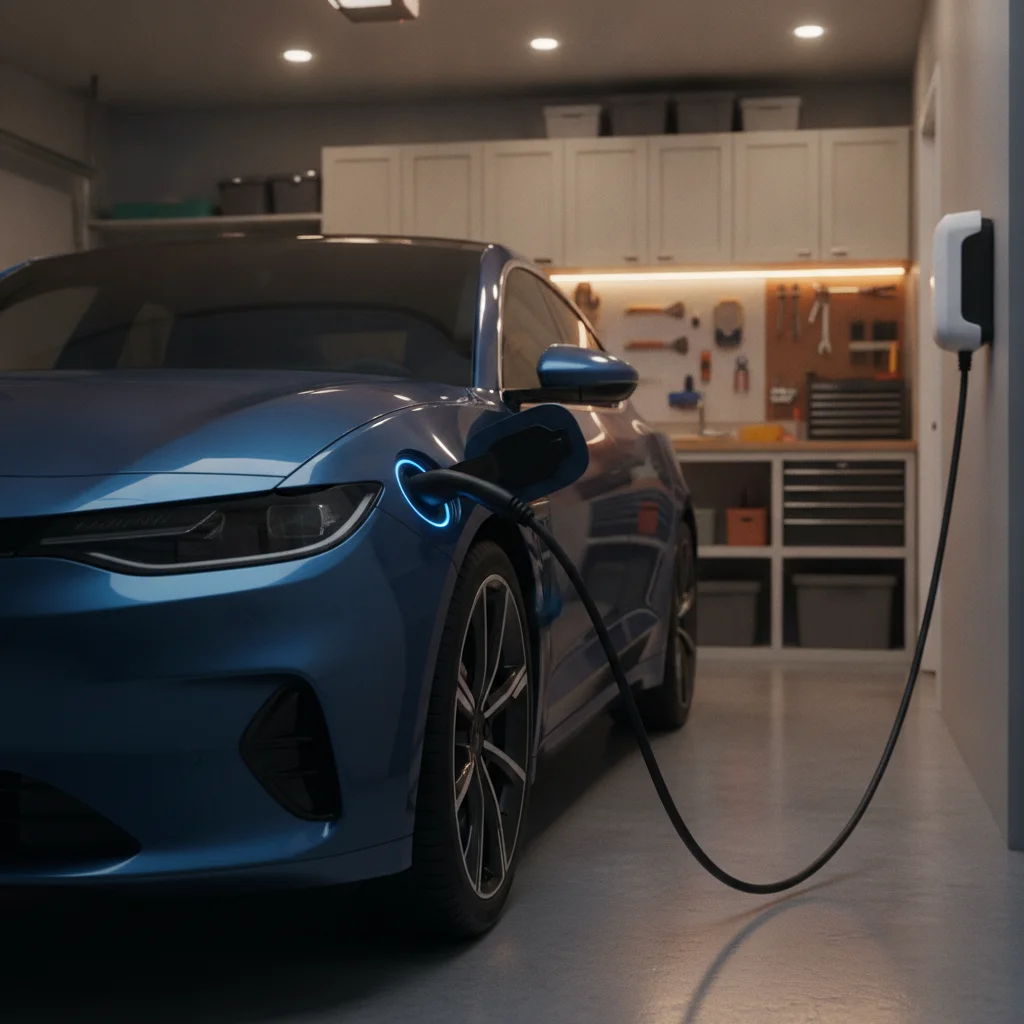
Owning a BEV requires the most meaningful behavioral adjustment of any vehicle on this spectrum. You need reliable access to charging — ideally a Level 2 home charger (240V) that can replenish 20–30 miles of range per hour overnight. Without home charging, BEV ownership becomes considerably more inconvenient, though workplace charging and public DC fast charging (DCFC) networks have improved substantially.
Range on current BEVs spans from roughly 150 miles (some entry-level models) to over 350 miles (long-range configurations). For the majority of Americans whose daily driving is under 40 miles, even modest-range BEVs handle everyday needs comfortably. Long-distance travel requires planning around charging stops, though DCFC can add 100–200 miles of range in 20–30 minutes on vehicles with high charging rates.
For a comprehensive breakdown of BEV powertrains — motors, inverters, battery management — see our introduction to all-electric powertrains. And if you're wondering how insurance costs shift with a BEV, our EV insurance guide is worth a read before you finalize your decision.
The BEV ownership economics
BEVs typically cost more upfront than comparable ICE vehicles, though the gap has narrowed meaningfully in 2023–2024. Operating costs — fuel and maintenance — run substantially lower. The U.S. Department of Energy estimates electricity for EV driving costs the equivalent of roughly $1.00–$1.50 per gallon in most U.S. markets. Maintenance savings are real: no oil changes, no transmission service, fewer brake jobs (regenerative braking reduces pad wear).
The federal Clean Vehicle Tax Credit of up to $7,500 applies to many new BEVs, subject to MSRP limits, income caps, and battery/assembly sourcing requirements. The used clean vehicle credit (up to $4,000) expands BEV affordability at the pre-owned end of the market.
“The transition to electric vehicles isn't happening overnight — it's a spectrum, and different consumers will find their on-ramp at different points. The industry's job is to make sure every point on that spectrum delivers genuine value, not just a marketing badge.”
— Jennifer Safavian, President and CEO, Autos Drive America
Side-by-Side Comparison: What Each Category Actually Delivers
The table below cuts through the marketing language and maps each electrified vehicle category across the dimensions that matter most to buyers:
| Category | Plug Required | Electric-Only Range | Fuel Dependence | Typical Efficiency Gain vs. ICE | Federal Tax Credit Eligible |
|---|---|---|---|---|---|
| MHEV | No | 0 miles | Full | 5–15% | No |
| HEV | No | 1–2 miles (low-speed only) | Full | 25–40% | No |
| PHEV | Yes (recommended) | 20–50 miles | Partial | 50–90% if charged regularly | Yes (up to $7,500) |
| EREV | Yes | 40–75 miles (then range-extended) | Partial | 60–90% typical | Varies by model |
| FCEV | No (hydrogen) | Unlimited (hydrogen-powered) | None (hydrogen) | ~60% vs. gasoline equivalent | Yes (up to $7,500) |
| BEV | Yes (required) | 150–350+ miles | None | 70–85% energy cost reduction | Yes (up to $7,500) |
A few important notes on this table: efficiency comparisons are approximate and depend heavily on drive cycle, climate, and driving behavior. Tax credit eligibility changes frequently and is subject to income limits, MSRP caps, and sourcing requirements — always verify current IRS Publication 5866 or the IRS website before purchase decisions. The fundamentals of how EVs work can help contextualize why these efficiency differences exist at the mechanical level.
The "fuel dependence" column is arguably the most revealing. MHEVs and HEVs are still fundamentally gasoline vehicles — their electrification reduces how much fuel you burn, but doesn't change your dependence on it. PHEVs and EREVs offer genuine optionality. BEVs and FCEVs eliminate petroleum entirely.
How to Use the Spectrum to Find Your Fit
The spectrum framing isn't just conceptually satisfying — it's a practical shopping tool. Here's how to use it:
Start with your charging situation
If you live in an apartment without dedicated parking, or can't install a home charger, the right side of the spectrum (PHEV, BEV) becomes harder to use effectively. You can still own a PHEV or BEV with workplace or public charging, but the economics shift. An HEV or MHEV may deliver more practical value in that scenario.
Map your daily mileage against electric range
The average American drives approximately 37 miles per day (Federal Highway Administration data). A PHEV with 30+ miles of electric range could cover most daily driving on electricity alone if charged overnight. A BEV with 250+ miles of range handles both daily driving and most weekend trips without mid-journey charging. A driver doing 80 miles of highway daily gets limited benefit from a short-range PHEV but might still find a long-range BEV viable.
Factor in the total cost of ownership — not just sticker price
MHEVs and HEVs carry modest price premiums over non-hybrid equivalents — typically $1,500–$4,000 — and pay back through fuel savings over 3–5 years. PHEVs carry larger premiums but may be offset by tax credits. BEVs have the highest potential total-cost-of-ownership advantage over time but require the largest upfront commitment and the biggest lifestyle adjustment.
IRS Clean Vehicle Credit Eligibility Tool
The IRS maintains an official list of vehicles that qualify for the Clean Vehicle Tax Credit under the Inflation Reduction Act. Always verify eligibility here before factoring any credit into your purchase budget.
DOE eGallon Calculator
The U.S. Department of Energy's eGallon tool calculates the cost of fueling an EV versus gasoline in your specific state, helping you model real-world operating cost differences across electrified vehicle types.
Choosing Between Electrified Vehicle Types: A Practical Decision Framework
A structured guide that walks you through your daily mileage, charging access, and driving patterns to help narrow down which electrified vehicle category fits your lifestyle and budget.
PlugShare Charging Map
A crowd-sourced and verified map of EV charging stations across North America. Use it to evaluate charging infrastructure along your regular routes before committing to a PHEV or BEV.
Extended-Range EVs and Fuel-Cell Vehicles Guide
Our deep-dive into EREVs and FCEVs — the two electrified categories most buyers overlook — covering how they work, who they're suited for, and where they fall short in today's market.
EV Insurance Guide
How EV and hybrid ownership affects your insurance premiums, what coverage considerations are unique to electric vehicles, and how to shop for the right policy across electrified vehicle categories.
Be honest about how you'll actually use the vehicle
The PHEV math only works if you plug in consistently. The BEV math only works if you have reliable access to charging. The MHEV value only shows up in mixed city-highway driving, not pure highway miles where regenerative braking opportunities are rare. Choosing a category based on its best-case scenario — rather than your realistic use case — is one of the most common and costly mistakes electrified vehicle buyers make.
Our structured decision framework walks through this matching process step by step, with specific questions to ask yourself before you set foot in a showroom. And if you're ready to go deeper on the full BEV end of the spectrum, the all-electric powertrain guide is the logical next read.
Hydrogen Infrastructure Remains the Key FCEV Barrier
As of 2024, hydrogen refueling stations in the United States number fewer than 60, with the vast majority located in California. Toyota and Hyundai have both paused or slowed FCEV expansion plans for the U.S. market in response to infrastructure constraints. FCEVs are a compelling technology but a practical option for only a narrow segment of current U.S. buyers.
Electrification Category Affects Insurance Costs
Insurers treat different electrified vehicle categories differently when setting premiums. BEVs tend to carry higher collision and comprehensive premiums due to expensive battery repair costs, while MHEVs and HEVs are typically rated more similarly to conventional vehicles. Before finalizing your purchase, get insurance quotes across the specific models you're comparing — not just vehicle categories in the abstract.

All claims are backed by peer-reviewed research. Sources on request.