| BEV federal tax credit | Up to $7,500 (income and MSRP limits apply) (IRS, Inflation Reduction Act 2022) |
| PHEV all-electric range (typical) | 20–50 miles (EPA vehicle data, 2023–2025 models) |
| HEV fuel economy improvement (vs. non-hybrid) | 25–40% better city MPG (U.S. Department of Energy fueleconomy.gov) |
| MHEV fuel economy improvement | 5–15% over comparable non-hybrid (Industry engineering estimates, 48V systems) |
| BEV average range (new 2024 models) | ~291 miles per charge (EPA, 2024 model year data) |
| Plug-in required | BEV and PHEV only |
| No charging infrastructure needed | HEV and MHEV |
| Powertrain complexity (highest) | PHEV (carries both full gas and EV systems) |
Why These Labels Matter Before You Buy
Walk into any dealership or browse any automaker's website and you'll run into a wall of acronyms: BEV, PHEV, HEV, MHEV. These aren't marketing fluff — they describe fundamentally different powertrains that will affect how you refuel, what you pay in fuel and insurance costs, whether you qualify for federal tax credits, and how much your daily routine needs to change.
The confusion is understandable. Automakers often blur the distinctions to make their lineups sound more electrified than they are. A car badged as a "hybrid" might have zero ability to run on electricity alone, while another labeled simply "electric" might actually carry a gas engine as backup. Getting the terminology right upfront means you shop on accurate expectations — not a brochure's spin.
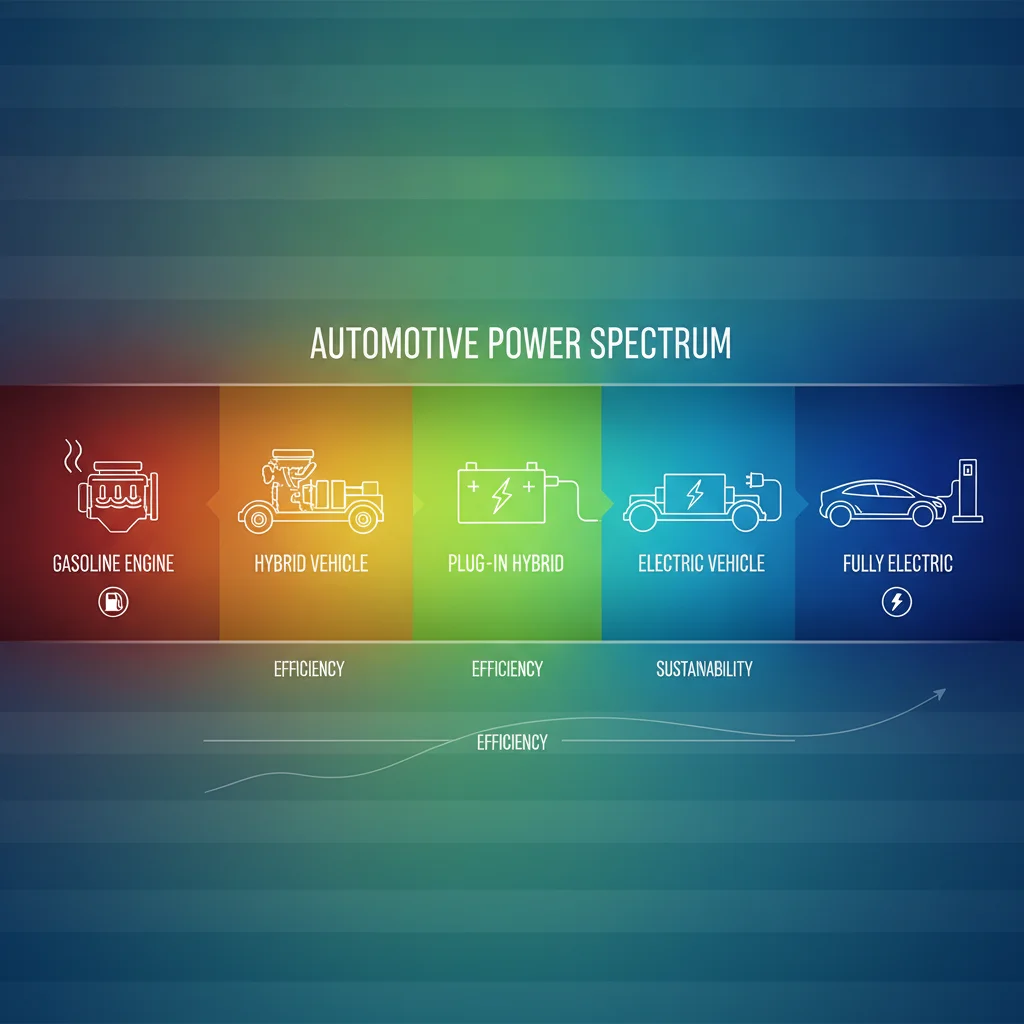
This reference covers each of the four major electrified vehicle categories in plain language, with the details that actually matter to a buyer: how the system works, what you plug in (or don't), what the fuel economy looks like, and who each type is realistically for. For a broader map of where every category sits relative to the others, see The Electrified Vehicle Spectrum.
| BEV federal tax credit | Up to $7,500 (income and MSRP limits apply) (IRS, Inflation Reduction Act 2022) |
| PHEV all-electric range (typical) | 20–50 miles (EPA vehicle data, 2023–2025 models) |
| HEV fuel economy improvement (vs. non-hybrid) | 25–40% better city MPG (U.S. Department of Energy fueleconomy.gov) |
| MHEV fuel economy improvement | 5–15% over comparable non-hybrid (Industry engineering estimates, 48V systems) |
| BEV average range (new 2024 models) | ~291 miles per charge (EPA, 2024 model year data) |
| Plug-in required | BEV and PHEV only |
| No charging infrastructure needed | HEV and MHEV |
| Powertrain complexity (highest) | PHEV (carries both full gas and EV systems) |
BEV — Battery Electric Vehicle
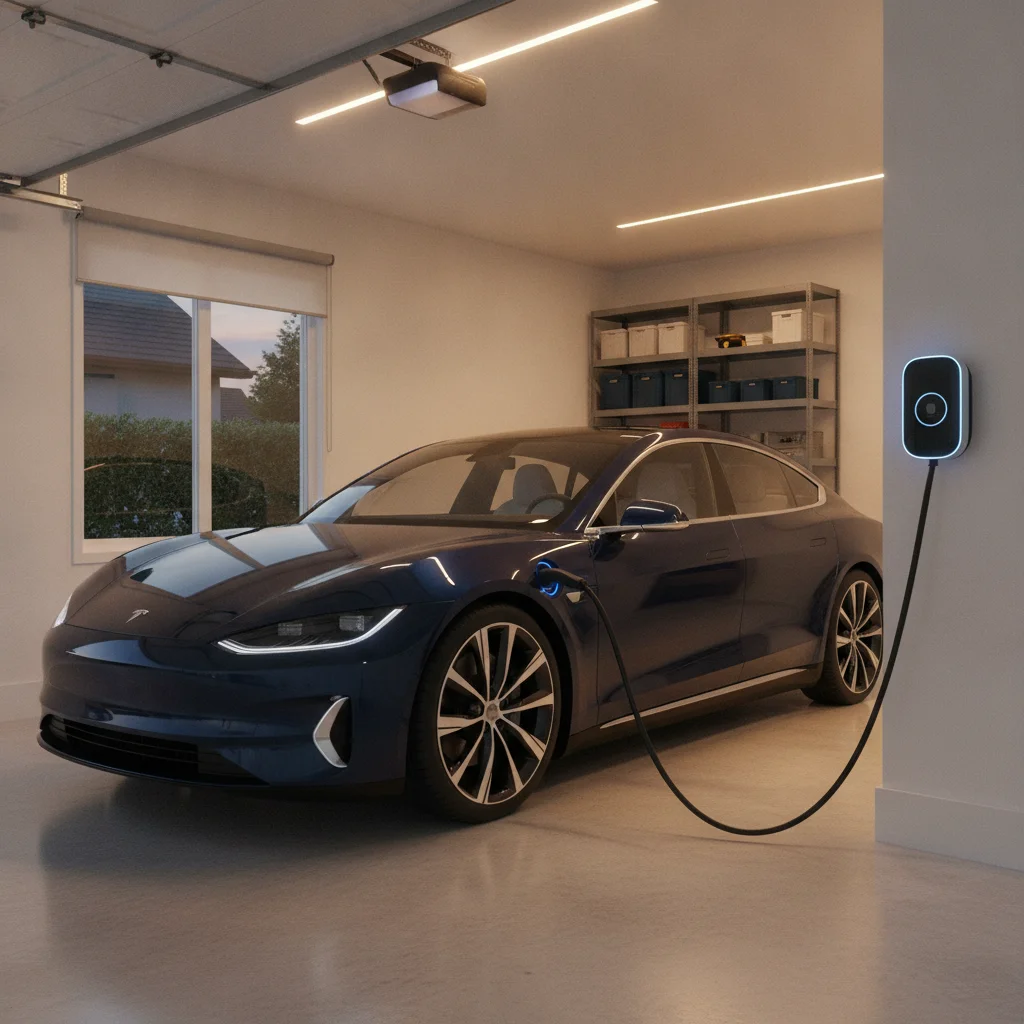
A BEV is what most people picture when they hear "electric car." It runs entirely on electricity stored in a large onboard battery pack. There is no gasoline engine, no fuel tank, and no tailpipe. The only energy input is electricity from the grid, delivered through a charging port.
How it works
One or more electric motors draw power directly from the battery. When you decelerate, regenerative braking converts kinetic energy back into electricity, partially recharging the pack. The battery is replenished by plugging into a Level 1 outlet (standard 120V household), a Level 2 charger (240V, typically installed at home or found at workplaces and public stations), or a DC fast charger (DCFC) that can add significant range in 20–40 minutes.
Range and charging reality
Modern BEVs span roughly 150 miles of range on the low end (smaller urban models) to over 400 miles on premium long-range configurations. The EPA's official range figures are reliable benchmarks, though real-world range drops noticeably in cold weather, at highway speeds, and with heavy climate control use. Planning around charging infrastructure is a genuine lifestyle consideration — it is not a dealbreaker for most drivers, but it requires an honest look at your daily mileage and parking situation. The How EVs Work hub explains battery chemistry and charging hardware in more depth.
Incentives and costs
BEVs are the primary target of the federal Clean Vehicle Tax Credit (up to $7,500 under the Inflation Reduction Act, subject to income limits and vehicle MSRP caps). State-level rebates often stack on top of that. Fuel costs are substantially lower than gasoline — typically the equivalent of $1–$2 per gallon in electricity costs depending on your local rates and charging habits. Maintenance is also leaner: no oil changes, no transmission fluid, fewer brake jobs thanks to regenerative braking. See the EV Maintenance Basics hub for a full breakdown of what routine upkeep actually involves.
Who it's for
BEVs work best for drivers who can charge at home overnight, whose daily driving stays well within the vehicle's range most of the time, and who have access to fast charging for longer trips. They are the highest-commitment electrified option, but also the one that delivers the largest long-term cost and emissions benefits.
PHEV — Plug-In Hybrid Electric Vehicle
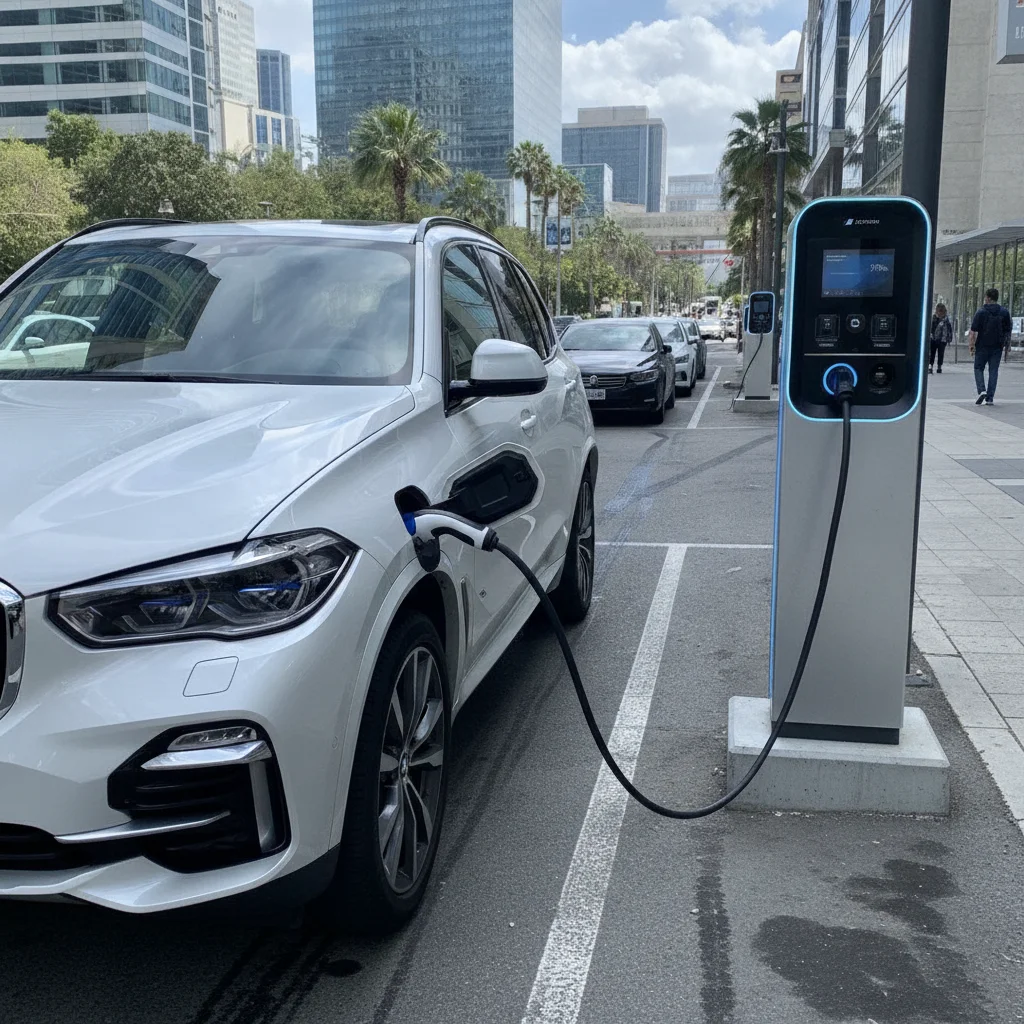
A PHEV is a hybrid vehicle with a battery large enough to power the car electrically for a meaningful distance — typically 20 to 50 miles — and a charging port so that battery can be refilled from the grid. When the electric range is exhausted, the gas engine takes over seamlessly, giving the vehicle unlimited range on fuel alone.
How it works
PHEVs carry both a conventional internal combustion engine and an electric motor with a battery pack that sits between HEV and BEV in size. Most PHEVs default to electric-first operation until the battery depletes, then switch to hybrid mode. Some vehicles allow you to "hold" the battery charge in reserve and deploy it strategically — useful for city driving after a highway leg.
The dual-fuel math
If your typical daily round-trip is under 40 miles and you charge at home every night, you could realistically drive a PHEV for weeks without touching a gas pump. That changes dramatically on road trips or if your workplace lacks charging. EPA rates PHEVs with two separate figures: a miles-per-gallon-equivalent (MPGe) for electric operation, and a standard MPG figure for hybrid mode. The gap between those numbers is often wide — a PHEV might show 80+ MPGe electric and only 35 MPG hybrid. Which number dominates your real-world fuel bill depends entirely on your charging habits.
Incentives
PHEVs qualify for a partial federal Clean Vehicle Tax Credit (up to $7,500, same structure as BEVs, with the actual credit tied to battery capacity). Many popular PHEVs clear the full credit threshold. State incentives vary — some states offer additional rebates specifically for PHEVs, while others focus exclusively on BEVs.
Who it's for
PHEVs are the pragmatic middle ground. They reward drivers who can charge regularly with near-BEV economics on daily commutes, while eliminating range anxiety entirely. They're particularly well-suited to households with one vehicle that needs to handle both daily urban driving and occasional long-distance travel. The tradeoff is complexity: you're maintaining both a gas engine and an electric drivetrain.
HEV — Hybrid Electric Vehicle
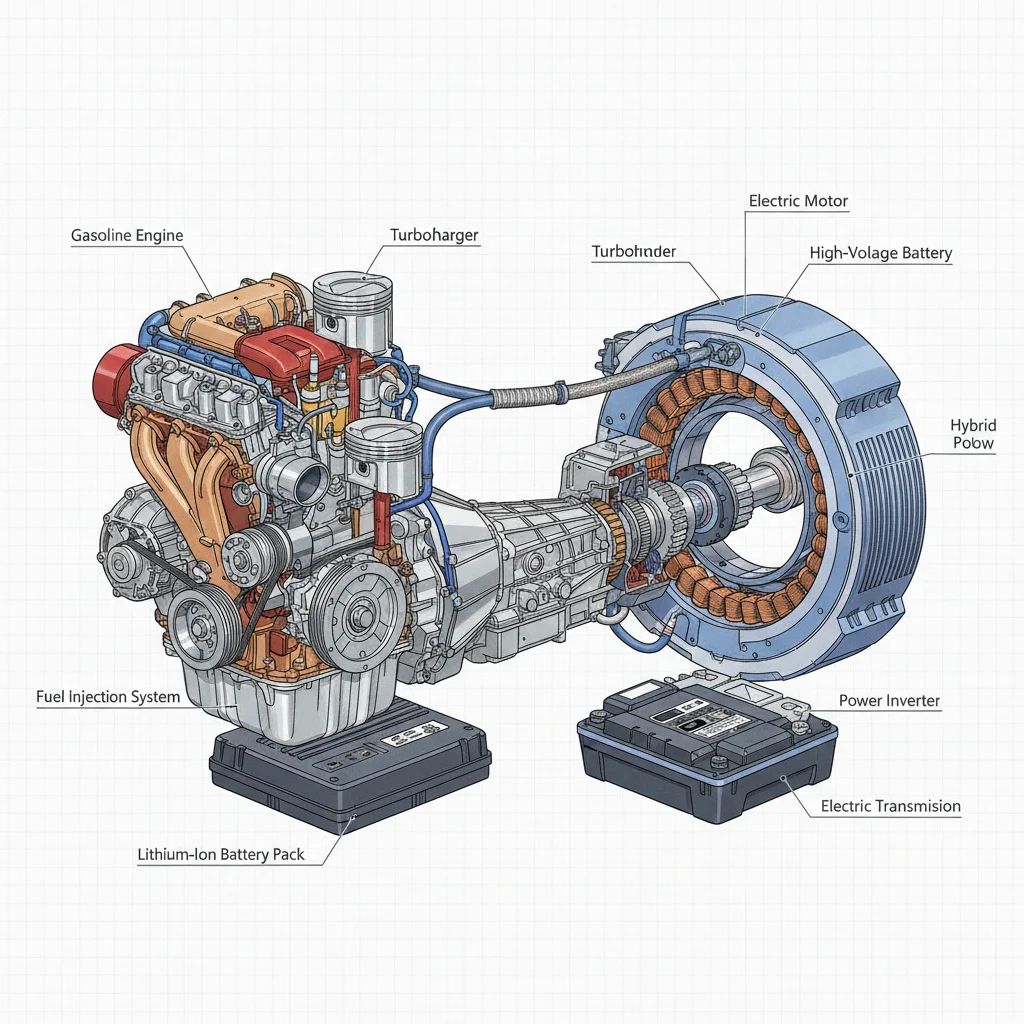
A HEV (or conventional hybrid) pairs a gasoline engine with an electric motor and a small battery — but you never plug it in. The entire system is self-contained and self-charging. The battery is replenished through regenerative braking and by the engine itself. From the driver's perspective, you fill up with gas exactly as you always have.
How it works
The electric motor assists the gas engine during acceleration, allowing the engine to be smaller and more efficient than it would need to be alone. At low speeds and light loads, many HEVs can run briefly on electricity only. The Toyota Prius popularized a "full hybrid" configuration where the car can creep through a parking lot or crawl in traffic on electricity alone. Honda's earlier mild-hybrid IMA system was less capable of pure-EV operation. System design varies significantly by manufacturer.
Fuel economy
HEVs deliver meaningfully better fuel economy than their non-electrified counterparts — often 25–40% better in city driving where the regenerative braking and electric assist have the most impact. Highway gains are more modest. A Toyota Camry Hybrid, for example, returns around 51 MPG combined versus roughly 32 MPG for the base non-hybrid model.
No plug, no tax credit
Because you never plug in a standard HEV, it does not qualify for the federal Clean Vehicle Tax Credit. What it does offer is a lower purchase price than a PHEV or BEV, combined with better-than-average fuel economy and zero charging infrastructure requirements. Total cost of ownership can be compelling, especially in stop-and-go urban driving.
Who it's for
HEVs are the simplest on-ramp to electrified driving. If you have no access to home charging, drive long distances regularly, or simply want better fuel economy without changing any habits whatsoever, an HEV is the rational choice. It asks nothing different of you beyond occasionally skipping a fuel stop.
MHEV — Mild Hybrid Electric Vehicle
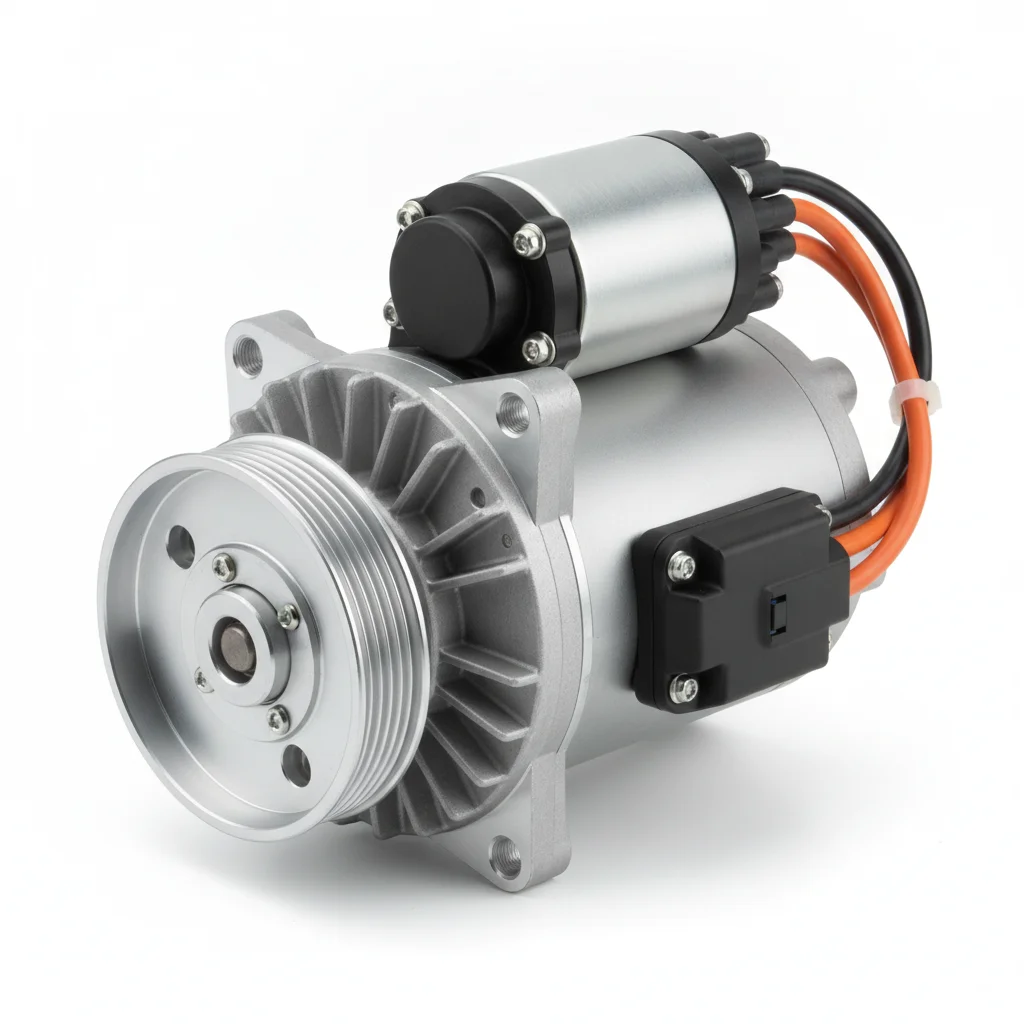
A mild hybrid (MHEV) is the most minimal form of electrification — so minimal that many consumers don't realize it's present. An MHEV adds a small electric motor-generator (typically a 48-volt belt-integrated starter-generator, or BSG) that helps the engine during acceleration and recovers a small amount of energy under braking. But it cannot propel the vehicle on electricity alone, even for a second.
What it actually does
The 48V system in a typical MHEV handles three things: smoother stop-start operation (eliminating the hesitation of older 12V start-stop systems), a modest torque-fill boost during low-speed acceleration, and marginal energy recovery under deceleration. The net effect on fuel economy is typically 5–15% depending on driving conditions — real, but not transformative.
Why automakers use the label
MHEV technology is cheap to implement relative to full hybrids and adds just enough efficiency improvement to satisfy tightening fleet fuel-economy regulations. It also lets automakers market vehicles with "electrified" language. That's not inherently dishonest, but it can mislead shoppers who conflate MHEV with a conventional hybrid or plug-in. How automakers classify their electrified lineups digs into the brand-specific naming conventions that further complicate this picture.
No plug, no significant EV operation, no federal credit
MHEVs do not qualify for federal electric vehicle tax credits. They require no charging infrastructure. Ownership experience is nearly identical to driving a conventional gas vehicle.
Who it's for
MHEVs make sense when a vehicle you want simply comes equipped with the system — it adds some efficiency at no extra cost to you. But if you're specifically shopping for an electrified powertrain for environmental or economic reasons, a mild hybrid shouldn't be your target. It's a background technology, not a headline feature.
For a side-by-side look at how much each electrified type actually changes your daily routine, see Every Type of Electrified Vehicle, Ranked by How Much You'll Change Your Routine.
Choosing Between Them: A Practical Framework
Once you know what each label actually means, the decision narrows quickly around three questions: Do you have consistent access to home or workplace charging? What does your typical daily mileage look like? And how often do you make long-distance trips that would require planning around charging?
~80%
EV owners who charge primarily at home
According to J.D. Power's 2023 U.S. Electric Vehicle Experience Home Charging Study.
$7,500
Maximum federal BEV/PHEV tax credit
Available under the Inflation Reduction Act; income caps and vehicle MSRP limits apply.
51 MPG
Toyota Camry Hybrid combined EPA rating
Compared to approximately 32 MPG for the base non-hybrid Camry (EPA, 2024 model year).
20–50 miles
Typical PHEV all-electric range
Covers the average U.S. daily commute of ~27 miles for most drivers, per U.S. DOT data.
291 miles
Average range for 2024 BEV models
Based on EPA-rated figures across new battery electric vehicles in the 2024 model year.
| Type | Plug-in? | EV-only range | Federal tax credit eligible? | Routine change required? |
|---|---|---|---|---|
| BEV | Yes (required) | 150–400+ miles | Yes (up to $7,500) | High |
| PHEV | Yes (optional) | 20–50 miles | Yes (partial to full) | Moderate |
| HEV | No | ~0–1 mile | No | Minimal |
| MHEV | No | None | No | None |
If you can charge at home and most days stay under 250 miles, a BEV will almost certainly cost you less to operate over five years than any alternative. If your mileage is unpredictable or home charging isn't an option, a PHEV or HEV is likely the smarter pick today. MHEVs are fine if they come standard on a vehicle you'd buy anyway — just don't pay a premium specifically for the badge.
Two more categories — extended-range EVs (EREVs) and hydrogen fuel-cell vehicles (FCEVs) — sit outside this core four. They're niche but worth knowing about; Extended-Range EVs and Fuel-Cell Vehicles covers both clearly. And when you're ready to work through the decision for your specific situation, Choosing Between Electrified Vehicle Types: A Practical Decision Framework gives you a structured way to get there.
BEV
Battery Electric Vehicle. Runs entirely on electricity stored in an onboard battery pack. Has no internal combustion engine and must be charged from an external power source.
PHEV
Plug-In Hybrid Electric Vehicle. Combines a gasoline engine with a battery large enough for meaningful all-electric driving range. Can be plugged in to recharge, but will also run on gas when the battery is depleted.
HEV
Hybrid Electric Vehicle (conventional hybrid). Uses a gas engine and electric motor together, with a small battery that charges itself through regenerative braking and the engine. Cannot be plugged in.
MHEV
Mild Hybrid Electric Vehicle. Adds a small 48-volt motor-generator to assist the gas engine and improve efficiency slightly. Cannot drive on electricity alone and is not a plug-in vehicle.
Regenerative Braking
A system that converts kinetic energy back into electrical energy during deceleration, partially recharging the battery. Used in all electrified vehicles to varying degrees.
MPGe
Miles Per Gallon Equivalent. An EPA metric that converts the energy content of electricity into a gasoline-equivalent figure so consumers can compare BEV and PHEV efficiency to conventional MPG ratings.
Level 2 Charging
A 240-volt charging method for plug-in vehicles, typically installed as a dedicated home charging unit or found at public and workplace stations. Adds roughly 15–30 miles of range per hour of charging.
DC Fast Charging (DCFC)
High-power direct-current charging that bypasses the onboard AC charger to deliver electricity directly to the battery. Can add 100–200+ miles of range in 20–40 minutes on compatible BEVs.
48V System
The electrical architecture used in most mild hybrids. Operates at 48 volts — higher than a conventional 12V car system, but far below the 400V+ systems in full BEVs and PHEVs.
Clean Vehicle Tax Credit
A federal income tax credit of up to $7,500 for qualifying new electric and plug-in hybrid vehicles purchased after 2022, subject to vehicle MSRP caps, buyer income limits, and battery sourcing requirements under the Inflation Reduction Act.
EPA fueleconomy.gov
The EPA's official fuel economy database lets you look up MPG, MPGe, and range figures for any vehicle by year, make, and model. Indispensable for comparing across electrified types on a level playing field.
IRS Clean Vehicle Credits FAQ
The IRS maintains an official FAQ page on the federal Clean Vehicle Tax Credit covering eligibility rules, income limits, MSRP caps, and how to claim the credit at point of sale.
PlugShare
A crowd-sourced map of public EV charging stations across North America. Useful for evaluating charging infrastructure along your regular routes before committing to a BEV or PHEV.
AFDC Alternative Fuels Station Locator
The U.S. Department of Energy's Alternative Fuels Data Center offers an authoritative charging and alternative fuel station locator, including Level 2 and DC fast charger coverage by region.
Electrified Vehicle Types: Spectrum Guide
A companion reference mapping all electrified vehicle categories from MHEV to BEV on a single continuum, helping you visualize where each type sits in terms of electrification depth and ownership implications.

All claims are backed by peer-reviewed research. Sources on request.