Key Takeaways
Summary
22 items · 15–30 minutes
Why This Decision Is Harder Than It Looks
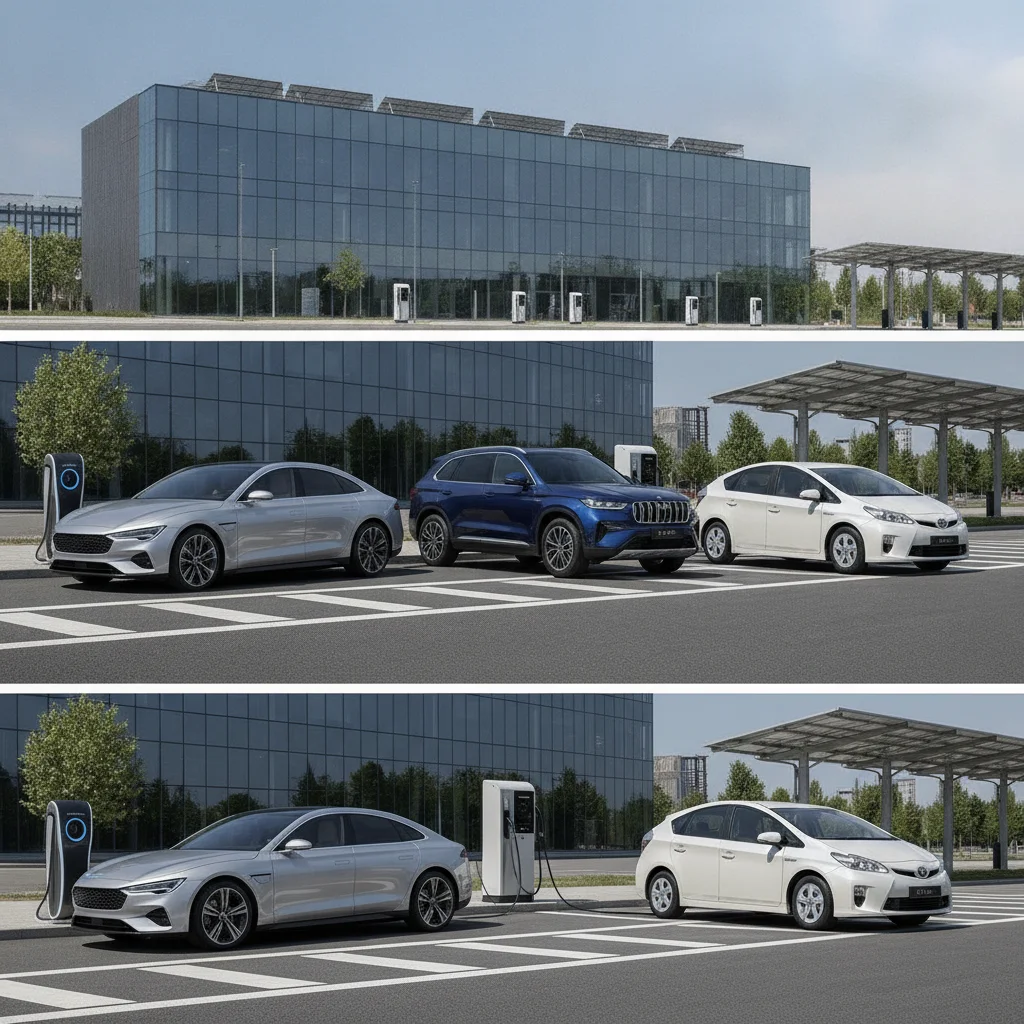
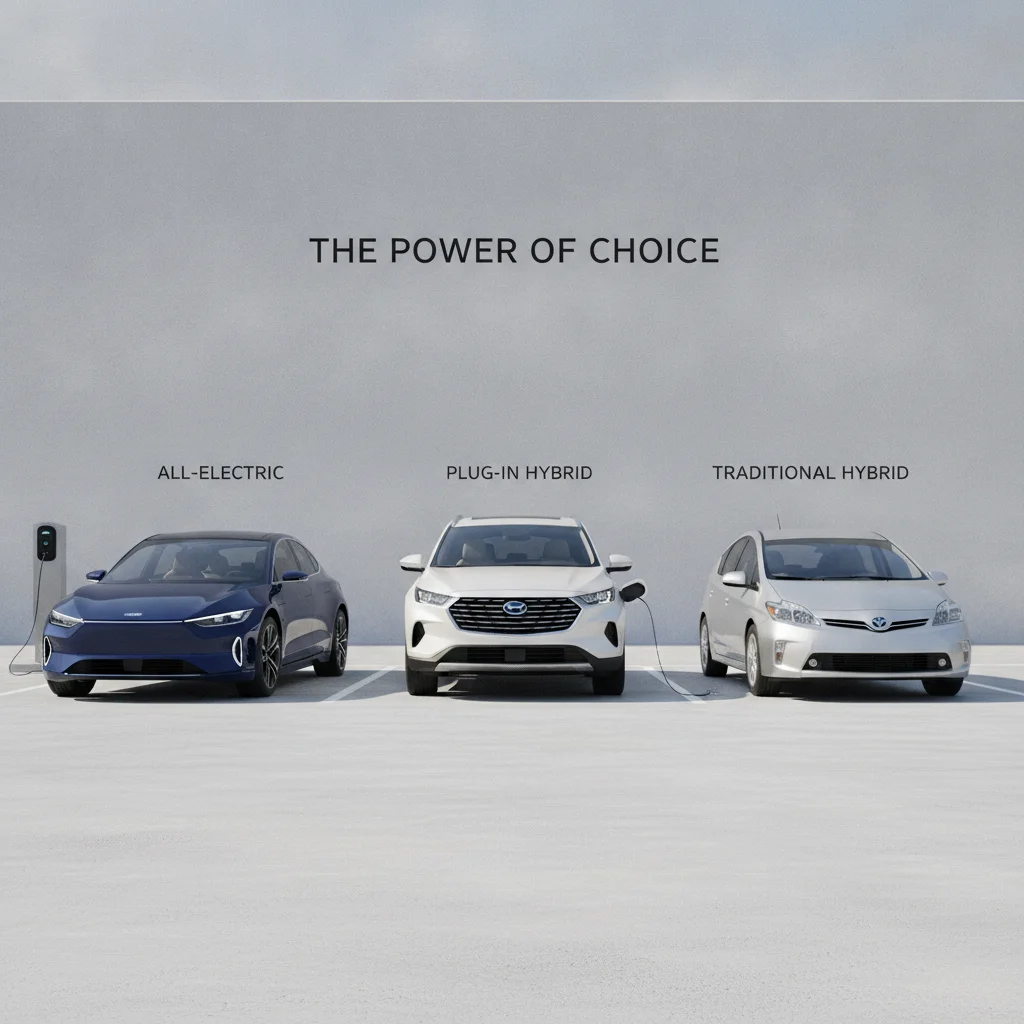
Buying an electrified vehicle isn't a single decision — it's a branching set of decisions that depend on how you live, where you drive, and how you spend money. The market now offers four distinct categories: battery electric vehicles (BEVs), which run entirely on electricity; plug-in hybrid electric vehicles (PHEVs), which pair a combustion engine with a rechargeable battery; hybrid electric vehicles (HEVs), which self-charge through regenerative braking and never plug in; and mild hybrids (MHEVs), which use a small electric motor to assist a gas engine but can't drive on electricity alone.
Salespeople, automaker marketing, and enthusiast sites all have a rooting interest in one category or another. This checklist doesn't. Work through these questions honestly and you'll have a defensible answer for which type actually fits your life — not just the one that looked good in a YouTube review.
For a broader framework that walks through the same categories in narrative form, see our Practical Decision Framework for choosing between electrified vehicle types.

Tools You'll Need Before You Start
These aren't power tools — they're data points. Gather them before working through the checklist so your answers are grounded in fact, not rough estimates.
90-Day Odometer Log or Trip Computer Data
Provides an accurate average daily and weekly mileage figure — the foundation for every range-related question in this checklist.
Most Recent Federal Tax Return (AGI)
Required to verify eligibility for the federal Clean Vehicle Credit, which has strict income limits that vary by filing status.
PlugShare or AFDC Station Locator
Maps public charging station availability and network type along your actual routes, not just in your general region.
fueleconomy.gov Clean Vehicle Credit List
The IRS-maintained list of currently eligible BEVs and PHEVs for the federal tax credit, updated in real time as vehicles qualify or lose eligibility.
Licensed Electrician (for home panel assessment)
Determines whether your home electrical panel can support a Level 2 charger and provides an installation cost estimate before you commit to a BEV or PHEV.
5-Year Total Cost of Ownership Calculator
Compares real purchase price, fuel, insurance, and maintenance across vehicle types — tools available at Edmunds, Consumer Reports, and the DOE's Alternative Fuels Data Center.
Your State DMV or Energy Office Website
Source for state-level EV rebates, HOV lane stickers, and registration fee reductions that vary significantly by state and vehicle type.
Your Home Insurance or Auto Insurance Provider
Lets you get a preliminary rate quote for each vehicle type you're considering before purchase, so insurance cost differences factor into your decision.
The Full Pre-Decision Checklist
Work through each group in order. Some questions have clear binary answers; others require you to think in ranges. Mark every item you can confidently answer "yes" or "confirmed" — gaps in your answers signal where you need more research before committing to a vehicle type.
Daily Driving & Commute Habits
Home Charging Access
Workplace & Public Charging Access
Financial & Incentive Eligibility
Lifestyle & Use-Case Fit
PHEVs Underperform When Owners Don't Plug In
A PHEV that never gets plugged in is essentially a heavy, expensive hybrid with a worse fuel economy than a comparable HEV — the extra battery weight works against you. If your parking situation makes regular charging inconvenient, a PHEV may not deliver the savings its specs suggest. Be honest with yourself about your actual charging behavior before choosing this category.
EPA Range Ratings Are Best-Case Numbers
Real-world BEV range typically runs 10–20% below the EPA estimate under normal driving conditions, and can drop 30–40% in cold weather or at highway speeds. Plan your decision around 75–80% of the rated range as your working assumption for daily and trip calculations. Don't size a BEV purchase to your average needs — size it to handle your worst-case days too.
Federal Tax Credit Timing Can Catch Buyers Off Guard
The federal Clean Vehicle Credit is claimed on the year's tax return, not deducted at purchase unless you use the Point-of-Sale transfer option introduced in 2024. If your tax liability for the year is less than the credit amount, you won't receive the full benefit — it is non-refundable. Confirm with a tax professional before factoring the full $7,500 into your purchase math.
Reading Your Results: What the Patterns Mean
Once you've worked through the checklist, look at where your answers cluster.
Strong BEV candidate if:
- Your daily mileage is well within the vehicle's rated range (plan for 70–80% of EPA range in real-world conditions)
- You have or can install Level 2 home charging
- You have access to DC fast chargers on your regular long-distance routes
- Your primary vehicle use is commuting and local errands, not open-ended road trips
- Your total cost of ownership math works, including any federal or state tax credits
Strong PHEV candidate if:
- Your daily commute falls within the PHEV's electric range (typically 20–50 miles depending on model)
- You have home charging but also take frequent long trips where charge infrastructure is uncertain
- You want the flexibility of gas as a backstop without full BEV range anxiety
- You qualify for the federal tax credit, which applies to many PHEVs
HEV is the practical default if:
- You have no reliable home charging option
- You drive high annual miles with variable trip lengths
- You want meaningfully better fuel economy than a conventional gas vehicle without any new charging behavior
- You tow or haul regularly and need predictable power output
No Home Charging Changes the Whole Equation
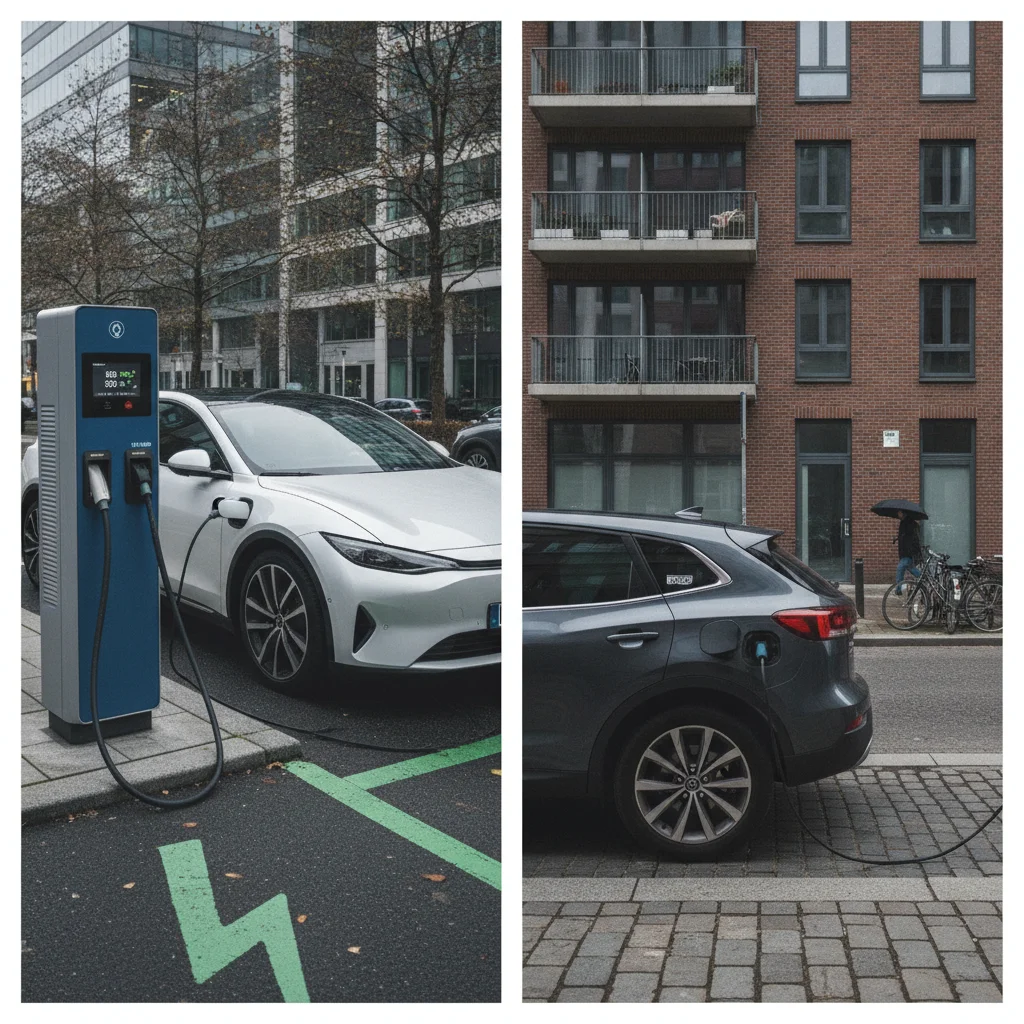
If you cannot reliably charge at home, a BEV becomes a significantly harder ownership proposition. You'll be dependent entirely on public charging for daily use, which is slower, less predictable, and more expensive than home electricity. In that scenario, a PHEV's gas-engine fallback carries real practical value — or an HEV may be the most sensible choice altogether. Do not buy a BEV assuming you'll figure out home charging later.
If you're still uncertain about charging access as a deciding factor, our article on how charging infrastructure should shape your EV type decision goes deeper on Level 1, Level 2, and DC fast charger availability by region.
And if home charging is genuinely off the table, the comparison shifts significantly — see BEV vs. PHEV when you can't always charge at home for that specific scenario.
Cost, Incentives, and Insurance: Don't Skip the Financial Layer
The sticker price comparison between a BEV, PHEV, and HEV is almost always misleading. Here's what to actually compare:
| Cost Category | BEV | PHEV | HEV |
|---|---|---|---|
| Purchase price premium vs. gas equivalent | High | Medium | Low–Medium |
| Federal tax credit eligibility (2024+) | Up to $7,500 | Up to $7,500 | None |
| Fuel cost per mile | Lowest | Low (if charged) / Medium (if not) | Medium |
| Routine maintenance cost | Lowest | Medium | Medium–Low |
| Insurance cost | Typically highest | Higher than HEV | Closest to conventional |
On insurance: BEVs and PHEVs typically carry higher premiums due to battery replacement costs and OEM repair complexity. Before you finalize a vehicle choice, it's worth understanding what EV-specific coverage questions to raise. Our guide on questions to ask an insurance agent before buying EV coverage covers the battery claims, OEM parts, and charging coverage issues that most buyers never think to raise until after they've signed.
For the fuel savings side of the equation, the Charging Costs & Savings hub has real-world calculators and cost-per-mile comparisons that make the math concrete.

Before You Walk Into a Dealership
This checklist is a pre-shopping tool, not a buying guide. Once you've worked through it and landed on a vehicle type, the next steps are:
- Confirm your federal tax credit eligibility using the IRS Clean Vehicle Credit tool or fueleconomy.gov — income caps and vehicle MSRP limits apply, and they change as manufacturer sales thresholds are hit.
- Get a home charging assessment before buying a BEV or PHEV. An electrician's quote for a Level 2 outlet (240V, 40–50 amp circuit) typically runs $200–$1,000 depending on panel proximity. Factor that into your total cost. See our Home Charging Setup hub for what to ask and expect.
- Check the battery specs on any BEV you're seriously considering. Rated range is a marketing number — usable capacity, thermal management design, and the charging curve matter more for real-world ownership. Our article on what to look for in an EV's battery specs will walk you through what to look for on the spec sheet.
- Test-drive all finalist types, not just your leading candidate. The driving feel difference between a BEV, a PHEV in EV mode, and an HEV is meaningful and subjective. Don't buy on paper alone.
The right electrified vehicle is the one that matches your actual life — not the one with the longest range or the lowest price. Work the checklist. Trust the data you gathered. And go in knowing your number before anyone starts talking monthly payments.

All claims are backed by peer-reviewed research. Sources on request.