Key Takeaways
Why Your Routine Matters More Than the Spec Sheet
Every car shopper comparing electrified vehicles eventually hits the same wall: the specs look great on paper, but nobody warns you about the habits you'll need to build — or break — once you drive off the lot. A 300-mile BEV range sounds liberating until you realize your apartment complex has zero charging. A PHEV's 35-mile electric range sounds modest until you do the math and realize it covers your entire commute five days a week.
The electrified vehicle market now spans at least five meaningfully different powertrain categories, each sitting at a different point on the disruption spectrum. To understand how they differ technically, our plain-language breakdown of how EVs work is a good foundation. But this article is about something more personal: how much will each category actually change the way you live?
Below, I've ranked all five major electrified vehicle types from least to most disruptive. This isn't about which one is best — it's about being honest with yourself before you sign anything. For a deeper decision framework once you've read through, see our practical guide to choosing between electrified vehicle types.
Mild Hybrid (MHEV) — Virtually Zero Disruption
If you want the marketing bullet point of "electrified" without changing a single habit, a mild hybrid is your answer. MHEVs use a small 48-volt battery and a belt-integrated starter-generator to recover braking energy and provide a brief electric boost during acceleration. The battery never propels the car on electricity alone, and it charges itself entirely through regenerative braking — you never plug in.
At the pump, you fill up exactly as you always have. Insurance, fueling logistics, and daily routine? Unchanged. The only difference you'll feel as a driver is marginally smoother stop-start behavior and, depending on the model, a small improvement in fuel economy — typically 5–15% compared to the non-hybrid equivalent.
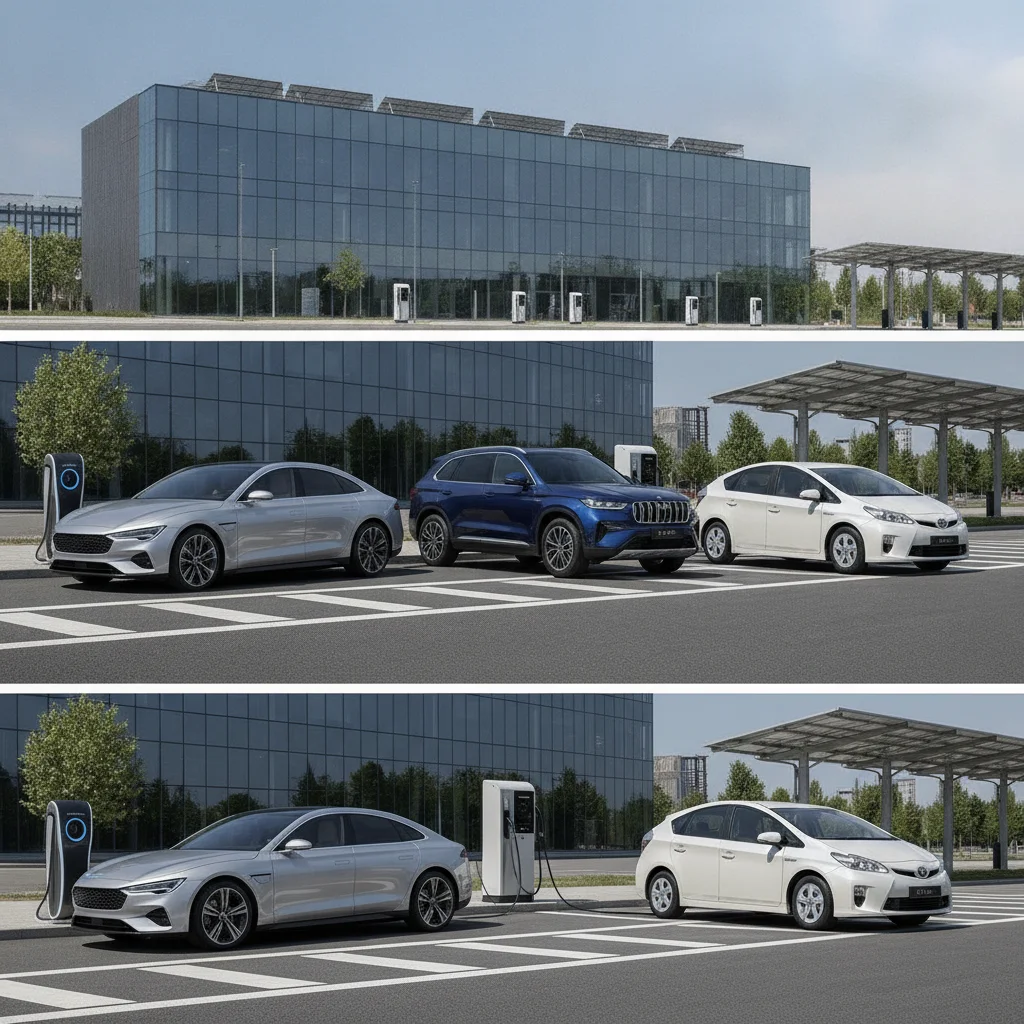
[in_content_images:0]The tradeoff is that MHEVs deliver the smallest environmental and fuel-cost benefit of any electrified category. You are paying a modest premium over a standard gas model for modest gains. For a fuller picture of where MHEVs sit on the electrification continuum, see our spectrum guide from MHEV to BEV.
Who it suits: Drivers who want improved efficiency but have no access to home charging, take long highway trips regularly, and aren't ready to think about plugs at all.
With an MHEV, you never plug in — your routine stays completely unchanged from a conventional gas car.
Full Hybrid (HEV) — Minor Habit Tweaks, Real Fuel Savings
Full hybrids — the category Toyota Prius made famous — go significantly further than mild hybrids. They carry a larger battery pack and can power the vehicle on electricity alone at low speeds and during light acceleration, typically up to about 25–35 mph. The battery still charges itself through regenerative braking and the combustion engine. No plug required.
The routine disruption here is still minimal. You fill up at gas stations as usual, though noticeably less often. Real-world fuel economy gains are substantial — 30–45% better than a comparable non-hybrid in many cases, with city driving delivering the biggest benefit because stop-and-go traffic is where regenerative braking shines most.
There are a few small behavioral adjustments worth noting. You'll find yourself coasting more deliberately to maximize regenerative braking. Some drivers initially find the electric-only glide at low speeds disconcerting (the car feels like it's drifting). And you may need to recalibrate your expectations around braking feel — regenerative systems often have a slightly different pedal response than pure hydraulic brakes.
Who it suits: Commuters with city or suburban driving patterns, ride-share drivers, or anyone who wants meaningful fuel savings without the infrastructure dependency of a plug.
Full hybrids can cut fuel consumption by 30–45% in city driving with zero changes to your fueling routine.
Plug-In Hybrid (PHEV) — Moderate Disruption, Maximum Flexibility
PHEVs are where the routine genuinely starts to shift. These vehicles carry a much larger battery than a standard HEV — typically delivering 20–50 miles of all-electric range — and they require plugging in to access that full electric potential. Run the battery down without charging and you're driving a standard (if somewhat heavier) hybrid. Charge it nightly and you could theoretically cover most weekday driving without touching a drop of gas.
The disruption here is real but manageable for most people. You need a way to charge — ideally a Level 2 home charger (240V), though a standard 120V outlet works for overnight top-ups given the smaller battery size. You develop a new habit: plugging in when you park, much like you do with a smartphone. Miss a few nights and the economics deteriorate quickly; PHEVs that run primarily on gas are expensive to operate relative to their price premium.
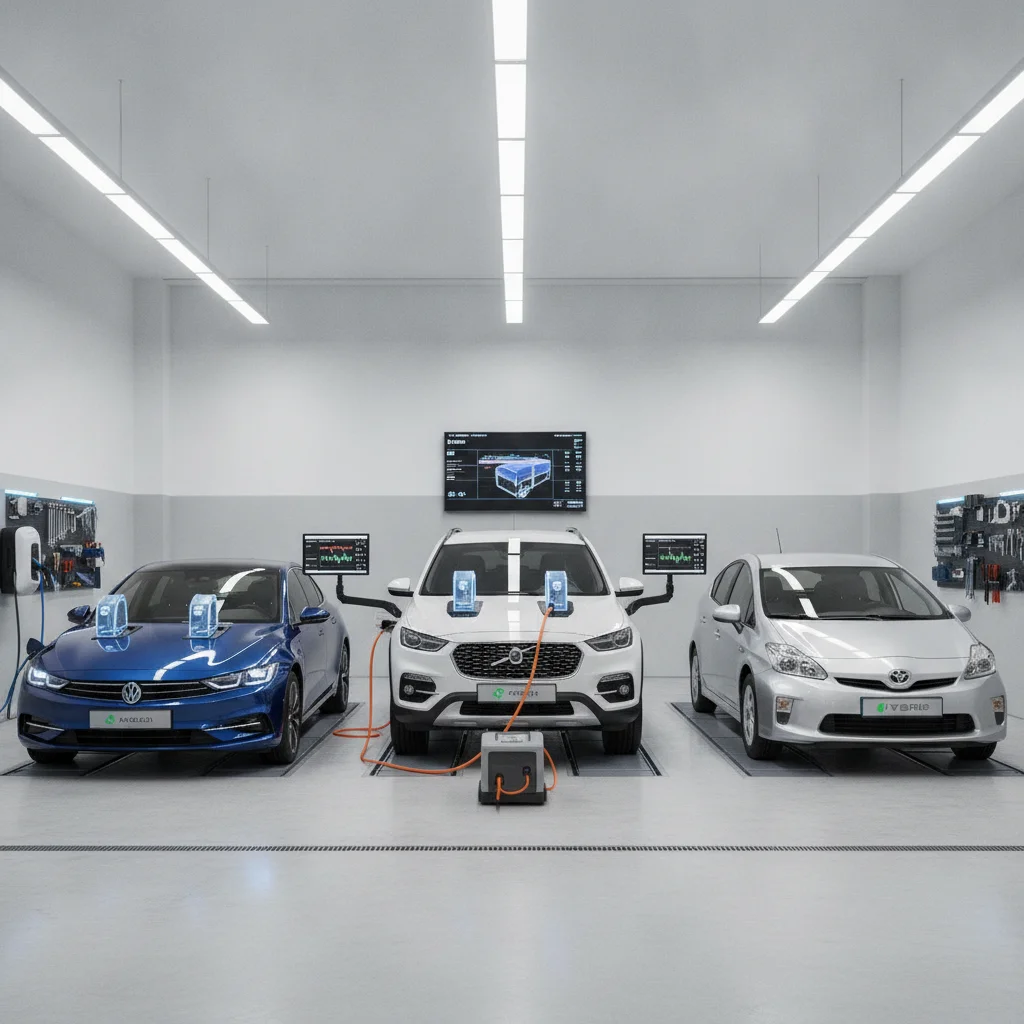
[in_content_images:1]The compelling upside is flexibility. Long road trip? Use gas. Daily commute under 40 miles? Run purely on electricity. This dual-mode capability is why PHEVs remain popular with drivers who aren't ready to commit fully to charging infrastructure — they eliminate range anxiety entirely while offering real electric driving.
One important caveat: PHEVs are the most maintenance-complex electrified category. They carry two complete powertrains, meaning more components that can wear out over time. Understand the long-term maintenance costs of PHEVs vs. other types before assuming the gas backup comes free.
Who it suits: Drivers with a mix of short daily commutes and occasional long trips, those with home charging access who aren't ready to go all-electric.
PHEVs offer genuine flexibility — all-electric daily commuting plus gas backup — but only if you actually plug in consistently.
Battery Electric Vehicle (BEV) — Significant Shift, Strong Long-Term Payoff
A full BEV eliminates the combustion engine entirely. No gas tank, no oil changes, no tailpipe. The routine change is the most significant of any category — except, for the right driver, it barely feels like a change at all.
The core adjustment is simple to describe but takes time to internalize: charging replaces fueling. If you have home charging (Level 2 strongly recommended), most BEV owners report that they spend less time on "fueling" than they ever did at gas stations — because the car is full every morning without them having to go anywhere. The disruption is almost invisible when home charging works seamlessly.
Where it becomes real disruption: apartment dwellers without dedicated parking, drivers who regularly exceed 200 miles in a day, people in areas with thin public charging networks, and anyone taking frequent long road trips. DC fast charging on road trips adds 20–40 minutes of planning per stop — not a dealbreaker, but a genuine routine change compared to a 5-minute gas fill.
[in_content_images:2]Range anxiety, while declining as battery technology improves, is still a psychological adjustment. Most BEVs now offer 200–350 miles of real-world range, and EPA estimates tend to be optimistic in cold weather or at highway speeds. Building in 10–15 minutes of route planning for long trips becomes second nature quickly, but it's not zero effort.
On the upside, the maintenance simplification is dramatic. No oil, no transmission fluid, fewer brake jobs (regenerative braking preserves pads), no spark plugs, no timing belt. The routine maintenance picture for BEVs is genuinely simpler and cheaper than any ICE vehicle over time.
Who it suits: Homeowners or drivers with reliable charging access, those with predictable daily mileage under 150 miles, and anyone whose road trips can accommodate 20–30 minute charging stops.
For drivers with home charging, a BEV often means less time 'fueling' than a gas car — not more.
Extended-Range EV (EREV) — Less Disruption Than a BEV, But a Niche Category
EREVs occupy a nuanced spot that most buyers overlook entirely. Vehicles like the Chevrolet Volt (discontinued) or the Nio ET-Range Extended operated primarily as battery electric vehicles but carried a small onboard combustion engine that acted purely as a generator — it never directly drove the wheels. The result was electric-first driving with a built-in range extender that charged the battery when it depleted.
The routine disruption sits somewhere between a PHEV and a full BEV. You plug in regularly to maximize electric-only miles. When the battery depletes on a longer trip, the generator kicks in and you stop at a gas station — but infrequently, and the gas tank is usually small. Day-to-day, if your electric range covers your commute, you barely interact with the gas system at all.
The practical challenge with EREVs is availability. This is the smallest and most fragmented electrified category in the U.S. market, and product selection is thin. Explore EREVs and FCEVs in detail if this category interests you — but go in knowing your choices are limited.
Who it suits: Drivers who want BEV-like daily operation with occasional gas backup but find PHEV's heavier gas-mode reliance unsatisfying. Best suited to enthusiasts willing to seek out specific models.
EREVs deliver BEV-like daily driving with a gas safety net, but the model lineup is thin and shrinking.
Fuel-Cell Electric Vehicle (FCEV) — Maximum Disruption, Maximum Range
Fuel-cell vehicles — the Toyota Mirai and Hyundai NEXO are the primary retail examples in the U.S. — generate electricity onboard by combining hydrogen with oxygen, emitting only water vapor. Technically they are electric vehicles, but they refuel at hydrogen stations in 3–5 minutes rather than plugging in.
On paper, that sounds like a BEV without the charging wait. In practice, FCEVs impose the most significant routine disruption of any electrified category — not because of the fueling process itself, but because of where you can do it. As of 2024, the vast majority of U.S. hydrogen stations are concentrated in California, primarily in the Los Angeles and San Francisco Bay Area corridors. Outside those zones, you essentially cannot operate an FCEV.
Even within California, hydrogen station downtime has been a persistent problem, with stations regularly out of service for maintenance or supply shortages. Several Mirai and NEXO owners have reported being stranded or forced to significantly reroute — a disruption that no PHEV or BEV driver with a 200-mile range would typically face.
The technology itself is compelling and has genuine long-term potential, particularly for heavy trucking and commercial fleets where charging downtime is more costly. But for the average consumer today, the infrastructure reality means FCEVs impose more daily planning burden than even a BEV in a charging-sparse area.
Who it suits: Very specifically: California residents near well-served hydrogen corridors who want fast refueling and zero tailpipe emissions. Almost nobody else can practically operate one today.
FCEVs refuel in minutes but hydrogen station scarcity makes them more restrictive than almost any other electrified type.
Before You Choose: Honest Questions to Ask Yourself
The ranking above gives you a useful framework, but your individual circumstances will shift where each category lands for you personally. Someone with a Level 2 charger in a private garage will barely notice the transition to a BEV. Someone in a dense city who street-parks will feel it intensely.
These Rankings Assume Average U.S. Driving Conditions
The disruption levels described here are generalizations based on typical U.S. driver profiles — suburban or urban commuters averaging 30–40 miles per day. Your specific situation may shift the rankings significantly. A rural driver with no nearby DC fast chargers will find BEV ownership far more disruptive than this ranking suggests. A city apartment dweller without dedicated parking may find even a PHEV harder to operate than expected. Use these rankings as a starting framework, not a final verdict.
A few dimensions matter most: your daily mileage relative to a vehicle's electric range, whether you have reliable home charging, how many long trips you take per year, and whether hydrogen fueling stations exist within a reasonable distance of your home (relevant only if you're considering an FCEV). The questions to ask before deciding which EV type to buy is worth working through systematically before you commit.
It's also worth thinking about total cost of ownership beyond just fuel. Routine maintenance costs differ significantly across these categories — MHEVs carry nearly full gas-car maintenance bills, while BEVs drop many line items entirely. See how maintenance costs differ across powertrain types over time. And if you're a high-mileage driver, the savings math looks very different than it does for someone who drives 8,000 miles a year — our comparison of how each type performs for high- vs. low-mileage drivers breaks that down clearly.
Start With Your Parking Situation
Before anything else, figure out whether you can install or access a Level 2 home charger. If you can, BEVs and PHEVs become dramatically more practical. If you can't, weight your comparison toward HEVs and MHEVs — or budget for reliable public charging access from day one. Charging logistics, not range specs, trip up most first-time EV buyers.
The electrified vehicle market will only expand from here. The category lines that feel sharp today — especially between PHEVs, EREVs, and BEVs — are blurring as battery costs fall and charging infrastructure grows. Understanding where each type sits now helps you make a confident purchase decision today while staying clear-eyed about how the landscape will evolve.

All claims are backed by peer-reviewed research. Sources on request.