Key Takeaways
Why EV Range Myths Persist — and Why They Matter
When a first-time buyer walks into an EV transaction, they almost always carry at least one piece of faulty range information with them. Maybe it came from a neighbor's bad road-trip story, a viral social media post, or a cable news segment about stranded drivers on a winter highway. Whatever the source, these myths have real consequences: they push hesitant buyers toward larger, more expensive battery packs they don't need, or away from EVs entirely.
Setting realistic range expectations is not just a consumer education exercise — it directly shapes purchasing decisions, long-term ownership satisfaction, and resale value. New EV owners are often surprised by real-world range variations, and the gap between expectation and reality is almost always explained by factors that are measurable, predictable, and manageable.
Below, I've assembled the most persistent EV range myths I've encountered covering this segment for years — paired with what the data and engineering actually say. Some myths contain a kernel of truth that's been badly distorted. Others are nearly pure fiction. All of them deserve a clear-eyed correction.
The Myths vs. The Facts
Each of the following myth-fact pairs addresses a specific, commonly held belief. Read them sequentially or jump to the one causing you the most doubt.
Myth
EVs are only good for short city trips — they can't handle highway driving without constant stops.
Fact
Most modern long-range BEVs are rated above 250 miles EPA, and highway charging stops average 20–30 minutes at DC fast chargers, comparable to a gas stop with a meal break.
This myth was grounded in early-generation reality. The 2011 Nissan Leaf offered 73 miles of EPA range; highway driving at 70 mph could cut that to 50 miles or less. But the technology has moved dramatically. The 2024 model year offers multiple vehicles — the Tesla Model Y Long Range, Hyundai IONIQ 6, Mercedes EQS, Chevrolet Silverado EV — rated above 300 miles EPA.
On highway trips, range does drop relative to EPA figures because EPA testing doesn't replicate sustained 70–75 mph cruising. A 300-mile EPA vehicle might deliver 240–260 miles at highway speeds. But that still means stops roughly every 2–2.5 hours — a cadence many road-trippers already use for fuel, food, and rest. DC fast chargers now routinely deliver 150–350 kW, adding 100–200 miles of range in 20–30 minutes on compatible vehicles.
The charging network gaps that made long-distance EV travel genuinely stressful in 2018 have narrowed considerably, particularly along major interstate corridors. The experience varies by brand, region, and charger reliability — but the blanket statement that EVs can't handle highway travel is no longer defensible with current data. For a detailed breakdown of where the EPA figure diverges from real-world performance, see why your EV's rated range and real-world range never match.
Myth
Cold weather will kill your EV's range so severely that the car becomes unreliable in winter.
Fact
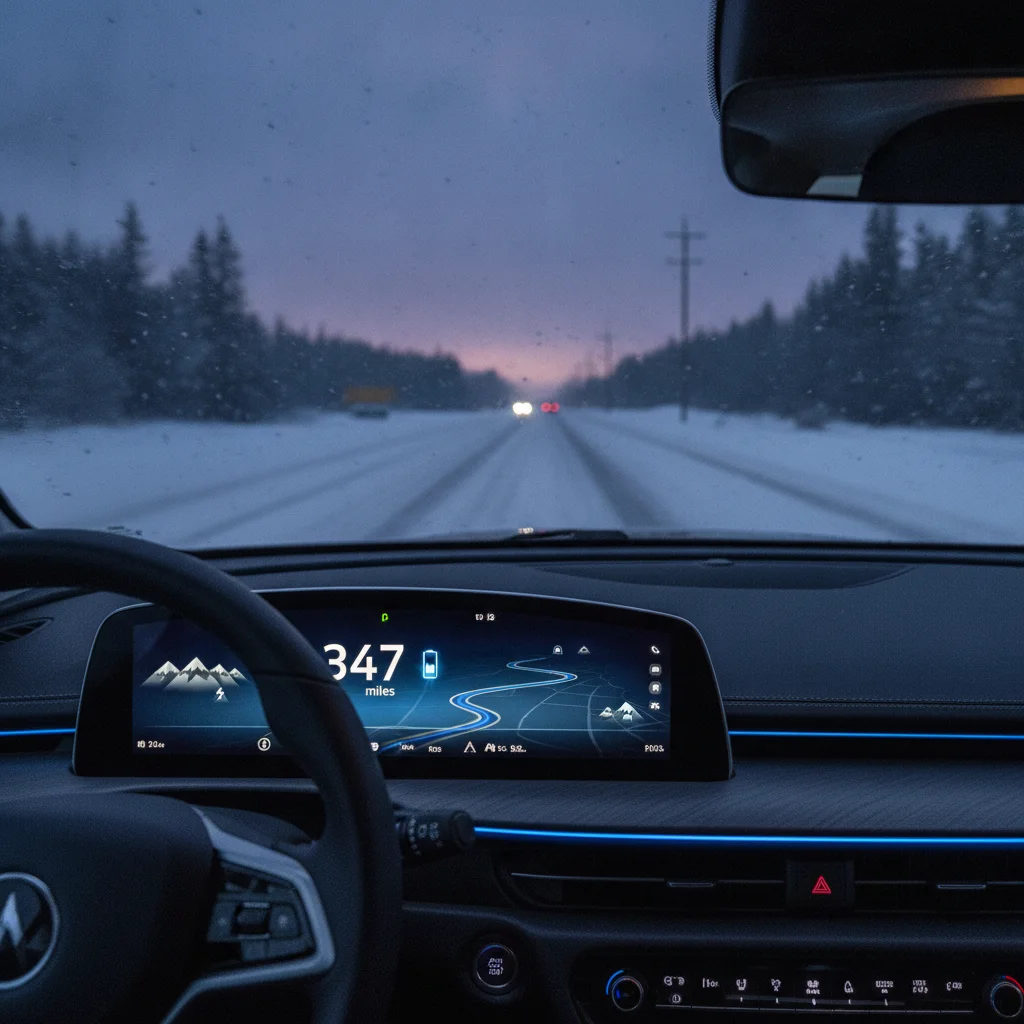
Cold weather reduces range meaningfully — typically 20–40% in severe conditions — but the effect is predictable, manageable, and does not render modern EVs unreliable.
Winter range loss is one of the few EV myths that contains a legitimate core. Lithium-ion cells do operate less efficiently at low temperatures, and electric cabin heating draws energy that a gas engine would provide as waste heat for free. A AAA study found average range loss of approximately 41% when the temperature dropped to 20°F with the heater running — a figure that sounds alarming until you contextualize it.
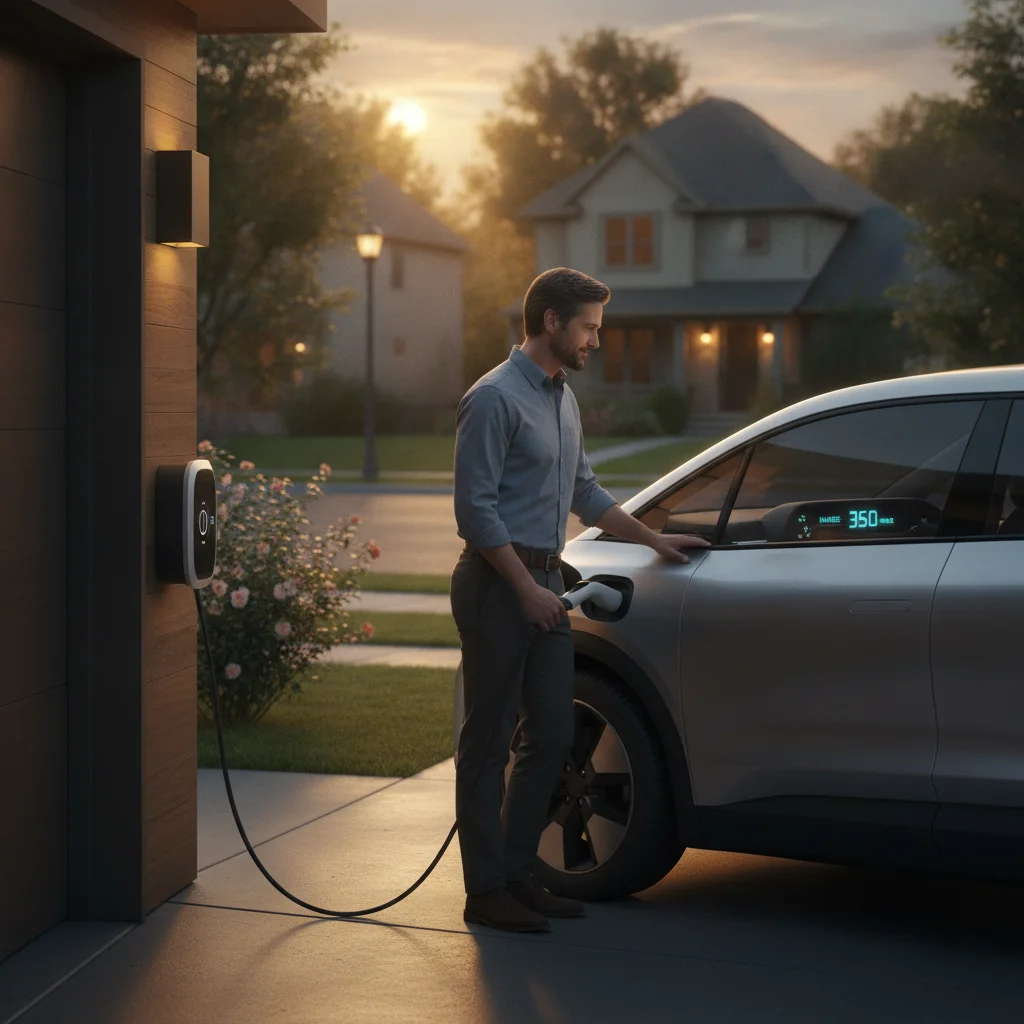
A vehicle rated at 300 miles EPA would deliver roughly 177 miles under those conditions. For most drivers, that remains more than sufficient for days of normal use. Home charging overnight means you start each cold morning at your target state of charge rather than worrying about a depleted battery. Preconditioning — warming the cabin while still plugged in — reduces the in-drive heating load and partially recovers the winter range penalty.
Heat pump systems, increasingly standard across the segment, reclaim ambient heat rather than generating it resistively, cutting heating energy consumption by 30–50% compared to resistive heaters alone. Cold-weather range loss is a real variable to plan around, particularly for drivers in Minnesota, Michigan, or similar climates — but it is a calculable variable, not an existential reliability failure.
Myth
Frequently using DC fast chargers will rapidly destroy your battery.
Fact
DC fast charging does cause incremental additional degradation compared to Level 2 charging, but real-world data shows the effect is modest when thermal management systems are functioning properly.
The physics here are real: faster charging generates more heat, and heat is the primary enemy of lithium-ion longevity. This has led some EV advocates to recommend avoiding DC fast charging almost entirely — advice that overcorrects based on early data and ignores how battery thermal management has evolved.
Recurrent Auto's analysis of tens of thousands of EVs in real-world use found that vehicles primarily using Level 2 home charging showed somewhat better long-term range retention than those using DC fast charging as their primary method. But the difference was measured in single-digit percentage points over years of use, not the catastrophic degradation the myth implies.
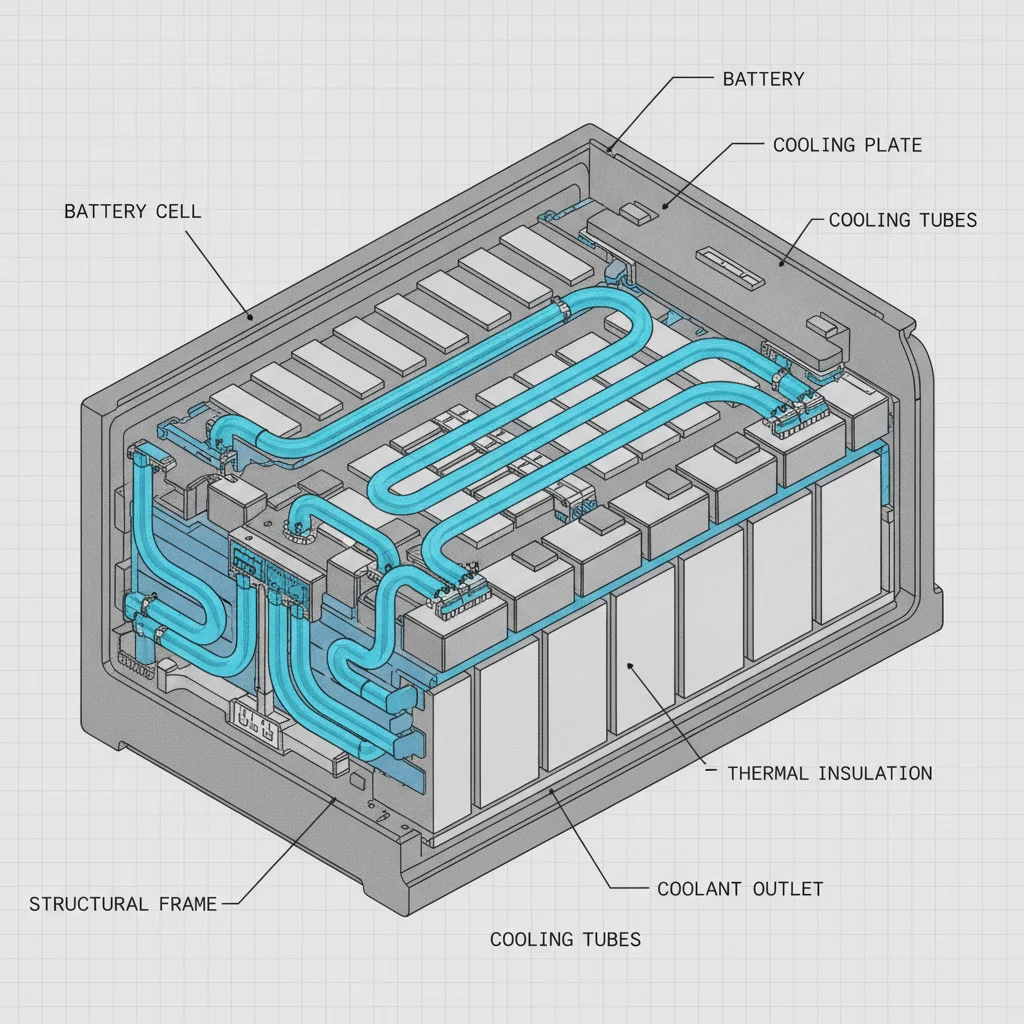
Modern EVs actively manage cell temperature during fast charging. Vehicles with liquid-cooled battery packs — the majority of current mainstream EVs — throttle charging speed if the pack overheats, protecting chemistry at the expense of charge speed. The practical guidance: use Level 2 home charging for daily needs, use DC fast charging on road trips without guilt, and avoid repeated back-to-back fast charging sessions in extreme heat without allowing the pack to cool between sessions. That's prudent battery hygiene, not avoidance.
[warning_callout]Myth
Software updates will consistently improve your EV's range as the car ages.
Fact
OTA updates can refine battery management and recalibrate range estimates, but they cannot reverse physical battery degradation or substitute for electrochemical capacity.
Tesla's early OTA updates generated significant coverage when they appeared to restore range on vehicles that had degraded — or unlock additional capacity on battery packs that had been software-limited at delivery. This created a broadly held expectation that software updates would continuously improve range over a vehicle's life, effectively aging in reverse.
The reality is more nuanced. Software can optimize how the battery management system uses available capacity, improve regenerative braking algorithms, refine energy consumption in climate control, and correct overly conservative range estimates that underreported actual available capacity. These are genuine improvements — OTA updates do meaningfully change what your EV can do.
But software operates within the constraints of physical chemistry. A battery cell that has lost 10% of its lithium inventory to side reactions cannot recover that capacity through firmware. There are hard limits to what software updates can and cannot change about EV range. Buyers who bank on future software gains to justify purchasing a vehicle with currently marginal range are taking a speculative risk the data doesn't support.
Myth
A bigger battery always means better real-world range.
Fact
Battery size is one factor among several; vehicle weight, aerodynamics, and efficiency (miles per kWh) determine real-world range more than gross capacity alone.
Raw kilowatt-hour figures are prominently marketed and easy to compare — which is precisely why they dominate buyer thinking disproportionately. But efficiency, expressed as miles per kWh or Wh/mile, is the variable that actually determines how far a given energy store takes you.
Consider the contrast: the Hyundai IONIQ 6 RWD long-range achieves approximately 4.0 miles/kWh in real-world testing despite a 77.4 kWh pack (roughly 74 kWh usable), yielding EPA-estimated 361 miles. A larger truck-based EV with a 200 kWh pack might deliver only 2.0 miles/kWh due to its mass and aerodynamic profile — producing similar or worse range despite carrying 2.5 times the energy.
Aerodynamic drag coefficient, vehicle curb weight, tire rolling resistance, and drivetrain efficiency all feed into the miles-per-kWh figure. A sleek sedan with a Cd of 0.22 will consistently outperform a boxy crossover with a Cd of 0.35, even if the crossover has a larger battery. Shoppers focused purely on kWh are reading only one chapter of the range story.
Myth
Once range degrades, the resale value of an EV collapses.
Fact
Battery degradation rates on modern EVs are slower than commonly feared, and resale values are influenced by far more variables than state of health alone.
Residual value anxiety drives some buyers away from EVs entirely, based on a mental model of rapid, linear battery decay. The data from real-world fleet analysis tells a different story. Recurrent's tracking of over 15,000 EVs found that the majority retained more than 90% of their original range after 100,000 miles under normal use conditions — with outliers skewing the narrative disproportionately.
EV resale values are influenced by incentive policy changes, new model releases, charging network expansion milestones, and broader market sentiment — often more sharply than by individual vehicle state of health. EV resale timing swings with news cycles and narrative moments in ways that have little to do with the battery in your specific car.
This doesn't mean battery health is irrelevant to resale — a vehicle with documented significant degradation will attract lower offers. But the myth that all EVs suffer dramatic value collapses due to range loss conflates outlier cases (early Nissan Leafs without active thermal management in hot climates) with the broader market reality of modern, actively managed packs.
41%
Average range loss at 20°F with heater on
AAA testing found EVs lose approximately 41% of rated range in cold weather with cabin heating active, compared to EPA estimates measured in controlled conditions.
~37 miles
Average American daily driving distance
U.S. Department of Transportation data consistently shows Americans average around 37 miles per day — well within the daily range of any modern BEV.
>90%
Range retained after 100,000 miles
Recurrent Auto's analysis of over 15,000 real-world EVs found the majority retained more than 90% of original range capacity past 100,000 miles of use.
15–25%
Range reduction at 75 mph vs. 65 mph
Independent real-world testing shows sustained highway speeds above 70 mph can reduce EV range by 15–25% compared to mixed-cycle EPA estimates.
361 mi
Top EPA-rated mainstream EV range (2024)
The Hyundai IONIQ 6 RWD long-range leads mainstream 2024 EV EPA ratings at 361 miles, illustrating how far the market has moved from first-generation range figures.
The Variables That Actually Drive Real-World Range
Understanding why myths form in the first place requires understanding which variables have the largest measurable impact on range. Most myths exaggerate one variable while ignoring others, creating a distorted picture.
Speed Is the Dominant Factor on Highways
Aerodynamic drag increases with the square of velocity. Driving at 75 mph rather than 65 mph doesn't add a modest penalty — it can reduce range by 15–25% depending on the vehicle's drag coefficient. This is the primary reason EPA-rated range and real-world highway range diverge so sharply. The EPA test cycle averages well below highway cruising speeds.
Ambient Temperature Attacks From Two Directions
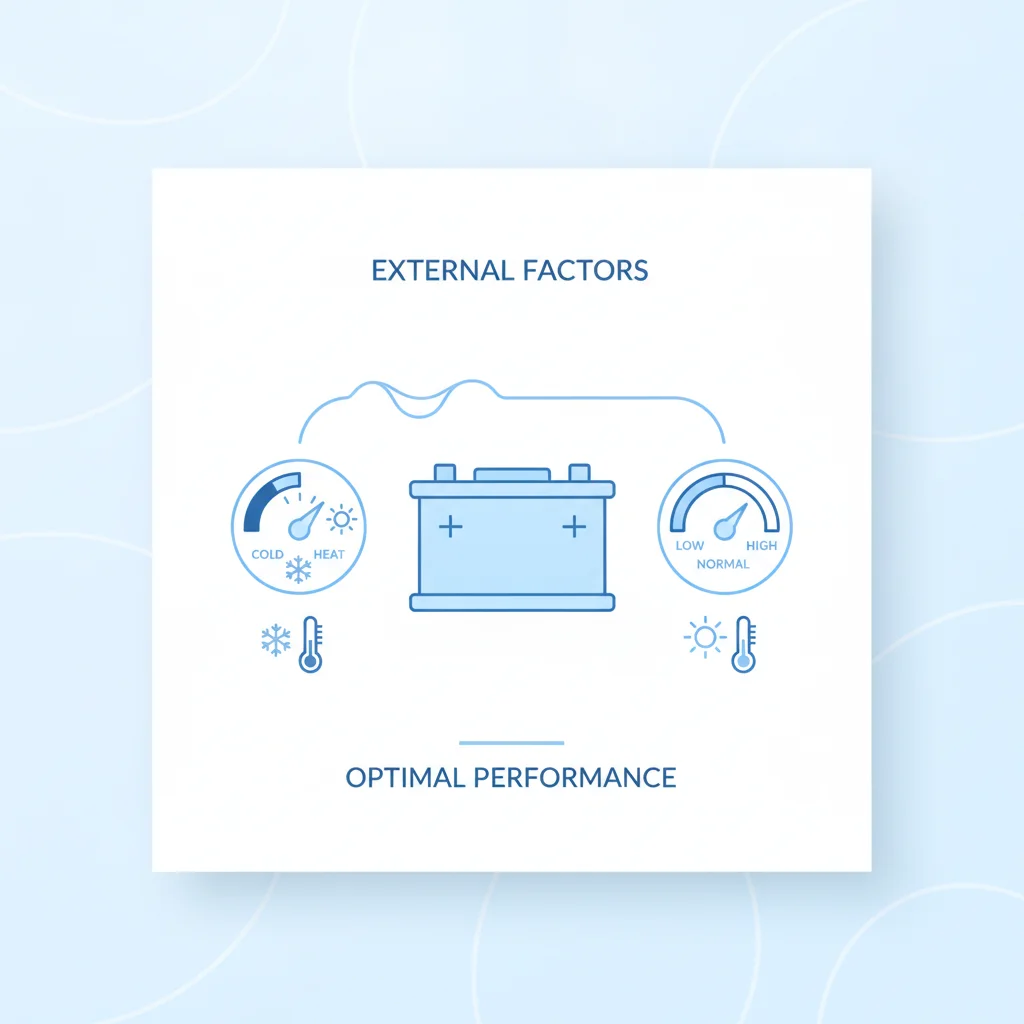
Cold weather reduces range both by slowing electrochemical reactions inside lithium-ion cells and by increasing the energy load of cabin heating. Unlike a gas engine that produces waste heat as a byproduct, a battery-electric vehicle must generate cabin heat electrically — a significant parasitic draw. Heat pumps, now standard on many new EVs, recover some of this energy but don't eliminate the penalty entirely.
State of Charge Windows Matter More Than Total Capacity
Battery management systems on virtually every modern EV protect the pack by limiting charging to around 80% for daily use and preventing discharge below roughly 10–15%. This means a 75 kWh pack is rarely delivering all 75 kWh to the motor in practice. Buyers who focus solely on total battery size without understanding usable capacity are working with incomplete data.
Don't Ignore Thermal Management Quality
Not all EVs manage battery heat equally well. Early Nissan Leaf models used passive air cooling and suffered accelerated degradation in hot climates — a real-world failure that seeded lasting battery anxiety myths. Before purchasing, verify that the vehicle uses active liquid thermal management, which is standard on most current mainstream BEVs. This single specification has more bearing on long-term battery health than charging habits alone.
Avoid Oversizing the Battery Based on Worst-Case Scenarios
Buying a 400-mile EPA vehicle because you're worried about a single annual ski trip is a common and expensive overcorrection. The cost premium for additional battery capacity is significant, and a 250-mile vehicle with good fast-charging support handles the vast majority of road trips with planned stops. Model your actual use case, not your worst-case anxiety.
Payload and Accessories Add Up
A fully loaded SUV towing a small trailer will see range drops of 30–50% depending on conditions — not because the vehicle is defective, but because towing is one of the highest-energy activities any vehicle performs. Similarly, running heated seats, a rear defrost, and a powerful audio system simultaneously chips away at the range estimate displayed on your dash.
For a deeper look at where EV drivers consistently go wrong when planning longer trips, see EV range planning mistakes that leave drivers stranded.
The Range Anxiety Paradox
Here's what makes range anxiety particularly interesting from a data perspective: it is simultaneously one of the most cited barriers to EV adoption and one of the least justified by actual driving patterns. Most EV owners drive fewer than 40 miles daily, yet range anxiety remains the top purchase barrier. A vehicle rated at even 220 miles of EPA range — on the conservative end of today's market — provides five days of typical driving before needing a charge.
The anxiety tends to spike around edge cases: the annual family road trip, an unexpected detour, a charging station that's out of service. These are real concerns worth planning for, but they're outliers, not the norm. Planning tools, in-car navigation that routes through chargers, and a modest familiarity with public charging networks address most of them.
It's also worth noting that range anxiety is largely a battery-electric vehicle concern that hybrid and plug-in hybrid owners don't share. If the anxiety feels too high a barrier for a full BEV right now, a PHEV can serve as a practical bridge. The EV Types Explained hub covers the tradeoffs across BEV, PHEV, and HEV formats in detail.
Range Anxiety Doesn't Reflect Average Driving Reality
The majority of American drivers travel fewer than 40 miles on any given day — a distance achievable by virtually every BEV on the market today on a single charge. Range anxiety is a statistically outsized fear relative to actual daily driving needs. Before letting it drive you toward a more expensive battery configuration or away from an EV entirely, calculate your real median daily mileage and compare it to the vehicle's usable range after a standard overnight Level 2 charge.
Software Updates and Range: Separating Hope From Reality
Over-the-air updates have become one of the most misunderstood range variables in the EV space. They generate headlines — sometimes breathless ones — when automakers push updates that restore or improve range estimates. But the mechanics of what software can and cannot do are frequently misrepresented.
Over-the-air updates can recalibrate range estimates and unlock capacity, but there are real limits. Software controls how the battery management system reads cell voltages, how aggressively regenerative braking recaptures energy, and how the thermal management system responds to conditions. Improvements in these areas can yield genuine range gains — but they are refinements, not transformations.
What software cannot do is add lithium to the cathode material, replace degraded electrolyte, or rebuild the physical structure of cells that have aged. When a battery loses capacity due to cycle aging or thermal stress, no firmware update reverses that loss. Understanding what EV software updates actually fix under the hood helps buyers set realistic expectations about the longevity of range over a vehicle's life.
The practical implication: don't choose an EV with marginal range today on the assumption that software will rescue you later. Buy the range you need now, and treat any software-delivered improvements as a welcome bonus rather than a planned outcome.
Making a Smarter Range Decision
Once the myths are cleared away, the range decision becomes more tractable. A few practical steps help buyers land in the right place:
- Calculate your actual daily mileage. Pull 90 days of driving data from your current vehicle's odometer if possible, or use a navigation app's history. Most buyers overestimate their daily distance.
- Identify your two or three longest annual trips. Map chargers along those routes using PlugShare or a manufacturer's native app. If fast chargers are spaced within 150 miles of each other, nearly any modern long-range EV handles the trip.
- Apply a realistic range buffer. Assume you'll see 80–85% of the EPA figure in temperate conditions and 60–70% in sustained cold-weather or high-speed highway driving. Size the battery accordingly.
- Check the usable capacity, not just the gross figure. Manufacturers publish or confirm usable kWh on request, and independent reviewers like Bjorn Nyland systematically test real-world range at highway speeds.
- Factor in home charging. An EV that starts each day at 80% charge from a Level 2 home charger eliminates the range anxiety equation for the overwhelming majority of daily trips.
For a fuller picture of ownership costs beyond range — including how insurance interacts with EV-specific risks — the EV Insurance Guide is a practical next stop. And if you're curious how other EV myths beyond range hold up to scrutiny, Common EV Myths That Confuse First-Time Buyers covers the broader misconception landscape with the same data-first approach.

Range is a real variable, not a marketing abstraction. But it is also a predictable, manageable one — once you replace the myths with the actual numbers.
All claims are backed by peer-reviewed research. Sources on request.