Key Takeaways
EV Over-the-Air (OTA) Range Update
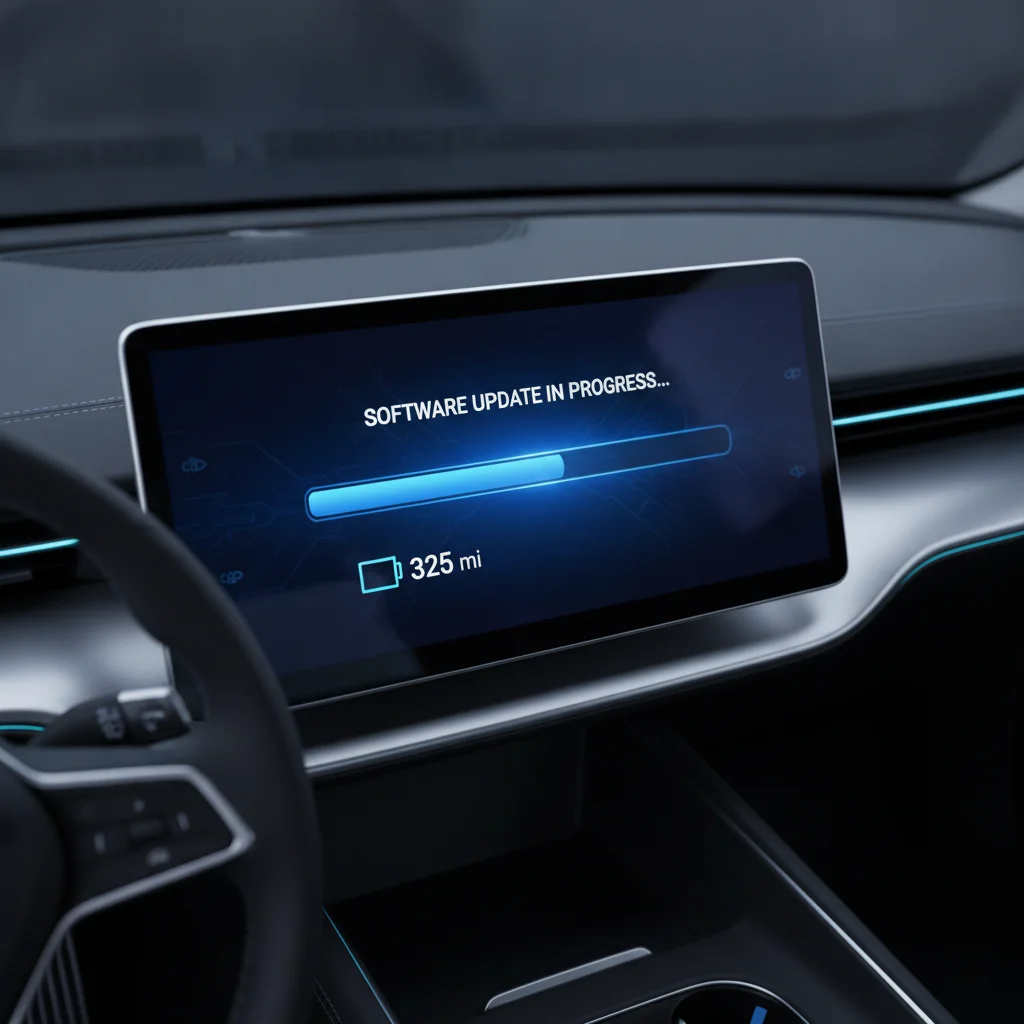
An over-the-air (OTA) range update is a wireless software change pushed by an EV manufacturer that alters how the vehicle's battery management system estimates, displays, or physically accesses driving range. These updates can recalibrate the range estimator algorithm, adjust how much of the battery pack is usable, or modify energy draw from components like climate control and motors. They work entirely through software — no physical hardware changes are involved.
Battery management system (BMS) firmware governs charge thresholds, thermal limits, and state-of-charge calculations. An OTA update targeting the BMS can shift the effective usable window of the pack — for example, unlocking capacity previously held in reserve — but cannot alter the electrochemical energy density of the cells themselves.
The Promise and the Reality of OTA Range Updates
The headline writes itself: "Software update adds 15 miles of range overnight." It sounds like getting a free upgrade to a newer car while you sleep. For EV owners watching their battery capacity estimates, the appeal is obvious — and manufacturers have leaned into it. But when you look past the press releases and forum excitement, a more nuanced picture emerges.
Over-the-air software updates are a genuine engineering tool. They allow manufacturers to refine battery management, correct estimation errors, and occasionally unlock capacity that was deliberately held back at launch. These are real benefits. The problem is the gap between what software can do and what buyers expect it to do — a gap that feeds into persistent myths about EV range that confuse first-time buyers.
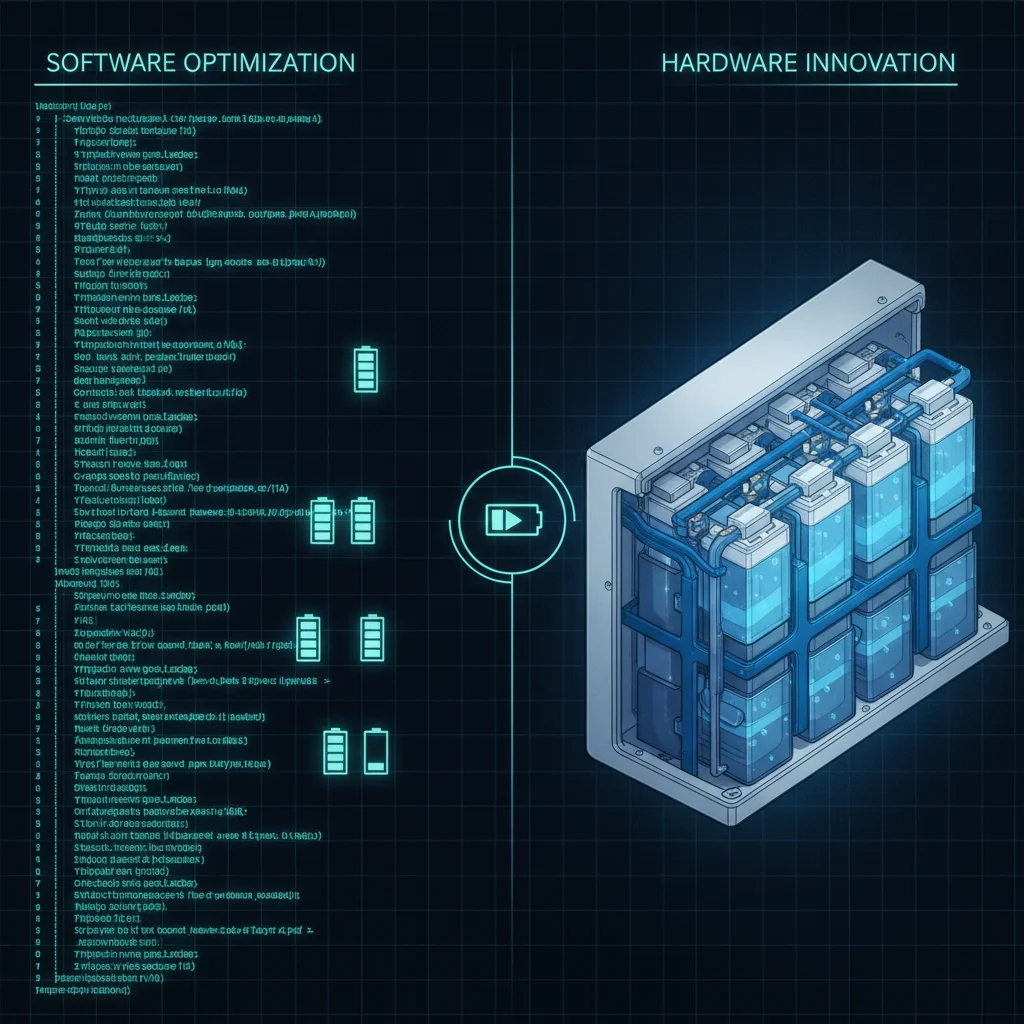
This article draws a clear line: here is what software updates genuinely change, here is what they cannot touch, and here is how to interpret the data when a manufacturer announces a range improvement via OTA.
What Software Updates Can Actually Change
To understand what an OTA update can affect, you need a basic model of how EV range is calculated and controlled. The battery management system (BMS) is the central actor. It monitors cell voltages, temperatures, and state of charge in real time, and it enforces the upper and lower charge limits that define how much energy is actually accessible to the driver.
Range Estimation Algorithms
Every EV displays a range estimate — a number derived from current battery state, recent energy consumption history, and sometimes navigation data. These algorithms can be imprecise. A vehicle that underestimates range causes unnecessary anxiety; one that overestimates causes drivers to run out of charge. OTA updates can recalibrate the estimation model, incorporating more driving scenarios or weighting recent consumption differently. The result: a more accurate number on the dashboard, even if the underlying energy in the battery hasn't changed.
Usable Battery Buffer Adjustments
Manufacturers typically reserve 5% to 15% of the battery pack's total capacity as a buffer — energy that's present in the cells but not made accessible to the driver. This protects against deep discharge events that accelerate degradation. At launch, some manufacturers set conservative buffers while they gather real-world data on how the cells perform. A subsequent OTA update can loosen those limits, making more of the pack available and increasing effective range without adding a single new cell.
This is the mechanism behind some of the most celebrated range updates in EV history. It is also why those gains can't be repeated indefinitely — once the buffer is optimized, there's no more slack to release.
1%–5%
Typical range gain from OTA buffer adjustments
Analysis of documented OTA updates across major EV brands shows most legitimate range improvements fall within this band; gains above 5% are rare and typically involve unlocking hardware that was intentionally restricted at launch.
20%–40%
Range reduction in sub-freezing temperatures
U.S. Department of Energy research found EV range drops an average of 41% in very cold weather when cabin heat is used, a physical reality no software update can eliminate.
5%–15%
Typical manufacturer battery buffer at launch
Most EV manufacturers hold back a portion of rated cell capacity as a protective buffer; some of this margin has historically been released via OTA updates as real-world cell performance data accumulates.
~2%–3%
Annual average EV battery degradation rate
Recurrent's analysis of over 15,000 EVs found average annual degradation of around 2.3%, a chemical process software updates cannot reverse but can more accurately reflect in range estimates.
Thermal Management and Charging Behavior
Software governs how aggressively the vehicle pre-conditions the battery before charging or driving, and how it balances power draw between the motor, climate system, and auxiliary electronics. Better thermal management means cells operate in their optimal temperature range more consistently, reducing waste. Smarter energy routing can shave a few percent off consumption in certain conditions. These gains are real but incremental, and they interact with ambient conditions in ways that make them hard to isolate.
OTA Capability Varies by Make and Model
Not every EV can receive over-the-air updates. Tesla pioneered true fleet-wide OTA capability, and brands like Rivian, Lucid, Ford (on the Mustang Mach-E and F-150 Lightning), and GM (on Ultium-based vehicles) have followed with robust update systems. However, many older EVs and some current budget models still require a dealer visit for firmware changes. If OTA updates are important to you, verify the capability before purchase — it is a meaningful differentiator in the long run.
Range Estimate vs. Actual Consumption: Know the Difference
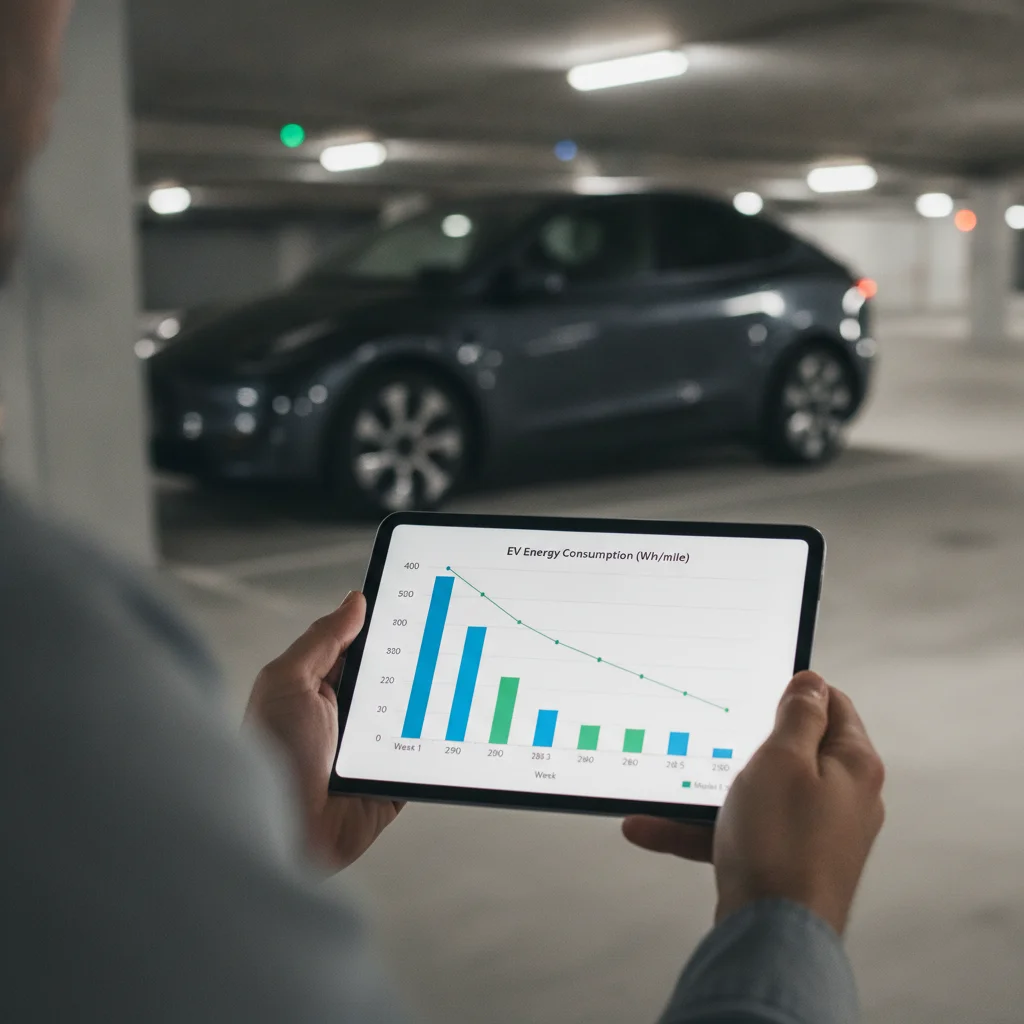
The range number displayed on your dashboard is a software estimate, not a direct measurement of remaining energy. It can shift after an update even if nothing physically changed in the battery. For accurate tracking of real efficiency, monitor your vehicle's energy consumption in watt-hours per mile (Wh/mi) — available in most EVs' trip data menus. This figure is far harder to manipulate with algorithms and gives you a true picture of how your driving style and conditions affect efficiency.
Long-Term Range and Insurance Considerations
Battery capacity and range can affect how insurers and lenders value your EV over time. Significant undisclosed range reductions from OTA updates could theoretically affect resale value and, in some cases, gap insurance calculations. If you notice a material, unexplained drop in range after an update, document it and consult your dealer. For a broader look at EV ownership costs, the <a href="/electric-vehicles/ev-ownership-costs/ev-insurance-guide">EV insurance guide</a> covers how coverage and premiums differ from gas vehicles.
Motor and Inverter Efficiency Tuning
The software controlling how electrical energy is converted to mechanical motion — torque maps, regenerative braking aggressiveness, one-pedal driving calibration — can be updated to extract slightly more efficiency from the drivetrain. Regenerative braking improvements, for example, can meaningfully increase range in stop-and-go urban driving even when highway range is unaffected.
Track Consumption, Not Just the Range Display
Before and after any software update, log your energy consumption in Wh/mi on a consistent route under similar conditions. This is the only reliable way to determine whether an update genuinely improved efficiency or simply recalibrated the estimate. Most EVs display this data in their trip computer or companion app.
Verify Before You Celebrate a Range Gain
When an OTA update increases your displayed range, check owner forums and automotive media for independent verification before assuming a real-world improvement. Algorithm changes can inflate the estimated range number without improving actual energy efficiency. Consistent consumption tracking over several weeks will tell you whether the gain is real.
What Software Cannot Change
This is the part that rarely gets equal coverage. Physics imposes hard ceilings on what any software revision can accomplish, and buyers who don't understand those ceilings end up disappointed — or misled.
Electrochemical Energy Density
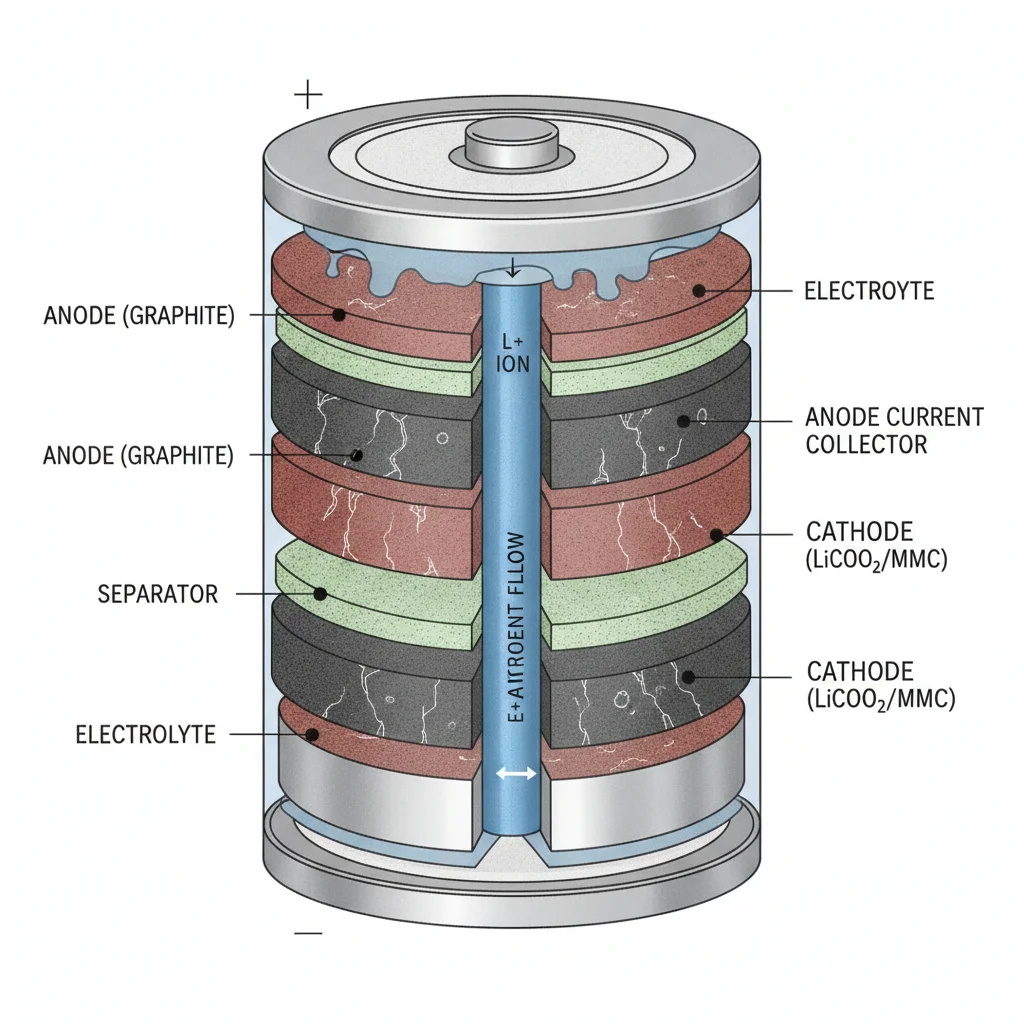
A lithium-ion cell stores energy through a chemical process. The amount of energy that can be stored per kilogram of cell material is determined by the cell chemistry and physical design — not by software. No firmware update can make a 75 kWh pack store 85 kWh. The energy simply isn't there. When a manufacturer announces a "range improvement" via OTA, they are always describing a change in how existing energy is managed or reported, never an increase in total stored energy.
Battery Degradation
Over time, repeated charge-discharge cycles, heat exposure, and other factors cause the active materials inside cells to degrade. A pack that once delivered 250 miles of real-world range may only deliver 220 miles after five years of use. This is a chemical and physical process. Software can recalibrate how the BMS reports remaining capacity — making the estimate more accurate — but it cannot restore lost electrochemical capacity. Real-world range and rated range already diverge from day one; degradation widens that gap over years of ownership.
Aerodynamic Drag and Rolling Resistance
At highway speeds, aerodynamic drag is the dominant energy consumer. The drag coefficient of a vehicle is fixed by its body shape. Software cannot make a boxy SUV slip through the air like a sedan. Similarly, tire rolling resistance — determined by tire compound, inflation, and contact patch — is largely outside software's domain (though some vehicles allow tire pressure monitoring and warnings that indirectly encourage better behavior).
Ambient Temperature Effects
Cold temperatures slow the electrochemical reactions inside cells, reducing available energy. A 20°F day can cut real-world range by 20% to 40% compared to a mild 70°F day. Software can make thermal management smarter — pre-heating the pack before driving, for example — but it cannot eliminate the fundamental thermodynamic reality. New EV owners are often caught off guard by how much winter driving reduces their effective range, regardless of software version.
When Updates Reduce Range — And Why
Not every OTA update is a gift. Manufacturers occasionally push updates that tighten charge buffers or restrict discharge depth, and when they do, range goes down. Understanding why this happens matters for setting realistic long-term expectations.
In 2019, Tesla pushed an update to certain Model S and Model X vehicles that reduced maximum battery capacity, citing concerns about cell safety and longevity in packs showing early signs of degradation. Owners woke up with less usable range than the night before, and the backlash was significant. Similar situations have occurred with other manufacturers, sometimes following battery recall investigations or field data showing unexpected cell behavior.
These decisions reflect a real tension: maximizing short-term range versus protecting long-term battery health. A manufacturer using software to tighten limits is, in effect, trading miles today for pack longevity over years. Whether that tradeoff is disclosed clearly to owners is a separate — and often contentious — question.
“The battery management system is doing a constant balancing act between performance today and longevity over years. When we adjust the software limits, we're making a deliberate engineering choice about where on that curve to operate — and sometimes that means accepting a lower range number in exchange for a healthier pack at 150,000 miles.”
— Shirley Meng, Professor of Molecular Engineering, University of Chicago, and battery systems researcher
For buyers, the lesson is that the range figure your vehicle displays is not a permanent number set at purchase. It is a software-mediated estimate that can move in either direction across the ownership period. This is one of several reasons why tracking actual energy consumption over time is more useful than watching the range display.
How to Evaluate Range Update Claims
When a manufacturer announces a range improvement via software update, a few questions help separate meaningful gains from marketing noise.
- What is the source of the gain? If the manufacturer explains the mechanism — buffer adjustment, algorithm recalibration, thermal management improvement — the claim is more credible than a vague announcement of "improved range."
- What is the magnitude? Gains above 5% of rated range from a pure software update should prompt skepticism unless accompanied by a detailed technical explanation. Gains of 1% to 3% are more typical and more plausible.
- Has it been independently verified? Owner community data, published tests by automotive media, and comparison of tracked consumption before and after the update are more reliable than manufacturer press releases.
- Does the gain apply to your driving conditions? A regenerative braking improvement may add meaningful range in urban driving but nothing on long highway trips. Context matters.
For a broader look at how OTA updates affect performance beyond range — including charging behavior, safety features, and driving dynamics — see our companion piece on what EV software updates actually do under the hood.
Track Consumption, Not Just the Range Display
Before and after any software update, log your energy consumption in Wh/mi on a consistent route under similar conditions. This is the only reliable way to determine whether an update genuinely improved efficiency or simply recalibrated the estimate. Most EVs display this data in their trip computer or companion app.
Verify Before You Celebrate a Range Gain
When an OTA update increases your displayed range, check owner forums and automotive media for independent verification before assuming a real-world improvement. Algorithm changes can inflate the estimated range number without improving actual energy efficiency. Consistent consumption tracking over several weeks will tell you whether the gain is real.
The Bigger Picture: Software as One Layer in a Complex System
Range anxiety persists in part because EV range is genuinely variable and the factors driving that variability are not always transparent. Software updates are real tools that manufacturers use to improve their vehicles post-sale — a meaningful advantage over conventional cars that require physical recalls or dealer visits for similar fixes. The EV maintenance model is fundamentally different from what gas-car owners are used to, and OTA capability is a central reason why.
But software is one layer in a system that also includes cell chemistry, pack architecture, thermal hardware, aerodynamics, and the driver's own behavior. Treating OTA updates as a primary range management strategy sets up unrealistic expectations. The meaningful levers available to drivers — speed management, climate use, route planning, charging habits — remain stubbornly physical and behavioral, not software-mediated.
Understanding this distinction is useful not just for current EV owners but for buyers evaluating new vehicles. A car with a slightly smaller rated range but superior thermal management hardware may deliver better real-world efficiency across a range of conditions than a car with a higher number on the sticker that loses ground in cold weather or at highway speeds.
OTA Capability Varies by Make and Model
Not every EV can receive over-the-air updates. Tesla pioneered true fleet-wide OTA capability, and brands like Rivian, Lucid, Ford (on the Mustang Mach-E and F-150 Lightning), and GM (on Ultium-based vehicles) have followed with robust update systems. However, many older EVs and some current budget models still require a dealer visit for firmware changes. If OTA updates are important to you, verify the capability before purchase — it is a meaningful differentiator in the long run.
Range Estimate vs. Actual Consumption: Know the Difference
The range number displayed on your dashboard is a software estimate, not a direct measurement of remaining energy. It can shift after an update even if nothing physically changed in the battery. For accurate tracking of real efficiency, monitor your vehicle's energy consumption in watt-hours per mile (Wh/mi) — available in most EVs' trip data menus. This figure is far harder to manipulate with algorithms and gives you a true picture of how your driving style and conditions affect efficiency.
Long-Term Range and Insurance Considerations
Battery capacity and range can affect how insurers and lenders value your EV over time. Significant undisclosed range reductions from OTA updates could theoretically affect resale value and, in some cases, gap insurance calculations. If you notice a material, unexplained drop in range after an update, document it and consult your dealer. For a broader look at EV ownership costs, the <a href="/electric-vehicles/ev-ownership-costs/ev-insurance-guide">EV insurance guide</a> covers how coverage and premiums differ from gas vehicles.
Software updates will continue to evolve, and the best manufacturers will use them honestly — to fix genuine problems, refine imprecise estimates, and extract efficiency gains from hardware that was always capable of delivering them. But the next significant leap in EV range will come from better cells, not better code.
All claims are backed by peer-reviewed research. Sources on request.