Key Takeaways
EV Software Updates
EV software updates are patches or upgrades delivered to your electric vehicle's onboard computer systems, often wirelessly over the internet. They can adjust how the battery charges, how range is estimated, how safety systems respond, and even add or remove features. Unlike traditional car maintenance, many of these updates happen automatically while your car sits in your driveway overnight.
Most modern EVs run on a distributed network of Electronic Control Units (ECUs) governing everything from the battery management system (BMS) to the infotainment stack. An OTA update can flash new firmware to one or several of these ECUs simultaneously without physical access to the vehicle.
Why Software Is the Engine Under the Hood of Modern EVs
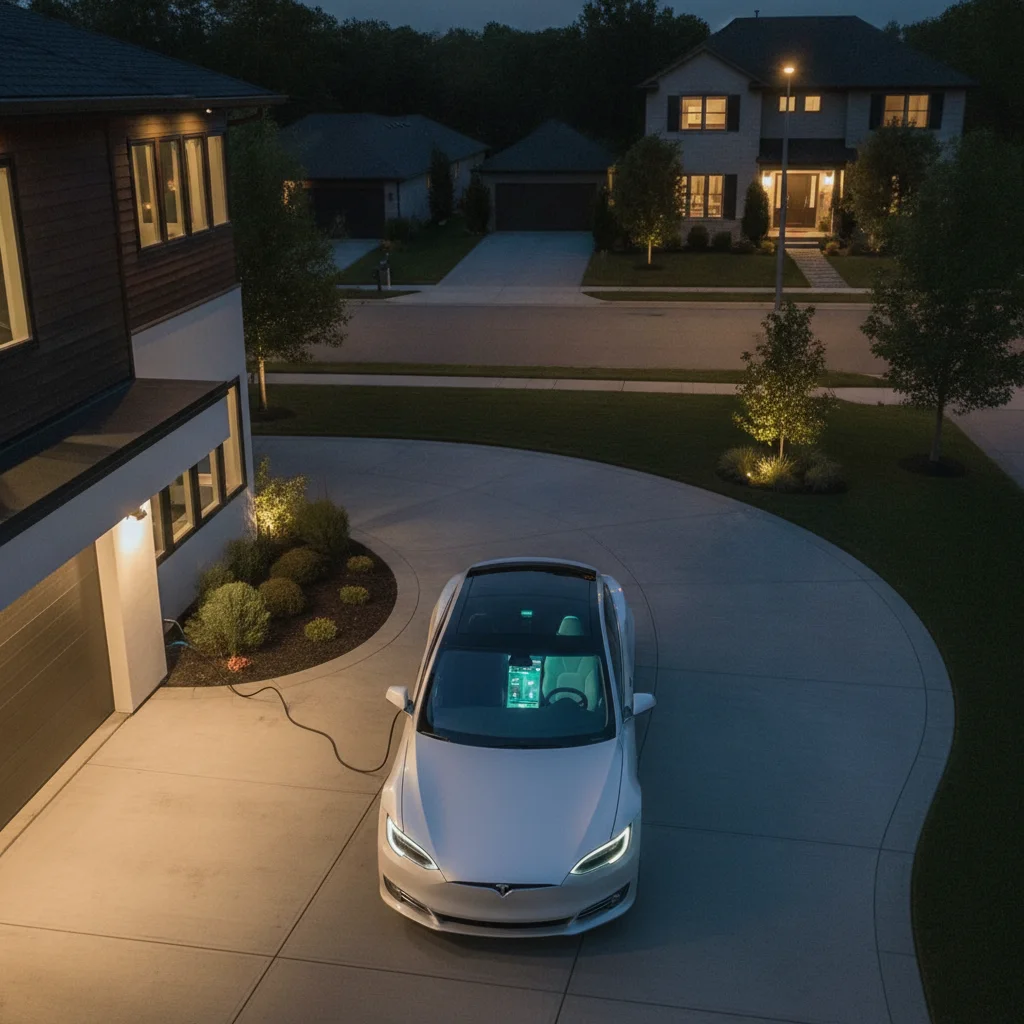
Gasoline vehicles have software too, but their core performance is fundamentally mechanical — pistons, valves, fuel injectors doing physical work. An electric vehicle flips that equation. The electric motor is simple and largely passive; nearly everything interesting — how much power you get, how fast the battery charges, how far the car estimates it can go — is governed by software running on the car's control systems.
That shift has a major practical implication for owners: the vehicle you drive today is not necessarily the same vehicle you'll drive in six months. A software update can change throttle response, adjust regenerative braking curves, tighten up battery thermal management, or recalibrate the state-of-charge display. This is genuinely new territory in automotive ownership, and most buyers aren't fully briefed on what it means.
Understanding what software updates actually touch — and what they can't — is part of being a smart EV owner. It's also relevant to resale value, insurance, and long-term battery health, all of which are discussed in the comprehensive EV maintenance lifetime guide.
OTA Capability Varies Significantly by Brand
Not all EVs have the same over-the-air update capability. Tesla has the most mature OTA infrastructure, capable of updating nearly every system in the vehicle remotely. Legacy automakers like GM, Ford, Hyundai, and Kia have been expanding OTA capability, but some still require dealer visits for certain module updates. Check your owner's manual or manufacturer's website to understand exactly what your vehicle can receive remotely.
What EV Software Updates Actually Fix and Improve
Software updates span a wide spectrum — from trivial UI tweaks to substantive changes in how the drivetrain behaves. Here's a breakdown of the major categories:
Battery Management System (BMS) Improvements
The BMS is the brain of your battery pack. It decides how much current flows in and out, manages cell balancing, monitors temperature, and enforces charge limits that protect the battery's long-term health. Updates to the BMS can:
- Improve the accuracy of state-of-charge (SOC) estimation
- Optimize cell balancing algorithms to reduce degradation over time
- Adjust charge rate curves to reduce heat buildup during fast charging
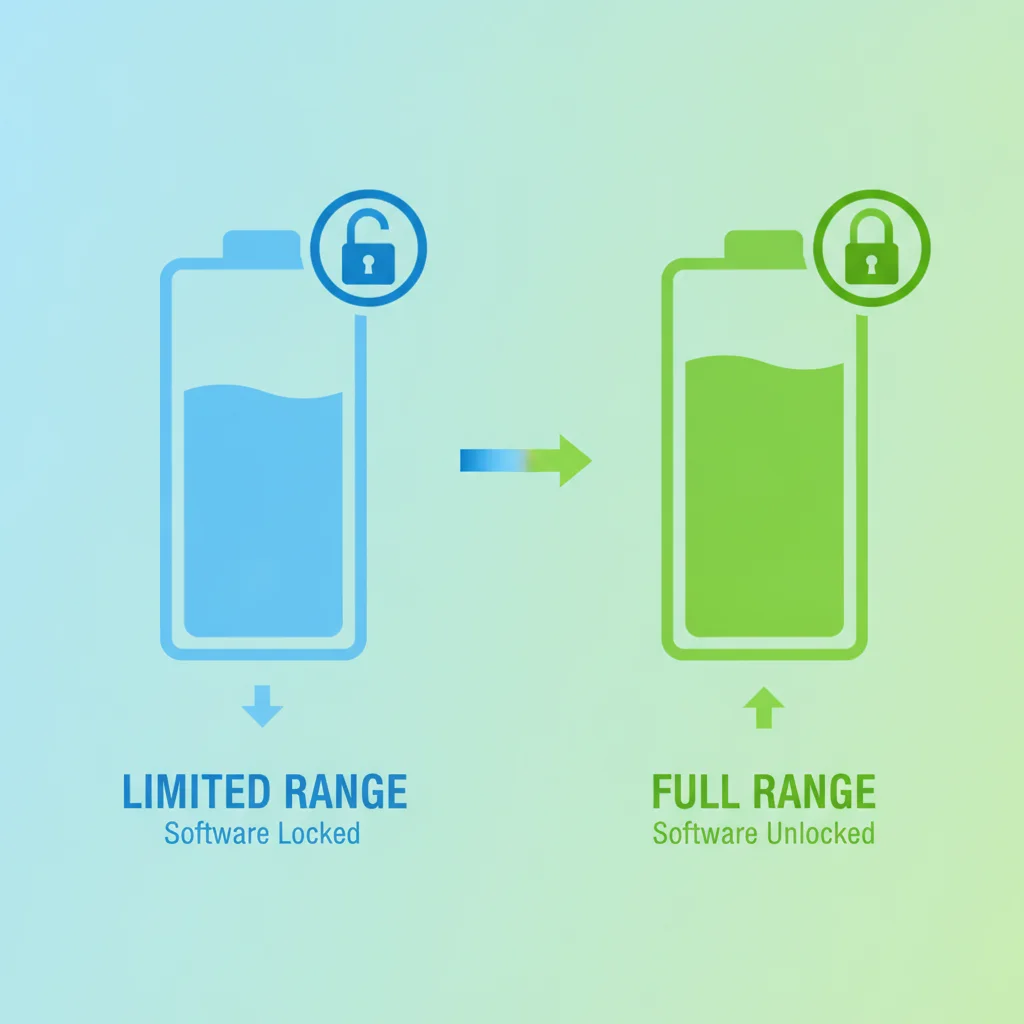
- Unlock additional usable capacity that was previously reserved as a buffer
Some of the most meaningful range improvements owners have reported — like early Model 3 owners gaining 5–10 miles of range — came directly from BMS recalibrations, not from any hardware change.
Charging Behavior and Speed
Fast charging is a software-mediated process. The car and the charger negotiate a power delivery curve that the BMS enforces in real time. An update can change that curve significantly — raising peak charging rates, extending the range of SOC over which fast charging stays fast, or adding preconditioning logic that warms the battery before you arrive at a charger.
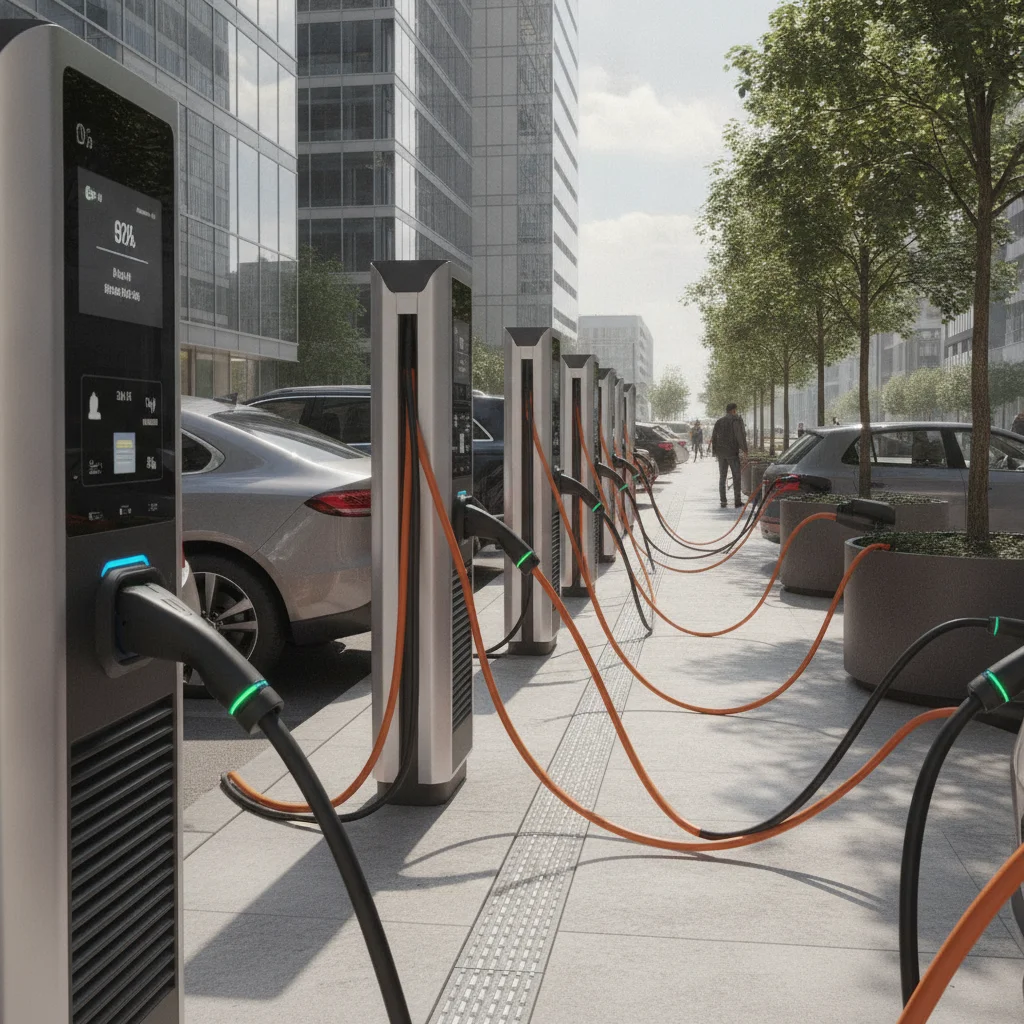
Ford's Mach-E, for example, received OTA updates that materially improved DC fast charging performance. Hyundai's Ioniq 5 and Ioniq 6 have similarly seen charging curve refinements post-launch. These aren't marketing gimmicks — they show up on real-world charging curves.
Safety Recalls and Regulatory Compliance
This is perhaps the most underappreciated use of OTA updates. The National Highway Traffic Safety Administration (NHTSA) now routinely accepts software-based fixes for safety recalls. Tesla has used OTA updates to address recall campaigns involving automatic emergency braking, regenerative braking behavior, and display functionality — resolving issues for millions of vehicles without a single dealership appointment.
Traditional automakers are increasingly following this path. For EV owners, this means a recalled vehicle can often be fixed overnight, silently, while parked at home — a genuine convenience that has no equivalent in the gasoline world.
Driving Dynamics and Powertrain Behavior
Throttle maps, steering feel weight, and regenerative braking strength are all tunable in software. Some automakers have used updates to add new driving modes, sharpen throttle response in performance modes, or soften regen for drivers who prefer a more traditional coasting feel. These changes can be subtle or significant depending on the update.
“The car you buy on day one is not the car you'll have in year three. For better or worse, software defines the electric vehicle experience in a way it never did for gasoline cars. Owners need to understand that — and pay attention to what's actually changing.”
— Sam Abuelsamid, Principal Analyst, Guidehouse Insights (e-Mobility)
Infotainment, Navigation, and Connectivity
Not every update is about performance. UI refreshes, navigation map updates, new voice command capabilities, Apple CarPlay or Android Auto improvements, and app connectivity fixes are all delivered the same way. These matter for the daily experience but have no impact on range or charging.
Read Update Release Notes Before Accepting
Most automakers publish at least a summary of what each update changes — look in the companion app or the vehicle's settings menu. If an update touches charging behavior or driving dynamics, knowing in advance prevents surprises. Some updates are reversible; most are not.
Set a Calendar Reminder to Check Update Status
Even if your EV supports automatic updates, check your app or vehicle settings every 60–90 days to confirm you're running the latest firmware. Some updates require manual approval, and they can sit as pending notifications for months if you're not looking.
The Difference Between OTA Updates and Dealer-Installed Updates
Not all EV software updates are created equal in how they're delivered. Over-the-air (OTA) updates are pushed wirelessly — your car downloads them over Wi-Fi (and sometimes cellular) and installs them with minimal driver involvement. The full breakdown of how OTA updates work covers the mechanics in detail.
Some updates — particularly those involving low-level firmware on safety-critical hardware modules — still require a dealer visit to be flashed directly via a diagnostic port. This is more common with legacy automakers who are newer to OTA infrastructure. If you own a Volkswagen ID.4, Chevrolet Equinox EV, or similar model, check your owner's manual and app for how updates are delivered for your specific vehicle.
400+
Tesla OTA recalls resolved via software (cumulative)
According to NHTSA recall records through 2024, Tesla has addressed over 400 recall campaigns using over-the-air software updates rather than requiring dealer visits.
~30%
Reduction in dealer recall visits via OTA updates
Industry analysts at S&P Global Mobility estimated that OTA-capable vehicles eliminate roughly 30% of traditional recall service visits, based on 2022–2023 recall data.
$3.5B+
Estimated annual savings from OTA recall resolution
McKinsey & Company estimated that widespread OTA adoption could save the global auto industry over $3.5 billion annually in recall logistics and labor costs.
5–15 miles
Typical OTA range improvement reported by owners
Based on aggregated owner reports and third-party testing across Tesla, Ford, and Hyundai models, range-relevant BMS updates have historically added 5–15 miles of usable range in real-world conditions.
The practical difference for owners: OTA-capable vehicles can receive improvements faster and with less friction. Dealer-required updates may go uninstalled for months simply because owners don't schedule the appointment. That gap can have real consequences if the update addresses a safety issue.
What Software Cannot Fix: Setting Realistic Expectations
It's worth being clear-eyed about what software updates cannot do, because the marketing language around OTA updates sometimes implies limitless improvement. A few important boundaries:
- Physical battery capacity is fixed by chemistry and hardware. Software can optimize how much of that capacity is usable, but it cannot manufacture energy from nothing. A degraded battery cell does not recover because of a software patch.
- Motor output is capped by hardware. Some automakers do unlock additional horsepower via software on vehicles with headroom built into their hardware (certain Tesla and Lucid models), but this is the exception, not the rule, and it's a deliberate design decision — not something that happens accidentally.
- Charging infrastructure limitations are external. If a charger maxes out at 50 kW, no car-side update changes that. The car's charging curve only matters when the infrastructure can actually supply the power.
For a more detailed look at where the real limits lie, see our analysis of what software updates can and cannot change about EV range. And if you've seen marketing claims about range improvements, it's worth cross-referencing with common EV range myths that confuse first-time buyers before drawing conclusions.
Software Updates and the Broader EV Ownership Picture
One thing OTA updates don't replace is physical maintenance. Tires still wear. Brake fluid still absorbs moisture. Cabin air filters still clog. The software-first narrative around EVs can sometimes mislead owners into thinking the car is essentially self-maintaining. It isn't. The EV maintenance schedule guide lays out exactly what still needs human attention and when.
That said, software updates are a legitimate and important maintenance task in their own right. Treating them as optional or ignoring update notifications is a mistake — particularly when those updates address battery management or safety behavior.
Insurance Implications
There's one angle most EV owners don't think about: insurance. A software update that changes vehicle behavior — whether it improves automatic emergency braking or adjusts battery limits — can technically affect your vehicle's risk profile. Most insurers don't currently adjust premiums based on individual update histories, but as telematics and connected-car data mature, this may change. The EV insurance guide covers how EV-specific factors already influence coverage and premiums.
Resale Value
A vehicle that's been kept current with software updates — particularly safety-related ones — is in better shape from a liability and functionality standpoint. Some used EV buyers specifically check whether open recalls or known software issues have been addressed before making an offer. Staying current costs you nothing but time.
How to Stay on Top of Your EV's Software Updates
The mechanics vary by manufacturer, but a few practices apply broadly:
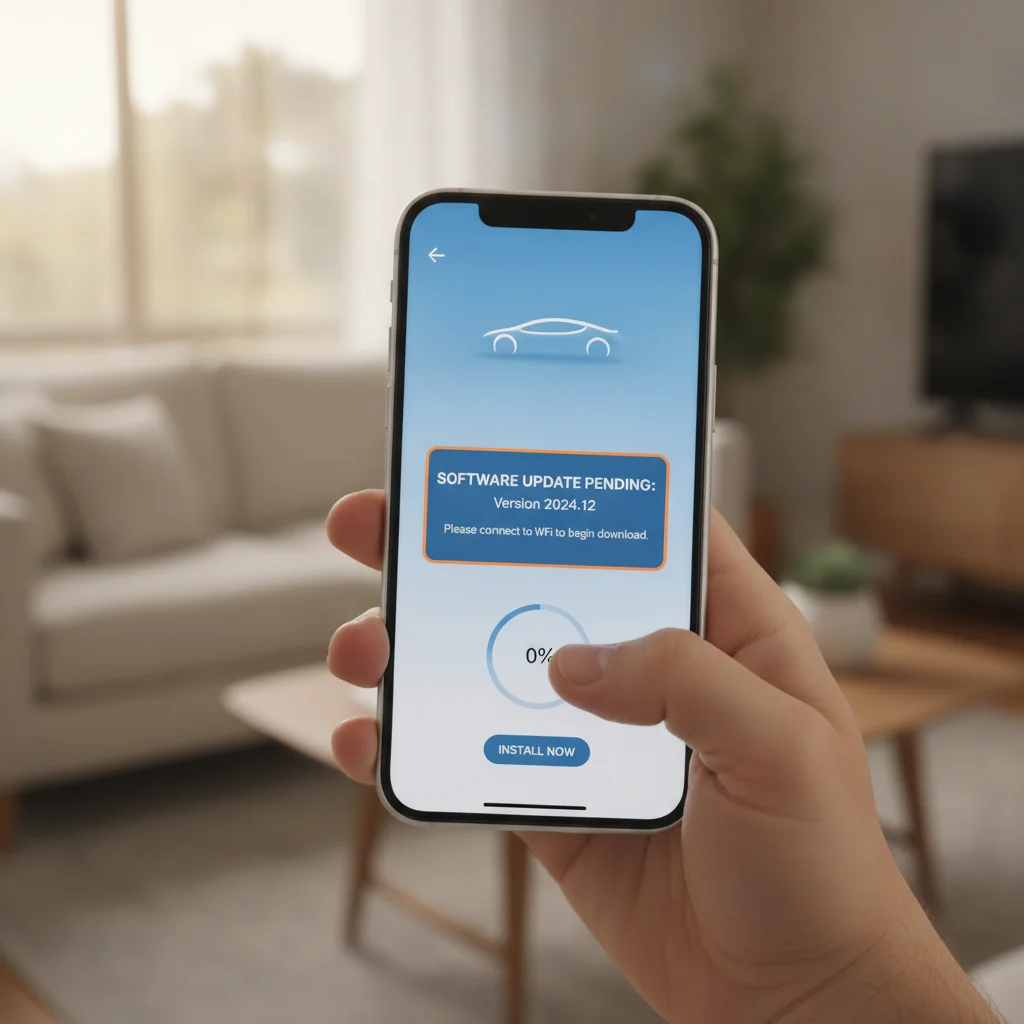
- Enable automatic updates if your vehicle supports them. Tesla, Rivian, and several others allow background installation. Turn this on and let the car manage it.
- Keep your vehicle connected to Wi-Fi at home. Most large updates require Wi-Fi rather than cellular to download. A vehicle that's never on a home network misses updates.
- Check your manufacturer's app regularly. Update notes and pending notifications typically appear there before they show up in the car itself.
- Read the update notes before accepting. Most automakers publish at least a summary of what's changing. If a change affects charging behavior or driving dynamics, knowing in advance avoids surprises.
- Don't ignore NHTSA recall notifications. Even if a recall is addressed via OTA, NHTSA sends physical mail for safety recalls. Use the VIN check at nhtsa.gov to confirm your vehicle's recall status independently.
Read Update Release Notes Before Accepting
Most automakers publish at least a summary of what each update changes — look in the companion app or the vehicle's settings menu. If an update touches charging behavior or driving dynamics, knowing in advance prevents surprises. Some updates are reversible; most are not.
Set a Calendar Reminder to Check Update Status
Even if your EV supports automatic updates, check your app or vehicle settings every 60–90 days to confirm you're running the latest firmware. Some updates require manual approval, and they can sit as pending notifications for months if you're not looking.
Understanding how your specific vehicle handles updates — and where software fits into the broader picture of how EVs work — positions you to make better decisions throughout ownership, from maintenance planning to resale timing.

All claims are backed by peer-reviewed research. Sources on request.